
You're probably looking at photos of mantas rolling through beams of light and wondering whether the dive feels that controlled, that close, and that reliable. It can, but only if you understand what you're watching. A manta night dive in Kona isn't a search for a passing animal. It's a stationary night on the bottom while reef mantas work a concentrated patch of plankton. If you're planning broader scuba diving tours in Kona, put this dive early in your trip so weather or a quiet night doesn't cost you your only chance.
Table of Contents
- What a Manta Night Dive Actually Feels Like
- How the Encounter Actually Works
- Garden Eel Cove vs Manta Village
- Skill Level, Certification, and Gear You Will Actually Use
- How to Read Manta Behavior During the Dive
- Conservation Trade-offs Most Divers Never Hear About
- Best Seasons, Times of Year, and What to Pack
- Booking Your Manta Night Dive with Kona Honu Divers
What a Manta Night Dive Actually Feels Like
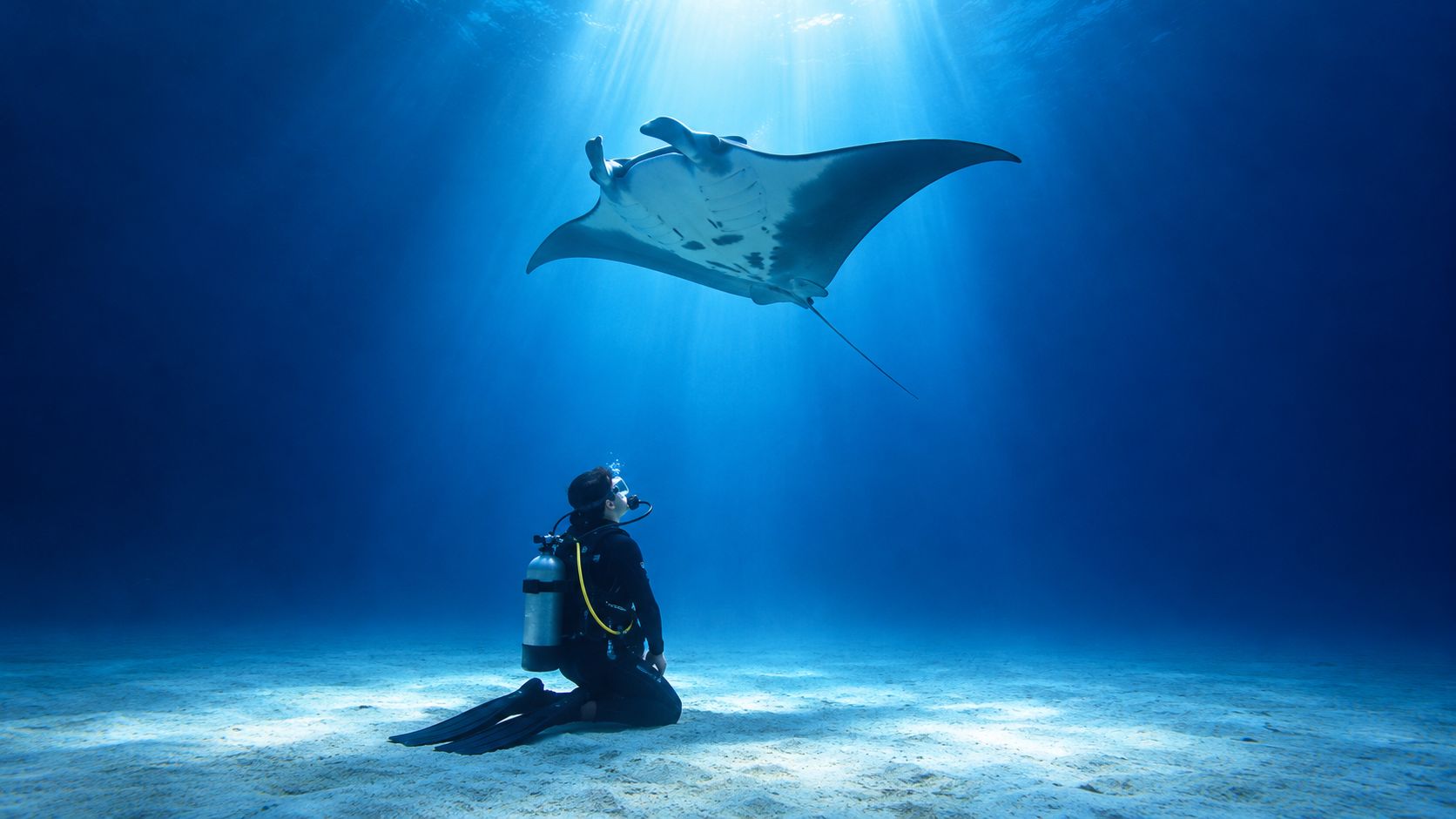
You descend after sunset and the reef sounds different. Your bubbles are loud, the beam from your light narrows the world, and the sand patch below looks empty for longer than you'd like. Then the guide settles the group, lights point up into the water, and you wait on your knees with very little to do.
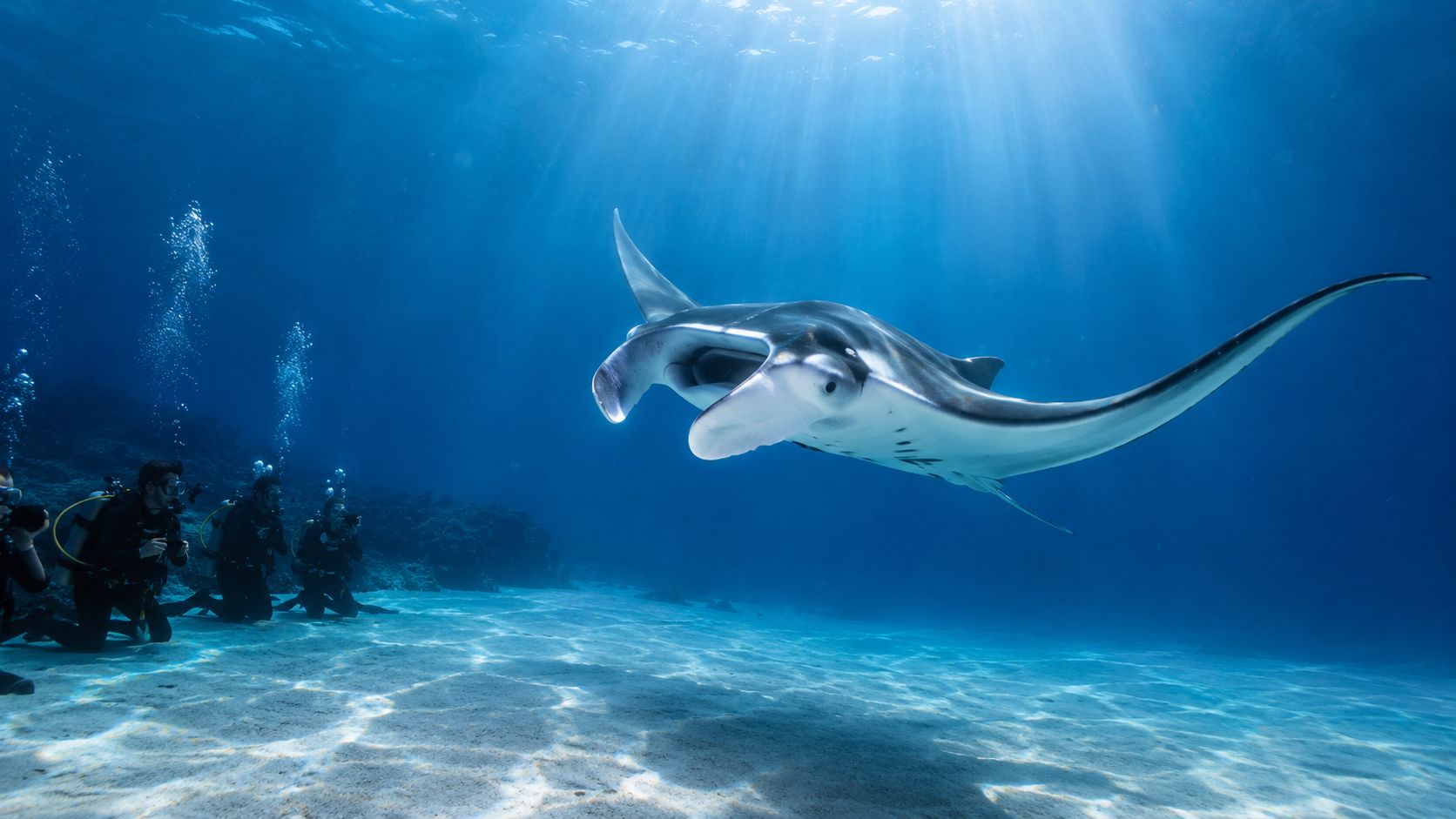
That stillness is the point. A white belly slides into the edge of the light, turns, and passes overhead with its mouth open. It's not performing for you. It's feeding, and once you accept that, the dive stops feeling like a show and starts feeling like you've been allowed to sit inside a feeding lane.
The Shape of the Night
Most trips follow a simple rhythm. You get a boat briefing at sunset, gear up while there's still enough light to check everything calmly, then make a controlled entry and descent. On the bottom, you're in shallow water, close enough to the surface that depth pressure isn't the main sensation. Darkness is.
Daytime diving rewards movement. You swim, look into cracks, follow the reef. Here, movement works against you. You'll spend most of the dive in one place, watching the illuminated water column above you and learning to ignore the urge to improve your angle every few seconds.
The divers who enjoy this most are usually the ones who stop trying to get closer and let the mantas set the distance.
Close passes do happen, and they're startling even when you're expecting them. A manta can fill your field of vision, roll, and disappear into black water before your brain catches up. Between passes, you'll see plankton drifting through the beams, other divers as silhouettes, and your own exhaled bubbles rising into the light.
Touch is never part of a well-run encounter. If a manta comes close, you stay low and still. That restraint feels unnatural for about a minute, then it becomes the calmest part of the dive. If night diving itself is new to you, read up on what scuba diving at night involves before you book, because comfort in the dark matters more here than fancy equipment or a long logbook.
How the Encounter Actually Works
The mechanism is simple, but the biology behind it explains why Kona works so well. Underwater lights aggregate zooplankton, and reef mantas come to feed on that concentrated food. Hawaiian nighttime surveys document manta feeding at commercial sites where zooplankton are attracted by underwater lights, as summarized in NOAA's giant manta ray framework.
Without the lights, you shouldn't expect mantas to hang around the surface waiting for divers. Giant mantas may move offshore at night and descend to depths approaching 1,000 m while tracking vertically migrating zooplankton, and reef mantas in New Caledonia were recorded diving deeper than 300 m, with a maximum of 672 ± 4 m, according to that same NOAA summary. Deep dives were significantly more frequent from 19:00 to 07:00 than during daylight.
A Feeding Patch, Not a Chance Meeting
That night-biased movement is why the lights matter so much. You're not intercepting natural surface behavior. You're creating a temporary, shallow feeding patch that's worth a manta's time. When plankton density builds, a manta can make repeated passes through one small area instead of searching a huge volume of dark water.
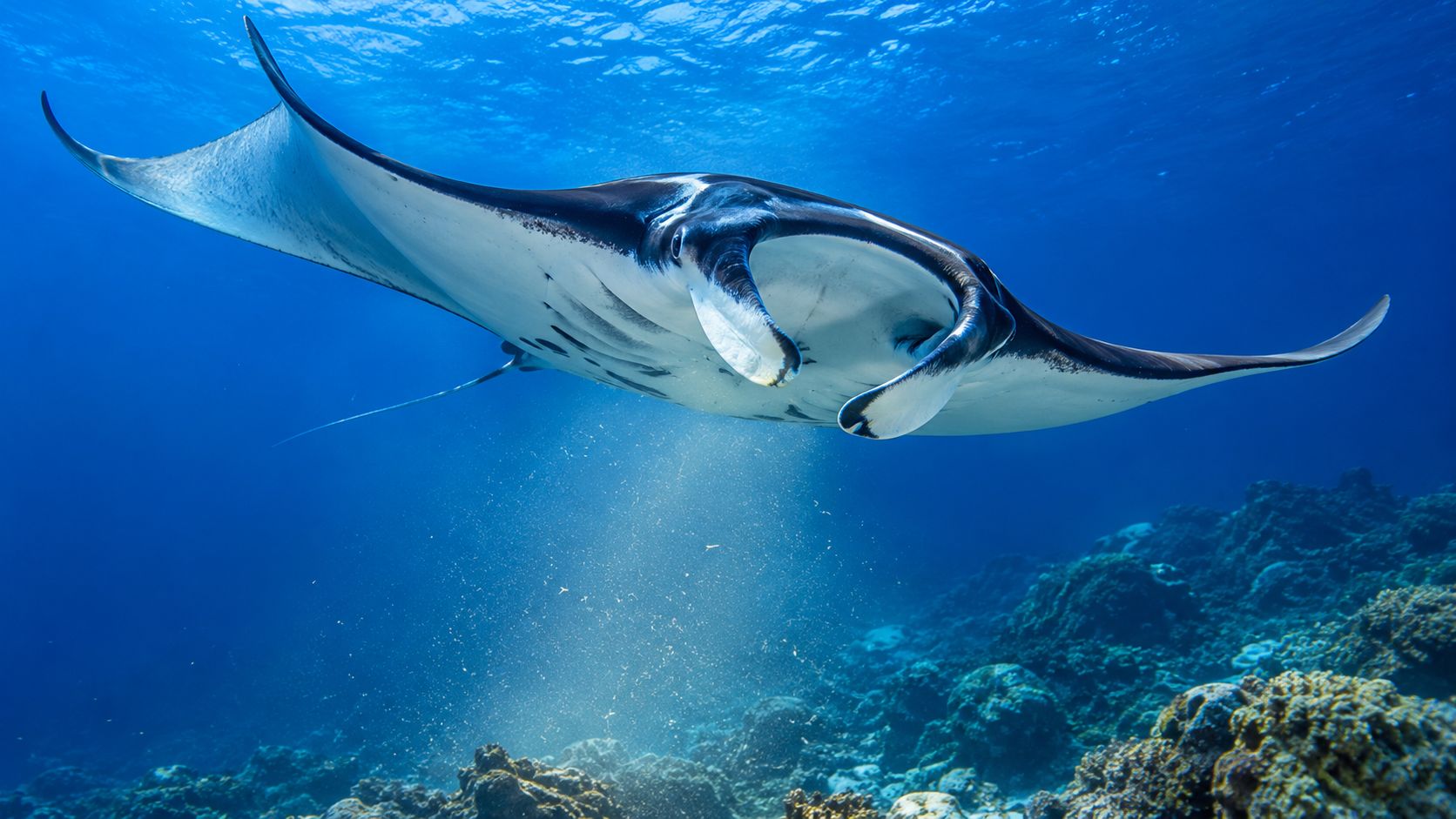
NOAA describes the diet as primarily planktonic organisms including euphausiids, copepods, mysids, decapod larvae, and shrimp, with water and prey channeled across the gill plates while the mouth is open wide, in its giant manta ray species profile. The cephalic fins help funnel that flow. Denser prey means the effort of each pass pays off.
Why Kona Became Reliable
Kona's industry grew from an accidental attraction in the early 1990s, when artificial lights near Keauhou Bay concentrated plankton and drew reef mantas to predictable feeding areas. The long-term record since then is substantial. One dataset summarized from a NOAA repository recorded 25,444 observations of 118 individual reef manta rays at Manta Heaven and Manta Village, detailed in this summary of Kona manta diving research.
- Predictable food: Lights concentrate plankton in one place.
- Accessible sites: Nearshore locations let operators return nightly.
- Repeated animals: Individually recognized mantas use the same areas.
That's the formula. It's designed, repeatable, and still dependent on wild animals choosing to feed.
Garden Eel Cove vs Manta Village
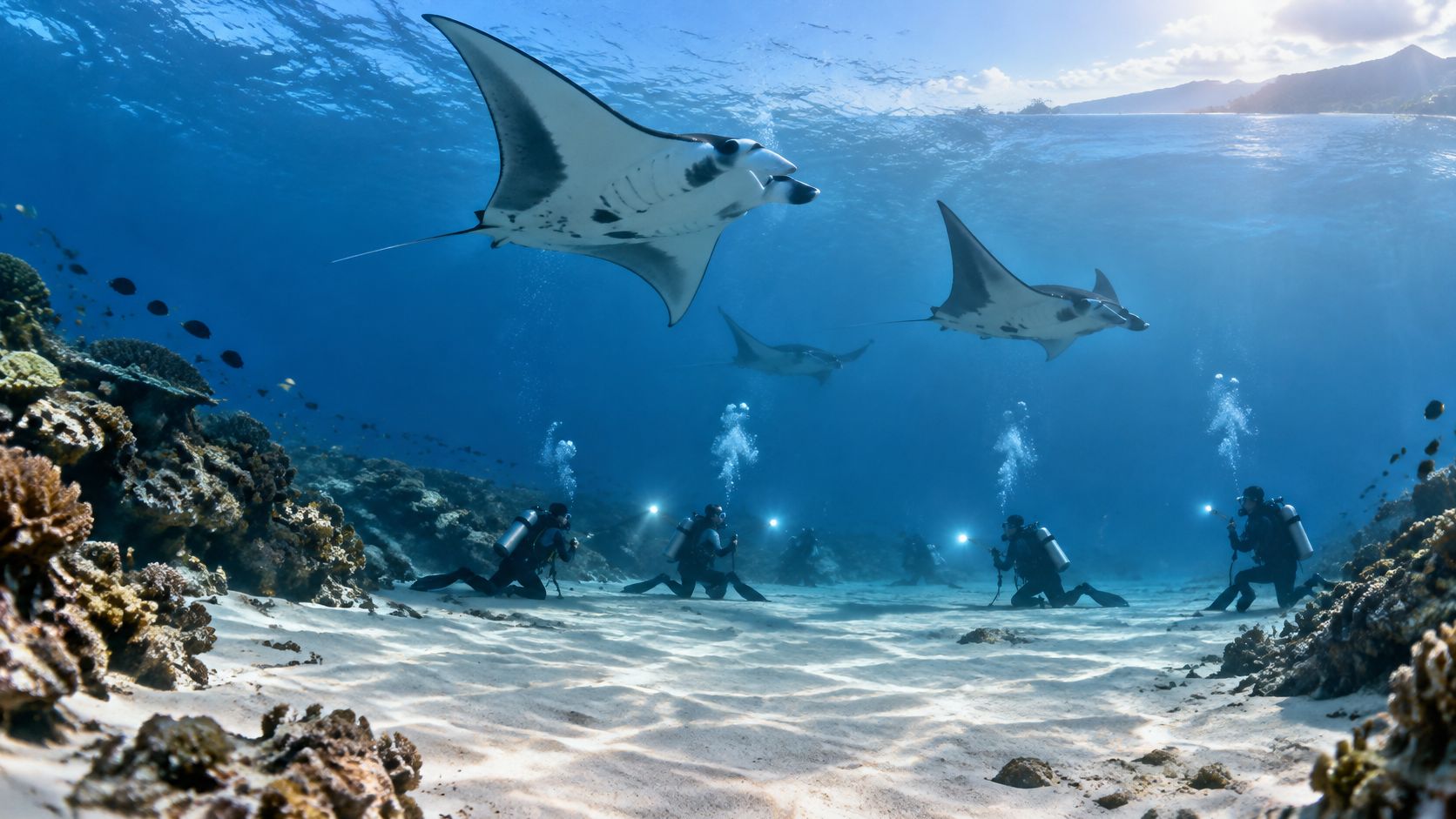
Both sites are established, both can produce a great night, and neither is a guarantee. If you're choosing where to dive, though, Garden Eel Cove is the stronger pick for most divers. Also called Manta Heaven or Makako Bay, it's identified as the preferred starting location because its protected setting provides a better viewing area and stronger surrounding reef structure, as noted in Hawaiʻi DLNR's site background.
The layout matters more than the name on the brochure. A wider, sheltered viewing area gives mantas room to make complete feeding circuits without constantly crossing boat traffic, anchor lines, and tight clusters of lights. It also gives your guide more options for placing divers where they can watch without sitting in the mantas' approach corridor.
What the Long-Term Counts Show
A six-year standardized monitoring program from January 1, 2009, through December 31, 2014, recorded 25,444 manta-ray sightings involving 118 individually identified reef manta rays at Manta Heaven and Manta Village, according to Kona Honu Divers' Big Island manta ray overview. Within that total, Manta Heaven accounted for the larger share of observations.
A separate University of Hawaiʻi analysis of community-sourced records from 2010 through 2022 examined more than 23,000 sightings involving 167 individually recognized reef manta rays and found Garden Eel Cove generally supported larger aggregations, while Keauhou showed stronger site fidelity among females, as reported in this account of the Garden Eel Cove and Keauhou analysis.
Garden Eel Cove vs Manta Village at a Glance
| Factor | Garden Eel Cove (Manta Heaven) | Manta Village |
|---|---|---|
| Viewing area | Protected, wider, better for settled positioning | More exposed, tighter feel |
| Reef setting | Stronger surrounding reef structure | Established site near Keauhou |
| Aggregations | Generally larger in the long-term analysis | Stronger female site fidelity at Keauhou |
| Best use | Headline dive choice for multiple mantas | Solid alternative when conditions suit it |
Book Garden Eel Cove when you have the choice. You're buying better odds and a better stage, not certainty.
Skill Level, Certification, and Gear You Will Actually Use
You don't need to be a technical diver for this, but you do need to be honest about your comfort after dark. A standard Open Water certification is the typical minimum for the scuba version. What determines whether you'll enjoy it is buoyancy control, calm breathing, and whether low visibility makes you tense up and start finning.
If you're still deciding between the surface and the bottom, compare whether it's better to snorkel or dive with manta rays before you commit. The dive gives you the bottom-up view. It also asks more of you in gear handling, air awareness, and self-control.
Skills That Matter on the Bottom
- Settle without stirring silt: Get down, get stable, then stop moving.
- Control your fins: Small kicks break the plankton concentration and cloud your neighbor's view.
- Breathe steadily: Big, anxious exhales send bubble curtains into a manta's path.
- Follow light discipline: Point your light into the water column, not into a manta's eyes and not wandering across the group.
A Night Diver or Peak Performance Buoyancy specialty helps because the problems here are specific. You're managing darkness, limited visual references, and a mostly stationary position. A refresher dive earlier in your trip is a smart move if you haven't dived in a while.
Gear That Earns Its Place
Wear enough exposure protection that you're not shivering while sitting still. A thicker wetsuit than you'd pick for an active daytime reef swim often makes sense because you're barely moving. Bring a primary light and a backup light if you own them, and know how to switch them on with gloves or cold hands before you're on the boat.
Boat rule: If you can't operate your light, mask, and BCD calmly in daylight, darkness won't make it easier.
Skip bulky camera rigs on your first manta night unless you already manage one comfortably at night. A slate or pointer can help with simple communication, but it isn't a tool for tapping, pointing at mantas, or rearranging yourself on the bottom. Your operator typically provides tanks, weights, and lights, so confirm exactly what's included when you reserve and arrive with your certification details ready.
How to Read Manta Behavior During the Dive
Watch the plankton first. If the beams look thin and empty, mantas may cruise through and leave. When the water in the light looks thick and alive, you're more likely to see repeated circuits, tighter turns, and longer feeding passes through the same patch.
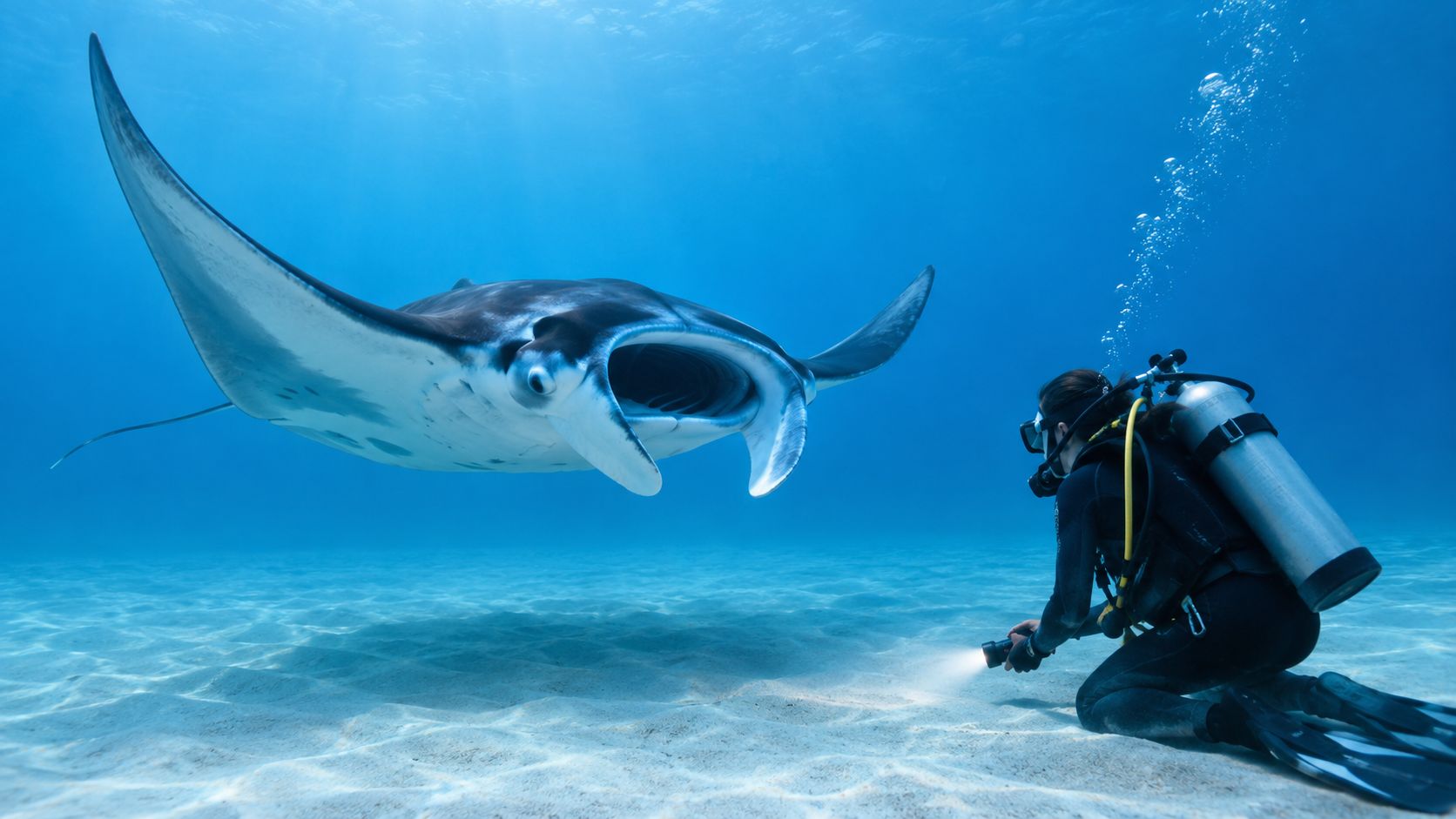
Active feeding has a clear posture. The cephalic fins unroll into an O-shaped funnel, the mouth opens wide, and the manta moves with deliberate, looping control. Barrel rolls and repeated passes through the densest part of the light mean the animal is working a food patch, not just passing the site.
Cruise, Feed, or Leave
A cruising manta crosses the light once, often higher and straighter, and may not open its mouth fully. A feeding manta keeps returning to the same volume of water. You'll start to predict its line, where it'll bank, and which side of the group it'll pass over next.
Avoidance looks different. Watch for:
- Sudden course changes: A sharp turn away from lights, bubbles, or a diver who moved.
- Interrupted passes: The manta starts a feeding run and breaks off early.
- Clean departures: The animal leaves the light and doesn't circle back.
Documented encounters elsewhere have produced course changes, interrupted feeding, and departures from feeding areas, which is why your stillness isn't just etiquette. It protects the behavior you came to see.
Your Positioning Script
Stay low on your knees. Keep your light directed as your guide briefed, generally into the water rather than at the animal. Don't rise into the light cone, cross a manta's approach line, or shuffle sideways for a better photo.
Let the manta control the distance. When it does, passes often get cleaner and closer on the animal's terms. That's the difference between watching a feeding pattern and disrupting one.
Conservation Trade-offs Most Divers Never Hear About
Closer isn't automatically better. That assumption drives a lot of bad behavior on manta nights, from divers lifting off the bottom for a photo to boats crowding a site because guests expect a dramatic pass on demand. A quieter, more distant view can be the more responsible outcome.
Crowding isn't an abstract concern raised only by conservationists. In a survey of 444 manta-tour participants, 82% felt crowded by snorkelers, 78% by boats, and 69% by scuba divers, according to Needham and colleagues' manta tour testimony. When guests themselves feel packed in, encounter quality is already slipping.
Where the Pressure Builds
Bright lights, multiple vessels, and high diver counts can alter behavior and create collision, injury, and disturbance risks. Limiting boats and divers has been proposed as a mitigation, but those limits haven't been successfully established. That regulatory gap puts more weight on operator judgment and guest behavior.
Touching is prohibited for a biological reason, not just a legal one. Mantas have a protective mucus layer that helps maintain their health, and Hawaiʻi DLNR rules prohibit harassing or harming them in state waters, as explained in this overview of manta feeding and no-touch rules. Your hands stay down even when a manta passes within reach.
An Impact Decision Guide
Judge an operator by what they do when conditions get messy. Do they hold a fixed viewing perimeter? Do they brief light placement and feeding corridors clearly? Will they reposition or leave if mantas stop feeding or the site is overcrowded?
For your part, read responsible and considerate diver etiquette as operating instructions, not a poster. Hold position, minimize fin movement, never chase or block, and accept a less dramatic night without pressuring your guide to manufacture one.
Best Seasons, Times of Year, and What to Pack
Kona's mantas are resident animals, so trips run year-round rather than in a short migration window. Your planning question isn't whether mantas live here in a given month. It's whether surface conditions, water comfort, and your own schedule give you the best chance on the night you pick.
Historical monitoring recorded manta sightings on approximately 80% of dives at Garden Eel Cove, based on 3,208 surveys conducted from 1992 through 2007, primarily at Keauhou and Hoʻona Bay, according to Kona Honu Divers' manta night dive history. Treat that as a strong historical baseline, not a promise for your date. For seasonal planning detail, check the best time to see manta rays in Kona and book early in your stay.
Pack for the Boat, Not Just the Dive
- Warm layer: The ride back feels cold in wet gear, even in Hawaiʻi.
- Towel and dry clothes: Change out of your swimsuit before the harbor if you can.
- Dry bag: Keep your phone, wallet, and car key off the wet deck.
- Personal backup light: Bring one if you own it and know it well.
- Light meal timing: Eat early enough that you're settled before boarding.
Seasickness Is the Common, Preventable Mistake
Calm Kona water still moves at night, and gearing up on a rocking boat is where many first-timers lose the evening. Take your chosen remedy before departure, not after you feel rough. Options divers commonly pack include the Ship-EEZ Seasickness Patch, Dramamine pills, Bonine pills, Sea Band wristbands, and Ginger chews.
Prevention beats treatment on a night boat. Handle motion sickness at the dock and keep your attention on the briefing.
Warm water helps, but sitting still on the bottom still cools you down. Dress for inactivity, protect your gear from spray, and arrive with time to spare. Rushing a night charter is how small problems stack up.
Booking Your Manta Night Dive with Kona Honu Divers
You've made the important decisions already. Choose Garden Eel Cove for its protected viewing area and stronger reef. Choose an operator that briefs positioning and light discipline properly. Book early in your trip, dress warmer than you think you need to, and handle seasickness before you board.
Kona Honu Divers runs a guided two-tank manta dive and snorkel tour built around the manta night dive at Garden Eel Cove, with the briefing, guide, tanks, weights, and dive light handled as part of the trip. If you're comparing operators more broadly, this insider guide to choosing a Kona diving company covers what to look for beyond price.
Ask about the early diver discount program and free nitrox when you're planning the rest of your Big Island dive calendar. Both matter if the manta night is one dive in a longer week rather than a single outing.
Reserve the manta night early, then build your daytime dives around it. That's how experienced Kona divers protect the headline experience instead of hoping a spot opens up later.
Ready to sit on the sand at Garden Eel Cove and watch reef mantas feed overhead on their own terms? Book your manta night dive and the rest of your Kona diving with Kona Honu Divers, check availability for your travel dates, and put the night early in your trip so you aren't gambling on your last evening in Hawaiʻi.