
Most Big Island manta ray guides tell you to chase the highest sighting odds. That's incomplete advice. The population can remain stable while the viewing area feels crowded, noisy, and poorly managed. A better night depends on understanding where mantas feed, how plankton shifts, how people occupy the water, and what you can control as a visitor.
Garden Eel Cove, also known as Manta Heaven, is my preferred starting point for a manta-ray dive because its protected setting offers a better viewing area and stronger surrounding reef structure. But no responsible guide should promise a guaranteed number of animals. Mantas follow food, not itineraries.
The Reality of Crowded Manta Ray Viewing
A stable manta population doesn't mean you'll have an uncrowded ocean experience. In a study of 444 manta viewers, 82% felt crowded by snorkelers, 78% by boats, and 69% by scuba divers (crowding study and manta-viewing testimony). Those figures describe the human experience, not a collapse in manta numbers.
That distinction matters for families and first-time divers. You may see a healthy, active aggregation and still feel that too many lights, fins, boats, and bodies compete for the same viewing space. The best operators manage that pressure through briefings, group positioning, and disciplined in-water behavior, but they can't make a popular wildlife site feel private.
Population stability is not visitor comfort
A 2025 University of Hawaiʻi analysis examined more than 23,000 sightings of 167 individual reef mantas recorded from 2010 through 2022 and found that the aggregations remained relatively stable despite increased tourism (University of Hawaiʻi community-sourced manta analysis). That's encouraging conservation information, but it shouldn't be marketed as proof that every night feels calm.
Crowding also changes how you behave. When swimmers feel boxed in, they're more likely to drift into another person's space, lift lights into faces, or move toward an approaching manta. That makes the encounter less comfortable and increases the chance of interfering with the animal's feeding path.
Practical rule: Choose a well-managed site and accept that a reliable wildlife encounter may still be a shared experience.
What to expect instead
The right expectation isn't a solitary manta circling beneath you. It's a controlled observation session in a working feeding area. You'll get more from the night if you stay still, leave space for the rays, and judge the trip by the quality of the encounter rather than by how empty the water looks.
Why Manta Rays Gather in Kona
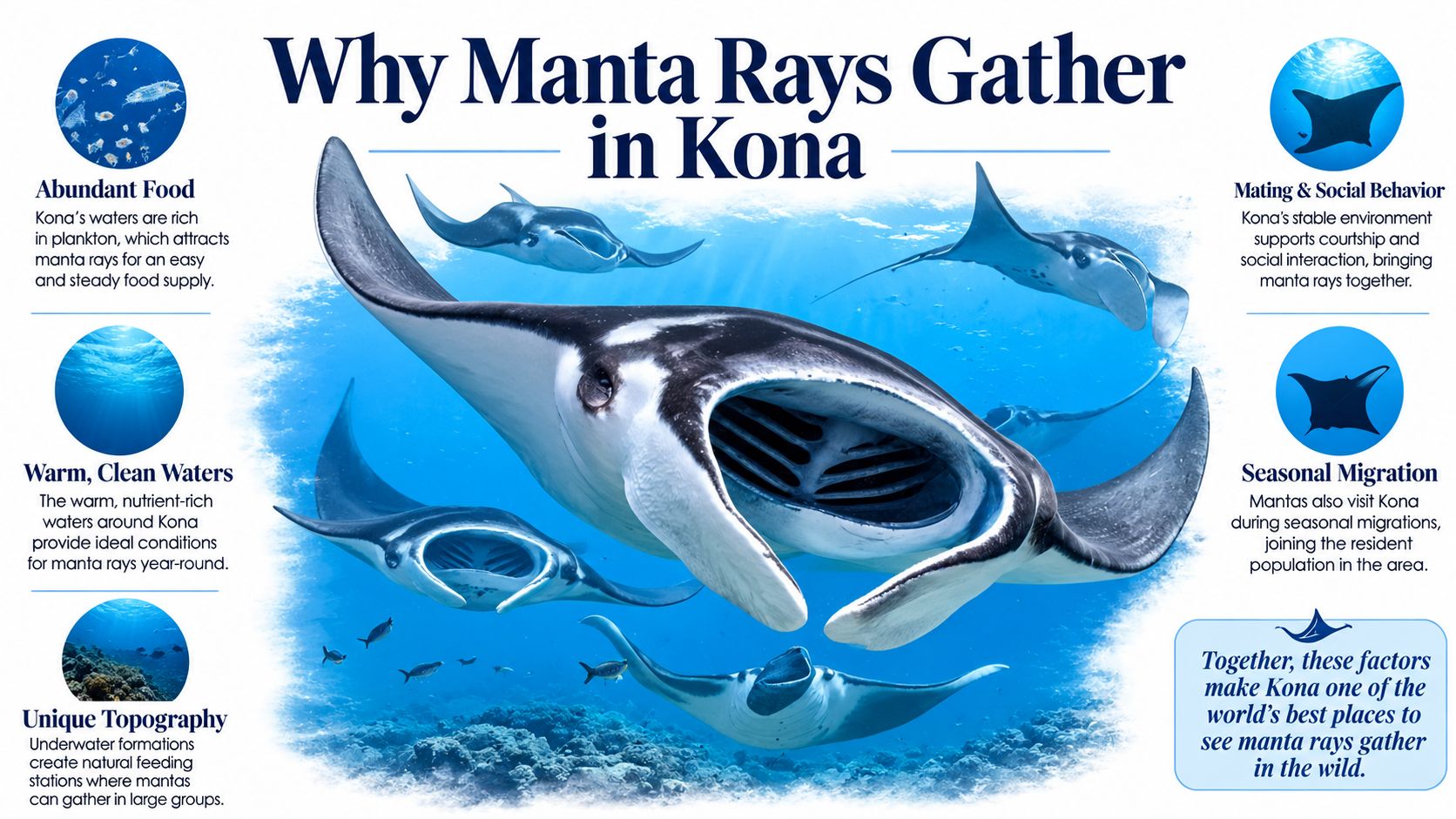
Kona's mantas don't arrive because the calendar says it's manta season. Reef mantas gather where zooplankton concentrates, and their numbers at a viewing site can change as prey moves through the water. The lights used by divers and snorkelers make that food easier to collect in one area, creating a feeding opportunity that mantas repeatedly recognize.
The long record from Kona shows why these sites matter scientifically. A six-year standardized monitoring program from January 1, 2009, through December 31, 2014, documented 25,444 sightings involving 118 individually identified reef mantas at Manta Heaven and Manta Village (NOAA repository monitoring study). Researchers recorded repeated site use and meaningful differences between individual animals, which is very different from a random gathering of passing rays.
Plankton controls the show
The later community-sourced analysis found that aggregation size tracked zooplankton density. Garden Eel Cove generally supported larger aggregations than Keauhou, while Keauhou showed disproportionate use by females and connectivity between the two areas (University of Hawaiʻi manta ecology analysis).
That gives you a more useful way to interpret a quiet night. Fewer mantas may reflect shifting prey rather than poor guiding or a damaged population. Conversely, a busy night doesn't mean the site will produce the same experience on your next visit. The animals are responding to food density, currents, and their own movement patterns.
Site loyalty makes Kona unusual
Individual identification gives Kona an advantage that many wildlife destinations don't have. Researchers can recognize returning rays from their ventral markings and compare behavior across years, locations, sex, and feeding conditions.
For a practical overview of the local encounter and viewing approach, see this guide to manta rays around Hawaiʻi's Big Island. The central lesson is simple: the big island manta ray experience is a natural feeding event shaped by prey, not an attraction that performs on demand.
Choosing Garden Eel Cove Over Other Sites
If the goal is a strong manta dive, I'd choose Garden Eel Cove over the more exposed or busier alternatives. Its protected topography creates a better viewing area, and the surrounding reefs give divers a more structured place to settle while the animals work the illuminated water above.
That choice isn't based on a promise that every visit produces the same show. The 2010–2022 analysis found that Garden Eel Cove generally supported larger aggregations than Keauhou (University of Hawaiʻi manta aggregation research). Larger groups can make the encounter feel more active, but the actual number present still depends on plankton.
Why the cove works better
A protected site helps in several practical ways:
- More comfortable staging: A defined viewing area makes it easier for divers to settle on the bottom without spreading into the feeding column.
- Better reef context: Healthy surrounding structure gives you more to observe before and after the mantas arrive, without turning the dive into a chase.
- More predictable positioning: Guides can establish a clear boundary between divers, snorkelers, lights, and the open water used by the rays.
- Stronger aggregation history: The available long-term data identify Garden Eel Cove as a particularly reliable feeding location for larger groups.
Manta Village and Keauhou remain established viewing areas, and the long-term monitoring record confirms substantial manta use there. But a site's popularity can also intensify the crowding problem. Choosing a location with a better physical layout gives your guide more room to protect the animals' path and your group more room to watch without pressing forward.
Match the site to your priorities
If you're bringing nervous swimmers, the calmest-feeling departure and simplest boat logistics may matter most. If you're a certified diver who wants a clean bottom position and a broader reef setting, Garden Eel Cove is the stronger choice.
Kona Honu Divers offers manta ray dive and snorkel trips, including a scuba option for certified divers and a snorkel experience for guests who remain at the surface. Read this detailed guide to Kona's manta-ray dive sites and tours before choosing an operator, and ask specifically where the trip will spend its viewing time.
Light Mechanics and Positioning in the Water
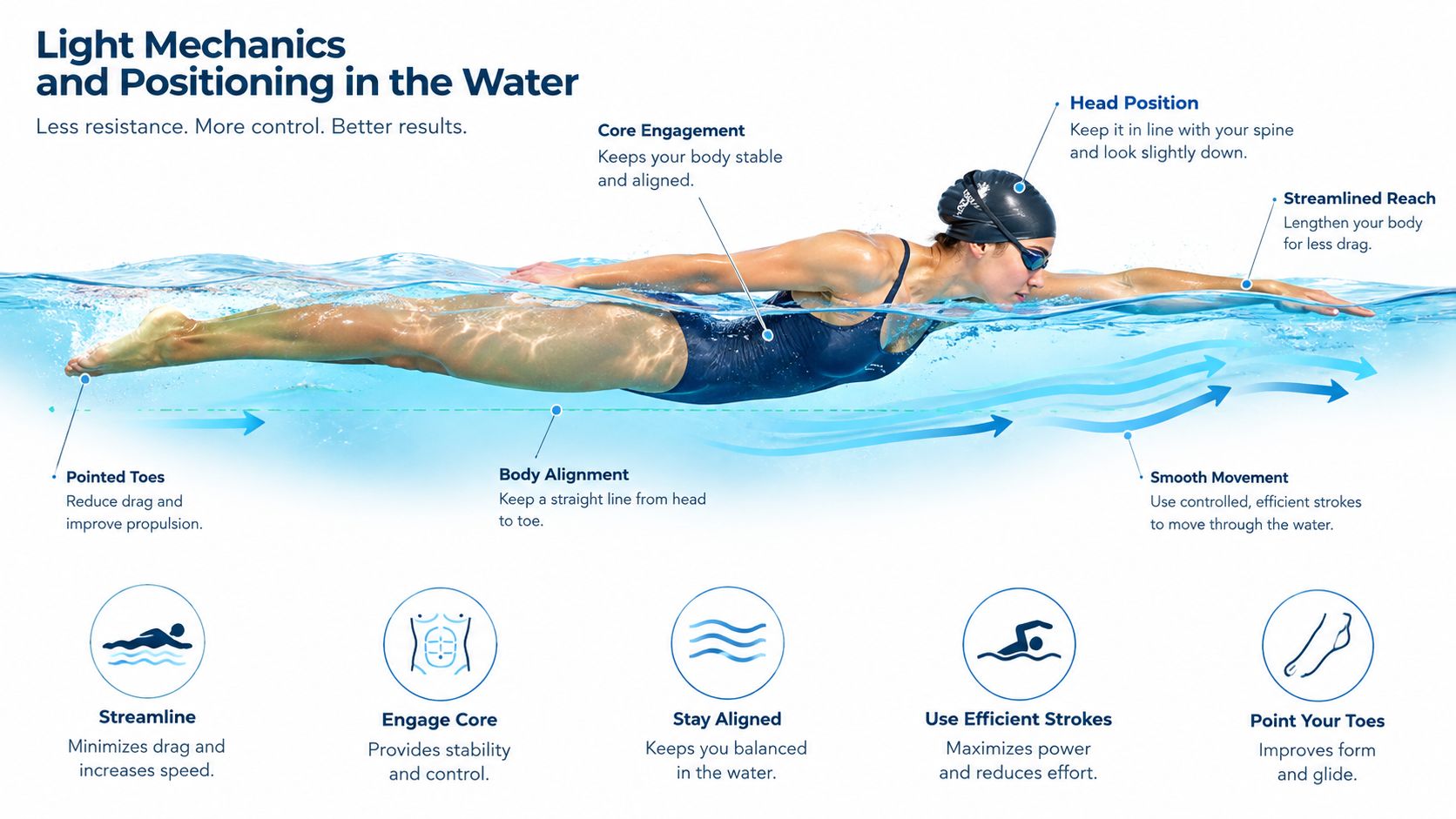
The lights aren't decoration. They create the feeding setup. Concentrated light draws plankton into the water column, and the mantas follow that food. Your position determines whether you're watching from outside the animals' path or sitting directly in it.
Divers and snorkelers use opposite light directions because they occupy different parts of the water. A diver creates an upward-facing plankton beacon from the bottom. A snorkeler illuminates the water beneath the surface while remaining above the feeding column.
Divers should stay low
Settle on sand, rubble, or boulder bottom, not live coral. Hold your dive light above your head and shine it upward into the water column. That placement draws plankton overhead and leaves the central feeding space open for the mantas to maneuver.
Keep your body compact and your fins controlled. Don't swim after a ray, rise into its route, or extend a camera rig into the space above your group. If a manta approaches close enough to fill your viewfinder, the correct response is to remain still and let it choose the distance.
Snorkelers belong at the surface
Snorkelers should remain on the surface, point lights downward, and never dive into the feeding column. A lighted float or board provides support, but it also creates a clear boundary. Hold your position rather than swimming toward every movement below you.
Remove your snorkel from the mask if your operator directs you to do so. It can snag a ray. Time your breathing so you don't blow bubbles directly into a manta's face, especially when it turns through the light.
Let the manta complete the pass. The best footage usually comes from holding position, not from swimming closer.
For more preparation on nighttime conditions, gear, and diver behavior, review this guide to scuba diving at night. The same principle applies throughout the dive: create the food-light pattern, then stay out of the space the animals need.
Preparing for a Night Boat Trip
A manta dive begins on the boat, and the boat ride can determine how much you enjoy the water later. At the harbor, keep your preparation simple. Eat a familiar meal, hydrate without overloading your stomach, and tell the crew early if you're prone to motion sickness.
If you already know boat movement affects you, don't wait until the deck starts rolling. Discuss medications with a qualified healthcare professional and follow the product directions. Common options include the Ship-EEZ Seasickness Patch, Dramamine pills, Bonine pills, Sea Band wristbands, and ginger chews.
Build a practical boat kit
Night trips expose small oversights. Wet gear feels colder after sunset, the deck can be slick, and a missing layer becomes obvious on the return ride.
Pack these items:
- Warm layer: Bring a windbreaker, fleece, or sweater for the ride home.
- Dry clothes: Keep them sealed in a dry bag or protected compartment.
- Towel: Don't assume a damp boat ride will be comfortable without one.
- Red-light headlamp: Use red light on deck so you can see handrails and equipment without blasting other guests' eyes.
- Water and a light snack: Keep both accessible, especially if the trip runs late.
A well-fitting wetsuit matters more at night than many guests expect. Even when the ocean feels warm at entry, sitting or floating still for the encounter can make you cold. Tell the crew if your suit doesn't seal properly around the neck, wrists, or ankles.
Make the ride easier
Use the most stable part of the boat available, keep your eyes on the horizon, and avoid reading or staring down at equipment if you feel unsettled. Stay outside when conditions allow and let the crew know before nausea becomes severe.
This Kona seasickness guide covers the preparation choices that make the biggest difference. The aim isn't to tough out discomfort. It's to arrive at the site alert enough to listen, enter calmly, and maintain good control in the water.
Legal Protections and Conservation Rules
Hawaiʻi state law treats rays as protected wildlife. The Division of Aquatic Resources states that it's unlawful to intentionally or knowingly capture or entangle any shark or ray, alive or dead, or kill one in state waters under HRS §§188-39.5 and 188-40.8 (Hawaiʻi marine regulated species rules). The state also says that rays have no open season.
Federal protection adds another layer. NOAA classifies the giant manta ray, Mobula birostris, as threatened under the U.S. Endangered Species Act, and federal rules prohibit retention or landing of manta and devil rays in the specified Pacific longline convention areas (NOAA Hawaiian marine protected species information).
Turn the law into behavior
You don't need to handle a manta to cause a problem. Chasing, blocking, touching, or forcing a ray to change direction interferes with feeding and violates the spirit of protected wildlife viewing.
Follow these rules:
- Keep your hands off the animals. Don't touch, grab, ride, or reach toward a passing manta.
- Hold your position. Let the ray decide how close it wants to come.
- Protect the bottom. Divers should avoid live coral and settle where the briefing directs.
- Report fishing interactions. Tell the crew about entanglement hazards or accidental contact so they can respond appropriately.
For a fuller guide to responsible and considerate diver etiquette, focus on restraint rather than pursuit. Experienced divers who want another nocturnal challenge can also consider a Kona blackwater dive, while advanced divers may prefer an advanced long-range dive.
Frequently Asked Questions About Manta Dives
Do I need certification? Snorkelers don't need scuba certification, but they must be comfortable in the water and follow surface-positioning rules. Scuba participants need appropriate certification for the planned dive.
Is there a best season? The encounter is available year-round. Daily conditions depend more on plankton density, sea state, and site behavior than on a fixed migration season.
What if mantas don't appear? No operator can control wildlife. Ask about the company's rebooking or alternate policy before paying, and schedule the trip early enough in your stay to preserve flexibility.
Kona Honu Divers offers certified divers a two-tank manta trip that can pair a twilight reef dive with the nighttime encounter, alongside snorkeling and other Big Island dive options. Visit Kona Honu Divers to choose a Garden Eel Cove experience, review the trip requirements, and reserve early enough to keep your itinerary flexible.