
Imagine gliding through warm, impossibly clear water, your bubbles rising towards the sun, when a sleek, powerful shape materializes in the blue. That’s the moment of awe that defines Kona shark diving. This isn't just about adrenaline; it's about witnessing the effortless grace of sharks in their natural home. Thanks to Kona's unique volcanic underwater landscape and thriving reefs, it stands out as one of the world's best places for respectful, authentic shark encounters.
Why Kona Is Perfect for Your First Shark Dive
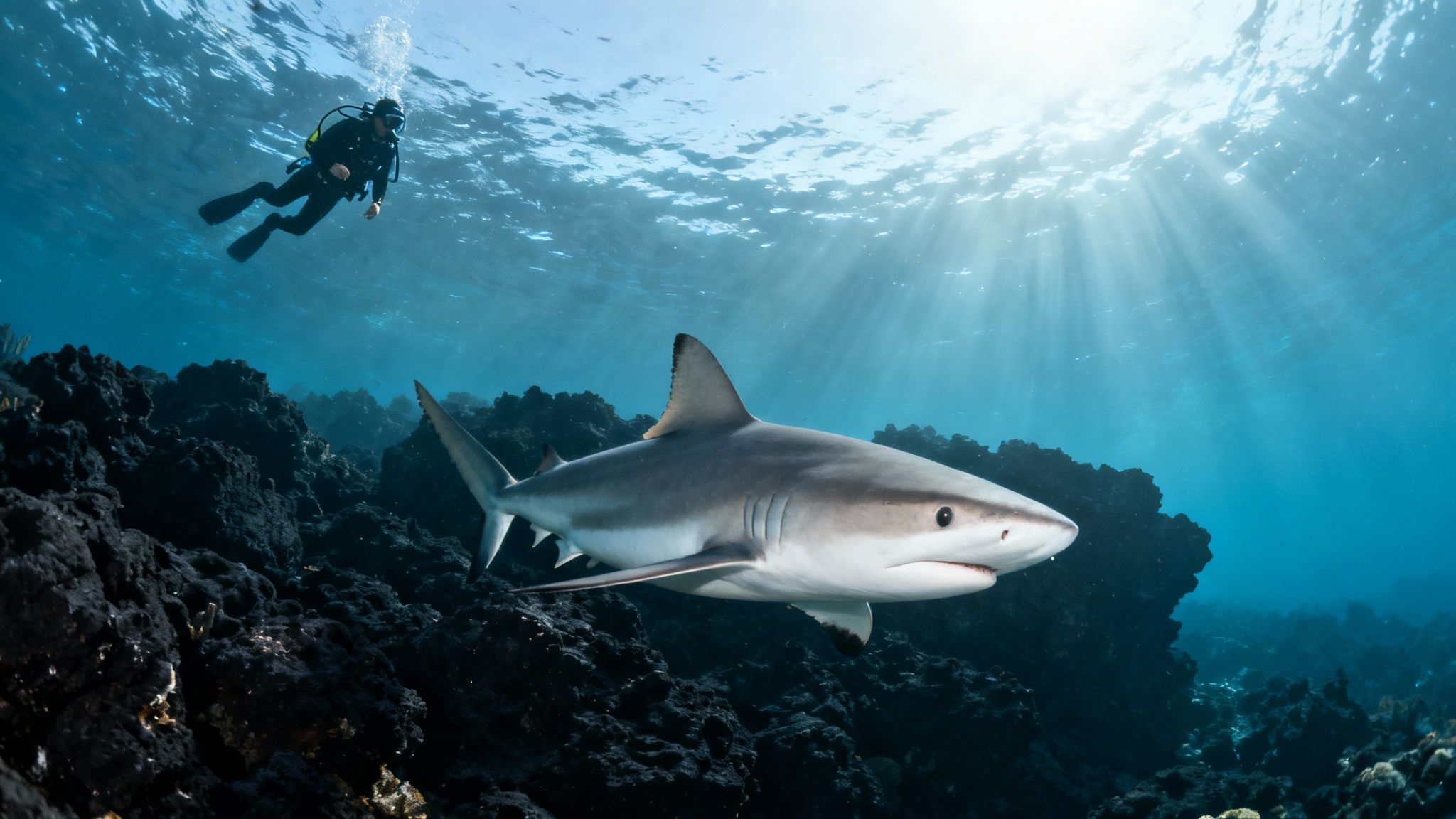
Let's be honest, the thought of diving with sharks can bring a jolt of nervous excitement. But here in Kona, that apprehension melts away into pure fascination almost immediately. The sheer size of the Big Island's volcanoes shields the Kona coast from the big ocean swells, creating exceptionally calm and predictable conditions. This makes it a fantastic, low-stress environment for both new divers and seasoned pros who just want a beautiful, serene dive.
What really sets Kona apart is the authenticity of the experience. Unlike other spots that rely on baiting to lure sharks in, our encounters are completely natural. The island's reef system is so healthy and full of life that sharks are already here, doing what they’ve always done. You get to see them in their true element, displaying real behaviors without any human meddling.
An Unforgettable Underwater Classroom
The underwater world here is a spectacle all on its own. Ancient lava flows have sculpted a dramatic seascape of arches, swim-throughs, and intricate lava tubes. It's a diver's playground.
These unique formations also happen to be the perfect resting spots for species like the Whitetip Reef Shark. It’s not uncommon to cruise along and find one chilling out on a sandy patch inside a cool cavern. This incredible geology means every single dive is a genuine exploration.
To give you a quick snapshot, here’s what makes Kona so special for shark diving.
| Feature | What This Means for You |
|---|---|
| Calm, Clear Waters | A comfortable, low-stress dive environment with fantastic visibility for spotting sharks. |
| Natural Encounters | You observe genuine shark behavior in their habitat, not an artificially baited show. |
| Diverse Topography | Every dive is an adventure through unique lava formations, arches, and caves. |
| Healthy Marine Ecosystem | The abundance of life attracts various shark species naturally, increasing your chances of a sighting. |
Ultimately, diving in Kona is about turning that initial fear into deep respect and admiration.
Choosing a top-tier, safety-focused operator is the key to an unforgettable experience. A great dive company prioritizes education and conservation, ensuring that every encounter benefits both the diver and the local shark population.
When you dive with us, you aren't just a spectator; you're a guest in a vibrant, living ecosystem. If you're curious about what else this amazing place has to offer, you can explore the many reasons to scuba dive in Kona and discover why it’s a world-class destination. This is about more than just seeing a shark—it’s about understanding their vital role in our oceans and taking that appreciation with you long after you surface.
Meet the Resident Sharks of the Kona Coast
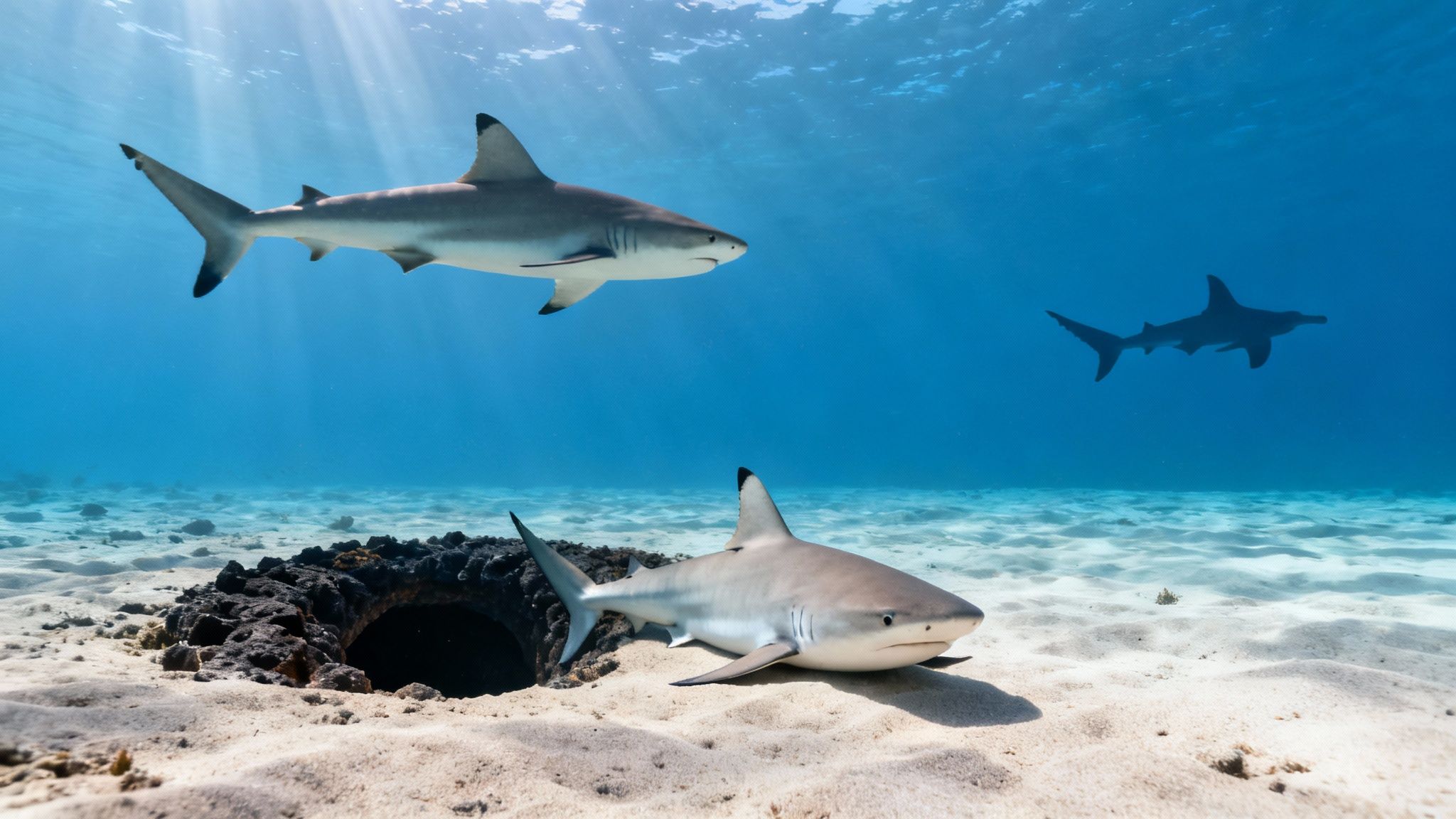
When you dip below the surface in Kona, you’re dropping into a world that runs on ancient rhythms. Here, sharks aren't the villains from the movies; they're the essential gatekeepers of the reef.
The sharks you'll likely meet are often shy, curious, and a critical piece of a healthy marine ecosystem. Learning a bit about who they are and how they behave is the key to turning any lingering fear into pure awe. This is the heart of the Kona shark diving experience—a chance to see a perfectly balanced underwater world in action. Far from being aggressive, most sharks here are just going about their day with a quiet grace that’s mesmerizing to watch.
Whitetip Reef Shark (Triaenodon obesus)
You'll probably meet a Whitetip Reef Shark; they're one of the most common sights on any Kona dive. With their slender bodies and signature white tips on their dorsal and tail fins, they are the definition of a laid-back predator.
We often find them resting completely still on the sandy bottom or tucked into lava tubes and under ledges during the day. This is their specialty. Unlike many sharks that need to keep moving to breathe, whitetips can actively pump water over their gills, letting them just hang out and conserve energy. Come nighttime, they get busy, expertly hunting for fish, octopuses, and crabs through the reef's nooks and crannies.
Sandbar Shark (Carcharhinus plumbeus)
With its stout body and tall, triangular dorsal fin, the Sandbar Shark is what most people picture when they think "shark." Their brownish-grey color is perfect camouflage for the deeper waters they prefer. You’ll typically find them cruising over sandy or muddy bottoms, on the lookout for bottom-dwelling fish and crustaceans.
Sandbars can get pretty big—up to 7 feet—but they have a reputation for being quite timid around divers. Kona's waters actually serve as an important nursery for them, so seeing smaller juveniles is always a possibility. Spotting one is a great sign, as their presence indicates a healthy, thriving marine environment.
Scalloped Hammerhead (Sphyrna lewini)
Seeing a Scalloped Hammerhead is one of those unforgettable, bucket-list moments for a diver. There's no mistaking their unique head shape, called a "cephalofoil." It’s not just for looks; it’s packed with sensory organs that let them detect the faint electrical fields of prey buried in the sand.
Hammerheads tend to hang out in the deeper, cooler water off the Kona coast, sometimes in huge schools. An encounter isn't a sure thing on every dive, which makes it all the more thrilling when you're lucky enough to cross paths with one.
Getting to know these incredible animals is what makes Kona shark diving so special. It’s a chance to meet the ocean’s top predators on their own terms, leaving you with a profound respect for their role and power.
Understanding the Real Risks of Shark Encounters
Let's get straight to it—the first question on everyone's mind is, "Is it safe?" Thanks to decades of movie magic and sensational headlines, sharks have a reputation that's more fiction than fact. The reality of shark diving in Kona, especially with a professional crew, is a world away from what you see on screen. It’s not about adrenaline-fueled danger; it’s about a calm, almost meditative experience.
The key is understanding the difference between the media's portrayal and the science. When you look at the data, you quickly realize that negative encounters between sharks and scuba divers are incredibly rare. Divers aren't seen as prey. We're just strange, bubble-blowing visitors, and the sharks treat us accordingly.
Putting Statistics into Perspective
Numbers don't lie, and they tell a pretty reassuring story. Hawaii as a whole sees very few shark incidents, and the Big Island has one of the lowest rates in the state.
According to the Department of Land and Natural Resources, Hawaii averages only two to three shark bites a year—and the vast majority are non-fatal. To put that into context, the state sees around 60 drownings annually. It becomes pretty clear that other ocean activities carry far greater risks.
Looking closer at the Big Island, from 1995 to 2020, there were only 22 unprovoked incidents recorded. That's the lowest of all the main islands. We've got more detail on the low likelihood of shark encounters on the Big Island if you want to dive deeper into the stats.
What this data really shows is that a guided scuba dive is fundamentally different—and safer—than surface sports like surfing, where a person on a board can look a lot like a seal from below. When we're underwater in Kona, there’s no mistaking us for food.
The Kona Honu Divers Commitment to Safety
A safe dive is a well-managed dive. Period. At Kona Honu Divers, safety is more than just a box to check; it’s woven into every single thing we do. Our Five Star Standard means we manage every aspect of your adventure with the highest degree of professionalism.
A professional dive operator turns a good dive into a great and safe one. The focus is always on education, respect for the animals, and strict safety protocols that give divers complete peace of mind.
Here's how we put that philosophy into practice:
- Comprehensive Pre-Dive Briefings: Before your fins even touch the water, our guides give a detailed briefing. You’ll learn what to expect from the local marine life, understand the typical shark behaviors for that site, and get clear instructions on how to be a respectful guest in their home.
- Expert Supervision: Our divemasters are seasoned pros who can read shark body language like a book. They are in the water with you from start to finish, keeping the group cohesive and ensuring everyone maintains a safe, comfortable distance.
- 'Look, Don't Touch' Policy: We have a strict no-touching and no-feeding rule. This is crucial. It ensures our encounters are 100% natural and don't teach sharks to associate humans with food, which keeps both divers and sharks safe in the long run.
While the chances of an incident are incredibly small, being prepared is always smart. For any kind of travel adventure, having solid medical evacuation insurance provides an essential safety net for those "what if" moments. By understanding the true risks and diving with an operator who puts safety first, you can relax and focus on what you're really here for—an unforgettable encounter.
Where to Find Sharks on Your Kona Dive
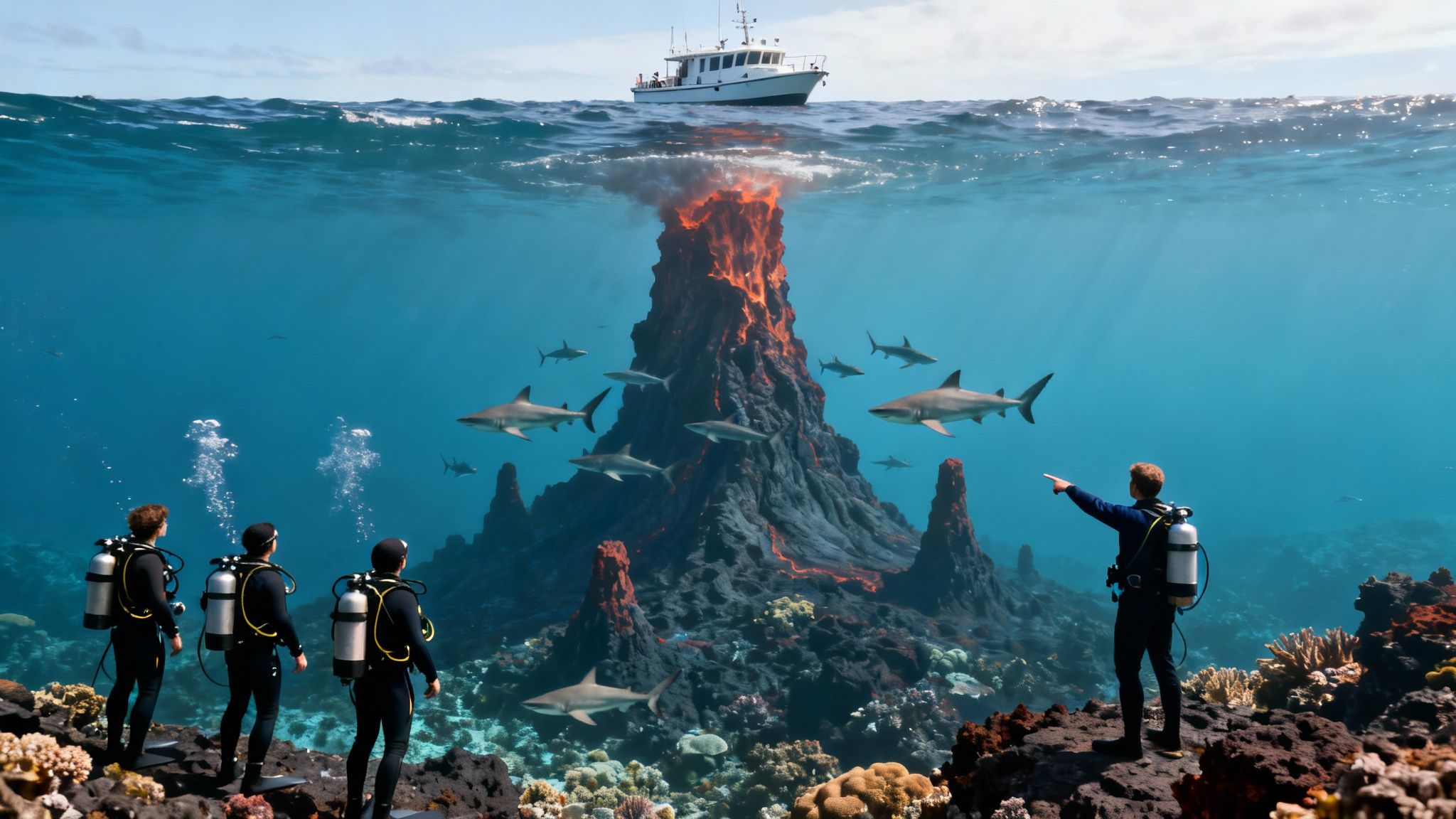
Alright, you know what sharks you might see and why they're here. Now for the most important part: where do you actually find them? Planning an unforgettable Kona shark diving trip is all about knowing which dive sites give you the best shot at an encounter.
Some spots are just natural magnets for certain species. We’ve spent years exploring every reef, pinnacle, and lava tube out here, and we’ve designed our dive trips to put you in the right place at the right time. Our guides know these waters intimately, which is key to finding sharks and observing them respectfully in their own environment.
The Premium Advanced Trip for Experienced Divers
If you’re a certified diver looking to get off the beaten path, our Premium Advanced 2-Tank Trip is your ticket. This trip is all about exploring the deeper, more remote offshore pinnacles—dramatic underwater mountains where the big pelagics like to hang out.
These are the kinds of sites where you have a real chance of spotting the more elusive sharks. We're talking about graceful Sandbars patrolling the depths or, if you're really lucky, the distinct silhouette of a Scalloped Hammerhead cruising by in the blue. The volcanic topography alone is worth the trip.
Night Dives: A Different World of Shark Activity
The ocean completely changes after dark, and so do the sharks. Whitetip Reef Sharks, which you might see lazing around under a ledge during the day, transform into efficient, active hunters once the sun goes down. You can see this firsthand on two of Kona’s most famous night dives.
- The Manta Ray Night Dive: The mantas are definitely the main event, but don't forget to look around the edges of the light. Whitetips are frequently drawn to the "campfire" we create, cleverly snatching up small fish disoriented by the bright dive lights. It’s an awesome bonus to an already incredible experience.
- The Blackwater Night Dive: For the truly adventurous diver, nothing compares to a Kona Blackwater Night Dive. You’re tethered to the boat, drifting miles offshore over thousands of feet of water, watching bizarre and beautiful creatures rise from the abyss. It’s here that you might glimpse rare deep-water sharks and other strange pelagic life.
Each dive offers a unique window into the world of Kona's sharks. From the daytime patrols of Sandbar Sharks to the nocturnal hunts of Whitetips, choosing the right tour connects you with a specific aspect of their fascinating lives.
Whether you're exploring deep volcanic structures by day or watching the reef's night shift come alive, Kona has a dive that will get you that shark encounter you're looking for. To dig deeper into specific spots, take a look at our guide on the best Kona shark diving opportunities. Every trip is a new adventure.
Choosing the Best Guide for Your Shark Dive
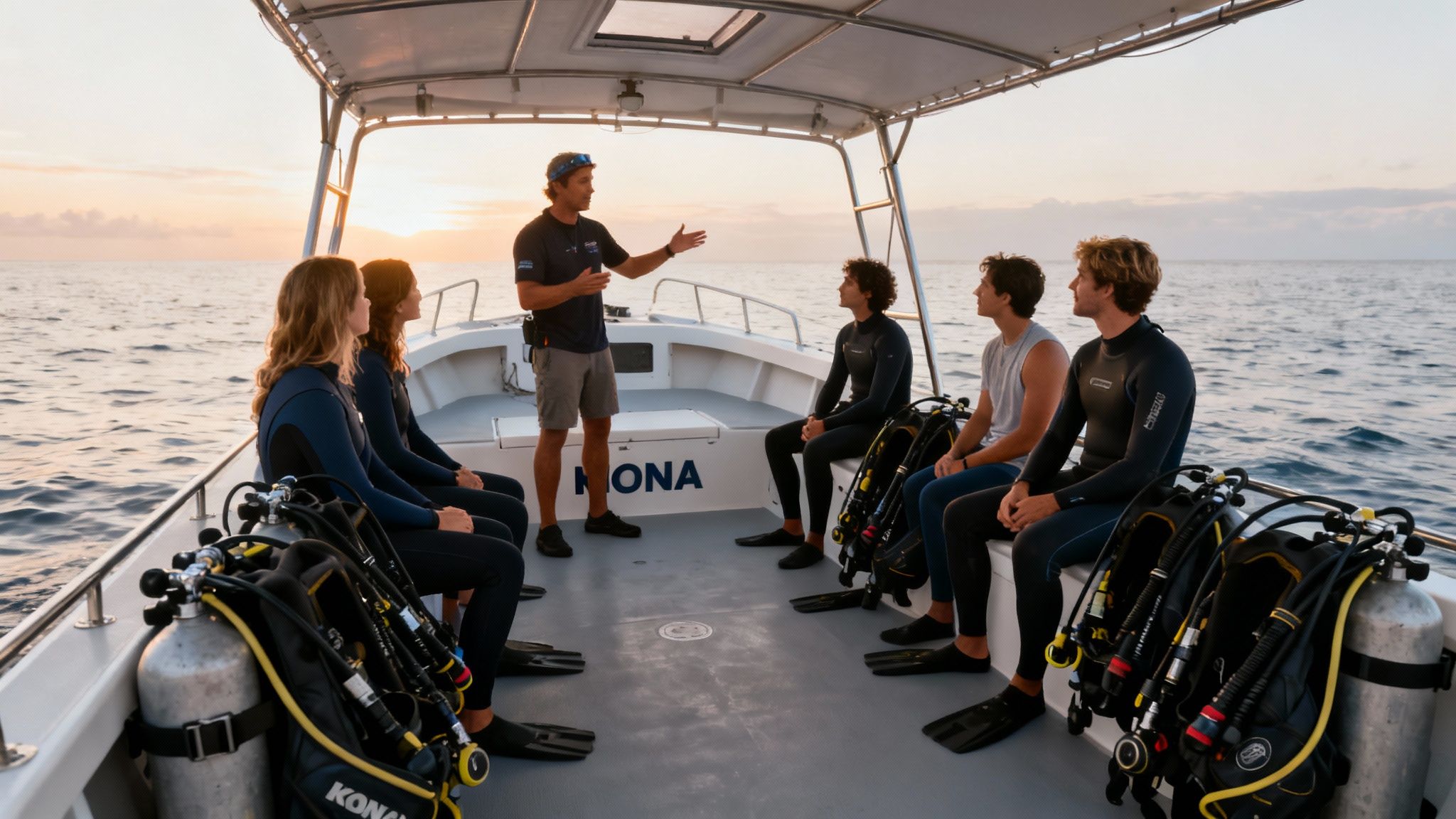
When it comes to shark diving in Kona, the single most important decision you’ll make has nothing to do with what you see underwater. It’s about who you choose to go with. A top-tier dive operator can elevate a simple shark sighting into a safe, educational, and genuinely unforgettable encounter. This is where experience and passion really matter, and it's what sets Kona Honu Divers apart.
Opting for Kona Honu Divers isn’t just booking a boat trip; it’s putting your trust in a team of seasoned professionals who live and breathe marine conservation and diver safety. It’s an investment in a world-class experience from start to finish.
The Kona Honu Divers Difference
So, what really separates a good dive shop from a great one? It's all in the details—the small things that add up to ensure your comfort, confidence, and overall experience. Here's a look at what makes the difference.
- Unmatched Experience: Our crew brings a staggering 200+ years of combined professional diving experience to the table. That kind of deep, local knowledge means we know Kona’s waters inside and out, from the best spots to the unique behaviors of our marine residents.
- Premium Equipment and Comfort: You'll be using top-of-the-line, meticulously maintained rental gear. And when you surface, our comfortable boats are waiting with amenities like a hot shower—a small luxury that feels amazing after a thrilling dive.
- Intimate Group Sizes: We intentionally keep our groups small. Forget being just another face in a crowd. This approach allows for personalized attention, ensuring every diver feels safe, supported, and gets the most out of their time underwater.
- Complimentary Nitrox: For certified divers, we offer complimentary nitrox. This lets you extend your bottom time, giving you more precious minutes to explore and observe these magnificent animals.
Choosing the right guide is less about the boat and more about the people on it. An experienced, passionate crew prioritizes your safety and enriches your understanding of the incredible marine life you're there to see.
Kona's reputation as a world-class dive destination is built on its incredible marine biodiversity. The area's vibrant reefs and high concentration of endemic species create a thriving ecosystem that naturally attracts sharks. This is especially true on our night dives, where reef sharks often make an appearance alongside the famous feeding manta rays, creating a truly spectacular underwater scene.
But don't just take our word for it. Hearing directly from fellow divers is often the best way to gauge the quality of an operation and the dedication of its crew.
Ultimately, the guide you choose will define your entire adventure. For a more detailed look at what to look for, check out our complete guide on how to choose a Kona dive shop.
Frequently Asked Questions About Kona Shark Diving
Alright, let's tackle some of the common questions we hear all the time. Getting these sorted out beforehand means you can relax and focus on the incredible experience waiting for you in the water.
What Is the Best Time of Year to See Sharks in Kona?
Honestly, there’s no bad time to dive with sharks in Kona. You can find them here year-round.
That said, if you're looking for those picture-perfect, glass-calm days with insane visibility, the spring (March-May) and fall (September-November) are tough to beat. The conditions are just prime for spotting sharks as they cruise by in the distance.
But summer (June-August) is also fantastic. The water is warm and inviting, making for some truly comfortable and beautiful dives. Even winter, which can bring bigger swells, has its own magic and can attract different migratory species. It really just depends on what you're looking for.
Do I Need to Be in a Cage to Dive with Sharks in Kona?
Nope, not at all! In fact, cage diving isn't really a thing here in Kona, and for good reason. It's completely unnecessary.
The sharks we regularly encounter, like Whitetip Reef Sharks and Sandbar Sharks, are not aggressive towards divers. We enter their world as respectful observers, not as a threat. By staying calm and following your guide, you'll get to have a safe, breathtakingly natural encounter without any bars between you and them.
The whole point of a Kona shark dive is to see sharks acting like sharks in their own home. This passive, respectful approach gives you a genuine appreciation for these animals and is incredibly safe.
How Should I Behave During a Shark Encounter?
Your guide will give you a full briefing before you hit the water, but the main rules are simple and come down to respect.
- Stay Calm: Think slow, smooth movements. Any sudden or frantic motions can spook a shark.
- Give Them Space: This is their turf. Never chase or crowd a shark. Let them come to you if they're curious.
- Keep Your Hands to Yourself: It’s a simple rule of wildlife viewing. Keep your arms close to your body and never, ever try to touch one.
- Stick Together: Always stay with your guide and the rest of your dive group. There's safety in numbers.
How Safe Is It Really?
Kona's safety record for shark diving is excellent. Statistically, incidents involving scuba divers are incredibly rare.
Across all the Hawaiian islands, there are typically only 2-3 unprovoked shark incidents per year, and almost all of those involve surfers or swimmers on the surface—not divers below. Scuba diving is one of the safest ways to be in the ocean. Here on the Big Island, the incident rate is even lower. Our guided tours are built around safety; we don't feed or touch the sharks, which eliminates the main reasons for any provoked interaction.
If you want to see the numbers for yourself, the state maintains an official list of all reported incidents.
Ready for the adventure of a lifetime? Kona Honu Divers offers a range of world-class diving tours that put you face-to-face with Kona's incredible marine life, safely and respectfully.