
You've got your travel dates, a certification card, and several Kona scuba shops open in different tabs. The trips sound similar until you notice that one leaves in the morning, another puts you in dark water with mantas, and another takes you offshore at night without a reef beneath you.
The useful comparison isn't which shop promises the most spectacular dive. It's which operator can match your actual skills to the trip, explain the day's conditions, and give clear answers before you pay.
Kona Scuba Shops and the Trips They Run
Kona scuba trip types at a glance
| Trip | Best for | When it runs | What you see |
|---|---|---|---|
| 2-tank morning dive | Certified divers wanting reef variety | Morning, two tanks | Coral gardens, ancient lava tubes, dramatic arches |
| Manta ray night dive | Divers and snorkelers wanting a night encounter | After sunset, about one hour, as described in NOAA's manta movement study | Reef manta rays feeding in artificial light |
| Blackwater night dive | Night divers curious about open-ocean life | Night | Salps, siphonophores and ctenophores, the most abundant animals in a NOAA-supported study |
| Premium advanced 2-tank trip | Certified divers wanting remote sites | Morning, two tanks | Remote, pristine dive sites |
| Morning introductory scuba dive | Beginners who aren't yet certified | Morning, following instruction and skills preparation | Shallow reef with instructor guidance |
The night-trip research behind these descriptions also helps explain what to expect in the water. Each trip asks something different of the diver: reef navigation, stationary nighttime viewing, or buoyancy control without a bottom reference.
Choose the working model you need
Kona scuba shops generally fall into full-service dive operations, course-focused schools, and snorkel-led operators. Full-service operations combine guided boat trips with equipment rentals, retail sales, and repairs. Schools put training and skill development first, while snorkel-led operators concentrate on surface encounters.
At Kona Honu Divers, we use the full-service model. Our lineup includes the morning reef, manta, blackwater, premium advanced, and introductory trips shown above, alongside PADI courses, Kama'aina Dive Courses, and Freediving Classes. You can compare the complete Kona diving tour overview, or examine the premium advanced trip if remote sites suit your experience.
Match the demands, not just the scenery
A morning reef trip lets certified divers explore terrain while maintaining buddy contact and monitoring gas. Seeing a lava tube doesn't mean you should enter an overhead environment without the appropriate training and dive plan.
An introductory dive is different. The instructor needs time to establish breathing, equalization, and basic control before sightseeing becomes the priority. A course or refresher is the better purchase when you need skills development rather than a guided outing.
Practical rule: Certification level and time of day narrow the field faster than any ranking. Start there, then compare the operator's screening and support.
How to Vet a Kona Scuba Shop’s Safety and Gear
A good phone conversation should leave you knowing who's responsible for you, what equipment you'll use, and what happens when the original plan changes. Friendly answers are welcome, but specific answers are what you're buying.
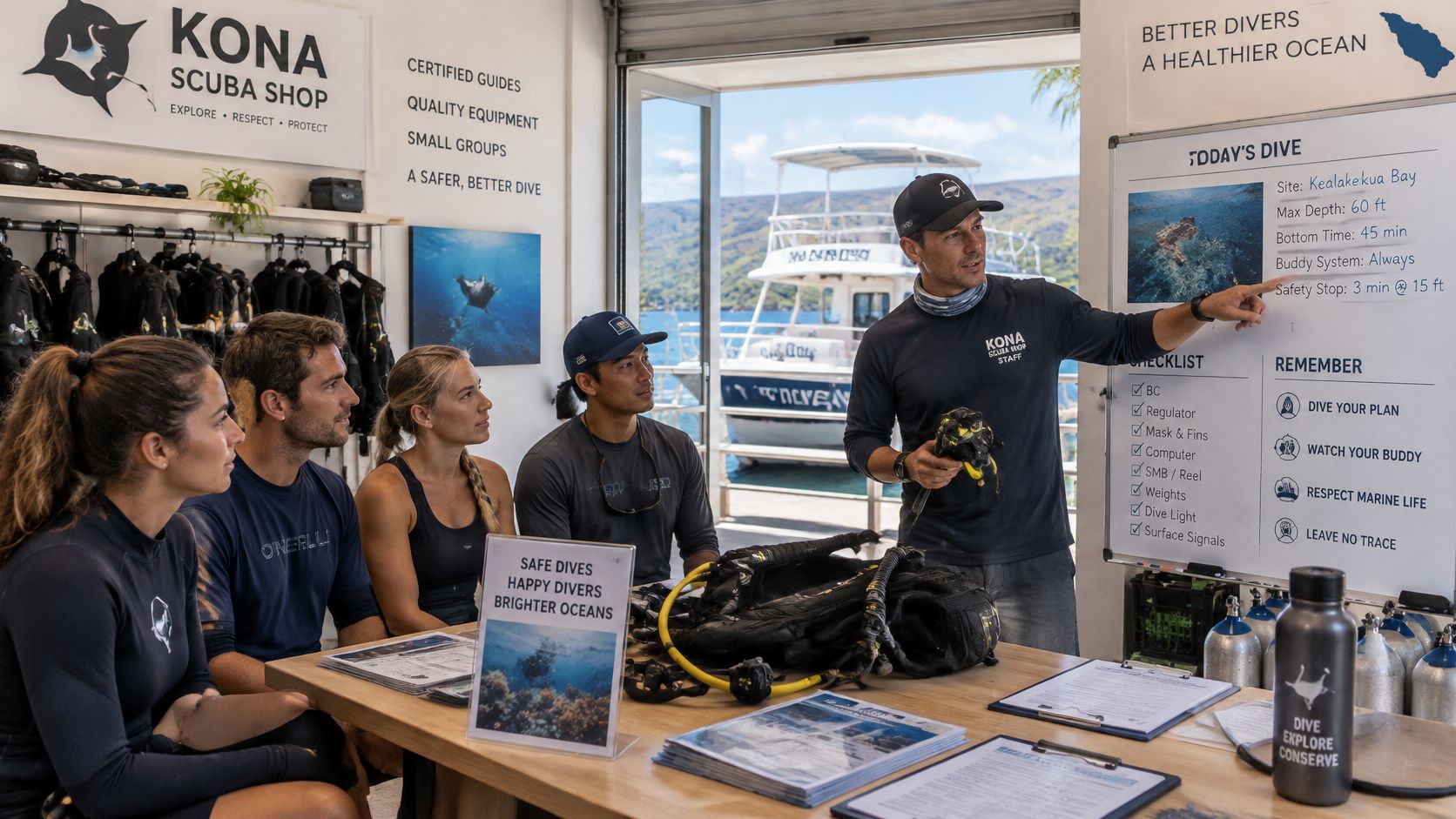
Questions about people and equipment
- Who will guide me? Ask whether an instructor or divemaster leads your group, how many divers they supervise, and how the shop groups different abilities. Our diving team profiles help you put names and qualifications to the people behind the operation.
- What does the briefing cover? Listen for the route, depth and gas plan, hand signals, separation procedure, entry and exit points, and arrangements for someone who surfaces early. An early ascent needs an agreed procedure, not an improvised response.
- How is rental equipment maintained and checked? Ask about scheduled servicing and pre-trip function checks rather than expecting a complete mechanical service before every departure. Our rental gear is proactively serviced.
- Will you check the fit with me? We size divers for any rental gear they need during check-in. Test mask seals, fin security, wetsuit movement, and BCD adjustment before boarding.
- Who handles the heavy equipment? We handle tanks and weights, plus any rental gear you've arranged. You still need to recognize your equipment, understand its controls, and complete a buddy check.
Questions about the boat, permissions, and payment
- What's the boat setup? Confirm shaded seating, secure equipment storage, clean facilities, and the boarding arrangement. A comfortable seat doesn't compensate for an exit ladder you can't manage.
- Are you authorized for the planned shore site? Commercial dive activity inside the Old Kona Airport Marine Life Conservation District requires authorization under the applicable permit provisions, according to Hawaiʻi's Division of Aquatic Resources. Ask the operator to confirm the authorization relevant to your outing.
- What's included in the quote? Compare tanks, weights, guiding, boat fees, and the second tank on a two-tank trip. Confirm rental charges, deposits, and whether night-dive lights are included.
- Should I rent or bring exposure protection? Compare the total rental cost with buying a properly fitted wetsuit or rash guard. A rash guard provides sun and abrasion protection, but isn't a substitute for a wetsuit when you get cold.
- Can you send the weather policy in writing? Distinguish an operator cancellation from your decision not to dive. Ask about refunds, rescheduling, and changes to the destination.
Read recent reviews for descriptions of briefings, gear fit, and rough-day decisions, not just animal sightings. Walk away from no real briefing, equipment issued without a fit check, pressure to skip preparation, or vague weather-cancellation answers.
Sea Conditions That Change Your Dive Day
Kona water is typically 24–27°C (75–81°F), with visibility around 18–30 meters (60–100+ feet), according to this Kona diving conditions guide. Those averages help you pack. They don't tell you whether a particular entry is suitable today.
Sheltered doesn't automatically mean easy. Kailua Bay or Keauhou can look calm while an exposed point has chop or surge. Rainfall and runoff can temporarily reduce visibility, while swell direction, wind, current, tide, and lava-shelf exits create separate problems.
Sea conditions to check by diver type
| Diver type | Check before booking | Why it matters |
|---|---|---|
| New certified divers | Protected entry and simple exit | Surge and steep entries make the first minutes the hardest |
| Experienced shore divers | Swell direction, current, tide and return route | Exposed points can have chop when a bay looks calm |
| Underwater photographers | Visibility plus calm water with low surge | Clear water is not the same as calm water |
| Night divers | Surface conditions and the lighting plan | Surge and lights shape the manta and blackwater sessions |
Evaluate the return, not just the entry
Say you're considering a shore dive over a lava shelf. Getting in between waves may look manageable, but returning with a cylinder, tired legs, and a rising swell can be a different task. Watch the exit through several wave sets and identify where you'd go if the primary route became unusable.
The partially protected cove at the northwestern end of Old Kona Airport's conservation district is commonly used by shore divers and snorkelers. Protection is relative, not a guarantee of an easy entry. Inside the district, don't collect marine life, coral, sand, or rocks, and don't anchor.
Account for the reef beneath you
Reef relief also changes the workload. A peer-reviewed South Kona reef study evaluated fish assemblages against factors including depth and reef rugosity, the reef's three-dimensional structural complexity. For divers, that structure means more terrain to explore and more opportunities for fins or dangling equipment to contact coral.
Keep your body horizontal, secure your alternate air source, and use controlled kicks near ledges. Photographers should establish neutral buoyancy before lifting the camera, rather than using the reef to stabilize a shot.
Clear water helps you see a difficult exit. It doesn't make that exit easier.
Use this guide to Big Island scuba visibility to separate viewing conditions from water movement. Before committing, get the day's entry, current, and exit plan. Skip the dive if surge is up beyond your comfort or the return route remains unclear.
Manta Ray Night Dives and Why Garden Eel Cove Wins
Garden Eel Cove is my recommendation for most manta dive visitors because of its protected location, better viewing area, and better surrounding reefs. That combination matters beyond the headline encounter: you want a workable place to settle, room to watch without crowding the animals, and a worthwhile reef setting.
A manta dive is a feeding encounter, not a chase. Artificial lights concentrate zooplankton after sunset, and reef manta rays come to feed in the illuminated water. Your job is to stay in the assigned viewing position while the animals choose their approach.
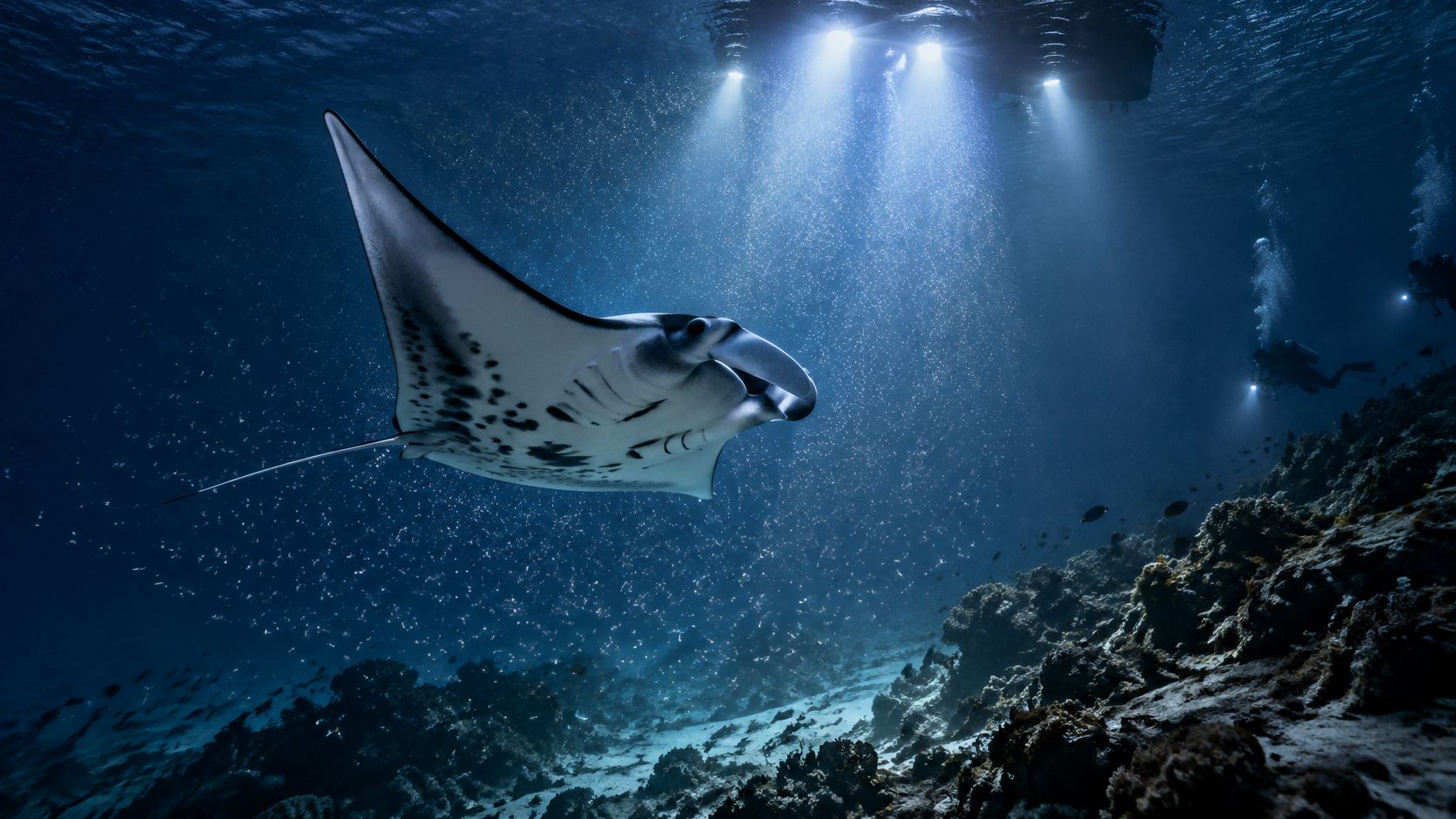
What the site differences actually mean
A 2025 University of Hawaiʻi study, summarized in this manta site comparison, analyzed 13 years of observations from 2010–2022 and found consistently larger manta groups at Garden Eel Cove, while Keauhou showed a stronger female presence and especially high female site fidelity. Larger groups strengthen the case for Garden Eel Cove, but they aren't the only meaningful measure of an encounter.
Keauhou deserves a fair hearing if you're interested in individual animals and repeated site use. High site fidelity means animals repeatedly use a location. It doesn't promise that you'll meet a particular manta on your vacation.
NOAA-linked documentation identifies Manta Village at Kaukalaelae Point and Manta Heaven in Makako Bay as recurring feeding sites with sightings almost every night, and prohibits harassment and physical contact in its manta-viewing guidance. Manta Heaven is the Garden Eel Cove area, while Manta Village is associated with the Keauhou encounter area, so these names shouldn't be mistaken for independent alternatives.
Manta sites compared for visitors
| Site | Known for | Group and visitor pattern | Best for |
|---|---|---|---|
| Garden Eel Cove | Protected location, better viewing area and better reefs | Consistently larger groups in the University of Hawaiʻi observations described above | Most visitors and the recommended tour |
| Keauhou | Stronger female presence | High female site fidelity | Visitors interested in repeated use by individual animals |
| Manta Village (Kaukalaelae Point) | Night feeding aggregation site | Sightings documented almost every night in the NOAA guidance above | Night divers wanting a dedicated feeding site |
| Manta Heaven (Makako Bay) | Night feeding aggregation site | Sightings documented almost every night in the NOAA guidance above | Night divers wanting a dedicated feeding site |
The viewing discipline matters as much as the site
Divers should hold their lights above their heads, pointing upward, remain inside the designated light circle, and avoid directing bubbles toward mantas when possible. Remove the snorkel from your mask for the encounter. Snorkelers use downward-facing lights, so follow the instructions for your activity rather than copying another group.
- Keep the feeding lane open. Don't rise toward an approaching animal or reach into its path.
- Protect live coral. Use the guide's assigned position and keep equipment and lighting away from living reef surfaces.
- Let the manta choose. Don't touch, pursue, or reposition yourself for a closer photograph.
No encounter is guaranteed, and larger aggregations don't excuse crowding. Ask how the operator organizes observers and what happens if mantas don't appear.
Review the manta night-dive preparation guide before choosing the manta dive and snorkel tour. Garden Eel Cove is the stronger all-around choice, provided the day's conditions and your nighttime comfort support the plan.
Blackwater Night Diving on the Kona Coast
Blackwater diving puts you in open water at night, rather than above a reef. Expect small drifting animals, subtle details, and patient observation instead of one large showpiece.
A NOAA-supported investigation of Kona pelagic fauna followed recreational observations over 19 months, finding salps, siphonophores, and ctenophores were the most abundant organisms encountered. Water temperature, bathymetry, and the El Niño–Southern Oscillation index were the strongest predictors of pelagic diversity, with the model explaining 43% of observed variation.
The associated NOAA record also documents recreational blackwater surveys off Kona. The practical takeaway is that the species mix responds to ocean conditions, so don't book expecting an identical collection of animals to someone else's photographs.
What to expect in the water
- Hold a steady position. Use your instruments and the operator's reference system rather than relying on a visible bottom.
- Handle lights deliberately. Keep your beam steady and follow the guide's lighting instructions.
- Protect drifting animals. Control buoyancy and don't reach for delicate organisms.
- Understand separation procedures. Confirm how the group stays together if the current changes.
There's no reef beneath you to provide a visual reference, and reef contact shouldn't be a coping strategy on any dive. Read the Kona blackwater dive guide and confirm the experience requirements before booking the Black Water Night Dive.
How to Book, Prepare and Ask the Right Questions
Good preparation keeps check-in from becoming a rushed negotiation about equipment, experience, or whether you're comfortable with the trip. Tell the operator what you can reliably do now, not what you hope you'll manage once you're underwater.
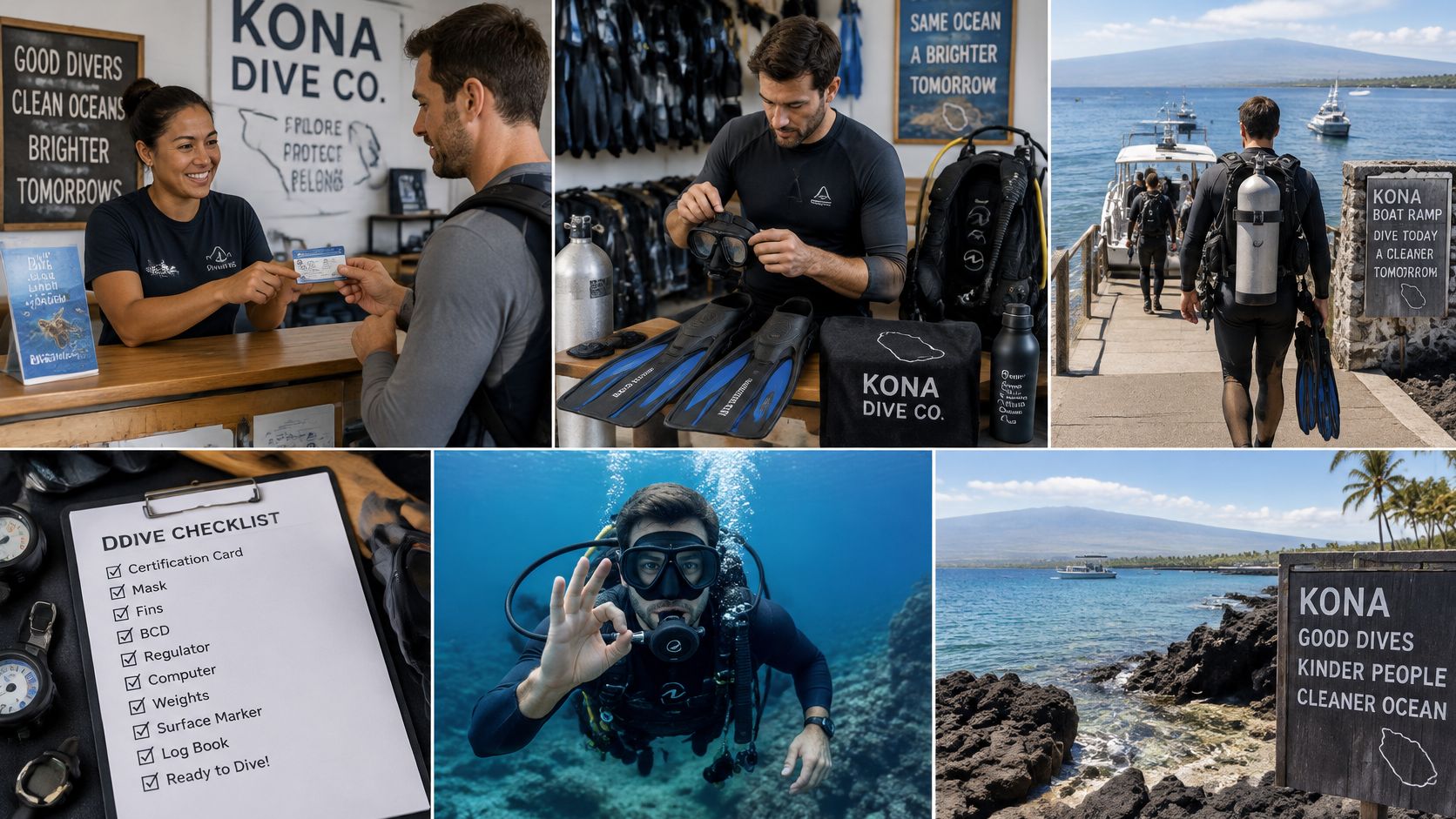
From reservation to check-in
Send your certification and recent experience. Include when you last dived and whether you've done night or open-water offshore dives. Advanced and night trips may assume skills that a certification card alone doesn't demonstrate. If you're rusty, arrange a refresher rather than hoping the first descent will sort everything out.
Choose for the expected conditions. Describe your comfort with surge, surface swimming, and boat exits. Use the sea-conditions criteria to discuss suitable alternatives, and leave room for the captain or guide to change sites.
Book your preferred departure early. Prioritize night and advanced departures when building your itinerary rather than leaving them until your final available evening. Confirm availability directly instead of assuming a trip operates whenever you're free.
Send gear sizes and arrange rentals. Include height, weight, shoe size, and any fit concerns the shop requests. We handle tanks and weights and the rental equipment you've arranged, but accurate sizing still depends on useful information from you.
Choose exposure protection deliberately. A NOAA-hosted manta movement study describes typical dives starting around sunset and lasting about one hour, with sea-surface temperatures of approximately 24.5°C in March to 27°C in October. Select your wetsuit for roughly that range and your cold tolerance, then adjust weighting for the actual suit. A stationary viewing dive can feel colder than an active reef swim.
Arrive with time for the fit check. Don't leave an uncomfortable mask or restrictive wetsuit unmentioned because the group is boarding. Check BCD controls and weight-release arrangements before the equipment becomes unfamiliar in the water.
Resolve the booking questions before departure. Use the safety checklist to confirm the guide, group arrangement, condition-change procedure, and written weather-refund terms. Save the confirmation where you can retrieve it without reliable mobile service.
Confirm the underwater plan before gearing up. Know the signals, entry and exit, buddy arrangement, and what to do if you need to stop. During the initial descent, establish comfortable breathing, equalize early, and check buoyancy before following the group.
Leave room to change your mind
Use these dive travel preparation tips to organize equipment and travel logistics without rushing the departure. The mistake to avoid is booking a manta night dive solely for the animal encounter without first considering dark water and current.
You can be excited about mantas and still need an easier daytime dive first. Say so before paying.
Book Your Kona Dive Trip with Kona Honu Divers
Choose the trip that fits your certification and your present comfort with dark water and current. A memorable dive starts with a realistic match, not the most ambitious option on the calendar.
Kona Honu Divers suits divers who want broad trip variety and a premium full-service experience, from morning reef dives to manta and blackwater nights and advanced sites. Call 808-324-4668 to discuss conditions and suitability before you reserve, particularly if you're returning after a break or considering your first night dive.
Confirm the outing before you commit
Give us your dates, certification, recent dive history, and the experience you're hoping for. Mention anything that affects the plan, such as difficulty climbing a ladder, uncertainty about nighttime descents, or a strong preference for a protected site.
Our 2-Tank Manta Dive & Snorkel tour can be booked directly on the website. Before completing your reservation, verify the departure information, rental arrangements, and applicable cancellation terms rather than assuming every trip has the same inclusions.
Check recent guest feedback
Look for comments about how guests were prepared and supported, especially when conditions changed or someone needed extra help. Those details tell you more about the working operation than a photograph of a close manta pass.
Keep your departure essentials together:
- Certification card, physical or accessible digitally.
- Logbook, if you have one, to clarify recent experience.
- Gear sizes you sent ahead, plus any changes or fit concerns.
Kona Honu Divers offers guided reef trips, manta encounters, blackwater dives, and advanced outings so you can choose an experience that matches your skills. Visit Kona Honu Divers to compare departures, discuss the conditions, and reserve the right Kona dive for you.