
You've just rolled into Kona, dropped your bags, and now you're staring at a page full of kona scuba dive shops. Some promise manta magic, some push reef dives, some talk up blackwater, and a few sound identical until you read the fine print and realize one boat is right for your cert card while another isn't. The smart move is to stop shopping by brand first and start shopping by trip type, operator discipline, and how the shop handles real water conditions.
A good Kona shop does more than get you wet. It gives you a tight briefing, gear that's well maintained, guides who know when to move a site, and a plan for the dive you booked instead of a sales pitch wrapped in sea turtle photos. If you want the blunt version, Kona rewards shops that run clean operations and punish the ones that wing it.
What Divers Really Want from a Kona Shop
You land with a cert card in your wallet and a short list in your head. Maybe you want a mellow reef morning, maybe you came for the manta, maybe you've got a buddy who keeps saying “blackwater” like it's a secret handshake. The problem is that the shop names blur together fast, and a glossy website won't tell you whether the crew matches your actual comfort level in the water.
A solid Kona scuba dive shop makes the whole day feel organized before the boat even leaves the dock. That means a briefing you can follow, crew who reads the ocean instead of forcing a schedule, and gear that isn't held together by optimism. It also means the operator is honest about what a given trip really is, a guided reef dive, a structured night encounter, a training day, or a more demanding charter.
The most useful way to think about Kona is by trip family, not by shop slogan. Reef divers need site choice and navigation help. Manta divers need a controlled light setup and an operator that understands the encounter. Blackwater divers need experience and clear thresholds. Newer divers need patient instruction, and certified independents need shore-access guidance that doesn't sugarcoat the entry.
If you want a place to start comparing options, Kona Honu Divers reviews are the kind of thing I'd read before calling any shop. Don't look for perfect praise. Look for signs that people talk about consistency, professionalism, and whether the crew kept the day calm when the ocean didn't cooperate.
Practical rule: pick the shop that matches your trip goal first, then judge everything else through safety, briefing quality, and how the crew handles the unexpected.
How to Choose the Right Operator

Start with the only question that matters: does this trip fit your certification and your comfort level, or is the shop trying to sell you something flashy? A blackwater dive is not a casual first-timer choice. A manta charter can be beginner-friendly when the operator runs it well, but that doesn't mean every boat gives the same support or structure.
Then ask about group size and gear. Smaller groups usually mean better attention at the surface, cleaner briefings, and less chaos when the water gets choppy or the site gets crowded. Gear matters too, especially for rental divers, because serviced regulators, fit, and mask comfort can make or break the day before the first descent.
Ask these four questions before you pay
- What cert level does this trip require? If the crew can't answer that plainly, move on.
- How many divers are on the boat? Fewer divers usually means more real supervision and less waiting around in the wrong conditions.
- Is rental gear included, and how is it maintained? You want direct answers, not vague reassurances.
- What happens if conditions turn bad? A serious operator will move, delay, or cancel when the ocean says no.
The last question serves as the ultimate test. A crew that pushes through ugly conditions to protect a schedule is telling you exactly how they rank your day. A crew that turns around and resets the plan is showing you they understand Kona isn't a pool. If you're comparing shops for repeat reef days, free nitrox can be a meaningful perk for qualified divers, but only after the operation gets the basics right.
For a quick reference point, Kona dive shops should be judged by trip fit, not just by location or branding.
Comparing Kona Dive Trip Types
Before you pick a shop, pick the trip. That sounds obvious, but a lot of divers get this backward and end up booking the wrong kind of water for their level. Kona gives you several very different experiences, and each one rewards a different kind of diver.
| Trip Type | Typical Depth | Min. Cert | What to Expect | Best For |
|---|---|---|---|---|
| 2-tank morning reef | Varies by site | Open Water or equivalent | Reef structure, fish life, relaxed daylight diving | Certified divers who want a flexible day on the water |
| Advanced 2-tank | Deeper and more varied than a basic reef day | Advanced or equivalent | Stronger site variety, more terrain, more challenge | Divers who want a more demanding reef day |
| Manta night dive | Shallow guided night water | Open Water or equivalent, depending on operator rules | Post-sunset entry, light circle, mantas feeding overhead | First-time Kona visitors and wildlife-focused divers |
| Blackwater dive | Open ocean, deep-water night setting | Advanced or operator-specific minimum | Rare pelagic activity, dark-water experience, high focus | Experienced night divers and photographers |
| Certification course | Skill-dependent training depth | No cert for entry-level training | Instruction, drills, supervised progression | New divers and refreshers |
| Private charter | Flexible | Depends on trip plan | Customized site choice, pacing, and timing | Families, mixed-level groups, and serious repeat divers |
That table is the cleanest way to sort the field. A 2-tank morning is your bread-and-butter dive day. A manta night dive is the signature Kona experience. A blackwater trip is a specialist move, not a generic add-on. A private charter makes sense when the group has mixed goals or wants more control over the day.
If you're still comparing options after this, Hawaii scuba diving tours is the next filter worth using. It's better to choose the right category first than to fall for a shop description and hope the trip fits later.
Don't book by popularity alone. Book the dive type that matches your certification, your comfort, and the kind of water you actually want to be in.
The Manta Ray Night Dive Done Right
The smart default for a first manta dive is Garden Eel Cove. It's the stronger starting point because the cove setting is easier to manage, the viewing setup is straightforward, and the protected location suits a guided night encounter better than a more exposed, improvisational approach. The choice isn't about hype. It's about putting new manta divers in the place where the operation can stay organized.
The science behind Kona's manta nights makes that recommendation easier, not harder. NOAA-recorded activity at the two principal sites shows 19,841 observations at Manta Heaven and 5,603 at Manta Village between 2009 and 2014, and the typical activity period begins shortly after sunset, around 18:00, lasting about an hour, with a documented population of 118 identifiable reef manta rays across the study period (NOAA manta dataset). That's not random wildlife watching. That's a repeatedly used feeding window at monitored sites.
What the dive actually feels like
A good manta dive starts with a calm briefing, not a sales pitch. You enter after sunset, settle into the light circle, and hold position while the animals cruise through the beam. The best crews tell you exactly where to hover, how to keep your fins out of the way, and what to do if visibility drops or the show is slow.
If the night is quiet, that doesn't mean the trip failed. It means you got a wildlife encounter on wildlife terms. Anyone promising perfect action every time is overselling the ocean, and that's not the operator I'd trust with a first-timer or a family group.
For booking, use the Kona manta ray night dive tours page and look for a shop that talks about placement, briefing, and safety before it talks about photos.
Vetting a Responsible Manta Operator
A responsible manta operator is visible before you ever jump in. In Hawaiʻi County's safety assessment, manta-ray tour operators need a Commercial Use Permit for State Ocean Waters, plus the right harbor or launch ramp permit depending on the vessel, and vessels must keep away from a displayed dive flag unless they are conducting diving or swimming activities, in which case they approach at slow-no-wake speed (county safety assessment). That paperwork matters because it separates a real operation from a casual boat ride dressed up as a tour.
The NOAA wildlife-interaction guidance is just as telling. It says marine operators, guides, crew, and others working around manta rays should provide clients with the Manta Pacifica Manta Ray Viewing Guide and instruct them to follow it, and it puts divemasters and videographers in charge of moving divers to the designated light circle (NOAA wildlife guidance). That's the kind of structure you want. It means the crew is managing diver placement around the animals instead of letting a crowd sprawl everywhere.
What to look for at the marina
- Permit confidence: the operator should sound normal when discussing permits, not evasive.
- Briefing clarity: the crew should explain light-circle positioning and diver behavior in plain language.
- Flag discipline: boats should treat dive-flag distance as essential.
- Crowd control: fewer divers around the platform usually means better control in the water.
- Low-sighting honesty: a slow manta night should be framed as a normal wildlife outcome, not a disaster.
Look for signs when cheap photo-boots cut corners. They sell certainty, but wildlife doesn't work that way. Better operators sell process, safety, and a well-run encounter. That's what you should pay for, not a promise that the mantas will perform on cue.
Shore Diving and Rental Gear for Independent Divers
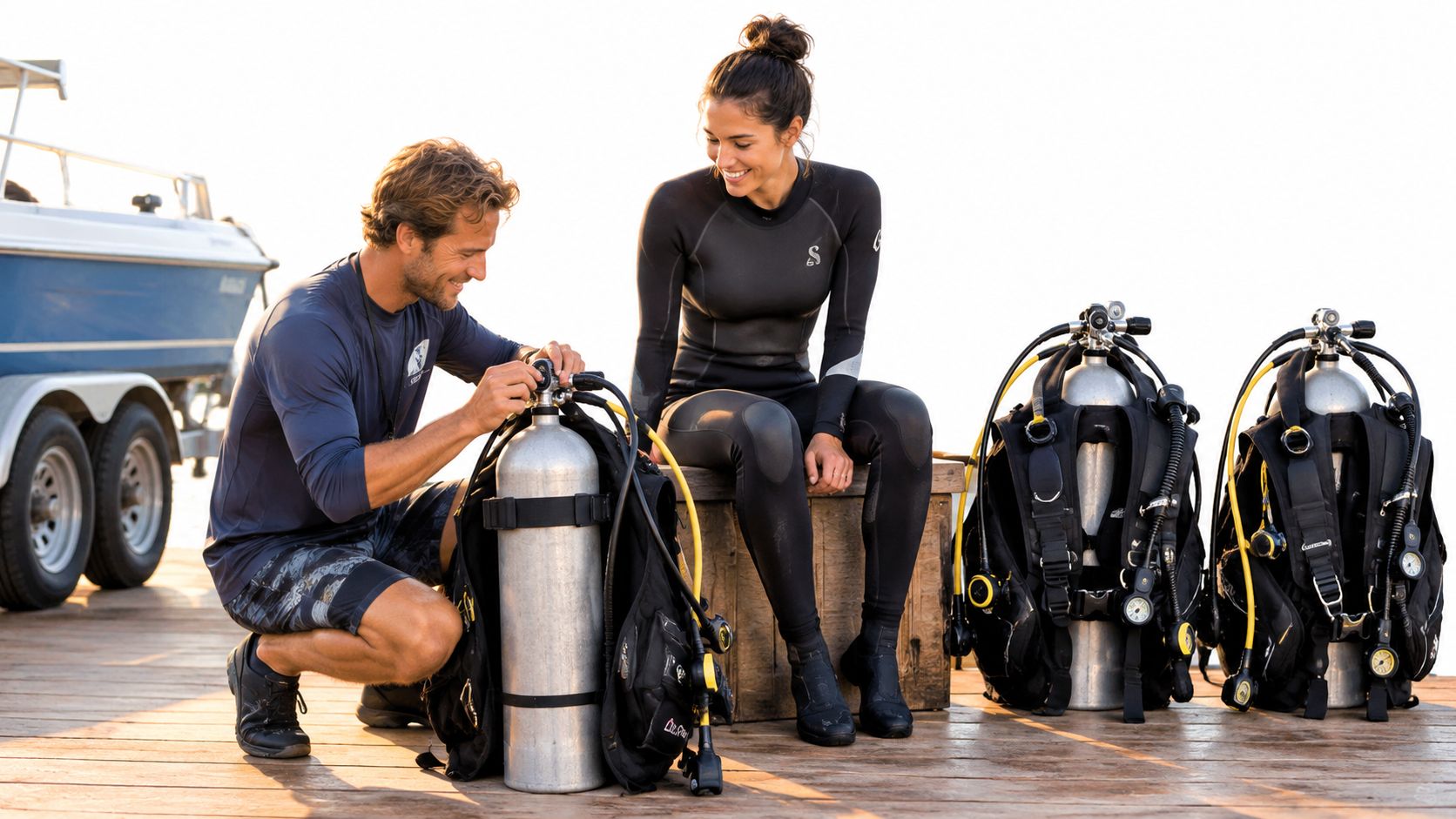
If you're certified and want to skip the boat, Kona gives you a real shore-diving option, but only if you judge the entry carefully. At Old Kona Airport Marine Life Conservation District, Hawaiʻi's Division of Aquatic Resources identifies a partially protected cove at the northwestern end as the preferred entry point for snorkelers and shore scuba divers, with shallow lava fingers extending offshore to about 50 feet before a faster drop-off (Old Kona Airport MLCD). That's useful terrain, but it's not a place to bluff your way through a rough day.
The key mistake is confusing good visibility with safe entry. You can have clear water and still face sharp coral, lava rock, swell, or currents that make the site a bad call. The shore diver who knows when to walk away has better judgment than the one who insists the reef “looks fine” from the parking area.
Run the shore-dive check before you gear up
- Surf and swell: if entry looks messy, don't force it.
- Current behavior: if the water is moving more than you expected, rethink the dive.
- Daylight left: shore exits get less forgiving as the light fades.
- Parking and access: long gear carries can turn a marginal day into a bad one.
- Emergency access: if you can't describe your exit plan, you're not ready.
The conservation rules at the site are strict, and they should be. Taking, injuring, killing, possessing, or removing marine life is generally prohibited, anchoring is prohibited inside the MLCD, and commercial operations need a permit. That's one reason shore diving in Kona works best as a complement to boat trips, not a replacement for them. When the entry looks wrong, book a boat instead and keep your dive day alive.
If shore conditions shut you down, Kona scuba diving tours is the practical fallback.
Why Kona Honu Divers Is Worth a Hard Look
A good day with Kona Honu Divers starts the way I want a dive day to start, with the dock working like a dock, not a circus. Divers show up, get fitted for gear, hear the plan, and head out on a 2-tank morning trip that's built for actual diving instead of rushed turnover. If you're qualified and want more challenge, an advanced second dive fits naturally into the same operation.
The operation also gives you clear paths into the trips that matter most in Kona. That means the manta ray dive tours, blackwater dive tour, and premium advanced 2-tank trip are all easy to compare without guessing what level they're really for. If you're checking them against the earlier decision points, that's the right way to use a shop site.
The NOAA manta dataset shows why this matters on the water, not just on paper. It documents 19,841 observations at Manta Heaven and 5,603 at Manta Village between 2009 and 2014, which matches the kind of predictable post-sunset window operators rely on (NOAA manta dataset). A shop that treats that encounter as a managed, repeatable system instead of a gimmick is the kind of shop I'd keep on my list.
You can also start from the main Kona Honu Divers site and work outward from the trip type that fits you. That's how you avoid booking the wrong dive and ending up unhappy before you even clear the harbor.
Your Quick Booking Checklist Before You Go
Before you book, confirm three things. First, make sure your cert card matches the trip, especially if you're eyeing blackwater or any more demanding dive. Second, ask about group size, because crowding changes the whole feel of the day. Third, get the cancellation policy in plain English so you know what happens if the ocean turns ugly.
Bring two things without overthinking it. Pack reef-safe sunscreen for the daytime boat and a light layer for night charters, because even warm water doesn't stop a breeze from getting annoying after sunset. If seasickness is part of your life, ask the shop before departure and decide whether you want a patch, pills, wristbands, or ginger chews from the usual options like Ship-EEZ, Dramamine, Bonine, Sea Band wristbands, or ginger chews.
My blunt recommendation is simple. First-timers should lean toward the manta night dive. Certified divers who want more edge should look at the advanced 2-tank or the blackwater trip. Don't book the flashiest option just because it sounds dramatic.
If you want a shop that handles Kona the way local divers expect it handled, Kona Honu Divers is built for that kind of day. They run manta dives, blackwater, advanced reef trips, training, and private charters with the kind of structure that matters once you're on the boat and the ocean decides the pace. Visit Kona Honu Divers and book the trip that fits your card, your comfort, and the kind of dive you want.