
You're standing on a Kona dock before sunrise, checking your mask strap while the crew loads tanks and watches the swell. One shop gives a rushed briefing and treats the boat like a floating checkout counter. Another checks your certification, asks about your last dive, explains the site plan, and makes it clear that the reef matters as much as the itinerary. That difference is what separates an average booking from a dive day you'll remember for the right reasons.
The best Kona dive shops aren't just the ones with the most attractive photographs or the fullest departure calendar. They're the operators that match the trip to your ability, maintain their equipment, respect wildlife, and tell you openly when conditions call for a different plan. You can compare available Kona scuba diving tours, but the more important decision is understanding what responsible, well-run diving looks like before you pay.
Why Choosing the Right Dive Shop Matters
The first five minutes on a boat tell you a great deal. A professional crew doesn't assume that every certified diver is equally current, comfortable, or prepared for a particular site. They ask direct questions, inspect essential equipment, explain entry and exit procedures, and make sure the group understands where to assemble if conditions change.
That attention protects more than divers. It also protects the animals and habitat that make Kona worth visiting. Kona's marine tourism grew into a meaningful local industry long ago. A 2002 survey of nine Kona dive and snorkel operators recorded approximately 11,000 manta-tour participants, with about $920,000 in direct tour revenue and broader manta-related business estimated at approximately $2.5 million for local operators. The same analysis estimated that an extra day of visitor spending could have added more than $2.4 million to Kona businesses, based on an average of $220 in additional daily vacation expenses. These historical figures appear in Hawaii legislative testimony on manta tourism.
The crew sets the tone
A good guide makes safety feel practical rather than theatrical. You should hear how the crew will handle buddy separation, low visibility, a lost mask, a tired diver, or a guest who decides not to continue. You should also hear what the operator expects underwater: neutral buoyancy, no contact with coral, and no touching, feeding, chasing, or blocking marine life.
Practical rule: If a shop can explain its wildlife rules clearly before departure, it's more likely to enforce them when guests become excited in the water.
A shop's attitude toward conservation reveals how it sees its own business. Kealakekua Bay Marine Life Conservation District was established in 1969, and a later state report identified it as Hawaii's first marine managed area. The Kona Coast Fishery Management Area followed in 1991, with measures connected to aquarium-trade regulation. These protections exist because access to marine habitat carries responsibilities, not because the ocean is an unlimited attraction.
Guest care is part of dive safety
The best operators notice small problems early. A guide sees that a diver is breathing hard before the guest admits feeling anxious. A deckhand spots a loose cylinder strap. A captain changes the route rather than forcing a site that no longer suits the group. Those decisions rarely appear in marketing copy, but they shape the experience more than a polished boat photograph does.
Ask yourself whether the shop welcomes questions about weather, site choice, group size, and equipment. If staff treat reasonable questions as an inconvenience, that's useful information. A Kona dive shop should help you make an informed decision, including the decision to choose snorkeling, a guided shore dive, or another day altogether.
Core Dive Services in Kona
Kona's dive menu is broad, but each service asks something different from the diver. A standard two-tank boat trip suits guests who want reef structure, volcanic formations, turtles, and tropical fish without committing to a specialized night program. A manta dive is a stationary wildlife encounter. A blackwater dive moves away from the reef entirely. A shore dive offers independence, but it also puts more responsibility on the diver.
Match the service to the experience
A two-tank morning trip is usually the most flexible starting point for certified divers. You can ask about site depth, current, entry style, and the expected pace before boarding. It's a strong choice for divers who want variety and for families or groups whose experience levels aren't identical.
The manta night dive is different. At Garden Eel Cove, divers use a boat-accessed sandy bowl and remain mostly stationary near an illuminated viewing area while manta rays feed on plankton overhead. The site's protected setting, assigned diver positions, and viewing layout make it a superior choice for a structured manta tour. Divers don't need to chase animals or work their way through a complicated reef in darkness. The Garden Eel Cove site description explains why the site's layout supports controlled observation.
The daytime site also has volcanic coral ridges, sandy patches, and Hawaiian garden eels. After sunset, artificial lights attract plankton and create the feeding environment above the divers. Reported marine life includes green sea turtles and milletseed butterflyfish, although no wildlife encounter should be treated as guaranteed. Garden Eel Cove's daytime and nighttime dive profile provides useful context for the site's split personality.
For certified divers, the manta ray dive and snorkel tour is best evaluated by its procedures, not only by the promise of close encounters. A responsible operator keeps divers on sandy areas, briefs them not to touch the mantas, and makes the viewing environment predictable.
Specialty and shore options
Blackwater diving is a more demanding experience. Participants enter open-ocean darkness and watch pelagic organisms move through the water column rather than exploring a fixed reef. A reported observation from researcher Steven Haddock found that 76 percent of organisms seen during a blackwater night dive could produce their own light, as described by Honolulu Magazine's account of Kona blackwater diving. Divers considering this experience should ask about comfort in darkness, buoyancy control, camera handling, and the operator's surface-support procedures. A dedicated Kona blackwater dive is a better fit for prepared divers than for someone still struggling with basic trim.
Shore diving can be rewarding, but it isn't automatically easier. Certification courses, guided shore dives, and refresher sessions can help newer divers build confidence before attempting independent entries. Rental equipment should also be matched carefully to the plan, which is why reviewing the shop's scuba rental options matters before arrival.
Safety Certification and Gear Quality
Two shops can advertise the same dive and deliver very different levels of preparation. Compare how they manage people, equipment, and changing conditions rather than comparing boat photographs.
What to ask before boarding
Start with the crew. Ask who will lead the dive, how the group is divided, and how the shop handles divers with different experience levels. A serious operator should be able to explain its briefing process, emergency planning, first-aid readiness, and communication between the captain and in-water guides without evasive answers.
Then inspect the equipment policy. Rental regulators, BCDs, computers, masks, and exposure suits should have a clear maintenance process. You don't need a sales pitch about shiny gear. You need confidence that the equipment is inspected, serviced, correctly sized, and replaced when it no longer performs reliably.
Nitrox can be valuable for eligible certified divers, particularly when planning multiple dives, but availability alone doesn't prove quality. Ask whether the shop verifies your certification, analyzes the gas, explains the maximum operating depth, and records the relevant information. A hot shower, shaded seating, secure storage, and a stable boarding area also make a meaningful difference, especially after a cool night dive or a long day on the water.
The best gear is the gear the crew has checked, fitted, and explained before you enter the water.
Compare the dive philosophy
A shop focused only on getting guests into the water may rush site decisions. A better operator treats conditions as part of the service. That means changing the plan when surge increases, limiting contact with the bottom, and choosing a site that suits the least comfortable diver rather than the most ambitious one.
The ecological context is serious. Across 25 monitored Kona sites, mean coral cover declined from 39.5% during baseline years to 18.3% in 2023, an average relative loss of 53.2%, according to the Hawaii Division of Aquatic Resources and related marine management report. Two protected Kona coastal park units recorded site-level declines of 61.6% and 52.2% in separate assessments. A responsible dive shop can't reverse those changes alone, but it can prevent guests from adding avoidable damage.
For beginners, a shop should offer a clear route from instruction to supervised diving. Review the available Big Island scuba certification options, ask how confined-water skills are taught, and find out whether a refresher is available if your certification is old but valid.
Shore access requires independent judgment
Old Kona Airport illustrates why local knowledge matters. Hawaii's Division of Aquatic Resources identifies it as a shore-diving location, but warns about sharp coral and lava-rock entries, dangerous swells and currents during summer and winter storms, and the absence of lifeguards. The area is also a Marine Life Conservation District, where removing marine life, coral, shells, rocks, or geological material is generally prohibited. Commercial dive activity requires an applicable permit. The official Old Kona Airport marine-area guidance is more useful than a generic site list.
A recreational diver's access and a company's authorization to conduct commercial operations aren't the same thing. Before choosing an independent shore dive, evaluate entry difficulty, swell, navigation, emergency access, parking, buddy readiness, and equipment. Kona's clear water doesn't make every lava-rock entry suitable for a novice.
Booking Strategy and Pricing Considerations
Price is only useful when you know what it includes. A cheaper trip may exclude tanks, exposure protection, marine-park fees, nitrox, photography support, or the guide attention you need. A higher price may reflect a smaller group, better-maintained equipment, a more capable boat, or a schedule that gives the crew room to respond to conditions.
Book the experience, not the headline
Begin by deciding what you want from the day. If you want reef variety, compare two-tank itineraries and ask how sites are selected. If you want manta rays, ask whether the dive is stationary, how divers are positioned, and what happens if the conditions don't suit the planned location. If you're considering blackwater, ask about experience requirements and the surface-support setup before paying.
Use package pricing carefully. A multi-dive package can make sense for a certified diver who intends to dive repeatedly, but only if the sites, cancellation policy, gear inclusions, and scheduling flexibility fit your trip. The Hawaii scuba diving packages page can help you compare bundled options, but you should still confirm the details directly with the shop.
Ask these questions before you commit
A short phone call or email can reveal more than a long review page.
- Who is the trip designed for? Ask about certification, recent experience, minimum comfort in open water, and whether beginners and advanced divers are separated when necessary.
- How large is the group? A crowded boat isn't automatically unsafe, but group size affects entry supervision, underwater spacing, and the guide's ability to notice problems.
- What can change the itinerary? Confirm how the operator handles weather, swell, visibility, current, illness, and a guest who chooses not to enter.
- What does the price include? Clarify tanks, weights, rental gear, exposure protection, nitrox, food, drinks, and transport.
- What happens after booking? Read the cancellation terms, arrival instructions, certification requirements, and check-in time.
Reviews deserve careful reading. Look for repeated comments about briefings, equipment fit, crew communication, boat comfort, and how staff handled nervous or less experienced guests. Ignore reviews that only praise a single animal sighting. Wildlife is part of the experience, but crew behavior is what the shop controls.
Kona’s Best Dive Sites and Seasons
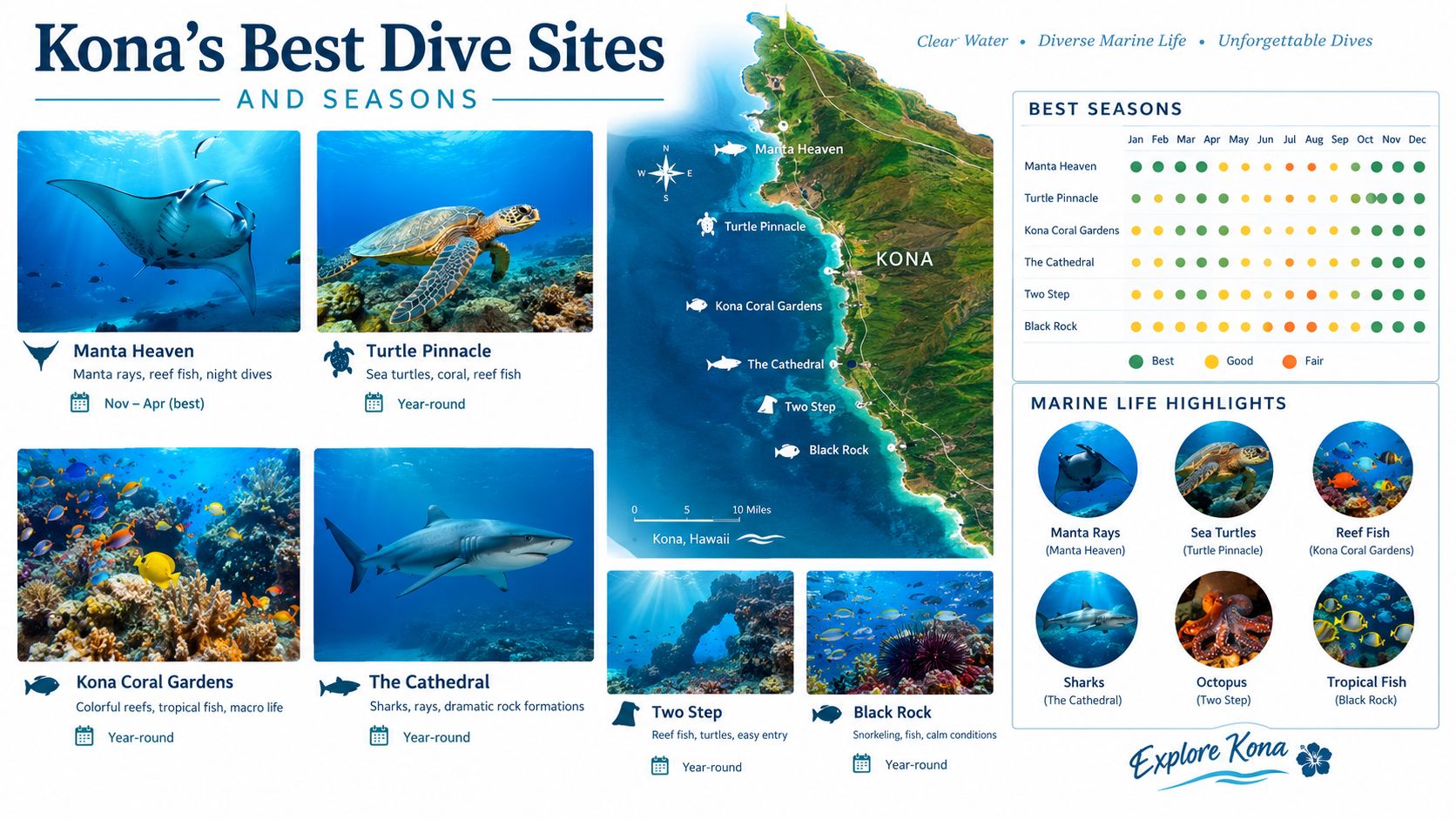
Kona diving makes more sense when you plan around the type of environment you want rather than chasing a list of famous names. Volcanic ridges, sandy bowls, lava formations, protected bays, and open-ocean pelagic water each demand different skills and equipment.
Use conditions to choose the site
A calm, shallow manta site can be ideal for a first night dive, while an experienced diver may prefer lava tubes, deeper pinnacles, shark nurseries, or unusual marine migrations. Those environments aren't interchangeable. Ask what the site requires from your buoyancy, navigation, gas planning, and comfort in current.
Garden Eel Cove demonstrates how one location can support different experiences. During daylight, divers can examine reef ridges, sand, and garden-eel colonies. At night, the focus shifts to a stationary manta-viewing procedure above the sandy bottom. That distinction matters because a diver who wants active reef exploration may be disappointed by a program built around remaining in one position, while a wildlife photographer may appreciate the controlled layout.
Winter water can fall to about 75°F, so exposure protection remains important even in Hawaii, as noted in Scuba Diving's Kona night-diving overview. A diver who stays warm maintains better concentration, buoyancy, and patience. Ask what thickness the operator recommends for the season and whether a hooded vest or other additional protection is available.
The unusual reward of blackwater
Blackwater trips operate on a different calendar from reef diving because the attraction is the migrating life in the water column. The experience can include transparent, drifting, or bioluminescent organisms that don't resemble familiar reef animals. The reported 76 percent bioluminescence observation cited earlier helps explain why the dive feels so unlike a conventional reef tour, but the more important planning question is whether you're comfortable managing your position in darkness.
For seasonal planning, focus on water temperature, swell, wind, personal tolerance for cooler conditions, and the kind of marine life you hope to observe. The operator's guide to the best months for scuba diving in Hawaii can be a starting point, but conditions on the day should always outrank a calendar recommendation.
Protected habitat changes the decision
Marine managed areas influence where boats can anchor, what guests may collect, and how commercial activity operates. Hawaii's broader marine life conservation guidance generally restricts taking living material, including fish, eggs, shells, coral, algae, and other organisms, as well as nonliving habitat such as sand and rocks. At Old Kona Airport, feeding or introducing substances to attract aquatic organisms is prohibited.
Your best dive site is therefore not just the one with the most dramatic name. It's the site where the conditions, regulations, wildlife behavior, and group ability align. A good guide makes that decision before the boat leaves the dock.
Why Kona Honu Divers Stands Out
One operator can stand out without relying on exaggerated promises if it handles the fundamentals consistently. Kona Honu Divers offers two-tank morning and advanced trips, manta night dives, blackwater excursions, private charters, scuba and snorkeling services, courses, rentals, and equipment support. Its published team information describes over 200 years of combined staff experience and extensive five-star customer feedback, details available through the Kona Honu Divers team page.
That range matters because guests arrive with different needs. A newly certified diver may need patient coaching and a conservative site. An experienced diver may want a deeper or more unusual itinerary. A mixed group may need divers and snorkelers to share a boat while following different in-water plans. A full-service operation can address those needs without forcing every guest into the same format.
Experience has to appear in the details
The practical differentiators are straightforward. The fleet is described as providing hot showers, shaded seating, and storage. Rental equipment is proactively serviced, and free nitrox is available for eligible divers. Those features don't replace good judgment, but they reduce preventable discomfort and help divers stay focused on the environment.
The service mix also supports deliberate progression. Beginners can pursue certification or a refresher, while experienced divers can consider advanced trips involving specialized formations and marine environments. The important question remains whether the guide matches the plan to the guest, not whether the shop can advertise an ambitious menu.
Kona Honu Divers also gives guests a way to review its reputation through the following customer-feedback widget:
Conservation belongs in the customer experience
A manta encounter should be measured by more than how close the animal swims. Divers should remain where the briefing places them, avoid contact, keep their fins and cameras under control, and allow the manta to choose its path. The same principle applies to coral, turtles, fish, and the small organisms that many visitors overlook.
That's why the right Kona dive shop is the one that makes responsible behavior easy. Guides explain the rules before the excitement starts. Captains and crew manage the boat so guests aren't rushed. Instructors teach buoyancy as a conservation skill, not merely a technique for comfort. Those habits protect the reef while giving divers a better chance to observe natural behavior.
Choose a shop by asking what it does when conditions change, how it maintains equipment, how it teaches wildlife etiquette, and whether its crew treats your questions seriously. Kona Honu Divers offers a broad set of guided diving, training, rental, and charter options for guests who want that kind of structured decision-making, rather than selecting solely on price or promotional imagery.
Kona Honu Divers offers guided two-tank trips, advanced diving, manta and blackwater excursions, certification, rentals, and private charter options, with crew support for both first-time and experienced divers. Visit Kona Honu Divers to compare the experience that fits your certification, comfort level, and conservation priorities, then choose your Kona dive day with confidence.