
Picture yourself in the dark ocean, a single beam of light cutting through the blue while a manta ray glides overhead like a silent shadow. Kona's manta ray night dive started by accident in the late 1980s, when a hotel light pulled in a meal that drew the mantas closer. Today it ranks among Hawaii's best-known marine experiences.
How a Hotel Light Started the Kona Manta Ray Dive
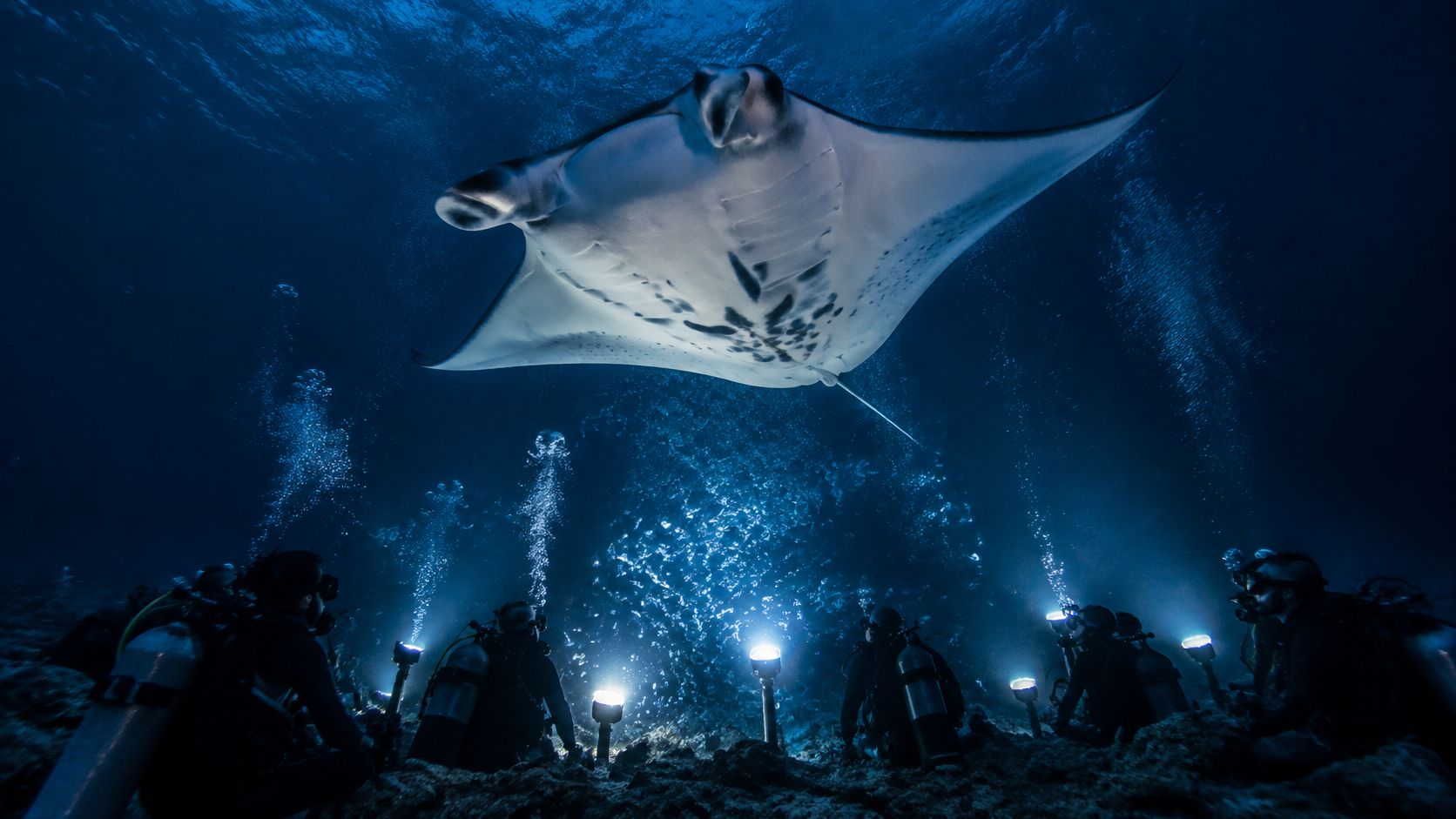
The story begins at the Kona Surf Hotel, which goes by the Sheraton Keauhou Bay Resort name today. Back then, the hotel started shining lights into the ocean after dark. The glow drew plankton up toward the surface.
Those drifting organisms brought in feeding manta rays, and a reliable wildlife show took shape almost by accident. Think of a porch light on a summer night that collects moths. Here the moths are plankton and the visitors are mantas. If you want the longer version of how that happened, how this accidental attraction grew into one of Hawaii's best-known marine tourism experiences is worth a read.
Jim Robinson and the Monday Night Dives
In 1991, diver Jim Robinson noticed how regularly the mantas came back to the lights. He started running night dives on Monday evenings, and interest grew fast from there.
Today the experience centers on two main sites, Manta Village and Manta Heaven. You aren't really exploring a reef in the usual sense. You're watching wild animals that decide for themselves when to show up.
Think of a manta night dive as a wildlife observation with a stage. The lights set the scene, but the animals decide when to perform.
Choosing a Trusted Operator in Kona
Kona Honu Divers is a Hawaii-based operator that puts safety first. The guides spend time briefing guests before anyone gets in the water, so nobody feels lost once the lights go down.
Recent guest feedback shows up in the review feed above. It's a handy way to hear what divers say after their night in the water.
A few things set this dive apart:
- Origin: a hotel light that drew plankton and, in turn, mantas
- Format: a carefully managed look at wild animals
- Best fit: divers who want wildlife, not just reef scenery
That mix of accident, timing, and careful management is what makes Kona's night dive memorable. The sections ahead cover how to choose between a night and day trip, and how to get ready for either one.
Night Versus Day Manta Experiences
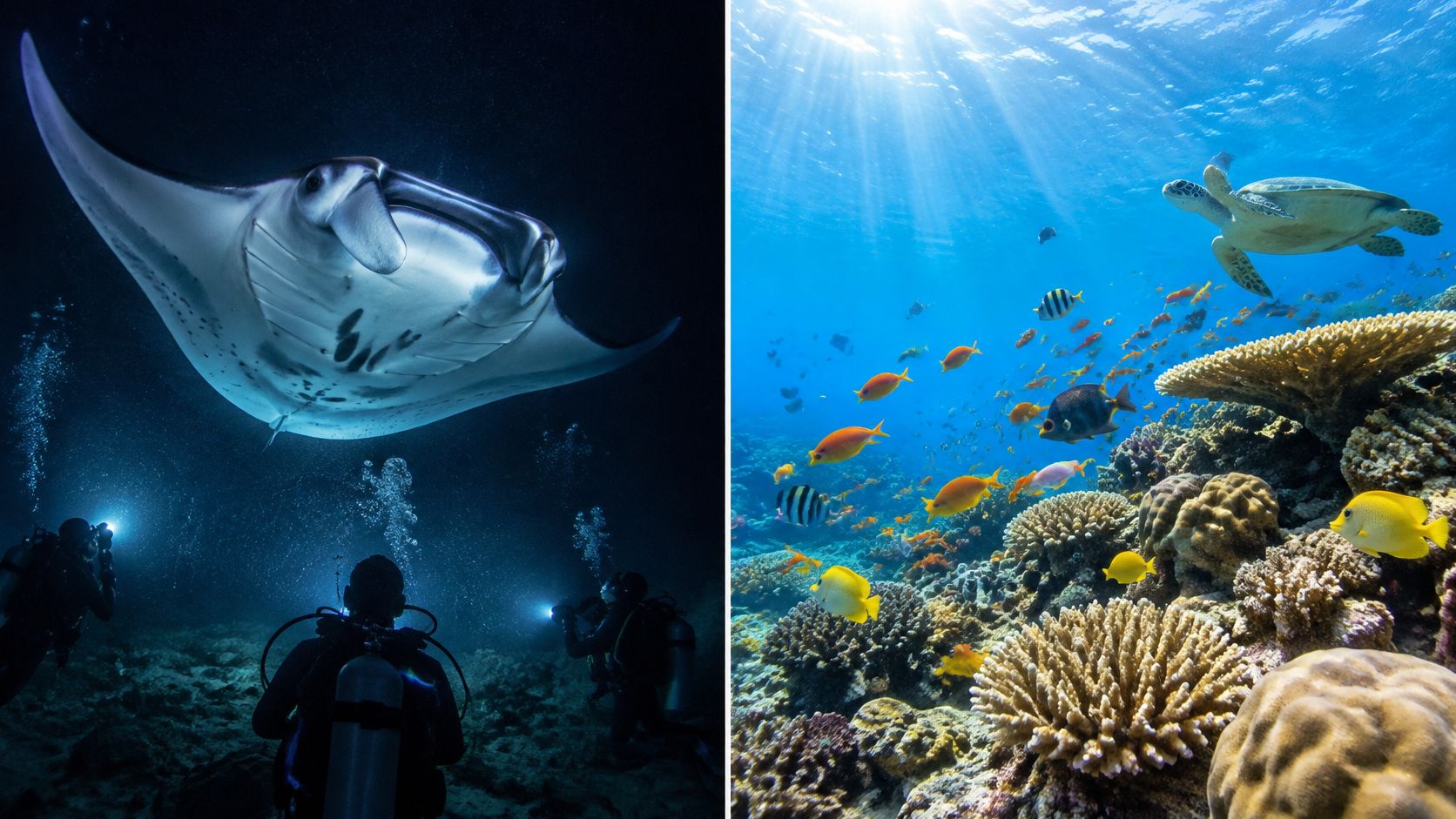
Picking between a night dive and a day dive really comes down to what you want out of the water. They feel like two different trips, even though you're in the same ocean. A night manta dive is a front-row seat at a spotlight show, and the performers only arrive once the lights come on.
A daytime dive feels more like a slow walk through a natural museum. You drift past reef ledges, lava formations, and schools of colorful fish, stopping wherever something catches your eye.
How the Night Dive Works
Night dives depend on lights placed near the surface. Those lights draw plankton into a glowing column, and the mantas swoop in to feed on it.
Divers settle on the bottom beneath that column. From there, they watch mantas make pass after pass overhead, sometimes close enough to feel the water shift.
Night Manta Dive Vs Daytime Dive at a Glance
The easiest way to see the difference is side by side. Each row below covers one part of the experience, so you can spot what matters most to you.
| Factor | Night Manta Dive | Daytime Dive |
|---|---|---|
| Visibility | Limited to whatever your light beam covers | Wide, clear views across the reef |
| Wildlife | Mantas, plus plankton feeders drawn to the light | Reef fish, eels, and a mix of marine life |
| Required Skills | Comfort in the dark and with dive lights | Basic buoyancy and reef awareness |
| Typical Pace | Focused, with divers mostly staying put | Relaxed, with plenty of room to explore |
| Temperature Feel | Water feels cooler after sunset | Sunlit water feels warmer |
Safety and Gear Differences
Night diving changes the gear list a bit, and the group dynamic shifts too. Here's what to expect:
- Dive lights: Every diver carries a primary light and a backup torch.
- Group safety: The group stays tight, and divers check in with hand signals.
- Temperature: The water feels cooler once the sun drops, so pack an extra layer.
Day trips often include reef topography and a wider range of fish, which suits divers who like variety. Night dives trade that variety for one focused wildlife encounter. Many divers feel that trade is well worth it.
The simplest way to decide: pick night if you want one dramatic wildlife moment, and day if you want variety.
Choosing the Right Option for You
Divers who want something deeper can look at the Kona blackwater dive as another night option. It explores the open ocean after dark, well away from the reef. Explore the Blackwater Dive tour for details.
Guests who want both worlds can pair the manta encounter with a daytime reef visit. See the 2-tank manta dive snorkel tour to compare your options.
Not sure which fits your comfort level? Check out our guide on whether snorkeling or diving is better for manta rays.
Either way, a little patience goes a long way down there. The right choice depends on how you like to feel in the water and what you hope to take home.
Why Garden Eel Cove Stands Above the Rest
Picking a dive site is a lot like picking a seat at the theater. You want a clear view, good sound, and a roof over your head when the weather turns.
Manta encounters are where Garden Eel Cove really shines because it covers all three. Its protected location keeps divers and snorkelers out of the swell that can make other sites rough and tiring.
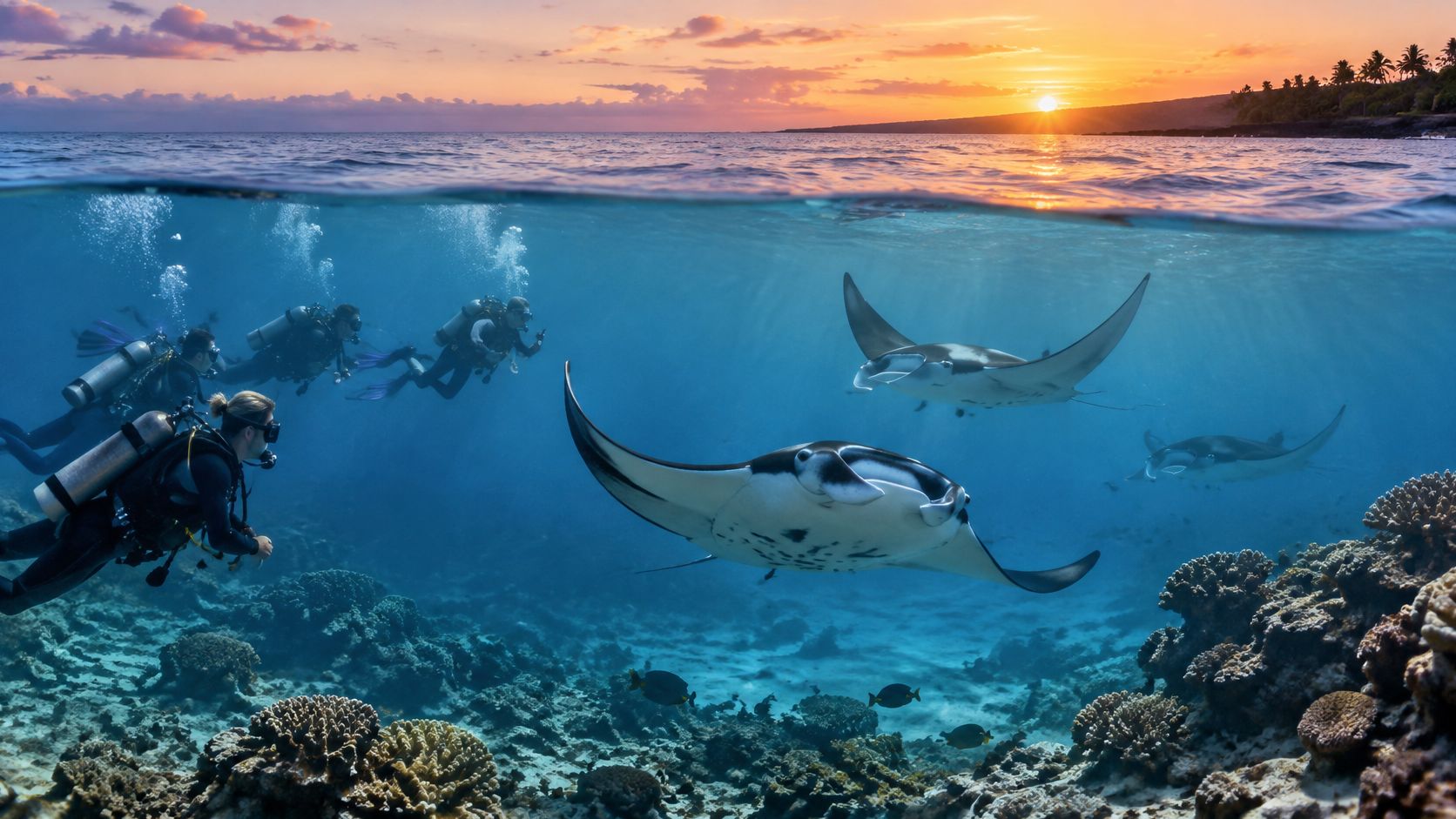
A Sheltered Spot for Calmer Water
Open ocean swell rolls across exposed sites, and it makes holding position a chore. Before long, plenty of people start feeling queasy. Garden Eel Cove's natural shelter keeps the water settled for the whole group.
That calm matters most when you're waiting in the dark for the mantas to show up. Steady water lets you watch the animals instead of wrestling with the current.
A Better Viewing Area for the Whole Group
Room to move is easy to take for granted until you're squeezed between strangers. At Garden Eel Cove, everyone has space to spread out. You can watch mantas loop and glide overhead without feeling crowded toward the edge.
Instead of elbowing for a spot, you settle in and let the show come to you. That extra room makes every pass feel a little more personal.
Reef Quality Adds Value Before and After
The mantas are the main event, but the reef gives the outing its warm-up and its encore. Healthy coral structure and resident fish keep things interesting from the first kick to the last.
Think of the reef as the opening act and the mantas as the headliner. A strong opener makes the whole evening feel worth the trip.
Matching the Site to Your Experience
- First-time snorkelers: Calm water makes it easier to relax, breathe steadily, and really enjoy the view.
- Underwater photographers: Stable positioning helps you hold steady frames and get sharper shots.
- Families and beginners: A protected site paired with a structured tour keeps the plan predictable.
The site does a lot of the heavy lifting, but the tour structure is what makes it easy for us to recommend. You get a clear plan, guided support, and a rhythm that keeps everyone together.
That's why the 2-tank manta dive snorkel tour suits families and newcomers so well. Calm water, a better viewing area, and a well-organized outing make the decision easy.
Pick a site that shields you from the swell, gives you room to watch, and backs the experience with healthy reef life.
Gear, Safety, and Logistics Checklist
A Kona manta ray dive runs on a tight schedule, so most of the day's success comes from planning. Sort out the details before you ever step onto the boat.
Confirm the Logistics First
Give Kona Honu Divers a call or send a message to lock in your meeting point, arrival time, and departure schedule. Night trips leave around dusk, so aim to arrive with some breathing room. Rushing to the dock in fading light is a rough way to start an evening in the water.
Plan for the outing to last long enough to cover the briefing, your time in the water, and the ride back. Night dives feel different from daytime trips, so set aside the whole evening instead of just the swim.
Your Pre-Flight Briefing
Think of the briefing as a pilot's pre-flight check. Before takeoff, the pilot runs through the instruments, the route, and the plan so everyone knows what's coming next. Your guide's briefing does the same job for the water.
Listen closely and ask questions. If a hand signal isn't clear, have your guide show it again. This is also where you'll learn how the mantas tend to behave and where your group will stay.
Gear Checklist for the Night
Here's what to pack for your Kona manta ray dive:
- Wetsuit or rash guard: Pick one that fits snugly. Loose material lets water move around inside, and that chill adds up fast.
- Mask: Test the seal before you leave the dock, and bring a spare if you have one.
- Fins: Choose a pair that fits well and feels comfortable when you kick slowly.
- Dive light or torch: Bring a primary light and a backup. Night dives depend on them.
- Personal items: Pack any medications you need, plus a small bag for your keys.
Kona Honu Divers keeps its rental gear in good shape with regular service, so what you're handed is ready to use. Complimentary nitrox also gives qualified divers some extra bottom time.
Safety Basics on the Water
Safety really comes down to a few habits that protect you and the animals. Stick close to your guide and stay inside the group's light circle the whole time.
- Stay off the reef: Keep fins, hands, and gear clear of coral.
- Do not touch the animals: Admire the mantas from a respectful distance.
- Communicate with hand signals: Use the standard signals to let your guide know you're okay.
When the lights are low, a simple hand signal is often the easiest way to stay connected.
Packing and Transport Tips
Bring reef-safe sunscreen, because regular formulas can harm coral. A towel, a dry bag for your valuables, and plenty of water round out the list.
Sort out your ride to the boat ahead of time. Parking and traffic have a way of eating into your buffer, so leave early.
Wondering how deep the dive goes? Our guide on how deep the Kona manta ray dive goes is worth reading before you pack.
Ready to secure your spot?
A calm, prepared diver is a safer diver, and a relaxed guest sees more of the show.
What Your Chances of Seeing Mantas Really Look Like
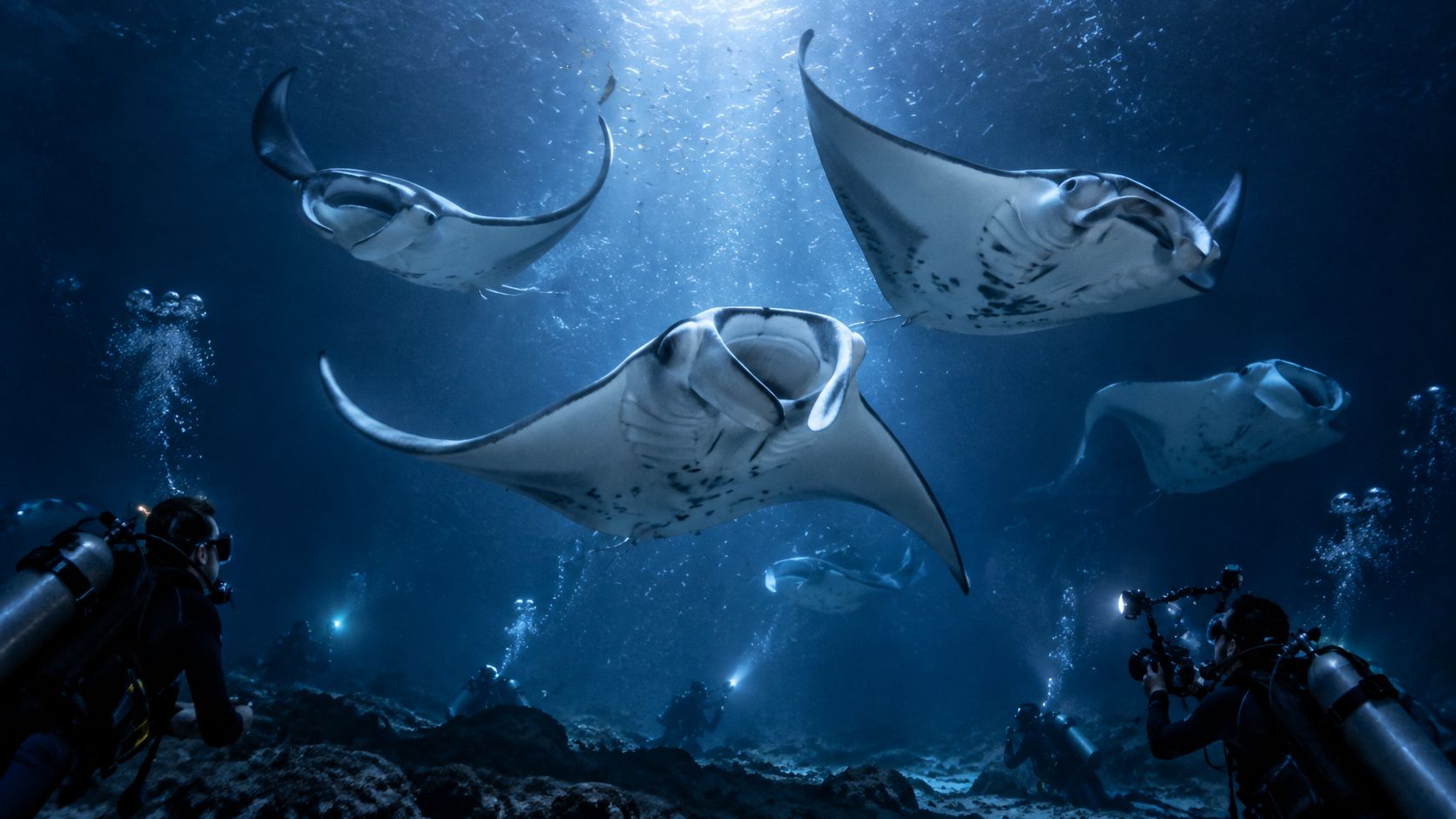
Sighting numbers can sound like a promise. They're really more like a clue, so it pays to read them closely.
Over 351 charter nights, mantas showed up on 347 of them. That works out to roughly 98.9 percent of the observation period. By tourism standards, that makes Kona's manta ray night dive a very high-probability wildlife encounter. Read the full research about Kona manta sightings.
Think of it like a weather forecast. A 99 percent chance of rain tells you to bring an umbrella, but it won't tell you which patch of sidewalk gets wet first.
Mantas work the same way. The odds are excellent, but nobody can promise the exact moment they'll appear or where they'll glide.
What a Typical Night Looks Like
Most nights, you can expect a group of around 5 to 6 manta rays. That's the usual picture.
Group size shifts with the weather, plankton levels, the season, and simply how the animals feel that evening.
Some nights go well beyond that. On July 4, 2013, one Kona site logged 42 manta rays in a single night. That was an exceptional result, not a benchmark to plan around.
Expect a typical show of five or six, and treat anything more as a bonus.
Why Mantas Are Never Guaranteed
Mantas might arrive late. They might hover just outside the brightest light, or drift off to nearby feeding areas. None of that is strange behavior. It's the animal doing what it normally does, but it can change what you see from the boat or the water.
Reliability here means opportunity, not a guaranteed count. Kona Honu Divers briefs every group before anyone enters the water, so you'll know how the animals tend to behave and what to watch for.
Timing matters too. Check out our guide on the best time to see manta rays in Kona before you book.
Setting Expectations for Your Night
Think of the dive as a high-probability wildlife encounter, not a sure thing. The best nights are the ones where you settle into the rhythm: the lights, the waiting, and then the sudden glide of a manta passing overhead. That moment is worth it no matter the group size.
A few expectations will help you enjoy the night:
- Arrival time: Mantas may show up early or late, so get comfortable and stay patient.
- Light placement: The action often unfolds just beyond the brightest beam.
- Group size: Five or six is typical, so count every pass as a win.
Go in with real curiosity, and the ocean will take care of the rest.
Photography, Etiquette, and Protecting Mantas
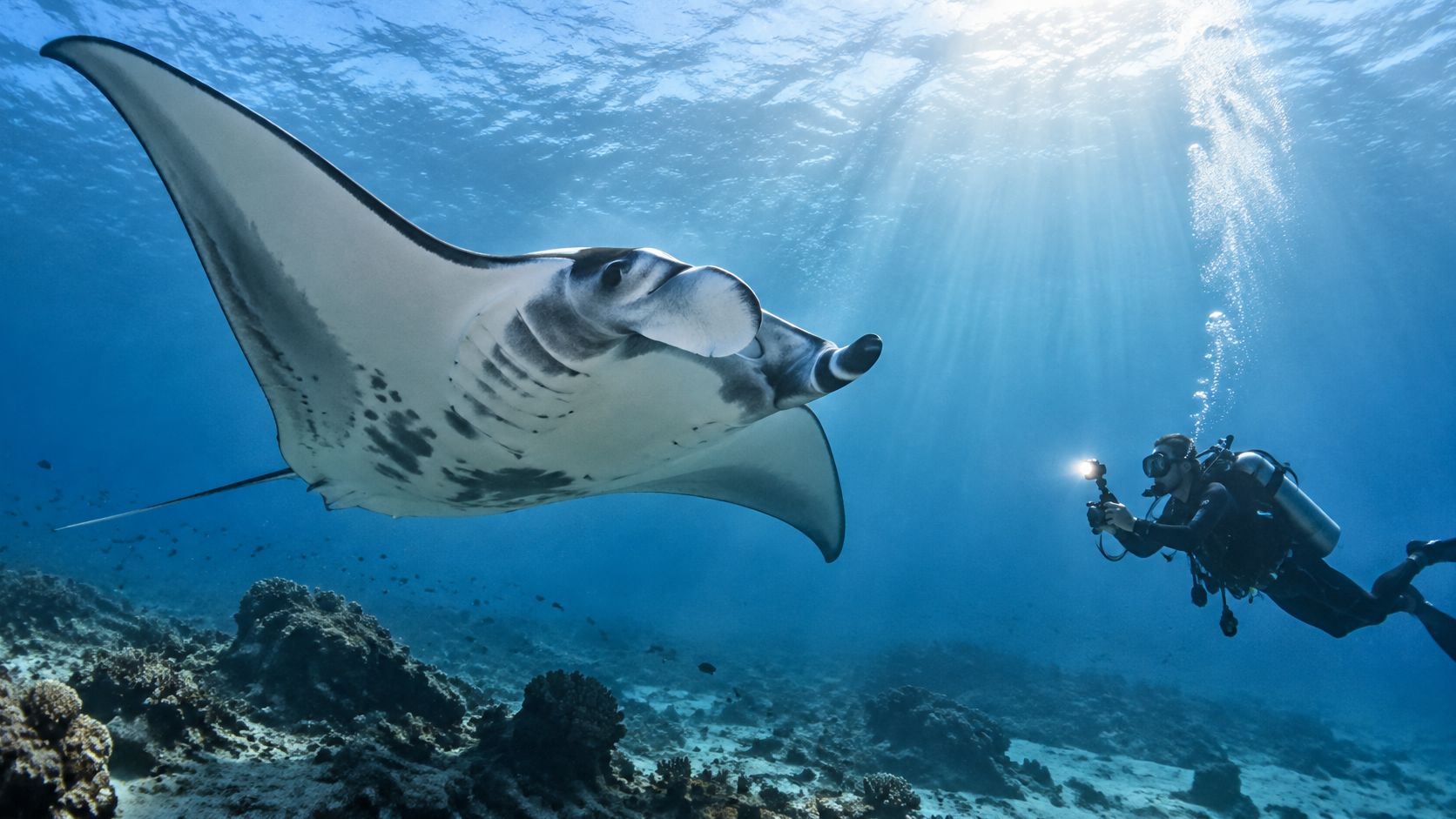
Think of a manta ray as a guest in someone's home. You want a good look, but you don't want to rearrange the furniture. That attitude should guide everything you do on a Kona manta ray dive, from how you set your camera to how you kick through the water.
Lighting Tips for Sharper Shots
Keep your flash gentle or switch it off entirely. A bright beam aimed straight into a manta's eyes startles the animal, and that surprise can end the encounter before you've even framed your shot.
- Let the mantas come to you. Chasing them almost always pushes them away, while patience tends to bring them closer.
- Move slowly and steadily. Smooth motion keeps your frames sharp, even when the water is dim.
Composition Ideas for Every Skill Level
Beginners should start wide. Include the light column and the animals in the same frame so the viewer understands the scene instead of seeing a blur of fins.
Once you're comfortable, get more adventurous. Try a silhouette against the glow, or move in tight on a passing wing and let the texture fill the frame.
Etiquette That Protects the Animals
Never touch, chase, or block a manta. If one swings in close, hold your position and give it room. It's tempting to lean in for a better angle, but a still diver is far less intimidating than one lunging around in the water.
The animal sets the distance, not the diver.
Keeping a respectful distance keeps the animal calm and keeps your group safe. For more on good habits in the water, read our guide on responsible diver etiquette.
Why Manta Tourism Matters to the Community
Manta watching is more than a memorable night out. It supports local jobs, from boat crews to the shop owners who keep the island running.
A Hawaii analysis estimated that manta-watching tourism generated approximately $4.7 million in direct economic impact across three sites in 2012. Kona sites accounted for about $3.4 million, roughly 72 percent of the measured total. Read the full research about manta tourism spending in Hawaii.
How Guided Trips Keep Mantas Healthy
Mantas reproduce slowly, so every disturbance counts. Guided trips help by limiting how many divers reach the animals at once.
Briefings matter too. Good guides explain the animals' behavior before anyone hits the water, and simple equipment habits, such as keeping lights and gear away from the animals, lower the chance of harm.
Your Place in the Protection Plan
Every diver who follows these simple rules becomes part of that protection plan. Your choices in the water help keep mantas coming back for years to come.
Frequently Asked Questions About the Manta Dive
Before you book your Kona manta ray dive, you probably have a few questions rattling around. Here are the ones we hear most often, so you can get in the water with a clear head.
Is the Manta Ray Night Dive Suitable for Beginners?
Yes, and we mean that. Snorkelers and certified divers of many experience levels join the outing. A clear briefing, a calm protected site, and attentive guides go a long way toward helping newcomers relax.
Plenty of first-timers find the lights less scary than they expected. Once the mantas start gliding through the beam, the nerves tend to fade. Stay close to your guide and follow the hand signals, and the whole thing stays simple.
Wondering about safety around the animals? Take a look at our guide on whether manta rays can sting you before you get in the water.
What Happens if the Mantas Do Not Appear?
Sightings are highly likely, but they are never guaranteed. Mantas sometimes arrive late, or they stay just outside the light and feed on their own schedule.
Even then, the dive still shows you night marine life. Plankton drifts through the beam like tiny snowfall, and other creatures come out after dark. The outing stays memorable either way.
The mantas are the headliner, but the night reef is the whole show.
How Far in Advance Should I Book?
Manta night dives fill up fast, so booking early locks in your preferred date. Flexible dates help too, since they make it easier to find a spot on a night with good weather.
Preferred nights can sell out quickly, especially around holidays and during peak travel season.
What Should I Ask the Operator When Booking?
Start with the basics:
- Gear availability, and whether rentals are serviced on a regular schedule
- Group size
- Nitrox options
- Certification requirements
Then ask how the group stays together in the dark. A good operator will have a clear answer ready.
Experienced divers who want remote lava formations and other premium sites should look at the Premium Advanced 2-Tank Trip.
Sharing the Ocean with a Gentle Giant
The manta dive is a rare chance to share the ocean with a gentle giant that has been drawn to Kona's lights for decades.
Kona Honu Divers' Google reviews show consistent excellence, so take a few minutes to read recent guest experiences below before you book.
Each glide overhead is a reminder of how much the ocean still has to share with anyone willing to slow down and look closely. That moment is worth planning for.
Ready to see the mantas for yourself? Explore more with Kona Honu Divers on their official website.