
The boat goes quiet when the lights drop below the surface. A few breaths later, a manta ray rises from the darkness, turns through the illuminated water, and passes close enough for its white belly to fill your view.
Diving into the Magic of a Kona Manta Ray Encounter
A Kona manta ray dive begins before the first animal appears. On the boat, the warm evening air gives way to the cooler water, and the familiar noise of conversation fades beneath the steady sound of your regulator. Once you descend, your torch and the guide's lights become the only clear points in a wide black space.
Then the feeding area takes shape. Divers settle into position, the underwater lights shine upward, and the darkness above begins to glow with suspended life. A manta may arrive as a silhouette at the edge of the light, then roll across the beam and reveal its broad wings, pale underside, and deliberate, effortless movement.
That first pass can feel theatrical, but the animal isn't performing. This is a wildlife encounter driven by feeding behavior, not a trained show. The mantas are responding to plankton concentrated by the lights, and every turn, barrel roll, and feeding loop serves that natural purpose. The diver's role is to become a quiet observer.
What the encounter feels like underwater
The most successful dives rarely involve chasing an animal. They involve settling comfortably, controlling buoyancy, and allowing the manta to choose its route. A stationary diver gives the animal predictable space to maneuver, while a diver who swims upward or cuts across the feeding lane can interrupt the encounter for everyone nearby.
The experience also changes as your eyes adjust. At first, the water seems empty beyond the light. Soon, the beam reveals plankton, bubbles, fins, and moving shadows. When a manta sweeps overhead, the scale becomes clear. Its movement is powerful without looking hurried, and its proximity makes the surrounding darkness feel even larger.
The best view usually comes from patience, not pursuit.
Kona's night diving has a distinctive character because the encounter combines tropical water, volcanic coastline, and open-ocean wildlife observation in one setting. Learn what makes diving in Kona unique before choosing which underwater experiences to add to your itinerary.
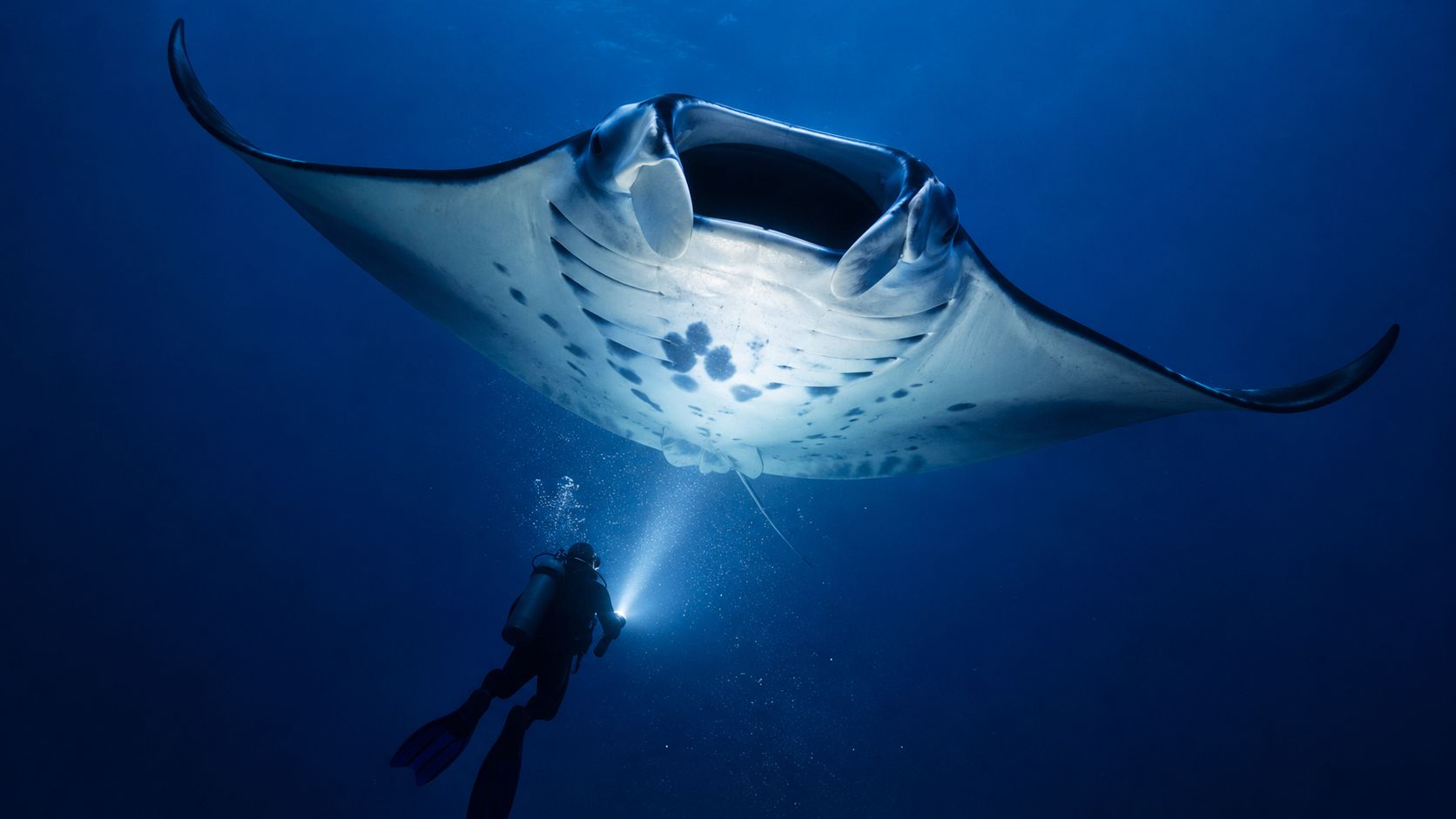
The encounter may last only moments for one diver and much longer for another, depending on positioning and animal movement. That variability is part of the appeal. A dive feels successful when the animals can feed naturally and guests observe without interfering, even if a manta doesn't pass directly over every person.
The Science Behind the Light and the Plankton
The light setup works because it concentrates food rather than attracting mantas directly. After sunset, zooplankton move toward shallower water. Underwater lights gather some of that plankton into a visible feeding area, creating conditions that mantas already know how to use.
NOAA documentation links manta feeding activity to this nighttime zooplankton migration and explains why artificial illumination can produce predictable surface feeding even though the rays aren't fed or baited. NOAA's manta-ray guidance also describes the anatomy that makes the behavior so effective.
How a manta feeds
Reef mantas have cephalic fins beside the mouth. These fins help funnel plankton-rich water into the mouth and across specialized gill rakers. The gill rakers retain prey while filtered water exits through the gills.
When the plankton concentration is suitable, mantas may form feeding chains or perform repeated barrel rolls. A barrel roll lets the animal remain within a productive patch while processing more plankton-rich water. The movement may look acrobatic to a diver, but it's an efficient feeding technique.
Feeding speed also matters to diver behavior. Mantas swim at approximately 30 pectoral-fin beats per minute, nearly twice their cleaning-station speed, according to the Hawaiʻi Department of Land and Natural Resources guidance linked above. A diver positioned in the animal's direct flight path can disrupt an approaching manta more easily than someone remaining below or beside the feeding area.
Why stillness produces better encounters
The lights create a feeding lane, not a stage. If you hold position below the manta's route, the animal can turn, rise, and pass through the illuminated water without needing to avoid you. If you chase it, shine a torch into its face, or swim across the lane, you change the geometry of the interaction.
That's why buoyancy control is more important than speed. Keep your body horizontal, use small breathing adjustments, and place your fins where they won't strike another diver or the seafloor. The manta has already adapted to the food source. You need to adapt to the manta.
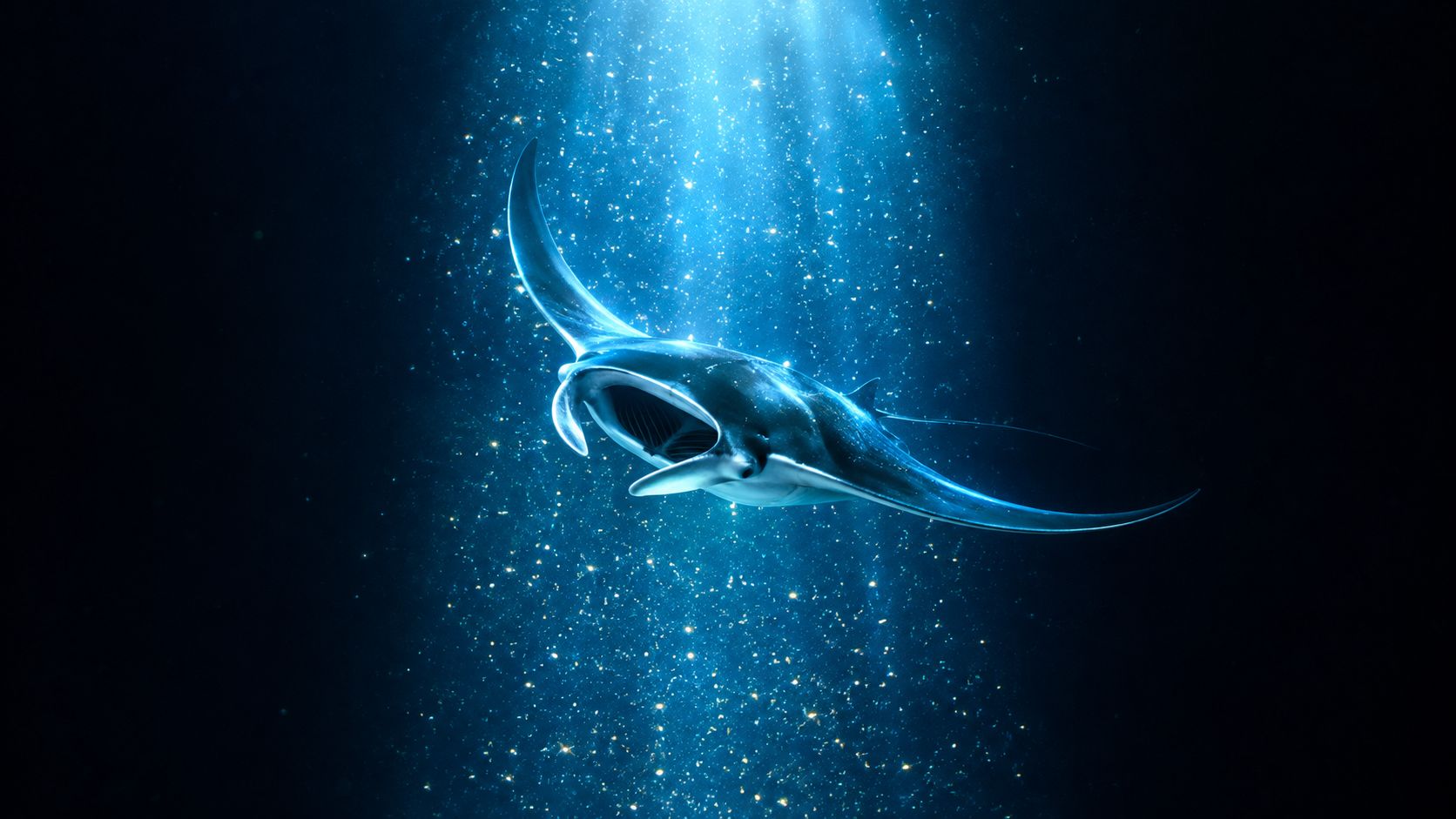
The result is a remarkably close encounter without bait, feeding, or handling. That distinction matters. Responsible operators use the animals' existing behavior to create an observation opportunity, then rely on guest discipline to keep it low impact.
Why Garden Eel Cove Is the Superior Dive Site
Garden Eel Cove is the superior choice for a Kona manta-ray tour because its advantages begin with geography. Located just north of Kona International Airport, the cove is naturally protected rather than exposed to open-ocean conditions. Its shape blocks much of the swell and wind, creating calmer, more predictable water for a nighttime entry, descent, and ascent. The site is accessed by boat from Honokohau Harbor and is commonly identified as Manta Ray Heaven or Makako Bay. See the Garden Eel Cove site description for more location context.
An exposed site may still offer marine life, but rougher water makes every task harder. Entries take more effort, exits become less comfortable, and surge can force divers to spend attention on stability instead of observation. At night, when visual references are limited, that trade-off matters.
A viewing area designed for observation
Garden Eel Cove's sandy seafloor includes the area commonly called the campfire. Divers settle on the designated sand while underwater lights shine upward, drawing plankton into the water column above the group. The arrangement creates a centralized viewing zone with clear sightlines.
That layout is better than spreading guests across the reef. Divers can watch the mantas without kneeling on coral or swimming directly over fragile habitat. The defined area also gives guides a practical way to manage spacing, lighting, and fin placement.
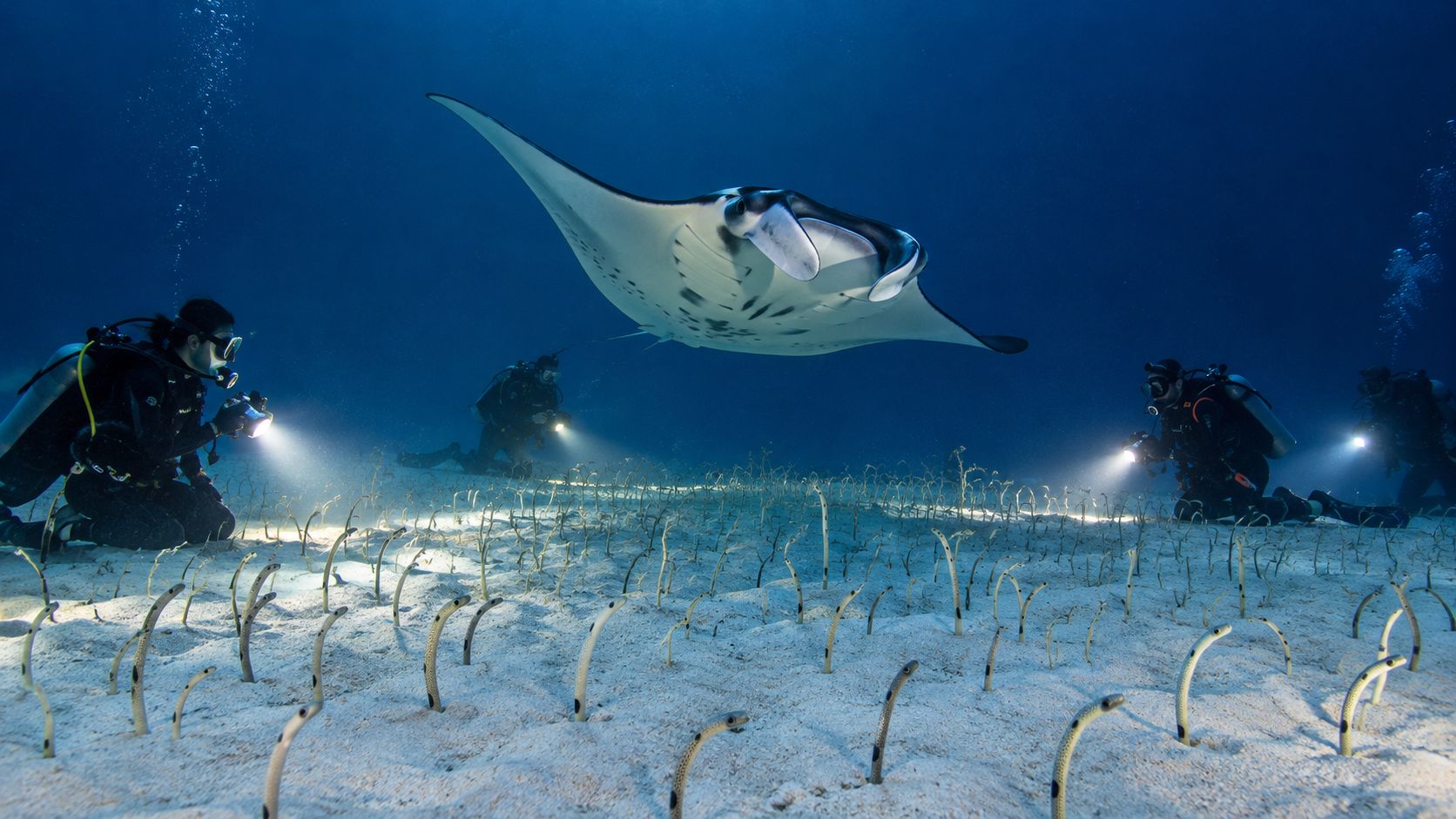
Why reef quality changes the experience
The surrounding reef is described as healthier and more vibrant than the reef environment at less-protected alternatives. That gives the site value beyond the manta encounter. A healthier reef supports a richer local ecosystem, while the sandy amphitheater keeps the main viewing activity away from coral.
Garden Eel Cove also suits a two-dive itinerary. A late-afternoon or twilight reef dive can introduce the site's topography and marine life before the group returns for the night feeding session. You get a more complete picture of the location, rather than treating the manta visit as an isolated spectacle.
Essential Safety Guidelines and Diver Etiquette
Good manta etiquette is practical safety, not ceremony. The rules protect the animal, preserve the viewing opportunity, and help divers avoid contact with the seafloor or other guests.
Independent wildlife-interaction guidance recommends that divers remain on or near the bottom, snorkelers stay at the surface, and all participants avoid touching, chasing, blocking, or entering the mantas' feeding lane. Review this wildlife-interaction guidance before your trip so the basic expectations aren't new when you reach the water.
Position yourself before the animals arrive
Settle on the designated sand and establish neutral buoyancy before focusing on the mantas. Keep your body low enough to leave the feeding lane open, but don't kneel on coral or drag equipment across the bottom. Your guide may adjust the group's position, so follow those directions rather than moving independently for a better angle.
The key rules are simple:
- Stay in place: Let the manta choose its route instead of swimming toward it.
- Keep your hands off: Contact can remove the animal's protective mucus layer.
- Protect the feeding lane: Don't rise into the path where mantas are turning and feeding.
- Control your fins: Avoid stirring the sand, striking coral, or kicking another diver.
- Manage bubbles and equipment: Keep hoses, cameras, and lights organized so they don't intrude into the animal's space.
Why contact and pursuit cause problems
Mantas need an open water column to maneuver. A diver who blocks that space forces the animal to change direction, while a person who chases it increases pressure on the encounter. Even a gentle touch isn't harmless because it can disturb the protective mucus layer covering the ray.
Camera users need the same discipline as everyone else. A close shot isn't worth swimming into a manta's route. If the animal turns away, allow it to leave and wait for the next pass.
Practical rule: If you need to move toward the manta to improve the image, your position is already too aggressive.
For a concise guide to behaving well in the water, use this resource on responsible and considerate diver etiquette. The best guest is predictable, calm, and easy for both the guide and the animals to read.
Capturing the Moment and Photography Tips for Divers
Underwater manta photography rewards preparation more than pursuit. The animals are large, the environment is dark, and the light comes from below, so a wide-angle setup usually makes more sense than a narrow lens. It lets you include the full animal while preserving enough distance for natural movement.
External strobes can help reveal detail in the manta's underside, but they add bulk and task load. Before entering the water, confirm that the camera strap, strobe arms, and controls are secure. A loose accessory can become a distraction at exactly the moment you need both hands for buoyancy or positioning.
Build the shot from your position
Start with the camera angled slightly upward from the viewing area. The lights will illuminate the plankton column and the manta's underside as it passes. Avoid aiming a torch or strobe directly into the animal's eyes, and follow the operator's briefing on camera lights and strobes.
A few habits improve results without changing the encounter:
- Use a wide field of view: Give the manta room in the frame instead of waiting until it fills every corner.
- Keep your settings ready: Dark water leaves little time to adjust when an animal approaches.
- Hold your position: Let the manta cross the frame naturally.
- Take fewer, better-timed images: Rapid shooting can make you focus on the camera instead of your surroundings.
- Check your bubbles and fins: A clean composition means little if your movement disturbs the animal.
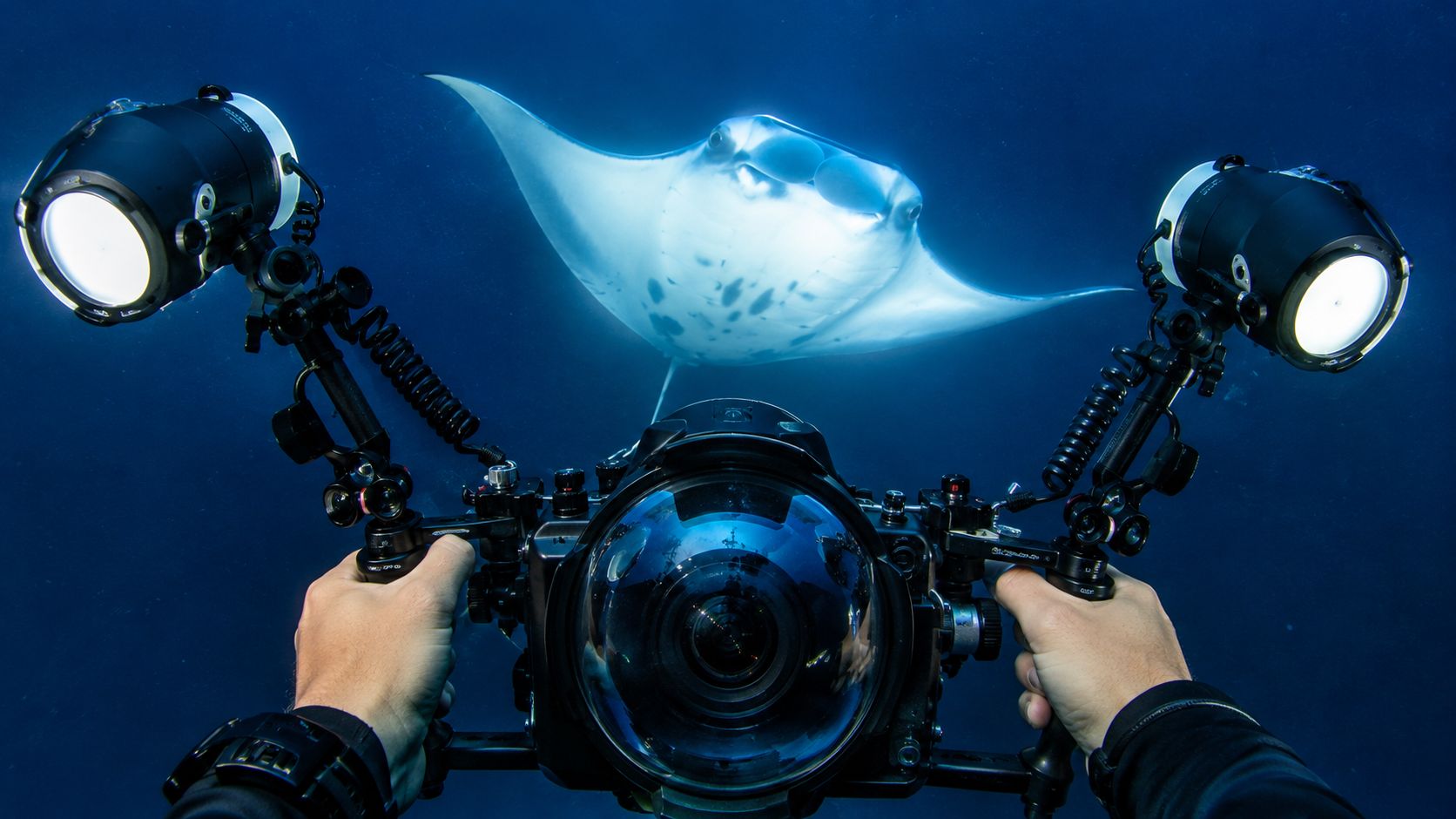
When the best image is no image
The temptation to get closer is strongest when the manta approaches from behind or above. Resist it. Keep your body low, leave the feeding lane open, and let the animal's movement create the perspective.
If the ray passes outside your frame, you haven't failed. You've protected the conditions that may bring it around again. Browse Kona manta ray dive pictures for an idea of the visual style the site can produce, then treat your own camera as a secondary objective.
The most memorable frame often comes after you stop hunting for it. A stable diver sees more, reacts less, and gives the manta a reason to continue using the illuminated area.
The Economic and Conservation Context of Kona Diving
Kona's manta encounter is a major marine-tourism activity, not a small recreational side trip. The practice developed from local wildlife viewing into a structured tourism sector with a meaningful role in Hawaiʻi Island's visitor economy.
A 2002 survey of Kona dive and snorkel operators estimated approximately US$2.5 million in direct revenue from manta encounters for local operators, as documented in the Hawaiʻi state testimony and assessment. By 2012, the direct economic impact of manta-ray tours at Kona sites was estimated at US$3.4 million, while a later state assessment calculated a crude inflation-adjusted 2017 value of approximately US$6.2 million, using the same source.
Scale creates management pressure
The operating intensity explains why visitor behavior matters. A Hawaiʻi boating and safety assessment observed 16 to 19 vessels and approximately 160 to 190 people in the water concurrently on some August 2015 nights, with snorkelers and divers combined. Other observation periods recorded 7 to 22 vessels supporting roughly 114 to 177 people in the water, also documented in the state material linked above.
Those conditions can produce extraordinary access to the animals, but they also create crowding, lighting, spacing, and navigation challenges. More people in the water means less room for poor buoyancy, careless finning, or aggressive photography.
The industry's value makes responsible operation an economic necessity, not a marketing extra.
What guests should look for
Choose an operator that treats the site as wildlife habitat. Briefings should cover positioning, lighting, contact restrictions, and what happens if conditions deteriorate. Guides should manage the group rather than encouraging guests to compete for the closest pass.
You can also ask how the company handles reef protection, equipment readiness, and guest education. Learn about eco-friendly diving practices and use those criteria when comparing tours. A responsible dive supports the local economy while respecting the animals that make the activity possible.
Booking Your Dive with Kona Honu Divers
The booking decision should begin with eligibility and comfort, not just availability. The scuba manta dive is intended for certified divers with suitable recent experience, while snorkelers need to be comfortable in open water at night. Ask the operator to clarify certification, age, recent-dive expectations, equipment, and weather policies before reserving.
A two-tank format can work well for divers who want a fuller Kona itinerary. A late-afternoon or twilight reef dive provides a gradual transition into the water, followed by the night session at Garden Eel Cove. A single-tank manta option may suit travelers with a tighter schedule, while the two-dive format gives more time to settle into the environment and observe the site.
Compare the practical details
Pricing varies with the package, boat service, equipment needs, and whether you choose one tank or two. Rather than selecting only by price, check what the booking includes and whether the crew explains the night-dive procedures clearly.
Kona Honu Divers offers manta-ray dive options, including a two-tank trip built around a reef dive and a night manta encounter at Garden Eel Cove. You can review the available manta ray dive tours, then contact the team through the Kona Honu Divers contact page if you need help matching the trip to your certification or experience.
Kona Honu Divers offers guided manta-ray dives at Garden Eel Cove, with options for divers who want a focused night encounter or a fuller reef-and-manta itinerary. Visit Kona Honu Divers to review the trip options, confirm your requirements, and reserve a place for a respectful, close-range Kona manta ray dive.