
You're probably doing what most Kona-bound divers do. You've opened too many tabs, every operator says they offer great service, and now the choice feels harder instead of easier.
That's where a good filter helps. Don't pick a Kona diving company by who sounds the most enthusiastic online. Pick based on the kind of dive day you want: stable boat, clear trip fit, crew that runs clean logistics, and signature dives worth building a vacation around.
If you're trying to sort out whether Kona Diving Company is the right move, you should also understand where Kona Honu Divers fits into the picture. They're not interchangeable operators, and that matters when you're spending real vacation time on the water.
Your Guide to Diving in Kona
You land in Kona with a short wish list. Easy reef dives, a manta night dive, maybe one more ambitious charter if the ocean cooperates. Then a significant problem shows up. Several operators sound similar online, but the actual dive day can feel very different once you step on the boat.
Use a better filter. Start with how you want the day to feel underwater and on the surface. Boat ride quality, site selection, crew judgment, and how clearly the trip is run will shape your vacation more than polished website copy. If you want destination context first, this guide to diving Kona on the Big Island lays out the local conditions, marine life, and trip options well.
What Kona Diving Company means to most travelers
Kona Diving Company has been part of the Kona market for years, and that matters. Longevity usually points to steady local demand, repeat guests, and an operation that understands how quickly conditions can change on this coast.
The practical question is not whether an operator exists or has history. The practical question is whether its approach matches your trip. In Kona, that means looking past a generic promise of “great diving” and asking sharper questions. What kind of boat are you boarding? How many divers are on it? Is the crew built around newer divers, experienced photographers, mixed groups, or a little of everything? How does the company handle a weather change without turning the day into a mess?
Those details decide whether your dive day feels relaxed and well-run or crowded and reactive.
My rule for Kona: judge the operator by the full day, not just the site list.
How I'd evaluate any Kona operator
If a friend asked me how to compare Kona diving companies, I'd keep it simple:
- Boat design and ride quality: Kona can be calm, but it can also be sloppy. A stable, diver-friendly boat saves energy and lowers stress before you even gear up.
- Trip match: Manta night dives, morning reef charters, blackwater, and advanced long-range trips attract different divers and require different crew rhythms.
- Crew experience: Good crews do more than point out octopus. They set a calm tone, organize entries cleanly, and make smart calls if conditions shift.
- Safety culture: Listen for clear briefings, realistic site plans, and honest communication. That tells you more than marketing language ever will.
- Who the trip is really built for: Some operators are better for mixed snorkel and dive groups. Others are clearly stronger for dedicated certified divers.
That last point matters in Kona more than people expect. A company can be perfectly fine and still be the wrong fit for the trip you want.
Kona Honu Divers comes up often in that conversation because their setup answers the “why” clearly. Their boat style, crew reputation, and signature trip lineup appeal to divers who want a smoother day with less chaos and more time focused on the diving itself. That difference is worth paying attention to before you book.
Why Choose Kona Honu Divers
If your real question is, “Who should I book if I want the strongest all-around scuba experience in Kona?” my answer is simple. Kona Honu Divers is the operator I'd point most certified divers toward first.
The case for them is pretty straightforward
The company is tied to the same original listing lineage discussed above, with roots going back to 2010 and a family-run identity centered on a more personal dive experience. That matters because owner-led dive operations usually feel different on the boat. The details get more attention.
There's a long public record of guest satisfaction. TripAdvisor shows a Certificate of Excellence for 2014–2019 and a Travelers' Choice Award for 2020–2023 on the TripAdvisor listing. I pay attention to streaks like that more than one-off praise. A long run tells me the operation didn't just have a hot season. It kept people happy over time.
If you want to get a feel for the people behind the operation, look at the Kona Honu Divers team page. Crew culture shows up in the little things. Briefings, timing, gear help, water entries, and how relaxed the whole day feels.
Why this matters more than flashy marketing
A dive operator earns trust by being consistent, not by sounding impressive. Kona Honu Divers has the kind of profile I like to see:
- Long-running recognition: Awards across two TripAdvisor eras suggest repeatable service quality.
- Destination focus: Their public positioning is built around guided local diving, not generic tourism.
- Useful trip breadth: Reef dives, introductory experiences, night dives, manta trips, and multi-day options all fit under one roof.
Some operators sell a seat on a boat. Better operators run a day that feels organized from check-in to final ladder climb.
The Fleet Crew and Onboard Experience
Boats decide a lot more than people think. Not just comfort. Safety, pace, stress level, and how much energy you still have by the second dive all start there.
Why the boat matters
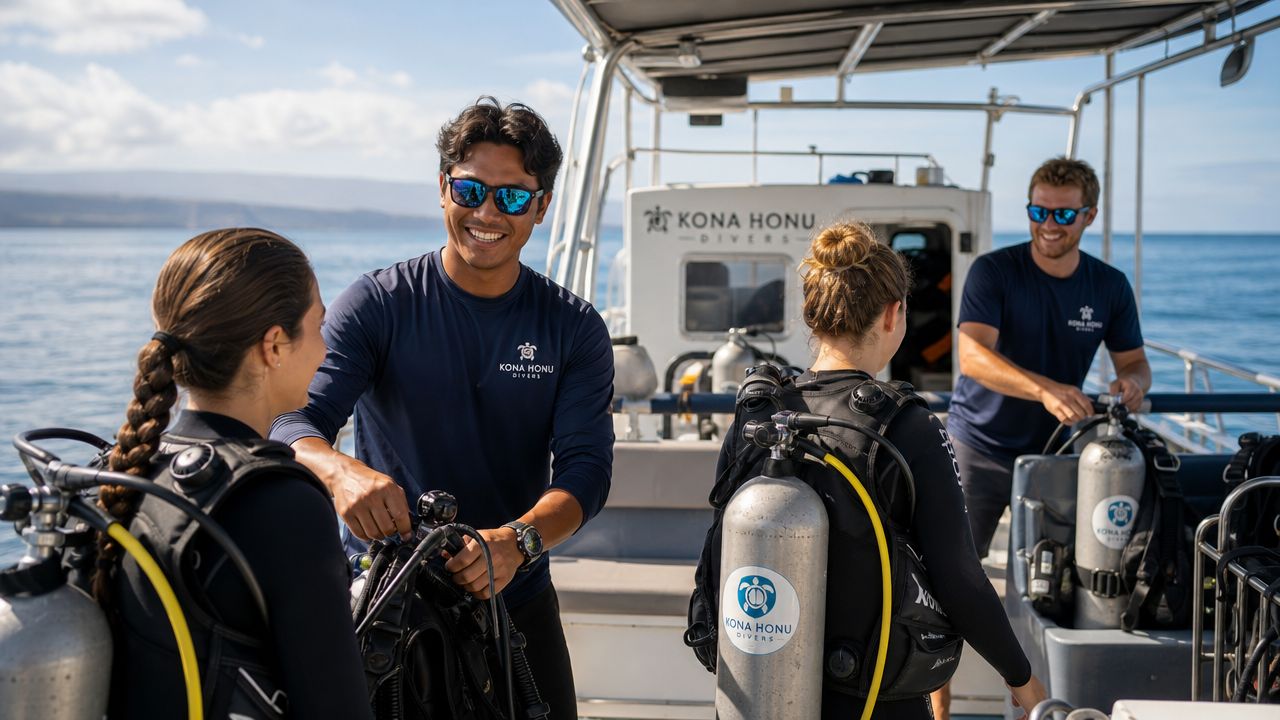
Kona Honu Divers' primary dive platform is a 46-foot Newton custom vessel built around safety and comfort, with more stable entries and exits plus more deck space than a smaller generic craft, as described on their boat page.
That's not a throwaway spec. On a real dive day, a larger custom boat usually means:
- Less chaos while gearing up
- Easier giant strides and ladder returns
- More room for cameras, fins, and spare layers
- A calmer feel between dives
If you've ever done two boat dives from a cramped platform, you already know this matters.
What a good crew changes
A polished crew doesn't just smile and hand out fins. They control the rhythm of the day. They spot the diver who's over-weighted, the one whose mask strap is twisted, the one getting nervous before a night entry.
The captain and crew background here is worth a look, as it's often the distinguishing factor among operators. Good Kona crews don't make the day feel dramatic. They make it feel easy.
Here's what I'd look for onboard:
- Clear briefings: Not theatrical. Just direct and specific.
- Efficient setup: Divers should know where to sit, stage gear, and move.
- Attention after the first dive: That's when fatigue, chill, and seasickness start showing up.
- Comfort systems: Shade, room to move, and post-dive rinsing make repeat diving more enjoyable.
Boat quality doesn't make up for weak operations. It does amplify a strong one.
I also like operators that build around divers rather than trying to split focus across too many different customer types on the same trip. It usually leads to cleaner pacing and less waiting around in full kit.
Signature Dives You Cannot Miss
The decision becomes straightforward. If you're diving Kona for memorable, destination-specific experiences, a few trips rise to the top fast.
Start with the manta night dive
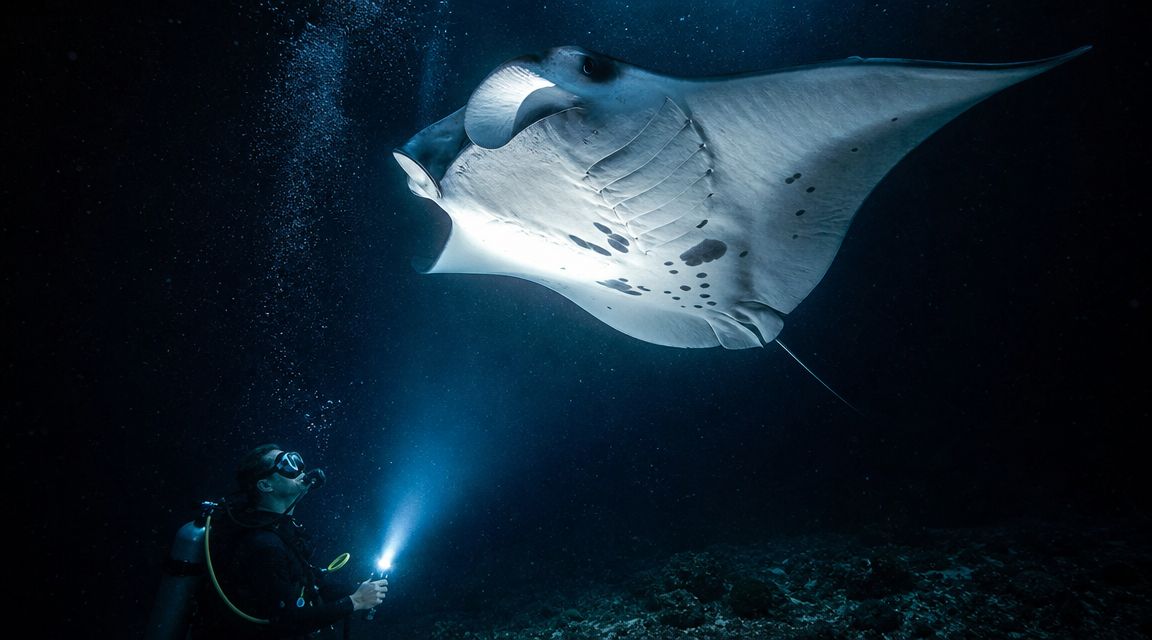
If you only book one iconic Kona dive, make it the manta trip. I'd steer people toward Garden Eel Cove because it's the stronger choice. The site's protected setting, better viewing area, and better reef structure make for a more dependable and enjoyable experience than more exposed alternatives.
If you've got non-divers in your group, that matters even more, because snorkelers can join the broader manta experience too. For the surface side of that adventure, check out the manta snorkel option. For divers, the direct booking page for the manta ray night dive is the one to look at.
Then decide how adventurous you want to get
The blackwater dive is a completely different animal. This isn't reef sightseeing. Kona black-water diving runs about 2–3 miles offshore over water that drops to roughly 3,000–8,000 feet, while divers stay clipped to a downline with a planned depth of about 50 feet, according to this Kona blackwater dive overview. It's controlled, but it's also technically demanding and absolutely not a casual add-on.
That's why I recommend it only to divers who already have solid buoyancy and are comfortable in unusual conditions. If that's you, book the blackwater dive here.
My trip-picking advice
Here's the short version:
- First Kona trip: Book reef diving plus the general Kona diving tours.
- Bucket-list marine life: Book the manta night dive.
- Experienced diver craving something rare: Book blackwater.
- Advanced diver who wants a more ambitious day: Look at the advanced long-range trip.
If you're on the fence between a standard reef day and mantas, choose mantas. Kona has many good reef dives. The manta experience is the one people build stories around.
Diving and Snorkeling for Everyone
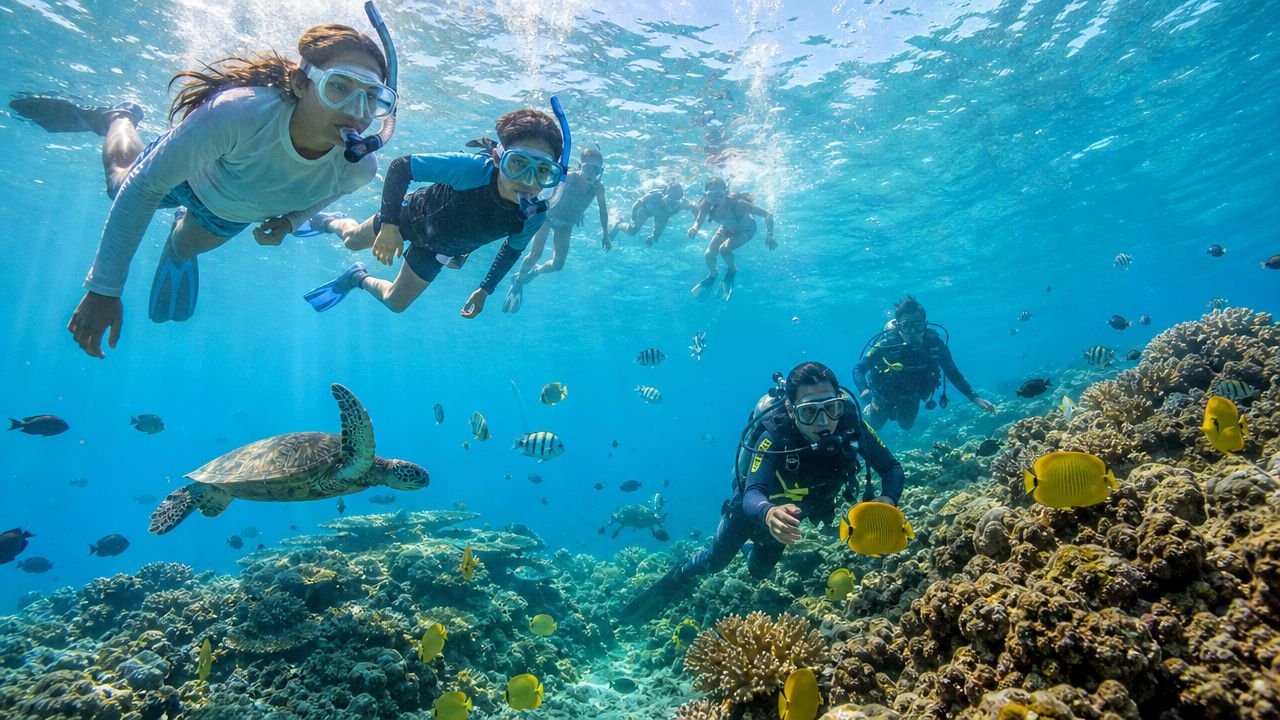
One reason Kona works well for mixed travel groups is that not everyone has to be on the same experience ladder. A brand-new vacationer can get into the water safely, while a certified diver can still book something more serious.
If you're new to scuba
For beginners, the right move is usually an introductory experience rather than forcing a full certification schedule into a short trip. A supervised discover-style dive lets you find out whether you enjoy breathing underwater before committing further.
That's the smart route for couples too. One person may want a certification path later. The other may decide snorkeling is more fun. Better to learn that on vacation than after buying gear.
If you're already certified
Certified divers should pick by goals, not ego. Not every diver needs the most advanced trip on day one.
A simple way to choose:
| Traveler type | Better fit |
|---|---|
| Recently certified diver | Standard reef charter |
| Diver returning after a break | Easier daytime diving first |
| Marine life focused diver | Manta night dive |
| Strong, current diver | Blackwater or advanced long-range |
For families and mixed groups, snorkeling often solves the scheduling problem. A diver gets the underwater fix. A non-diver still gets a memorable ocean experience, especially on manta-focused outings.
Best match by travel style
- Couples with different comfort levels: Split between scuba and snorkel options instead of forcing one shared activity.
- Families with teens or curious adults: Introductory scuba makes more sense than a rushed full course.
- Experienced dive travelers: Build the trip around signature dives, not just generic reef charters.
Booking Your Trip and Practical Logistics
Booking a dive trip should be simple. The operator should tell you what the trip is, who it's for, what to bring, and what happens if conditions shift. If any of that feels fuzzy, ask before you pay.
What to handle before you arrive
I'd get these things squared away early:
- Certification details: Have your cert card information ready.
- Trip choice: Don't book blackwater just because it sounds cool.
- Your budget expectations: This look at scuba diving costs in Hawaii helps frame what you're paying for.
- Transport and timing: Know exactly where you're meeting and how early you need to be there.
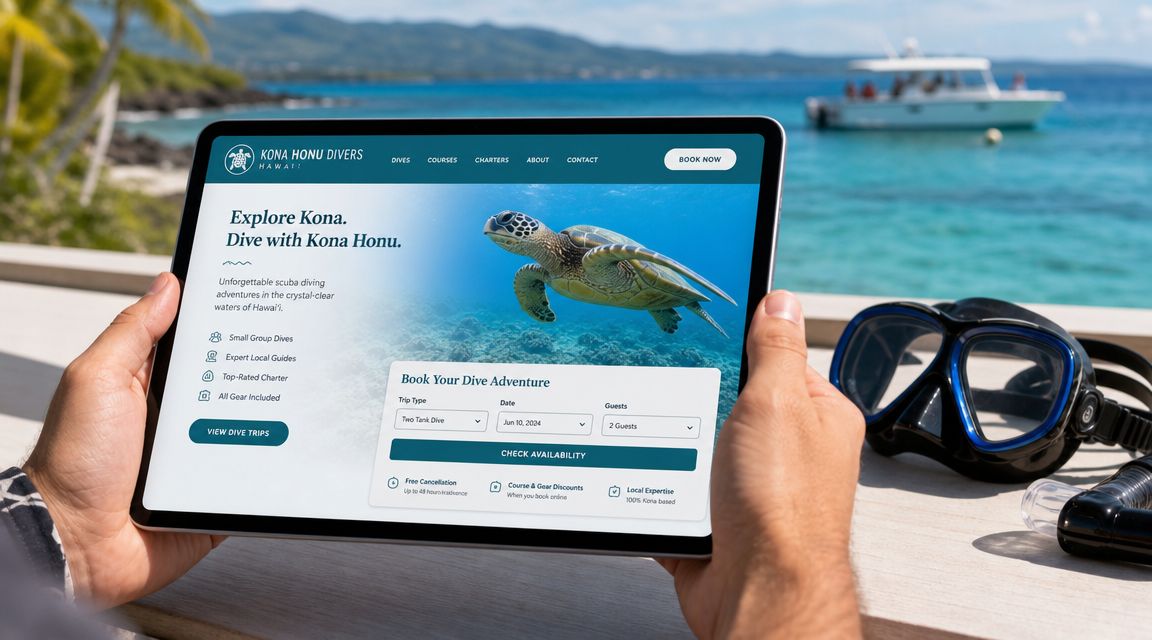
Kona Honu Divers states a 72-hour cancellation policy for most bookings on the company website. That's clear enough on refunds. The bigger traveler question is what happens on a disrupted dive day when weather or ocean conditions change. That's the part many operators explain poorly, and it's worth asking directly before your trip.
Seasickness is the problem people ignore until it's too late
If you're even slightly prone to motion sickness, prepare for it. Don't try to “tough it out” on a dive boat.
Useful options include the Ship-EEZ Seasickness Patch, Dramamine pills, Bonine pills, Sea Band wristbands, and ginger chews.
Bring your seasickness solution with you. Don't assume you'll find your preferred one at the last minute in town.
My practical recommendation
Ask three questions before booking any charter:
- What happens if conditions change on trip day?
- Is there site substitution if the original plan isn't ideal?
- If I'm unsure about seasickness, what do you recommend I take before boarding?
Those questions tell you very quickly whether an operator thinks like a traveler or just processes bookings.
Frequently Asked Questions and Local Tips
When should you dive Kona
You wake up in Kailua-Kona, the ocean looks calm, and you are glad you did not overbuild the itinerary. That is the right way to dive here.
Kona works year-round. The smarter move is matching the trip to your goal. Book the manta night dive if you want Kona's signature experience. Book a standard reef charter if you want easy, high-value diving with lots of bottom time. Book blackwater only if you are already comfortable in open ocean at night and want something genuinely different.
Conditions matter more than the month on the calendar. A good operator adjusts. Kona Honu's value is not just the destination. It is the way experienced crews choose sites, read the ocean, and keep the day enjoyable instead of forcing a bad plan.
What marine life should you expect besides mantas
Expect healthy reef life, lava tubes, arches, hard volcanic structure, and the kind of fish variety that keeps every dive interesting. You may also see turtles, eels, octopus, or larger pelagics passing through, but Kona is better approached with curiosity than a checklist.
That is part of why the diving feels so satisfying here. The reef dives give you the full setting, not just one headline animal. The manta dive is the specialist trip. Everything else is about the broader Kona underwater experience.
Can you bring your own gear
Yes, and you probably should bring the pieces that affect comfort and confidence the most.
Bring your own mask, dive computer, and exposure gear if you already know they fit well. A mask that never leaks and a computer you understand will improve the trip more than hauling every piece of equipment across the Pacific. For heavier gear, renting often makes more sense.
Ask ahead how Kona Honu wants personal gear labeled and stored on boat days. Good boat operations usually have a system. Use it. It keeps mornings faster and prevents the usual gear mix-ups.
Local planning tips that actually help
Stay close to Kailua-Kona. Shorter early-morning drives make dive days better, especially if you are doing multiple charters or a night dive.
Give yourself a light schedule after diving. You will enjoy the trip more if you are not rushing from the harbor to a formal dinner reservation or a long cross-island drive. Eat somewhere casual, hydrate, and leave room to be pleasantly tired.
One more tip. Keep one non-diving window open. The Big Island rewards a slower plan.
If you want the trip to go well, keep it simple:
- Pick the charter that matches your actual comfort level, not your ego.
- Bring the personal gear that matters most.
- Stay near the departure point.
- Do not stack every day with activities.
- If motion sickness is even a possibility, treat it before boarding, not after.
That last point decides a lot of dive days. A well-run boat, a crew that knows the coast, and a realistic plan for your skill level will do more for your trip than any glossy brochure ever will.