
The crystal-clear waters off the Kona coast are a diver's dream, offering a world of volcanic lava tubes, vibrant coral reefs, and encounters with majestic marine life. Planning your trip can feel overwhelming with so many unique options available. This guide breaks down the essential Kona diving experiences, providing the inside scoop on what makes each one special, what to expect, and how to choose the perfect adventure for your skill level.
From the world-famous Manta Ray Night Dive to surreal Black Water pelagic dives, we'll explore the best the Big Island has to offer. Consider this your comprehensive resource for planning an unforgettable underwater journey. For a full range of guided scuba diving tours on the Big Island, check out what local experts have to offer.
1. Manta Ray Night Dive – Manta Village
The world-famous manta ray night dive at "Manta Village" is the cornerstone experience of Kona diving. This unforgettable encounter involves divers kneeling on a sandy bottom, approximately 35 feet deep, around a central light source. This "campfire" of lights attracts immense clouds of plankton, the primary food source for manta rays.
As the plankton gathers, giant, graceful manta rays swoop in from the darkness to feed, performing an underwater ballet just inches above your head. It’s a surreal and bucket-list-worthy dive popularized by pioneers like Big Island Divers and researchers such as Keller Laros. Choosing an operator with a marine biologist guide enhances the educational value, providing insights into the behavior and conservation of these magnificent creatures. For those ready for this incredible experience, you can book a manta ray dive tour to secure your spot.
This decision tree helps determine if the Manta Village night dive is the right choice for you based on certification and comfort level.
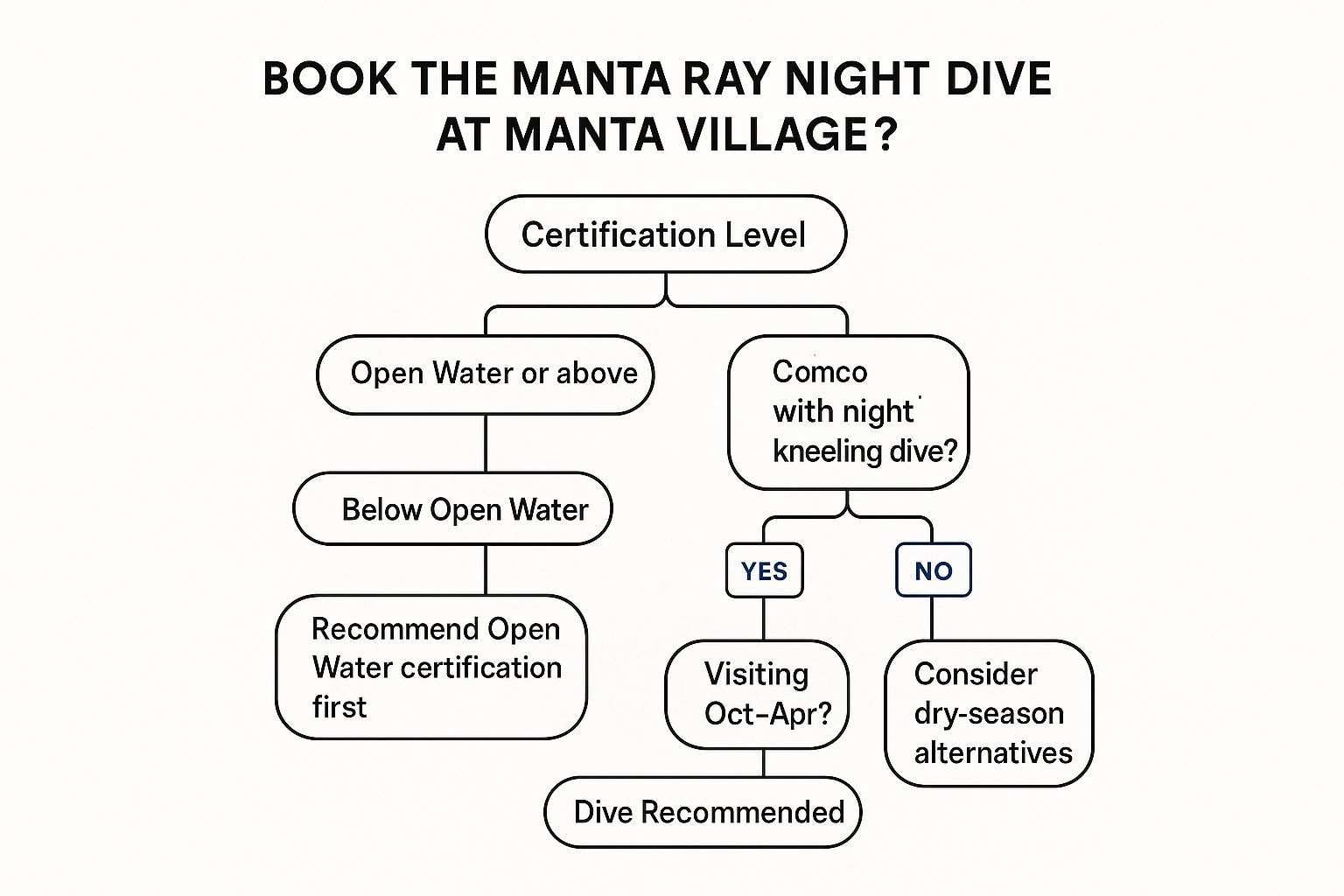
The visualization clarifies that while the dive is accessible to most certified divers, comfort with night conditions and kneeling on the ocean floor are key considerations.
Actionable Tips
- Buoyancy: Practice neutral buoyancy control before the dive, as you will be stationary on the bottom for an extended period.
- Seasickness: The boat is moored for the duration of the dive. If you're prone to motion sickness, take medication beforehand.
- Lighting: Bring a dive light, but consider one with a red-light mode to minimize disturbance to marine life before the main lights are on.
2. Cathedrals I & II – Lanai (Day Trip from Kona)
While not on the Big Island, a day trip to Lanai's "Cathedrals" is a legendary part of the broader Kona diving experience for those seeking something truly unique. These sites feature immense underwater caverns formed by lava tubes, where light filters down from openings above, creating a stained-glass window effect. Divers can explore vast, cathedral-like chambers, swim-throughs, and archways teeming with life.
The pristine conditions and dramatic topography, famously explored by Jacques Cousteau, make this a photographer's paradise. As these are more advanced dives often involving overhead environments, operators like Fair Wind Cruises and various private charters typically require an intermediate certification. The journey across the channel is part of the adventure, offering stunning views and the potential for marine mammal sightings. These trips are full-day excursions and are considered a premium adventure for certified divers.
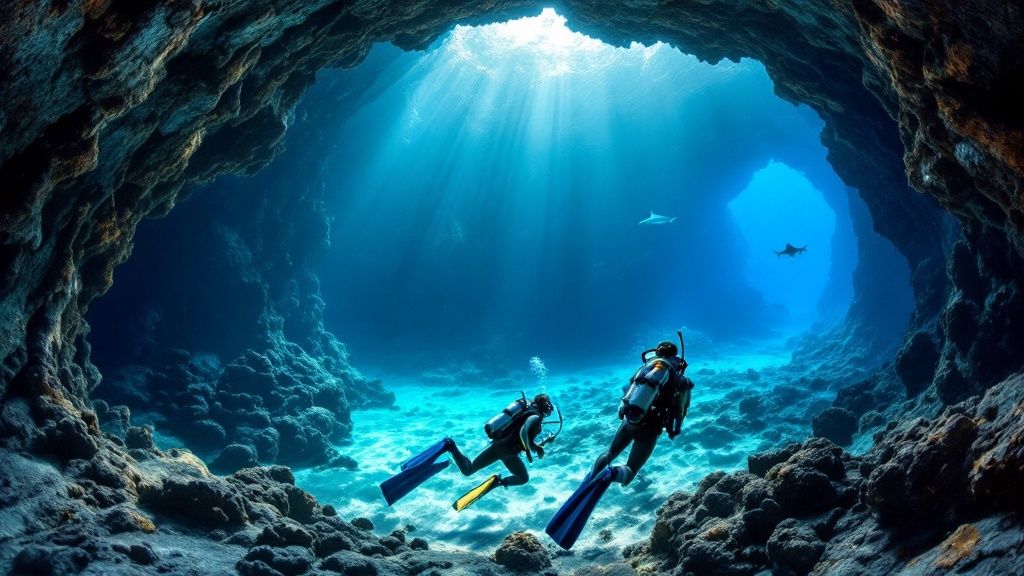
This dive is ideal for experienced divers comfortable with boat travel and overhead environments who want to witness some of Hawaii's most dramatic underwater geology. For those seeking other advanced dive tours closer to Kona, there are many deep reef and cavern options available.
Actionable Tips
- Book in Advance: Day trips to Lanai are limited and fill up quickly, so plan well ahead of your visit.
- Prepare for the Crossing: The channel crossing can be rough. Take seasickness medication if you are susceptible to motion sickness.
- Verify Certification: Confirm the required certification level with the dive operator before booking, as it is often intermediate or advanced.
3. Kealakekua Bay Marine Life Conservation District
Kealakekua Bay is a protected marine sanctuary rich in both history and biodiversity, marking it as a premier destination for Kona diving and snorkeling. Famous as the site where Captain James Cook landed and ultimately met his fate, the bay's protected status has cultivated one of Hawaii’s most vibrant and healthy coral reef ecosystems. The calm, crystal-clear waters offer exceptional visibility, making it an underwater photographer's paradise.
The bay is teeming with diverse marine life, including large schools of tropical fish, green sea turtles, and frequent pods of spinner dolphins that use the sheltered waters to rest. Diving here means exploring pristine coral gardens that slope gently from the shore. The site’s historical and ecological significance is highlighted by organizations conducting research and conservation efforts. To fully appreciate this special location, consider exploring some of the best Kealakekua Bay snorkeling tours.
Actionable Tips
- Access: The best dive spots are often reached by boat or a rigorous kayak paddle, as land access is restricted. A guided tour is highly recommended.
- Conservation Rules: Strictly adhere to all marine life conservation district rules. Do not touch, chase, or harass any marine life, and do not touch or stand on the coral.
- Best Time: Go early in the morning to avoid afternoon winds and crowds, ensuring the calmest conditions for your dive.
4. Black Water Diving – Pelagic Night Dives
For a truly unique and otherworldly experience, Kona diving offers the black water dive. This pelagic night adventure involves drifting tethered in the deep open ocean, thousands of feet above the seabed. Divers are suspended at a depth of around 50 feet to witness one of the planet's largest migrations, where bizarre and often bioluminescent deep-sea creatures ascend towards the surface to feed under the cover of darkness.
This dive is a macro photographer's dream, showcasing alien-like larval fish, jellies, and cephalopods you won't see anywhere else. The experience was pioneered by innovators like Jeff Milisen of Kona Honu Divers and has attracted National Geographic expeditions. It is an advanced dive that requires a high comfort level with night conditions and the vastness of the open ocean. You can learn more about this unique Kona blackwater dive tour to prepare for the adventure.

The image highlights the surreal nature of the black water environment, where divers encounter fascinating creatures emerging from the deep.
Actionable Tips
- Certification: An Advanced Open Water certification is typically required due to the nature of the dive.
- Mental Prep: Prepare mentally for the sensation of being in a deep, dark, open-water environment with no visible bottom.
- Optimal Conditions: Choose a dive during the new moon phase for the darkest conditions, which can encourage more deep-water creatures to rise.
5. Kona’s Lava Tube and Cavern Systems
The volcanic origins of the Big Island offer a unique dimension to Kona diving: exploring underwater lava tubes and expansive cavern systems. These dramatic geological formations, created by ancient lava flows, provide a thrilling swim-through experience for properly trained divers. Sites like Two Step (Honaunau Bay) and Place of Refuge showcase these intricate networks, which serve as natural shelters for shy marine life such as spiny lobsters, resting whitetip reef sharks, and vibrant nudibranchs.
Navigating these overhead environments requires a higher level of skill and awareness, making them an excellent next step for certified divers looking to expand their abilities. The play of light filtering through openings in the lava rock creates a stunning, cathedral-like atmosphere that is both serene and adventurous. Diving these systems with an experienced local guide is crucial for safety and for discovering the hidden critters that call these unique habitats home. Exploring these formations adds a sense of geological wonder to any dive trip.
Actionable Tips
- Buoyancy: Flawless buoyancy is non-negotiable to avoid kicking up silt, which can reduce visibility to zero, and to protect the delicate structures and inhabitants.
- Lighting: Always carry a primary and a backup dive light, even during the day, as areas within the tubes can be completely dark.
- Training: If you plan to explore these sites, consider completing a cavern diver specialty course to learn essential safety protocols and techniques.
6. Turtle Cleaning Stations and Coral Gardens
One of the most serene and reliable wildlife encounters in Kona diving involves visiting a turtle cleaning station. These vibrant, shallow coral gardens are natural spas where Hawaiian green sea turtles, or honu, gather to have parasites and algae removed by cleaner fish like the Hawaiian cleaner wrasse. This symbiotic relationship provides divers with an incredible opportunity to observe these gentle giants in their natural habitat as they patiently wait their turn for a cleaning.
Dive sites such as Turtle Pinnacle and areas within Honaunau Bay are famous for this activity, offering a relaxing and picturesque experience suitable for divers of all levels. The research and educational efforts by organizations like the Hawaii Sea Turtle Research Program have highlighted the importance of these sites. Many of these locations are also excellent for snorkelers, providing a fantastic shared experience. For those interested in seeing honu from the surface, you can learn more about Kona's snorkeling opportunities.
This is an ideal dive for anyone who appreciates marine life, underwater photography, and calm conditions. Observing this natural behavior is a gentle reminder of the intricate connections within the reef ecosystem.
Actionable Tips
- Respect the Wildlife: Per NOAA guidelines, always maintain a respectful distance of at least 10 feet from the honu. Never touch or block their path.
- Move Slowly: Approach these sites with calm, slow movements to avoid startling the turtles and disrupting their natural cleaning behavior.
- Timing is Key: Early morning dives often provide the best light and the most turtle activity at the cleaning stations.
- Bring a Camera: The shallow depths and excellent visibility make these sites perfect for underwater photography, but ensure you have the right settings prepared.
Kona Diving Experiences Comparison Chart
| Dive Experience | Core Features/Depth | User Experience/Quality ★★★★☆ | Value Proposition 💰 | Target Audience 👥 | Unique Selling Points ✨ |
|---|---|---|---|---|---|
| Manta Ray Night Dive – Manta Village | Shallow 35 ft, night dive with lights | Iconic, guaranteed manta sightings ★★★★☆ | $$ $130-180, premium night dive | Beginners to advanced divers 👥 | Up to 40+ mantas, unique night kneeling dive 🏆 |
| Cathedrals I & II – Lanai (Day Trip) | 35-65 ft, lava tube caverns | Exceptional visibility ★★★★☆ | $$$ More expensive, long boat ride 💰 | Intermediate & advanced divers 👥 | Dramatic lava formations, white tip sharks ✨ |
| Kealakekua Bay Marine Life Conservation | Surface to 100+ ft, protected sanctuary | Pristine coral & clarity ★★★★☆ | Free access, guided tours available 💰 | All skill levels & snorkelers 👥 | Historical site & marine sanctuary 🏆 |
| Black Water Diving – Pelagic Night Dives | 2000+ ft deep, vertical migration | Rare deep-sea encounters ★★★★★ | $$$$ $200-300, specialty dive 💰 | Advanced certified divers only 👥 | Unique pelagic creatures, scientific focus ✨ |
| Kona's Lava Tube and Cavern Systems | 20-80 ft, swim-through caves | Geological & marine diversity ★★★★☆ | $ Moderate cost | Various cert levels, trained recommended 👥 | Extensive lava tubes, swim-throughs ✨ |
| Turtle Cleaning Stations & Coral Gardens | 15-40 ft, shallow coral gardens | Relaxed, turtle encounters ★★★☆☆ | $ Budget friendly shore/boat dive 💰 | Beginners & all divers 👥 | Consistent turtles, beginner-friendly 🏆 |
Ready to Take the Plunge?
From the ethereal nighttime ballet of manta rays to the vibrant, sunlit coral gardens teeming with green sea turtles, Kona diving presents an unparalleled underwater adventure. The experiences detailed here, whether you're exploring ancient lava tubes or drifting through the inky abyss on a blackwater dive, represent some of the most unique and memorable encounters the ocean has to offer. Understanding the variety of dive sites, the importance of proper gear, and the commitment to eco-conscious practices are the foundational steps to a truly remarkable Big Island expedition. This guide equips you with the essential knowledge to not just see Kona’s underwater world, but to truly connect with it.
The key takeaway is that Kona’s marine ecosystem is as diverse as it is fragile. Choosing the right dive operator is crucial, not just for your safety and enjoyment, but for the preservation of these pristine environments. With a clear picture of what awaits, your next step is to select the adventures that excite you most. Mastering the dive through thoughtful preparation and responsible participation transforms a simple vacation activity into a profound experience. The magic of kona diving awaits, offering a vibrant world of discovery just beneath the waves.
Ready to experience the best of Kona diving for yourself? Let the expert crew at Kona Honu Divers guide you on an unforgettable journey. Their commitment to small group sizes, top-tier service, and marine conservation makes them the perfect partner for your underwater adventure on the Big Island.