
Ever wondered what it's like to dive in a giant, natural aquarium? That's what you get in Kona. The secret lies with the massive volcanoes, Mauna Loa and Hualalai. They stand guard over the coast, shielding it from the Pacific's notorious trade winds and creating some of the calmest, clearest water you'll ever dive in.
Why Kona Diving Is a World-Class Underwater Experience
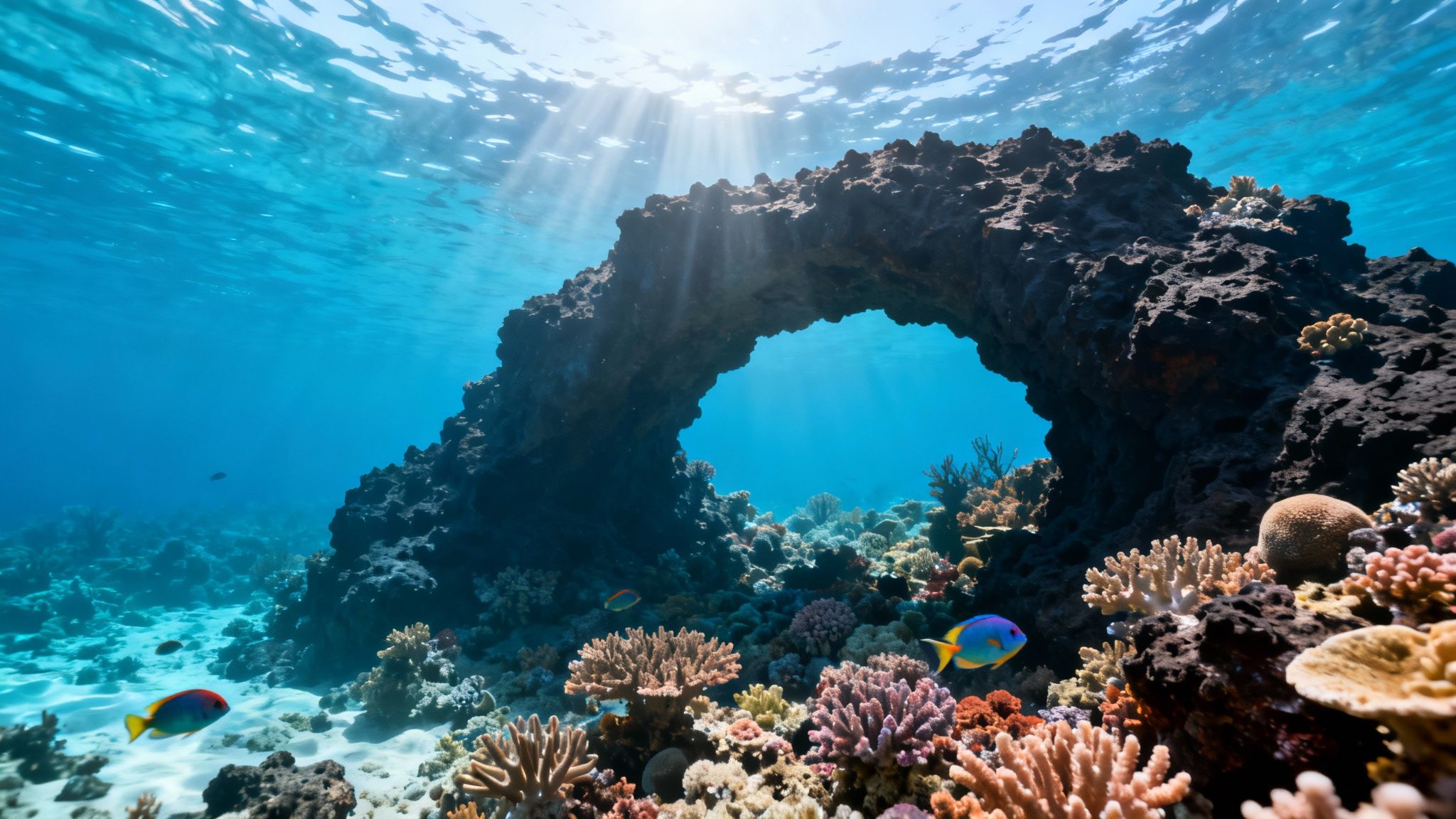
The Big Island’s unique geology is what truly sets its diving apart. Those volcanoes don't just block the wind; their ancient lava flows have created a breathtaking underwater world. Think dramatic lava tubes you can swim through, massive archways, and hidden caverns—all waiting to be explored. This protection results in incredibly calm seas and visibility that often stretches beyond 100 feet.
This serene, clear environment is the perfect canvas for a thriving ecosystem. Those volcanic structures are now draped in vibrant coral gardens, buzzing with an incredible amount of life. It’s a photographer’s dream and an explorer’s paradise.
The Evolution of a Premier Dive Destination
Diving in Kona wasn't always the global draw it is today. Back in the 60s and 70s, it was the hidden gem of a few adventurous locals. Now, word is out. The Kona coast hosts around 100,000 certified scuba dives every year, attracting over 150,000 divers from all corners of the globe. A handful of pioneering shops has grown into a community of over 50 operators, proving just how special this place is.
What fueled this boom? It’s the stories—the ones you tell after an unforgettable encounter with a gentle manta ray, a pod of playful spinner dolphins, or a wise old sea turtle. Experienced operators like us at Kona Honu Divers have been part of this journey from the beginning, committed to providing safe, respectful, and genuinely awe-inspiring diving tours. We know these waters like the back of our hands. To learn more about what sets our little corner of the world apart, check out our guide on what makes diving in Kona so unique.
To give you a quick snapshot, here’s a look at what makes Kona a bucket-list destination for divers.
Kona Diving At A Glance
This table breaks down the key ingredients that make Kona's underwater world so unforgettable.
| Feature | Details |
|---|---|
| Water Clarity | Consistently amazing visibility, often exceeding 100 feet (30+ meters), thanks to volcanic filtration and calm seas. |
| Marine Biodiversity | Home to over 20% of Hawaii's endemic fish species, green sea turtles, spinner dolphins, manta rays, and occasional whale sharks. |
| Volcanic Topography | Dramatic underwater landscapes with lava tubes, archways, and caverns shaped by ancient lava flows. |
| Calm Conditions | Sheltered from strong trade winds by Mauna Loa and Hualalai volcanoes, creating ideal diving conditions almost all year. |
| Accessibility | A huge variety of dive sites are just a short boat ride from Honokohau Harbor, perfect for everyone from beginners to seasoned pros. |
From the calm conditions to the incredible topography, it’s a combination you just don't find anywhere else.
Experience The World-Famous Manta Ray Night Dive
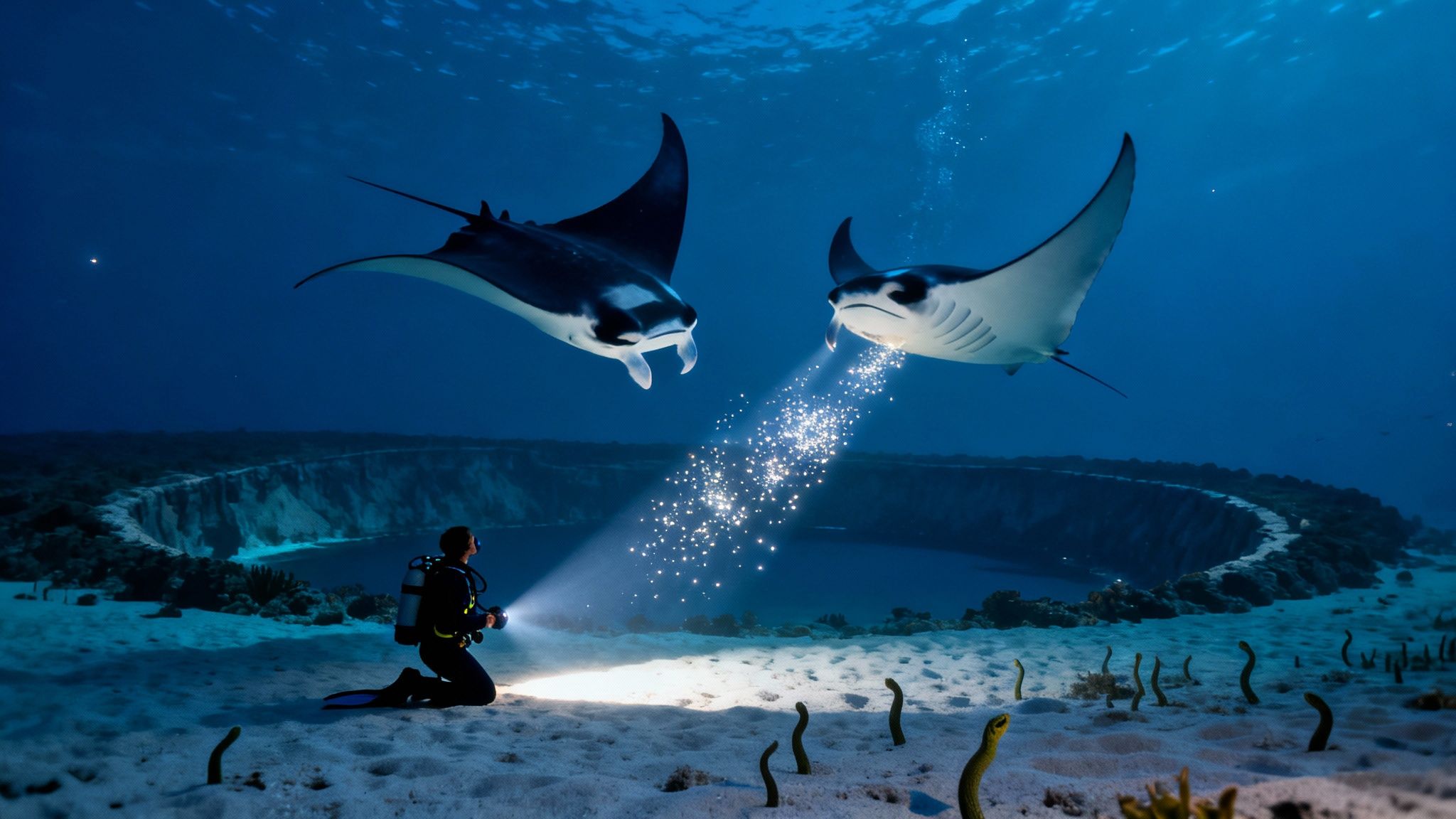
If you ask any diver about Kona, one thing immediately comes to mind: the Manta Ray Night Dive. It's the crown jewel of Big Island diving, a bucket-list spectacle that feels more like an underwater ballet than a scuba trip. And the best part? It started completely by accident.
Imagine this: you're kneeling on the ocean floor as the last bit of daylight vanishes. Your dive light cuts through the dark water, attracting clouds of plankton. Then, out of the deep blue, they arrive. Massive, gentle giants with wingspans stretching up to 12 feet glide in, performing effortless barrel rolls just inches above your head as they feed. It’s a truly magical, almost surreal encounter.
Why Garden Eel Cove Is The Superior Choice
While you can see mantas at a couple of spots, Garden Eel Cove is hands-down the superior location. Think of it as a natural amphitheater built for this exact show. The bay's protected location shields divers from strong currents, which means calmer, safer conditions and a better viewing area to watch the action unfold.
This setup is better for everyone—divers and marine life alike. By having divers stay in one place, we minimize our impact on the surrounding reefs, which are noticeably healthier and more vibrant here than at other sites. This thoughtful approach lets the mantas feed naturally and gives you a front-row seat to one of nature's greatest performances. If you're curious to learn more, check out our deep dive on what the manta ray night dive is all about.
What began in the 1990s as a happy accident—when a hotel pointed lights into the water and unintentionally attracted mantas—has evolved into a world-famous, sustainable dive. Since then, local operators and researchers have documented over 10,000 sightings and identified more than 300 individual mantas by their unique spot patterns.
Your Manta Encounter With Kona Honu Divers
We believe a once-in-a-lifetime experience deserves a personal touch. That’s why we run small groups, ensuring you have a safe, intimate, and ethical encounter with these incredible animals. You’re not just another person in a massive crowd; you’re our guest, and our expert guides are there to give you their full attention.
A great dive is about more than just what you see—it's about feeling comfortable, safe, and completely in awe of the moment. Our crew lives and breathes this philosophy, and their passion for these gentle giants is contagious.
Choosing the right operator makes all the difference. We are deeply committed to protecting the mantas and their habitat while giving you an adventure you’ll be talking about for years to come. Explore our manta ray dive tours to book your spot.
The Manta Ray Night Dive isn't just another dive on your logbook. It’s a profound connection with the ocean's gentle giants—a powerful reminder of the beauty hidden just beneath the waves that stays with you long after you've dried off.
Ready to witness the underwater ballet for yourself? Don't miss your chance to be part of this unforgettable Kona diving adventure.
Exploring Kona’s Most Beloved Dive Sites
While the manta ray night dive is an absolute showstopper, it’s really just scratching the surface of what Kona has to offer. This coastline is a diver's playground, with more than 50 unique dive sites tucked away along its shores. The very same volcanic activity that protects us from the trade winds also created a spectacular underwater world filled with lava tubes, dramatic arches, and vibrant coral gardens.
Every single dive tells a new story. One day you could be gliding through a massive lava arch, the next you might be watching green sea turtles queue up for their turn at a "cleaning station." It’s this incredible variety that keeps divers coming back year after year, always wondering what they’ll find around the next corner. There’s always another world to explore, just a short boat ride away.
When you dive with our crew at Kona Honu Divers, you're not just getting a guide; you're getting an insider's look. We know where the octopuses like to hide out and the best ledges for spotting a napping whitetip reef shark.
Crescent Beach: Where Turtles Relax
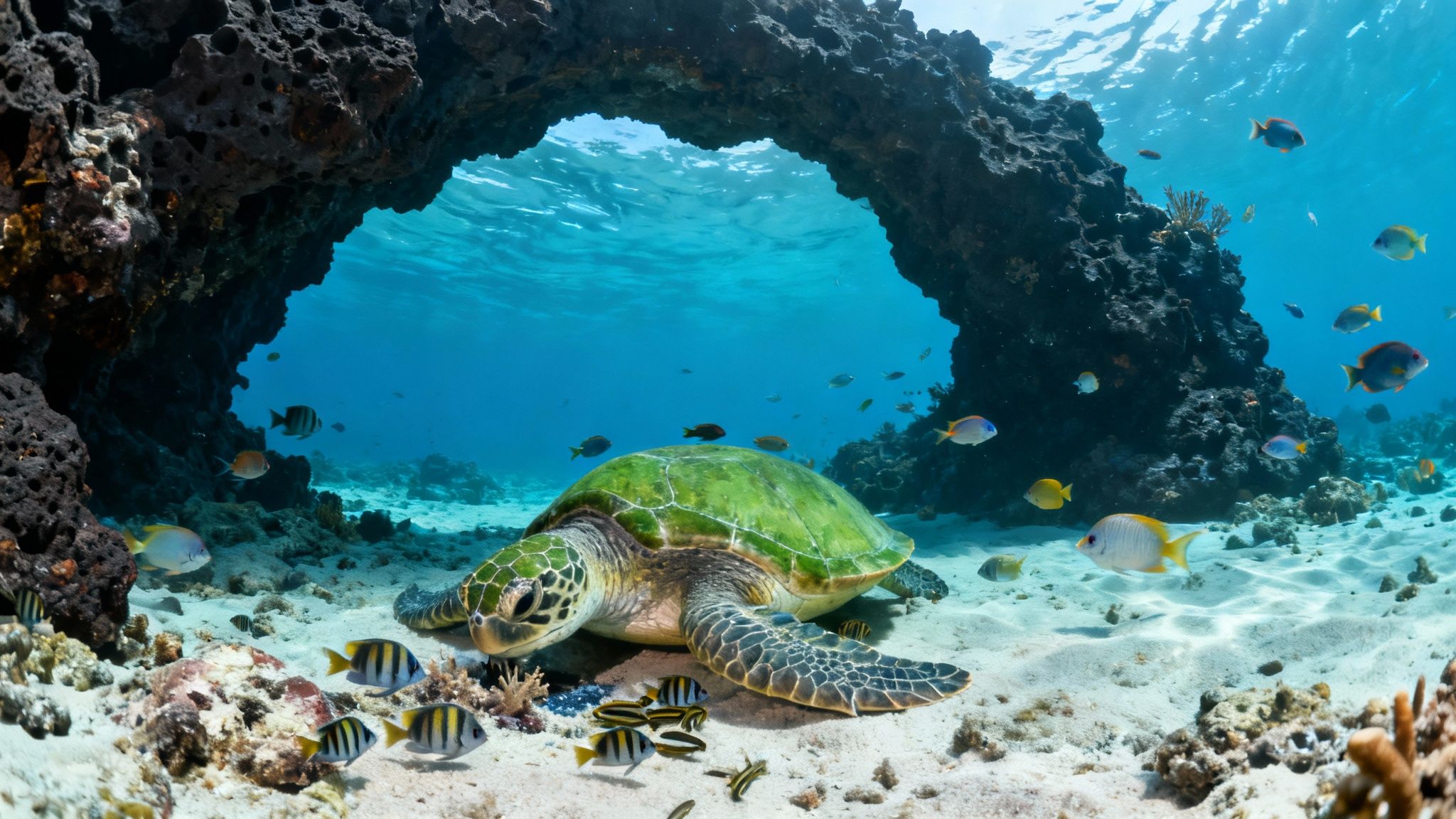
If you want to see how volcanic geology can create a perfect sanctuary for marine life, look no further than Crescent Beach. This spot is famous for its breathtaking lava arches and swim-throughs, which make you feel like you're exploring the ruins of an ancient, submerged city.
But the real celebrities here are the Hawaiian green sea turtles, our beloved honu. Crescent Beach is home to several bustling turtle cleaning stations, where the turtles patiently wait for small reef fish to pick off parasites and algae. Watching this underwater spa day in action is a front-row seat to one of nature’s coolest partnerships and an amazing way to see these gentle giants up close.
- Skill Level: All Levels
- Typical Depth: 25-60 feet (8-18 meters)
- What You'll See: Green sea turtles, whitetip reef sharks, moray eels, and stunning lava formations.
Two Step: An Easy Entry to an Underwater Metropolis
For divers who love easy access without compromising on incredible sights, Two-Step (Honaunau Bay) is a non-negotiable stop. It gets its name from two natural lava rock "steps" that make for one of the easiest shore entries you'll ever find. The second you slide into the water, you’re immersed in a thriving, dense coral reef.
This protected bay is basically a bustling city for reef fish. You'll be surrounded by clouds of yellow tang, while parrotfish and butterflyfish dart through the intricate coral gardens. Keep an eye on the rocky crevices for moray eels peeking out. It's also not unusual for a pod of spinner dolphins to use the bay for a daytime nap, which is a truly magical encounter.
Two-Step is the perfect reminder that you don't always need a deep, technical dive to have an incredible experience. Sometimes the most vibrant worlds are waiting just a few steps from the shore.
The combination of easy entry and jam-packed marine life makes this a fantastic spot for a relaxed afternoon dive, especially for photographers who want to maximize their bottom time.
Whether you're exploring the arches at Crescent Beach or the busy reefs of Two-Step, Kona diving always delivers. Our diving tours are all about showing you the very best of this underwater paradise, matching you with sites that fit your comfort level and diving dreams.
Ready to see what else lies beneath the waves in Kona?
Advanced Diving And The Pelagic Magic Blackwater Dive
For certified divers with a real taste for adventure, Kona offers experiences that go way beyond the beautiful reefs and into the profound, mysterious deep. If you're ready for a dive that feels less like swimming and more like floating through outer space, it’s time to explore the advanced side of Kona diving. This is where you get to navigate intricate lava tubes, explore deeper reef structures, and really test your skills.
These dives demand more than just a certification card; they require sharp skills, confidence, and the steady hand of an expert guide. Finding your way through labyrinthine volcanic formations or managing deeper profiles requires a crew that knows these sites like the back of their hand. At Kona Honu Divers, our experienced team makes your safety the absolute top priority, allowing you to push your boundaries and see a side of Kona few ever get to.
But for the ultimate thrill, nothing compares to Kona's most otherworldly adventure: the Pelagic Magic Blackwater Dive.
Witness The Planet's Largest Migration
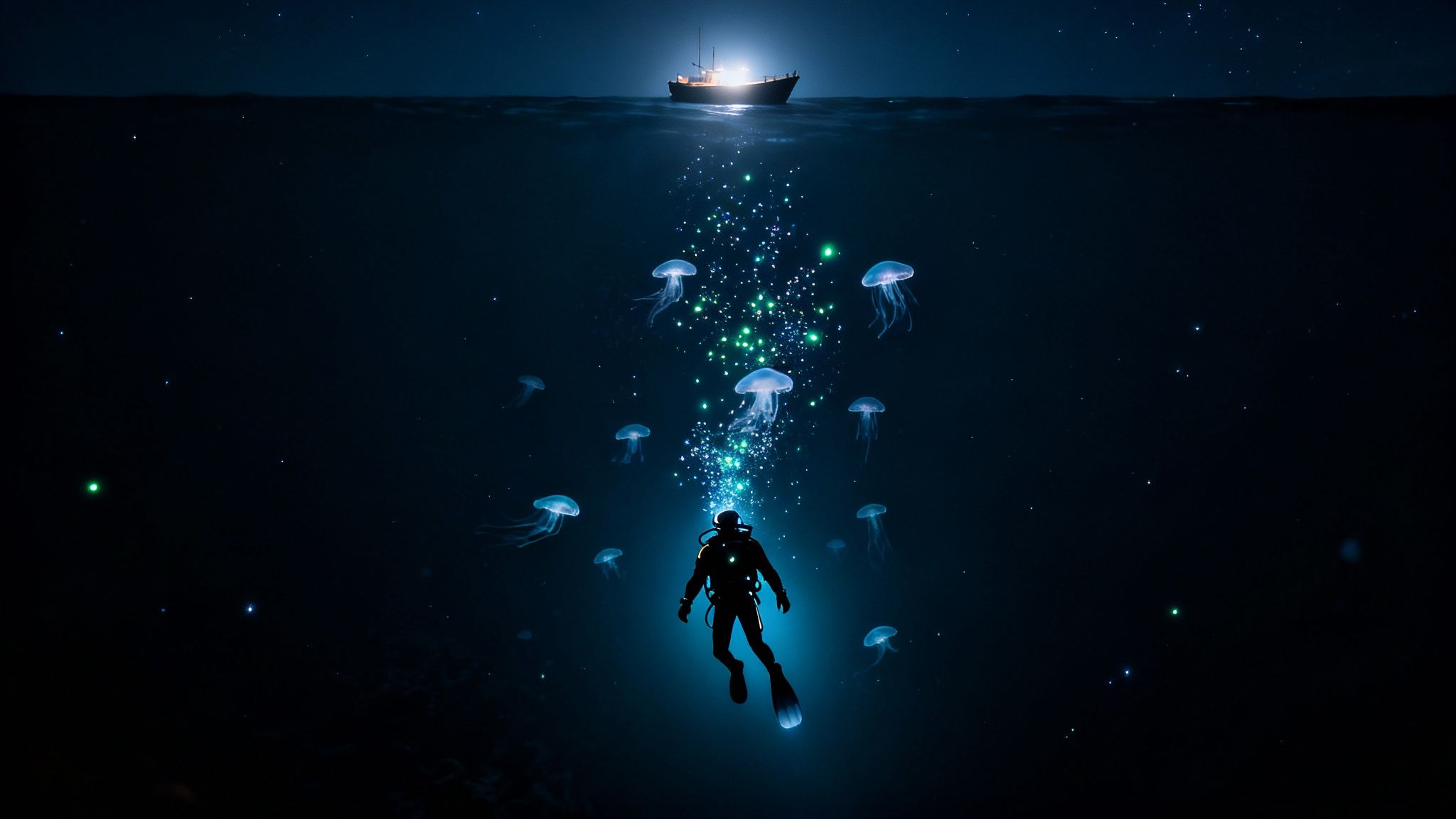
Picture this: you're suspended in the inky blackness of the open ocean, miles from shore, with thousands of feet of water right below you. You’re tethered to the boat, a single beacon of light in an infinite void. This is the stage for the planet’s largest vertical migration, and you have a front-row seat.
Every single night, an untold number of bizarre, bioluminescent, and often transparent creatures rise from the abyss to feed near the surface. You'll encounter organisms that look like they belong on another planet.
- Larval Creatures: See juvenile fish, crabs, and lobsters in their alien-like larval stages.
- Jellyfish and Siphonophores: Encounter pulsating jellies and long, stringy siphonophores glowing with an eerie light.
- Cephalopods: Spot tiny, iridescent squid and octopuses hunting in the darkness.
This isn't just a dive; it’s a journey into a world of living light. The experience was pioneered right here in Kona, where deep ocean trenches lie remarkably close to shore. While it’s now copied around the world, the dive was perfected here. Commercial operations began running these tethered night dives between 2013 and 2015, making this incredible phenomenon accessible to adventurous divers.
Why Kona Is The Blackwater Capital
Kona’s unique geography is the secret to its blackwater diving success. The steep volcanic slopes of the Big Island plunge directly into the deep sea, meaning we can access thousands of feet of water just a few miles offshore. This proximity to the pelagic zone is unmatched, making the trip to the dive site short and the experience absolutely world-class.
The Blackwater Dive is a humbling, mind-altering experience. Floating in the deep, surrounded by creatures of light, you realize just how vast and mysterious our oceans truly are. It’s an adventure that redefines what you think is possible on a dive.
At Kona Honu Divers, we have perfected the art of the blackwater dive, ensuring a safe yet profoundly thrilling adventure. Our crew knows the open ocean at night and manages the tethers and lights to create a secure and mesmerizing environment. You can learn more about this unique adventure in our guide to blackwater diving in Kona.
This is more than just an advanced dive; it’s a peek into one of the last truly wild frontiers on Earth.
How To Plan Your Perfect Kona Diving Trip
Alright, let's get down to the fun part: turning that Kona diving dream into a real plan. A little bit of forethought goes a long way in making sure your trip is seamless, from picking the right time of year to crafting an itinerary that hits all your must-see spots.
As you plan, you'll be connecting with local companies to book your dives, stays, and maybe a luau or two. If you're curious about how marine tour operators in Hawaii connect with visitors like you, this resource on Hawaii Search Engine Marketing for Marine Businesses offers some interesting behind-the-scenes insights.
Choosing The Best Time To Visit
One of the absolute best things about diving here in Kona is that there's truly no "off-season." The massive volcanoes of the Big Island act as a natural shield, keeping the Kona coast remarkably calm and clear almost all year round. That said, there are a few subtle differences between the seasons that might sway your decision.
-
Summer (May to September): This is classic Kona. The water is at its warmest, typically a balmy 78-82°F (25-28°C), and the seas are usually flat as glass. It's prime time for manta ray encounters, as they are often most active during these months.
-
Winter (October to April): The water temperature dips just a bit, hovering around 74-77°F (23-25°C)—still incredibly comfortable, especially with a 3mm wetsuit. The real magic of winter, though, is the arrival of the humpback whales. While we can't dive with them, hearing their hauntingly beautiful songs reverberate through the water on a dive is an experience you will never, ever forget.
Honestly, you can't go wrong. It really just boils down to whether you prefer warmer water or the chance to have a humpback whale soundtrack for your dive.
Packing And Gearing Up For Your Dives
Packing for a dive trip is an art—you want to be prepared for anything without lugging your entire closet across the Pacific. Here's a quick checklist of what you should bring, plus the scoop on our rental gear.
What to Pack:
- Dive Certifications & Logbook: The essentials! Don’t leave home without them.
- Swimsuits & Rash Guards: Pack at least two. Nothing's worse than pulling on a damp suit for your second dive.
- Reef-Safe Sunscreen: This is non-negotiable. Help us protect the fragile coral you're coming to see.
- A Warm Layer: A simple hoodie or windbreaker makes all the difference on the boat ride back after a dive.
- Your Personal Gear: While we have excellent rental equipment, nothing beats the comfort and fit of your own mask, snorkel, fins, and computer.
Here at Kona Honu Divers, we take pride in our top-of-the-line rental fleet, which is meticulously serviced for your safety. Better yet, we offer a huge perk for our certified divers: complimentary nitrox. Diving on enriched air means you get more bottom time, which translates to more moments with turtles, eels, and all the incredible life on our reefs.
Sample Itineraries For The Ultimate Kona Experience
To give you an idea of what's possible, we've sketched out a few sample itineraries. Think of these as a starting point—we can always mix and match to create the perfect underwater adventure just for you.
Sample Kona Diving Itineraries
These plans offer a great way to structure your trip, whether you want a taste of everything or want to focus on a specific underwater experience.
| Itinerary Focus | Day 1 | Day 2 | Day 3 | Best For |
|---|---|---|---|---|
| The Classic Kona | 2-Tank Morning Reef Dive to explore lava tubes and meet local honu (turtles). | Afternoon dive followed by the world-famous Manta Ray Night Dive. | Rest and explore Kona town, or add a relaxed shore dive at Two-Step. | First-time visitors who want to see the iconic highlights. |
| The Adventurer | 2-Tank Advanced Morning Dive exploring deeper reefs and unique topography. | Take the day to relax, then gear up for the thrilling Pelagic Magic Blackwater Dive. | A final 2-Tank Morning Reef Dive at a site like Crescent Beach. | Experienced divers seeking Kona’s most unique and challenging dives. |
| The Manta Enthusiast | 2-Tank Manta Ray Night Dive & Snorkel trip. | Daytime snorkel at Kealakekua Bay to see vibrant reefs. | Repeat the Manta Ray Night Dive at a different location for a new perspective. | Divers whose primary goal is to spend as much time as possible with the gentle giants. |
No matter which path you choose, the whole crew at Kona Honu Divers is here to make your trip unforgettable. We're passionate about what we do, and we can't wait to share the magic of our home with you.
Ready to jump in?
Your Kona Diving Questions, Answered
We get a lot of questions from divers gearing up for their Kona trip, and we love answering them. Getting the details sorted out ahead of time means you can relax and focus on the incredible underwater adventure waiting for you. Here are some of the most common things people ask.
What Is The Best Time Of Year For Diving In Kona?
Honestly, there's no bad time to dive in Kona. The coast is so well-protected that we have great conditions year-round. That said, if you're looking for the absolute calmest, warmest water, the summer months from May to September are usually fantastic. This also tends to be when manta ray activity is at its peak.
But don't count out the winter! There's nothing quite like being on a dive and hearing the haunting songs of humpback whales echoing through the water. It’s a truly magical soundtrack to your dive.
Do I Need To Be A Certified Diver?
Nope! You don't need a certification to experience Kona's underwater world. Of course, you need to be certified to go on our regular scuba charters, but we have amazing options for everyone.
You can join a snorkel trip to see the majestic manta rays or try our introductory 'Discover Scuba Diving' experience. This lets you get a feel for breathing underwater and explore a beautiful reef with one of our instructors right by your side.
What Makes The Garden Eel Cove Manta Dive So Special?
Ah, Garden Eel Cove. It's world-famous for a reason and is hands-down the best place for the manta ray night dive. The bay is shaped like a natural amphitheater, which keeps the water conditions nice and calm.
This unique layout allows us to have divers kneel on the sandy bottom in a designated spot. It’s the perfect setup for incredible, up-close views of the mantas while protecting the reef and ensuring a safe, unforgettable encounter for everyone.
What Marine Life Can I Expect To See?
Kona is bursting with life! Beyond our famous manta rays, on any given dive you're almost certain to run into some of our other local residents.
- Hawaiian green sea turtles (honu) cruising the reef
- Pods of playful spinner dolphins
- Whitetip reef sharks taking a nap on the seafloor
- Inquisitive moray eels poking their heads out of lava tubes
- Elusive octopuses showing off their camouflage skills
- Schools of colorful reef fish like butterflyfish, triggerfish, and parrotfish
Every single dive is different. You just never know what you'll find, and that's the real magic of diving here.
Ready to see it all for yourself? We offer a wide range of diving tours that fit any experience level.