
Picture this: you're sinking into unbelievably clear, turquoise water. All around you are ancient lava tubes, dramatic underwater arches, and vibrant coral reefs absolutely buzzing with life. That's what diving in Kona is all about. The Big Island of Hawaii offers some of the most incredible—and consistently amazing—underwater adventures on the planet, all thanks to its unique geology and protected coastline.
Why Kona Is a World-Class Diving Destination
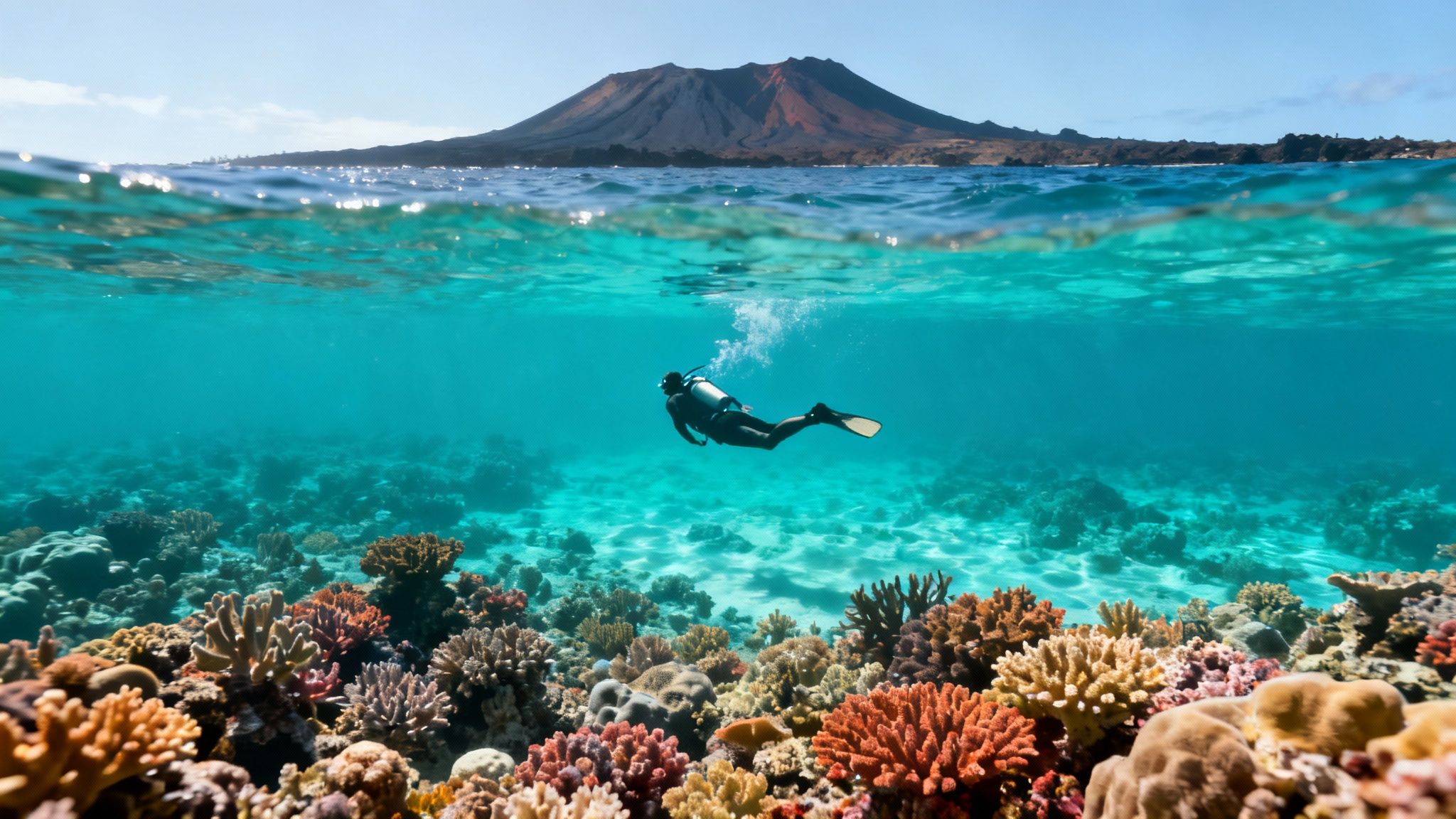
The Kona coast really is a diver's dream. It's like nature went out of its way to build the perfect underwater playground. Tucked away behind the massive volcanoes of Mauna Loa and Hualālai, the waters here are shielded from the powerful trade winds that batter other parts of the island. This natural barrier keeps things calm and clear, creating exceptional dive conditions year-round. It’s perfect for everyone, from first-timers blowing their first bubbles to salty old pros.
But what really puts Kona on the map are its three signature diving experiences. Each one is a completely different world, promising a new kind of adventure every time you hit the water.
The Three Pillars of Kona Diving
- Spectacular Daytime Reefs: This is classic Hawaiian diving at its best. You'll explore sun-drenched coral gardens, navigate through old lava tubes, and swim alongside massive schools of colorful tropical fish. It's a chance to see the raw, volcanic beauty that formed these islands.
- The World-Famous Manta Ray Night Dive: Imagine an underwater ballet where giant, graceful manta rays swoop and glide right over your head, feeding on plankton drawn to your dive lights. It’s a true bucket-list experience, and honestly, nothing else in the world compares.
- The Otherworldly Blackwater Dive: This one is for the true adventurers. You'll drift in the deep, open ocean at night and watch as bizarre, bioluminescent creatures rise up from the abyss. Divers often say it feels like floating through outer space.
We've got a quick breakdown here to help you see what makes each Kona dive so special.
Kona Diving Experiences at a Glance
| Dive Type | Best For | Key Marine Life | Experience Level |
|---|---|---|---|
| Morning Reef Dive | Vibrant coral, lava tubes, and classic Hawaiian marine life. | Tropical fish, eels, turtles (honu), dolphins, octopuses. | All levels, from beginner to advanced. |
| Manta Ray Night Dive | An iconic, up-close encounter with gentle giants. | Giant manta rays, plankton, nocturnal critters. | All levels (snorkeler-friendly too). |
| Blackwater Dive | Seeing bizarre, bioluminescent creatures from the deep. | Pelagic jellies, larval fish, strange invertebrates. | Advanced divers comfortable in open ocean. |
This table just scratches the surface, but it gives you a good idea of the sheer variety Kona offers.
Diving on the Kona coast is defined by these incredible volcanic landscapes and the rich ecosystem they support. You have sites like Turtle Pinnacle, which acts as a crucial "cleaning station" where Hawaiian green sea turtles—our local honu—congregate in huge numbers. Visibility here often pushes past 80 to 100 feet, and the water temperature is comfortable enough for diving any day of the year.
Kona isn't just a place to go diving; it's a destination that offers a profound connection to the marine world. The combination of pristine conditions, unique volcanic topography, and iconic marine encounters makes every descent unforgettable.
Whether you’re dying to explore those lava-formed reefs or witness the magic of the mantas, Kona has an adventure waiting for you. The sheer variety and quality of the Kona diving scene is something truly special. You can get a deeper look at what Kona is famous for underwater in our detailed article. Our full range of scuba diving tours on the Big Island is designed to show you the absolute best of this underwater world.
Exploring Kona’s Underwater Lava Landscapes
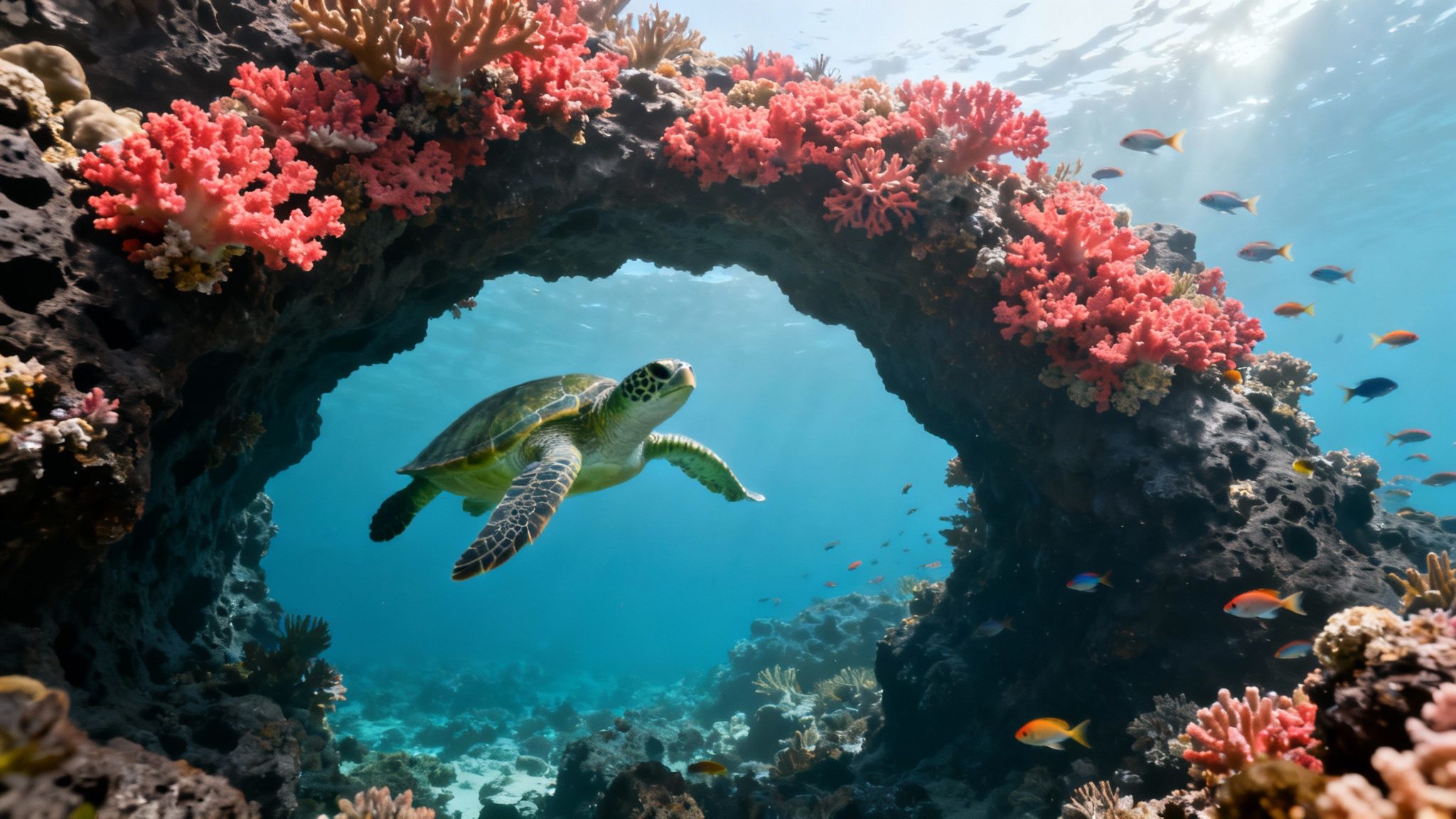
The manta ray night dive might get all the fame, but don’t sleep on Kona’s daytime diving. This is where you truly connect with the Big Island's volcanic soul. Millennia of lava flows have carved out a spectacular underwater world filled with dramatic lava tubes, massive archways, and hidden caverns just waiting for you.
This isn't your average sandy-bottom reef dive; it's a journey through geologic time. The ancient volcanic rock acts as the perfect anchor for coral to latch onto, creating some of the most vibrant and healthy reef systems you'll ever see. It's like swimming through a submerged cathedral, with sunlight streaming through cracks in the overhead lava rock.
Iconic Dive Sites and Their Residents
The Kona coast is absolutely packed with world-class dive spots, each with its own vibe. With visibility that often pushes past 100 feet, you get a front-row seat to all the action. Here are just a few of the legendary sites that make our daytime charters so unforgettable.
- Turtle Pinnacle: This spot is famous for a good reason. Think of it as a natural "spa" for Hawaiian green sea turtles, or honu. You can literally watch them line up to get cleaned by surgeonfish and other reef fish that pick algae and parasites off their shells. It's an amazing thing to witness.
- Golden Arches: Just like the name says, this site is dominated by a breathtaking lava archway you can easily swim through. It’s almost always swarming with huge schools of bright yellow tangs, making it feel like you’re swimming through a cloud of gold.
- Au Au Crater: This collapsed lava dome creates a unique bowl-shaped dive site with walls that drop off into the deep blue. It's a great spot for bigger animals, but the real treasures are often hiding in plain sight. Keep your eyes peeled for masters of disguise like the frogfish, which can change its color and texture to perfectly match the surrounding rock.
These are just a taste of what Kona has to offer. Going with a guide who knows the nooks and crannies is the best way to make sure you don't miss a thing.
A Sanctuary for Unique Marine Life
All that complex lava rock creates the perfect home for an incredible variety of marine life. Beyond the turtles and big schools of fish, you’ll find moray eels poking their heads out of holes, octopuses blending seamlessly into the reef, and countless species of colorful fish darting everywhere.
The real magic of Kona's reefs lies in their structure. The lava tubes and caverns aren't just beautiful to look at; they are the foundation of a thriving, dynamic ecosystem that supports an incredible density of life.
The health of these reefs is a direct result of the clean, clear, nutrient-rich waters that bless the Kona coast. This combination of pristine conditions and wild underwater architecture makes every single dive a new adventure.
At Kona Honu Divers, we've spent decades exploring these sites and know them like the back of our hands. Our guides are passionate about sharing the wonders of Kona's underwater world and helping you have a safe, unforgettable trip. Come see for yourself why so many of our divers come back year after year to explore these reefs with us.
Ready to see these incredible lava formations for yourself? You can explore all our guided adventures on our Kona diving tours page and book your next underwater journey today.
The Unforgettable Manta Ray Night Dive
This is the one. It's the single experience that puts Kona diving on the world map. If the daytime reefs are about exploring a vibrant volcanic playground, then the Manta Ray Night Dive is pure, unfiltered magic. Honestly, it's an encounter so profound and mesmerizing that it stays with you long after you've dried off.
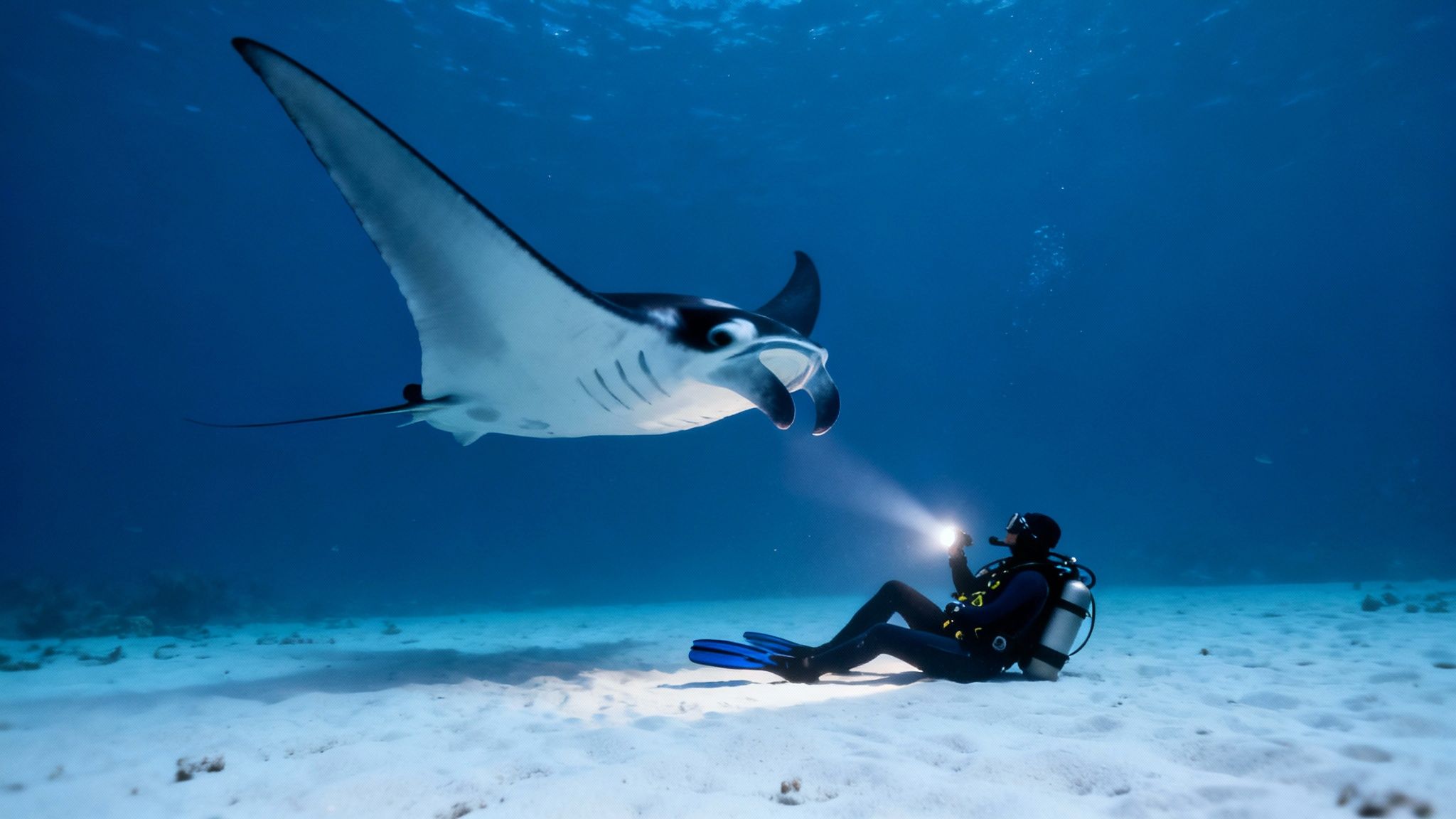
The whole setup is brilliantly simple. Just after sunset, you'll gear up and descend into the warm Pacific, finding a comfortable spot on the sandy ocean floor. Your guide then sets up powerful, upward-facing lights, creating what we all lovingly call the "campfire." This intense beam of light acts like a magnet for swarms of plankton, which just happens to be the manta rays' favorite meal.
And then, the show begins.
Gliding out of the darkness, the giants appear. These are impossibly graceful manta rays, some with wingspans stretching over 16 feet, and they soar right into the light. You're front row for a silent, weightless ballet as they swoop and barrel-roll just inches above your head in a breathtaking feeding frenzy. It's a moment that feels both primal and completely otherworldly.
Why Kona is the Manta Ray Capital
What makes this dive truly special is just how reliable it is. The Kona coast isn't just a place where you might see mantas; it's one of the most consistent locations on the entire planet for this specific encounter. The unique underwater landscape and calm, nutrient-rich waters have created the perfect nightly buffet.
This isn't just talk, either. The numbers from famous sites like "Manta Heaven" and "Manta Village" show an incredibly high success rate, with sightings happening on nearly every single trip. This consistency is exactly why divers travel from all corners of the globe for this one-of-a-kind Kona experience.
The history behind the dive is pretty cool, too. It started organically back in the 1990s when divers noticed mantas were drawn to the lights from a local hotel shining on the water. Some savvy dive operators realized they could recreate this phenomenon out in the open ocean, and just like that, the world-renowned attraction we know today was born.
The Importance of Responsible Tourism
When you have an encounter this popular, a huge responsibility comes with it. Protecting these gentle giants is absolutely paramount. The best, most reputable operators follow strict guidelines to make sure the mantas are never stressed or harmed. This commitment is non-negotiable for the long-term health of Kona's resident manta population.
The core principles of a responsible manta dive are simple but crucial:
- Observe, Don't Touch: Never, ever touch a manta ray. It can remove their protective mucous coating, leaving them vulnerable to nasty infections.
- Stay Positioned: Divers stay put on the bottom, and snorkelers on the surface. This gives the mantas a wide-open water column to maneuver freely without feeling crowded.
- Proper Lighting: We direct our lights to attract plankton, not shine them straight into the mantas' eyes.
Choosing an operator that puts the well-being of the mantas first is the single most important decision you'll make. A great company ensures you get a spectacular show while also acting as a guardian for the marine life.
Here at Kona Honu Divers, we live by these principles. We are deeply committed to making every encounter safe for both our guests and our beloved mantas. Our experienced crew will guide you through this bucket-list adventure with the utmost respect for the ocean. For a deeper dive into the experience, check out our guide on what the manta ray night dive is all about.
Witnessing this underwater ballet is an opportunity you’ll never forget. Are you ready to see it for yourself? We’d be thrilled to have you join us for this incredible spectacle on our Manta Ray Dive Tour.
Diving Deeper with the Kona Blackwater Dive
So, you've explored Kona's reefs by day and danced with the mantas at night. What’s next? For certified divers looking for a completely different kind of challenge, the Kona Blackwater Dive is waiting. This isn't your typical reef dive; it's an open-ocean experience that feels more like floating through deep space than scuba diving. It’s a serious dive, built for seasoned divers ready for the next frontier of Kona diving.
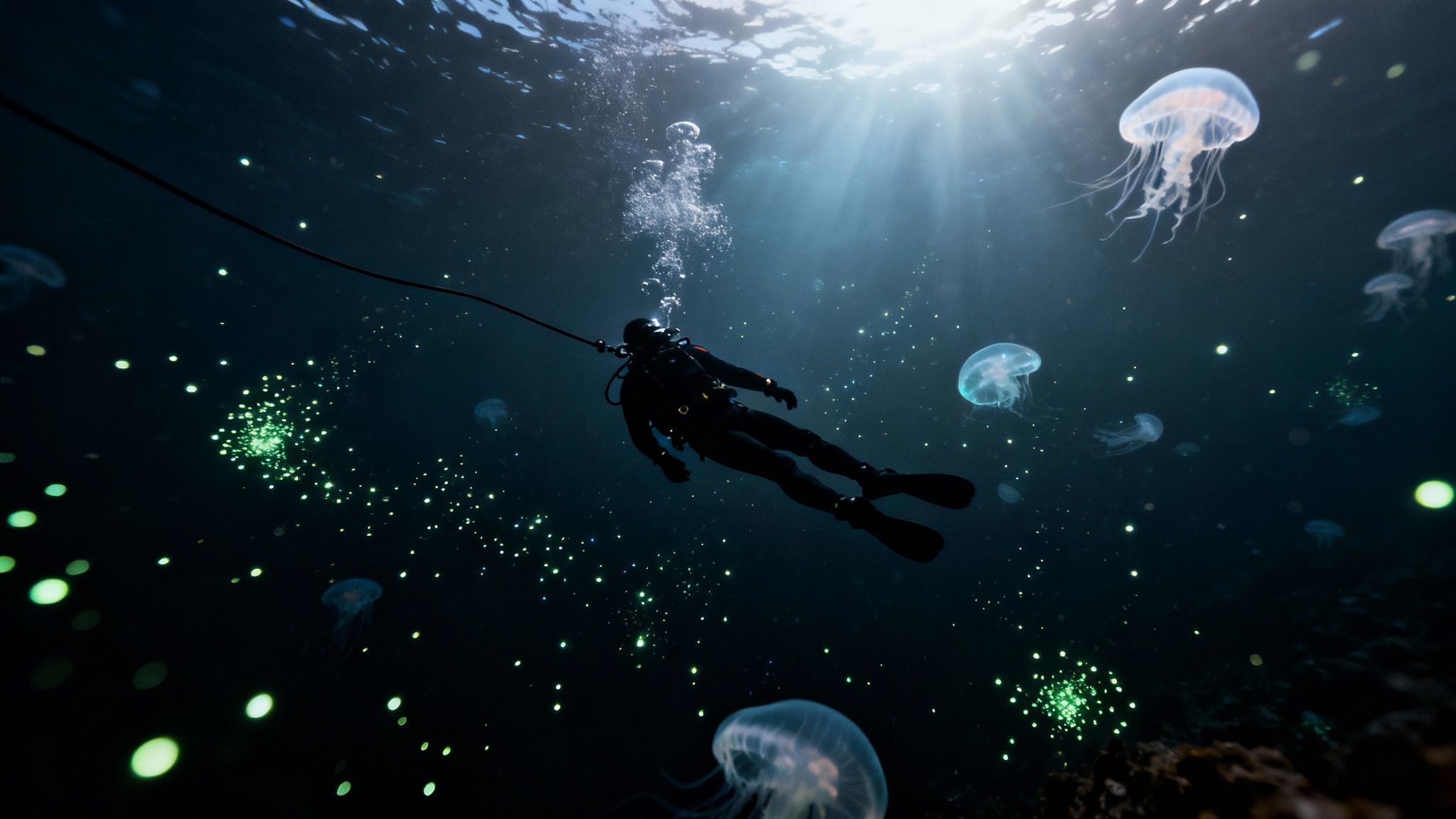
The concept is simple, but the experience is profound. We head out miles from shore where the seabed is thousands of feet below. As the sun sets, we descend into the pure black water, tethered to the boat, and just… drift. Suspended in the void, you become a witness to one of the planet's largest migrations, as countless bizarre and beautiful creatures rise from the depths to feed near the surface.
This is a dive that requires absolute trust in your skills. Impeccable buoyancy control and a calm mind are non-negotiable. With no landmarks and no bottom for reference, it's just you, your light, and the immense, inky blackness. The reward? Coming face-to-face with life forms that look like they were pulled straight out of a sci-fi movie.
What You Might See in the Abyss
The critters you'll meet on a blackwater dive are nothing like what you see on the reef. Many are in their larval stages, appearing as tiny, see-through versions of their adult selves. Others are permanent residents of the deep, making a brief nightly trip to the upper water column.
Here's just a taste of what could drift by your light:
- Alien-like Cephalopods: Think tiny, iridescent squid and the elusive pelagic octopus. These intelligent creatures often put on a spectacular light show of their own.
- Pulsating Jellies and Siphonophores: You'll see an unbelievable variety of gelatinous animals, many trailing long, bioluminescent tentacles like fishing lines through the dark.
- Translucent Larval Fish: Many of the reef fish you know and love start their lives as strange, see-through drifters in the open ocean.
The Kona Blackwater Dive is a journey into another world. It’s a humbling experience that connects you to the vast, mysterious ecosystem that thrives just beyond daylight's reach, reminding you just how much of our ocean is still waiting to be explored.
This incredible dive, often called "Pelagic Magic," is an innovation that was actually pioneered right here in Kona before being adopted by divers around the globe. Thanks to the deep oceanic waters so close to shore and the stable weather created by our massive volcanoes, Kona has the perfect setup for observing these pelagic animals. To get the full scoop on this one-of-a-kind adventure, check out our complete guide to blackwater diving in Kona.
Advanced Opportunities Beyond Blackwater
Beyond the blackwater experience, Kona offers plenty of challenges for the advanced diver. The same volcanic geology that created our beautiful reefs also formed deeper, more complex lava tube systems and dramatic underwater pinnacles. These sites demand a higher skill level but pay off with pristine coral formations and encounters with bigger marine life. Our advanced charters often head to more remote spots where sharks, eagle rays, and other pelagic species are common sights.
Here at Kona Honu Divers, we're all about pushing the boundaries of underwater exploration. Our guides are experts at navigating these demanding environments safely and showing you the best of what Kona has to offer.
If you’re a seasoned diver ready for your next big thrill, we’ve got you covered. Explore our specialized Kona Blackwater Dive tour or our Premium Advanced Dive trips and get ready to see a side of Kona that very few people ever will.
How to Choose Your Kona Dive Operator
With so many fantastic dive charters in Kona, picking the right one can feel like a pretty big decision. And it is. The company you dive with doesn't just drive the boat; they shape your entire underwater experience, from the pre-dive briefing to the moment you surface.
Choosing well means your adventure will be safe, comfortable, and absolutely unforgettable. It’s the difference between just seeing fish and truly understanding the reef.
So, what separates a good dive shop from a great one? It boils down to a few core things that should be non-negotiable for any diver. A spotless safety record is the bedrock. From there, you want well-maintained, comfortable boats and a commitment to small group sizes. Nothing ruins a dive faster than feeling like you're just one of the herd.
What to Look for in a Dive Company
When you start digging into your options, keep these key things in mind. They’re the hallmarks of a top-tier operation.
- A Passionate and Knowledgeable Crew: The best guides are way more than just underwater navigators. They're marine life nerds, storytellers, and genuine ocean fanatics. Their expertise turns a simple dive into something you’ll be talking about for years.
- Commitment to Ocean Conservation: A great operator sees themselves as a guardian of the reef, not just a tour company. They stick to strict eco-friendly practices, get involved in conservation, and teach you how to interact with marine life responsibly.
- Exceptional Customer Service: From the first phone call to the final gear rinse, the whole team should make you feel like family. That "ohana" vibe is what makes a dive company truly special and keeps people coming back.
The right dive operator does more than just get you in the water. They are your guides, your safety net, and your connection to the local ecosystem, transforming a good dive into an unforgettable adventure.
Here at Kona Honu Divers, we’ve built our entire company on these principles. Our mission is to run the safest, most enjoyable, and most educational Kona diving trips out there. But don't just take our word for it—see what our divers have to say.
For a deeper dive into all the little details, check out our complete guide on how to choose a Kona dive shop.
Comparing Respected Local Operators
To feel totally confident in your choice, it’s always a smart move to see what other reputable shops are doing. The Kona diving community is tight-knit, with several highly respected companies known for their professionalism. Getting the full picture helps you find the perfect match for your dive style.
Operators like Jack's Diving Locker and Big Island Divers have been mainstays in Kona for years, and both have earned solid reputations. Looking at what divers say about each one gives you a transparent view of what makes them special and ensures you’re picking from the best of the best.
Here’s a look at what people are saying about Jack's Diving Locker:
And here are some reviews for Big Island Divers:
Ultimately, you’re looking for an operator whose values line up with your own. When you prioritize safety, small groups, a knowledgeable crew, and a deep respect for the ocean, you're setting yourself up for an incredible time beneath the waves.
Essential Tips for Planning Your Dive Trip
Alright, you've seen the incredible underwater world Kona has to offer, and now it's time to get down to the brass tacks. A little bit of planning goes a long way in turning a good dive trip into an unforgettable one. Think of this section as your pre-flight checklist for a smooth, stress-free Big Island adventure.
One of Kona's best-kept secrets is that the diving is fantastic pretty much any day of the year. We have the massive volcanoes on the island to thank for that—they act as a giant shield, protecting the Kona coast from the winds and keeping the waters calm and inviting. Still, there are a few subtle differences between the seasons that might help you pick the perfect time for your visit.
Best Times to Dive in Kona
While you really can't go wrong, knowing the seasonal quirks can help you dial in your perfect trip. Winter brings slightly cooler water, but you get an incredible bonus: the sound of humpback whale songs echoing through the reef on your safety stop. Summer, on the other hand, means the water is at its warmest and most bathtub-like.
To make it simple, here’s a breakdown of what to expect throughout the year.
Kona Diving Seasonal Guide
The great news is that conditions in Kona are remarkably consistent. The "best" time to visit really just comes down to your personal preference for water temperature and what you'd like to see.
| Season | Average Water Temp | Typical Visibility | Seasonal Marine Life Highlights |
|---|---|---|---|
| Winter (Dec-Mar) | 75°F – 77°F | Excellent (80-100+ ft) | Humpback whale songs are the underwater soundtrack; you might even get lucky with a surface sighting. |
| Spring (Apr-Jun) | 76°F – 78°F | Excellent (80-100+ ft) | The seas are typically at their calmest, making for glassy conditions and consistently great dives. |
| Summer (Jul-Sep) | 79°F – 81°F | Very Good (70-100 ft) | The warmest water of the year! This is when you can get away with less neoprene for those long, leisurely dives. |
| Fall (Oct-Nov) | 78°F – 80°F | Excellent (80-100+ ft) | Visibility is crystal clear, and the summer crowds have thinned out, making it a fantastic time to visit. |
Ultimately, whether you prefer the thrill of hearing whales or the comfort of warmer water, Kona delivers an amazing experience no matter when you jump in.
Packing the Right Dive Gear
Bringing your own core gear can make a world of difference, though you can always rent high-quality equipment from us. The big question for most people is what wetsuit to bring. With water temps hovering in the mid-to-high 70s, a good 3mm wetsuit is the go-to for most divers.
If you know you get chilly, especially after a few days of diving, stepping up to a 5mm suit or adding a hooded vest is a smart move. It'll keep you toasty and comfortable, particularly on night dives like the manta or blackwater trips.
And don't leave home without these essentials:
- Mask, Snorkel, and Fins: There's nothing like the comfort and reliability of your own gear. A mask that fits your face perfectly is priceless.
- Dive Computer: This isn't optional; it's a critical piece of safety equipment for every single dive.
- Reef-Safe Sunscreen: This is a big one. Standard sunscreens contain chemicals that are incredibly damaging to our coral reefs. In fact, Hawaii has banned them. To protect our delicate underwater ecosystems, please only use mineral-based, reef-safe options.
Getting Certified or Advancing Your Skills
Never been diving before? Kona is one of the best classrooms on the planet. The calm, clear, and warm water creates a relaxed environment that’s absolutely perfect for getting your PADI Open Water certification.
If you're already a certified diver, Kona is the ideal place to take your skills to the next level. You could earn your Advanced Open Water certification and explore deeper sites, or maybe take a specialty course like Night Diver to really get the most out of the world-famous manta ray and blackwater experiences. Just about every dive shop here, including ours, offers a full slate of courses to help you become a more confident and capable diver.
A little bit of prep work is all it takes to make sure your Kona dive vacation is everything you've been dreaming of.
Frequently Asked Questions About Kona Diving
To wrap things up, let's tackle a few of the questions we hear all the time from divers planning a trip to Kona. Hopefully, this clears up any lingering thoughts and gets you that much closer to your underwater adventure.
Do I Need to Be a Certified Diver?
Nope, not at all! While you'll need at least an Open Water certification to join most of our boat dives, Kona is one of the best places on the planet to get your feet wet for the first time.
Most shops offer a "Discover Scuba Diving" experience. It's a fantastic way to try diving with an instructor right by your side on a beautiful, shallow reef. And if you're not ready to take the plunge, snorkeling is an incredible option—especially for seeing the world-famous manta rays.
What is the Water Temperature Like in Kona?
The water here is beautiful and warm pretty much year-round. During the winter months (think December-March), you can expect temperatures around 75-77°F (24-25°C).
Once summer rolls in (July-September), the water warms up to a balmy 79-81°F (26-27°C). For most people, a standard 3mm or 5mm wetsuit is the perfect amount of thermal protection to stay comfortable.
Is Kona Diving Good for Beginners?
It’s not just good—it’s fantastic. The Kona coast is tucked away in the protective shadow of massive volcanoes. This natural barrier shields us from most of the open ocean swells and currents.
What you get is typically very calm water with phenomenal visibility. It's a low-stress environment that's absolutely ideal for new divers to build skills and confidence while being surrounded by stunning marine life.
What if I Haven't Dived in a While?
No worries at all, it happens to the best of us. Every reputable dive operator in Kona offers a refresher course to help you knock the rust off.
It's a quick and easy way to get reacquainted with your gear and review essential skills with an instructor. We always put safety and comfort first, so a refresher is a great way to make sure you feel totally confident before heading out on the boat.
Ready to explore the incredible underwater world of Kona diving?
At Kona Honu Divers, we offer a full range of guided scuba diving tours on the Big Island for every skill level, from first-timers to seasoned pros.