
Picture this: you're descending into calm, crystal-clear water. Sunlight filters down, illuminating ancient lava tubes that look like underwater cathedrals. Vibrant coral reefs are everywhere, humming with life. This isn't a dream—it's just another day of diving in Kona.
Here, perfect diving conditions aren't a rare treat; they're the standard. We have the massive volcanoes, Mauna Loa and Hualalai, to thank for that. They act as a natural shield, blocking the trade winds and creating one of the most consistently pristine and protected underwater playgrounds on the planet.
Why Kona Is a Global Diving Paradise
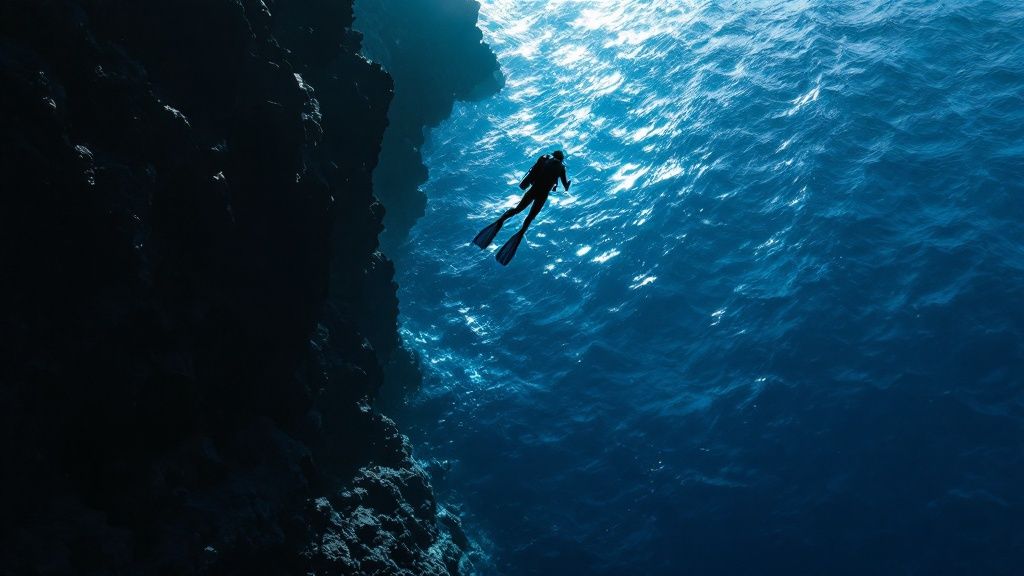
The real magic of Kona diving comes from its one-of-a-kind geology and mind-blowing biodiversity. The Big Island's volcanic past has left behind a spectacular underwater landscape you won't find anywhere else. You'll be navigating through lava tubes, gliding under massive arches, and exploring submerged craters, all bursting with marine life.
Visibility often pushes past 100 feet, so you won't miss any of the action. It feels like you're floating through a living aquarium, home to everything from tiny critters to majestic ocean giants. It's this killer combo of clear, calm water and dramatic scenery that puts Kona on every serious diver's bucket list.
A Sanctuary for Marine Life
Kona's protected coastline is a true sanctuary. The healthy coral reefs support a thriving ecosystem, which means every single dive is a new adventure. You never know what you'll find, but you can almost always count on seeing some local celebrities:
- Hawaiian Green Sea Turtles: We call them honu. You’ll often spot these gentle giants chilling on the reef or cruising gracefully past you.
- Spinner Dolphins: Keep an eye out from the boat! These acrobatic dolphins love to put on a show, traveling in big, energetic pods.
- Endemic Fish Species: A huge chunk of the fish you'll see here are found only in Hawaii. We're talking about colorful butterflyfish, funky-looking triggerfish, and so many more.
- Manta Rays: Kona is world-famous for its resident manta rays. They’re the rockstars of our legendary night dive experience.
This rich biodiversity is why no two dives are ever the same. To get a better sense of what's waiting for you, check out the top reasons to scuba dive Kona, Hawaii.
Unforgettable Experiences with Trusted Experts
The incredible environment is one thing, but the crew you dive with can make or break your trip. A professional, passionate guide transforms a good dive into a truly unforgettable one. That's what we're all about at Kona Honu Divers—a deep commitment to safety, marine conservation, and creating a welcoming ‘ohana’ (family) vibe for everyone.
Our divemasters know these sites like the back of their hand. They’re not just leading you on a tour; they’re showing you all the hidden nooks and crannies where the coolest creatures hang out. Whether you're taking your first breath underwater or you’re a seasoned pro, the right team makes sure your Kona adventure is safe, fun, and absolutely amazing.
Experiencing the World-Famous Manta Ray Night Dive
Imagine this: The sun has vanished below the horizon, and you're sinking into the warm, dark Pacific. You settle onto a sandy patch of the ocean floor. Above you, powerful lights slice through the blackness, creating a glowing storm of tiny plankton. Then, out of the deep blue, a massive, graceful shadow emerges, gliding effortlessly into the beam of light.
This is it. You're witnessing Kona's world-famous manta ray night dive, a surreal underwater ballet that many divers call one of the most incredible encounters on Earth.
What you're seeing isn't just a lucky break; it's a brilliant bit of learned behavior. The story goes that decades ago, a coastal hotel's bright lights would spill into the water, attracting swarms of plankton. The local mantas quickly figured out this was an easy, all-you-can-eat buffet. Today, we recreate this phenomenon in a controlled, safe way. Dive operators set up a central light source—we call it "the campfire"—which draws in the plankton, and right on cue, the majestic manta rays arrive for dinner.
The Science Behind the Spectacle
The magic of the manta dive comes down to a simple food chain, kicked off by our lights. The process is straightforward, but the result is absolutely breathtaking.
- Powerful Lights: We submerge bright, eco-friendly lights that shine up toward the surface, creating a column of light.
- Plankton Party: This light attracts phytoplankton and zooplankton, the microscopic critters that are the foundation of the ocean's food web.
- The Dinner Bell: Kona’s resident manta rays are smart, opportunistic feeders. They recognize these lights as a dinner bell and flock to the area to feed.
As a diver, you're not just watching the show—you're part of it. You'll kneel on the ocean floor, shining your own dive light upward to help build that column of light. Snorkelers do the same from above, holding onto a float and pointing their lights down. Together, we create a concentrated "plankton smoothie" that the mantas just can't resist.
You'll be completely mesmerized as these gentle giants, with wingspans reaching up to 16 feet, perform graceful barrel rolls and somersaults just inches above your head, scooping up plankton with their massive, gaping mouths.
It's an experience made possible because the Kona coast is home to a year-round population of reef mantas. We've identified nearly 200 individual manta rays here, each with a unique pattern of spots on its belly that acts like a fingerprint. On a really good night, you might see more than 20 mantas at once, creating a swirling, beautiful vortex of marine life. To really understand why this is such a bucket-list dive, check out our guide on why you should go on a manta ray dive in Kona.
A Truly Unforgettable Encounter
What makes this dive so profound is the sheer proximity and grace of these animals. It's not just seeing a manta ray; it's about having them glide so close you can feel the water move as they pass by. They are completely wild, yet they interact with the lights and the divers with a clear sense of purpose.
This isn't just another dive; it's a humbling connection with one of the ocean's most intelligent and graceful creatures. The feeling of a massive manta ray gliding silently over you is a moment that stays with you forever.
This globally recognized spectacle is an absolute must-do for anyone visiting the Big Island. The combination of Kona's typically calm conditions and the reliability of the manta sightings makes it an accessible adventure for certified divers. We also have snorkeling options, so just about everyone can witness this underwater wonder.
Exploring Kona Dive Sites for Every Skill Level
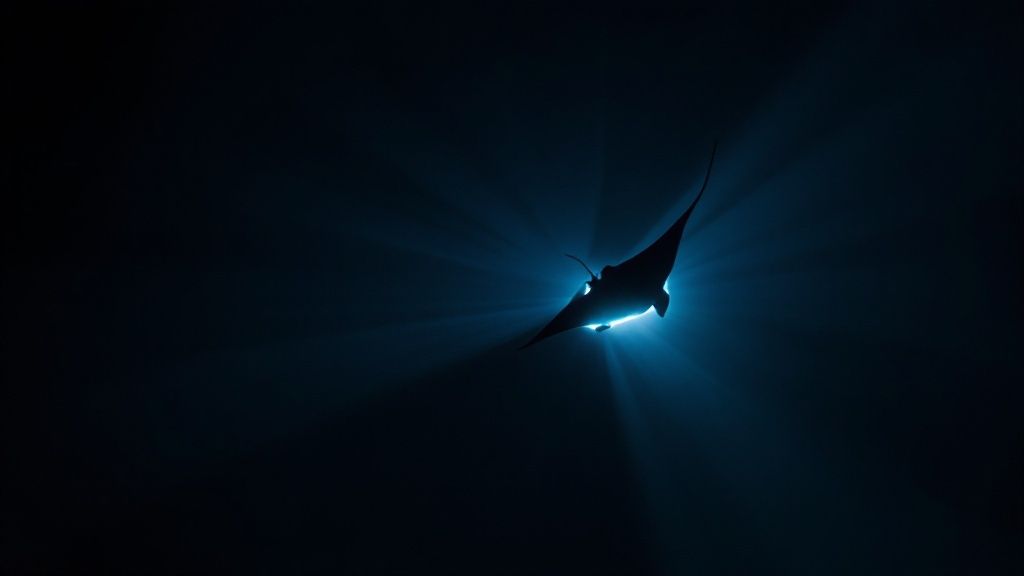
While Kona's famous night dives often steal the show, the daytime diving here is absolutely world-class. The Big Island's volcanic past has carved out a spectacular underwater playground, creating a massive variety of dive sites that are perfect for any certification level.
The Kona coast is dotted with dozens of unique spots, each with its own personality. One day you could be navigating intricate lava tubes and the next, drifting along a deep reef wall that's buzzing with fish you won't find anywhere else on Earth. That variety is what makes Kona diving so addicting—there's always a new adventure waiting just a quick boat ride away with our diving tours.
Dive Sites for New and Novice Divers
If you're just starting your diving journey or prefer to stick to shallower, calmer waters, Kona is one of the best places to build confidence. The coastline here is naturally protected, meaning many sites are shielded from strong currents. This creates a relaxed, safe environment to get your fins wet and sharpen your skills.
Pawai Bay is a perfect example of a beginner-friendly paradise. It's a large, shallow bay that hosts a whole collection of sites ideal for first-timers and photographers. Here, you can float through beautiful lava arches and swim-throughs without having to worry about going too deep. You’ll want to keep a sharp eye out for masters of disguise like the elusive frogfish or a day octopus camouflaged in a rocky crevice.
Intermediate and Advanced Diving Adventures
For certified divers who are ready for deeper, more dramatic underwater scenery, Kona really delivers. These sites often have more complex topography and tend to attract bigger pelagic species, offering a totally different kind of thrill.
One of the most incredible advanced sites is Au Au Crater. It’s a massive, collapsed volcanic crater that acts like a magnet for marine life. As you descend along its sloping walls, you’re almost guaranteed to run into schools of massive jacks, graceful eagle rays, and whitetip reef sharks patrolling their turf. The sheer scale of the crater and the chance for big animal encounters make it a must-do for any experienced diver.
If you’re a seasoned diver looking for a more tailored adventure, a premium advanced dive trip is the way to go. We design these charters to take small groups to Kona's more remote and challenging dive sites for a truly unique day on the water.
Exploring Kona's advanced dive sites is like graduating to the next level of underwater exploration. You move from the intricate, beautiful reef structures to the vast, dramatic landscapes where the ocean’s larger inhabitants often make an appearance.
To help you start planning your underwater itinerary, here's a quick look at some of Kona's most popular dive spots.
Kona Dive Site Guide
Here’s a quick rundown of some of our favorite spots to give you an idea of the incredible variety Kona has to offer.
| Dive Site | Skill Level | Average Depth | What You'll See |
|---|---|---|---|
| Pawai Bay | Beginner | 20-40 ft | Lava tubes, arches, eels, frogfish, octopus |
| Golden Arches | Beginner | 30-50 ft | Large coral arches, reef fish, turtles |
| Turtle Pinnacle | Intermediate | 40-70 ft | Turtle cleaning station, pyramid butterflyfish, eels |
| Au Au Crater | Advanced | 50-80 ft | Volcanic crater, sharks, eagle rays, large jacks |
Of course, this is just a small taste of the incredible underwater world waiting for you. To see a more extensive list of the places we can take you, check out our full guide to the dive sites of the Big Island. Each location offers a unique window into the rich biodiversity that makes this coastline so special.
The Thrilling Kona Blackwater Dive Experience
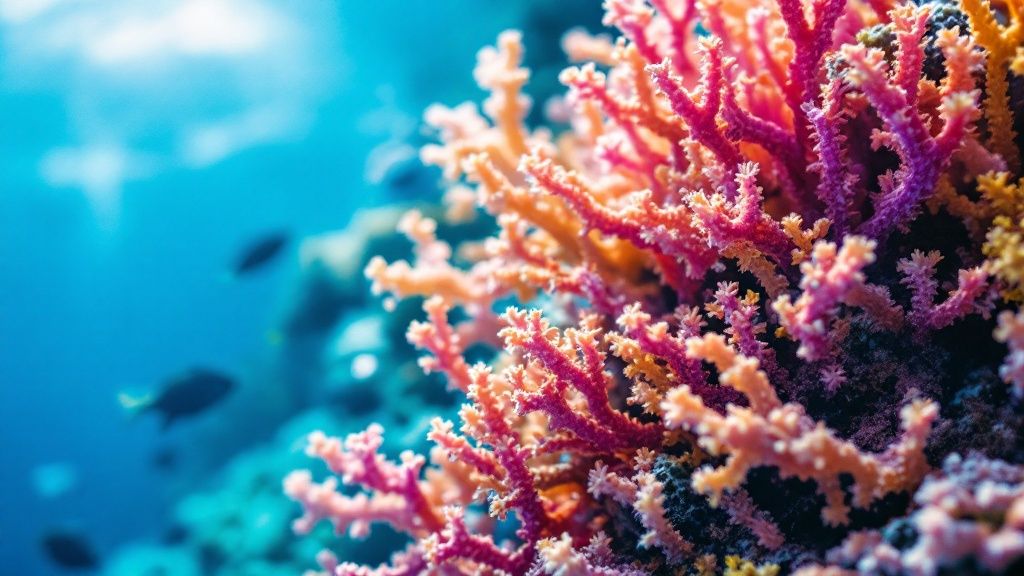
If you're a truly adventurous diver, Kona has something special for you. It feels less like a scuba dive and more like a trip into deep space. The Kona blackwater dive is an otherworldly experience that was born right here on the Big Island, and frankly, it's unlike anything else you can do underwater.
This isn't about exploring a reef. It's about drifting in the deep, dark ocean miles from shore, suspended over thousands of feet of water with nothing but the inky abyss below you. Tethered to the boat, the only light comes from your dive torch, cutting through the blackness to reveal a world of bizarre, alien-like creatures rarely seen by human eyes.
What you're doing is intercepting one of the planet's most significant natural events: the nightly vertical migration.
Witnessing the Planet's Largest Migration
Every single night, an almost unbelievable event happens in the deep ocean off the Kona coast. Under the cover of darkness, countless tiny, strange, and often bioluminescent creatures rise from the crushing depths toward the surface to feed. This incredible journey is the largest migration on Earth in terms of sheer biomass.
The blackwater dive—or 'Pelagic Magic,' as it's sometimes called—is an experience that started right here in Kona and is now copied around the world. It lets you witness this spectacular vertical migration firsthand as creatures rise from hundreds or even thousands of feet below. It's a spectacle only possible in places like Kona, where extremely deep water is so close to shore.
Your dive light acts like a beacon, attracting an incredible parade of pelagic life. You’ll be mesmerized by creatures that look like they belong on another planet.
Creatures of the Deep
Most of the organisms you'll encounter on a blackwater dive are in their larval or juvenile stages. They're drifting as plankton before they mature and settle on a reef or continue their lives in the open ocean.
What might you see?
- Larval Creatures: You’ll see the infant stages of familiar reef dwellers like eels, crabs, and lobsters, which look completely different and almost alien-like at this stage.
- Bioluminescent Jellies: Expect a variety of gelatinous animals, from pulsating comb jellies that refract your light into rainbows to siphonophores that glow with their own internal light.
- Pelagic Wonders: Keep an eye out for deep-water squid, iridescent salps, and other strange organisms that spend their entire lives in the open ocean.
Floating in the deep, with nothing but dark water above and below you, is a profoundly humbling experience. When a strange, glowing creature drifts into your light, it feels like making first contact with an alien lifeform.
This dive is an absolute dream for thrill-seekers and underwater photographers. The contrast of the vibrant, bizarre creatures against the pure black backdrop creates opportunities for some of the most stunning and unique macro photos you will ever capture.
It's a challenging dive, but it's incredibly rewarding, offering a glimpse into a hidden world that few ever get to see. If you're ready to explore this final frontier of Kona diving, you can learn more about the specific techniques and gear used in blackwater diving in Kona.
This is more than just an adventure; it's a rare chance to connect with the mysterious heart of the ocean.
Essential Safety Tips for Hawaii’s Waters
Any experienced diver will tell you the same thing: a great dive is a safe dive. Getting to know the local conditions here in Hawaii is really the first step to having an unforgettable time underwater. While Kona's waters are known for being pretty calm and inviting, you can't ever forget that the ocean is in charge.
A few basic safety principles will make sure your memories of Kona diving are spectacular for all the right reasons.
The single best decision you can make for your safety is to dive with a reputable, professional crew. It's not just about them knowing the coolest spots—they're experts in the local weather, the currents, and any potential issues that could pop up. They handle all the tough stuff like navigation and emergency prep, so you can just kick back and enjoy the incredible show.
Before you even think about getting in the water, a thorough gear check is an absolute must. It's a simple ritual that can save you a lot of trouble. Check your regulator, computer, BCD, and how much air you've got. Make sure everything works, and just as importantly, make sure you and your buddy know how each other's gear works. A quick check like this prevents most common problems before they even start.
Understanding Kona's Unique Conditions
Hawaii’s volcanic origins have created an underwater world unlike any other. Those same dramatic lava rock formations that look so cool can also be incredibly sharp. This is where having solid buoyancy control really pays off. It helps you avoid any nasty scrapes and protects the delicate critters that call the lava home.
Another thing to get a feel for is the surge. It’s that back-and-forth push of water from the waves up top. It's usually strongest near the shore or in shallower spots.
The secret to dealing with surge? Don't fight it. Trying to power through the ocean's natural rhythm is a quick way to wear yourself out. Just relax and go with the flow. Time your movements with the water, letting it gently guide you along.
Always, always pay attention during your dive briefing. Your guide will give you the inside scoop on the conditions for that specific site. They'll know the best ways to get in and out of the water and will point out any areas where you need to be mindful of the current or surge.
A Serious Word for Snorkelers
While scuba diving comes with its own set of rules, snorkeling needs to be taken just as seriously. In fact, maybe even more so, since many people go out without a professional guide. The numbers here are sobering: between 2009 and 2018, there were 206 snorkeling-related deaths in the islands, and 189 of those were visitors.
That gives Hawaii a snorkeling fatality rate that's a shocking 13 times higher than the U.S. national average. It's a stark reminder of why safety has to be your top priority. You can read more about these snorkeling safety findings to get a better sense of the risks involved.
To keep yourself safe while snorkeling, stick to these non-negotiable rules:
- Never Go Alone: The buddy system is everything. Having someone with you is the most important safety measure you can take.
- Use a Flotation Device: It doesn't matter if you're a champion swimmer. Currents can surprise you and anyone can get tired. A simple snorkel vest provides a critical safety net.
- Know Your Limits: If you're not a strong swimmer, that's okay! Just stick to the calm, protected bays. Better yet, join a guided tour where pros are watching out for you.
- Check the Conditions: Take a minute to check the surf and wind reports before heading out. When in doubt, don't go out. The ocean will be there tomorrow.
Your Kona Diving Questions, Answered
Planning a dive trip to a world-class destination like Kona usually brings up a few questions. To help you get ready for an amazing trip, we've pulled together the answers to the most common things we get asked about Kona diving. Think of this as your final checklist to make sure your vacation is smooth, well-planned, and totally unforgettable.
When Is the Best Time of Year to Dive in Kona?
Honestly, one of the best things about Kona is that the diving is fantastic year-round. The massive volcanoes on the Big Island act like a giant shield, protecting the Kona coast from the heavy trade winds that batter other parts of Hawaii. The result? We get consistently calm seas and visibility that often pushes past 100 feet.
Now, while any month is a great month to be underwater here, there are some subtle differences that might sway your decision.
- Warmest Water (August – October): This is when the ocean feels like a bathtub, hovering around a balmy 80°F (27°C). If you get cold easily or just prefer warmer temps, this is your sweet spot. A thin wetsuit is usually all you'll need.
- Coolest Water (January – March): The water temperature dips a bit to its coolest, around 75°F (24°C). It's still plenty comfortable, but you'll probably want a slightly thicker wetsuit, like a 5mm, to stay cozy.
- Whale Season (December – March): This is when things get really special. It’s humpback whale season, and hearing their haunting songs echo through the water while you're on a dive is an experience you will never forget. Plus, you’ll often see them breaching from the boat during your surface intervals!
Ultimately, the best time to visit comes down to what you’re looking for, but you're pretty much guaranteed a world-class experience no matter when you jump in.
Do I Need to Be Certified to Dive in Kona?
Yes, to join our boat dives and explore Kona's incredible reefs—including the legendary Manta Ray Night Dive—you'll need to be a certified scuba diver. This ensures you have the fundamental skills and knowledge to dive safely and confidently in the open ocean.
But if you're not certified yet, don't worry! You absolutely don't have to miss out on the underwater magic. We've got a couple of great options for you:
- Discover Scuba Diving (DSD): This program is built for beginners. It lets you try scuba diving under the close supervision of a professional instructor in a safe, controlled environment. It’s the perfect way to take your very first breaths underwater.
- Snorkeling Tours: Many of our most popular adventures, including the manta ray experience, are also open to snorkelers. You can see the exact same incredible show from the surface, making it a fantastic trip for everyone in your group.
What Kind of Marine Life Will I See?
Kona is an absolute hotbed for biodiversity. The variety of marine life here is just staggering. Thanks to our protected coastline and healthy coral reefs, the ecosystem is thriving, so every single dive feels like a new adventure.
On pretty much any dive, you have a great chance of running into Hawaiian green sea turtles (honu), seeing playful spinner dolphins from the boat, and swimming through schools of vibrant reef fish that are found nowhere else on the planet. Look closely at the reef, and you’ll likely spot moray eels peeking out from their homes, octopuses showing off their camouflage skills, and maybe even a hard-to-find frogfish.
Of course, the undisputed superstars are the majestic manta rays that make our night dive famous worldwide. Depending on the site and a bit of luck, you might also be treated to sightings of graceful eagle rays, whitetip reef sharks resting on the sand, and if you’re really lucky, a jaw-dropping whale shark passing through.
What Gear Should I Pack for My Dive Trip?
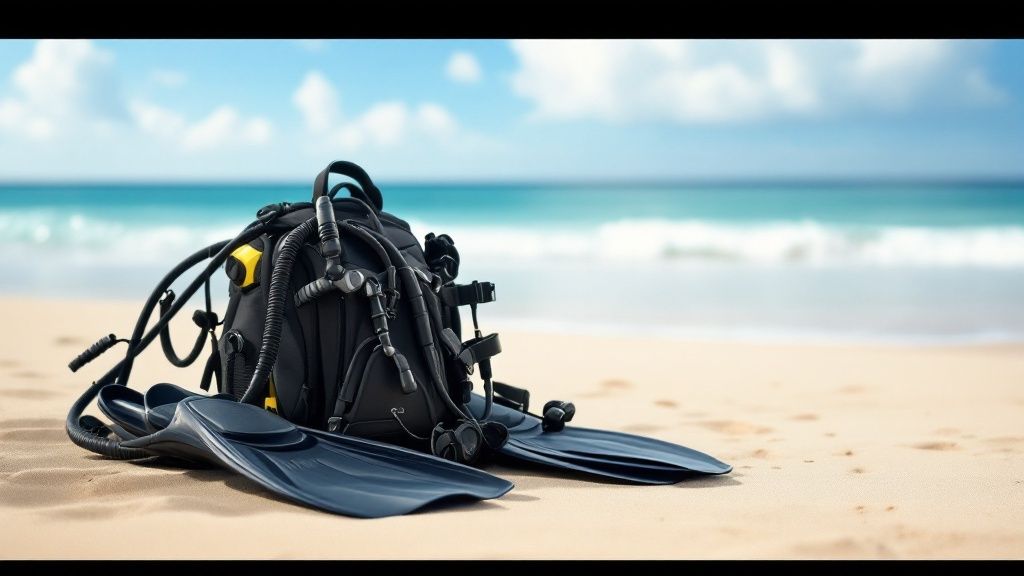
While we offer complete sets of high-quality rental gear, we know many divers prefer the comfort and fit of their own equipment. If you have them, we definitely recommend bringing your personal mask, snorkel, fins, and dive computer. You know them best.
For wetsuits, a 3mm or 5mm will do the trick for Kona's water temperatures. It really just depends on the time of year and your personal comfort level.
Pro Tip: One of the most important things you can pack is reef-safe sunscreen. Normal sunscreens have chemicals like oxybenzone and octinoxate that are incredibly damaging to coral. By choosing a reef-safe option, you're helping protect the very ecosystem you came here to see.
And don't forget the essentials: your certification card, a logbook to remember all your amazing dives, and a reusable water bottle to stay hydrated.
Ready to experience the best Kona diving has to offer? At Kona Honu Divers, we have everything you need for an unforgettable underwater adventure, from first-timers to seasoned pros. Let our expert crew show you why the Big Island is a top-tier diving destination. Book your Kona scuba diving tour today