
When people talk about bucket-list dive destinations, Kona almost always comes up. It’s home to some of the most mind-blowing underwater experiences you can have, thanks to its famously calm, clear water and truly unique marine life encounters. Specifically, Kona is legendary for two world-class night dives: the ethereal Manta Ray Night Dive and the otherworldly Blackwater Dive.
What Makes Kona Diving So Unforgettable
Welcome to the Kona coast, a diver's paradise tucked into the leeward side of the Big Island. The secret to its incredible conditions? The massive volcanoes of Mauna Loa and Hualalai act as a natural shield, blocking the gusty trade winds that hit other parts of Hawaii. The result is exceptionally calm and clear water pretty much all year round—perfect for scuba diving Kona, Hawaii.
The island's volcanic past has also created a stunning underwater playground. As a diver here, you'll get to explore ancient lava tubes, swim through huge archways, and navigate intricate reef structures that are just bursting with life. This dramatic geology is the perfect backdrop for some seriously impressive marine biodiversity.
Kona Diving at a Glance
Here's a quick rundown of what makes diving in Kona so special.
| Feature | Description |
|---|---|
| Water Conditions | Exceptionally calm and clear due to protection from trade winds by massive volcanoes. |
| Underwater Terrain | Dramatic volcanic landscapes including lava tubes, archways, and complex coral reefs. |
| Marine Life | Rich biodiversity with a high percentage of endemic species found only in Hawaii. |
| Manta Ray Night Dive | A world-famous, awe-inspiring encounter where giant mantas feed on plankton right above you. |
| Blackwater Diving | A unique pelagic dive miles offshore at night to see bizarre, bioluminescent deep-water creatures. |
| Best Time to Dive | Year-round, with consistently good conditions. The dry season (April-October) offers the calmest seas. |
These features combine to create a truly one-of-a-kind diving environment that attracts enthusiasts from all over the globe.
Signature Underwater Adventures
Kona's reputation is built on experiences you just can't get anywhere else. The Manta Ray Night Dive is often described as an underwater ballet. You settle on the sandy bottom, shine your light up, and watch as these gentle giants glide and swoop overhead, feeding on the plankton attracted to the beams. It's a surreal, peaceful, and absolutely unforgettable encounter.
For those with a taste for the extraordinary, the Kona Blackwater Dive is a trip into the abyss. You're tethered to the boat, drifting miles offshore in the pitch-black ocean, witnessing the nightly vertical migration of strange, often bioluminescent creatures rising from the deep. People often say it feels more like floating through outer space than diving.
At Kona Honu Divers, guiding people through these incredible experiences is what we live for. Our team is obsessed with providing safe, respectful, and thrilling adventures for divers of all levels. We truly believe exploring Kona's underwater world is more than a tour—it's a chance to connect with the ocean in a profound way. For a deeper look, check out the many reasons to scuba dive in Kona, Hawaii.
The World-Famous Manta Ray Night Dive
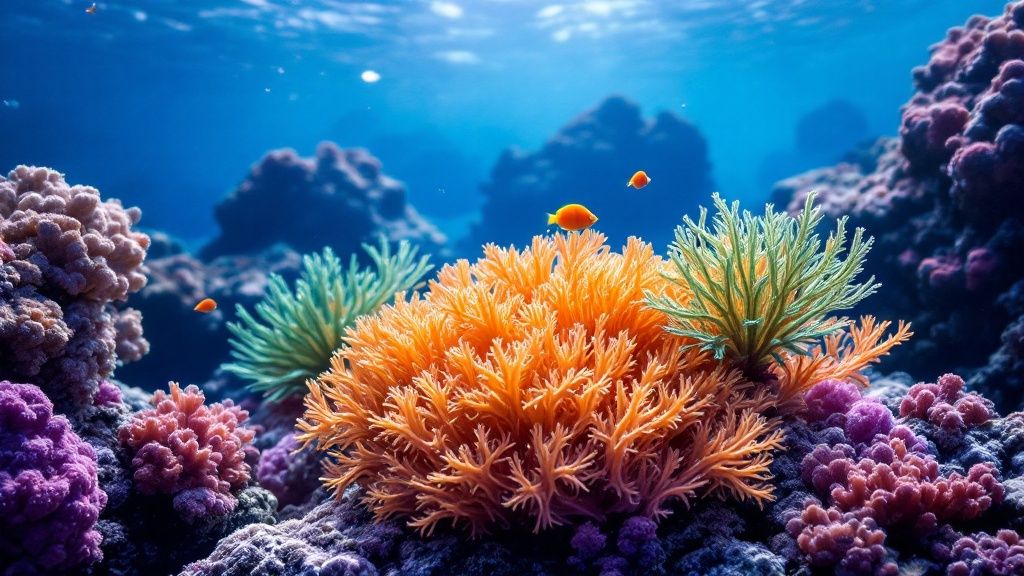
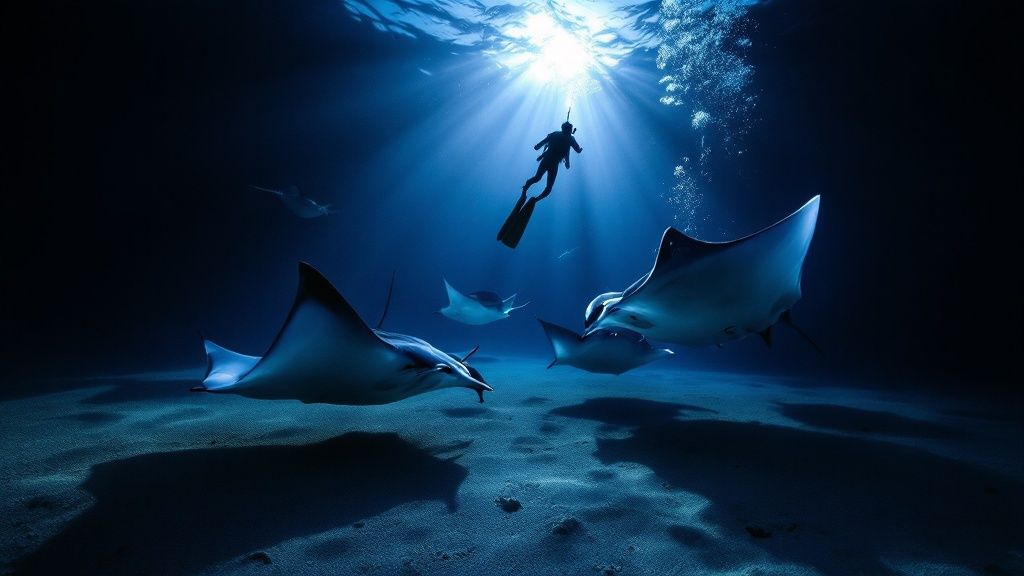
Picture this: you’re kneeling on the ocean floor, surrounded by the deep, dark blue of the Pacific at night. You flick on your dive light and point it straight up. Then, out of the darkness, a massive shadow glides into your beam—a giant manta ray with a wingspan of 12 feet or more. It’s not science fiction. It’s the Kona Manta Ray Night Dive, and it's an experience so unreal it constantly tops lists of the best dives on the planet.
This isn't your typical reef dive; it's more like attending a breathtaking underwater ballet. The idea is brilliant in its simplicity. We set up powerful lights on the seafloor that attract clouds of plankton—the mantas’ favorite meal. You and your fellow divers gather around these lights, almost like sitting around a campfire, creating a brightly lit stage for the main event.
Snorkelers get in on the action from the surface, too. They hang onto floating rafts that also have lights pointing down into the water. This one-two punch creates an irresistible, all-you-can-eat plankton buffet that draws in dozens of these gentle giants for their nightly feast.
How the Manta Dive Works
The whole experience is a masterclass in watching wildlife without disturbing it. After you descend to a sandy spot about 30-40 feet deep, your only job is to get comfortable, stay put, and enjoy the show.
- The "Campfire": Divers arrange themselves in a semi-circle around a central light box, all pointing their own lights upward to create a concentrated column of plankton.
- The Performance: Drawn in by the feast, the mantas swoop down, performing graceful barrel rolls and somersaults to filter-feed, sometimes passing just inches over your head.
- A Shared Experience: It’s incredible because both divers below and snorkelers above get a front-row seat, sharing in the same sense of awe.
This setup is designed to be completely safe and non-invasive. The number one rule is simple: look, but don't touch. Manta rays have a protective mucus layer on their skin, and touching them can strip it away, leaving them vulnerable to infections.
For a lot of people, the Manta Ray Night Dive is a deeply moving experience. The silent, dark ocean, combined with the sheer size and grace of these animals, creates a moment of pure connection with the natural world that’s hard to find anywhere else.
Why Is Kona the Manta Capital of the World?
Kona’s reputation as the global epicenter for manta encounters isn't just a lucky break. The Big Island draws around 80,000 tourists a year just for this dive, and for good reason. The Kona Coast has the perfect storm of conditions—from reliable ocean currents that bring in tons of plankton to sheltered bays where these gentle giants can safely gather.
At Kona Honu Divers, we’ve dialed in this life-changing adventure to make sure every single person has an amazing and respectful encounter. Our crew knows these mantas, understands their behavior, and puts your safety first, making the whole thing seamless. Whether you're an experienced diver or trying snorkeling for the first time, this is one Hawaii adventure you'll never forget. You can find out even more in our guide that breaks down what the manta ray night dive is all about.
Discovering Top Dive Sites and Unique Marine Life
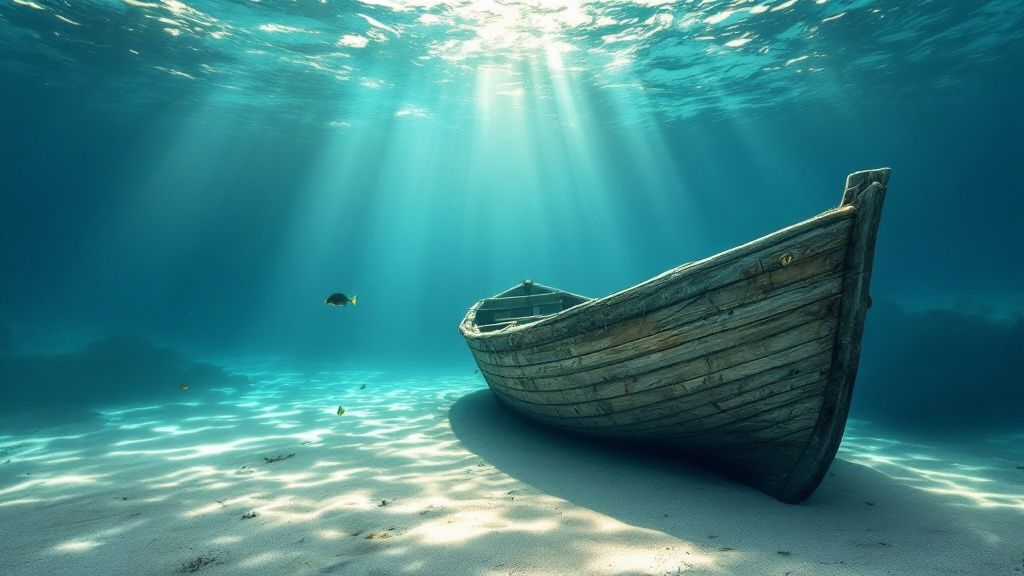
Sure, the manta ray night dive is an absolute showstopper, but it’s just the opening act for the incredible story of Kona diving. The Big Island’s coastline is a playground of dive sites, each one a unique world shaped by ancient volcanic flows meeting the Pacific. These aren't just pretty reefs; they're dynamic underwater landscapes packed with life you won’t find anywhere else on the planet.
The geology is the real star here. Imagine dropping into a world of dramatic lava tubes, massive archways, and winding caverns all carved out by molten rock centuries ago. It’s like exploring a submerged city built by a volcano, with endless nooks and crannies where marine critters make their homes.
Every dive feels like a treasure hunt. This incredible variety means that whether it's your first dive in Kona or your fiftieth, that feeling of discovery never gets old.
Must-See Kona Dive Sites
Kona's dive sites are as different from each other as they are beautiful. Some spots are famous for their mind-bending topography, while others are known as cleaning stations or hangout spots for specific animals. Each location has its own personality, just waiting for you to discover it.
Here are a few iconic sites that really show off what Kona diving is all about:
- Golden Arches: This spot delivers on its name with a massive, spectacular lava archway you can actually swim through. It's a photographer's dream, often perfectly framed by shimmering schools of yellow tangs and milletseed butterflyfish.
- Turtle Pinnacle: No prizes for guessing what you’ll find here! This is the place to hang out with Hawaiian green sea turtles, or honu. The pinnacle is a "cleaning station" where turtles patiently line up for surgeonfish to nibble algae and parasites off their shells. It's totally normal to see a half-dozen turtles just chilling on the reef or gliding past.
- Suck 'Em Up Caverns: If you love exploring overhead environments, this site is a blast. It’s a network of lava tubes and caverns where the ocean surge gently pushes you in and out. Navigating the passageways is a fun, dynamic experience you won't forget.
These are just a taste of the dozens of world-class spots. To see more, check out the premier dive sites Kona Honu Divers will take you to.
Encounters with Endemic Species
What truly makes diving in Kona a one-of-a-kind experience is the sheer number of endemic species. These are creatures that evolved in total isolation around the Hawaiian Islands and exist nowhere else on Earth. It's like diving in a living museum of natural history.
Over 25% of the reef fish you'll spot in Kona are endemic. Think about that—one in every four fish you see is a species unique to Hawaii. That makes every single dive a pretty special event.
This incredible uniqueness is all thanks to Hawaii's extreme isolation out here in the middle of the Pacific. As you explore the reefs, keep an eye out for these local celebrities.
- Hawaiian Green Sea Turtles (Honu): While you can find green turtles elsewhere, the Hawaiian honu is a genetically distinct population and a sacred animal in local culture. Watching them glide effortlessly through the water is a highlight for everyone.
- Moray Eels: You'll almost certainly spot various species, like the whitemouth or zebra moray, peeking out from reef crevices. They're just curiously watching the world—and the divers—go by.
- Spinner Dolphins: You won't see them on a dive, but don't be surprised if your boat gets a personal escort from a pod of acrobatic spinner dolphins on the way to or from your dive site!
For divers looking to push their limits, there are plenty of advanced diving opportunities available. These trips explore deeper reefs and more remote pinnacles where you have a better chance of running into larger pelagic species. Every descent in Kona promises a new adventure, revealing another secret of its rich underwater world. Explore all of our Kona scuba diving tours to find the perfect trip for you.
Floating in Outer Space on a Blackwater Dive
Get ready for one of the most surreal, mind-bending experiences you can have with a tank on your back. A Kona Blackwater Dive isn't about reefs or wrecks; it’s about drifting in the deep, dark, open ocean, miles from shore, with thousands of feet of water right below you. This is the ultimate night dive for the truly adventurous.
The dive is almost always described as floating through outer space, and for good reason. You’re not exploring a landscape—you’re just suspended in a black void, waiting for alien-like creatures to drift into the beam of your dive light. It's a bizarre mix of profoundly peaceful and intensely thrilling, because you have absolutely no idea what will reveal itself next.
The whole operation is carefully planned for safety. Divers are tethered to a central line attached to the boat as it drifts on the surface. This keeps everyone together and at a controlled depth, usually around 40-50 feet, while the abyss looms far, far below.
Witnessing the Great Vertical Migration
So, what are you even looking for out there in the dark? You’re witnessing one of the planet's largest migrations. Every single night, countless tiny, bizarre, and often bioluminescent creatures rise from the crushing depths to feed near the surface. Most of these animals are in their larval stages, looking nothing like the adults they'll become.
This is where Kona’s unique biodiversity really shines. The islands have the world's highest rate of marine fish and invertebrate endemism, meaning many of the species here are found nowhere else on Earth. Pioneered right here in Kona, this "Pelagic Magic" dive has been replicated around the globe. As the sun goes down, a massive parade of tiny, transparent creatures migrates upward from thousands of feet deep, creating that otherworldly, outer-space feeling for divers lucky enough to see it.
This nightly event brings out a cast of characters that look like they belong in a sci-fi movie.
- Larval Fish and Eels: They look like delicate, intricate glass sculptures.
- Jellies and Siphonophores: Often glowing with their own eerie internal light.
- Tiny Squids and Octopuses: Perfectly formed but unbelievably small.
The real magic of a blackwater dive is the treasure hunt. You might spend minutes seeing nothing but dark water, and then suddenly, a creature that defies all imagination drifts into view. It’s an exercise in patience and wonder that rewards you with sights few people will ever get to see.
Is a Blackwater Dive Right for You?
This kind of Kona diving isn't for just anyone. It demands excellent buoyancy control, a genuine comfort with complete darkness, and a calm mind. You have to be able to manage your gear and your position in the water without any visual references like a reef or the ocean floor. It’s a true adventure for divers with a bold spirit who want to see something completely different.
For those who are ready, it's an unforgettable trip into a hidden world. Kona Honu Divers offers expertly guided trips that put safety first while unlocking this incredible nocturnal show. If you're curious about what it's like to meet these deep-sea aliens, our guide offers more details on the blackwater dive experience. Are you ready for an otherworldly journey?
How to Plan Your Perfect Kona Dive Trip
Alright, so you’ve got visions of graceful manta rays and glowing deep-sea critters dancing in your head. Now it’s time to make it happen. Planning a dive trip to Kona is pretty straightforward once you know the lay of the land, and getting the logistics dialed in is the key to an absolutely unforgettable time underwater.
The best part? Kona is a fantastic year-round dive destination. Thanks to the massive volcanoes that shield the coastline, the water stays remarkably calm and clear pretty much all the time. But, there are a few seasonal differences that might help you decide exactly when to pull the trigger.
Choosing the Best Time to Visit
While you really can't go wrong any month of the year, understanding the subtle shifts between seasons can help you line up the perfect trip for what you want to see and feel.
- Summer (June – October): This is when you'll find the warmest water, often hitting a toasty 80°F (27°C). The seas are usually at their calmest, making for glassy boat rides and super easy dives. It's a popular time, so booking your charters in advance is a smart move.
- Winter (December – March): Water temps drop just a touch to around 75°F (24°C), which is still plenty comfortable. The real magic of winter is the humpback whales. You won't be diving with them, but hearing their incredible songs echoing through the reef on a dive? That’s a profound experience you’ll never forget.
No matter when you visit, a 3mm wetsuit is the go-to for most divers here. Some folks might prefer a 5mm, especially for night dives where you're not moving around as much.
A quick look at the year can help you decide what's best for you.
Kona Dive Season Highlights
| Season | Water Temperature (Avg) | Key Marine Life Sightings |
|---|---|---|
| Winter (Dec-Mar) | 75°F (24°C) | Humpback whale songs (audible underwater), higher chance for larger pelagics. |
| Spring (Apr-May) | 76°F (24.5°C) | Calm conditions, pilot whales, great visibility as crowds thin out. |
| Summer (Jun-Oct) | 80°F (27°C) | Warmest water, flattest seas, turtle nesting season on some beaches. |
| Fall (Nov) | 78°F (25.5°C) | Great all-around conditions, beginning of whale season. |
Ultimately, the best time to dive Kona is whenever you can get here. The marine life is always active, and the conditions are consistently world-class.
Selecting the Right Dive Operator
This is the most important decision you'll make for your trip. Your dive shop can either make or break your entire experience. You're looking for a crew that puts safety first, genuinely cares for the marine environment, and is committed to giving you an amazing time.
Kona Honu Divers consistently gets top marks, and for good reason. We're known for our small group sizes, which means you get a more personal dive without the crowds. Our guides are total ocean nerds who live and breathe this stuff—they’re dedicated to keeping you safe while showing you the incredible world just offshore. We pride ourselves on our 'ohana' (family) vibe, making sure every single diver feels welcome and looked after.
While we're obviously proud of what we do, we know it's good to have options. Here are a couple of other well-respected shops in town.
Other Reputable Kona Dive Shops
Jack's Diving Locker is one of the original dive shops in Kona, and they've been around forever. They're a bigger operation with a fleet of boats and offer the full spectrum of PADI courses and daily charters. Their long-standing reputation is built on solid professionalism and deep local knowledge.
Big Island Divers is another local favorite, known for their friendly crew and great boats. They run a bunch of different tours for all skill levels, from classic morning reef dives to the must-do manta ray night dive. Their focus on customer service has earned them a loyal following.
When you're choosing, think about things like group size, the comfort of the boat, and the specific dives they offer. A word to the wise: book your Kona diving tours well ahead of time. Trips like the manta dive and blackwater dives fill up fast, and you don't want to miss out
Essential Safety Tips for Hawaii Diving
A good dive is a safe dive. Period. The thrill of exploring Kona’s underwater world is incredible, but your number one job is always to come back safe. That means sticking to the universal rules of diving: check your gear before every single drop, always stay within your certification limits, and nail your buoyancy to protect yourself and the stunningly fragile reefs.
Diving in Hawaii, though, has its own set of local rules. The currents here in Kona are usually pretty mellow, but conditions can change. Your divemaster lives and breathes these waters, so their pre-dive briefing isn't just chatter—it's critical information. And when it comes to marine life, remember the golden rule: look, but never, ever touch. Giving our protected green sea turtles (honu) and majestic mantas plenty of space is non-negotiable.
The Bigger Picture of Ocean Safety
It's also worth understanding just how powerful the Hawaiian ocean is and why professional oversight is so important. Some of the statistics for other water activities are genuinely startling. An analysis of water-related deaths in Hawaii from 2009 to 2018 painted a stark picture.
During that time, there were 206 snorkeling deaths—a rate 13 times the national average. In contrast, there were only 28 fatalities from scuba diving. This really drives home the value of proper training and professional guidance. You can read more about these Hawaii water safety findings for a deeper dive.
The main takeaway here is simple: structured, professionally guided activities like scuba diving have an incredible safety record. The smartest, safest decision you can make is to dive with an experienced, safety-first operator.
When you book with a top-tier company like Kona Honu Divers, you're putting yourself in the hands of an expert crew that manages every single detail. From constantly monitoring ocean conditions to guiding you on safe, respectful wildlife encounters, their experience is what allows you to simply relax. You get to lose yourself in the magic of the moment, totally confident that you're in the safest hands possible.
Your Kona Diving Questions Answered
Getting amped for a dive trip to Kona? Awesome. It’s totally normal to have a few questions bouncing around your head before you take the plunge. We get these all the time, so let’s clear up some of the most common ones.
What if the Mantas Don't Show Up?
This is probably the number one question we hear, and it's a fair one! While the manta rays show up for dinner over 90% of the time, they are wild animals on their own schedule. It’s nature, not an aquarium.
On the super rare occasion the mantas are a no-show, most reputable outfits—including us at Kona Honu Divers—will let you come back another night for free. That’s why we always recommend booking your manta ray dive early in your vacation, just in case.
Do I Need to Be Certified to See the Mantas?
Nope! The manta experience is just as mind-blowing whether you're a diver or a snorkeler.
Divers get a front-row seat on the ocean floor, looking up as these gentle giants perform their underwater ballet above. Snorkelers get a bird's-eye view, floating on the surface and watching the mantas swoop and glide just inches below them. Either way, it's unforgettable.
Can I Touch the Manta Rays?
That’s a hard no. It might be tempting, but it's crucial that you don't. Manta rays have a special mucus layer on their skin that acts like a shield against nasty infections.
Touching them strips away that protective coating, leaving them vulnerable. The rule is simple and sacred: look, but don't touch. This keeps the mantas healthy and ensures they keep coming back to grace us with their presence.
What’s the Water Temp Like in Kona?
You can pretty much leave your drysuit at home. The water here is amazing year-round, hovering between a cool 75°F (24°C) in the winter and a balmy 80°F (27°C) in the summer.
For most people, a 3mm wetsuit is the sweet spot for daytime dives. If you tend to get chilly or you're heading out for a night dive, you might be a bit cozier in a 5mm.
Ready to see it all for yourself? Check out all of Kona Honu Divers' world-class diving tours on the Big Island and let's get you in the water.