
Picture this: you descend into warm, crystal-clear water, surrounded by a kaleidoscope of vibrant coral gardens and ancient lava tubes buzzing with life. That’s the magic of Kona diving. The Kona coast on the Big Island is famous for its calm, protected waters and incredible biodiversity, offering some of the most spectacular underwater adventures you can find anywhere on the planet.
Why Kona Is a Top Global Diving Destination
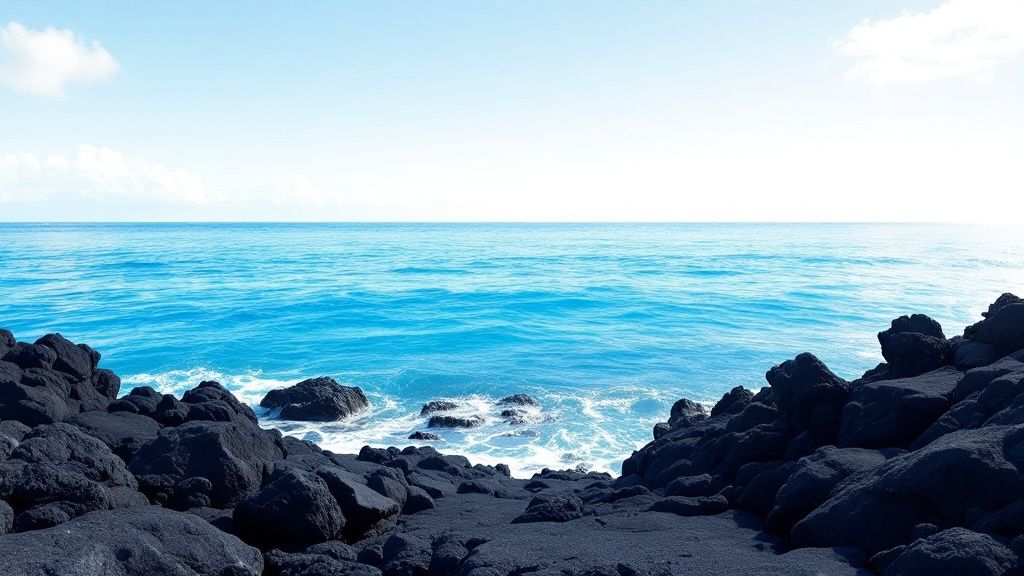
Diving in Kona is more than just a fun activity; it’s like stepping into a completely different world—one shaped by millennia of volcanic fire. The island's dramatic geology has carved out a stunning underwater landscape full of arches, caverns, and intricate lava formations that now serve as a home for a dazzling array of marine creatures.
What really sets Kona apart is its geography. Unlike many other world-class dive spots, the Kona coast is naturally shielded from strong trade winds by the colossal volcanoes of Mauna Loa and Hualalai. This creates a massive "wind shadow," resulting in consistently calm and clear waters that are perfect for divers of every experience level, from absolute beginners to seasoned pros.
A Sanctuary for Marine Life
The nutrient-rich waters all along the Kona coast support a healthy, thriving ecosystem, which means you're almost guaranteed to see something amazing on every single scuba diving Kona, Hawaii tour.
- Honu (Hawaiian Green Sea Turtles): These gentle, ancient reptiles are a common and beloved sight. You'll often find them resting on the reef or gliding gracefully through the water right beside you.
- Endemic Fish Species: A huge portion of Hawaii's reef fish are found nowhere else on Earth. It's a truly unique experience to see fish that have evolved in complete isolation.
- Larger Pelagic Animals: It's not uncommon for pods of spinner dolphins to greet the dive boats on the way to a site. And in the winter, you can often hear the haunting songs of humpback whales echoing through the water—a truly magical soundtrack for your dive.
This incredible biodiversity is a huge part of what makes Kona so special. The underwater terrain, a direct result of the island's volcanic past, hosts everything from sprawling coral gardens to massive, hollowed-out lava tubes. Some sites, like Turtle Pinnacle, are even known as natural "cleaning stations," where honu line up to have parasites nibbled off by smaller fish—a reliable spectacle for divers. You can dive deeper into the unique ecology and find the best times to visit by reading up on the local marine environment at KonaOceanAdventures.com.
When you're ready to plan your trip, picking the right guide makes all the difference. Kona Honu Divers offers exceptional diving tours and is consistently ranked as one of the best dive charters in Hawaii. They're known for their expert guides, small group sizes, and genuine commitment to protecting the marine environment.
Experience the Manta Ray Night Dive Ballet
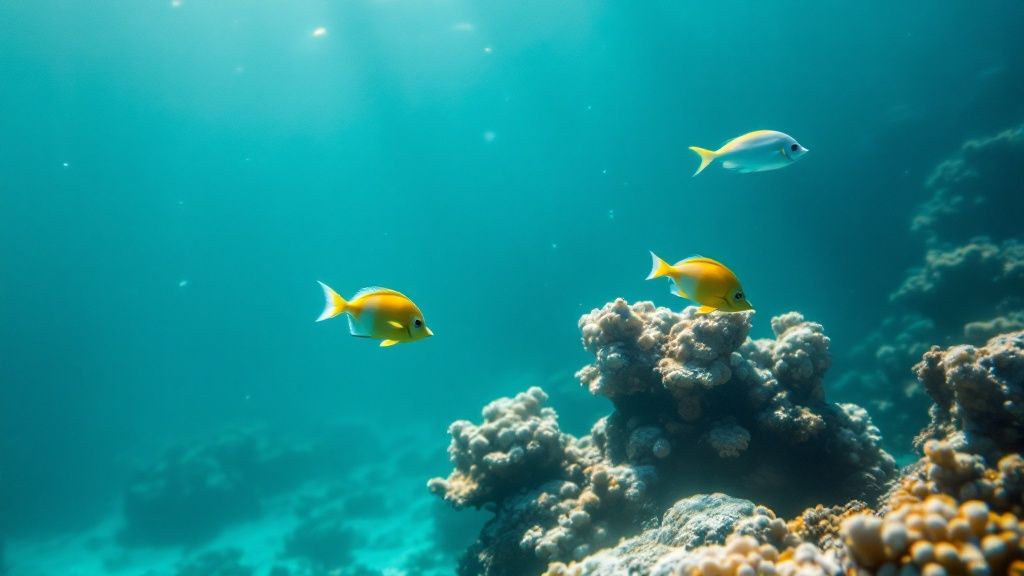
Imagine dropping into the dark, warm Pacific just as the last bits of sunlight vanish from the sky. Below you, a circle of powerful lights turns the seafloor into a glowing underwater stage. This bright beacon draws in a massive cloud of plankton, essentially setting up a dinner buffet for Kona’s most celebrated residents.
Then, out of the darkness, they appear. Huge, graceful shadows glide into the light, and the show truly begins. This is the world-famous Manta Ray Night Dive, an encounter that feels less like scuba diving and more like witnessing a breathtaking aquatic ballet. For countless divers, this is the signature experience of the Big Island.
There’s really nothing that can prepare you for the awe of watching these gentle giants, some with wingspans stretching up to 16 feet, soar and somersault just inches over your head. They are completely at ease, performing effortless barrel rolls as they feed on the plankton, totally unfazed by their human audience.
The Science Behind the Spectacle
This incredible gathering isn't just a happy accident; it's a learned behavior that has developed over many years. The whole encounter hinges on a very simple food chain reaction: our lights attract the plankton, and the plankton attracts the mantas. It's that simple.
What makes Kona so unique is how reliable this is. This is one of the very few places on the planet where you can see manta rays this close, this consistently, all year long. It’s a humbling, mesmerizing experience that has rightfully earned its spot as one of the best night dives in the world. For a deeper dive into how it all works, check out our guide explaining what the Manta Ray Night Dive is.
The key to this unique interaction is passive observation. Divers are instructed to remain on the seafloor and simply watch the show, allowing the mantas to approach on their own terms. This creates a safe, non-invasive experience for both the animals and the participants.
A Community of Gentle Giants
One of the coolest things about the mantas here is how well we know them. The local community is made up of nearly 200 identified individuals who stick around the Kona coast year-round. We can actually tell them apart by the unique spot patterns on their bellies, which are like fingerprints.
Local dive operators have been keeping records for years, and on a really good night, divers have seen massive gatherings. The record stands at an incredible 36 mantas showing up at once! This nightly spectacle has helped make Kona a global leader in responsible, mind-blowing dive tourism.
This is a true once-in-a-lifetime encounter and an absolute must-do for anyone visiting the Big Island. It’s an adventure that will stay with you long after your gear has dried.
Discovering Kona’s Premier Dive Sites
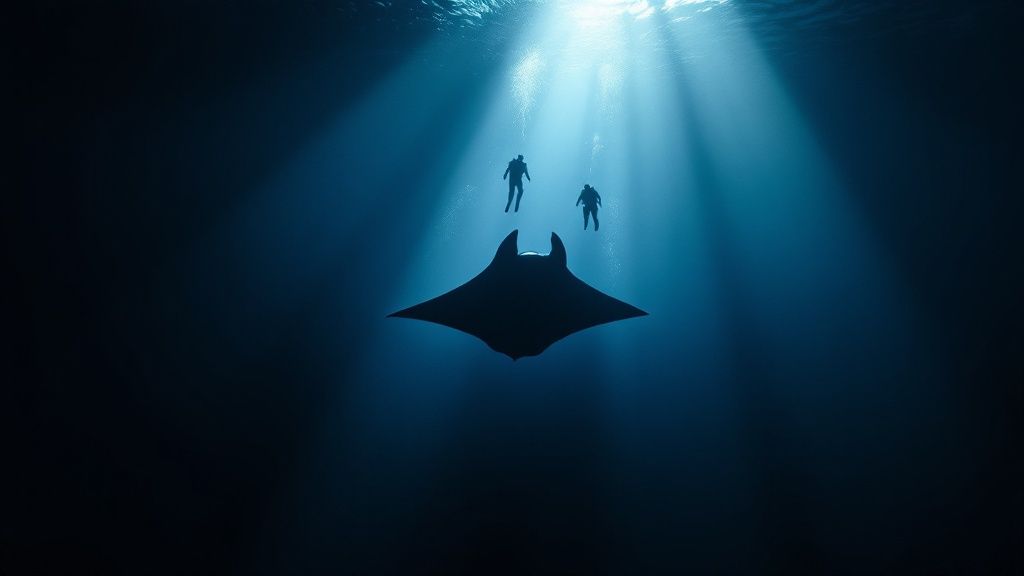
While the Manta Ray Night Dive is the star of the show, it's just the beginning of what Kona has to offer. The Big Island’s volcanic past has left behind an incredible underwater playground. We're talking dramatic lava tubes, sweeping arches, and reefs teeming with life, making every single dive a genuine exploration.
This is what makes Kona diving so addicting. One day you’re gliding through an ancient lava tube, the next you’re watching Hawaiian green sea turtles at their personal "cleaning station." The sheer variety means you'll never get bored, no matter how many tanks you've logged here.
Exploring Lava Tubes and Arches
Some of Kona’s most memorable dives are all about the incredible underwater architecture. These aren't just rocks; they're the frozen-in-time results of the island's fiery creation.
-
Crescent Beach: This spot is famous for its dramatic lava formations. You'll find swim-through arches and caverns that make you feel like you're exploring a submerged cathedral, especially when shafts of sunlight pierce the dark from above. It's a fantastic place to find whitetip reef sharks and turtles taking a nap.
-
Golden Arches: Just like the name suggests, this site is built around a stunning archway. It’s often framed by massive schools of bright yellow tangs, and when the sunlight hits just right, it’s a dream shot for any underwater photographer.
Dives like these are the perfect mix of geological wonder and vibrant marine life, offering a completely different vibe from the open-water manta experience.
From Turtle Pinnacles to Deep Ocean Drifts
Beyond the arches and caves, Kona's dive portfolio has sites known for specific animal encounters and others that are a true test of your skills. One of our all-time favorites is Turtle Pinnacle, a spot almost guaranteed to have a high concentration of honu (turtles). They gather here to let local surgeonfish clean algae off their shells, giving you an amazing, up-close look at these gentle giants.
But if you're looking for something truly out of this world, nothing compares to the Kona Blackwater Dive. People call it "Pelagic Magic," and it’s not a reef dive at all. Instead, you're tethered to the boat, drifting in the pitch-black open ocean, with thousands of feet of water below you.
The Blackwater Dive is like a trip to another planet. You'll see bizarre, bioluminescent creatures rise from the abyss to feed near the surface—a part of the ocean that almost no one ever gets to witness. It’s a mind-blowing experience for more experienced divers looking for advanced opportunities.
Overview of Popular Kona Dive Sites
To help you get a sense of what's out there, here’s a quick-glance guide to some of the must-do sites in Kona. It's just a taste of what the coast has to offer.
| Dive Site | Key Features | Best For |
|---|---|---|
| Manta Heaven | The go-to spot for the Manta Ray Night Dive with a shallow, sandy bottom. | All skill levels, Night Diving |
| Crescent Beach | Impressive lava tubes, arches, and a good chance to see turtles and sharks. | Intermediate Divers |
| Golden Arches | Huge schools of fish, healthy coral, and an iconic archway. | Beginner to Intermediate |
| Turtle Pinnacle | A famous turtle "cleaning station" with a very high probability of seeing honu. | All skill levels, Photographers |
| Pelagic Magic (Blackwater) | Open ocean night dive featuring deep-sea bioluminescent creatures. | Advanced Divers Only |
This table covers the highlights, but for a deeper look at the possibilities, you can explore all the dive sites Kona Honu Divers will take you to and start planning your perfect underwater adventure. Whether you're a seasoned pro or just starting out, there's a dive site here with your name on it.
When Is the Best Time for Kona Diving
Here's the great thing about diving in Kona: there really isn't a "bad" time to visit. Thanks to the massive volcanoes that shelter the coastline, our waters stay remarkably calm and clear year-round. It’s less about finding a good season and more about choosing the right season for the experience you're looking for.
Think of it like this: are you dreaming of the warmest possible water and glassy seas, or does the idea of hearing humpback whale songs on your dive give you goosebumps? Each season has its own personality, and the choice is all yours.
Summer Diving in Kona (June to October)
This is what many people consider "peak season" in Kona, and for good reason. The water temperature climbs into the low 80s°F (around 27-28°C), making it feel like a refreshing bath. The ocean surface often looks like a sheet of glass, which means comfortable boat rides and incredibly peaceful dives.
Those calm conditions lead to phenomenal visibility, which can easily exceed 100 feet. It’s an underwater photographer's dream. It's also the perfect time for new divers to get certified or for anyone who simply wants the most serene and predictable diving conditions imaginable.
Winter Diving in Kona (November to May)
While summer brings the heat, winter brings its own kind of magic. The water cools down a bit, usually sitting in the mid-to-upper 70s°F (around 24-25°C). Most divers are perfectly comfortable in a 3mm or 5mm wetsuit.
But the real showstopper of the winter season is the arrival of the humpback whales. From December through March, these gentle giants migrate to Hawaii to breed and calve. While getting a glimpse of one underwater is the holy grail—rare and entirely up to luck—their presence is felt on almost every dive.
It’s a truly unforgettable experience to be 60 feet down, exploring a lava tube, and hear the powerful, haunting songs of a male humpback echoing through the water. It adds a whole other layer to the dive that you just can't get anywhere else.
Winter swells can occasionally stir things up and reduce visibility a little, but it's still fantastic by most standards. Plus, you have a better chance of spotting other big pelagic animals that cruise through during the cooler months. If hearing whale song and seeing fewer crowds is your goal, winter is your time.
Honestly, no matter when you book your trip, Kona’s underwater world is ready for you. Every season offers something special, giving you a perfect reason to jump in.
Essential Safety Tips for Diving in Kona
Kona's warm, clear waters are what divers dream of, but we never forget that we're guests in a powerful, wild environment. The ocean always has the final say. A truly fantastic dive trip isn't just about what you see; it's about coming back to the boat with a great story, and that starts with putting safety first. When you know the local environment and stick to best practices, you can relax and focus on the incredible world below.
The underwater landscape here is a direct result of volcanic fire meeting the sea. That means you’ll be swimming through a stunning, but complex, world of sharp lava rock, intricate tunnels, and dramatic drop-offs. This is why excellent buoyancy control is non-negotiable in Kona. It's more than just a skill—it's your ticket to navigating this terrain without getting a scratch. Just as important, staying perfectly neutral protects the fragile, slow-growing coral that is the lifeblood of our marine ecosystem.
Understanding Local Ocean Conditions
While Kona is famous for its calm, protected waters, conditions can and do change. This is the open ocean, after all. A smart diver is always aware of what’s happening with currents, surge, and visibility.
Before you even think about getting in the water, listen closely to your dive guide's briefing. These folks dive these sites day in and day out. They have an intimate understanding of the entry and exit points, know where currents might be hiding, and can tell you exactly what to expect.
If you're planning any shore dives on your own or just want to be a more informed diver, it's a great idea to learn how to check ocean conditions for the Big Island. While a reputable operator will always make the final go/no-go call based on real-time conditions, knowing what to look for empowers you to ask the right questions.
The most important piece of safety gear you have is your own brain. Know your limits, never be afraid to speak up if you're uncomfortable, and always, always do your pre-dive safety checks.
The Critical Role of a Professional Dive Operator
Honestly, the single most important safety decision you'll make is choosing a professional, reputable dive shop. An experienced local crew and a well-maintained boat aren't just nice-to-haves; they are essential. A top-tier operator gives you so much more than a ride to the site—they provide expert site selection, detailed briefings, emergency oxygen, and a crew fully trained in rescue procedures.
This professional oversight is a huge factor in reducing risk. Sadly, Hawaii sees its share of ocean-related incidents, especially with visitors who aren't familiar with local conditions.
Between 2009 and 2018, Hawaii recorded 206 snorkeling deaths, and tourists accounted for 189 of them. This statistic is a staggering 13 times higher than the U.S. national average for snorkeling fatalities. Over that same time frame, there were 28 scuba diving fatalities. That comparatively lower number often reflects the rigorous training and professional supervision that is fundamental to our sport. You can read more about these Hawaiian ocean safety statistics on Divernet.com.
These numbers aren't meant to scare you, but to highlight why diving with a certified and respected company is so crucial. They handle the heavy lifting of logistics and safety planning so you can just relax and enjoy the magic.
- Dive Within Your Limits: Don't let ego push you into a deep dive or a complex lava tube if your training and experience aren't there yet. Be honest with yourself and your guide.
- Stay Hydrated and Rested: It’s easy to forget you're exercising in the tropics! Drink plenty of water and get a good night's sleep before a dive day.
- Respect Marine Life: Look, but don't touch. Keep a respectful distance from all marine animals. Never chase or harass wildlife—it's for their safety and yours.
Stick to these fundamentals, and your Kona diving adventure will be memorable for all the right reasons: incredible wildlife, stunning underwater scenery, and the pure joy of exploring one of the best dive destinations on the planet.
Choosing the Best Kona Dive Operator
Let's be honest: the dive operator you choose will make or break your entire Kona experience. A fantastic guide does more than just drive the boat—they unlock the secrets of a reef, keep you safe, and manage all the details so you can just relax and dive. With a few different outfits in town, how do you find the right one for you?
The best charters aren't just a boat and some rental gear. They’re defined by their commitment to small groups, which makes a world of difference underwater. It’s the gap between feeling like you’re just another tank on the boat and being part of a real, intimate expedition.
What to Look For in a Dive Charter
When you’re vetting your options, put a premium on operators with truly experienced local guides. These are the divemasters who’ve spent years, not just seasons, in Kona’s waters. They know the exact cranny an octopus likes to hide in or the time of day a particular reef just explodes with life. That kind of local knowledge is priceless.
Also, look for a crew that genuinely cares about marine conservation. A great operator doesn’t just dive; they protect. They respect the fragile ecosystem and teach their guests to do the same, ensuring these vibrant reefs are here for future generations. For a much deeper dive, we have a complete guide on how to choose a Kona dive shop.
A top-tier dive operation lives by a simple code: safety first, always. Right behind that comes an incredible customer experience and a deep respect for the ocean. They invest in meticulously maintained equipment, a highly trained crew, and a professional, welcoming vibe from the moment you first contact them.
When you're ready to pick your guide for Kona diving, here's a look at why Kona Honu Divers is a top choice:
Other well-regarded operators in the area include:
Jack's Diving Locker:
Big Island Divers:
Taking a little time to research your operator is the final, crucial step in planning an amazing trip. When you find a company that matches your values on safety, service, and conservation, you’re setting yourself up for a truly unforgettable Kona adventure.
Your Kona Diving Questions, Answered
Alright, let's tackle some of the most common questions we get about diving in Kona. Think of this as your final pre-flight check before you dive into our incredible underwater world. Getting these details sorted will help you feel completely ready and even more excited for your trip.
Do I Need to Be Certified to Scuba Dive in Kona?
For almost all of our boat dives out to the reefs, yes, you'll need to be a certified diver. But if you're not certified yet, don't worry! You can still get a fantastic taste of the experience with a "Discover Scuba Diving" program. These are guided, introductory dives where an instructor is right by your side in a safe, controlled setting.
And of course, snorkeling is another amazing way to see the vibrant life just below the surface at many of our best spots.
What Is the Water Temperature in Kona?
The water here is wonderfully comfortable all year long. In the winter, it hovers around 75-77°F (24-25°C), and during the summer months, it warms up to a balmy 80-82°F (27-28°C).
For most people, a standard 3mm wetsuit is perfect. If you tend to get chilly or are planning some deeper dives, you might feel a bit cozier in a 5mm, especially in the winter.
Kona's consistent warmth and clarity make it a world-class destination any time of year. The biggest seasonal difference isn't the conditions, but the soundtrack—humpback whale songs echoing through the water in winter versus the glassy, calm seas of summer.
What Marine Life Can I Expect to See?
Kona is bursting with life. The giant manta rays and Hawaiian green sea turtles (honu) are the stars of the show, but the supporting cast is just as impressive. You can expect to see vibrant schools of tropical fish, curious moray eels peeking out from their homes, cleverly camouflaged octopuses, and even the occasional frogfish.
It’s also very common to find whitetip reef sharks relaxing on the sandy bottom. If you visit in the winter (roughly December to March), you might even be treated to the incredible sound of humpback whale songs on your dive or spot pods of spinner dolphins on the boat ride.
What Should I Bring on the Dive Boat?
The key is to pack light but bring the essentials. Here’s a quick list of what you'll want to have with you:
- Your certification card and logbook
- A towel and some reef-safe sunscreen
- A hat and sunglasses for the boat ride
- A reusable water bottle (staying hydrated is key!)
We provide snacks, drinks, tanks, and weights on our boats, and you can rent any other gear you might need. Don't forget your underwater camera—you're going to want it!
Ready to make it happen? The crew at Kona Honu Divers lives and breathes this stuff, and we'd love to show you around our amazing underwater backyard. We keep our groups small and focus on safety and conservation to make sure every single dive is a memorable one. Take a look at all our Kona diving tours and find the adventure that’s right for you.