
Picture this: you descend into warm, crystal-clear water, sunlight dancing through the surface. All around you are vibrant coral gardens and dramatic lava tubes teeming with life. That's what Kona diving is all about—an underwater world that consistently lands on every diver's "best of" list. It’s a special mix of protected volcanic coastlines and deep offshore waters that creates a true paradise, no matter your skill level.
Why Is Kona Diving So Incredibly Good?
Diving in Kona is unlike anywhere else, and we have the massive volcanoes of Mauna Loa and Hualalai to thank for it. They act like a giant shield, protecting the coastline from the wind and creating some of the calmest, clearest conditions you'll ever see. It’s not uncommon for visibility to stretch out well beyond 100 feet. Whether you're a seasoned pro or just starting out, there are incredible scuba diving tours on the Big Island for every skill level.
This unique underwater landscape is a direct result of volcanic activity. You'll explore stunning lava formations, swim through ancient arches, and navigate intricate caverns that have become home to a thriving ecosystem. It's a world built by fire and reclaimed by the sea.
And the marine life? It's off the charts. Much of it is endemic to Hawaii, meaning you literally won't find these creatures anywhere else on the planet. From the beloved Hawaiian green sea turtles (honu) resting on coral heads to schools of colorful reef fish, every single dive is a fresh encounter.
But as great as the reefs are, Kona's reputation goes way beyond that.
Kona's Signature Underwater Adventures
Kona is world-famous for two night dives that are nothing short of life-changing. First, there's the legendary Manta Ray Night Dive. It’s like an underwater ballet where majestic manta rays, some with wingspans wider than you are tall, glide inches overhead to feed on plankton. You can experience this incredible spectacle on a dedicated manta ray dive tour.
For those who crave a bit of mystery, the Kona Blackwater Dive is a journey into the deep. We take you miles offshore to float in the dark and witness the planet's largest nightly migration, as bizarre and beautiful deep-sea creatures rise from the abyss. This is an adventure you can book on a specialized Blackwater Dive tour.
These aren't just dives; they're profound experiences. People travel from all corners of the globe just to witness these two underwater spectacles. They really are that special.
Before we go further, here's a quick look at the top experiences that make Kona a must-visit for any diver.
Kona's Signature Dives at a Glance
| Dive Experience | What Makes It Special | Perfect For |
|---|---|---|
| Manta Ray Night Dive | An up-close, surreal ballet with gentle giant manta rays feeding in the dark. | Absolutely everyone. It's an iconic, unforgettable bucket-list dive. |
| Blackwater Night Dive | Floating in the open ocean at night to see bizarre, bioluminescent deep-sea creatures. | Adventurous divers looking for a completely unique, otherworldly experience. |
| Lava Tube & Reef Dives | Exploring ancient volcanic formations, arches, and vibrant coral reefs. | Divers of all levels who love interesting topography and abundant marine life. |
These dives showcase the incredible diversity Kona has to offer, from the shallows to the deep blue.
Your Guide to Kona's Underwater Realm
To get the most out of these natural wonders safely, you need a guide who knows these waters like the back of their hand. Here at Kona Honu Divers, our experienced crew lives and breathes Kona diving. We're all about providing safe, respectful, and genuinely awe-inspiring diving tours that show off the very best of the Big Island.
Our passion is sharing the magic of this place with every person who joins our ‘ohana (family).
Ready to see for yourself why Kona is on every diver's must-do list? Let's get you in the water.
Exploring Kona’s Top Underwater Landscapes
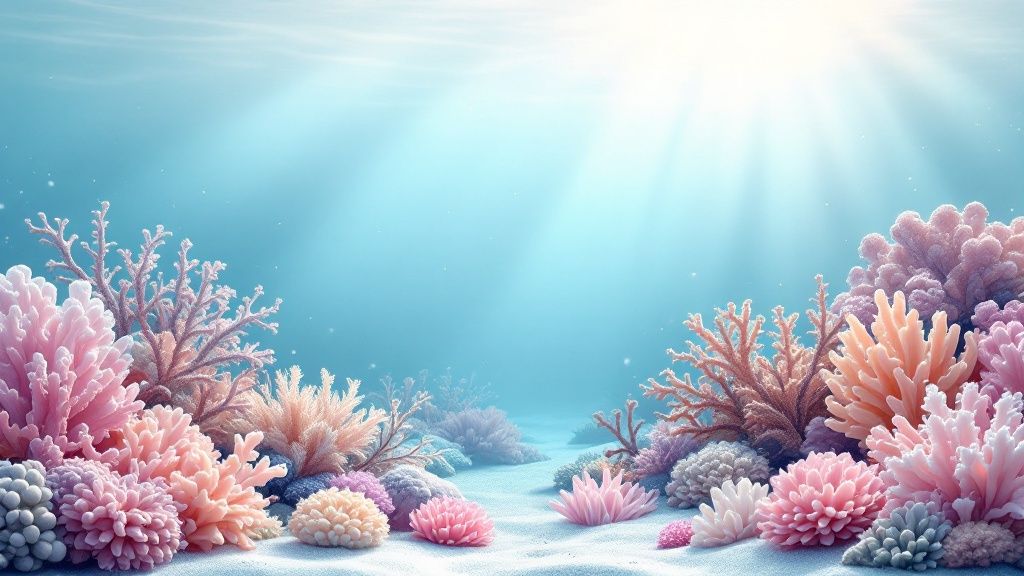
The Kona coast isn’t just one dive destination; it's a massive underwater playground with countless unique neighborhoods, each offering a totally different vibe. The Big Island's volcanic past sculpted an incredible seascape, from calm, sun-drenched reefs to complex, shadowy lava formations. This geological variety is precisely why Kona diving has something for everyone, from a brand-new Open Water diver to the most seasoned tech guru.
Figuring out this variety is the secret to planning your perfect dive trip. Instead of a one-size-fits-all approach, you get to hand-pick the sites that spark your interest and fit your comfort level.
Shallow Reefs and Turtle Sanctuaries
For a lot of divers, the classic Kona experience starts in the shallows. Sites like Pawaii Bay and Golden Arches are picture-perfect examples of these vibrant underwater gardens. The sun punches deep into the crystal-clear water, lighting up the hard coral colonies and creating a brilliant explosion of color.
These shallower reefs, usually between 20 and 60 feet, are absolutely buzzing with life. You’ll be surrounded by schools of yellow tang, ornate butterflyfish, and of course, Hawaii’s state fish, the humuhumunukunukuāpuaʻa. Best of all, these spots are favorite hangouts for the beloved Hawaiian green sea turtle, the honu. It’s almost a given you'll find them snoozing peacefully on the reef or gliding effortlessly past you.
These dives are a perfect match for:
- Newly certified divers looking for beautiful, calm, and predictable conditions.
- Photographers who want amazing light and tons of colorful subjects that don't move too fast.
- Anyone who has their heart set on a guaranteed encounter with majestic sea turtles.
The Dramatic Architecture of Lava Tubes
Once you venture a bit deeper and hit the more advanced sites, the whole underwater world changes. Millennia of volcanic flow have left behind a stunning and intricate architecture of lava tubes, swim-throughs, and massive arches. Honestly, navigating these formations feels like you're exploring ancient, sunken cathedrals.
Places like Cathedral and Au Au Crater are legendary for these features. You might be cruising along a wall, spot an opening, and suddenly find yourself in a huge cavern where sunlight streams through holes in the ceiling like spotlights. Swimming through a tunnel carved by molten rock is a Kona diving thrill you won't forget.
Exploring a lava tube is a lesson in the sheer power of nature. You're not just looking at fish; you're interacting with the geology that literally built the Hawaiian islands. It connects you directly to the island's fiery heart.
These structures also create homes for a whole different set of critters. Keep your eyes peeled in the nooks and crannies for shy whitemouth moray eels, sleeping whitetip reef sharks, and tiny, vibrant nudibranchs. The dynamic topography turns these dives into a multi-layered adventure.
Advanced Pinnacles and Deep Water Dives
For divers with a few more logbook entries, Kona's offshore pinnacles and deep walls offer a whole other level of excitement. These are basically submerged volcanic spires that shoot up from the ocean floor, creating isolated ecosystems that pull in bigger, pelagic species.
This is where you have a shot at seeing schools of jacks, barracuda, and sometimes even oceanic whitetip sharks cruising by in the blue. The dramatic drop-offs and potential for current demand rock-solid buoyancy control, making them a fantastic challenge for divers looking to push their skills. A guided advanced dive tour is the best way to safely see what these deep structures have to offer.
Kona's reputation as a world-class dive spot isn't new; it's been a global destination since the late 1960s. Today, the Big Island supports a thriving community with over 50 dive shops, and the incredible conditions bring in more than 150,000 dive tourists every year. All told, that adds up to about 100,000 certified scuba dives happening around Kona annually.
No matter what you're into—from peaceful turtle-watching to navigating ancient lava flows—the waters off Kona have a dive site with your name on it. Each spot tells a different story about the island's creation and the amazing life that calls it home. For a more detailed look, check out our guide to the most beautiful Kona diving sites and start planning your next trip.
Experiencing the World-Famous Manta Ray Night Dive
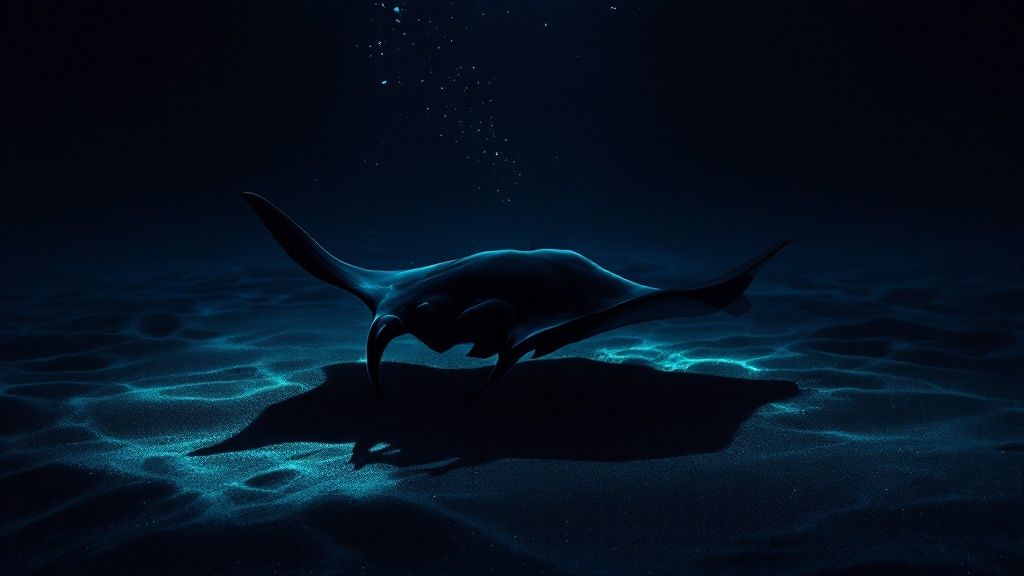
There are night dives, and then there's the Manta Ray Night Dive in Kona. Honestly, it's in a category all its own. This isn't just another entry in your logbook; for a lot of people, it's a profound, almost spiritual encounter that consistently gets voted one of the best underwater experiences on the entire planet. It's the kind of dive that can genuinely change how you see the ocean.
The magic begins right as you drop into the twilight. As the last glow of the sun vanishes, your dive group finds its spot on the ocean floor in a designated viewing area. Then, on cue, everyone aims their dive lights straight up, creating powerful beams that cut through the deep blue.
This cone of light acts like a giant magnet for tiny, free-floating plankton. It only takes a few minutes for a thick, shimmering cloud of these little critters to gather in the water above you. What you've just done is set the table for an all-you-can-eat buffet for Kona's most famous residents.
The Underwater Ballet Begins
And then, the show starts. A huge, dark shape emerges from the blackness, gliding without effort into the light beams. It’s a giant manta ray, with a wingspan that can stretch up to 16 feet, soaring through the water like some kind of stealth bomber. Before you know it, another one follows, and then another.
They put on a mesmerizing underwater ballet, performing graceful barrel rolls and looping somersaults as they filter the plankton-rich water through their enormous mouths. They swoop down, sometimes just inches from your mask, their intelligent eyes seeming to make contact as they pass. It’s an incredibly intimate and humbling experience. You stop being a spectator and become part of the spectacle itself.
It's almost impossible to put into words the feeling of a creature the size of a small car gliding silently right over your head. It’s a powerful, unforgettable reminder of the grace and majesty of the ocean's gentle giants.
Why This Dive Is So Reliable and Special
Kona is one of the very few places in the world where you can count on these encounters with such amazing consistency. The local manta ray population doesn't migrate; they live here all year and have learned to associate our dive lights with a nightly "dinner bell." That incredible reliability is what makes the Kona diving experience truly unique.
In fact, this consistency isn't just anecdotal. A major 2013 study at popular sites like 'Manta Heaven' and 'Manta Village' confirmed just how frequently divers encounter these magnificent animals. This research solidifies Kona's reputation as both a critical habitat and the global gold standard for sustainable manta ray tourism.
A Commitment to Sustainable Tourism
The long-term success of this incredible dive depends entirely on all of us being responsible. Reputable operators are fiercely protective of both the divers and the mantas, and we follow strict guidelines to make sure every interaction is safe and respectful.
Here are the key rules for anyone joining the dive:
- Observe Only: Never, ever touch, chase, or try to ride a manta. Touching them can strip away their protective mucous coating, which leaves them vulnerable to infections.
- Maintain Position: Divers stay on the bottom, and snorkelers stay on the surface. This keeps the water column clear for the mantas to move around safely.
- Proper Lighting: We shine our lights up from the bottom (or down from the surface for snorkelers) to create a focused feeding zone.
By sticking to these simple rules, we can ensure this natural wonder continues to be enjoyed for generations. To get the full picture of the logistics and the magic, check out our guide on what the manta ray night dive is all about.
Beyond The Reef: Kona’s Unique Marine Life and The Famous Blackwater Dive
Sure, the stunning reefs and majestic manta rays tend to get most of the attention, but there's a whole other world waiting for you in Kona. A huge number of the critters you'll meet here are endemic, which is just a fancy way of saying you can't find them anywhere else on the planet. This incredible biodiversity turns every single dive into a real-life treasure hunt.
This is especially true when you venture away from the reef and into the deep blue. Kona's unique offshore geography opens up amazing chances for encounters with big pelagic species that you just don't see closer to shore. It's not out of the question for lucky divers to spot pilot whales, oceanic whitetip sharks, or even the occasional whale shark cruising by in the open ocean.
As you get to know Kona's underwater world, it's impossible not to feel a responsibility to protect it. Understanding how to stop water pollution is a crucial part of making sure these fragile ecosystems are around for the next generation of divers.
The Ultimate Adventure: The Kona Blackwater Dive
For those with a serious sense of adventure, Kona offers one of the most unique, mind-bending dives you can possibly imagine: the Blackwater Dive. This is not your standard night dive on a reef. Not even close. Instead, we head miles offshore, where you'll float suspended in the dark over thousands of feet of water, safely connected to the boat by a tether.
The whole point of the experience is to witness one of the planet's greatest natural events: the nightly vertical migration. Every single evening, as the sun goes down, a staggering number of deep-sea creatures rise from the crushing depths toward the surface to feed. By biomass, it's the largest migration on Earth, and on a Blackwater Dive, you get a front-row seat.
Imagine floating in total darkness. The only things you can see are the beam of your dive light and the downline to the boat. It's an experience that dials your senses to eleven, making you hyper-aware of the strange and beautiful life drifting right past your mask. This is truly the final frontier of Kona diving.
The creatures you see out here look like they were dreamed up for a sci-fi movie. Many are tiny, translucent, and bioluminescent—they create their own light in the inky blackness. You might see larval fish that look absolutely nothing like their adult selves, bizarre jellies pulsing with light, and alien-like squid and crustaceans. It's a surreal journey into an environment most people will never, ever get to see.
This specialized dive definitely requires advanced skills and a calm mindset, but the reward is an experience that will completely redefine what you think a night dive can be. It's less about spotting big animals and more about appreciating the tiny, intricate life that forms the very foundation of the ocean's food web.
To take on this otherworldly adventure, you need a guide with specialized training and equipment. The Kona Blackwater Dive is an experience we've meticulously planned for maximum safety and absolute wonder. It's your chance to see a part of the ocean that is still largely a mystery, revealing its secrets one glowing creature at a time.
How to Plan Your Perfect Kona Diving Trip
So, you're dreaming of diving in Kona? Turning that dream into a reality is all about a little bit of smart planning. With some insider knowledge, you can map out a trip that's smooth, safe, and absolutely unforgettable. This is your blueprint for choosing the best time to visit, picking the right crew to dive with, and packing everything you need for the adventure.
First things first: when should you come? The amazing thing about Kona is that the diving is fantastic all year long. We have the massive volcanoes on the Big Island to thank for that—they shield our coastline from the worst of the wind, keeping the waters famously calm and clear.
Water temperatures are always comfortable, too. You can expect them to hover around a refreshing 75°F (24°C) in the winter months and warm up to a balmy 82°F (28°C) in the heart of the summer.
Choosing the Best Season for Your Dive Goals
While any time is a great time to be underwater here, some seasons offer unique bonuses. Your decision might come down to what you hope to see or hear besides our incredible reefs. For example, diving in the winter comes with a magical soundtrack: the haunting, beautiful songs of migrating humpback whales often echo through the water while you explore. It's an experience you'll never forget.
To help you decide, here’s a quick look at what each season has to offer.
Choosing the Best Season for Your Kona Dive
Picking the "best" time to dive in Kona really depends on what you're hoping to experience. Are you chasing the warmest water, or is the chance to hear a whale's song underwater your top priority? This table breaks it down to help you find your perfect dive window.
| Season | Water Conditions | Key Wildlife Encounters | What to Expect |
|---|---|---|---|
| Winter (Dec – Mar) | 75-77°F (24-25°C), generally calm. | Humpback whales (audible, occasional sightings), manta rays, reef fish. | The chance to hear whales singing underwater is a major highlight. Surface conditions can occasionally be a bit choppier. |
| Spring (Apr – Jun) | 76-78°F (24-26°C), excellent visibility. | Increased turtle activity, pilot whales, diverse reef life. | A great time for crystal-clear water and calm seas. Perfect for photographers and newer divers finding their fins. |
| Summer (Jul – Sep) | 80-82°F (27-28°C), warmest water. | Manta rays, pods of dolphins, potential for rarer pelagic sightings. | This is when the water is warmest and most comfortable, ideal for divers who tend to get chilly. |
| Fall (Oct – Nov) | 78-80°F (26-27°C), consistently calm. | Manta rays, huge schools of fish, eagle rays. | Often considered a "sweet spot" with warm water, fewer crowds, and absolutely fantastic diving conditions. |
No matter when you visit, you're in for a treat. The year-round calm conditions and abundant marine life are what make Kona a world-class diving destination.
Selecting the Right Dive Operator
The dive crew you choose can honestly make or break your entire trip. With over 50 dive shops on the Big Island, it pays to do a little research to find an operator that puts safety, quality, and the local ecosystem first. Look for an impeccable safety record, small group sizes for a more personal tour, and guides with deep local expertise.
A great operator doesn't just drop you at a dive site; they tell you its story. They know the nooks and crannies where the coolest critters hide. Here at Kona Honu Divers, our experienced crew is obsessed with providing safe, respectful, and jaw-dropping diving tours in Kona that show off the very best of our island home. We truly believe in creating an ‘ohana (family) vibe on every single boat trip.
Packing Essentials and Certification
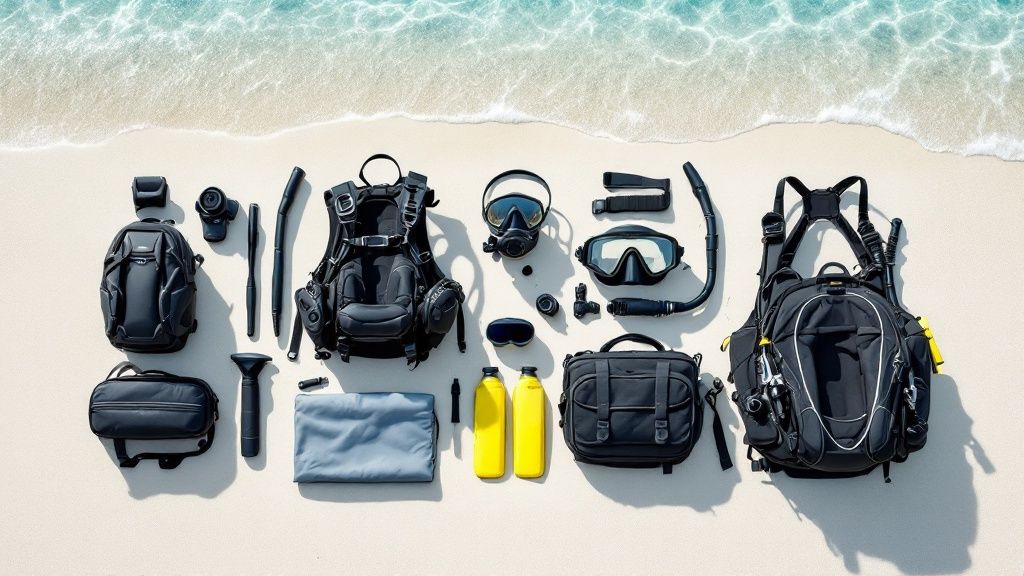
Once you've locked in your dates and your dives, it's time to think about packing. While you can always rent top-notch gear from us, many divers feel more comfortable bringing their own mask, computer, and fins. You know they fit perfectly! And please, don't forget the reef-safe sunscreen—it protects both your skin and our delicate coral from harm.
For a full rundown, check out our guide on the gear you will need for your Kona diving adventure.
Lastly, remember to bring your certification cards! Your Open Water cert is your ticket to dozens of incredible sites. If you're hoping to join some of our more advanced dives, like the mind-blowing Pelagic Blackwater Dive or exploring deeper lava tubes, you'll generally need your Advanced Open Water certification. Get those details sorted, and you're all set for an epic Kona experience.
Common Questions About Kona Diving

Getting ready to dive into Kona’s incredible underwater world is exciting, but we know you probably have a few questions before you hit the water. We get it. To help you plan with total confidence, we’ve pulled together the most common questions we hear from fellow divers.
Think of this as your quick-start guide to clear up any uncertainties. This way, you can spend less time worrying about the details and more time dreaming about the amazing marine life waiting for you.
What Certification Do I Need to Dive in Kona?
Kona is fantastic because it truly offers something for divers of all stripes. If you have your Open Water certification, you're good to go! That certification is your ticket to explore dozens of stunning reef sites packed with colorful fish, Hawaiian green sea turtles, and wild coral formations.
Now, for some of our more unique adventures, you'll need a bit more training under your belt. To get into the incredible lava tubes or experience the mind-blowing Kona Blackwater Dive, an Advanced Open Water certification is typically required. It just ensures you have the skills and comfort level for these more challenging, but rewarding, environments.
Been a while since your last log entry? No problem. A quick refresher course is a great way to brush up on your skills and get your confidence dialed in before heading out on our main Kona diving tours.
Is the Manta Ray Night Dive Really Safe?
Absolutely, yes. When you dive with a professional, experienced crew, the Manta Ray Night Dive is incredibly safe. The most important thing to remember is that manta rays are gentle giants. They're filter feeders, which means they only eat microscopic plankton—they have zero interest in divers.
These majestic animals are drawn to the clouds of plankton that gather in our powerful lights, not the people holding them. Safety is a team effort here. Our divemasters give a detailed briefing, set up a specific spot for everyone to watch from, and keep a close eye on the entire dive. Your job is simple: relax, hold your position, and just soak in the spectacle without touching the mantas.
Going with a reputable operator means you're getting the highest safety standards for both the divers and the mantas, making it a respectful and unforgettable experience for everyone.
When Is the Best Time of Year for Kona Diving?
This is one of the best things about diving here: Kona diving is amazing all year long. The Kona coast is perfectly protected by our massive volcanoes, which blesses us with exceptionally calm, clear water most days. It’s not uncommon for visibility to push past 100 feet, giving you postcard-perfect conditions whenever you visit.
The water is always comfortable, too. It hovers around a pleasant 75°F (24°C) in the winter and warms up to a balmy 82°F (28°C) in the summer.
While the diving is always top-notch, the winter months (December through March) bring a special kind of magic. This is when humpback whales migrate through Hawaiian waters. Hearing their haunting, beautiful songs echoing through the water on a dive is an experience you will never, ever forget.
Do I Need to Bring My Own Scuba Gear?
Only if you really want to. Lots of divers love the fit and feel of their own gear, and we totally get that. But if you’d rather travel light and skip the hassle of extra baggage fees, we’ve got your back.
All the great dive shops in Kona, including us here at Kona Honu Divers, offer full sets of high-quality, meticulously maintained rental equipment. You can easily rent everything you need for the day:
- Buoyancy Control Devices (BCDs)
- Regulators with dive computers
- Wetsuits perfect for our water temps
- Masks, snorkels, and fins
It’s the easiest way to dive. Just show up ready for an adventure, and we’ll make sure you’re outfitted with safe, reliable gear to explore the best of Kona’s underwater world.
Ready to experience the magic for yourself?
At Kona Honu Divers, we live to share the wonder of our island’s underwater realm. From vibrant reefs to unforgettable night dives, we provide safe, fun, and memorable adventures for every diver.
Visit our diving tours page to find the perfect trip for your skill level and start planning your Kona diving adventure today.