
When people talk about world-class diving, Kona almost always enters the conversation. There's a good reason for that. It’s famous for its stunningly clear water, wild underwater lava formations, and some truly unforgettable marine life encounters.
The Big Island’s leeward coast offers up some of the calmest, clearest conditions you could ask for, making it a fantastic spot for everyone from brand-new divers to seasoned pros. Whether you're here to drift over vibrant coral reefs or experience the world-famous manta ray night dive, Kona delivers.
Why Kona Is a Top-Tier Diving Destination
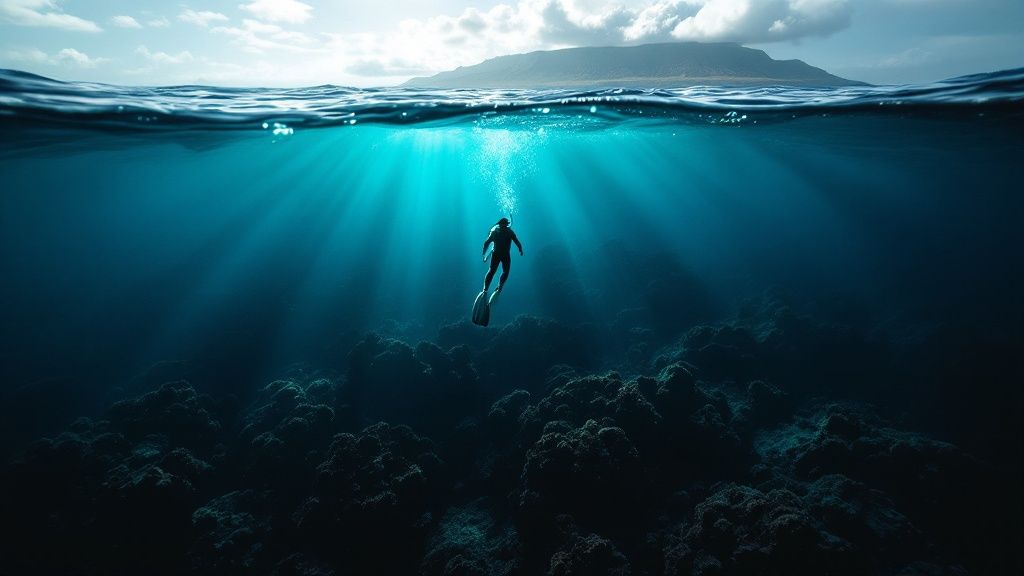
Picture this: you descend into the warm, blue Pacific, and everywhere you look, the aftermath of ancient volcanic eruptions has created a jaw-dropping underwater world. That's the heart of Kona diving. It’s a playground of dramatic lava tubes, massive arches, and hidden caves just waiting to be explored.
This isn't your typical tropical reefscape. Kona’s underwater topography is raw and rugged, a direct result of its volcanic past. It’s a unique environment you just won't find anywhere else, and it’s this very geology that lays the groundwork for Kona’s incredible marine ecosystem. The porous lava rock creates the perfect home for everything from tiny, vibrant nudibranchs to clever octopuses that are masters of camouflage.
Kona Diving At a Glance
To give you a quick snapshot, here's what truly sets Kona apart from other dive destinations around the globe.
| Feature | Highlight |
|---|---|
| Water Clarity | Visibility frequently exceeds 100 feet, offering crystal-clear views. |
| Calm Conditions | Sheltered by massive volcanoes, the seas are consistently calm. |
| Unique Topography | Explore dramatic underwater lava tubes, arches, and caves. |
| Iconic Marine Life | Home to the world-famous manta ray night dive and blackwater dives. |
| Rich Biodiversity | Reliable sightings of green sea turtles (honu) and spinner dolphins. |
| Accessibility | Ideal for all skill levels, from beginners to technical divers. |
Simply put, Kona checks all the boxes for a premier diving location.
The Advantage of the Leeward Coast
One of Kona’s biggest secrets to success is its location. It sits on the western, or leeward, side of the Big Island, and this is a game-changer. The colossal volcanoes of Mauna Kea and Mauna Loa act like a massive natural shield, blocking the coastline from the gusty trade winds.
What does this mean for divers? Remarkably calm and consistent sea conditions pretty much all year. You get less choppy waves on the surface, minimal currents at most of the popular sites, and that legendary water visibility that often pushes past 100 feet.
This natural protection makes Kona an incredibly reliable place to plan a dive trip. While other spots might be a roll of the dice with seasonal weather, Kona's waters stay welcoming and accessible. It means your dives are far less likely to get canceled. To get a better feel for why this area is so special, check out our post on the top reasons to scuba dive Kona, Hawaii.
A Hub of Incredible Biodiversity
But the calm, clear water is just where the magic begins. Kona is a true hotspot for marine biodiversity, known for those bucket-list encounters that divers travel the world to see. You're almost guaranteed to spot graceful green sea turtles (honu) and pods of playful spinner dolphins.
Of course, the star of the show is the legendary manta ray night dive. It's an otherworldly experience, like watching a silent ballet as these gentle giants swoop in to feed on plankton attracted by underwater lights. For the more adventurous, there's the thrill of a blackwater dive—a trip into the deep, dark open ocean to see some of the bizarre, bioluminescent creatures that rise from the abyss at night.
It's this killer combination of unique geology, perfect conditions, and world-class wildlife that truly cements Kona's reputation as one of the best places to dive on the planet.
Witnessing the Manta Ray Night Dive Ballet
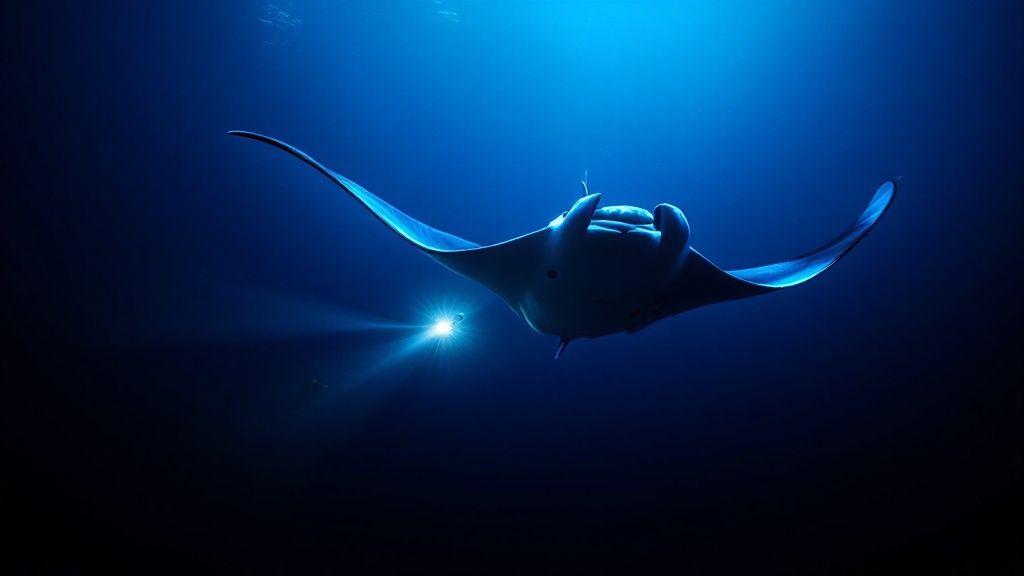
Of all the incredible dives you can do in Kona, one experience is truly the stuff of legends: the Manta Ray Night Dive. This isn't just another dive. It’s an underwater ballet, a performance where massive, graceful creatures are the stars of the show. Your adventure begins as the sun sinks below the horizon and you head out on the boat into the calm twilight waters.
Once you descend into the dark, your guide will get you situated in a designated spot on the sandy ocean floor. From there, you'll point your dive light straight up, creating a beam that cuts through the darkness. This column of light attracts microscopic plankton—the manta rays' favorite meal—essentially setting the stage for the main event.
Before long, the stars arrive. With wingspans that can stretch over 12 feet, these gentle giants glide effortlessly into the light. They perform silent, mesmerizing barrel rolls and swooping maneuvers as they filter the plankton from the water. Watching them is hypnotic; they are powerful, completely silent, and utterly captivating.
The Science Behind the Spectacle
This incredible gathering isn't just a happy accident; it's a unique natural phenomenon that's been happening for decades. The sheltered conditions along the Kona coast are the perfect environment for plankton to thrive. When we show up with bright lights, it attracts the plankton, which in turn draws in the local population of reef manta rays for a reliable nightly feast.
The sheer consistency of this event is what makes Kona so special. It has become one of the most dependable manta ray encounters on the planet, a fact that draws thousands of divers and snorkelers every year. It’s a perfect storm of warm, clear water, nutrient-rich currents, and sheltered bays that has created a sanctuary for this amazing spectacle. In fact, these unique conditions attract about 80,000 participants annually to witness the mantas.
If you're ready to see this for yourself, looking into the available tours is the best place to start. You can find some of the best Manta Ray Night Snorkel Kona tours to get your adventure planning underway.
Protecting the Performers
The long-term success of the manta ray dive all comes down to responsible tourism. To make sure these incredible animals are protected, there are strict guidelines in place for everyone who gets in the water. The core rule is simple but critical: look, but don't touch.
Touching a manta ray is strictly forbidden. Their skin is covered in a delicate mucus layer that protects them from infection, and our touch can strip it away, leaving them vulnerable.
Divers are always instructed to stay on the ocean floor, which gives the mantas plenty of room to maneuver above. Snorkelers do the same, but from the surface. By following these simple rules, we ensure the mantas stay safe and comfortable, allowing this natural ballet to continue for generations to come. To get a better feel for the experience, you can learn more about what a manta ray night dive entails in our detailed guide.
Discovering Kona’s Unique Marine Life and Dive Sites
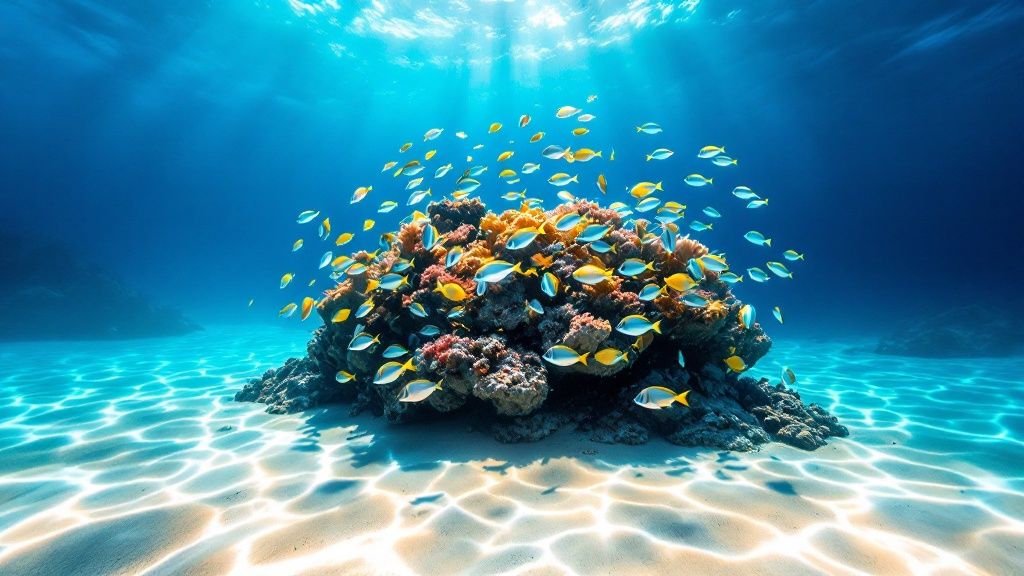
Sure, the manta ray ballet is the main event, but the full story of Kona diving goes so much deeper. The volcanic coastlines of the Big Island are a sanctuary for a mind-blowing variety of marine life, turning every single dive into an underwater treasure hunt. This isn't just another pretty tropical reef; it's a living museum where evolution has been cooking up unique creations for millennia.
The secret ingredient here is something called Hawaiian endemism. Because the Hawaiian archipelago is the most isolated island chain on the entire planet, many of the critters that found their way here evolved into completely new species. You can't find them anywhere else. When you drop into Kona's waters, you're literally swimming alongside fish and invertebrates that are one-of-a-kind.
This all comes down to geology. Deep ocean water is surprisingly close to shore, and the colossal volcanoes act like a shield, creating calm, protected habitats. These perfect conditions have resulted in the world’s highest rate of endemism for marine species, making Kona a genuine global hotspot for biodiversity.
Encounters With Kona's Famous Residents
Beyond the rare stuff, Kona is known for its reliable cast of amazing marine animals. No dive log from here is complete without spotting a honu, the majestic Hawaiian green sea turtle. We find them all the time, just chilling out under lava ledges or gliding effortlessly over the reef.
Other frequent visitors you'll want to look out for include:
- Spinner Dolphins: You'll often see them putting on an acrobatic show from the boat, but sometimes they'll surprise you underwater, zipping past in big, curious pods.
- Shy Eels: If you've got a patient eye, you can find all sorts of moray eels peeking out from their rocky homes, from the beautifully patterned zebra moray to the giant yellowmargin.
- Whale Sharks: They're a rare treat, but sightings of the world's biggest fish happen year-round, adding a serious dose of "what if" excitement to every dive.
- Humpback Whales: During the winter months (December to March), the haunting songs of migrating humpbacks often provide an unforgettable, vibrating soundtrack to your dive. It's something you feel as much as you hear.
For those looking to explore more, the area around the Captain Cook Monument is a fantastic spot, often mentioned in resources like this guide on Captain Cook Snorkeling Kona Hawaii: Dive Discover.
Journey Into Inner Space on a Blackwater Dive
If you're looking for something truly out of this world, you have to try Kona's pioneering 'Pelagic Magic' blackwater dive. This isn’t a reef dive. It’s a trip into the deep open ocean—an environment that honestly feels more like floating in space than being in the sea.
Here's how it works: we head miles offshore where the bottom is thousands of feet below. Divers are tethered to the boat and just drift in the darkness, surrounded by the beams of powerful lights. These lights attract a bizarre and mesmerizing parade of creatures that migrate up from the abyss every single night. It’s the largest migration on Earth, and we drop you right into the middle of it.
You'll see life forms you can't even imagine: tiny, see-through larval fish with shimmering tails, pulsating jellyfish that look like alien spaceships, and glowing squid. It’s a humbling, awe-inspiring peek into a hidden world that very few people ever get to see.
This otherworldly adventure is a definite must-do for experienced divers searching for a unique challenge.
Exploring Kona's Diverse Dive Sites
With over 50 named dive sites along the coast, you'll never get bored diving in Kona. Each spot offers a different mix of underwater landscapes and marine life. We've got shallow, sun-drenched coral gardens that are perfect for new divers, as well as dramatic canyons and pinnacles for the more seasoned folks.
Part of the adventure is exploring the sheer range of what's out there, and we love showing our divers the incredible variety. You can get a sense of what's possible by checking out this overview of Kona dive sites Kona Honu Divers will take you to. Whether you're swimming through an ancient lava tube or drifting along a deep wall, the options are practically endless.
How to Choose the Right Kona Dive Operator
With so many unbelievable underwater adventures waiting for you in Kona, the last piece of the puzzle is picking the right guide for your trip. Choosing a dive operator isn't just about booking a spot on a boat; it's about finding a team that gets you—your experience level, your values, and the kind of vibe you're looking for. The right crew can turn a good dive into a truly unforgettable one. The wrong fit? Well, that can leave you feeling like just another person on the boat.
The perfect operator really depends on what you care about most. Are you after a quiet, intimate experience away from the big crowds? Is a real commitment to marine conservation important to you? Or maybe you're a seasoned diver looking for a crew that can point you toward a genuine challenge. Figuring this out first is the key to narrowing down your options and finding your perfect match.
What to Look for in a Top-Tier Operator
When you start looking at different dive shops, a few things should always be at the top of your list. These are the details that separate the great operators from the merely good ones, ensuring your safety and fun are always the top priority.
- Small Group Sizes: An operator that keeps groups small means you get personal attention from your guide. It also means less waiting around and more time actually diving, which adds up to a much more relaxed and special experience on the reef.
- Safety and Professionalism: Look for a crew with deep local knowledge and a serious commitment to safety. A well-maintained boat, detailed dive briefings, and professional, alert divemasters aren't just nice-to-haves—they're essential.
- A Conservation Mindset: The best operators are genuinely passionate about protecting the ocean. They’re involved in local conservation, stick to responsible diving practices, and teach their guests how to be good stewards of the fragile marine world.
- Great Gear and Comforts: If you're renting gear, you want it to be modern and well-cared-for. Little things like hot showers on the boat, snacks between dives, and provided reef-safe sunscreen also make a huge difference in how much you enjoy your day.
For a deeper dive into all the factors you should weigh, check out our complete guide on how to choose a Kona dive shop. It’ll walk you through everything you need to make the right call.
Why Kona Honu Divers Stands Out
When it comes to hitting all these marks, Kona Honu Divers really sets the bar. They have a true passion for Hawaii's marine life and a dedication to giving every guest an amazing experience, earning them a reputation as one of the Big Island's best dive operators. Their focus on small groups means every diver feels like a special guest, not just another number on a list.
You don't have to take our word for it—the experiences shared by fellow divers are the best way to see what you can expect.
Finding the Right Tour for Your Skill Level
A truly great operator offers a variety of tours to match different experience levels. While Kona Honu Divers is fantastic at guiding new divers through their first magical breaths underwater, they are also experts at creating thrilling adventures for those with hundreds of dives logged.
For certified divers looking to explore a bit more, the advanced charters are where it's at. These trips head out to more challenging sites, exploring deeper reefs, dramatic lava pinnacles, and underwater canyons that are far from the usual spots.
These trips are built for divers who are comfortable in different conditions and want to see the wilder side of Kona's underwater world. If you're an experienced diver ready for an adventure, you can check out the premium advanced dive tour options.
In the end, the right dive operator is one that listens to what you want to achieve and then helps you do it, safely and with a huge smile on your face.
Staying Safe While Diving in Kona
Let's be real: a great dive is a safe dive. And the key to unlocking an incredible experience in Kona's underwater world is understanding how to navigate it smartly. Kona is famous for its calm, clear water, but the ocean always has the final say and deserves our respect. When you arm yourself with a little local knowledge and solid habits, every single dive becomes not just a thrill, but a safe one, too.
Your safety mindset should kick in long before you even smell the salt air from the boat. It's about the simple things, like drinking enough water and protecting yourself from that powerful Hawaiian sun. It's also about being totally honest with yourself—and your guide—about your comfort and skill level in the water. There's zero shame in it. You should never feel pushed beyond your training; there's always an amazing Kona dive site that's a perfect match for where you're at right now.
Before You Get Wet: Checks and Balances
The pre-dive safety check is one of those non-negotiable rules of scuba. You have to do it. Every time. Make it a habit to run a thorough check on your own gear and then do the same with your buddy. The easiest way to remember is with the acronym BWRAF:
- BCD/Buoyancy
- Weights
- Releases
- Air
- Final OK
This simple, two-minute routine is your best friend for catching a small issue before it has a chance to become a big problem 60 feet down.
Right alongside your gear check is mastering your buoyancy. This is a huge deal here, especially with Kona’s delicate coral gardens and sharp lava formations. Nailing your buoyancy doesn't just protect the reef (which is crucial!), it keeps you safe from a nasty scrape on lava rock or an unfortunate encounter with a sea urchin. Plus, you’ll conserve air and energy, which means longer, more chilled-out dives. It's a win-win.
Why a Pro Guide is Your Best Asset
If you're going to make one decision that stacks the safety odds in your favor, it's this: dive with a certified, local professional. This is especially true if you’re not used to diving in Hawaiian waters. A local guide isn't just a tour leader; they're your safety expert. They read the subtle currents, know the dive sites like the back of their hand, and are trained to handle whatever the ocean decides to throw at them. Their presence turns what could be an uncertain dive into a confident, relaxed exploration.
The numbers back this up in a big way. Just look at the safety statistics for water sports in Hawaii.
A study of ocean incidents between 2009 and 2018 tells a powerful story. In that time, Hawaii saw 206 snorkeling-related fatalities, and a staggering 189 of them were visitors. In stark contrast, scuba diving—which almost always involves certified guides and strict safety protocols—had only 28 fatalities during the same period. You can learn more about the factors behind these Hawaiian ocean safety statistics.
This isn't to scare you; it's to show you that structure and professional supervision make a massive difference. It's a solid reminder of why picking a top-notch, reputable operator for your Kona diving adventure is the most important booking you'll make.
Before we jump in, let's put all this into a simple checklist you can run through for every dive.
Kona Diving Safety Checklist
This table breaks down the key safety steps to think about before, during, and after your dive. Making these actions a habit is the best way to ensure every Kona dive is a safe and memorable one.
| Phase | Action Item | Reasoning |
|---|---|---|
| Before the Dive | Check your gear & your buddy's (BWRAF). | Catches equipment issues on the boat, not underwater. |
| Before the Dive | Listen carefully to the dive briefing. | Provides critical site-specific info on currents, entry/exit points, and marine life. |
| Before the Dive | Hydrate well and apply sunscreen. | The sun and dry, compressed air can dehydrate you faster than you think. |
| During the Dive | Breathe continuously; never hold your breath. | This is the #1 rule of scuba to prevent a serious lung over-expansion injury. |
| During the Dive | Monitor your air and depth gauges frequently. | Keeps you aware of your limits and ensures a safe ascent with plenty of air. |
| During the Dive | Stay with your buddy and guide. | Ensures you have immediate help if needed and don't get lost. |
| After the Dive | Log your dive details. | Helps you track your experience and provides important data for future dives. |
| After the Dive | Follow surface interval & no-fly time rules. | Prevents Decompression Sickness (DCS) by allowing nitrogen to safely off-gas. |
By internalizing these simple but crucial steps, you set yourself up for success and can focus on what you came here for: the incredible underwater world of Kona.
Frequently Asked Questions About Kona Diving
Even when you're buzzing with excitement for a dive trip, the practical questions always pop up. We get it. This section is all about giving you quick, straightforward answers to the things we're asked most often by divers heading to Kona.
We want to get the logistics sorted so you can focus on the amazing stuff waiting for you under the surface. We've pulled together everything you need to know, from the best seasons to visit to what gear to pack, so you can feel completely ready for your Kona diving adventure.
What Is the Best Time of Year for Diving in Kona?
Honestly, one of the best things about Kona diving is that there’s really no bad time to come. It’s a fantastic year-round destination. Because Kona is on the sheltered leeward side of the Big Island, we’re protected from the big winds and ocean swells, which means the water is almost always calm and clear.
It’s pretty common for visibility to push past 100 feet, and the water temperature is always inviting. You can expect it to be around 75-77°F in the winter, warming up to a balmy 80-82°F by late summer.
While any time is a great time, some seasons have special perks.
- Winter (December – March): This is the heart of humpback whale season. You might not see them on your dive, but hearing their songs echoing through the water is an experience you will never, ever forget. It's truly magical.
- Summer (June – August): These months usually bring the warmest water and the flattest, calmest seas. It’s perfect for new divers or anyone who gets a little chilly on longer dives.
What Scuba Certification Level Do I Need for Kona Diving?
Kona has a dive site for literally every skill level, from someone who’s never breathed underwater to divers with hundreds of technical dives in their logbooks. There’s an adventure here for everyone.
If you’re a complete beginner, you can jump on a Discover Scuba Diving experience. It’s a fantastic way to try scuba with an instructor right by your side, no certification needed.
For most of the boat dives on Kona’s stunning reefs, a standard Open Water Diver certification is all you need. This ticket gets you into the vast majority of our best sites, including the world-famous Manta Ray Night Dive. Some of the more advanced sites, like those with deep lava tubes or the potential for stronger currents, might require an Advanced Open Water certification or a certain number of logged dives.
Being upfront and honest with your dive operator about your experience is key. It helps us put you on a trip that’s not just fun, but perfectly matched to your skill level and, most importantly, safe.
Do I Need to Bring My Own Dive Gear?
Nope, you absolutely don't have to haul your gear across the ocean. Every solid dive shop in Kona, including us, has high-quality, well-maintained rental gear available. This includes your BCD, regulators, wetsuit, mask, and fins. It’s a super convenient option that saves a ton of hassle and airline baggage fees.
That said, a lot of divers just feel more comfortable in their own stuff. The most common items people bring are their own mask (nothing beats a perfect, no-leak fit) and their dive computer. For wetsuits, a 3mm or 5mm is usually perfect for Kona's water temps, depending on how warm you like to be.
Here at Kona Honu Divers, we also offer complimentary Nitrox for certified divers. It can help you get a little more bottom time and feel less tired after a day of diving. It's just another way we try to make your scuba diving Kona, Hawaii experience that much better.
Besides the Manta Dive What Is Another Must-Do Dive in Kona?
The Manta Ray Night Dive is legendary for a reason, but if you're looking for something totally different and just as mind-blowing, you have to try the Blackwater Dive. We often call it 'Pelagic Magic,' and it’s a dive that’s not about the reef at all—it’s about the strange, beautiful world of the open ocean at night.
We take you miles offshore where the seafloor is thousands of feet below. You then drift in the deep, inky blackness, tethered to the boat while powerful lights cut through the dark. These lights attract a soup of zooplankton, which in turn brings in a parade of the most bizarre and incredible creatures that migrate up from the abyss every single night.
The feeling is less like scuba diving and more like floating through deep space. You’ll see things you never knew existed—translucent larval fish, glowing squid, and creatures that look like they're straight out of a sci-fi movie. For any adventurous diver searching for a truly unique experience, the Kona Blackwater Dive is an absolute must.
Ready to explore the underwater world of Kona? At Kona Honu Divers, we're passionate about sharing the magic of our oceans with you, from the vibrant reefs to the legendary manta rays. Book your Kona diving adventure today!