
The western coast of Hawaii's Big Island, known as Kona, offers a world-class underwater playground unlike any other. Shielded from trade winds by massive volcanoes, its calm, clear waters are home to ancient lava tubes, vibrant coral reefs, and a spectacular array of marine life. This unique geology creates a diverse range of dive sites, from shallow gardens perfect for beginners to deep, dark abysses for the truly adventurous.
Whether you're dreaming of swimming with gentle giants or exploring dramatic volcanic formations, Kona diving delivers unforgettable experiences. This guide explores the essential experiences that define scuba diving in Kona, providing the insights you need to plan your ultimate underwater adventure.
1. The World-Famous Manta Ray Night Dive
No Kona diving trip is complete without experiencing the world-famous manta ray night dive. This iconic underwater ballet, often held at Garden Eel Cove, is consistently ranked as one of the best night dives on the planet. The experience is meticulously orchestrated: divers descend to a sandy bottom around 35 feet and gather near powerful, upward-facing lights. These lights attract dense clouds of plankton, creating a floating buffet that draws in majestic manta rays.
These gentle giants, with wingspans that can exceed 15 feet, glide, swoop, and perform barrel rolls just inches above the divers' heads. It’s a surreal and humbling encounter that defines Kona diving for many. To ensure a safe and magical evening, booking with a top-tier operator is essential. Kona Honu Divers has a stellar reputation for providing exceptional manta ray dive tours.
Key Considerations:
- Booking: Reserve your spot well in advance, as this is Kona's most popular dive and fills up quickly, especially during peak travel seasons.
- Buoyancy: Practice good buoyancy control. You will be stationary on the ocean floor, and staying put is crucial for your safety and the mantas' well-being.
- Safety: Always follow your dive guide's instructions precisely. This protects both the divers and the magnificent marine life.
2. Cathedral Caves (Cathedrals I & II)
For divers fascinated by unique underwater topography, the Cathedral Caves offer an unforgettable experience. Located off the South Kona coast, these sites are ancient lava tubes that have formed massive underwater caverns. As you enter, shafts of light pierce through openings in the ceiling, creating a dramatic, cathedral-like effect that illuminates the vast chambers. This geological wonder makes for some of the most striking underwater photography opportunities in Hawaii.
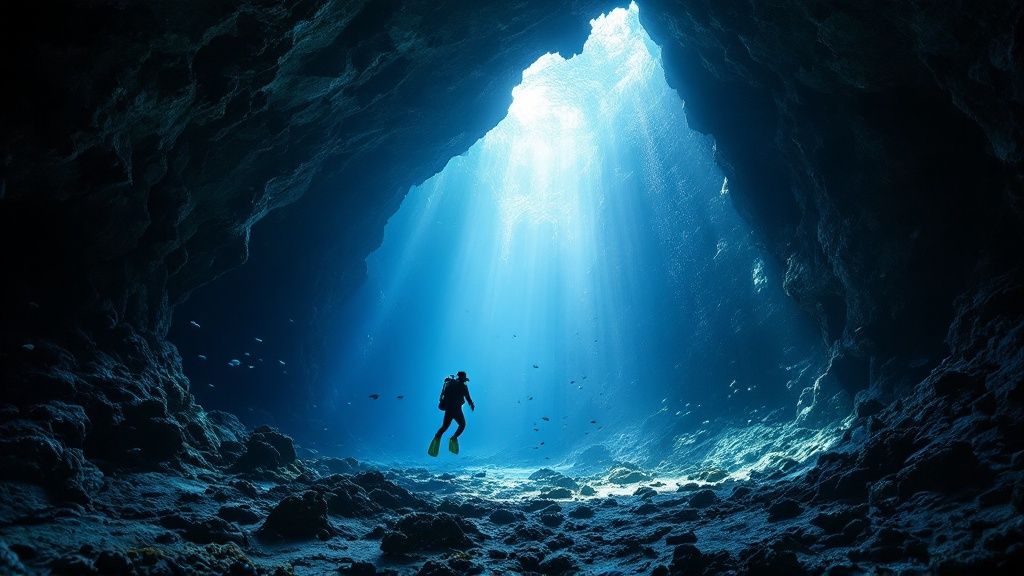
These sites provide incredible swim-throughs and are often used for advanced open water training due to their overhead environment. Exploring these caverns is a highlight for experienced divers, and a skilled guide is essential for navigation. Because this type of Kona diving requires advanced skills, it is typically part of a specialized charter, like Kona Honu Divers' premium advanced dive trips, which cater to divers looking for more challenging and rewarding underwater adventures.
Key Considerations:
- Skill Level: This dive is best suited for experienced divers with excellent buoyancy control and comfort in overhead environments.
- Equipment: A reliable primary and backup dive light are essential for safely exploring the darker sections of the caverns.
- Technique: Use a frog kick or modified flutter kick to avoid stirring up silt on the cavern floor, which can quickly reduce visibility.
3. Black Water Diving
For the truly adventurous, black water diving offers a glimpse into one of the most alien environments on Earth. Pioneered right here off the coast, this unique form of kona diving involves drifting in the open ocean at night, tethered to a line over thousands of feet of water. The dive itself is relatively shallow, typically between 40-60 feet, but what you witness is profound. Powerful lights attract creatures that undertake the largest vertical migration on the planet, rising from the deep abyss to feed near the surface.
This is not a reef dive; it’s an encounter with bizarre and beautiful pelagic life rarely seen by humans, including translucent larval fish, mesmerizing jellyfish, and alien-like squid. Featured in documentary series like Blue Planet II, it’s a surreal experience that feels like floating through outer space. Given the advanced nature of this dive, it is crucial to book with a highly experienced operator like Kona Honu Divers, who specialize in these challenging but rewarding black water expeditions.
Key Considerations:
- Skill Level: This is an advanced dive. Excellent buoyancy control and comfort in complete darkness are mandatory.
- Photography: Macro photography equipment is ideal for capturing the intricate details of the small, often transparent creatures you'll encounter.
- Safety: Always stay close to your tether and follow the divemaster’s instructions meticulously to ensure a safe drift in the open ocean.
4. Kealakekua Bay Marine Life Conservation District
More than just a dive site, Kealakekua Bay is a protected marine sanctuary offering some of Hawaii's most pristine underwater conditions. This historical bay, marked by the Captain Cook Monument, is renowned for its exceptional water clarity and vibrant, healthy coral reefs. As a Marine Life Conservation District, all fishing and collecting are prohibited, which has cultivated an incredibly dense and diverse ecosystem that makes for unforgettable Kona diving and snorkeling.
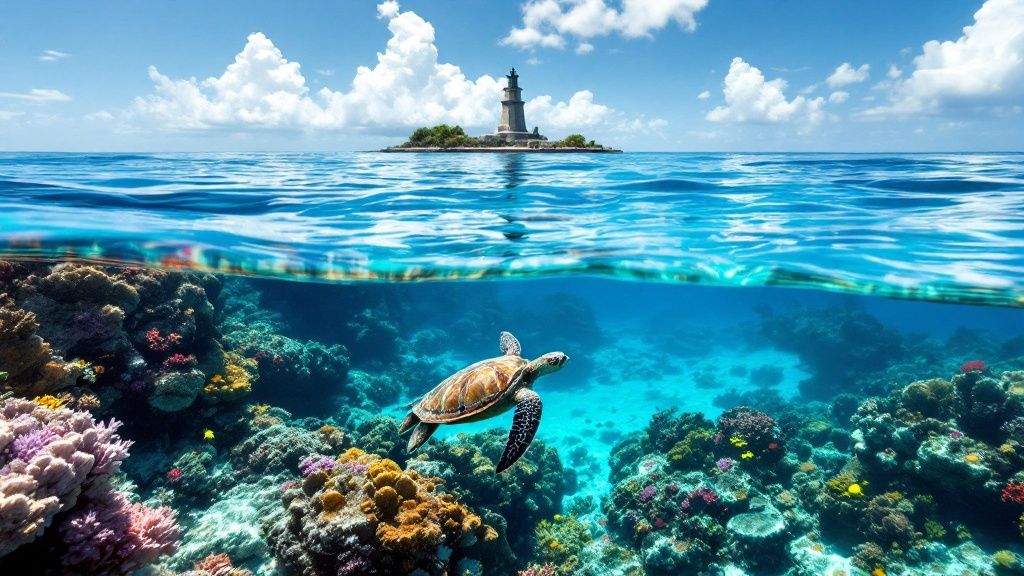
The calm, protected waters are teeming with colorful reef fish, Hawaiian green sea turtles, and occasionally, playful spinner dolphins. The health of this reef system serves as a powerful example of successful marine conservation in action. Exploring this underwater paradise requires care and respect for its protected status, making guided tours a popular and responsible way to experience its wonders. For those interested in snorkeling this iconic location, you can learn more about the top Kealakekua Bay snorkeling tours.
Key Considerations:
- Conditions: Visit in the early morning for the calmest waters, best visibility, and fewer crowds.
- Conservation: Strictly adhere to all conservation rules. Do not touch or disturb any marine life or coral, and use only reef-safe sunscreen.
- Access: Access by land is challenging. A boat tour is the most common and recommended way to reach the prime diving and snorkeling spots.
5. Choosing the Right Kona Dive Company
Selecting a professional dive operator is one of the most critical decisions for a successful Kona diving adventure. These companies provide everything from guided tours and equipment rentals to PADI certifications and specialized charters. Established operators like Kona Honu Divers and Jack's Diving Locker offer decades of local expertise, ensuring access to the best sites while adhering to strict safety protocols. A great operator enhances your experience, offering insights into the marine ecosystem and prioritizing the well-being of both divers and the environment.
From the world-famous manta ray night dive to challenging blackwater dives and serene reef explorations, the right company tailors the adventure to your skill level. When researching, it's wise to compare safety records, read recent reviews, and inquire about group sizes. For a deeper look into the top-rated operators, you can explore a detailed comparison of the best Kona diving companies to find the perfect fit for your trip.
Key Considerations:
- Safety First: Prioritize operators with impeccable safety records and highly-qualified, insured dive professionals. Don't hesitate to ask about their emergency procedures.
- Vessel Quality: Check that the company uses well-maintained, comfortable, and US Coast Guard-certified vessels designed for diving.
- Group Size: Ask about the guide-to-diver ratio. Smaller groups often receive more personalized attention, enhancing both safety and enjoyment.
6. Kona’s Lava Rock and Coral Reef Ecosystems
The underwater landscape of Kona is a direct result of the island’s volcanic origins, creating a dynamic environment for divers to explore. This unique topography offers a stunning contrast between ancient, weathered lava formations and vibrant, thriving coral reef ecosystems. Sites like Red Hill feature dramatic lava tubes, arches, and canyons, while areas like Kealakekua Bay host flourishing coral gardens. This geological diversity provides a wide range of habitats that support an incredible array of marine life.
Exploring these varied environments is a cornerstone of the Kona diving experience. The contrast between dark volcanic rock and the brilliant colors of the reef is visually spectacular. Navigating these structures requires skill, and local guides are invaluable for finding the most interesting features and safest routes. The diverse topography makes every dive unique, from exploring intricate swim-throughs to drifting over expansive reef systems. You can explore many of these incredible sites on one of Kona Honu Divers' daily dive charters.
Key Considerations:
- Buoyancy: Master your buoyancy control. This is critical to avoid accidental contact with sharp lava rock and fragile coral formations.
- Protection: Consider wearing gloves, where appropriate and permitted, to protect against scrapes on volcanic rock, but never touch the coral.
- Reef Safety: Practice reef-safe diving at all times. Avoid touching, kicking, or damaging the delicate coral to preserve these beautiful underwater ecosystems for future divers.
7. Seasonal Marine Life and Diving Conditions
While Kona offers incredible diving year-round, understanding seasonal shifts can elevate your experience from great to unforgettable. The time of year dictates everything from water visibility and surface conditions to which magnificent creatures you are most likely to encounter. Planning your trip around these patterns allows you to target specific marine life events, such as the awe-inspiring humpback whale migration or peak manta ray feeding activity. Aligning your visit with the calmest seas also ensures maximum comfort and enjoyment on your dives.
The chart below visualizes the peak seasons for humpback whales, manta rays, and the calmest ocean conditions, helping you plan the ideal time for your Kona diving adventure.
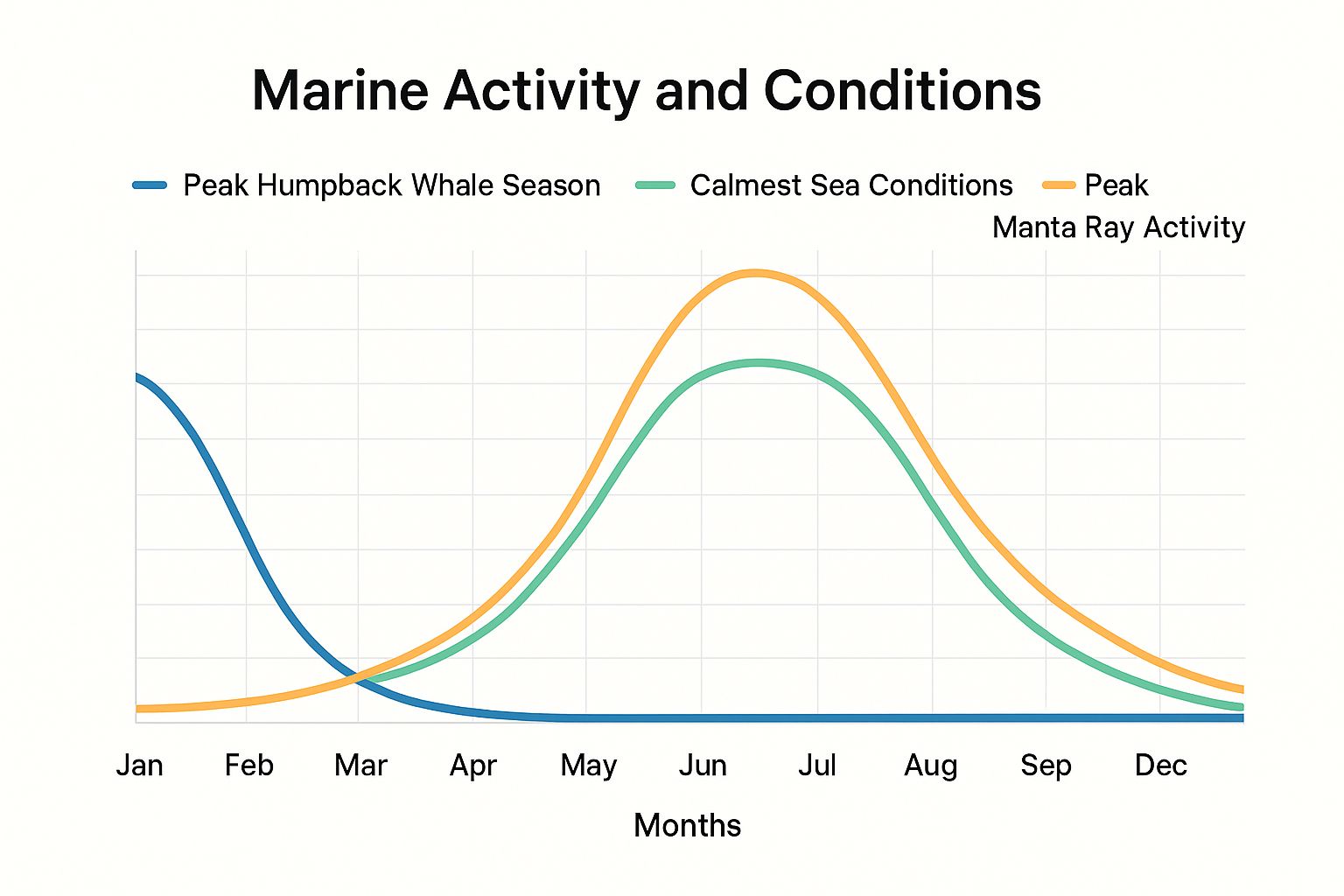
As the data shows, winter brings the whales, while summer offers the calmest seas and high manta activity, creating distinct windows for different types of underwater experiences. To better understand these patterns, you can learn more about checking local ocean conditions.
Key Considerations:
- Whale Season: From December to April, you can often hear the enchanting songs of humpback whales underwater. Book trips well in advance as this is a popular time.
- Calm Waters: The summer months from May to October typically bring the flattest, calmest seas, which is ideal for those prone to seasickness and for accessing more remote dive sites.
- Shoulder Seasons: Consider visiting during the "shoulder seasons" like April, May, October, or November for a great balance of pleasant conditions, active marine life, and fewer crowds.
7-Key Aspects Comparison of Kona Diving Resources
| Experience / Feature | Core Highlights & Uniqueness | User Experience & Quality ★★ | Value & Price 💰 | Target Audience 👥 | Unique Selling Points ✨ |
|---|---|---|---|---|---|
| Manta Ray Night Dive at Garden Eel Cove | Year-round manta encounters, shallow (35 ft), multiple light stations | ★★★★★ Reliable sightings, safe, photo-friendly | 💰 Higher cost, premium night dive | Certified divers & photographers | 🏆 Iconic manta interactions, NatGeo featured |
| Cathedral Caves (Cathedrals I & II) | Underwater lava tubes, natural light, 25-65 ft depth | ★★★★ Advanced buoyancy control needed | 💰 Mid-range, advanced dive level | Experienced divers, cave enthusiasts | ✨ Stunning lava formations, swim-throughs |
| Black Water Diving | Deep open ocean night dive, rare pelagic species | ★★★★ Unique & small groups, macro photo ideal | 💰 Higher cost, skill-intensive | Advanced certified divers | 🏆 Rare deep-sea life, pioneering experience |
| Kealakekua Bay Marine Life Conservation | Protected bay, crystal clear (>150 ft), rich coral & wildlife | ★★★★★ Exceptional clarity & biodiversity | 💰 Moderate, permit/restrictions apply | All skill levels, eco-tourists | ✨ Marine sanctuary, historical site |
| Kona Diving Company & Operator Services | Full-service ops, cert courses, equipment rental | ★★★★ Professional, safe, small groups | 💰 Higher price for convenience | All divers needing guided & cert services | ✨ Local expertise, wide range of dives |
| Kona's Lava Rock & Coral Reef Ecosystems | Volcanic formations, diverse coral habitats | ★★★★ Geological & eco diversity, photo ops | 💰 Variable, mostly included in guided tours | Divers appreciating geology & biodiversity | ✨ Unique volcanic underwater landscapes |
| Seasonal Marine Life & Diving Conditions | Year-round diving, seasonal whale/manta peaks | ★★★★ Predictable conditions, variable crowding | 💰 Peak season pricier | All divers planning trips | ✨ Seasonal highlights for optimal experiences |
Your Ultimate Kona Diving Adventure Awaits
Kona truly stands out as a world-class diving destination, offering an incredible variety of underwater experiences packed into one beautiful coastline. We've explored everything from the life-altering Manta Ray Night Dive at Garden Eel Cove and the eerie depths of a Black Water Dive to the sunlit caverns of ancient lava tubes. Understanding Kona's unique lava rock and coral reef ecosystems is the first step toward appreciating the vibrant marine life that calls this place home.
The key to unlocking these treasures is thoughtful planning and choosing a professional, passionate dive operator to guide you safely. Whether you're seeking a serene exploration of Kealakekua Bay or the adrenaline rush of an advanced expedition, the right preparation makes all the difference. Mastering these details ensures your kona diving trip is not just a vacation, but a profound connection with the ocean.
With its characteristically calm waters, amazing visibility, and unparalleled marine encounters, a kona diving adventure is an experience that will stay with you forever. The memories of giant mantas gliding overhead or alien-like creatures rising from the abyss are what make this corner of the Big Island so magical. Ready to take the plunge?
When you're ready to book your underwater journey, consider diving with the expert team at Kona Honu Divers. Their commitment to small group sizes, safety, and ocean conservation ensures you have a premium and personalized kona diving experience. Visit Kona Honu Divers to see their full range of tours and secure your spot on the boat.