
You've got a free morning in Kona, a certification card in your wallet, and several dive-shop tabs open. Your traveling companion has never breathed underwater. The boats, reef photos, and manta videos look similar, but you don't necessarily belong on the same scuba trip.
Choosing among Kona dive shops starts with the dive, not the review count. A patient introductory instructor, a well-managed manta group, and an experienced offshore night-diving crew solve different problems. Match the operator's trip, site-selection approach, and boat setup to your actual experience before comparing prices.
Kona Dive Shop Services and Who Each Suits
A certified diver with limited vacation time usually wants a guided reef charter. A first-timer needs instruction, shallow-water practice, and an instructor who can slow the pace. Booking both onto a standard certified-diver trip doesn't solve that mismatch.
Most Kona dive shops offer a similar core menu: reef dives, night trips, introductory experiences, courses, snorkeling, private charters, and equipment services. Use the full diving tours menu alongside this comparison to identify the right category before choosing a departure.
Kona dive shop services and their audience
| Service | What It Covers | Best For |
|---|---|---|
| Morning 2-tank local dive | Two dives on reefs, lava features, and arches | Certified divers wanting a full morning |
| Premium advanced 2-tank trip | Deeper, more remote sites and drift dives | Experienced divers with logged depth experience |
| Manta ray night dive | Night dive over a manta feeding aggregation, with a separate surface snorkeling option | Certified divers and snorkelers wanting the signature Kona experience |
| Blackwater night dive | Open-water drift after dark, watching plankton and visiting animals | Comfortable, experienced night divers |
| Introductory scuba dive | Supervised first breaths underwater with an instructor | Beginners without certification |
| Certification courses | Open Water, Advanced, Enriched Air, and specialty training | People starting or building skills |
| Freediving classes and snorkel tours | Breath-hold training and surface reef exploration | Freediving learners and snorkelers |
| Private charters | A tailored schedule, site plan, and group arrangement | Families and small groups |
| Rentals, gear sales and repairs | Equipment hire, purchase, and servicing | Visitors without their own kit |
Certification and comfort aren't interchangeable. A morning reef trip requires certification but can accommodate newer divers when the profile is appropriate. Advanced and blackwater departures require additional experience, while introductory scuba accepts beginners under instructor supervision.
Snorkeling and beginner freediving instruction give non-scuba companions their own worthwhile options. Confirm whether mixed activities share a vessel rather than assuming everyone can board the same departure.
Kona operators use the same coastal harbor network, so the menu, vessel, and underwater supervision often matter more than the storefront's location. Shortlist a couple of suitable trip types before comparing shops.
Vetting Shops and Packing for Your Dive
Reviews can reveal whether guests felt welcomed. They're less useful for determining how a crew handles deteriorating conditions, separates experience levels, or manages a crowded night site.
Call with operational questions. A useful answer describes procedures, equipment, and alternatives, not just how beautiful the diving is.
Questions worth asking before payment
Operator criteria to check before booking
| Criterion | What to Check | Red Flag |
|---|---|---|
| Certification and guide ratio | Certified instructors for teaching and appropriately qualified guides, with smaller groups for night and advanced dives | Large groups with little or no pre-dive briefing |
| Boat and comfort | Shaded seating, restrooms, freshwater rinse, and gear storage on half-day trips | Open deck with no shade on a long trip |
| Nitrox | Availability for certified divers, with a clear fee and certification requirement | Only air offered when nitrox is important to your plan, or an unclear fee |
| Gear servicing and sizing | Regular servicing and fitting at check-in | Poorly fitting equipment, questionable cylinder condition, or no sizing step |
| Site choice and weather policy | A written explanation of relocation and cancellation procedures | Insistence on one site regardless of conditions |
| Night-dive briefing | Light placement, buoyancy, wildlife rules, and buddy signals explained before entry | No briefing before entering the water |
Air-only operation isn't automatically unsafe. It may not suit the repetitive diving you're planning. Likewise, cylinder age alone doesn't establish condition, current inspection markings and proper maintenance matter more.
Check the scuba rental equipment information before deciding what to pack. A rental package should solve a travel problem, not leave you discovering missing equipment at the dock.
The phone test: Ask what happens when the planned site becomes unsuitable. Favor a specific explanation of alternatives and decision-making over an enthusiastic promise that everything will be fine.
Pack for immersion and the ride home
Kona's water is generally warm, but exposure protection remains personal. Stationary night viewing and the boat ride after sunset can feel cooler than an active daytime reef dive.
- Credentials: Bring your certification card and logbook, plus completed medical forms when required.
- Exposure protection: Pack a rash guard or thin wetsuit appropriate to your cold tolerance.
- Sun protection: Bring reef-safe sunscreen, and rely on clothing and shade wherever practical.
- Depth monitoring: Carry a dive computer, or the depth and timing instruments appropriate to your training and plan.
- Night equipment: Arrange a primary light and backup light for after-dark diving.
- Dry comfort: Bring a towel and dry clothes for the return ride.
- Waterproof storage: Protect your phone, keys, and other valuables in a waterproof bag.
Book popular night departures early and leave enough time for parking, paperwork, and fitting. Build a rest day between demanding multi-tank days if fatigue affects your enjoyment. Separately, plan flying and altitude travel around appropriate post-dive guidance, a sightseeing day isn't automatically a suitable surface interval.
Matching Your Skill Level to Kona Dive Sites
Kona isn't one uniform dive condition. A partially sheltered cove, an exposed lava entry, and a steep offshore ledge can require very different decisions on the same morning.
The Hawai'i Division of Aquatic Resources site guide describes Old Kona Airport's shallow lava fingers reaching roughly 50 feet before a rapid drop, and Ka'awaloa Cove's broader 5-to-120-foot depth envelope. For Garden Eel Cove, the Big Island dive-site guide gives a depth of approximately 30 to 45 feet and identifies it as accessible to Open Water-certified divers.
Kona dive sites by depth and suitability
| Site | Depth Range | Best For | Watch For |
|---|---|---|---|
| Old Kona Airport Marine Life Conservation District | Shallow lava fingers to about 50 ft, then a rapid drop | Snorkelers, shore divers, and novices in suitable conditions | Entry surge and sudden deep water beyond the fingers |
| Ka'awaloa Cove, Kealakekua Bay | About 5 to 120 ft | Intermediate to advanced divers for broader profiles | Southern storms and high surf |
| Garden Eel Cove (Manta Heaven) | About 30 to 45 ft | Open Water-certified divers on appropriately managed night dives | Boat traffic overhead and designated sandy viewing areas |
Choose the profile, not just the site name
Old Kona Airport's partially protected cove can suit a conservative outing, but shallow doesn't mean effortless. Shore divers still need to evaluate footing, surge, their exit, and whether conditions might worsen while they're submerged.
Ka'awaloa offers coral and often excellent visibility, but its depth range isn't an invitation to explore every contour. Southern storms and high surf can make an otherwise attractive plan inappropriate. Newer divers should stay within a shallow, guided profile rather than follow terrain downhill.
For rusty divers, scuba classes and refresher training can be a better investment than booking a demanding charter immediately. Experienced divers can consider deeper ledges only when gas reserves, sea state, and ascent options support the plan.
A site's maximum depth doesn't determine your dive depth. Your training, recent experience, and agreed profile do.
Before entering, verify the marine-area rules and applicable dive-flag requirements. Confirm who manages the flag and how the group will remain appropriately positioned relative to it.
Safety, Nitrox and Boat Logistics on Dive Day
A smooth departure begins before the boat leaves. Arrive ready to describe your experience accurately, try on equipment, and resolve anything unfamiliar while you're still ashore.
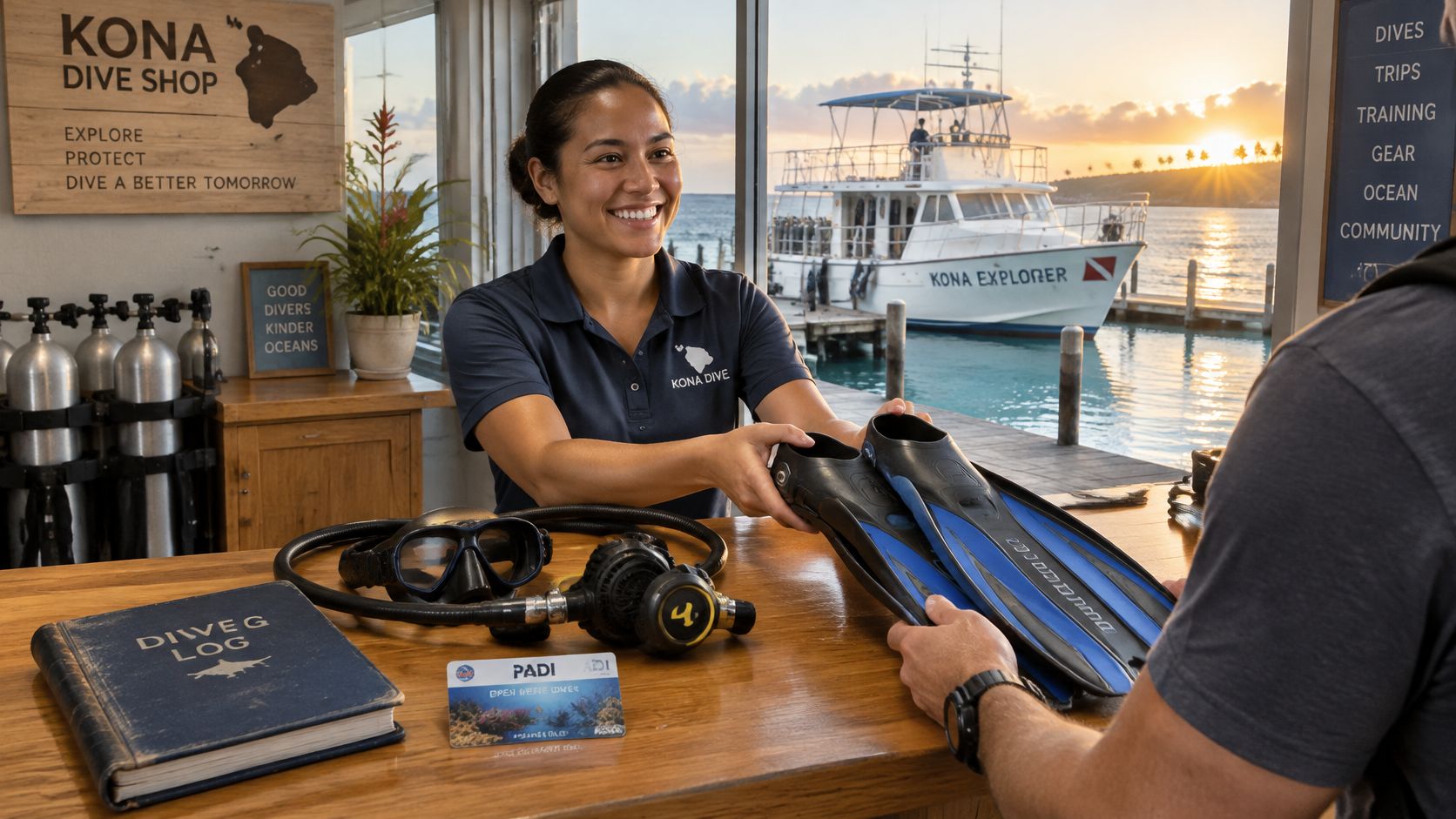
From check-in to descent
Present your certification and recent history. Bring your card and logbook, and tell the crew your last dive date and total experience. Mention difficulties with equalization, buoyancy, or boat entries so the guide can make an appropriate plan.
Fit rental equipment before departure. At Kona Honu Divers, we size divers for any rental gear they need during check-in. Check fin comfort, BCD adjustment, mouthpiece comfort, and how the weight system releases. Tight fins and awkward equipment can turn an easy swim into unnecessary work.
Choose air or nitrox for the actual profile. Enriched air contains more oxygen and less nitrogen than regular air. With the appropriate certification, it can help manage nitrogen exposure on repetitive or longer dives, but it doesn't eliminate decompression risk or permit unrestricted depth. Review the benefits and limitations of nitrox diving, analyze your cylinder, and set your computer for the measured mix.
Board and secure your space. Find shaded seating when available, keep passageways clear, and stow equipment so it can't roll or fall. Don't leave a cylinder standing unsecured while you organize a camera.
Listen to the complete briefing. Understand the site, planned depth, current, entry and exit procedures, flag arrangements, and emergency procedures. Ask where to surface if separated and how the crew wants divers to approach the ladder.
Complete equipment and buddy checks. Test breathing from the primary and alternate regulators, check pressure and inflator operation, and identify weight releases. Confirm gas-turn expectations and communication before descending, not after a problem develops underwater.
Know what's handled for you
We handle the tanks and weights, plus any rental gear you've arranged. Bring the personal equipment you agreed to supply, and tell the crew if your configuration differs from a conventional recreational setup.
Boat diving remains conditional on the ocean. A departure may be moved, shortened, or canceled when the planned operation is no longer appropriate, so avoid building an irreplaceable connection immediately after the scheduled return.
For repetitive diving, monitor your own fatigue as well as your computer. Choosing to skip a dive is better than entering tired because a cylinder has already been loaded.
Manta Night Dives and Why Garden Eel Cove Leads
Garden Eel Cove is my preferred starting point for a Kona manta dive comparison. Its relatively protected location, tighter viewing area, and surrounding reef and lava terrain make it a stronger overall choice than treating every manta departure as interchangeable.
The Kona manta sightings report identifies the northern site near the airport as generally more protected, with more moorings, a more concentrated viewing area, and greater average manta numbers than the southern location. Those advantages support a preference, not a promise that it will be the correct destination every evening.
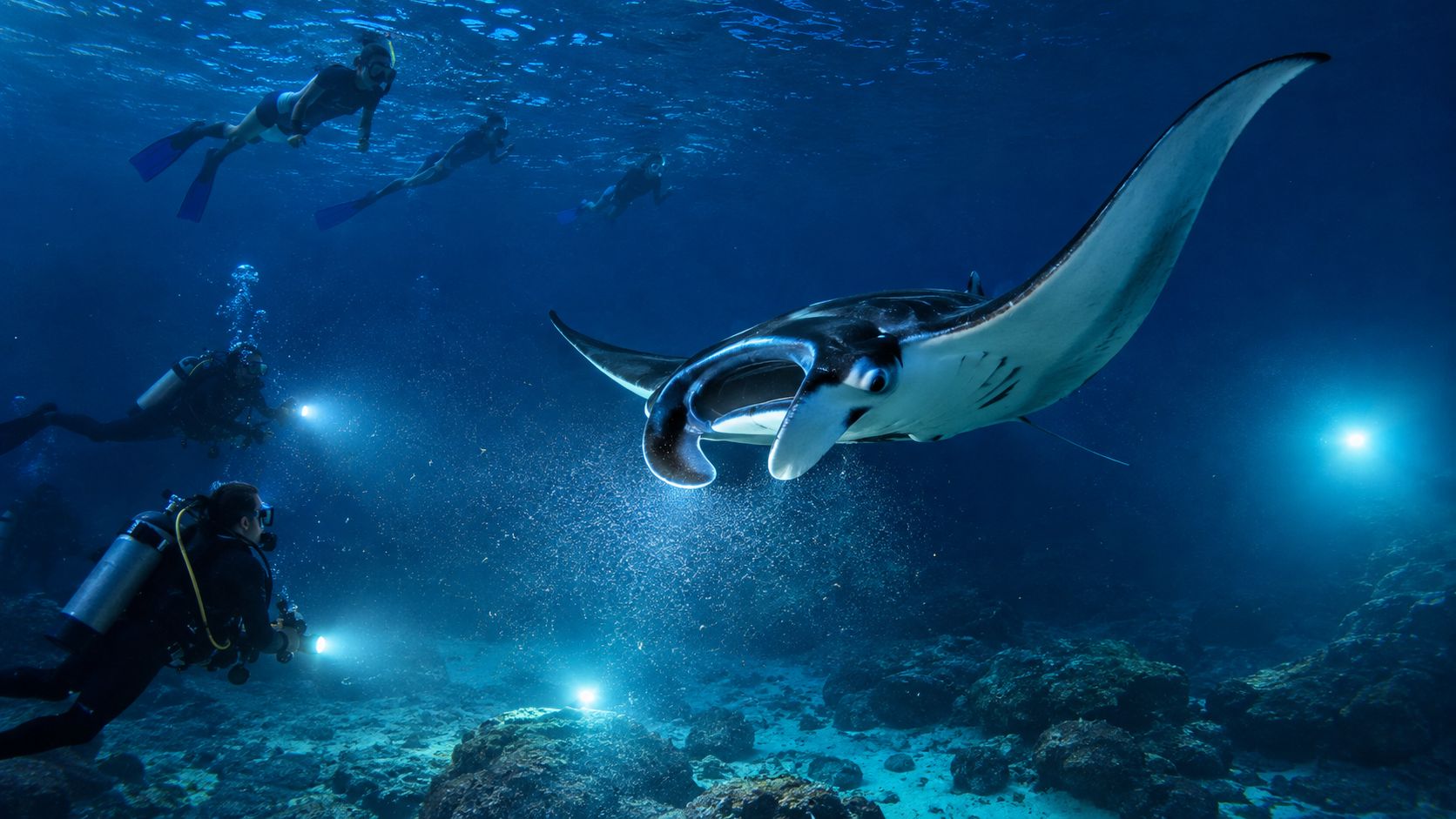
Why the setup matters
Lights attract plankton into the water column, and mantas approach to feed on that concentrated food. Operators aren't baiting the animals or hand-feeding them. Divers observe from designated sandy positions while snorkelers watch from illuminated surface boards.
The Scuba Diving magazine night-diving guide describes this illuminated feeding setup and emphasizes controlled buoyancy, buddy contact, appropriate lights, and following the operator's descent and ascent arrangements. Stay where the guide positions you, avoid stirring sediment, and leave the animals an unobstructed route through the water.
Never touch, chase, block, or ride a manta. Contact can disturb its protective mucus layer, and pursuing an animal undermines the stationary viewing arrangement. For photographers, that means accepting a missed frame rather than swimming into a feeding path.
Better odds aren't a wildlife guarantee
The University of Hawai'i manta study found that manta presence varied with zooplankton density. A full boat therefore doesn't imply a full viewing area, and an operator can't responsibly guarantee a close pass.
Crowding also changes the experience. Ask how the crew organizes divers and snorkelers, maintains feeding space, and manages the return to the boat. A protected location still requires disciplined positioning.
Choose the crew that can explain how it protects the encounter, not the one promising the closest animal.
Snorkeling suits non-divers who are comfortable in the ocean after dark. Scuba suits certified divers who can hold position calmly and enjoy watching from below. Review the Kona manta night-dive guide and the manta dive and snorkel departure details, while allowing the crew to relocate or cancel if exposure becomes unsafe.
What to Expect on Blackwater, Lava Tube and Pinnacle Dives
On a blackwater night dive, the reef disappears from the experience. You're suspended in open water after dark, watching the illuminated space for drifting plankton and visiting animals rather than following a bottom contour.
Say you spot a translucent animal just beyond your light beam. The right response is to maintain depth and orientation within the operator's system, not kick after it until the boat reference disappears. Open-water composure and reliable buoyancy matter more than enthusiasm for unusual wildlife.
Blackwater requires independent control
Comfortable night divers should review the Kona blackwater diving overview and confirm the departure's experience requirements. Ask about the drift arrangement, attachment procedures, lights, and how the crew handles separation.
Being relaxed on a shallow reef at night doesn't automatically mean you'll enjoy open water without a visible bottom. If you rely on terrain to hold depth, build that skill before booking.
Lava formations require an exit judgment
A broad arch with an obvious exit is a different proposition from a lava tube that continues beyond daylight. Don't treat both as a casual swim-through just because they appear on the same coastline.
Overhead environments require suitable training, a primary and backup light, and an explicit entry and exit plan. A recreational guide's presence doesn't qualify you for cave penetration. Many shops restrict overhead routes to divers with relevant experience, and a conservative crew may route the group around the formation instead.
- Before entering: Identify the exit and decide whether the passage matches your training.
- Inside an appropriate passage: Maintain spacing and controlled finning without touching the roof or bottom.
- If uncertain: Stay outside with the agreed buddy or guide arrangement rather than improvising.
Pinnacles add depth and current decisions
A pinnacle rises from deeper water, so it can be easy to descend while watching the formation rather than your computer. Current may also make the sheltered side feel very different from the exposed edge.
The premium advanced trip is the appropriate category to investigate for remote sites and drift diving. These outings call for depth awareness, deliberate gas planning, and an experienced guide, not just a willingness to go deeper.
Match the dive to logged experience, not ambition. The interesting formation will still be there after you've developed the skills to enjoy it without rushing.
Kona Dive Shop Questions Answered
Which trips need certification?
Standard morning reef dives, advanced trips, manta scuba dives, and blackwater dives require scuba certification. Advanced and blackwater departures may impose additional experience requirements.
Introductory scuba is instructor-supervised and doesn't require an existing certification. Beginner freediving classes and snorkel tours also accept non-scuba divers, subject to the activity's swimming, age, and health requirements.
Can a non-diver join a manta night tour?
Yes, through the snorkeling option. Snorkelers observe from the surface above illuminated boards, while scuba divers occupy the designated sandy viewing area below.
Both groups must follow the wildlife-interaction rules. Confirm whether your preferred departure accommodates both activities together, especially when booking a mixed family group.
How much does a Kona dive cost?
The useful comparison is the complete booking total, not an old starting price. Trip format, rental equipment, nitrox, and private arrangements can change what you pay.
- Compare inclusions: Check which equipment and onboard provisions are covered.
- Check additions: Identify optional upgrades before entering payment details.
- Use current rates: Trust the live booking page rather than an older travel guide.
What happens if weather cancels my trip?
The operator may relocate, shorten, or cancel a departure when sea state changes. Ask about operator-canceled trips separately from customer cancellations, because they're different situations.
Get the rescheduling and refund terms before paying. If the dive is a priority, leave another possible departure window in your itinerary.
Are there age or medical requirements?
Yes, requirements differ by course and trip. Children may need a particular supervision arrangement, and medical screening can identify circumstances requiring a physician's clearance.
Complete forms early enough to resolve questions without rushing. Don't assume that feeling fit, swimming well, or having dived previously replaces the current screening process.
Choose Your Kona Shop and Book Your First Dive
Pick the trip that matches your logged experience, then book online or call with the details that could affect your placement.
Kona Honu Divers offers morning reef and advanced trips, manta and blackwater night dives, and instruction from introductory experiences through advanced training. We're the highest-rated and most-reviewed dive shop in Hawaii and won Scuba Diving Magazine's Reader's Choice Award for the best dive company in the Pacific. Those credentials are useful context, but the trip still needs to fit the diver.
Make the booking useful to the crew
When you reserve, include your certification level, recent diving, rental needs, and whether anyone in your party wants to snorkel. For placement questions, call 808-324-4668 rather than guessing which departure is appropriate.
A clear description helps more than calling yourself advanced. Mention the environments you're comfortable in, especially night diving, current, open-water ascents, and deeper profiles.
Confirm your certification and nitrox needs at least a day before your dive, allowing more time if you need training or medical clearance. Then choose an available departure that gives you room for check-in and a flexible return-day schedule.
Kona Honu Divers offers guided reef trips, specialty night dives, training, and rental equipment for visitors with different experience levels. Visit Kona Honu Divers to choose your trip, share your diving background, and reserve a departure that suits you and your traveling companions.