
You’re probably looking at a dozen Kealakekua Bay snorkeling tour options right now, and they all sound similar. Clear water. Tropical fish. Captain Cook Monument. Dolphin sightings if you’re lucky.
The problem is that not all tours feel the same once you’re on the boat.
A crowded trip can turn a world-class bay into a rushed checklist stop. The right crew, on the other hand, gets you in early, keeps the group manageable, gives a real safety briefing, and treats the bay like the protected place it is. That difference matters at Kealakekua, because this isn’t just another snorkel stop off the Kona coast. It’s one of the Big Island’s signature marine environments and a place with deep historical weight.
Your Ultimate Kealakekua Bay Snorkeling Experience
On a good morning in Kealakekua Bay, the water is so clear that the reef looks close enough to touch even when it drops away below you. Yellow tang move over coral heads in bright flashes. A honu may cruise through the edge of your view, unhurried, completely at home.
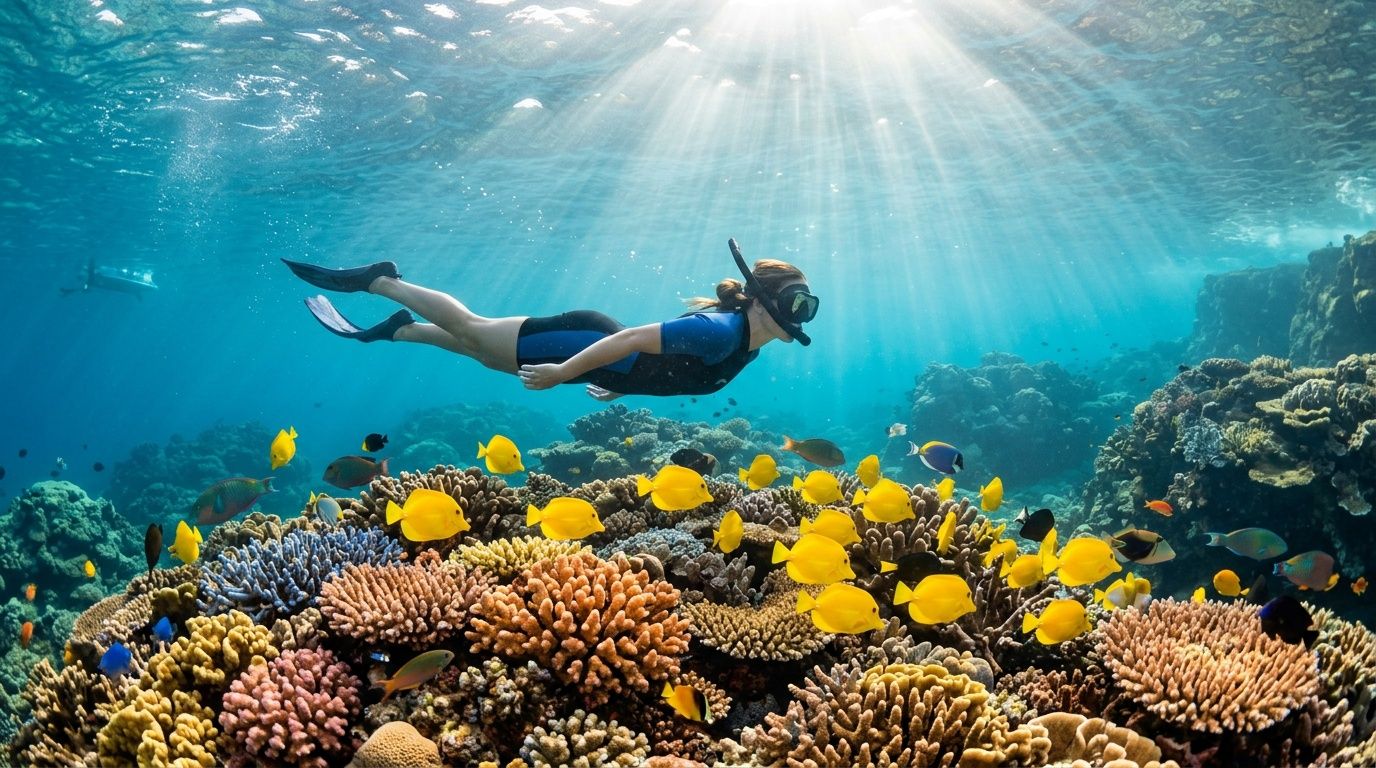
That’s why people come here from all over the world. Kealakekua Bay is a designated Marine Life Conservation District, and its snorkeling conditions are famous for water visibility that often exceeds 100 feet, with over 100,000 visitors annually drawn to its coral reefs and marine life, as noted by this Kealakekua Bay overview.
What the experience feels like
The best trips don’t start with chaos. They start with an easy check-in, a calm run down the coast, and a crew that explains what you’re seeing before you ever put a mask on. By the time you slip into the water, you already know where the reef rises, where it falls away, and how to move without kicking coral or drifting where you shouldn’t.
That matters more here than at many easier-access beach spots. Kealakekua rewards people who arrive prepared.
Practical rule: If your goal is the reef, not just the boat ride, choose the tour that treats snorkeling time and in-water support as the main event.
Why booking the right tour matters
A Kealakekua Bay snorkeling tour should do three things well:
- Get you there at the right time: Morning usually gives you the calmest water and the easiest visibility.
- Keep the group under control: Smaller groups make wildlife viewing, safety, and instruction better.
- Protect the bay while you enjoy it: Good guides are firm about distance from wildlife, reef etiquette, and staying aware in the water.
If you book with those priorities in mind, this bay usually lives up to the hype. If you don’t, you can still see a beautiful place, but you won’t see it at its best.
A Living Sanctuary of History and Marine Life
Kealakekua Bay stands out because several things come together in one place. The water is sheltered. The reef is protected. The shoreline tells a geologic story. The monument side of the bay carries one of the most recognized historical landmarks in Hawaiʻi.
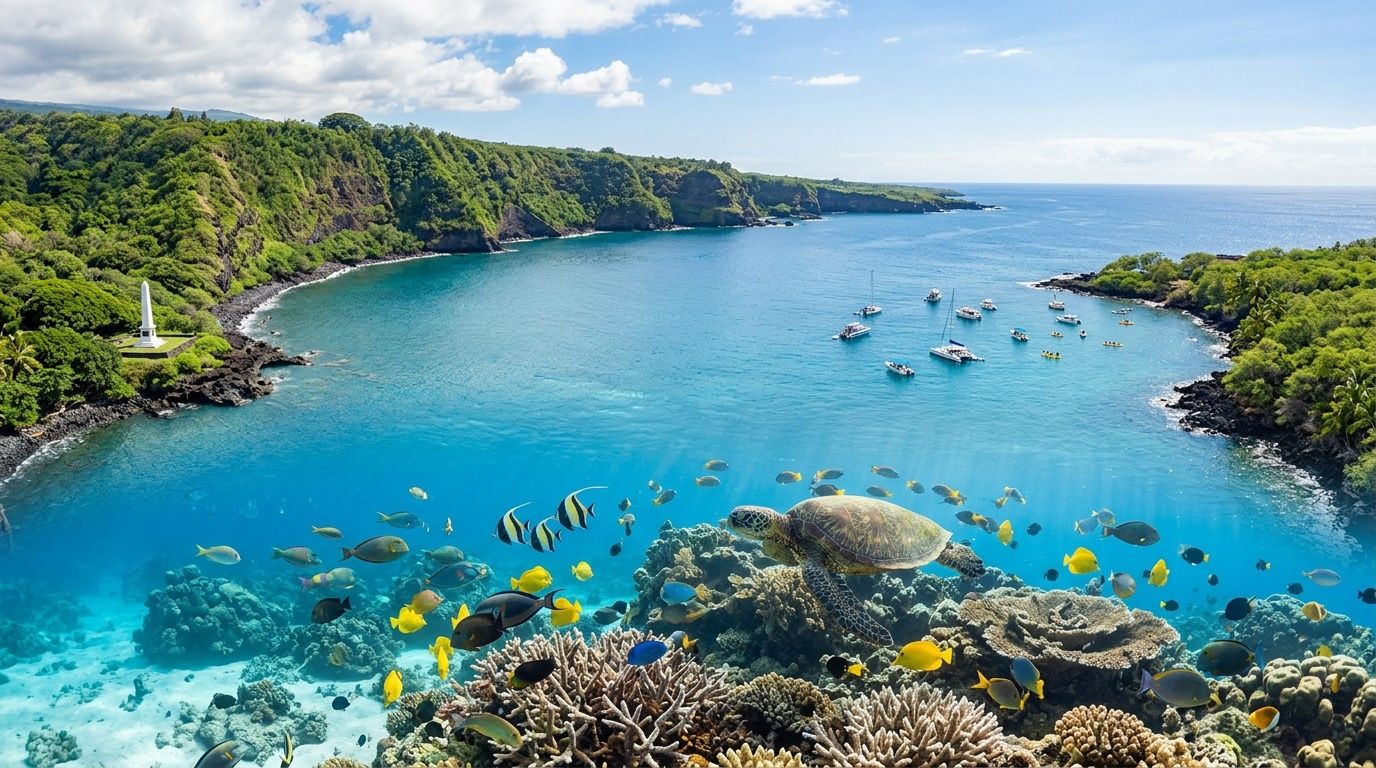
That combination changes how the bay feels. You’re not just visiting a pretty cove. You’re entering a protected marine and cultural area.
Why the water is so clear
The bay’s underwater scene looks unusually sharp because the setting helps keep it that way. The dark lava shoreline, pillow lava formations, and pale coral architecture create strong visual contrast, and the bay’s protected status helps maintain water visibility that frequently exceeds 100 feet, according to this Captain Cook snorkel tour guide.
In practical terms, that means first-time snorkelers usually have an easier time spotting fish here than at murkier sites. Guides also have an easier time pointing out reef structure, turtles, and changes in depth because the bottom is often visible from far above it.
What you’ll notice underwater
The reef near the monument side is often cited as a standout feature after the trip. You’ll see coral growth, lava structure, and fish traffic layered together instead of scattered in patches.
A few things tend to stand out:
- Color contrast: Yellow tang, reef fish, and turtles are easier to pick out against the lava and pale coral.
- Topography: The bay doesn’t feel flat. The reef has contour, shelves, and drop-offs.
- Calmer surface conditions: In good morning weather, the bay often feels forgiving for newer snorkelers.
Some bays are nice from the boat and average in the water. Kealakekua is the opposite. The real show starts when your face goes in the water.
The history changes the experience
The Captain Cook Monument isn’t just a landmark for orientation. It marks the area associated with the death of Captain James Cook on February 14, 1779, a major moment in Hawaiian history that still shapes how many visitors understand the bay.
That historical layer matters because it reminds people this place shouldn’t be treated like a theme park stop. Respect applies both above and below the surface. The marine life is protected. The setting is culturally significant. A good guide treats both seriously.
Why this bay stays memorable
A lot of snorkel spots have one standout feature. Kealakekua has several at once.
| What sets it apart | Why it matters on tour day |
|---|---|
| Protected marine status | Helps preserve the reef and marine life |
| Lava and coral structure | Makes the underwater scenery more dramatic |
| Sheltered geography | Often supports calmer snorkeling conditions |
| Historic monument setting | Adds context beyond the snorkel itself |
That’s why people who’ve snorkeled all over the island still single this bay out. It doesn’t feel interchangeable.
A Typical Kealakekua Bay Tour Itinerary and Logistics
You feel the difference before the boat even leaves the harbor. The better Kealakekua Bay trips start calm, with enough time to check in, fit gear properly, and listen to a safety briefing that people can hear and follow. That early rhythm matters because the bay usually shows its best side in the morning, before the wind and chop have more time to build.
Most tours run on a half-day schedule. Expect an early meet-up, a harbor departure soon after, and enough time for the boat ride, snorkel session, and an easier return along the South Kona coast.
How the morning should run
A well-run crew does more than collect waivers and point at a bin for your fins. They check mask fit before anyone is rushed, explain where personal items go, and tell guests exactly how the entry and exit will work. On a small-group boat, that process feels organized instead of noisy, and that usually carries through the whole day.
The ride down the coast is part of the experience. You get lava shoreline views, sea cave country in some conditions, and a better sense of where the protected water begins. Good captains also use that transit time well. They set expectations about reef boundaries, current, depth changes, and wildlife rules, including the fact that spinner dolphins need space and should never be chased, cut off, or surrounded.
Handle motion sickness before it starts
If you get seasick, solve that problem on land.
Options people commonly use include Ship-EEZ Seasickness Patch, Dramamine pills, Bonine pills, Sea Band wristbands, and Ginger chews. Sea conditions change fast on this coast, so it helps to review a local guide on how to check ocean conditions for the Big Island before tour day.
A few habits also help:
- Eat light: A small breakfast usually sits better than either a heavy meal or nothing at all.
- Watch the horizon: Looking out works better than staring at your phone or your lap.
- Tell the crew early: They can often place you where the ride feels steadier and keep an eye on you.
What happens once you reach the bay
The best operators do not rush the water entry. They space people out, help less confident swimmers first, and make sure everyone knows where to snorkel without drifting into the wrong area or kicking coral in the shallows.
Expect a short orientation, then open snorkel time with crew oversight. That mix works well in Kealakekua because different guests need different things. First-timers often want help getting settled. Experienced snorkelers usually want enough room to move and watch the reef without a crowd splashing on top of them.
Typical onboard support includes:
- Snorkel gear: Mask, snorkel, and fins
- Flotation: Useful for kids, tired swimmers, and guests who want to float and observe
- Snacks and drinks: Simple, but appreciated on the ride home
- In-water supervision: Crew watching entries, exits, drift, and wildlife behavior
The boats themselves matter more than people think. Clean decks, organized gear storage, and well-kept ladders usually reflect a crew that pays attention to details. That same mindset tends to show up in safety practices and reef etiquette. Maintenance standards matter on any vessel, and operators who care about upkeep tend to understand the basics covered by Boat Juice's boat care solutions.
Timing, trade-offs, and the ride back
A half-day Kealakekua trip always involves trade-offs. Earlier departures usually mean better water and a calmer snorkel, but they also require a prompt start and less flexibility if your group moves slowly in the morning. Later trips can feel easier logistically, though they are more exposed to changing wind and surface texture.
The return leg is usually relaxed. People warm up, snack, compare fish sightings, and scroll through photos of yellow tang, parrotfish, or a lucky manta or turtle encounter outside the bay. If the operator managed the morning well, the boat ride home feels easy because nobody spent the best part of the day confused, seasick without support, or worn out from a rushed entry.
That is what a polished Kealakekua Bay tour looks like in real life. Calm start, clear briefing, respectful wildlife practices, and enough crew attention to make the day work for both strong swimmers and nervous first-timers.
How to Choose the Best Kealakekua Bay Tour Operator
You feel the difference before the boat even leaves the harbor. On a good Kealakekua Bay trip, the crew knows your name, checks your mask fit, asks who is nervous in the water, and gives clear expectations about reef protection and dolphin rules. On the wrong boat, you are one of a crowd, the briefing is rushed, and the bay becomes a checklist stop instead of the main event.
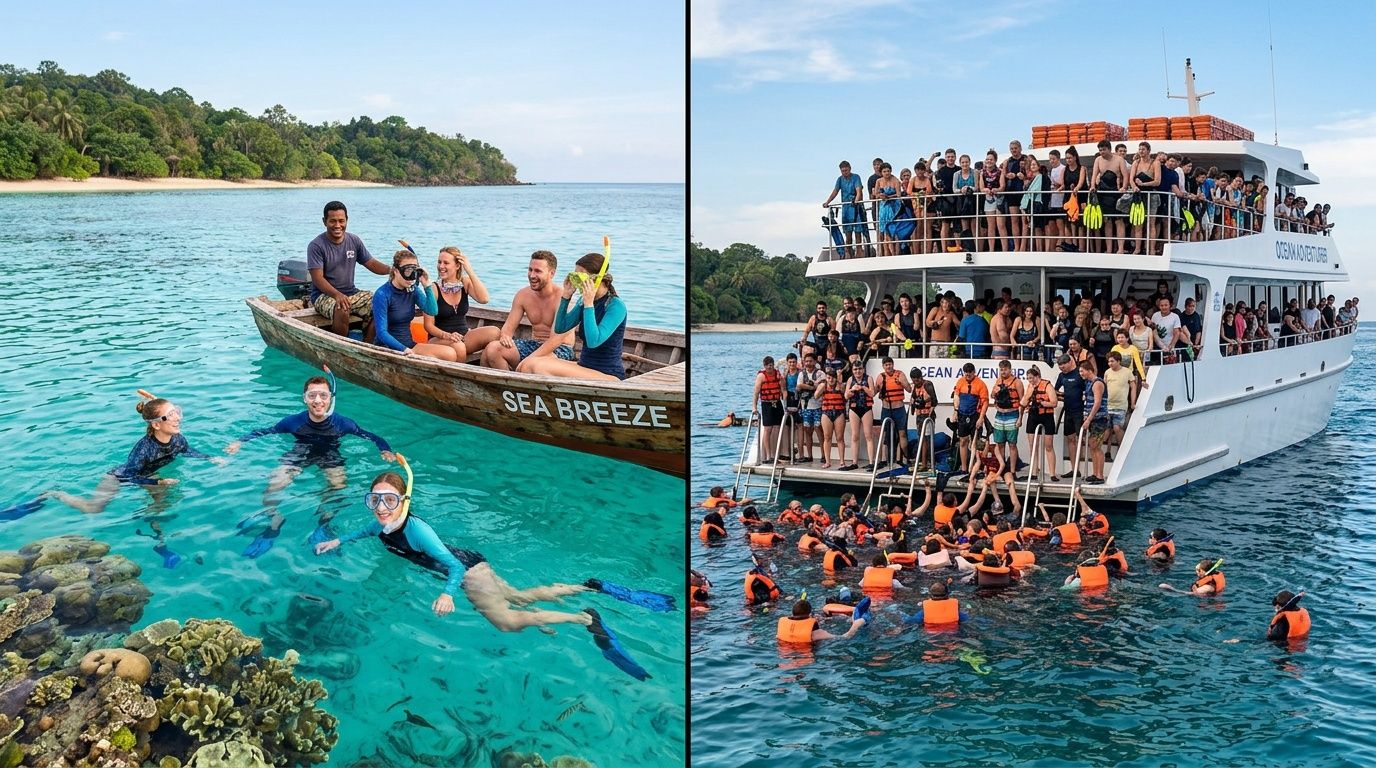
That choice matters more here than in many other snorkel spots on the Big Island. Kealakekua Bay is protected, historically significant, and often busy. A smaller, guide-centered operator usually gives you more time enjoying the reef and less time waiting on ladders, sorting gear, or trying to hear instructions over a large group.
What small-group tours do better
Small-group boats are not automatically better at everything. They usually cost more per person, and they may offer fewer departure slots. For travelers who care about the quality of the snorkel, though, the trade-off is usually worth it.
Here is where smaller operators tend to earn their price:
- They watch guests closely: Good crews spot loose masks, bad fin fit, and uneasy swimmers before those small issues turn into problems.
- Entries stay organized: Fewer people in the water at once means less kicking, less crowding, and a calmer start.
- Guiding is more active: You are more likely to get fish ID help, route suggestions, and direct support if current or nerves become a factor.
- Wildlife interactions stay more respectful: Better operators actively manage expectations around spinner dolphins and do not let guests turn a sighting into a chase.
- The day feels purpose-built for snorkeling: The reef is the priority, not just filling seats.
Large boats still suit some visitors. They can be fine for mixed groups who want a social morning and are less concerned about personal attention. But if the goal is to book the right Kealakekua Bay tour, not just any tour, start by looking hard at passenger count, guide involvement, and how the company talks about conservation.
Operators worth shortlisting
Two local options that fit that smaller-group approach are Kona Snorkel Trips Kealakekua Bay Captain Cook Monument tour and Captain Cook Snorkeling Tours. Both focus on the snorkel experience itself, which is what matters in this bay.
I would also pay attention to how any operator describes marine life encounters. The right company gets excited about dolphins, turtles, and reef fish without treating wildlife as entertainment that guests should pursue. Kealakekua has seen too many visitors assume that seeing dolphins means swimming straight at them. A crew that sets firm boundaries before anyone enters the water is doing its job.
If you are comparing marine tour styles beyond this one bay, this overview of Kona diving company options gives a useful look at how local operators structure trips in Kona. Kona Honu Divers also offers marine tours on the Big Island, including snorkel options, for travelers who want to compare formats and boat styles before booking.
Boat condition is another useful filter. Clean decks, clear walkways, working ladders, and organized gear bins usually reflect a crew that pays attention to safety and routine maintenance. If you want a practical reference for what proper vessel upkeep looks like, Boat Juice's boat care solutions give a helpful baseline.
Booking filters that actually matter
Use these criteria when comparing tours:
| Decision point | What to look for |
|---|---|
| Group size | Smaller passenger caps usually mean clearer briefings and better in-water support |
| Departure time | Early departures often get calmer conditions and cleaner visibility |
| Crew involvement | Ask whether guides stay active in the water or mainly supervise from the boat |
| Boat setup | Check ladder access, shade, storage, and whether the layout works for older guests or beginners |
| Conservation standards | Good operators explain reef etiquette, dolphin rules, and bay restrictions before anyone gets in |
| Guest fit | Match the trip to your group, especially if you have kids, weak swimmers, or anyone prone to seasickness |
Reviews help, but read them with a guide's eye. Look for comments about crew attention, safety briefings, patience with beginners, and whether the snorkel felt rushed. Those details tell you much more than generic praise.
Review widgets
Safety Guidelines and Responsible Snorkeling Practices
The safest snorkelers in Kealakekua aren’t always the strongest swimmers. They’re usually the people who listen, stay aware, and understand that this bay has rules for good reasons.
One of the most important rules involves spinner dolphins. NOAA guidance limits approaches to 50 meters (164 feet) to prevent harassment, and Kealakekua Bay is a known hotspot for violations, which is why operators who actively brief and manage dolphin interactions matter so much.
The basics still matter
Before getting into advanced etiquette, stick to the fundamentals:
- Use the buddy system: Don’t drift off alone, even if the water looks easy.
- Watch your fins: New snorkelers often damage coral by kicking backward without realizing it.
- Float, don’t stand: If you need a break, use flotation support or return to the boat if that’s the tour setup.
- Listen to the crew the first time: Most in-water problems begin as small instructions ignored early.
If you need a broader mindset for respectful ocean use, this piece on responsible and considerate diver etiquette translates well to snorkeling too.
Dolphin etiquette is not optional
People get excited when dolphins show up. That excitement is exactly what causes bad decisions.
Don’t swim toward them. Don’t try to intercept them. Don’t assume a close encounter is a gift you should chase. In Kealakekua, spinner dolphins often use the bay to rest. A good crew will position the boat and guests for passive observation, not pursuit.
Local advice: The best dolphin encounter is the one where the dolphins choose their path and you never need to wonder if your group pushed too close.
Reef-safe choices start before you board
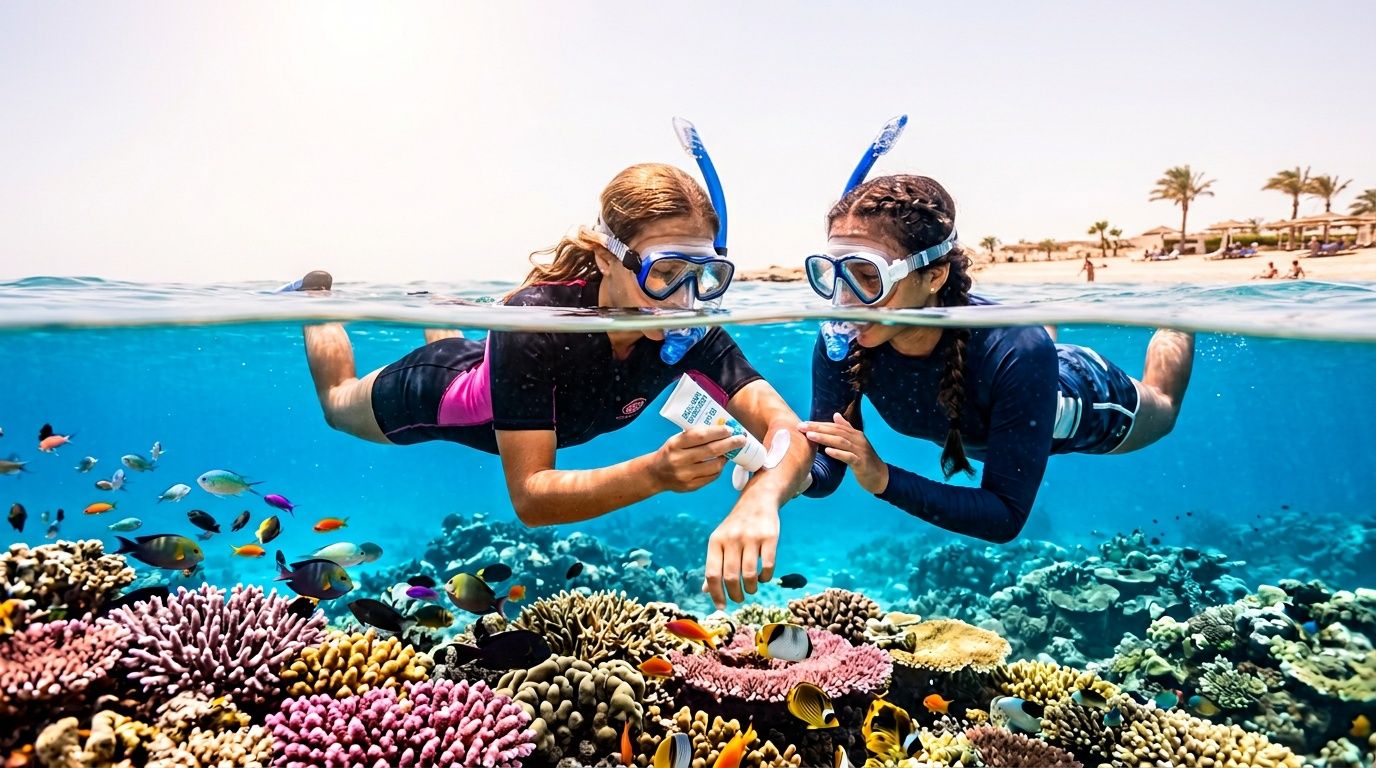
Your sunscreen matters. Mineral-based options are the safer call for coral areas, and if you want a practical consumer read on ingredients and product types, this guide to choosing surf sunscreen is a helpful starting point.
Other prep choices matter too. Secure loose items. Don’t bring disposable trash you can avoid. Rinse gear where the crew directs you, not wherever it’s convenient.
Conservation pressure is real
Kealakekua is still spectacular, but “protected” doesn’t mean immune to pressure. Visitor demand, changing access conditions, and reef stress all affect how tours operate and how the bay should be treated.
That’s one reason I tell people to choose operators who act like stewards, not just hosts. A company that gives a firm wildlife briefing, spaces guests out, and adjusts plans when conditions change is doing more than managing liability. It’s helping reduce wear on a place that gets a lot of attention.
What respectful snorkeling looks like in practice
| Situation | Good response | Poor response |
|---|---|---|
| You see dolphins | Observe from a distance and wait for crew guidance | Swim toward them for a closer photo |
| You feel tired | Use flotation or return to the boat | Stand on coral or grab reef structure |
| You lose awareness near the reef | Stop, reset your body position, kick gently | Keep flailing and hope for the best |
| You’re unsure about sunscreen | Choose reef-safer options before the trip | Apply anything without checking ingredients |
People remember the fish and the clarity. The bay remembers how visitors behave.
Your Essential Packing and Preparation Checklist
Packing for a Kealakekua Bay snorkeling tour isn’t complicated, but a few small misses can make the day less comfortable than it needs to be. The goal is to show up light, sun-protected, and ready to get in the water without fuss.
Most good operators provide the core snorkel setup. What you bring should solve the personal comfort issues they can’t solve for you.
Bring the things that change comfort
A dry towel matters more on the ride back than people expect. So does a shirt or cover-up for the harbor. If you tend to get cold after snorkeling, that change of clothes can be the difference between ending the day happy or shivering.
Sun protection also needs more thought than tossing any sunscreen into your bag. A hat, sunglasses, and reef-conscious sun protection usually do more for a full morning on the water than one hurried application right before boarding.
If motion sickness is on your radar, plan ahead instead of hoping for the best. This guide on how to avoid sea sickness covers simple habits that can make the boat ride easier.
Kealakekua Bay Snorkeling Tour Packing Checklist
| Item | Recommended | Notes |
|---|---|---|
| Swimwear | Yes | Wear it under your clothes to speed up boarding and gear-up time |
| Towel | Yes | Important for the ride back and changing after the trip |
| Change of clothes | Yes | A dry shirt or cover-up makes the return much more comfortable |
| Reef-safe sunscreen | Yes | Apply before boarding and choose reef-conscious options |
| Hat | Yes | Useful before and after snorkeling |
| Sunglasses | Yes | Helps with glare at the harbor and on the boat |
| Reusable water bottle | Good idea | Nice to have if your operator allows it |
| Waterproof phone case or camera | Optional | Bring it only if you can manage it without distracting from safety |
| Personal snorkel gear | Optional | Usually unnecessary if the operator provides quality gear |
| Light snack before departure | Good idea | Eat enough to settle your stomach without going heavy |
What you usually don’t need to overpack
Leave bulky extras behind unless you know you need them. Most guests don’t need multiple bags, spare fins, or complicated gear setups. This is snorkeling, not a gear-intensive expedition.
A few simple notes help:
- For kids: Bring familiar sun gear and a towel they’ll want to use.
- For non-swimmers: Wear comfortable swim clothing and ask for flotation support right away.
- For cooler months or windy mornings: A light layer for the boat ride can be a good call.
Seasonal expectations
Kealakekua is a year-round destination, but conditions aren’t identical every day. Morning tours from April to October are often favored for calmer conditions before afternoon wind affects clarity, according to the earlier cited bay overview.
That doesn’t mean other times are off the table. It means you should match your expectations to the season, the day’s weather, and your own comfort level in the ocean.
Frequently Asked Questions About Kealakekua Bay
Can you visit Kealakekua Bay without a tour?
Yes. For many visitors, it is the harder option with the lower payoff.
The bay can be reached by kayak in some circumstances or by the steep trail down to the monument area, but that route is hot, rough, and punishing on the way back up. If the goal is great snorkeling with energy left to enjoy it, a boat tour usually makes more sense. Small-group operators tend to give you better water time, clearer briefings, and less crowd pressure than big cattle-call boats.
Is Captain Cook snorkeling the same as Kealakekua Bay snorkeling?
Usually, yes.
“Captain Cook snorkeling” is the common shorthand for snorkeling in Kealakekua Bay near the Captain Cook Monument. Tour listings may use different names, but many are selling access to the same reef zone. The primary difference is rarely the destination. It is the boat size, guide quality, pace of the trip, and how well the crew handles beginners.
Is Kealakekua Bay good for beginners and families?
It can be, with the right crew.
The bay often has calm, clear morning conditions, which helps new snorkelers relax and enjoy what they are seeing. The operator matters just as much as the location. Good crews fit masks carefully, explain entries in plain language, keep flotation ready, and watch the group instead of chatting among themselves. That is why I steer families toward smaller, snorkeling-focused companies such as Kona Snorkel Trips and Captain Cook Snorkeling Tours rather than generic sightseeing boats that happen to hand out masks.
Will we definitely see dolphins?
No. Nobody should promise that.
Spinner dolphins use parts of the Kona Coast to rest, and Kealakekua Bay is one of the places where people sometimes spot them. The right response is quiet, respectful observation from the legal distance, not chasing, swimming after them, or trying to force an encounter for a photo. That matters even more now because respectful wildlife viewing is not just etiquette. It is part of protecting animals that are already dealing with heavy human pressure.
Are water shoes worth bringing?
Sometimes.
On a boat tour, many guests do fine without them because they board from the harbor and enter the water from the vessel. They are more useful if you want extra grip on wet decks or if you are combining the tour with other shoreline stops later in the day. If you want a general buying reference, this guide to the best water shoes for Lake Bled covers fit and traction points that apply well beyond Slovenia.
What should I ask before I book?
Ask the questions that show how the trip runs, not just what the brochure promises.
- How many guests do you take on a typical trip?
- How much actual snorkel time do we get in the bay?
- Do you provide flotation belts, pool noodles, or other support for beginners?
- How do your guides handle dolphin and turtle encounters?
- Is the trip centered on snorkeling, or is snorkeling one short stop on a wider cruise?
Those answers usually tell you who is serious about the bay and who is just filling seats.
Is a Kealakekua Bay snorkeling tour worth it?
Yes, if you book carefully.
Kealakekua Bay holds some of the clearest water and healthiest coral reef habitat on this side of the island, and getting there by boat removes a lot of hassle. A good tour lets you spend your attention on reef fish, coral structure, and conditions in the water instead of burning half the day on access. If your trip leaves you wanting more time underwater, this guide to the best dive sites in Kona is a smart next read.
If your trip to Kealakekua Bay gets you hooked on Kona’s underwater world, take a look at Kona Honu Divers. They’re a solid next step for visitors who want to add more ocean time to the trip, whether that means snorkeling support, training, or moving into scuba on the Big Island.