
You’re probably in the same spot most visitors are when they start planning this trip. You want the classic Big Island snorkel day, the one with glassy water, bright reef fish, and the kind of visibility that makes Hawaii feel unreal. Then you start researching Kealakekua Bay snorkeling Hawaii, and the simple idea turns into a logistical puzzle.
That’s because the bay is easy to admire and harder to access well. The snorkeling near the Captain Cook Monument is famous for a reason, but the right way to reach it depends on who’s in your group, how comfortable you are in the ocean, and whether you want adventure before the snorkeling starts, or only during it.
Why Kealakekua Bay is Hawaii's Premier Snorkeling Jewel
If someone asks me for one Kona snorkel that consistently lives up to the hype, Kealakekua Bay is the answer. This bay combines two things most places don’t. It has protected, fish-rich water and a shoreline with deep historical weight.
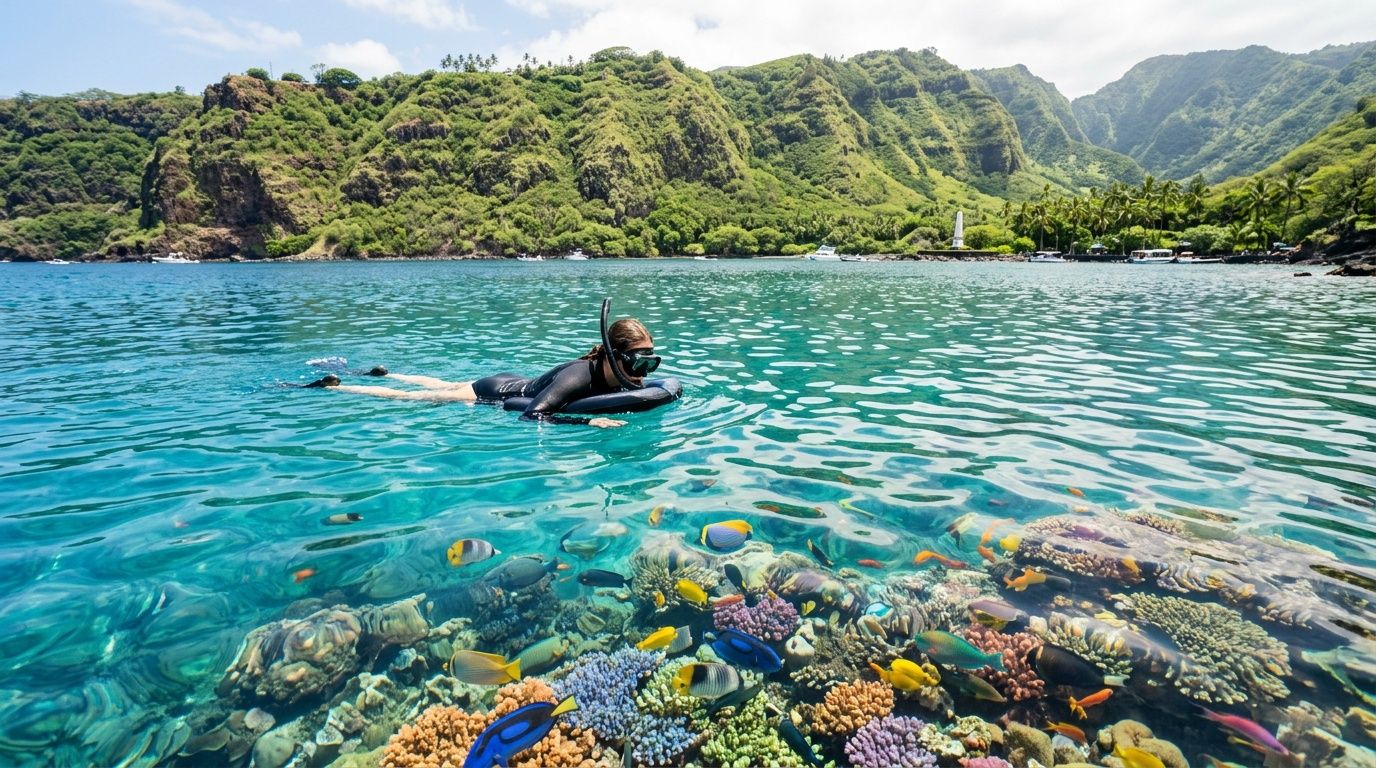
The reason the underwater experience feels so different starts with protection. Kealakekua Bay is a Marine Life Conservation District, and the water clarity often exceeds 100 feet, which gives snorkelers a clear window into a reef packed with life, especially around the Captain Cook Monument area where the snorkeling depth sits in the sweet spot for surface exploration. The bay’s shape and surrounding cliffs help keep water calm and clear, which is a huge part of why people come away talking about it for years. For a broader look at what makes Kona underwater experiences special, this guide to the best dive in Kona is a useful companion read.
Why so many people choose this bay
Kealakekua Bay draws approximately 190,000 visitors annually, and that mix isn’t all snorkel-focused. According to this overview of Kealakekua Bay history and visitation, 70% come for the historical significance tied to Captain James Cook’s first landing in 1778 and death in 1779, while 30% come specifically for the snorkeling.
That split tells you something important. This isn’t just a pretty reef. It’s one of those rare places where Hawaiian history, dramatic volcanic coastline, and accessible marine life all sit in the same frame.
Local takeaway: Plenty of good snorkel spots have fish. Very few have fish, calm water, major history, and a setting that feels this dramatic before you even get in.
What makes it stand above other easy-access spots
Kealakekua Bay tends to feel cleaner, calmer, and less chaotic than more exposed or more crowded beginner beaches. You’re not fighting for a patch of reef or peering through stirred-up water. You’re floating above a protected bay that was built by geography to reward patient snorkelers.
For families, first-time snorkelers, and people who care more about quality than convenience-store beach access, that difference matters. The only real catch is getting there well. That’s where most visitors make either a very smart decision, or a very tiring one.
How to Reach the Captain Cook Monument
This is the part most guides rush through. They’ll say you can go by boat, kayak, or hike, then move on. In practice, the access method often decides whether your day feels smooth or punishing.
The prime snorkeling area isn’t roadside. Independent access also comes with real trade-offs. According to this overview of Captain Cook snorkel tour access and safety, there’s no parking near the prime snorkel zones, and reaching them on your own means either a strenuous hike down steep trails or a challenging kayak paddle. That same source notes that professional guides are often considered essential for safety, especially for novices and families, because they help reduce risks like sudden currents, fatigue, and injury potential.
Boat tours for comfort and the least hassle
For most visitors, the boat is the right answer. If your group includes kids, older family members, nervous swimmers, or anyone who wants to spend energy snorkeling instead of earning the snorkel by land or paddle, boat access wins.
You board, get your gear sorted, ride down the coast, and enter near the best water fresh instead of already tired. That matters more than people think. Fatigue changes everything in the ocean. A person who starts the snorkel relaxed usually enjoys more, sees more, and makes better decisions in the water.
A guided boat trip also removes several common independent-access problems:
- No route stress: You don’t have to sort out trail logistics or kayak handling.
- Better energy management: You arrive ready to snorkel, not already overheated.
- Crew oversight: Guides can watch conditions and keep an eye on less experienced swimmers.
- Simple group fit: Mixed-ability families usually do better when the whole outing is structured.
If that sounds like your style, a Captain Cook snorkeling tour is the practical option to compare first.
Kayaking for independent travelers who want work with the reward
Kayaking appeals to people who like the idea of earning access and moving at their own pace. I understand the draw. On a calm morning, crossing the bay under your own power can feel special.
But this option gets romanticized. You still need to manage the paddle, the sun, your gear, and the transition from kayaking to snorkeling. If someone in your group is not confident, not fit, or not enthusiastic about physical effort, the kayak can become a chore before the best part of the day even starts.
Kayaking makes the most sense for travelers who:
- Already enjoy paddling: Not people trying it for the first time on vacation
- Travel light: Less gear means fewer headaches
- Have solid ocean judgment: Calm at launch doesn’t guarantee calm later
- Want independence more than convenience: That trade-off is the whole point
Hiking for very fit people only
The hike is the choice people most often underestimate. It sounds simple on paper. In reality, it’s the harshest access method by a wide margin.
The trail is steep, exposed, and punishing on the way back up after you’ve already been in the sun and water. If your goal is excellent snorkeling, not proving a point to yourself, this usually isn’t the smartest route. I’d only point very fit hikers with strong heat tolerance and realistic expectations toward it.
The hike can turn a snorkel day into a conditioning test. For many visitors, that’s not a great trade.
Kealakekua Bay Access Methods Compared
| Method | Best For | Approx. Cost (per person) | Effort Level | Key Benefit |
|---|---|---|---|---|
| Boat tour | Families, beginners, mixed-ability groups | Qualitatively higher than self-access | Low | Easiest, safest access to prime snorkeling |
| Kayak | Independent travelers comfortable with paddling | Qualitatively moderate | Moderate to high | Flexible and adventurous |
| Hike | Very fit visitors who don’t mind steep terrain | Lowest direct access cost | High | No boat needed |
Which method actually works for your group
Here’s the short version I’d give a friend visiting Kona:
- Choose a boat if you want the highest chance of a smooth, enjoyable day.
- Choose a kayak if the journey matters as much as the snorkeling.
- Choose the hike only if you already know you handle steep, exposed trails well.
That’s the honest breakdown. Individuals often aren’t choosing between three equal options. They’re choosing between one practical option and two demanding ones.
Recommended Kealakekua Bay Snorkel Tours
Once you accept that boat access is the cleanest solution for most groups, the next question is simple. Which operators make the day easy without making it feel generic?
The strongest Kealakekua Bay snorkeling trips tend to do the same few things well. They keep logistics tight, use crews who know the bay, and avoid turning a protected place into a cattle-call experience. A useful roundup of top Kealakekua Bay snorkeling tours is worth checking before you book.
Two tour styles that work well
Kona Snorkel Trips Kealakekua Bay Captain Cook Monument tour is a strong fit for travelers who want a straightforward boat-based snorkel focused on getting into the good water without turning the day into an expedition.
Captain Cook Snorkeling Tours is another solid option if you want a dedicated operator focused on this area and the monument-side experience.
Kona Honu Divers also offers a Captain Cook snorkeling tour by boat, which is useful for travelers who prefer booking through a company that also runs dive operations and other ocean activities on the Big Island.
What to look for before you book
Not every boat tour fits every traveler. I’d pay attention to these details more than flashy marketing:
- Group feel: Smaller groups usually mean less waiting, less crowding in the water, and more useful help.
- Crew involvement: The best crews don’t just drive the boat. They help with gear fit, water entry, and local context.
- Snorkeler mix: Some boats suit first-timers better than others.
- Coast ride quality: The ride to the bay is part of the day, not dead time.
Practical rule: If you’re traveling with family or a mixed-skill group, choose the operator that reduces friction, not the one that promises the most adventure.
The smart booking mindset
Book the tour that matches your group’s real needs, not the imaginary version of your trip where everyone wakes up athletic, fearless, and perfectly coordinated. Kealakekua Bay rewards good planning. It also exposes bad planning fast.
For most visitors, that means a morning boat tour with a crew that knows how to keep people comfortable, informed, and moving smoothly from dock to reef.
Marine Life and Underwater Wonders You Will See
The first thing many snorkelers notice at Kealakekua Bay isn’t one animal. It’s density. You put your face in the water and realize the reef is busy almost everywhere you look.
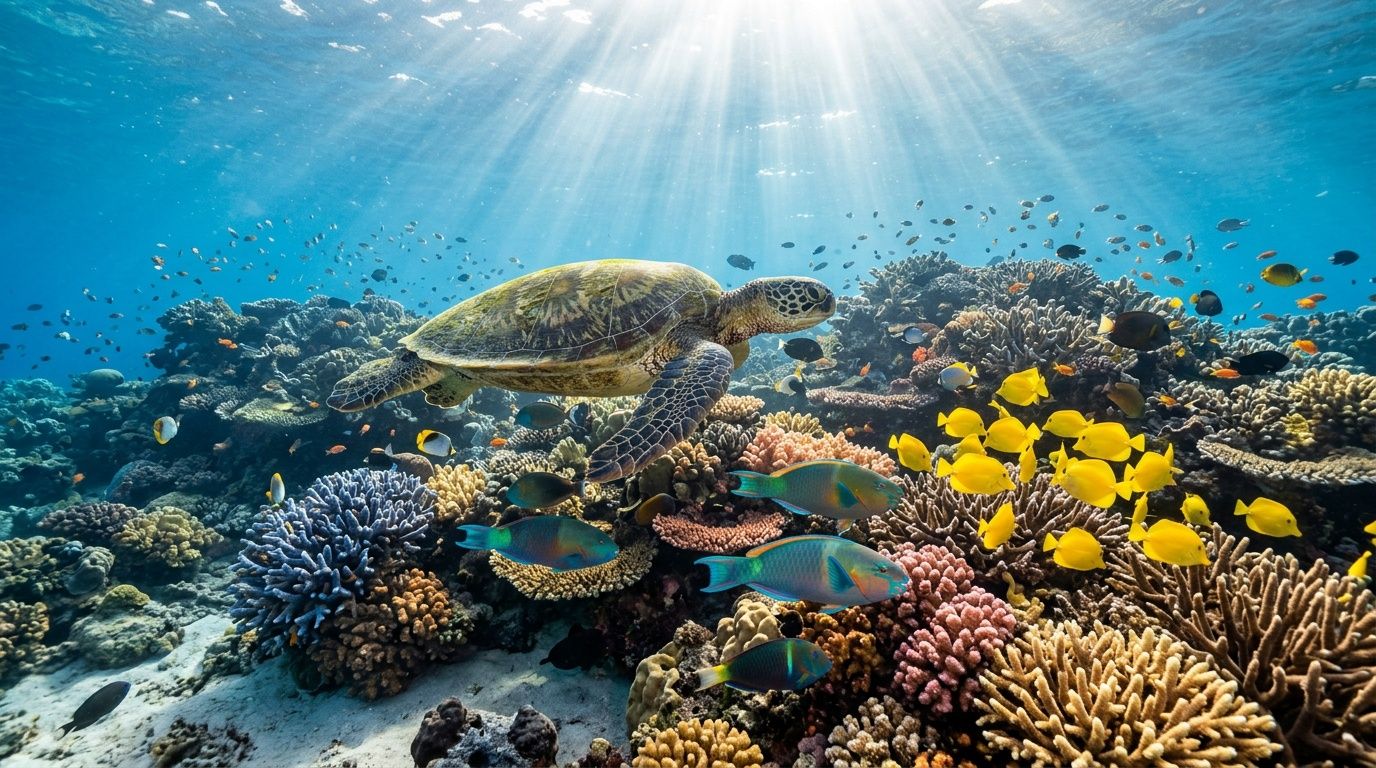
That’s not accidental. The bay’s 315-acre protected status supports dense schools of fish and coral structures thriving from 5 to 30 feet deep, which makes the reef unusually accessible to snorkelers rather than only to divers. The same protected setup, along with the bay’s natural enclosure, helps create calm conditions and visibility that often exceeds 100 feet, while the average depth is 25 feet. Those details come from this overview of Kealakekua Bay’s marine environment and bathymetry.
Why the reef feels so alive
When fishing pressure is removed, fish act differently. You see larger schools, more constant movement, and a reef that feels occupied instead of empty. That’s one of the big reasons Kealakekua Bay snorkeling Hawaii stands apart from average vacation snorkeling.
The depth profile helps too. You don’t need to dive down to appreciate the structure. Coral grows in the zone where snorkelers can see color, texture, and fish behavior clearly from the surface. That keeps the experience rewarding even for people who never dive below face-down floating depth.
Fish to watch for on a typical snorkel
Some species are so common here that even first-time snorkelers usually remember them afterward.
- Yellow tang: Bright, unmistakable, and often seen moving in schools.
- Parrotfish: Easy to recognize once you know the shape and beak-like mouth.
- Butterflyfish: Reef staples that add pattern and motion near coral heads.
- Humuhumunukunukuapuaʻa: Hawaii’s state fish, and one many visitors hope to spot.
If you enjoy endemic marine life and want to know what’s unique to Hawaii waters, this guide to Big Island endemic marine animals adds helpful context.
The animals that make people stop talking mid-snorkel
Fish are the baseline here. The bigger emotional moments usually come from the bay’s more charismatic visitors.
Hawaiian green sea turtles are common enough that many snorkelers get a memorable sighting. Spinner dolphins also use the bay as a resting area, especially in the mornings, and seeing them from a respectful distance changes the tone of the whole trip.
Some snorkel sites impress you with one moment. Kealakekua Bay often gives you a steady stream of moments.
How to see more without working harder
A lot of people waste energy swimming fast. The better move here is to slow down. Drift along the reef edge, pause over coral heads, and let your eyes adjust to movement and shape.
That’s when the reef opens up. A patch that looked empty becomes full of color changes, feeding behavior, and fish crossing different depths. Kealakekua Bay rewards calm observers more than aggressive swimmers.
Snorkeling Smart Safety Rules and Conservation
Kealakekua Bay is forgiving compared with more exposed ocean spots, but it’s still open water. Good conditions can make people casual, and casual decisions are where most problems start.
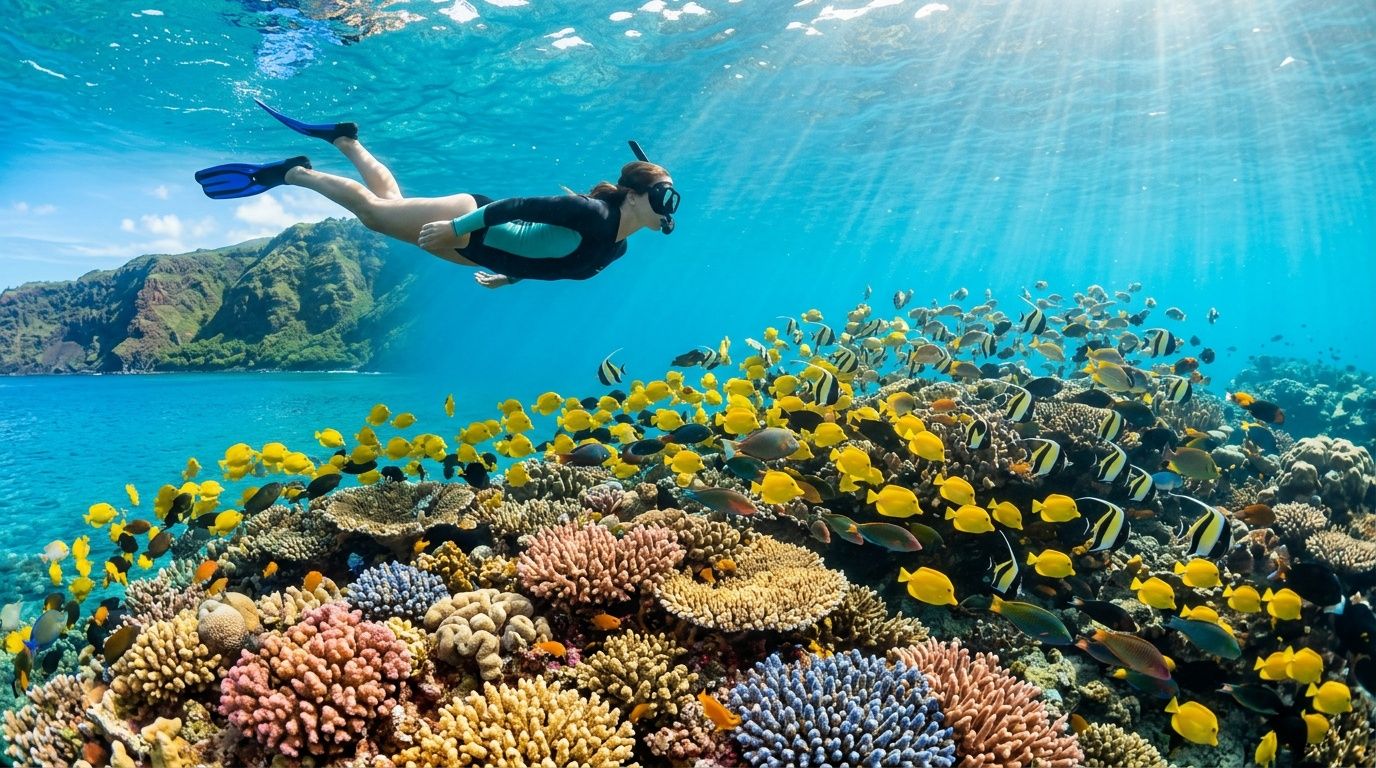
The bay also needs more from visitors than admiration. This piece on recent concerns affecting Kealakekua Bay snorkeling notes that while the bay remains pristine, it faces pressure from overcrowding and climate-related warming events affecting coral health on the Big Island. It also makes the point that reef-safe sunscreen and keeping your distance from wildlife are no longer optional habits. They’re essential if this place is going to stay worth visiting.
Personal safety that actually matters
If you’re on a guided tour, listen to the briefing even if you’ve snorkeled before. Local conditions matter more than vacation confidence.
If you’re not on a guided tour, be stricter with yourself:
- Know your limit: Don’t swim farther than you can comfortably return.
- Manage heat early: Drink water before you feel thirsty.
- Respect fatigue: Tired swimmers make bad choices late in the snorkel.
- Don’t snorkel alone: Independent access is where small mistakes get expensive.
The safest snorkelers aren’t always the strongest swimmers. They’re the ones who stay conservative.
Seasickness prep for boat riders
If you know boats can bother you, prepare before the harbor, not after the swell finds you. These are common options people use for prevention:
- Ship-EEZ Seasickness Patch: Ship-EEZ patch
- Dramamine pills: Dramamine
- Bonine pills: Bonine
- Sea Band wristbands: Sea Band wristbands
- Ginger chews: Ginger chews
Choose whatever has worked for you before. If nothing has, start simple and don’t wait until you already feel off.
On-the-water habit: Eat lightly, hydrate well, and keep your eyes on the horizon during the ride if you’re motion-sensitive.
Conservation rules that aren’t optional
This bay is popular because it still feels healthy. Visitors can either keep it that way or slowly strip away what they came to enjoy.
A few rules matter more than the rest:
- Don’t touch coral. Not with your hands, fins, knees, or gear.
- Give turtles and dolphins room. Watching is fine. Pursuit is not.
- Use reef-safe sunscreen. Apply it before the trip so it has time to set.
- Move slowly over the reef. Fast kicking stirs silt and increases accidental contact.
For a good wider primer on respectful underwater behavior, this guide to responsible and considerate diver etiquette translates well to snorkeling too.
Your Kealakekua Bay Trip Planning Checklist
A smooth Kealakekua Bay day usually comes down to a few simple decisions made early. Bring the right basics, book the right access, and don’t overcomplicate it.
The prime snorkeling area around the Captain Cook Monument sits at roughly 20 to 30 feet deep, while the bay itself drops to over 100 feet, and spinner dolphins often rest in the bay in the mornings, according to this guide to Kealakekua Bay snorkeling conditions. That’s why morning trips are usually the smart play. The water is often calmer, and the bay feels less rushed.
What to pack
You don’t need much, but the right few items make a difference:
- Reef-safe sunscreen: Non-negotiable for coral protection.
- Reusable water bottle: The sun on the Kona coast sneaks up on people.
- Hat and sunglasses: Useful on the ride and after the snorkel.
- Towel and dry shirt: Small comfort, big payoff afterward.
- Waterproof camera or phone case: If you care about underwater memories, bring it ready.
- Your own mask if fit matters to you: Good operators provide gear, but some people always prefer their own mask.
What to sort out in advance
The biggest planning mistake is assuming all access is equally simple. It isn’t.
- Boat tour guests: Your operator handles the logistics.
- Kayak users: Permits and launch rules matter.
- Hikers: Treat it like a real trail day, not a beach stop.
If you’re traveling with pets and need someone reliable while you’re out on the water for part of the day, this Hawaii pet sitting guide is a practical resource to review before your trip.
Timing tips that work
If you have flexibility, book the morning. That’s the best fit for calm water, easier visibility, and the bay’s most relaxed feel.
Also keep your expectations realistic. A good trip isn’t about forcing the perfect wildlife sighting. It’s about putting yourself in the best conditions, with enough energy left to enjoy them.
Frequently Asked Questions About Kealakekua Bay Snorkeling
Can you snorkel from shore at Kealakekua Bay
Technically, yes. Practically, it’s not the right choice for most visitors. Reaching the prime area from land involves a steep, strenuous route, so shore access makes more sense for very fit people who already know what they’re getting into. For families and most vacation snorkelers, boat access is far more realistic.
Is it better to snorkel or scuba dive at Kealakekua Bay
For most visitors, snorkeling is the point here. The reef is shallow, visible, and rewarding from the surface, which is exactly why the bay is so famous. If you’re a certified diver and want to compare other underwater options around Kona, browse these Big Island dive tours.
What is the history of the Captain Cook Monument
The monument marks the area associated with Captain James Cook’s death in 1779. That history is one reason so many visitors are drawn to the bay even before they consider the snorkeling.
Are there sharks at Kealakekua Bay
Small reef sharks are part of a healthy Hawaiian marine ecosystem, and their presence offshore or around reef systems isn’t unusual. They’re typically shy and not a concern for snorkelers. Few snorkelers ever see one, and if they do, it’s usually a brief and uneventful sighting.
Is Kealakekua Bay good for beginners
Yes, especially when beginners choose the right access method. The biggest beginner mistake isn’t the snorkeling itself. It’s choosing an access plan that drains energy or adds stress before the swim starts. A guided boat trip keeps the experience focused on the part beginners came for.
What’s the single best decision for most groups
Choose the access method based on the least experienced or least enthusiastic person in your group, not the fittest one. That one decision prevents a lot of rough days.
If Kealakekua Bay leaves you wanting more time in the water, Kona Honu Divers is a solid next stop for exploring the Big Island’s broader underwater side, whether you’re looking for snorkeling, scuba training, or guided dive trips beyond the bay.