
The first time I slipped into Kealakekua Bay just after sunrise, the water was so clear that the reef looked close enough to touch. A few minutes later, I was floating above coral and schools of tropical fish, with the cliffs and the Captain Cook Monument behind me, and it was obvious why this place stays with people.
An Introduction to Hawaii’s Premier Snorkeling Sanctuary
Kealakekua Bay snorkeling Hawaii isn't just about finding clear water. It's about entering a place where history, culture, and marine life all exist in the same small stretch of coast.
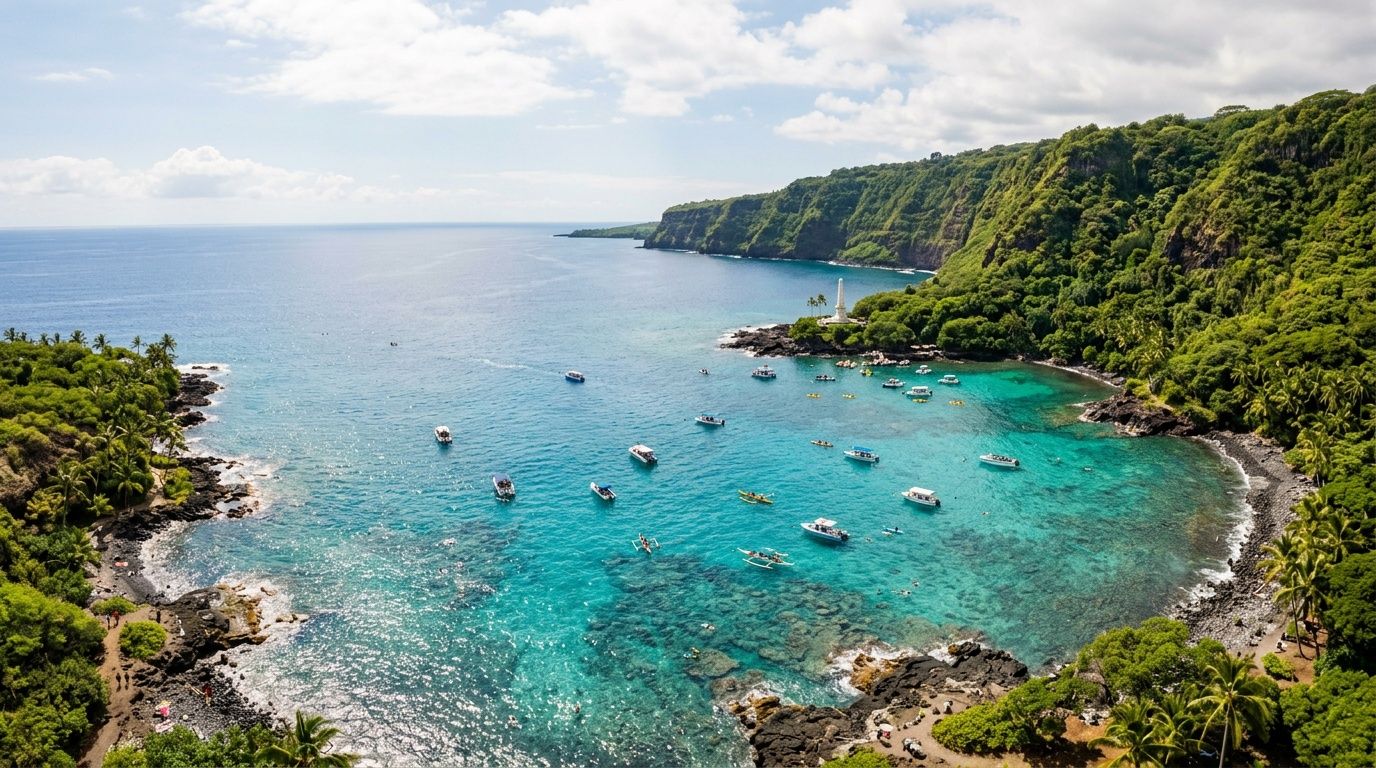
On the surface, the bay looks inviting right away. The water is often a striking blue-green, the shoreline is backed by steep volcanic cliffs, and the protected shape of the bay helps keep conditions calmer than many other exposed spots on the island. Under the surface, that shelter translates into one of the biggest reasons people come here in the first place: visibility that often exceeds 100 feet.
What makes the bay different from many famous snorkel sites is its dual identity. Kealakekua Bay is both a U.S. Historic District and a Marine Life Conservation District. It marks the site connected with Captain James Cook’s death in 1779, and it is also a protected marine area where no fishing is allowed in the bay’s conservation zone. That combination gives the experience more weight. You’re not just visiting a beautiful cove. You’re entering a place that matters a great deal, both historically and ecologically.
Why so many visitors remember this bay
The bay draws over 100,000 snorkelers annually, and 85% of visitors rate it their favorite snorkeling spot on the Big Island, according to Kona Snorkel Trips’ Kealakekua Bay overview. That same source notes the bay’s visibility often exceeds 100 feet, which helps explain why first-time visitors and experienced ocean people alike come away impressed.
Those numbers matter, but the feeling matters more. The bay has the rare ability to make beginners feel welcome while still giving seasoned snorkelers plenty to appreciate. In shallow areas, you can drift over reef without feeling far from safety. In deeper water, the bay opens into darker blue, and the change in depth gives the whole underwater scene more texture and drama.
Practical rule: Treat Kealakekua as a sanctuary first and an attraction second. You’ll enjoy it more when you understand why the rules exist.
More than a stop on a vacation itinerary
A lot of visitors searching for snorkeling in Kona, Hawaii are really asking a deeper question: where can I have one unforgettable ocean day on the Big Island? Kealakekua Bay is often the answer because it offers more than fish sightings. It gives you a sense of place.
You see that in the protected reef. You feel it in the quiet of the morning water. You notice it when guides talk about the shoreline with respect instead of treating it like a backdrop.
That’s the right way to approach this bay. Go for the beauty, absolutely. Stay aware that the beauty survives because the bay is protected.
When to Go The Best Times for Kealakekua Bay Snorkeling
Timing changes this experience more than many visitors expect. At Kealakekua Bay, a good day can feel effortless. A poorly timed outing can still be enjoyable, but the water may be rougher, visibility may drop, and nervous first-time snorkelers may have a harder time relaxing.
Morning is usually the smart choice
Morning tours are the standard recommendation for a reason. Kona Snorkel Trips’ seasonal water temperature guide notes that morning tours are advised to avoid afternoon winds that can reduce visibility. Local visitors learn this quickly. The earlier hours often bring flatter water, easier entries, and better viewing conditions over the reef.
If you’re traveling with kids, seniors, or anyone who gets uneasy in choppy water, this matters even more. Calmer water helps people focus on breathing, floating, and looking down instead of managing splash and swell.
Seasonal conditions and comfort
That same seasonal guide notes that Kealakekua Bay’s water temperatures typically range from 75 to 82°F, and during cooler winter months a 3 to 5mm wetsuit is recommended for 60 to 90 minute snorkeling sessions, which can enhance endurance by 20 to 30% in those cooler conditions. That’s useful planning information, especially for people who assume Hawaii water always feels warm enough without gear.
Here’s the simple version:
- Summer through early fall: Conditions are often at their calmest and clearest, especially from April to October, as noted in the earlier source on the bay.
- Winter: Snorkeling can still be excellent, but some visitors feel chilled faster, especially if they stay in the water a while.
- Any season: Early departure usually gives you the cleanest look into the reef.
How I’d plan it for different travelers
If you’re choosing dates and trying to keep things simple, use this approach:
- For families: Book an early morning trip and choose a tour with easy water entry.
- For first-time snorkelers: Prioritize calm conditions over everything else.
- For confident swimmers: You’ll still benefit from mornings because visibility tends to be stronger.
- For winter visitors: Ask whether exposure protection is available if you get cold easily.
The bay can be good year-round. The difference is that the best mornings feel easy from the moment you get in.
A little trip planning helps. Before your tour day, it’s worth learning how to check ocean conditions for the Big Island, Hawaii, especially if you’re comparing dates or trying to decide whether to rebook after a windy forecast.
The main point is simple. Don’t just ask, “Can I snorkel that day?” Ask, “When will the bay show me its best side?” Most of the time, that answer is morning.
How to Get to Kealakekua Bay A Comparison of Your Options
Getting to the best snorkeling area is where many visitors misjudge this trip. On a map, the bay can look easy. In real life, your access method shapes everything: how tired you are before you enter the water, how safe the day feels, and how much time you end up spending snorkeling.
The three main approaches are boat tour, kayak, and hike. They are not equal.
Kealakekua Bay Access Methods Compared
| Method | Difficulty | Approx. Time | Best For | Key Consideration |
|---|---|---|---|---|
| Boat tour | Low | Half-day outing | Most visitors, families, beginners, mixed-skill groups | Direct access to prime reef area |
| Kayaking | Moderate to high | Varies with conditions | Fit, experienced paddlers comfortable with ocean exposure | Return paddle is vulnerable to wind |
| Kaʻawaloa Trail hike | Very high | Long outing with strenuous return | Strong hikers prepared for heat and steep terrain | Access is physically demanding before and after snorkeling |
The clearest summary comes from Love Big Island’s Kealakekua Bay access guide, which states that boat tours are low-difficulty and place snorkelers directly on the reef, kayaking is moderate-to-high difficulty due to the wind-vulnerable return paddle, and the 2-mile Kaʻawaloa Trail hike is very high difficulty with a steep 1,300-foot elevation change and significant heat exhaustion risk.
Why boat access works for most people
A boat tour removes the hardest part of the day. That’s not a small advantage. Most visitors come to see the bay, not to spend their energy earning access to it.
With a licensed tour, you usually get:
- Simple entry: The crew brings you close to the reef instead of making you descend a steep trail or paddle back against wind.
- Less fatigue: You start the snorkel fresh.
- Guidance: Crew members explain entry technique, reef etiquette, and where to spend your time in the water.
- Better fit for groups: Families and mixed-ability groups usually have a much easier day.
If you’re already spending heavily to reach Hawaii, it’s smart to save where you can before the trip. One useful planning resource is this guide on how to save money on international flights. Cutting airfare costs can free up room in the budget for activities that are worth doing the easier, safer way.
The kayak option
Kayaking appeals to independent travelers, and I understand why. It sounds adventurous, and in calm conditions the crossing can be beautiful. The problem is the return. Wind and fatigue change the tone of the day fast.
That matters most if your group includes anyone who paddles casually, gets dehydrated easily, or isn’t confident managing ocean conditions after a long snorkel. What looks romantic in a travel photo can feel very different in full sun with tired shoulders.
The hike option
The Kaʻawaloa Trail deserves respect. It is not a casual walk down to the water.
The steep grade and heat exposure make the descent serious and the climb back much harder. Add snorkeling gear, food, and water, and many visitors realize too late that they planned a strenuous hike and a snorkel in one outing. That’s a lot to ask of a vacation day.
If your main goal is snorkeling well, don’t choose the method that leaves you exhausted before you put your face in the water.
What about seasickness on a boat
Some people avoid boat tours because they worry about motion sickness. That’s reasonable, but it’s manageable for many travelers, especially on morning departures when conditions are often calmer.
If you’re prone to seasickness, these are common options people use before a trip:
- Patch option: Ship-EEZ Seasickness Patch
- Medication: Dramamine pills
- Alternative medication: Bonine pills
- Non-medication option: Sea Band wristbands
- Simple stomach support: Ginger chews
Try anything new before your tour day only if you’re comfortable with how your body responds to it. Also eat lightly, stay hydrated, and keep your eyes on the horizon during the ride if you start to feel off.
For many visitors comparing ocean outings on the Kona coast, Kona boat tours are the easiest starting point because they remove the hardest logistics. For Kealakekua Bay snorkeling Hawaii, that convenience often translates directly into a better experience in the water.
Choosing the Best Snorkel Tour A Guide to Local Operators
Once you’ve decided to go by boat, the next question is simpler but still important: which operator matches your group?
Not every tour fits every traveler. Some people want a fast, efficient snorkel outing. Others need a crew that’s patient with beginners, kids, or older family members. In Kealakekua Bay, that difference matters because the site is so special that you don’t want the day spoiled by rushed instruction, poor gear, or awkward water entry.
What separates a strong operator from an average one
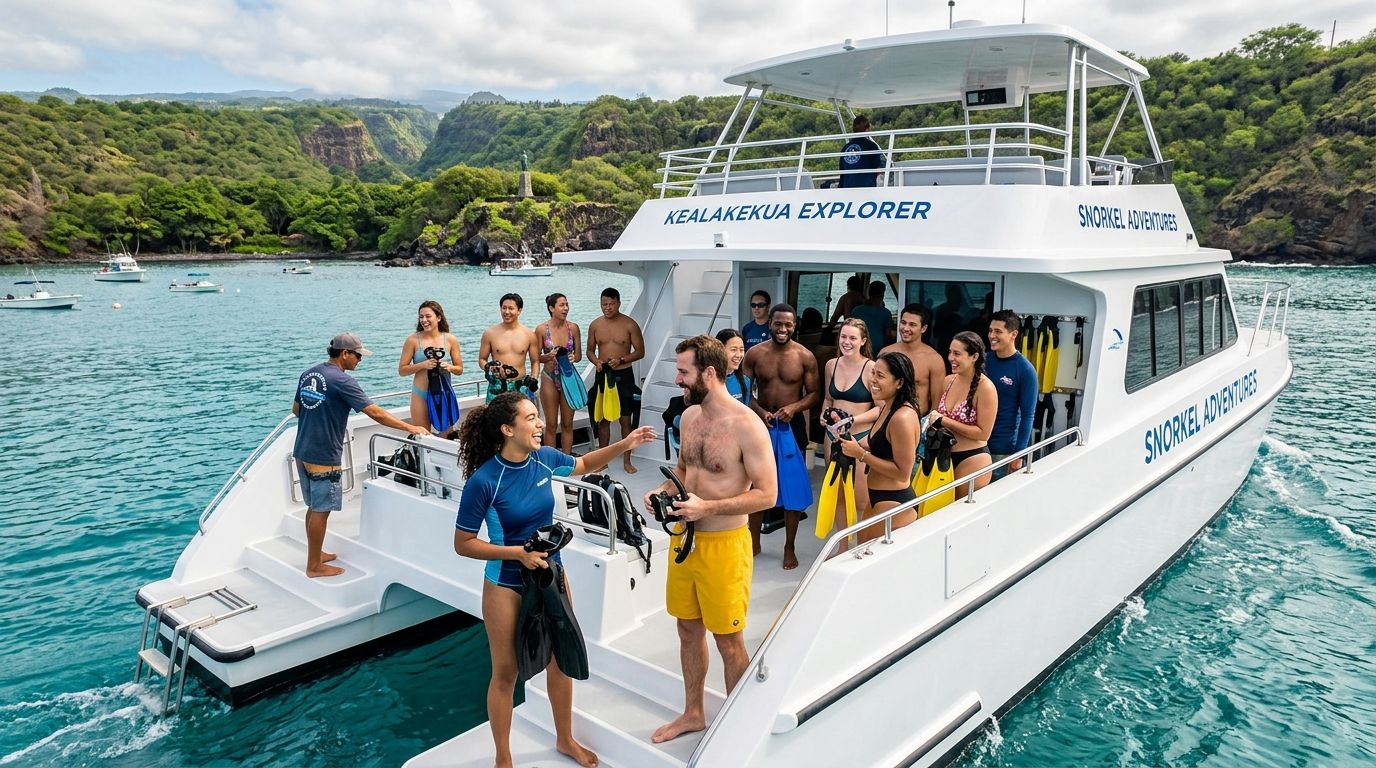
One useful detail often gets overlooked: accessibility. According to this Kealakekua Bay article discussing visitor barriers and accommodations, 40% of families cite physical demands as a barrier to visiting places like Kealakekua, and professional tours address that with easy water entry, provided life vests for all ages, typically 5+, and onboard amenities.
That’s not just a family issue. It also matters for:
- Seniors who want a stable, organized outing
- Non-swimmers who feel better with flotation and close support
- Mixed groups where one confident snorkeler and one nervous beginner are traveling together
- Visitors with limited mobility who need the day to be physically manageable
Two tour choices many visitors consider
If you want a direct path to the bay with established tour options, two names that come up often are Kona Snorkel Trips Kealakekua Bay Captain Cook Monument tour and Captain Cook Snorkeling Tours. Both are focused on getting visitors out to this iconic snorkeling area by boat, which is the lowest-difficulty access method discussed earlier.
A third option people may already know is Kona Honu Divers’ guide to top Kona snorkeling spots, which can help travelers compare Kealakekua with other sites if they’re deciding how to spend several ocean days on the island.
What I’d look for when booking:
- Clear guidance for beginners: Ask how the crew helps first-timers get comfortable.
- Included equipment: Good tours usually provide mask, snorkel, fins, and flotation.
- Water entry style: Some guests do best with stable ladders and unhurried entry.
- Group feel: Smaller or well-managed groups tend to feel calmer in the water.
- Respect for the place: You want a crew that talks about the bay as a protected area, not just a product.
A good snorkel operator doesn’t just take you to the reef. The crew lowers the stress level before you even hit the water.
How to choose for your travel style
If you’re traveling with children or grandparents, prioritize comfort and support. If you’re a confident swimmer traveling solo or as a couple, you may care more about pace and time in the water. If half your group loves the ocean and the other half is anxious, choose the crew that’s known for patient instruction, flotation options, and smooth logistics.
The smartest booking decision usually isn’t about finding the flashiest marketing. It’s about finding the crew that makes your specific group feel capable, safe, and welcome.
The Underwater World What You Will See in Kealakekua Bay
Your first few minutes in the water are often memorable. You put your face down, expect a nice reef, and then realize the bay is busy with life at almost every depth you can comfortably see from the surface.
Reef life from the shallows down
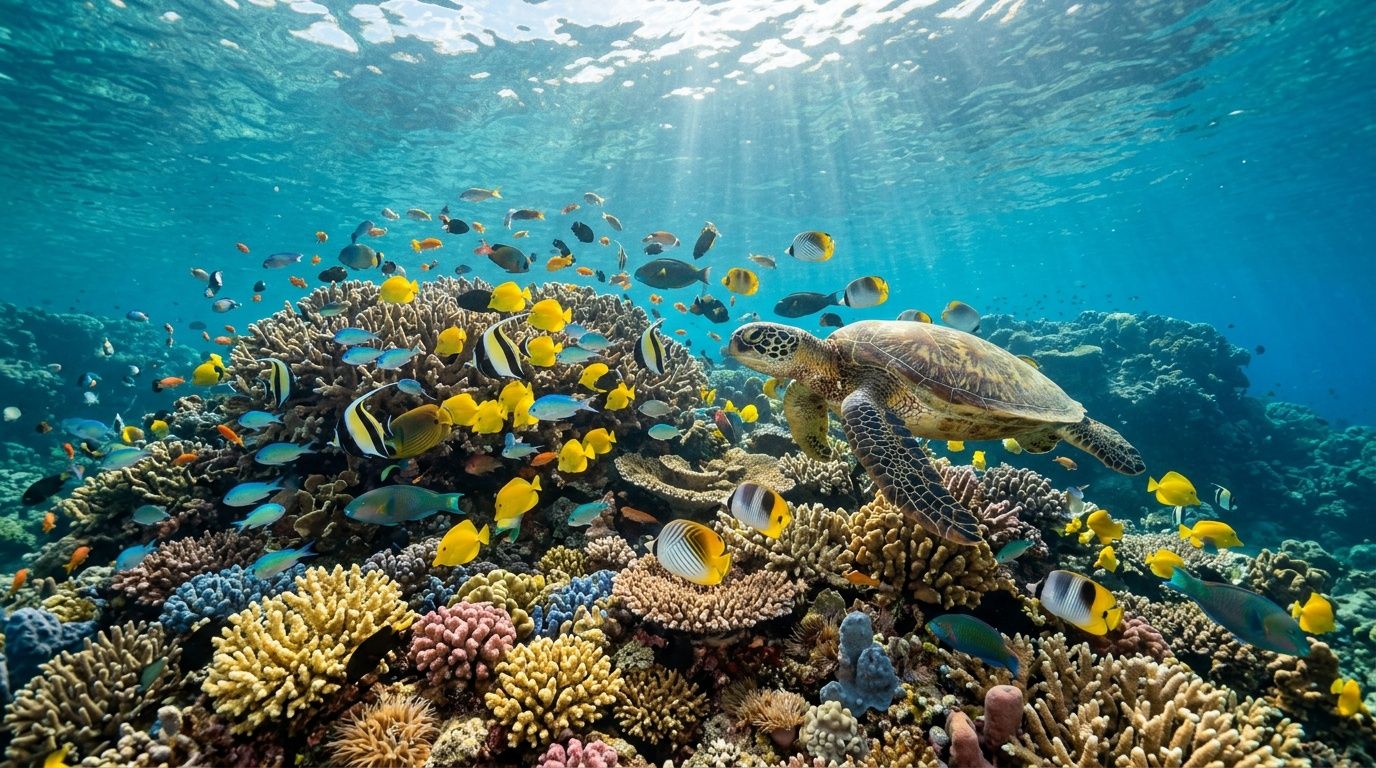
The bay supports abundant tropical fish and healthy coral reefs. Commonly noted fish life in the protected area includes surgeonfish, convict tangs, parrotfish, and triggerfish, based on the verified data about the bay’s marine life conservation protections. For snorkelers, that means you don’t need to dive deep or chase sightings. Much of the action happens right below you.
The layout of the bay helps. In reef zones, shallow areas allow long, relaxed surface swims. Then the bottom falls away into deeper blue water, and the scene changes. The edge between shallow reef and deeper water is often where people pause, hover, and realize how much habitat fits into one snorkel session.
What larger animals might appear
Two animals tend to stay in people’s memory long after the trip: Hawaiian green sea turtles and spinner dolphins. The bay is known for both, but the right mindset is respect, not expectation. You may see them. You may not. If you do, the moment is better when no one tries to force it.
A turtle sighting often feels quiet and close. The animal moves with total ease while snorkelers kick and splash nearby. Dolphins create a different energy. Even from a distance, they change the whole mood of the bay.
Keep your movements calm. The more settled you are in the water, the more you notice.
Why the bay feels so alive
Protected status is a big part of the answer. When fish aren’t pressured in the same way they are in unprotected areas, the reef feels fuller. The bay’s shelter also helps preserve the conditions snorkelers care about most: clarity, calm pockets of water, and reef structure that supports many species in a relatively compact area.
This is one reason Kealakekua Bay snorkeling Hawaii works for both new and experienced visitors. A beginner can float over bright fish in comfortable depths and feel amazed. A more practiced snorkeler can study the reef edge, the changing bottom contour, and the behavior of larger animals moving through the bay.
You don’t need expert eyes to appreciate it. You just need enough calm to look carefully.
A Responsible Visitor’s Guide Safety and Conservation
Kealakekua Bay rewards respectful visitors. It also punishes careless habits faster than people realize. One misplaced fin kick can damage coral. One rushed decision in the water can turn a fun outing into a stressful one.
What to pack
You don’t need a huge gear pile for this bay, but a few items make the day smoother.
- Reef-safe sun protection: Mineral-based sunscreen is the better choice around coral reefs. If you want a broader refresher on clothing, coverage, and timing, this ultimate guide to sun protection is useful.
- Reusable water bottle: The Kona coast sun can wear people down quickly, even on shorter outings.
- Rash guard or sun shirt: This helps with sun exposure and reduces how much sunscreen you need.
- Towel and dry clothes: Small comfort, big difference on the ride back.
- Properly fitted mask and snorkel: On guided tours, this is usually provided, but fit still matters more than brand.
How to behave in the bay
These rules are simple. They are not optional.
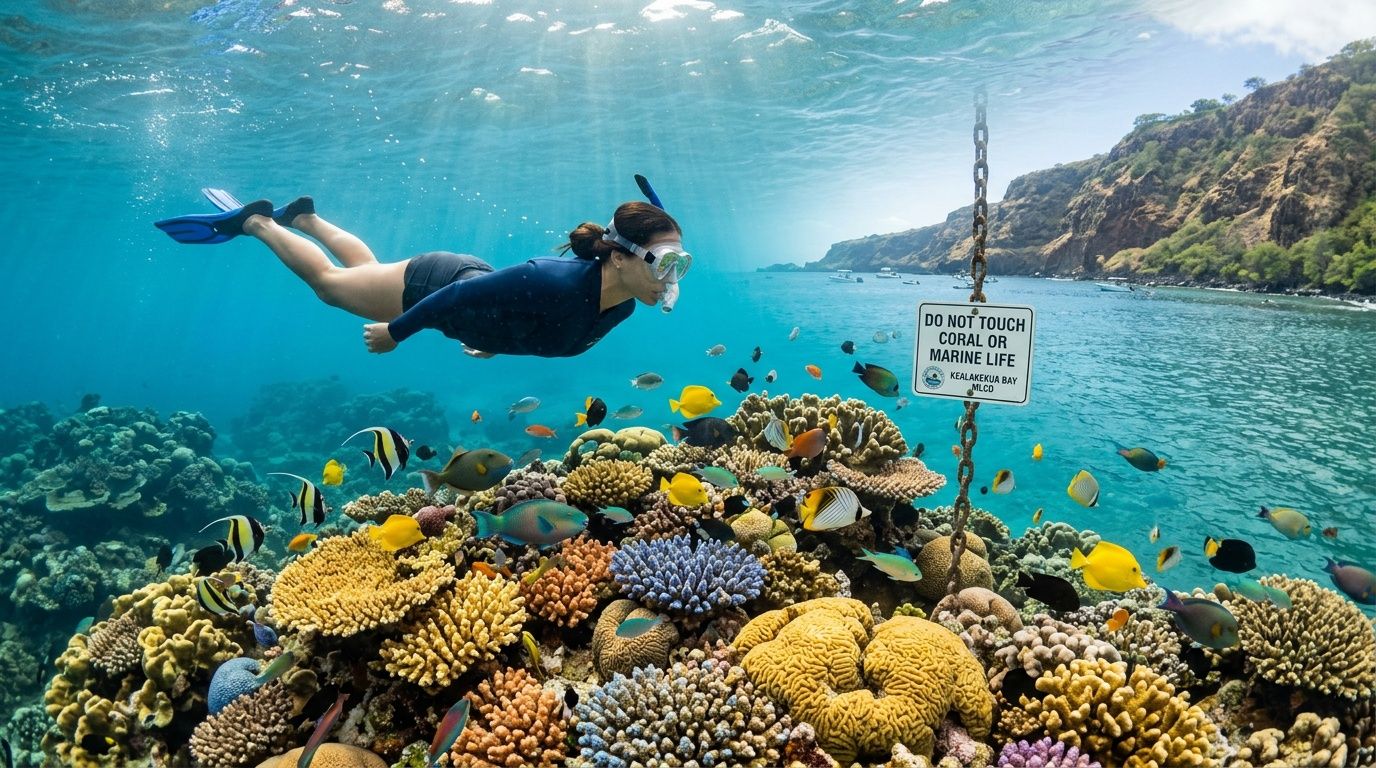
- Don’t touch coral: Coral is living animal tissue. It can be damaged by hands, fins, knees, and gear.
- Don’t stand on the reef: If you need a break, use flotation or return to the boat when possible.
- Give wildlife space: Turtles and dolphins should never be chased, crowded, or blocked.
- Don’t feed fish: Feeding changes natural behavior and doesn’t belong in a protected marine area.
- Listen to the crew: Good guides know where entries are easier and where currents demand more attention.
Respect in the ocean looks simple from the outside. It usually comes down to distance, patience, and slow movements.
Safety habits that make the day better
A lot of snorkeling problems start before anyone gets in the water. People are dehydrated, sunburned, overconfident, or embarrassed to ask basic questions. Don’t be that guest.
Use the mask on the boat before entry so you know it seals. Ask for flotation if you think you might want it. Tell the crew if you’re nervous. Strong guides prefer a cautious guest to a silent one.
For a wider ethic on ocean behavior, responsible and considerate diver etiquette applies well to snorkeling too. The principle is the same. Enjoy the place without leaving stress, damage, or disruption behind you.
Kealakekua Bay stays special because enough people decide to act like caretakers while they’re there.
Frequently Asked Questions About Kealakekua Bay Snorkeling
Is Kealakekua Bay good for beginners?
Yes, especially on a guided boat tour. The bay’s reputation comes from clear water and protected conditions, but beginners still do best with instruction, flotation options, and easy entry. If you’re new, tell the crew before you get in so they can help you settle your breathing and mask fit.
Can non-swimmers do it?
Some non-swimmers are comfortable on guided trips when life vests and close supervision are available. The key is honesty. If you’re anxious in the water, say so early. A supportive crew can often help you enjoy the experience from a pace that feels manageable.
Do tours usually include gear?
In most cases, yes. Snorkel tours commonly provide the basic gear you need, though exact equipment can vary. If fit matters to you, ask in advance whether prescription masks, flotation aids, or child sizes are available.
Is the hike to the monument worth it for most visitors?
For most travelers, no. It’s a demanding route better suited to strong hikers who understand the heat and steep return climb. If your priority is snorkeling well and conserving energy for the water, boat access is usually the better decision.
How do I keep my mask from fogging?
A clean mask, proper fit, and careful prep matter most. Don’t touch the inside of the lens once it’s treated. Rinse only as directed by the crew. If your mask starts fogging in the water, stay calm and ask for help rather than fighting it and getting frustrated.
What if I get nervous once I’m in?
That happens all the time. Roll onto your back if needed, hold onto flotation if available, and focus on slow breathing. You don’t have to prove anything. People usually enjoy the bay more once they stop trying to perform and start letting themselves float.
Are there facilities right at the snorkel area?
Don’t expect the kind of infrastructure you’d find at an easy beach park. Kealakekua’s appeal is tied to its protected, less-developed setting. That’s another reason guided boat trips are practical. They simplify access, gear handling, and comfort.
What’s the biggest mistake first-timers make?
Rushing. They kick too hard, breathe too fast, or try to cover too much water. Kealakekua Bay reveals itself best when you slow down.
If you want help planning a Kona ocean day beyond this bay, Kona Honu Divers offers snorkeling and diving information for visitors who want to explore the Big Island with a safety-minded, local-water perspective.