
You’re probably here because Kealakekua Bay keeps showing up on every Kona must-do list, and you’re trying to figure out whether it’s worth the effort. Short answer: yes. But it’s even better when you understand what kind of place you’re visiting.
Kealakekua Bay kona isn’t just a pretty patch of blue water on the South Kona Coast. It’s one of those rare places where the scenery above the surface and the life below it feel equally memorable. The cliffs are dramatic, the water often looks almost unreal, and the reef near the Captain Cook Monument draws snorkelers, paddlers, and divers for good reason.
What many first-time visitors miss is that the bay also carries weight. It matters culturally. It matters historically. And because it’s protected, how you visit matters too.
An Unforgettable Journey to Kealakekua Bay
A lot of visitors first see the bay from a lookout or from a boat ride in, and the reaction is usually the same. The water shifts between deep blue and bright turquoise, the shoreline looks rugged and green, and the whole bay feels more sheltered than many other spots along the coast.
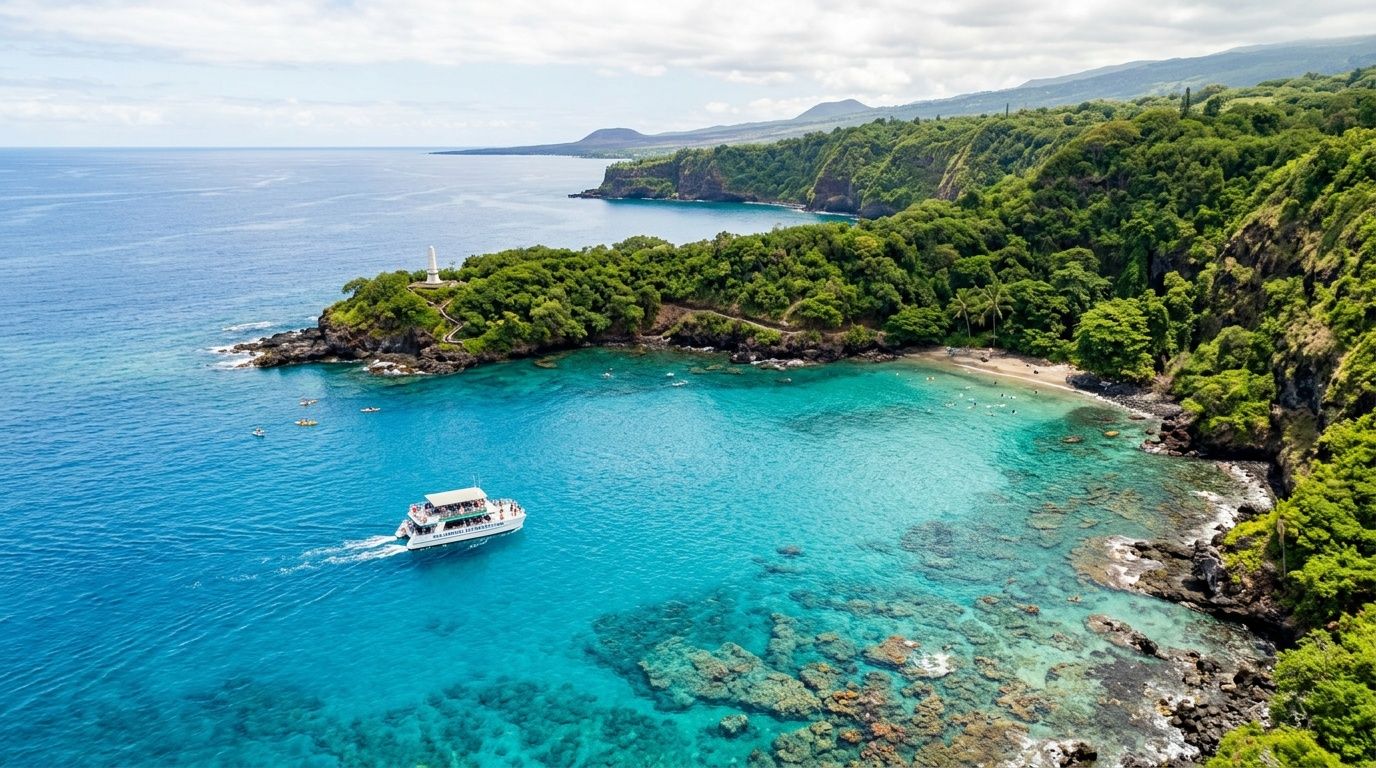
Once you get into the water, the experience changes again. From the surface, it may seem calm and simple. Put your face in the water, and suddenly you’re looking at coral structure, schools of reef fish, and an expanse that drops away into darker blue.
That contrast is part of what makes kealakekua bay kona so memorable. It works for the person who wants a peaceful snorkel, the history buff who wants to see the monument in person, and the ocean lover who cares as much about the reef as the view.
Practical rule: Treat the bay as both a recreation spot and a place of significance. You’ll get more out of the visit when you approach it with both excitement and respect.
Some travelers arrive thinking only about snorkeling. They leave talking about the clarity of the water, the steep shoreline, the history attached to the bay, and the feeling that this part of Kona still holds something older and deeper than a standard beach stop.
The Storied Waters of Kealakekua Bay
Kealakekua Bay has long been important to Native Hawaiians. Even before most visitors knew the name, this was a place with meaning, ceremony, and connection to the surrounding land and sea. If you only view it as a monument stop or a snorkel site, you miss the deeper story.
Why the bay feels different
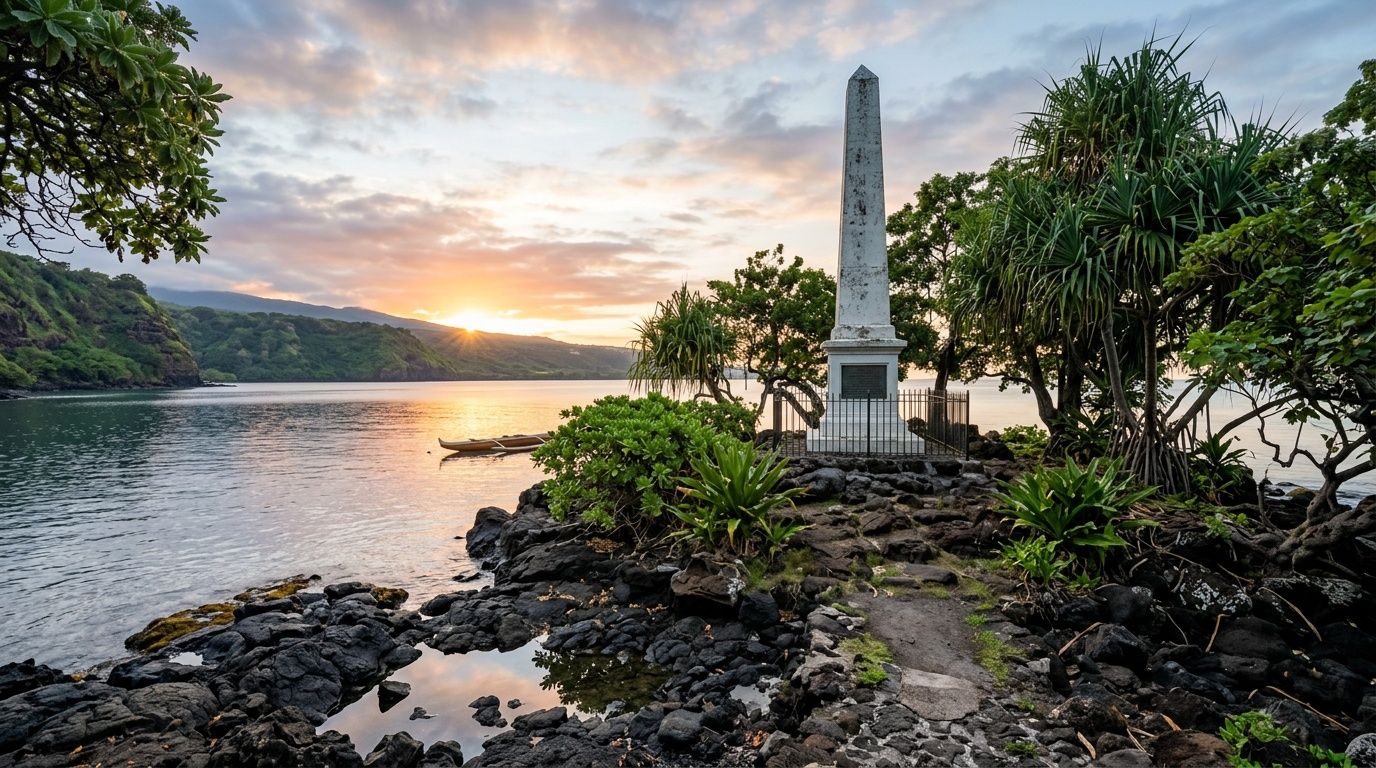
Some places in Hawaii feel busy. Kealakekua feels layered. The cliffs, the protected water, and the monument across the bay all signal that something important happened here, and it did.
Captain James Cook arrived in Kealakekua Bay in 1779. His arrival has often been retold in simplified ways, but the full story is more complicated than a quick plaque summary. Early encounters were shaped by cultural misunderstanding, shifting expectations, and the timing of his arrival during a significant Hawaiian season associated with Lono.
The Cook story in plain language
Cook and his crew were initially received with a level of ceremony and curiosity that later readers often describe too casually. Some people summarize it by saying he was mistaken for a god, but that shortcut leaves out the complexity of Hawaiian protocol, symbolism, and political reality.
What matters for a visitor today is this: the relationship changed. Tensions rose. Conflicts followed. Cook was killed in the bay, and that moment permanently tied his name to this coastline.
That’s why the white monument on the shoreline draws so much attention. It marks a historic event, but it doesn’t tell the whole Hawaiian side of the story by itself.
Kealakekua is best understood as a Hawaiian place first, and a Captain Cook landmark second.
Why this history still matters to visitors
Knowing this history changes how you move through the bay. You stop thinking only in terms of “best snorkel spot” and start recognizing why respectful behavior matters on shore, on the water, and around the monument area.
A few mindset shifts help:
- See the monument in context: It marks a famous event, but the bay’s identity is much older than that event.
- Remember the name matters: Kealakekua is often translated in ways that suggest sacredness and connection to the divine.
- Respect quiet moments: Not every meaningful experience here happens underwater. Sometimes it’s pausing and taking in where you are.
For many people, the history makes the bay feel heavier in the best possible way. The snorkeling is still excellent. The scenery is still beautiful. But the visit becomes more than recreation.
How to Access Kealakekua Bay's Pristine Waters
Getting to the best part of the bay is where many visitors get confused. They see photos of the Captain Cook Monument area and assume they can just drive there. You can’t. Reaching the prime water access point takes planning, and the right choice depends on your fitness, comfort on the ocean, and how much effort you want to spend getting there.
Kealakekua Bay Access Options Compared
| Access Method | Difficulty | Time Required | Pros | Cons |
|---|---|---|---|---|
| Hike | Strenuous | Half day or more | Independent, scenic, no boat needed | Hot, steep, hard climb back up, you carry everything |
| Kayak | Moderate to challenging | Varies with launch and conditions | Active and adventurous, close to the water the whole way | Requires planning, rules can be confusing, physical effort matters |
| Guided boat tour | Easiest for most visitors | Usually the simplest day plan | Gear, guidance, easier access, shade, easier entry to snorkel area | Less independent |
Hiking to the bay
The hike is the most physically demanding option. Going down can fool people because gravity helps. Coming back up in the heat is what changes the tone of the day.
If you choose this route, think like a hiker first and a snorkeler second. You’ll need water, sun protection, sturdy footwear, and enough energy left to climb out after your swim.
This option can be rewarding, but it’s not the best fit for many families, casual visitors, or anyone who wants a relaxed ocean day.
Kayaking across the bay
Kayaking appeals to independent travelers, and it can be a beautiful way to approach the shoreline. But it’s not as simple as “rent kayak, paddle over, hop out.” The rules around bay access and landing areas matter, and conditions on the water can feel very different on the way back.
This is the option where visitors often underestimate logistics. Before choosing it, make sure you understand current access rules, launch details, and what’s allowed near the monument area.
Why many visitors choose a boat
For most travelers, a guided boat trip is the most practical choice. You spend less energy solving access problems and more energy enjoying the bay itself. That matters, especially if your real goal is to snorkel well, learn some history, and return to the harbor comfortable instead of cooked by the sun.
A good operator also helps smooth out the parts beginners worry about, like gear fitting, water entry, and where to snorkel once you arrive. If you want a sense of what a dedicated excursion looks like, this Kealakekua Bay snorkeling tour overview gives a useful picture of the boat-based experience.
If your dream day is “easy, beautiful, and well-organized,” a boat trip usually fits better than proving you can suffer through the access.
A simple way to choose is this:
- Pick the hike if the journey itself is part of the challenge you want.
- Pick the kayak if you’re comfortable with self-propelled ocean travel and planning details.
- Pick the boat if the bay is the main event and you want to arrive fresh.
Snorkeling and Diving at the Captain Cook Monument
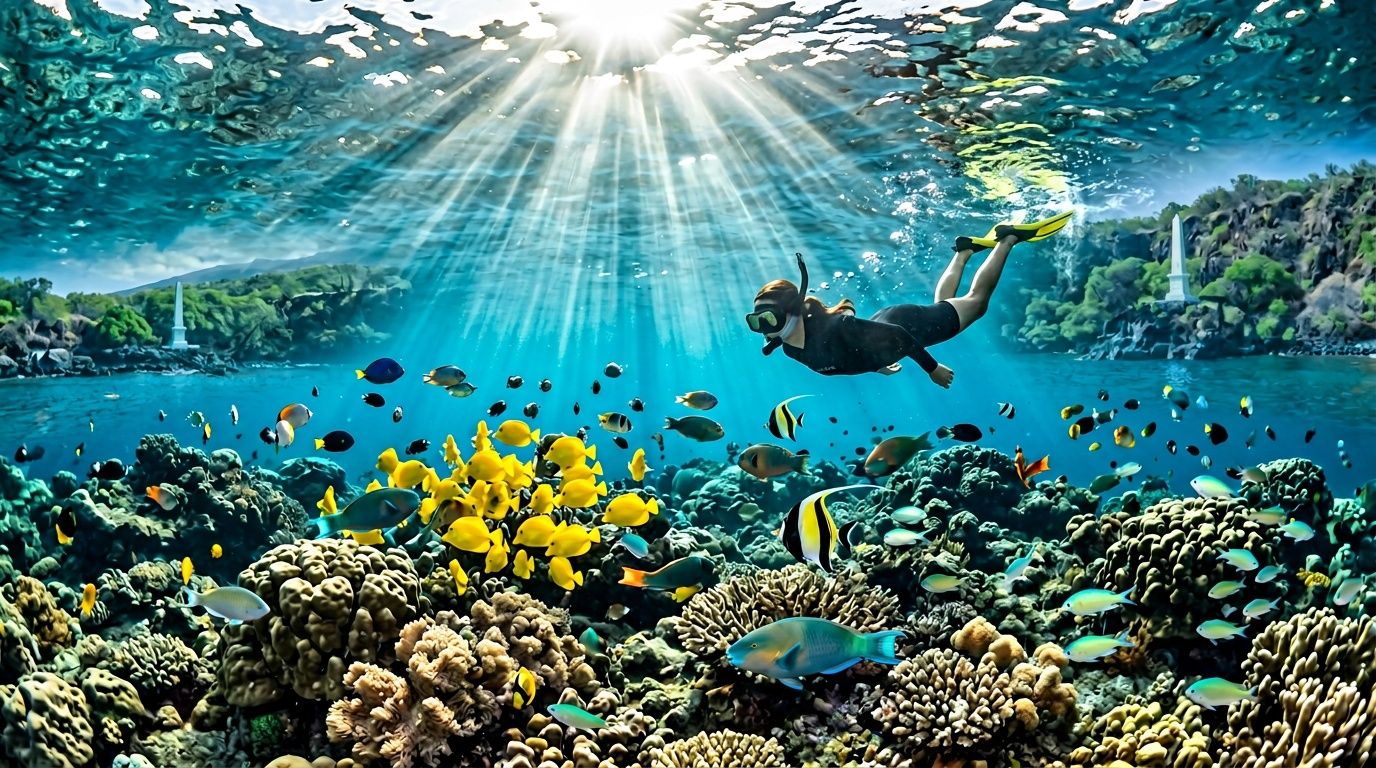
The water near the Captain Cook Monument is what puts Kealakekua Bay on so many dream itineraries. Here, many visitors first understand why the bay has such a strong reputation. The reef begins close enough to reward snorkelers, and the underwater terrain has enough depth and structure to keep divers interested too.
What snorkelers notice first
Most snorkelers remember the visibility and the color contrast. You’re floating at the surface, looking down at coral heads, reef fish, and darker blue water beyond the shelf. Even people with limited snorkeling experience usually find this kind of setting easy to appreciate because you don’t need to dive down to see a lot.
The best approach is simple:
- Start shallow. Give yourself time to settle your breathing and get comfortable with the mask.
- Watch the reef edge. Fish activity often becomes more interesting where structure changes.
- Float, don’t chase. Marine life comes into view more naturally when you move slowly.
If you want a snorkel-focused outing, this Captain Cook snorkel tour page is a useful starting point for understanding how guided access works.
What divers love about the site
Scuba divers experience the bay differently. Instead of looking down from the surface, they get to move through the changing topography. Ledges, coral-covered sections, and deeper blue water create a stronger sense of scale than snorkelers can usually get.
Divers also tend to appreciate how the bay combines beauty with orientation. It’s not just fish everywhere. It’s a site with shape, contour, and a shoreline that makes the dive feel grounded in place.
Visitors who want to explore broader underwater options along this coast can review Kona diving tours, especially if Kealakekua Bay is part of a larger Big Island dive plan.
How to get more from the water
A few habits make the experience better for both snorkelers and divers:
- Fit your mask before entry: Small leaks become big annoyances fast.
- Stay calm at the surface: Rushing into the swim often makes people miss the first few minutes of the reef.
- Look in layers: Surface, reef shelf, and blue water each hold different kinds of movement.
Calm swimmers see more. Fast swimmers usually just cover distance.
If you’re choosing between “snorkel once and leave” or “spend real time observing,” choose the second. The bay rewards patience.
A Guide to the Bay's Vibrant Marine Life
Kealakekua Bay isn’t memorable only because it’s clear. It’s memorable because the water is full of life. The bay was designated as a Marine Conservation District in 1969, and it encompasses over 315 acres, measuring 1.5 by 1 mile, to protect its ecological significance and diversity of tropical fish and marine life, as noted in this Kealakekua Bay conservation overview.
What you’re likely to notice first
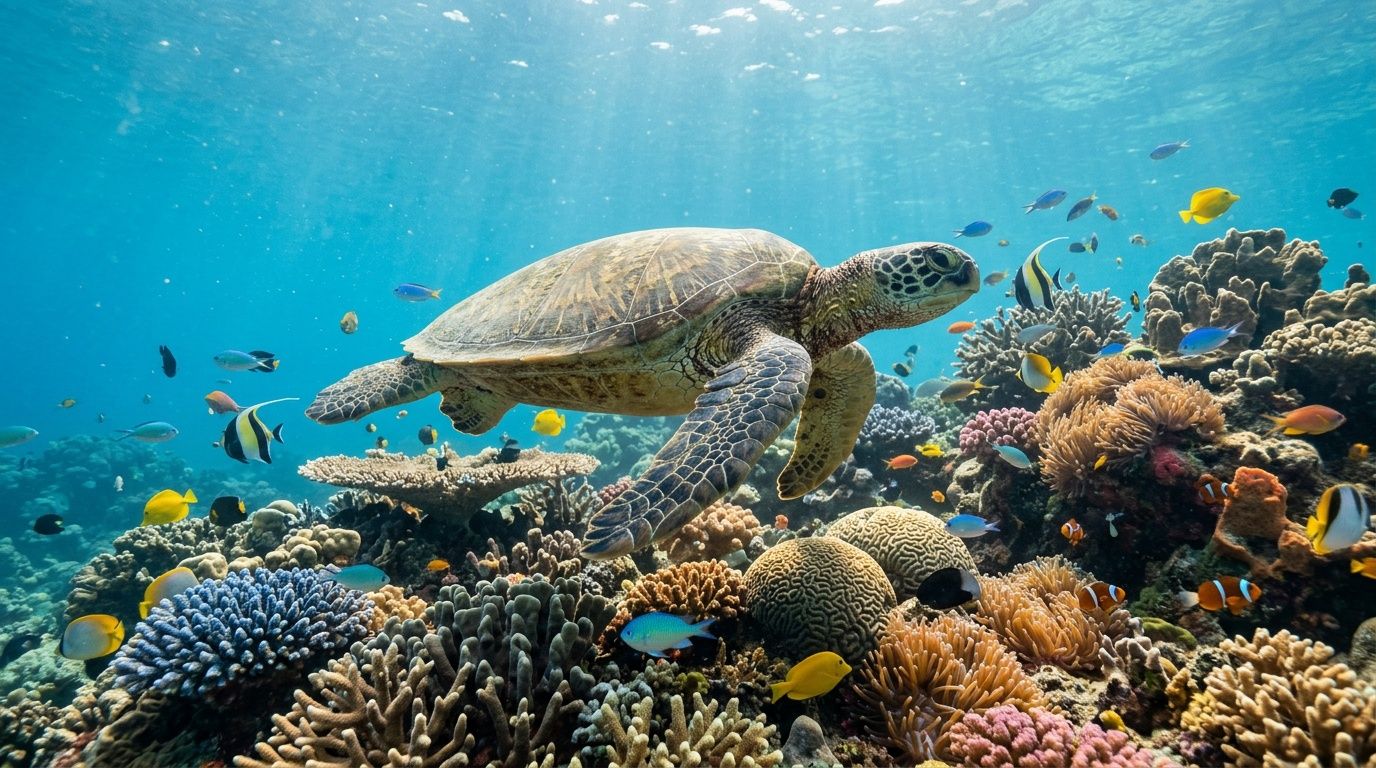
For many visitors, the first impression is motion. Small reef fish move in every direction, then a larger shape glides through and changes the whole scene. The bay can feel busy underwater without feeling chaotic.
Common favorites include:
- Yellow tang: Easy to notice because of their bright color and constant movement.
- Parrotfish: Often heard before they’re clearly seen, especially when they work along the reef.
- Humuhumunukunukuāpuaʻa: Hawaii’s state fish, and one that people love spotting because the name alone makes the sighting memorable.
If you enjoy learning the difference between common reef residents and species found mainly in Hawaii, this guide to Big Island endemic marine animals adds useful context.
Larger animals that make the bay special
Two animals create the most excitement for many visitors: honu and naʻiʻa.
Hawaiian green sea turtles bring a calm presence to the water. When one passes by, the whole mood shifts. People stop kicking, stop talking, and just watch.
Spinner dolphins are different. Even from the boat or shoreline, they can be the animals everyone hopes to glimpse. They add energy to the bay, but they also need space and quiet.
A good wildlife encounter doesn’t interrupt the animal’s day. It lets you witness it.
How to look without missing the best moments
New snorkelers often scan too far ahead. A better method is to slow your eyes down.
Try this:
- Check the coral first for smaller fish weaving in and out of structure.
- Look into the blue water next for bigger silhouettes.
- Pause often because marine life appears when you stop thrashing.
Kealakekua Bay kona is one of those places where even a quiet float can turn into a highlight reel. You don’t need to force the experience. You need to notice it.
Respecting the Bay Rules Safety and Conservation
The fastest way to ruin a Kealakekua Bay visit is to treat it casually. This is protected water, and it deserves the same level of care you’d give a historic site and a living reef at the same time.
Why the rules are stricter here
Kealakekua Bay’s protected status isn’t symbolic. It exists to preserve the bay’s marine life and ecological value. Because of that, visitors should expect more structure around access, behavior, and wildlife interaction than they might at an ordinary beach.
A helpful plain-language rundown appears in this guide to Kealakekua Bay snorkeling rules every visitor should know. It’s worth reading before your trip, especially if you’re planning to approach the monument area by water.
Core rules every visitor should follow
These aren’t “nice extras.” They’re the baseline for visiting responsibly.
- Don’t touch marine life: Turtles, dolphins, fish, and coral all need space.
- Don’t stand on coral: Coral is alive, fragile, and easy to damage.
- Use reef-safe sun protection: Your sunscreen choice affects the reef.
- Follow landing and access rules: The monument side isn’t a free-for-all drop-off zone.
- Know your limits in the water: Calm-looking bays can still tire people out.
For a broader ocean-etiquette mindset, this article on responsible and considerate diver etiquette applies well beyond scuba.
Safety habits that matter more than people think
Visitors often focus on marine life and forget basic self-management. Most problems start with simple things: too much sun, not enough water, poor fin fit, or overconfidence in swimming ability.
A smart checklist looks like this:
- Hydrate before you board or hike.
- Wear sun protection you’ll keep on.
- Tell the crew if you’re not a strong swimmer.
- Use flotation if offered and you want it.
- Turn back early if you feel tired.
The ocean doesn’t care whether you meant to stay close to the boat. Fatigue sneaks up faster than people expect.
If you’re worried about seasickness
Boat tours are the easiest access method for many visitors, but some people hesitate because they’re prone to motion sickness. If that’s you, handle it before departure instead of hoping for the best.
Common options people use include Ship-EEZ Seasickness Patch, Dramamine pills, Bonine pills, Sea Band wristbands, and Ginger chews.
A few practical habits help too:
- Eat lightly: An empty stomach and a heavy meal can both backfire.
- Watch the horizon: Looking at a fixed point can settle some people.
- Mention it early: Crew members can often suggest the best place to sit.
Visitors who respect the rules usually have the best day anyway. They’re less stressed, more observant, and less likely to make the kind of mistakes that spoil the experience for themselves or the bay.
Planning Your Perfect Trip to Kealakekua Bay
A good Kealakekua Bay day starts before you leave the harbor or trailhead. The visitors who enjoy it most usually make a few simple decisions well in advance: how they’ll access the bay, what they’re bringing, and whether they want a physically demanding day or a smooth one.
When to go and how to think about timing
Morning is usually the safest bet for a cleaner, calmer-feeling experience on the water. Early trips also tend to fit better with the overall rhythm of the bay. You’re fresher, the light is gentler, and you’re less likely to feel wrung out by midday heat.
If you’re trying to narrow down operator choices, this roundup of the top Kealakekua Bay snorkeling tours helps clarify what kind of day each style of trip is built for.
A simple packing list that prevents most problems
You don’t need to overpack. You do need to bring the right things.
- Water and a light snack: Especially important if you’re hiking or get dehydrated easily.
- Reef-safe sunscreen: Put it on before you’re in direct sun.
- Towel and dry clothes: The ride back feels better when you’re not sitting in wet gear.
- Hat and sunglasses: The glare off the water can wear people down.
- Waterproof camera or phone case: If you like photos, this is the day to bring it.
The easiest way to do the bay well
If your goal is to experience the bay responsibly, comfortably, and with the least logistical stress, booking a guided trip is the strongest option. You spend less time solving transportation and access questions, and more time enjoying the place.
Two solid options to consider are Kona Snorkel Trips for Kealakekua Bay and Captain Cook Monument and Captain Cook Snorkeling Tours. Both are focused on helping visitors experience this area with less guesswork.
The best trips to kealakekua bay kona don’t feel rushed. They feel intentional. You show up prepared, you choose an access method that matches your ability, and you treat the bay like the special place it is.
If Kealakekua Bay inspires you to explore more of Kona’s underwater world, Kona Honu Divers is a strong next step for visitors who want professional guidance, safe operations, and a deeper look at what makes the Big Island so remarkable above and below the surface.