
Some trips are easy to postpone. Kealakekua Bay Kona usually isn’t one of them. Visitors get one open morning on the Big Island, start comparing options, and quickly run into the same questions: Is the Captain Cook side really worth it? Should you hike, kayak, or take a boat? Is it good for beginners? How do you enjoy it without stumbling into the bay’s rules or exhausting yourself before you even get in the water?
That uncertainty makes sense. Kealakekua Bay isn’t just a pretty place to snorkel. It’s one of those rare spots where the ocean, the cliffs, and the history all matter at once. If you treat it like a simple beach stop, you’ll miss half of what makes it memorable.
A good visit starts with the right expectations. This bay can be calm, bright, and full of fish, but it also asks for some planning, some humility, and the willingness to choose the access method that fits your vacation style, not your fantasy version of yourself.
Welcome to Kealakekua Bay A Kona Treasure
Morning is when many people fall in love with this bay. The water looks clear enough to read through. The cliffs hold the coastline in a broad curve, and the whole place feels quieter than much of the Kona coast. Then you remember you’re not looking at a hidden cove. You’re looking at one of the most recognized places on the island.
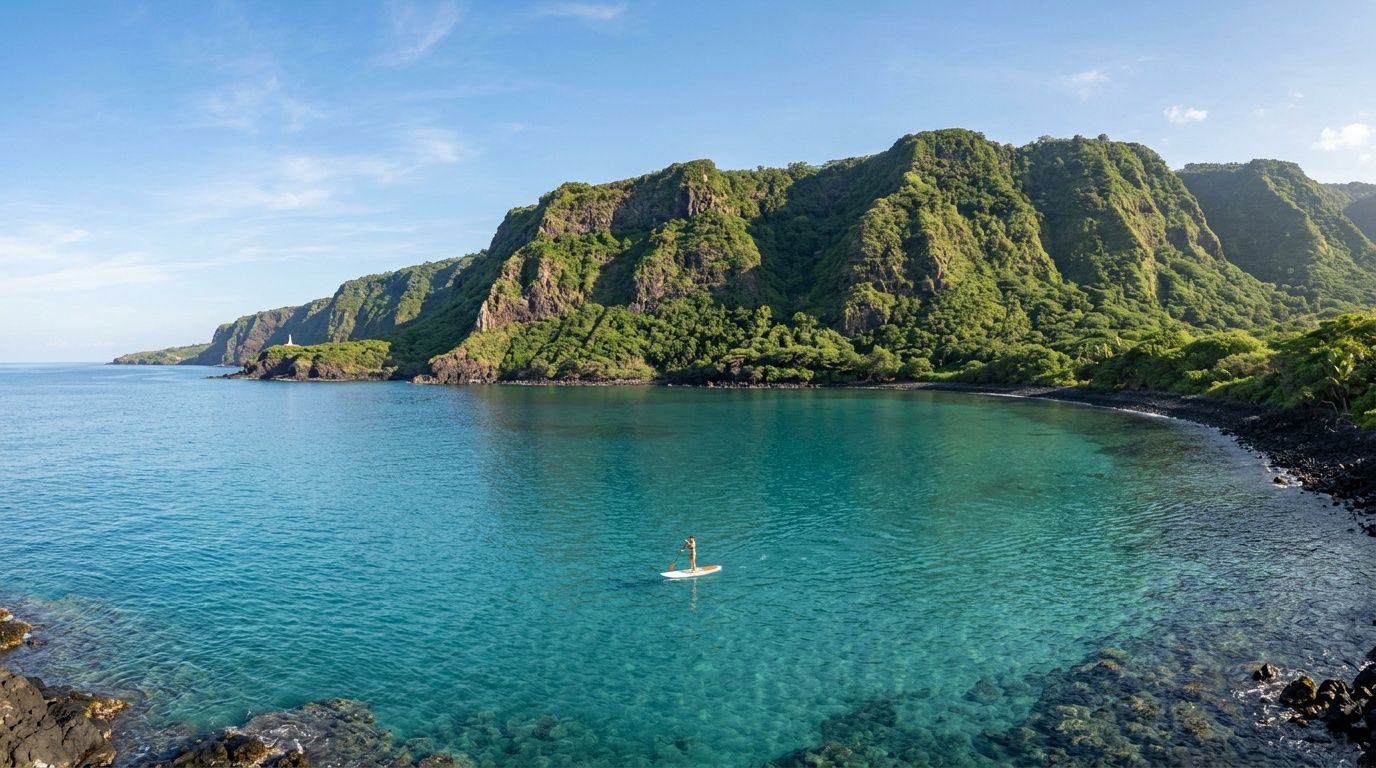
That first impression matters, but the deeper story matters more. Kealakekua Bay was settled by Native Hawaiians over a thousand years ago, and it became a sacred center of Hawaiian culture with heiaus and the annual makahiki season honoring Lono, according to this history of Kealakekua Bay. The same source notes that about 180 acres around the bay were designated as Kealakekua Bay State Historical Park in 1967.
Why visitors remember it differently
Some places impress you with scenery. This one also changes the way you move through the day. People lower their voices. They look longer at the shoreline. Even families who came mostly for snorkeling tend to realize pretty quickly that they’re visiting a place with unusual cultural weight.
That’s why I always encourage people to approach the bay with two goals in mind:
- Enjoy the water: The reef and clarity are a primary draw here.
- Respect the setting: The shoreline, the temples, and the history aren’t background decoration.
- Choose the right experience: Your entry method shapes the whole day.
If you want a starting point for getting on the water, this Kealakekua Bay snorkeling page lays out a practical tour-based option.
Kealakekua Bay rewards people who slow down. The better your plan, the more of the place you actually notice.
Why This Bay is a World-Class Destination
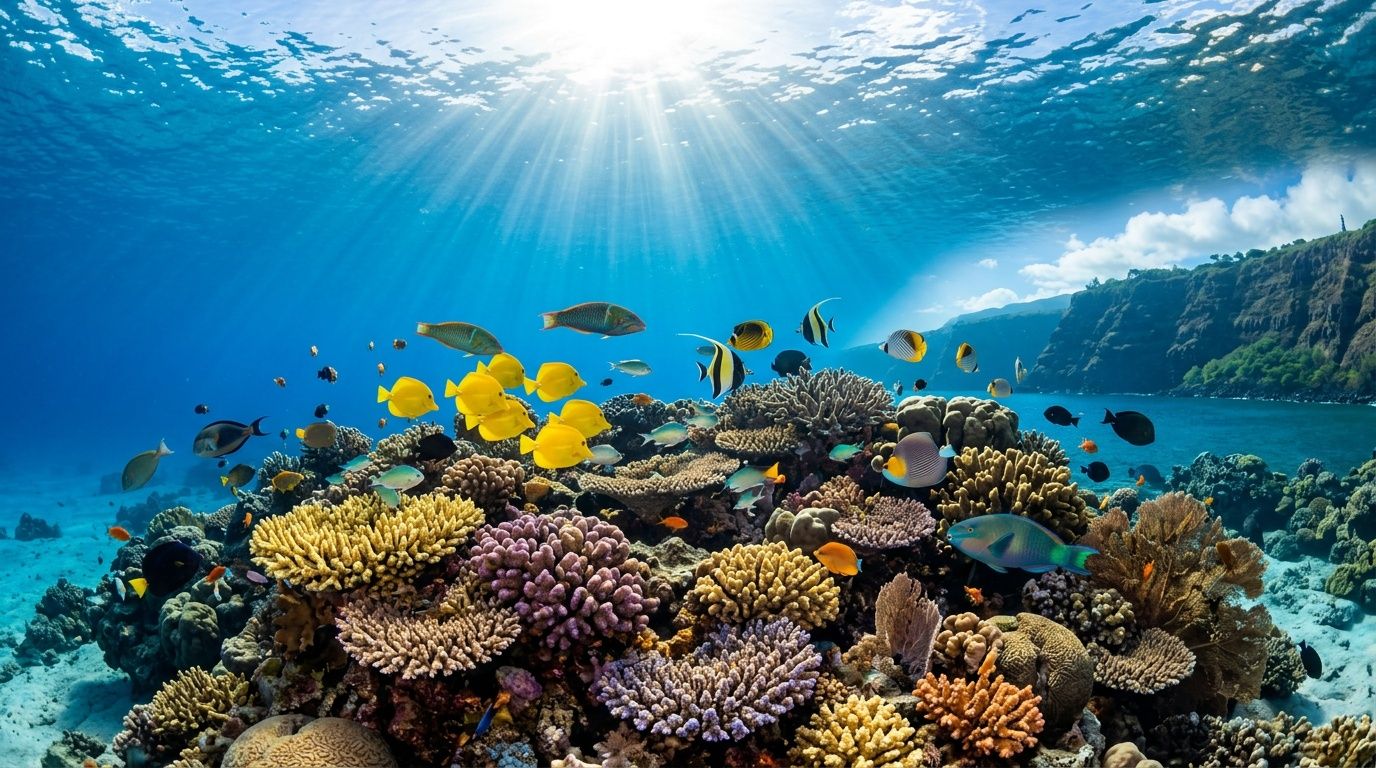
Some bays are famous because they’re scenic from shore. Kealakekua Bay Kona stands out because the scenery continues underwater and the history remains visible above it. That combination is rare.
Protected water creates the marine experience
The bay’s marine reputation starts with protection. Kealakekua Bay became a Marine Life Conservation District in 1969, and that protected status covers 315 acres, as summarized by this Kealakekua Bay overview. In plain terms, protection gives fish, coral, and reef structure a chance to remain the main event.
The bay’s size also helps explain why people feel they’ve entered a different environment. Verified background data places it at 315 to 375 acres and roughly 1.5 miles by 1 mile, making it the largest natural bay on the island. That broad sheltered shape supports the clear-water experience visitors talk about long after the trip.
History isn’t a side note here
It’s easy for first-time visitors to think the history begins and ends with the monument on shore. It doesn’t. Long before modern tours and guidebooks, this bay was already a major Hawaiian cultural and political center.
A few details help anchor that:
- Ancient settlement: Native Hawaiians established community and ritual life here more than a thousand years ago.
- Religious importance: The area included heiaus, places used for major ceremonial life.
- Makahiki connection: The bay was tied to the annual season honoring Lono, associated with peace, fertility, and renewal.
When people ask why the Captain Cook area feels different from a typical snorkel stop, this is the answer. You’re entering a place where Hawaiian history remained active for centuries before European contact.
Practical rule: Treat the monument area as both a snorkel destination and a cultural landscape. That mindset changes how you behave in the water and on the coast.
Why people travel out of their way for it
Many Kona sites offer one thing well. Kealakekua offers several things at once.
| What visitors value | Why it matters |
|---|---|
| Protected reef | Fish life and coral habitat remain a central part of the experience |
| Clear water | Snorkelers can enjoy the reef without needing advanced skills |
| Historic shoreline | The visit feels grounded in place, not interchangeable |
| Sheltered geography | Conditions are often friendlier than more exposed coastal areas |
If you want one destination that combines ocean access, strong snorkeling, and a sense of place, this bay earns its reputation.
How to Access Kealakekua Bay Your Three Options
You wake up in Kona with a simple goal. Spend the day enjoying Kealakekua Bay. By lunchtime, that goal can turn into three very different vacations.
One version feels relaxed and water-focused. Another feels independent and active. The third can feel like a test of heat tolerance, footing, and stamina. That is why access matters so much here. Your route shapes the entire experience, not just how you arrive.
Option one is the boat tour
For many visitors, boat access creates the best balance of comfort, safety, and time in the bay. You arrive ready to snorkel instead of using most of your energy getting there. That difference is easy to underestimate until you compare a fresh morning swim with a swim that starts after a hard descent or a long paddle.
A boat trip usually fits travelers who want the bay itself to be the highlight:
- Families and mixed-ability groups: People with different fitness levels can share the day more easily.
- First-time visitors: Guided arrival, site orientation, and water support remove a lot of uncertainty.
- Travelers on a schedule: Boat tours reduce the planning load.
- Visitors bringing cameras or extra gear: Carrying equipment is much easier by boat.
A guided Captain Cook snorkel tour by boat is a good example of this style of visit. You trade the strain of self-access for more energy in the water, better context from the crew, and a smoother day overall.
If your vacation style is, “I want to enjoy the reef, learn a little, and still have something left in the tank afterward,” the boat option usually matches that goal best.
Option two is kayaking
Kayaking changes the mood of the day. It feels more self-directed, more physical, and more dependent on your judgment. For confident paddlers, that can be rewarding. You get a stronger sense of distance, weather, and coastline because you are working with the bay instead of arriving fully supported.
But kayaking is not a casual swap for a boat tour.
Visitors often assume it is just a matter of renting a kayak and heading out. In practice, you need to handle launch logistics, local rules, landing restrictions, changing conditions, gear security, and the energy required for the return. If you are new to preparing a small craft from shore, this article on how to launch a boat is helpful because the same planning habits apply. Small mistakes at the start of the day tend to follow you all the way across the water.
Kayaking works best for travelers who enjoy self-managed outings and do not mind that the access itself is part of the workout.
Option three is hiking the Kaʻawaloa Trail
The hike creates the most rugged version of Kealakekua Bay. Some visitors want exactly that. They like earning the view and turning the day into a physical challenge.
The catch is that many people choose this option for the photo idea of it, not for the reality of it.
The Kaʻawaloa Trail is widely known as steep, hot, and demanding, especially on the return climb after time in the sun and water. Loose footing and exposed conditions are part of the experience. The downhill trip can feel manageable at first, which leads some hikers to underestimate what the uphill exit will demand once legs are tired and packs feel heavier.
A good local rule is simple. If your main goal is snorkeling, the hike usually adds hardship without improving the actual time you spend enjoying the bay.
Kealakekua Bay access methods compared
| Method | Best For | Effort Level | Approx. Cost | Key Consideration |
|---|---|---|---|---|
| Boat tour | Families, first-time visitors, relaxed vacationers, snorkel-focused travelers | Low to moderate | Varies by operator | Easiest way to save energy for the water |
| Kayak | Independent, experienced paddlers | Moderate | Varies | Requires self-management, planning, and comfort on open water |
| Hike | Very fit visitors who want a strenuous outing | High | Lower direct cost, higher physical cost | Heat, footing, and the climb back out can change the whole day |
How to choose based on the trip you want
Choose the access method the same way you would choose a trail or hotel. Match it to the kind of day you actually want.
- You want comfort, support, and maximum snorkel time: Choose a boat.
- You want an active, self-guided outing: Kayaking may fit.
- You want a tough physical challenge that happens to end at the bay: Consider the hike.
That last distinction matters. Kealakekua Bay is beautiful enough without turning the visit into an endurance project.
For the large majority of visitors, a boat trip creates the safest, most comfortable, and most rewarding experience. You spend less time managing logistics and more time doing what brought you here in the first place. Floating above clear water, looking into the reef, and taking in one of Kona’s most memorable places.
The Ultimate Underwater Experience Snorkeling and Diving
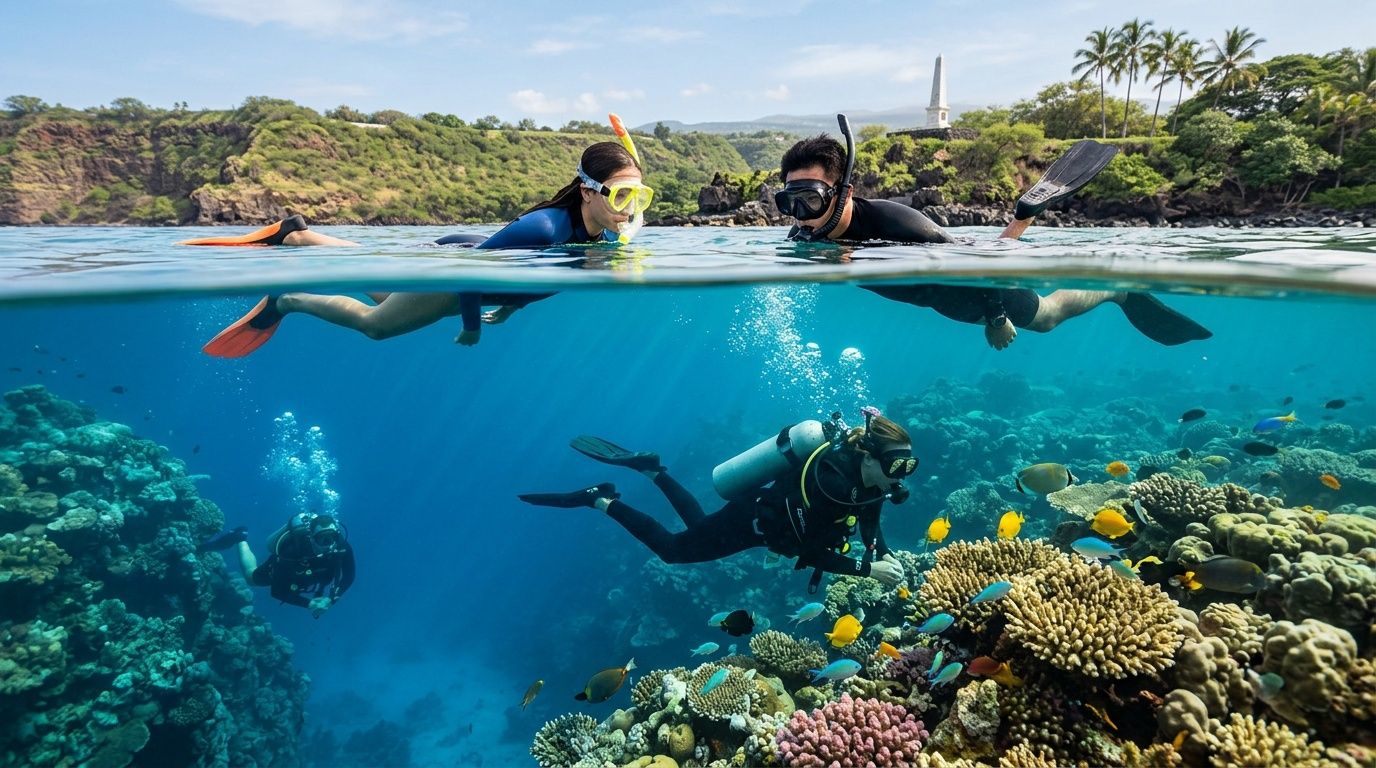
Once you’re in the water, the bay starts making sense immediately. The layout underwater is one reason both snorkelers and divers talk about it with the same kind of excitement. You don’t need to guess where the reef begins or whether there’s enough variety to keep the experience interesting. It unfolds in layers.
Why snorkelers like it so quickly
Verified bathymetry data shows the bay slopes from 5 to 15 feet near the monument to over 120 feet, with visibility that often exceeds 100 feet and water temperatures of 77 to 82°F year-round, according to this depth and conditions guide.
That matters because beginners often ask, “Will I be able to see anything from the surface?” In this bay, the answer is usually yes. The shallower zones let snorkelers float above coral and fish without needing to dive down. Clear water also reduces the anxiety some first-timers feel in murkier places.
Why divers keep finding more
Divers get a different version of the same bay. The slope outward creates changing reef scenes instead of one flat underwater view. Shallow sections are easy to enjoy, while deeper contours add structure, shadow, and the chance to watch fish behavior change as the reef drops away.
For general diving options in Kona, this guide to the best snorkeling in Kona gives useful context on how this site compares with other in-water experiences nearby. If you’re planning scuba as part of the trip, Kona dive tours show the range of guided diving available on the coast.
Common marine life people notice first
The bay is known for abundance, not just one signature sighting. You may see a little of everything, and that variety is part of the appeal.
- Reef fish: Expect a busy reef scene with schools moving over coral heads.
- Green sea turtles: The bay is known for regular turtle encounters.
- Eels and reef pockets: Look into crevices and ledges instead of staring only into open water.
- Spinner dolphins: You may spot them from a respectful distance.
For divers who want longer-range or more advanced outings beyond a standard reef profile, this advanced long-range dive tour is the relevant next step.
Good snorkeling here comes from staying calm, floating high, and looking slowly. People who rush through the surface often miss half the reef life below them.
Rules of the Bay Permits Regulations and Conservation
Kealakekua Bay feels generous. The reef is accessible, the water can look inviting from a distance, and the whole setting encourages people to relax. That’s exactly why rules matter here. A place that welcomes visitors easily can also be damaged easily if everyone treats it casually.
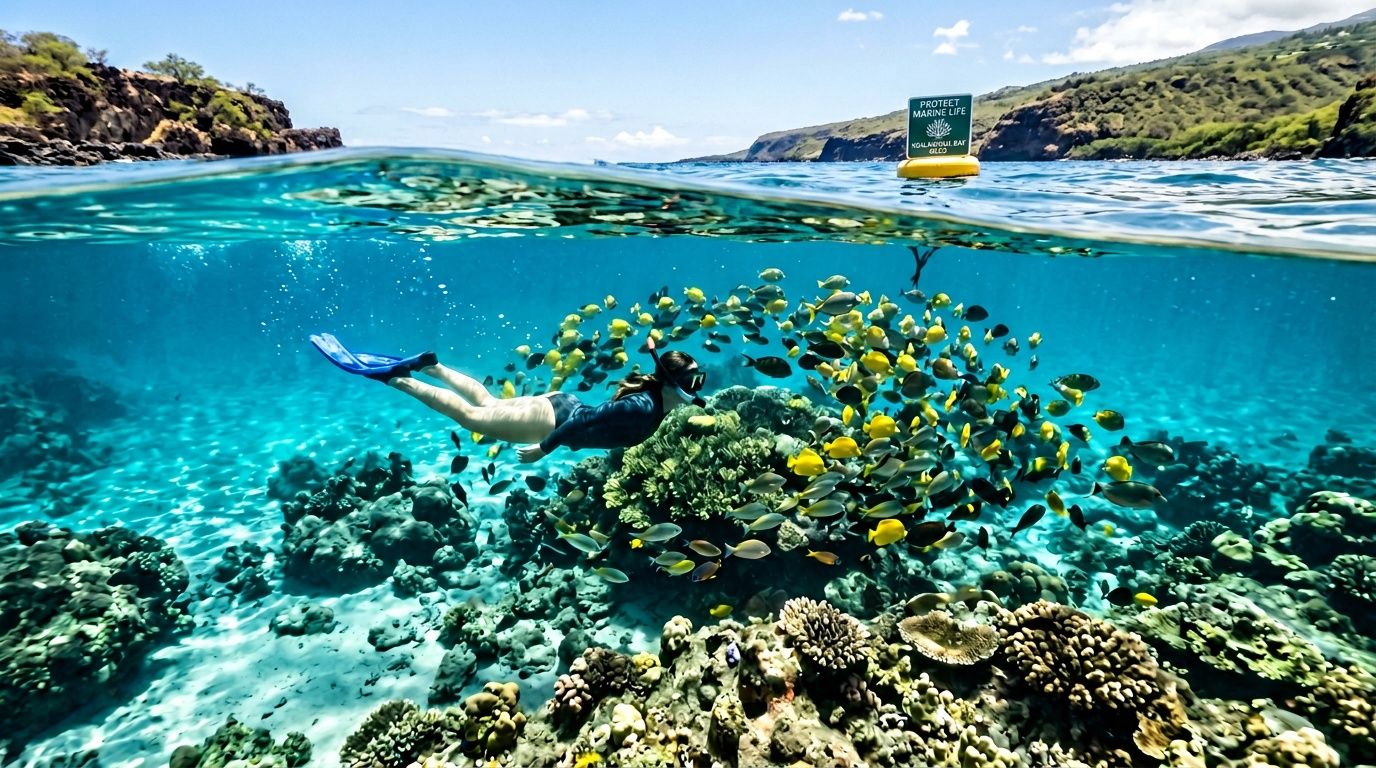
Verified data notes that the bay has been a Marine Life Conservation District since 1969, that its 315 acres are a strict no-take zone, and that the protected ecosystem includes over 200 fish species with an 85% encounter rate for green sea turtles on day dives. The same verified source also notes over 190,000 annual visitors and stresses the importance of the 50-yard dolphin buffer, as summarized in this MLCD and conservation overview.
What the rules mean in plain language
“No-take” sounds technical, but the visitor version is simple. Don’t remove marine life. Don’t collect coral. Don’t treat the bay like a souvenir site.
The same respectful approach applies underwater:
- Leave coral alone: Touching breaks living structure.
- Give animals room: Chasing turtles or closing in on dolphins changes their behavior.
- Follow operator guidance: Permitted crews know where guests should and shouldn’t be.
- Pack in, pack out: Don’t leave anything behind on shore or in the water.
If you want a practical visitor-focused rundown, this article on what to know for Kealakekua Bay snorkeling is a helpful companion.
Dolphins are the point where many visitors get it wrong
People often think seeing dolphins means swimming toward them. It doesn’t. The legal and ethical move is distance. The 50-yard buffer exists because spinner dolphins use these calm waters for rest.
Watching wildlife responsibly often means doing less, not more.
That’s one reason guided boat access works so well. Professional crews can position visitors for observation without pushing into wildlife space or forcing guests to interpret regulations on the fly.
Why conservation feels strict here
The visitor total explains it. A bay can look open and resilient while still carrying a heavy daily burden. Rules aren’t there to make the trip less fun. They’re what keep this place from becoming a worn-out attraction.
A good visitor mindset looks like this:
- Enter lightly
- Observe more than you interact
- Assume the bay needs space from you
- Leave with photos and memories, not collected objects
That approach protects the same reef and marine life you came to enjoy.
Planning Your Perfect Day Gear Safety and Best Times
Good Kealakekua Bay days usually look easy from the outside. Calm morning, smooth boat ride, mask on, into the water. What visitors don’t see is that the smoothest trips are usually the best prepared ones.
Best times to visit
Morning is usually the smartest window. Conditions tend to feel calmer earlier, and many visitors prefer getting in the water before the day heats up. You can also monitor local conditions before you go with this guide on how to check ocean conditions for the Big Island Hawaii.
The bay is attractive year-round, so your day-to-day conditions matter more than trying to chase a “perfect season.” If you’re booking a boat, ask what departure time gives you the most comfortable ride and strongest visibility for that date.
What to pack without overpacking
A few items make a big difference:
- Reef-safe sun protection: Bring sunscreen and a rash guard if you have one.
- Basic comfort items: Towel, hat, sunglasses, and dry clothes for after the water.
- Hydration: More water than you think you’ll need, especially if your plan involves any shore effort.
- Waterproof storage: A simple dry bag helps keep phones, keys, and layers protected.
- Personal snorkel gear if preferred: Many visitors are happy using provided gear, but some like their own mask.
If you’re hiking, the packing list becomes stricter. Water and sun protection stop being nice extras and become essential.
Seasickness and comfort on boat days
Not everyone gets seasick, but enough visitors do that it’s worth planning for before you board. If you know you’re sensitive to motion, prepare early rather than waiting to “see how it goes.”
Common options include:
- Patch option: Ship-EEZ Seasickness Patch
- Medication option: Dramamine pills
- Another medication option: Bonine pills
- Non-medication option: Sea Band wristbands
- Gentler comfort option: Ginger chews
Some visitors do best with a simple combination: light breakfast, good hydration, shade before departure, and one motion-sickness remedy they already know works for them.
A simple safety checklist
Before you head out, run through this list:
- Know your access method: Boat, kayak, and hike each carry different demands.
- Protect against sun: Kona sun adds up fast.
- Don’t overestimate your fitness: The bay is enjoyable without turning it into a test.
- Respect instructions in the water: Guides aren’t being fussy. They’re preventing small problems from becoming bigger ones.
Recommended Kealakekua Bay Tour Operators
You can feel the difference almost immediately. One group arrives tired from the trail, hot and already managing a long climb back out. Another arrives by boat, gets a safety briefing, steps into clearer water with support nearby, and has the energy to notice the reef, the cliffs, and the history around them. That contrast is a useful way to choose an operator.
For many visitors, a boat tour creates the kind of Kealakekua Bay day they want. It reduces the physical strain, lowers the chance that the outing turns into a fitness test, and usually gives first-time snorkelers more confidence in the water. If your goal is a rewarding vacation experience rather than proving you can reach the monument on foot, guided boat access often makes the most sense.
Two direct snorkel-focused options
As noted earlier, Kona Snorkel Trips runs Kealakekua-focused boat outings for visitors who want direct access to the Captain Cook monument area.
Captain Cook Snorkeling Tours offers a similar style of trip centered on this same part of the bay.
For travelers comparing snorkeling with scuba options elsewhere on the Kona coast, Kona Honu Divers also offers guided ocean tours and dive trips through its main site.
How to make the final choice
The right operator is usually the one that fits your vacation style, not the one with the most dramatic marketing.
Use this simple filter:
- For families or mixed comfort levels in the water: Choose a trip with clear crew support, easier entry, and a pace that does not rush weaker swimmers.
- For visitors who care most about snorkeling at Kealakekua itself: Pick an operator whose outing is built around the bay rather than treating it as one quick stop among many.
- For travelers who want scuba as part of the plan: Compare dive-specific operators, boat setup, and whether the day is designed for certified divers, snorkelers, or both.
A good operator does more than transport you. The crew sets the tone for the whole visit. Good briefings, realistic expectations, and close attention in the water often make the difference between a stressful outing and a memorable one.
A Final Word A Place of History and Wonder
Kealakekua Bay Kona stays with people because it offers more than one kind of beauty. The reef is lively, the water is inviting, and the shoreline carries deep history that deserves more than a passing glance. If you choose the access method that fits your real vacation, follow the bay’s rules, and move through it with respect, you’ll get far more than a quick snorkel stop. You’ll experience one of Kona’s most meaningful places the way it should be experienced.
If you’re ready to explore the Kona coast with a safety-minded, water-focused team, take a look at Kona Honu Divers for guided ocean experiences and trip options.