
Is scuba diving popular in Hawaii? That’s like asking if there’s sand on the beach. It’s not just a popular activity here—it's a massive part of the islands' identity and a powerful engine for our tourism economy. Diving in Hawaii is a truly world-class experience, putting the islands on the map with the planet’s most elite underwater destinations.
Scuba Diving Is a Pillar of Hawaiian Tourism
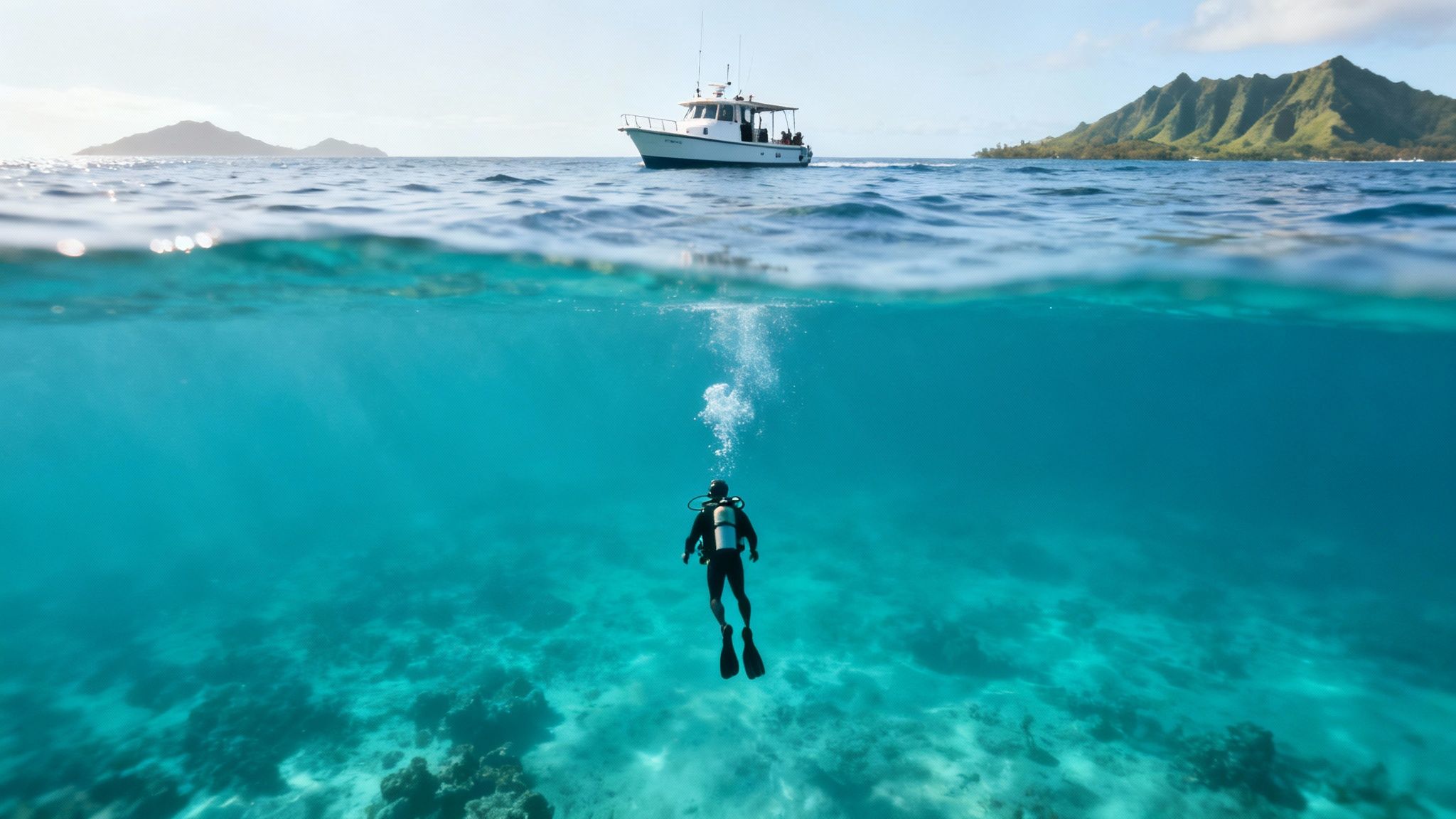
Hawaii's reputation as a premier diving location is backed by some serious numbers. Think about this: the islands host over 1.5 million scuba dives every year. Supporting that incredible volume is a robust network of more than 215 licensed dive shops ready to cater to every skill level imaginable.
These figures aren't just impressive; they place Hawaii in the same league as legendary spots like the Great Barrier Reef and the Caribbean. It’s a major reason why Hawaii consistently ranks among the top 10 scuba diving destinations in the United States.
The Economic Ripple Effect
This immense popularity creates a huge economic wave that benefits the entire state. For hundreds of local businesses—from tour operators and gear rental shops to the hotels and restaurants lining our coastal towns—dive tourism is their lifeblood.
In places like Kona, Maui, and Oahu, the constant stream of divers brings in millions of dollars in revenue, highlighting just how critical the industry is to our local communities.
The thriving dive scene really is a testament to the unparalleled underwater adventures the islands offer. With so many dive operations and such consistent demand, you're guaranteed to find the perfect experience, whether you're a first-timer just getting your fins wet or a seasoned pro who has seen it all.
Hawaii Scuba Diving at a Glance
To put the scale of Hawaii's dive industry into perspective, here are some key statistics that paint a clear picture.
| Metric | Statistic |
|---|---|
| Annual Dives | 1.5 million+ |
| Licensed Dive Shops | 215+ |
| Economic Impact | Millions in local revenue |
| Global Ranking | Top-tier international destination |
These numbers confirm what so many divers already know: Hawaii is a cornerstone of the global diving community. It's this widespread appeal that keeps people coming back, year after year, to explore our underwater paradise.
What Makes Hawaiian Diving So Irresistible
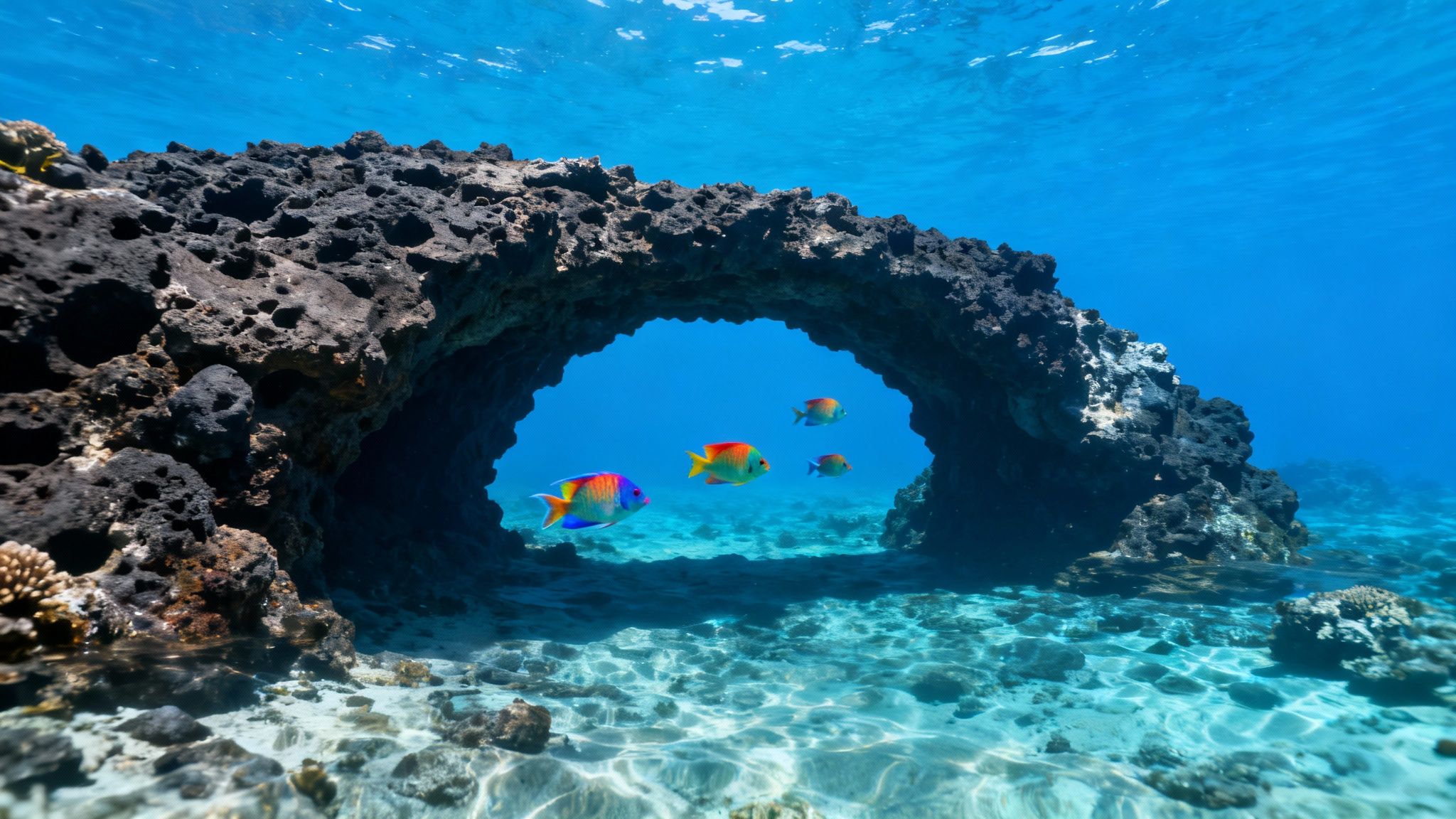
Sure, the numbers are impressive, but the real heart of Hawaiian diving is found in a perfect storm of geology, biology, and amazing ocean conditions. These islands are literally the tips of massive underwater volcanoes, which have created a dramatic, otherworldly seascape you just can't find anywhere else on the planet.
Picture yourself gliding through ancient lava tubes, peering into submerged craters, and drifting along sheer underwater cliffs. It's this one-of-a-kind volcanic terrain that provides the ideal foundation for vibrant coral reefs to take hold, which in turn brings in an unbelievable amount of marine life.
Year-Round Perfection and Crystal Clear Waters
One of the best things about diving here is just how easy it is to get in the water. Hawaii’s ocean stays comfortably warm all year long, usually hovering between 75-80°F (24-27°C). This basically means there's no such thing as an "off-season" for diving.
On top of that, the water visibility is often phenomenal, frequently stretching beyond 100 feet. This kind of clarity turns every single dive into a high-definition experience, letting you soak in the full, vibrant colors of the reef and its inhabitants. It's this reliable combination of warmth and clarity that makes planning a dive trip here a sure bet.
A Sanctuary for Unique Marine Life
What truly puts Hawaii in a league of its own is the sheer biodiversity—and a lot of it is found only here. In fact, over 25% of the reef fish you'll see are endemic, meaning they don't exist anywhere else on Earth. It feels like you're swimming through a living museum, where a species you've never seen before could be just around the next coral head.
From the calm, majestic green sea turtles (honu) and playful spinner dolphins to the absolutely awe-inspiring manta rays, the big-animal encounters here will stick with you forever. If you want to know more about those gentle giants, you can find out exactly where to see manta rays in Hawaii in our dedicated guide.
Ultimately, it’s this mix of stunning underwater landscapes and exclusive wildlife that makes so many divers put Hawaii at the very top of their must-visit list.
Why the Big Island Is the Heart of Hawaiian Diving
While every Hawaiian island offers something special beneath the waves, the Big Island is really the undisputed capital of the state's diving scene. More specifically, the Kona coast is a diver's dream come true, and it's all thanks to some incredible geography.
The island’s massive volcanoes, Mauna Loa and Hualalai, create a massive natural barrier. They effectively shield the Kona side from the powerful trade winds that can churn up the ocean on other parts of the islands. The result? Unbelievably calm, clear water pretty much year-round. It's this dependable serenity that makes Kona a world-class destination for underwater exploration.
But Kona’s reputation isn't just built on calm water; it's home to some true bucket-list dives that draw people from every corner of the globe.
Kona’s World-Famous Signature Dives
The Big Island offers underwater experiences that are nothing short of legendary. We’re not just talking about great dives; these are unique spectacles you simply can't find anywhere else on the planet.
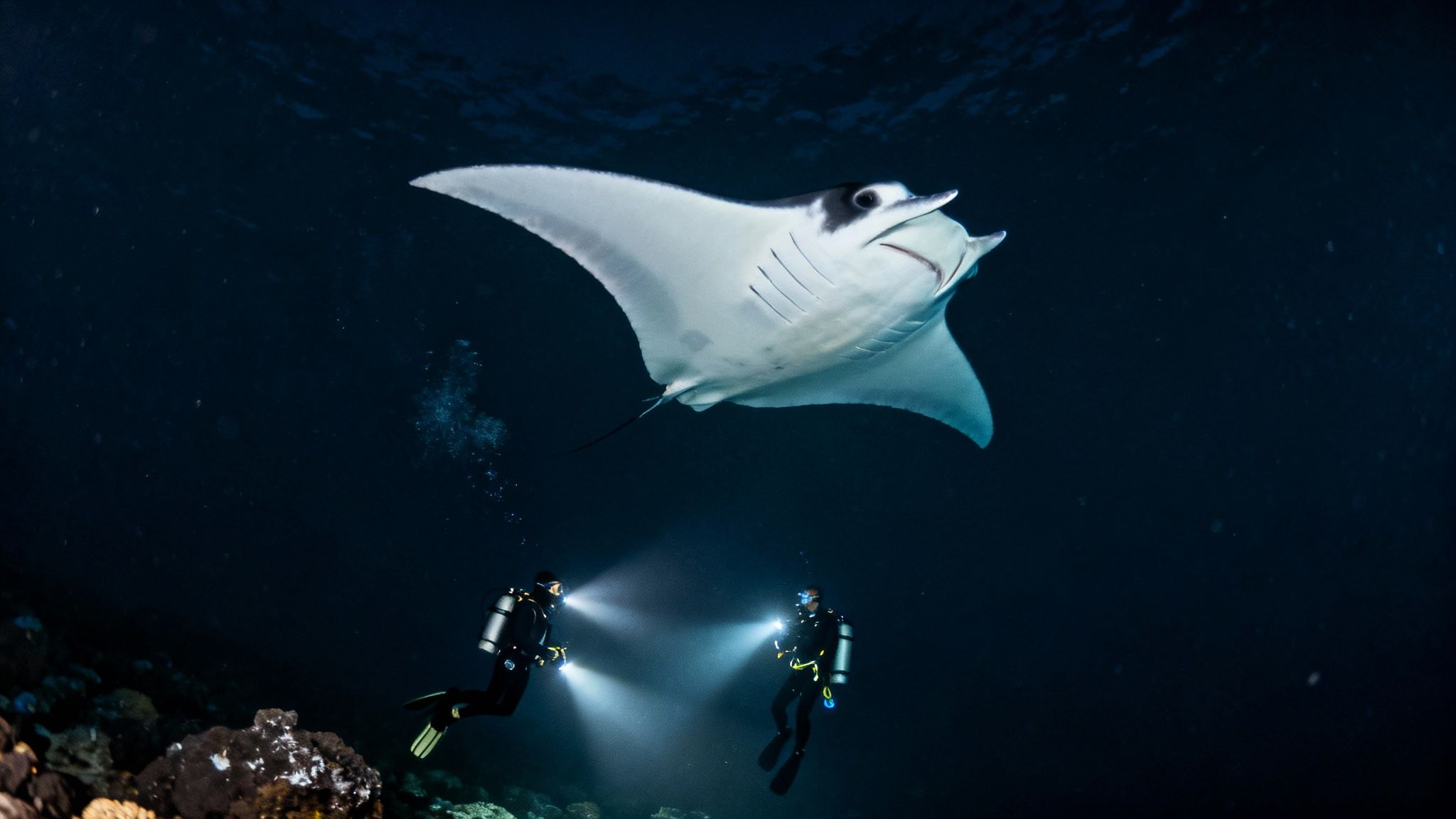
- The Manta Ray Night Dive: Consistently ranked as one of the best night dives in the world, this is a genuinely magical experience. You descend into the dark, where your lights attract swarms of plankton. This, in turn, draws in enormous, graceful manta rays that swoop and glide right over your head in a stunning underwater ballet. It’s an unforgettable encounter you can book on a dedicated Manta Ray Night Dive tour.
- The Kona Blackwater Dive: For a different kind of thrill—something more surreal and otherworldly—the Kona Blackwater Dive is a must-try. You’ll drift in the open ocean at night, tethered to the boat, and watch as bizarre and beautiful deep-sea creatures rise from the depths. It’s a front-row seat to the largest migration on Earth.
These signature dives are a huge part of why the answer to "is scuba diving big in Hawaii?" is a resounding yes, with Kona as the main stage.
Your Guide to Kona’s Underwater World
To see these amazing sights safely and get the most out of your time, going with a top-notch local operator is everything. Kona Honu Divers has built a solid reputation as a premier choice for diving tours on the Big Island. Their experienced crew, custom-designed dive boats, and serious commitment to safety make every trip a memorable one.
Ready to see for yourself why Kona is the heart of Hawaiian diving?
Finding Your Perfect Dive Experience
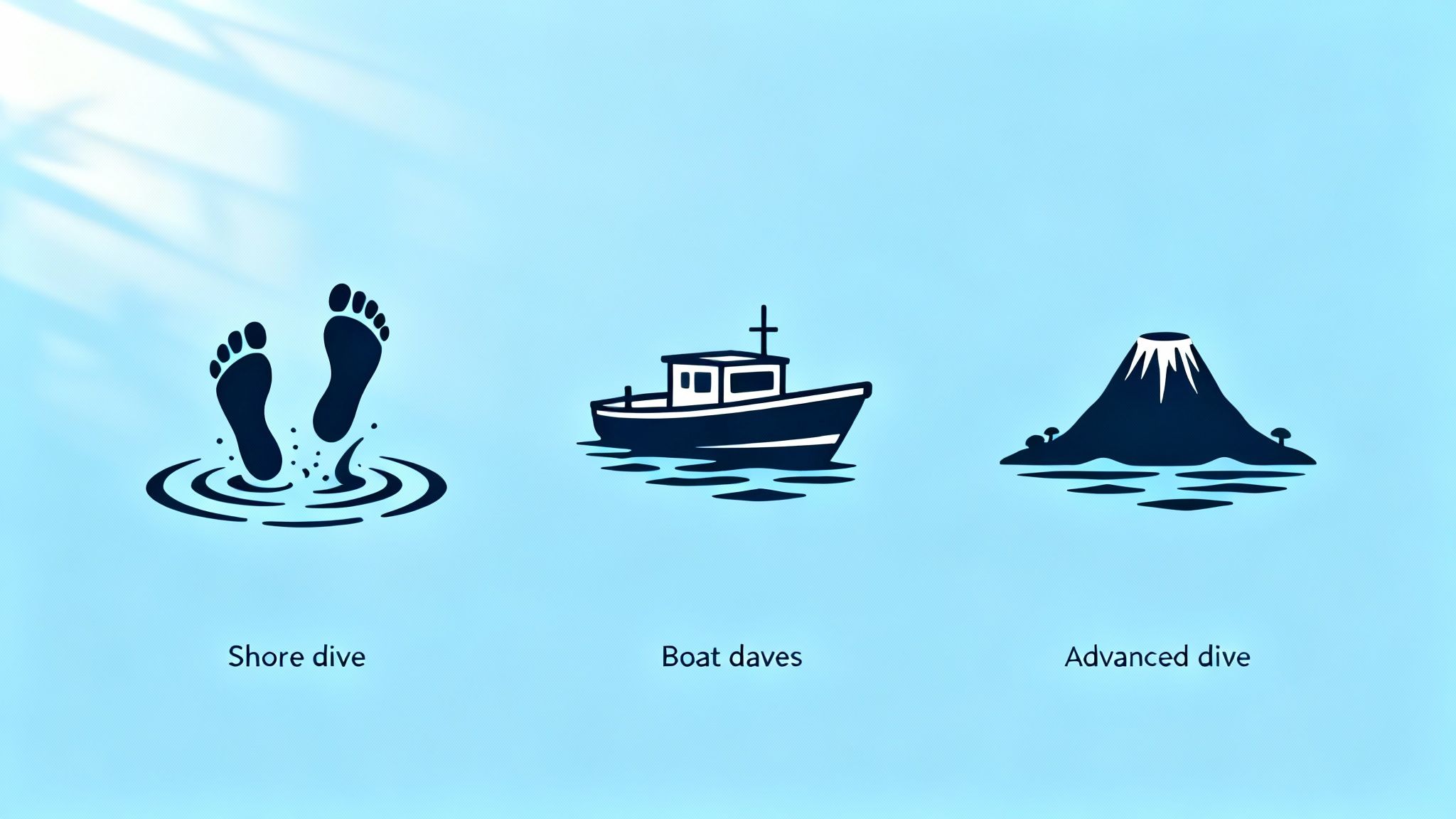
Whether you’re strapping on a tank for the very first time or you're a seasoned pro with hundreds of log entries, Hawaii has an underwater adventure with your name on it. This incredible variety is a huge part of what makes diving so popular here—there’s truly something for everyone, so no one gets left on the shore.
For those totally new to the sport, the journey usually kicks off with a Discover Scuba Diving program. It's a fantastic, non-certification experience where an instructor walks you through the basics in a calm, shallow spot. You get to breathe underwater and see your first reef fish up close, all under careful supervision. It's the perfect way to test the waters, literally.
For Certified and Advanced Divers
Once you have that certification card, a whole new world opens up. Most of the best diving, especially along the Kona coast, happens from a boat. These trips take you out to pristine offshore reefs, dramatic lava tubes, and sunken volcanic craters that are just buzzing with life. It’s the classic Hawaiian dive experience.
But if you're looking for a bigger challenge, the options get even more exciting. Hawaii delivers some incredible opportunities for experienced divers, from deep-water explorations to thrilling drift dives where you just relax and let the current carry you along a stunning underwater wall.
These specialized trips definitely require more skill, but the payoff is an encounter you'll never forget. For those wanting to push their limits, Kona Honu Divers runs advanced dive tours designed specifically for divers with serious experience under their weight belts.
The secret to an amazing experience, no matter your skill level, is picking the right operator. A great dive shop will take the time to check your comfort and certification level to match you with a dive that’s both safe and absolutely spectacular.
This focus on safety and matching the dive to the diver is what allows everyone, from novice to expert, to really soak in the underwater magic of the islands. Finding the right guide is just as important as finding the right dive site.
Respecting the Power of the Pacific Ocean
Hawaii's underwater world is pure paradise, but let's be real: the Pacific Ocean is a powerful, unpredictable force. That’s not meant to scare anyone off, but to give you a healthy dose of respect for the water you're about to jump into.
Safety has to be your number one priority. The conditions here can shift in a heartbeat—strong currents, unexpected swells, and tricky underwater landscapes can surprise even the most seasoned divers.
Know Before You Go
Understanding the ocean’s power is a non-negotiable part of diving responsibly in Hawaii. The statistics speak for themselves. Between 2020 and 2024, Hawaii sadly ranked second in the U.S. for per-capita resident drownings, with 187 residents losing their lives.
While that number covers all ocean activities, it’s a stark reminder that underestimating the sea is never a good idea.
The Smartest Way to Dive
So, what’s the secret to safely enjoying Hawaii’s incredible diving? It’s simple: go with a pro.
Diving with a certified, local guide is the single most important decision you can make. These folks have an intimate, day-in-day-out understanding of the local dive sites. They know exactly where it's safe to go based on the swell, wind, and currents for that specific day. Their expertise is your best safety gear.
A local guide does more than just point out the cool fish. They're constantly reading the water and making complex safety calls so you can relax and just enjoy the magic of the dive.
This is especially true here on the Big Island. Before you even think about getting in the water, it’s a good habit to check the forecast. Learning how to check ocean conditions for the Big Island is a fantastic first step.
When you combine your own awareness with the guidance of an expert, you unlock Hawaii’s underwater world safely. It's the difference between a potentially risky situation and an unforgettable adventure.
Your Hawaii Diving Questions, Answered
Planning a dive trip to the islands for the first time? You've probably got a few questions. Let's get them sorted out so you can focus on the fun part.
What's the Best Time of Year to Dive in Hawaii?
Honestly, there's no bad time. Hawaii offers incredible diving year-round, with water temperatures staying in a very comfortable 75-80°F (24-27°C) range.
Your decision really comes down to the kind of experience you want. Summer (May to September) typically brings the calmest, flattest seas, which is perfect for smooth boat rides and gentle conditions. If you come in the winter (December to March), you get the added bonus of humpback whale season—hearing their songs reverberate through the water on a dive is something you'll never forget.
Do I Need to Be Certified to Go Scuba Diving?
Not at all! If you're just curious and want to see what all the fuss is about, look for a "Discover Scuba Diving" program. A good dive shop will take you through the basics and then guide you on a shallow dive with an instructor right by your side. It’s the perfect way to test the waters.
Of course, if you want to explore the deeper reefs and join the main dive charters, you'll need to get your Open Water Diver certification first.
What Kind of Marine Life Can I Expect to See?
Get ready for a show! Hawaii's underwater world is bursting with life. You’re almost certain to run into our famous green sea turtles (honu), playful spinner dolphins, and more colorful reef fish than you can count—many of which you can't find anywhere else on Earth.
The Big Island is legendary for its manta ray night dive, an absolute must-do. But depending on the site, you could also spot eagle rays, reef sharks, and cleverly camouflaged octopuses. This incredible biodiversity is exactly what makes diving here so special.
What Does a Typical Dive Trip Cost in Hawaii?
You'll find the pricing is right in line with other world-class diving spots. For a standard two-tank boat dive, you can expect to pay somewhere between $150 and $225 per person.
That price usually covers your tanks and weights. Renting the rest of your gear—like your BCD, regulator, and wetsuit—is typically an extra fee. It's an investment, for sure, but the unforgettable experiences and professional-grade diving make it well worth it.