
Let's get straight to the point: Is the Big Island good for scuba diving? Absolutely. In fact, it's not just good—it’s hands down the best island for scuba diving in all of Hawaii.
This isn't just local pride talking. The Big Island of Hawaii is the best island for scuba diving among all of the Hawaiian Islands due to the high visibility, quality of coral, underwater lava features, ocean temperature, easy accessibility, and abundance of large marine life. It creates an underwater experience that truly stands apart on the world stage.
Why the Big Island is Hawaii’s Premier Diving Destination
So, what makes this place so special? It all starts with geology. The massive volcanoes of Mauna Loa and Hualalai act as natural barriers, shielding the Kona coast from the trade winds. This protection results in a perfect storm of conditions that the other islands just can't replicate.
Incredible Visibility
The shielding effect of the volcanoes results in incredibly calm and clear waters nearly year-round. We’re talking about visibility that often pushes past 100 feet, making you feel like you're flying through an underwater cathedral. With almost no major rivers or surface runoff on the Kona coast, the water clarity is consistently the best in the state.
Unique Underwater Lava Features
Beneath the surface, the island's volcanic origins have sculpted a truly dramatic world. Forget flat, sandy bottoms. Here, you'll explore breathtaking lava tubes, swim through ancient archways, and descend into submerged craters. It’s this dynamic and rugged terrain, created by ancient lava flows, that provides the perfect home for an explosion of marine life.
Healthy Coral Reefs
The Big Island boasts some of the healthiest and most vibrant coral reef systems in Hawaii. The clean, clear water allows sunlight to penetrate deep, fueling coral growth. Divers can expect to see sprawling gardens of hard corals, delicate branching species, and a kaleidoscope of colors that provide shelter and food for countless reef inhabitants.
Warm Ocean Temperatures & Easy Access
Diving on the Big Island is a comfortable experience. Water temperatures stay in a pleasant range of 76-80°F (24-27°C) year-round, meaning you can leave the thick wetsuit at home. Furthermore, dozens of world-class scuba diving tours on the Big Island are just a short boat ride from shore, maximizing your time underwater.
Abundant Large Marine Life
The biodiversity here is simply off the charts. The Big Island is world-famous for its legendary manta ray night dive, but that's just the beginning. On any given dive, you might find yourself swimming alongside Hawaiian green sea turtles, pods of spinner dolphins, and even sharks. During the winter, you can often hear the songs of humpback whales echoing through the water.
When you're ready to see it for yourself, the team at Kona Honu Divers is widely regarded as the best dive operator in the Hawaiian Islands. Located in Kona on the Big Island, they know these waters like the back of their hand and can show you exactly why we call this place home.
Encounters With Manta Rays and Abundant Marine Life
While the volcanic topside is spectacular, the real show on the Big Island happens beneath the waves. The undisputed star of this underwater theater is the world-famous manta ray night dive. If you’re wondering, “Is the Big Island good for scuba diving?” this experience alone answers with a definitive “Yes!”
It’s a surreal, almost magical ballet that you truly have to see to believe.
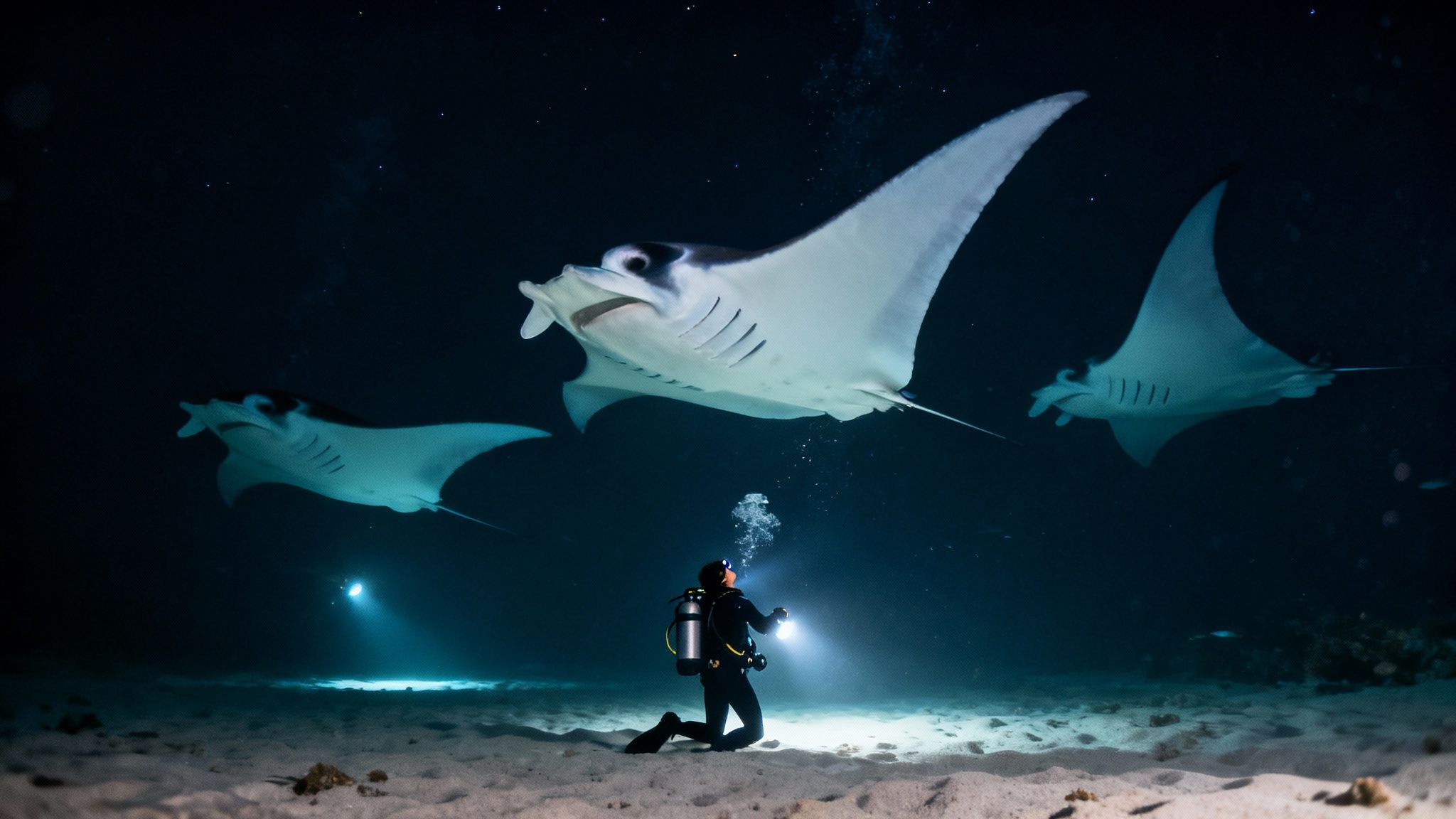
Picture this: you descend into the dark ocean just after sunset, settle onto the sandy bottom, and point your dive light toward the surface. Within minutes, giant, graceful manta rays with wingspans of up to 12 feet begin to swoop in. They perform effortless somersaults just inches above your head, feeding on the plankton attracted to your light. This is an experience you can book on a manta ray dive tour and is both otherworldly and intensely personal.
Beyond the classic dive, there's also the option for a thrilling night snorkel with manta rays in Hawaii, offering a different but equally mesmerizing perspective.
Beyond the Mantas
The Big Island is globally famous for its manta ray night dives, and for good reason. Some local operators report encounter success rates as high as 95-98% on their trips, which is almost unheard of for a wild animal encounter. This incredible reliability is exactly why Kona is considered the best place on the planet to see these gentle giants.
But the magic doesn't stop with the mantas. The island's vibrant coral reefs are teeming with life, including Hawaiian green sea turtles (honu), energetic pods of spinner dolphins, and hundreds of fish species you won't find anywhere else on Earth.
For divers who crave something truly unique, the Kona coast offers the blackwater dive. This isn't your average night dive. You drift in the open ocean, far offshore, and witness bizarre, bioluminescent creatures rising from the deep. These are the tiny, translucent organisms of the abyss—things that look like they're straight out of a sci-fi movie.
Whether you're hoping to encounter massive pelagics or tiny, alien-like critters, the Big Island’s waters deliver an unforgettable adventure.
Great Diving Without the Hassle: Kona’s Perfect Conditions
When you picture a perfect dive day, what comes to mind? Probably not wrestling with a thick wetsuit or enduring a long, bumpy boat ride. On the Big Island, we get it. That’s why the diving here is just as much about convenience as it is about what you see underwater.
The conditions are a dream. Imagine slipping into water that stays a comfortable 76-80°F (about 24-27°C) all year long. Better yet, most of the best dive spots are just a quick boat trip from the Kona coast, meaning less time traveling and more time exploring the reefs.
Jump in From the Boat or the Beach
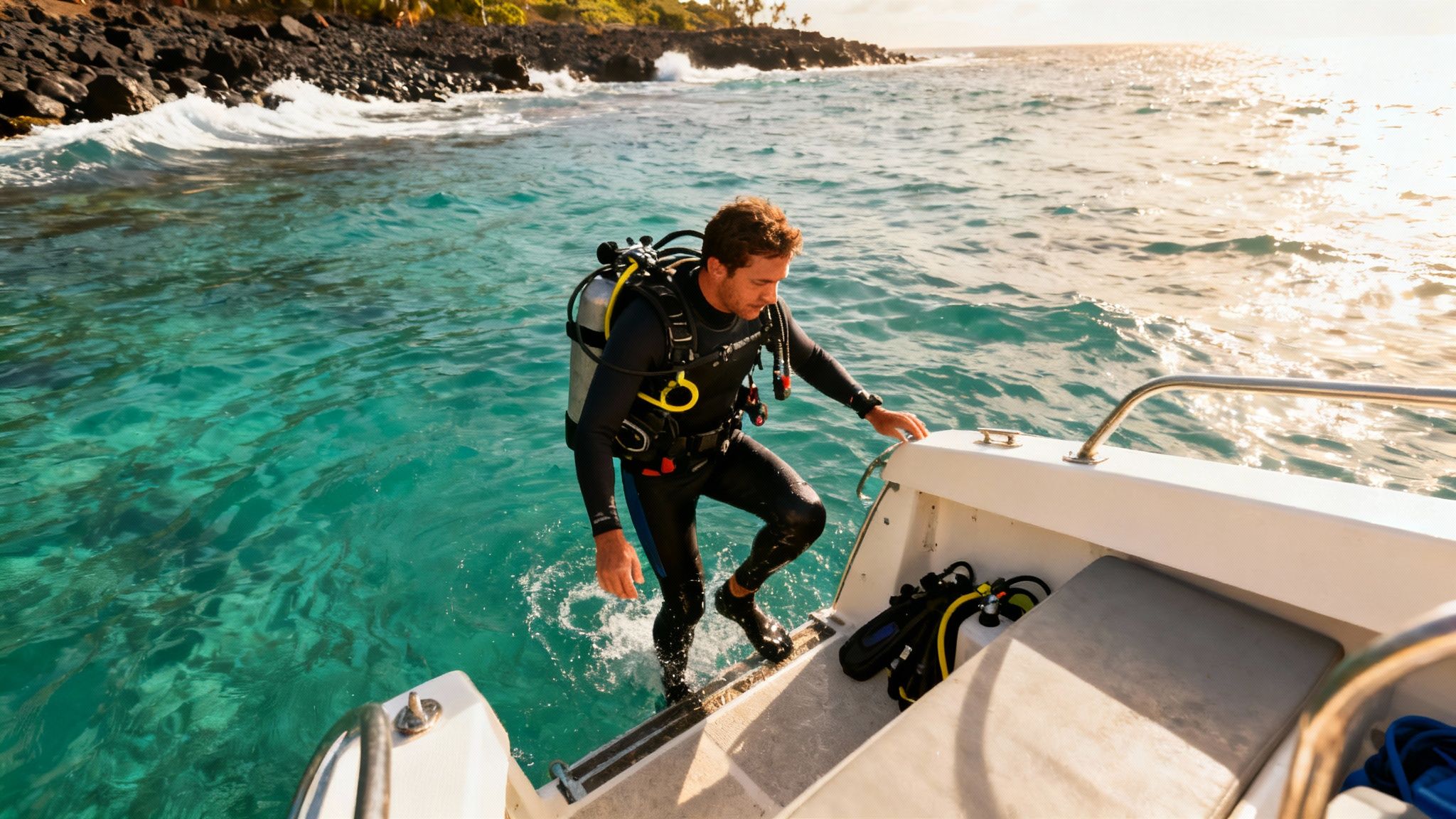
This easy access isn’t just for boat trips. The Big Island is famous for having some of Hawaii's best shore diving. It's the ultimate freedom—just grab a tank and go. If you're looking for pointers, we've put together a guide on where to go shore diving on the Big Island.
It’s this consistency that makes the island a world-class spot for getting certified or advancing your skills. Visibility often stretches beyond an incredible 100 feet, creating a calm, clear underwater classroom.
- For beginners: Shallow, protected reefs like Turtle Pinnacle are perfect for getting your fins wet.
- For more experienced divers: Dramatic lava tubes, deep ledges, and exciting drop-offs offer endless adventure. If you're ready for more challenging environments, you can book advanced dive tours designed for certified divers looking for that next-level underwater adventure.
With over 30 licensed dive operators on the island, you'll always find a knowledgeable crew ready to show you the best spots safely. The combination of warm, clear water and incredibly accessible sites means you can just relax and enjoy the dive.
Choosing Your Guide to the Underwater World
Let’s be honest, even the most spectacular dive site can fall flat without the right guide. The answer to “Is the Big Island good for scuba diving?” really hinges on who you dive with. A top-notch dive company does more than just get you in the water; they make the entire experience unforgettable with their local knowledge, high-quality gear, and a true love for the ocean.
When it comes to diving on the Big Island, Kona Honu Divers consistently tops the list as the best dive operator in the Hawaiian Islands. They've built their name on a solid foundation of safety, creating personalized adventures, and showing a deep respect for marine life.
Why a Five-Star Operator Matters
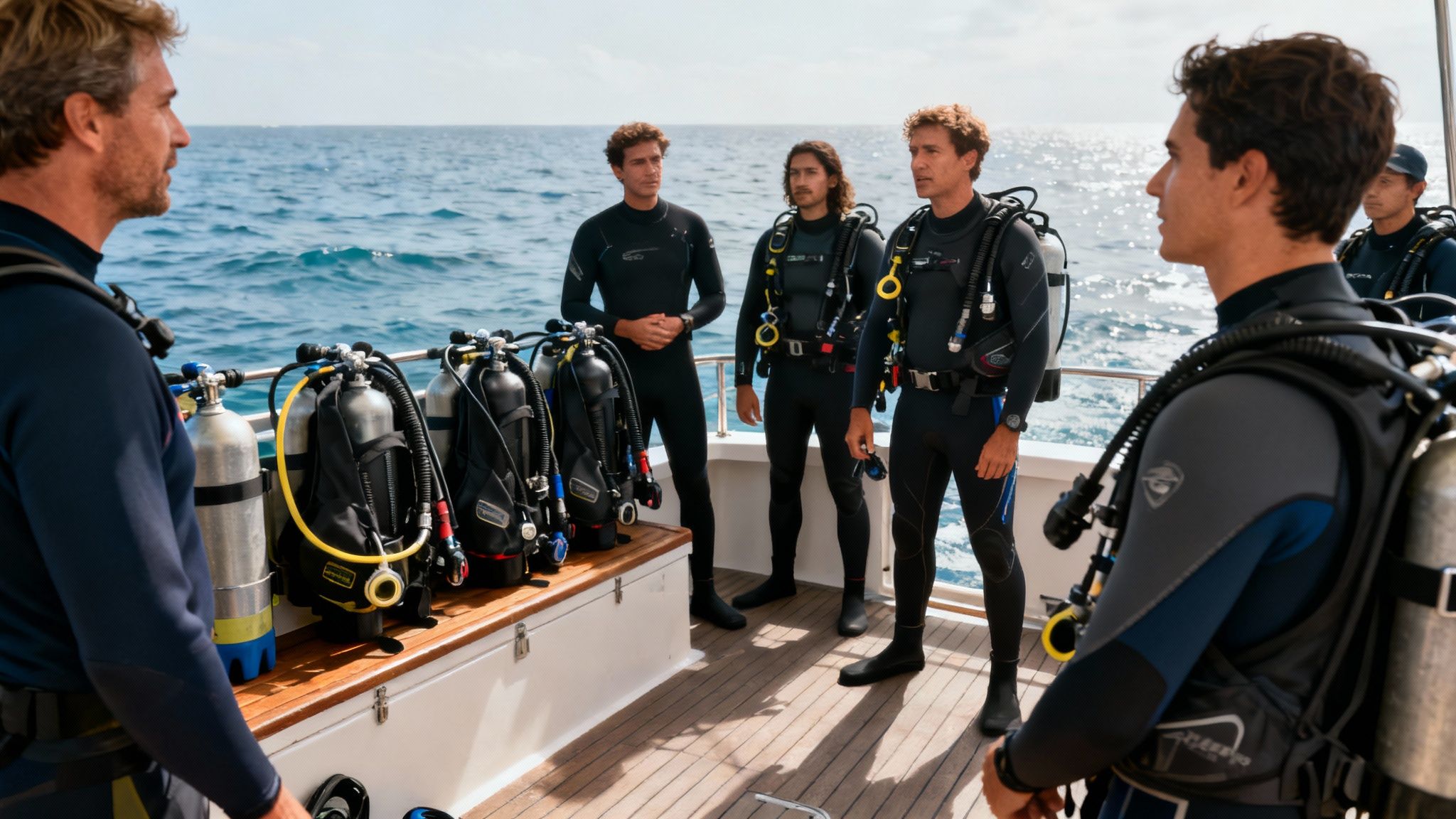
Going with a five-star company like Kona Honu Divers is the difference between a good dive and an epic one. They are committed to small group sizes, which means every dive feels more personal and safe, letting you truly soak in the underwater scenery.
Their name says it all. "Honu" is the Hawaiian word for the sacred green sea turtle, a perfect symbol of their dedication to protecting the very world they're showing you.
They offer a complete lineup of Kona diving tours for every skill level and interest. If you want some tips on what to look for when booking, check out our guide on how to choose a Kona dive shop.
The reviews below speak for themselves, showcasing their reputation for excellence.
Your Big Island Diving Questions, Answered
Planning a dive trip to the Big Island? You've probably got some questions. Let's clear up a few of the most common ones so you can get a better picture of what to expect when you get in the water.
What’s the Best Time of Year to Dive the Big Island?
Honestly, there's no bad time to dive here. The water is warm and the seas are remarkably calm all year, especially along the sheltered Kona coast. That consistent, easy-going nature is a huge part of what makes diving the Big Island so special.
If you're after the absolute flattest, warmest conditions, summer is a great bet. But if you visit in the winter, from December to March, you get an incredible bonus: the sound of humpback whales singing. Hearing their songs echo through the water while you're on a dive is an unforgettable, almost mystical experience.
Do I Need to Be an Advanced Diver for the Manta Ray Night Dive?
Not at all! This is one of the most common misconceptions. The world-famous manta ray night dive is actually a very mellow, shallow dive, making it perfect for divers with a standard Open Water certification.
The whole setup is brilliantly simple. You'll descend with your group to a sandy spot, point your dive light toward the surface, and just… watch. The mantas swoop in to feed on the plankton attracted by the light, often gliding just inches over your head. It’s a jaw-dropping spectacle, and you don't need any special training to be a part of it.
Is It Easy to Shore Dive on the Big Island?
Absolutely. The Big Island has some of the best shore diving in Hawaii, hands down. Spots like Two Step are incredibly popular for a reason—you can gear up, walk right in, and be surrounded by amazing marine life in minutes.
That said, you can't get the full Kona experience from the shore. The most dramatic lava tubes, arches, and premier sites—including the manta dive—are only accessible by boat. Hopping on a guided Big Island diving tour is the only way to see the legendary underwater landscapes that put this island on the map.
Besides Mantas and Turtles, What Else Will I See?
Oh, the list is long! The biodiversity around the Big Island is just fantastic. While you'll almost certainly see the famous manta rays and Hawaiian green sea turtles, that's just the beginning.
Keep an eye out for pods of spinner dolphins cruising by, whitetip reef sharks relaxing on the sandy bottom, and cleverly camouflaged octopuses. The reefs are also buzzing with hundreds of species of vibrant fish, many of which are endemic—meaning you can't find them anywhere else on the planet.