
If you're picturing a deep, dark, technical dive, think again. The world-famous Kona manta ray dive is a spectacular show that happens in surprisingly shallow water, usually just 25 to 40 feet (8 to 12 meters) deep.
This isn't some hardcore dive for advanced divers only. In fact, its shallow nature is precisely what makes the experience so accessible and consistently magical. The entire encounter is designed to give you the best seat in the house for one of nature's greatest performances.
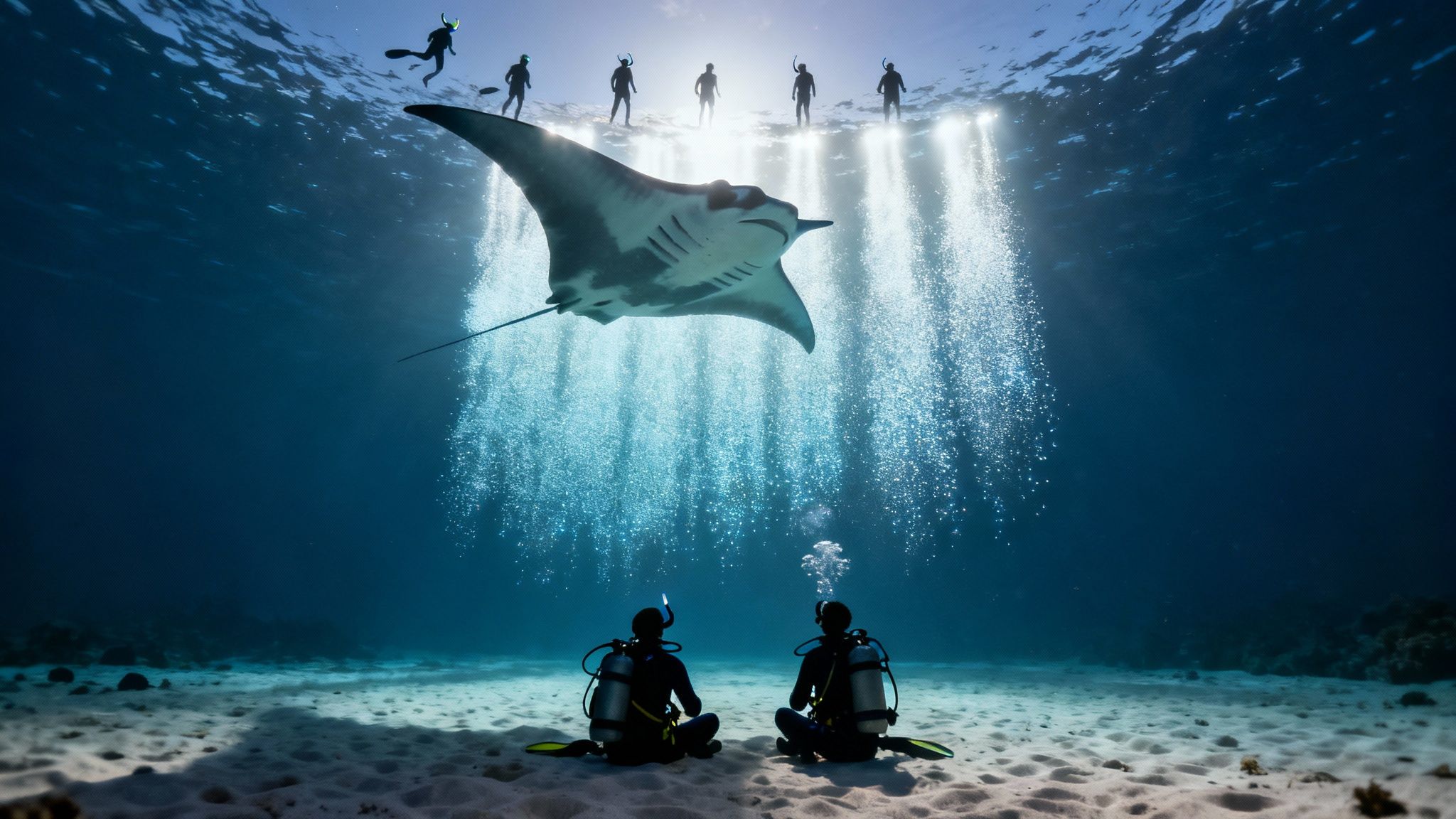
A Brilliant, Simple Setup
So, how does it work? Think of it as setting the dinner table for giants. The whole operation is brilliantly simple but incredibly effective.
- The "Campfire": Dive guides place powerful lights on the sandy ocean floor, pointing straight up toward the surface. We call this the "campfire."
- The Buffet Opens: These bright lights attract massive clouds of plankton, which are the manta rays' favorite food.
- Dinner is Served: The local mantas have learned that this bright light means an easy, all-you-can-eat plankton buffet. They show up almost every single night to feed.
This clever setup transforms a patch of the ocean into a reliable feeding station, creating a wildlife encounter that’s about as close to a guarantee as you can get.
The Best Seat in the Ocean
For scuba divers, the experience is unreal. You'll descend to the sandy bottom, get settled in, and simply look up. It's like having a front-row seat at the world's most incredible IMAX theater.
Giant mantas, some with wingspans stretching 16 feet or more, swoop and barrel roll just inches above your head, gracefully gulping down the plankton. It's an underwater ballet, and you're right in the middle of it.
Snorkelers get an amazing view too! They hang onto custom-built rafts on the surface that also have lights pointing down, giving them a perfect bird's-eye view of the action below.
This table gives you a quick look at what to expect depending on how you choose to experience the dive.
Kona Manta Ray Dive Depth At A Glance
| Participant Type | Typical Depth (Feet) | Typical Depth (Meters) | Viewing Position |
|---|---|---|---|
| Scuba Diver | 25 – 40 ft | 8 – 12 m | On the ocean floor, looking up |
| Snorkeler | 0 ft (surface) | 0 m (surface) | Holding a raft, looking down |
Ultimately, this dual-participant setup makes the manta ray dive one of the most inclusive and unforgettable marine encounters you can find anywhere on the planet.
The two main sites where this all happens are affectionately known as "Manta Village" and "Manta Heaven." Both are perfectly suited for this shallow, theater-like experience, ensuring you'll have a night you won't soon forget. To learn more about the experience, check out this detailed overview of the manta dive in Kona.
What to Expect on Your Manta Ray Night Dive
The Kona manta ray dive isn't just about how deep you go; it's an entire underwater journey that starts at sunset and ends under the stars. The main event happens in pretty shallow water, but the whole experience is a two-part show that begins as the sun sinks into the Pacific.
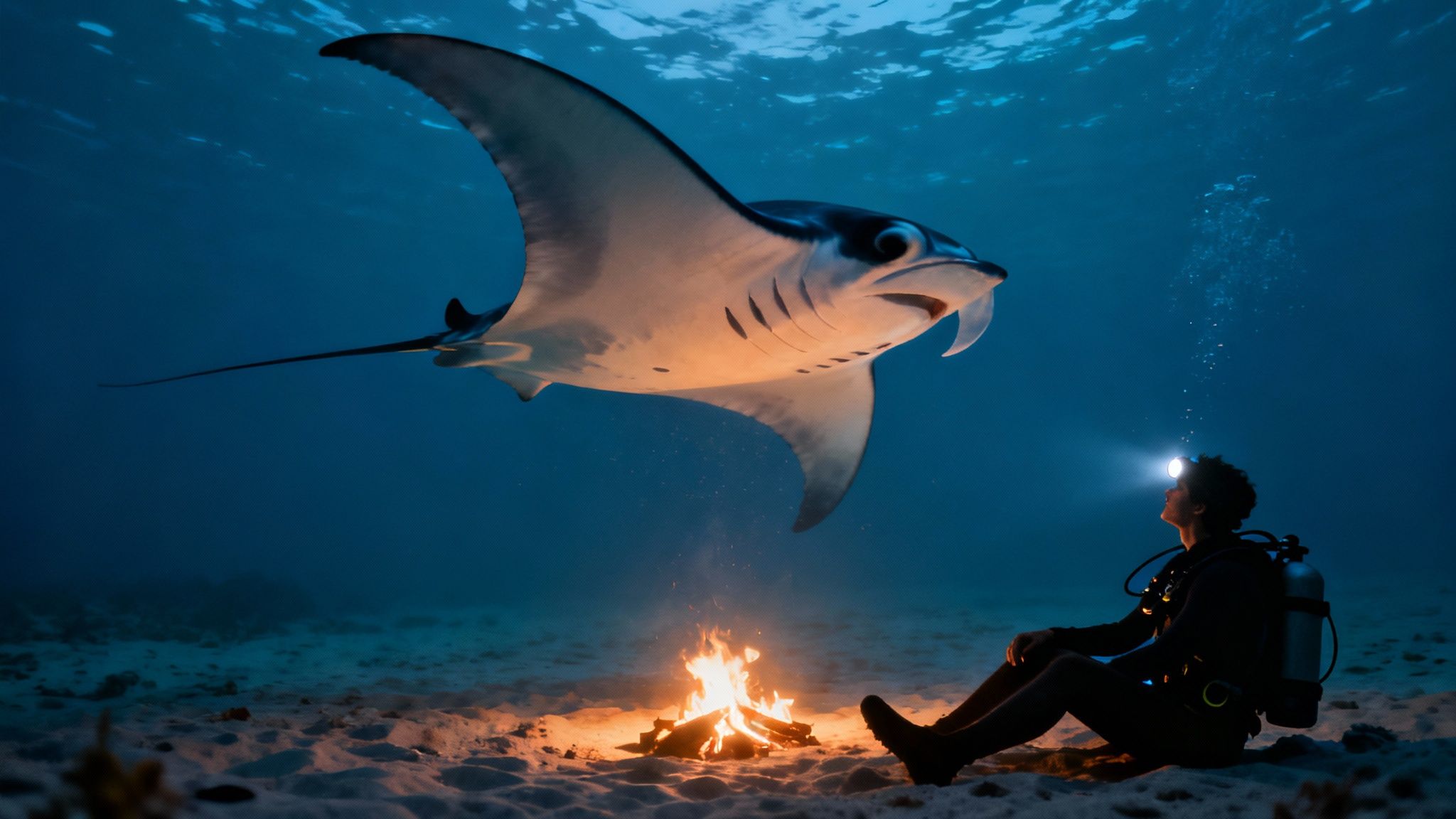
Most trips kick off with a twilight dive along the reef. This first dip lets you watch the reef change shifts. You’ll see the colorful daytime fish head for cover while the nighttime critters start to wake up. This dive often goes down to about 60-70 feet and perfectly sets the scene for what's coming next.
The Underwater Stage is Set
Once it's completely dark, you'll head down for the second dive. This is the main event. You'll descend to a sandy patch on the ocean floor at a comfortable, shallow depth of 30 to 40 feet (9 to 12 meters).
Your dive guides will set up a circle of powerful lights pointing straight up—we call this "the campfire." These light beams attract plankton, which is the whole point. You can learn more about the specifics of the experience by checking out our guide on what the manta ray night dive is.
Your job is simple: find a spot around the lights, settle onto the sandy bottom, and get your buoyancy just right. Then, just relax and look up. The show is about to begin.
A Silent, Graceful Ballet
What happens next is something you'll never forget. Drawn in by the plankton swarming in the light, the giant manta rays materialize from the darkness. With massive wingspans that can reach up to 12 feet, these gentle giants swoop and glide right over your head, sometimes just inches away.
They perform a silent, mesmerizing ballet, doing barrel rolls and graceful loops with their huge mouths open to filter the plankton from the water. It feels both massive and deeply personal at the same time. There are no cages or barriers here—just you, the open ocean, and these magnificent creatures sharing their world with you.
Why This Dive Has Such a High Success Rate
People fly in from all over the world for the Kona manta ray dive, and for a very good reason: it’s one of the most dependable wildlife encounters you’ll find anywhere. Unlike the hit-or-miss nature of spotting whales or dolphins in the open ocean, this experience is practically built for success. The setup is simple, predictable, and absolutely magical.
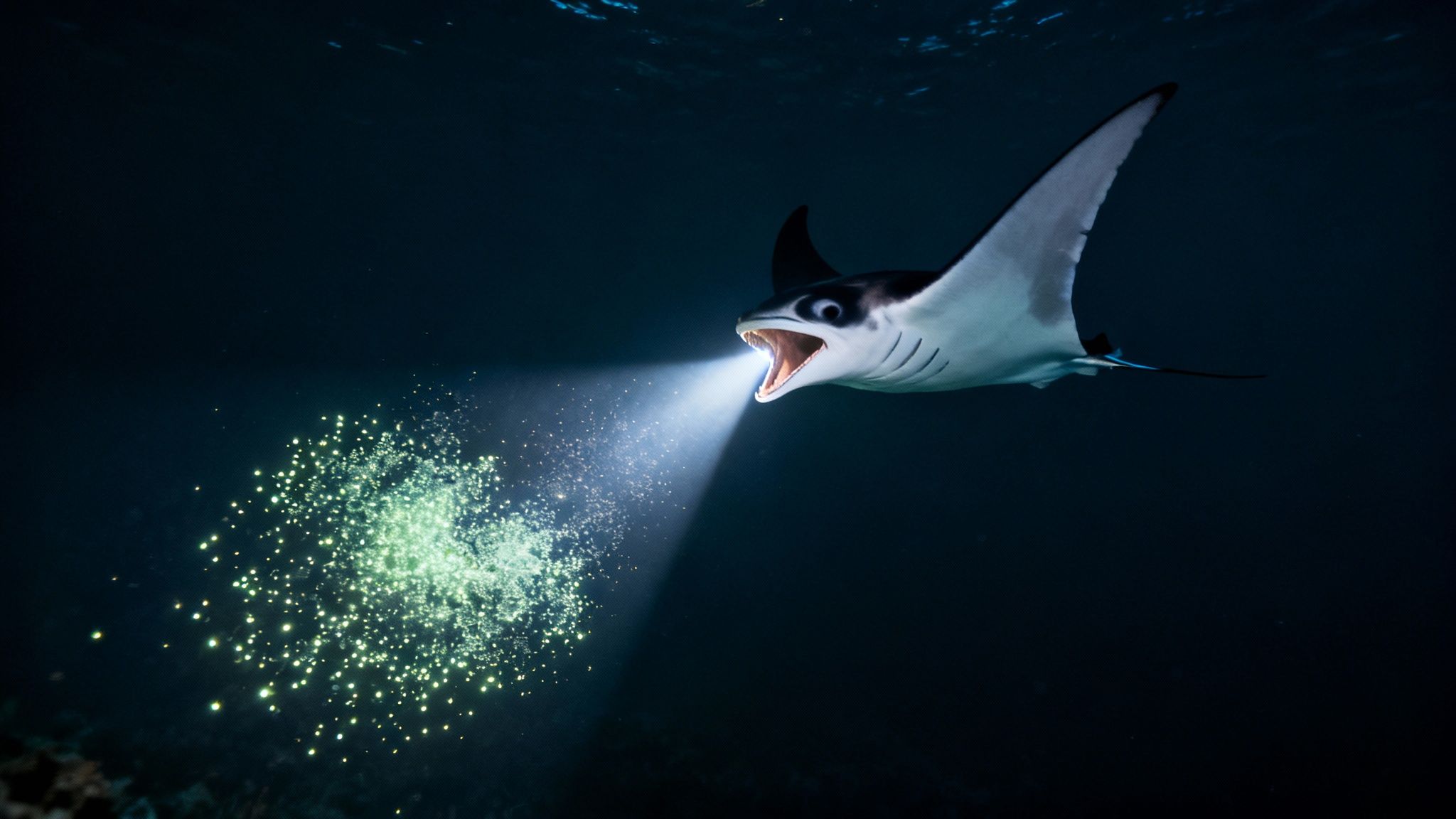
The secret behind it all is a brilliant and straightforward idea. Dive operators set up powerful lights on the shallow ocean floor, usually between 25 and 40 feet deep. These lights act like giant magnets for plankton, the manta rays' favorite food.
A Reliable Underwater Restaurant
Over decades, Kona's local manta ray population has learned that these lights mean one thing: an easy, all-you-can-eat buffet. Think of it less as a chance encounter and more like a nightly reservation at a five-star manta restaurant. This reliable food source is precisely what makes the dive so consistent.
The numbers don't lie. Manta sightings on the Kona night dive have an incredible success rate, hovering between 85% and 90%. Some long-standing operators even report success rates topping 95%.
This is possible thanks to a healthy, resident population of nearly 200 individually identified manta rays, each known by the unique spot pattern on its belly. You can learn more about Kona's unique manta population and the dive's success to see just how special this group is.
What this all means is that you aren't just booking a hopeful dive; you're booking a near-guaranteed front-row seat. You're not just hoping to see mantas—you're showing up for their regularly scheduled dinner. This reliability transforms the experience from a simple dive into an unforgettable performance with Kona’s most famous underwater residents.
Choosing Your Kona Manta Ray Dive Operator
Picking the right dive operator for your manta ray encounter is a big deal—just as important as knowing the dive profile itself. Your safety, your enjoyment, and the well-being of the mantas all hinge on the crew guiding you. A truly great company isn't just about getting you in the water; it's about deep-seated respect for the ocean and the animals that call it home.
When you go with a pro outfit like Kona Honu Divers, you’re putting your trust in a team that lives and breathes this stuff. Their experienced guides handle all the logistics, so you can just focus on the incredible spectacle unfolding in front of you.
What to Look For in a Dive Company
Here's the bottom line: choosing a responsible operator is key to protecting Kona’s incredible manta ray population for years to come. The most important thing to look for is a company that follows the Manta Ray Green List standards.
This isn't just a fancy title. It's a set of strict, science-backed guidelines for sustainable and respectful interactions. It means the animals' welfare always comes first.
Kona Honu Divers is a proud Green List operator. Their guides are specifically trained to run the dive in a way that’s safe for the mantas and for everyone in the water. But you don't have to take our word for it—see what other divers are saying about their time with the team.
While the mantas are the main event, don't forget the Big Island has a whole underwater world waiting. There are plenty of other incredible diving tours in Kona for every skill level.
For something completely different, the Kona Blackwater Dive is a mind-bending experience, where you’ll see strange and wonderful creatures rise up from the abyss. And if you're an experienced diver looking to push your limits, there are some amazing advanced dive opportunities that explore deeper, more dramatic sites.
Ready to see what many call the world's best night dive? You can book your manta ray dive tour and get ready for an adventure you won't soon forget.
How to Prepare for Your Manta Ray Encounter
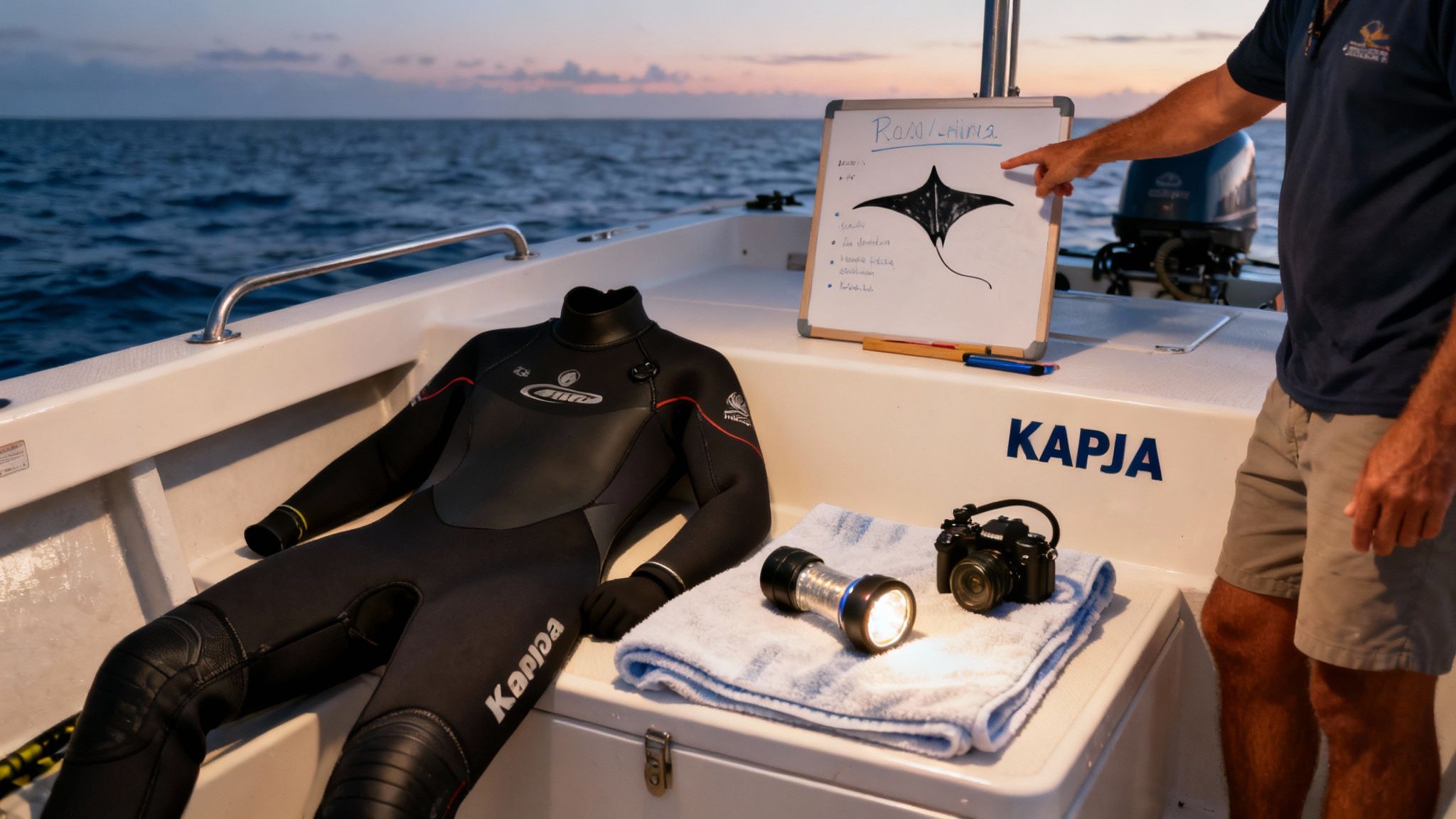
Knowing what to expect and what to bring is the key to a relaxed and awe-inspiring manta encounter. The good news? You don't need any highly specialized training to join in.
The dive itself is quite shallow, so a standard Open Water certification is all you need to participate in the scuba dive. If you're new to adventure sports or just want a refresher, reviewing some essential precautions for adventure activities is always a good idea.
What to Bring and What to Know
Most operators will handle the heavy lifting, providing all your essential scuba gear, including thick wetsuits and the powerful lights that attract the plankton. That said, you'll want to pack a few personal items to make your trip more comfortable.
Here’s a quick checklist for your bag:
- A towel and warm, dry clothes: The boat ride back can be chilly after an evening in the water.
- Motion sickness medication: If you're even slightly prone to seasickness, it's better to be safe than sorry!
Above all else, there's one golden rule every diver and snorkeler must follow: never touch the animals. Manta rays have a delicate mucus coating on their skin that acts as a shield against infection. Our touch can strip this layer away, leaving them vulnerable to disease. Giving them space ensures these gentle giants stay healthy and keep returning to this special spot.
The controlled, shallow environment is also a dream for underwater photographers. With a little planning, you can get set up and focus on capturing the stunning, graceful ballet unfolding right in front of you. To get a better idea of what to pack, check out our full guide on the gear you will need for your Kona diving adventure.
Frequently Asked Questions About the Manta Dive
Even with the best planning, you probably still have a few lingering questions. That’s completely normal! Here are the answers to the most common queries we get from divers and snorkelers, helping you feel totally confident before you even get your feet wet.
Is the Kona Manta Ray Dive Safe for Beginners?
Absolutely. One of the best things about this dive is how accessible it is. The answer to "how deep is the Kona manta ray dive?" is a big part of why it's so safe. We're talking about a shallow dive, typically in just 25 to 40 feet of water. The sites are sheltered and calm, making it a perfect first night dive for newly certified Open Water divers.
Your Divemaster will give you a thorough briefing before you get in the water. Since the dive is stationary (you stay in one spot), there's no complex navigation to worry about. It’s all about relaxing and enjoying the show in a controlled, supervised environment.
What is the Difference Between the Manta Sites?
Kona has two world-famous spots for this dive: Manta Village near Keauhou Bay and Manta Heaven up by the airport. You really can't go wrong with either one, as both offer incredible, reliable sightings.
- Manta Village: This is the original, legendary site. It's been the go-to spot for decades and is known for its remarkable consistency.
- Manta Heaven: A bit further north, this site is just as amazing and can sometimes attract even larger groups of mantas.
Your dive operator will choose the best spot for the night based on current ocean conditions. No matter where you go, you’re in for a spectacular experience.
Will I Get Cold During the Night Dive?
Kona’s water is warm, but sitting still underwater for an hour at night can definitely give you a chill. Don't worry, though—reputable dive shops have you covered. They provide thick wetsuits, usually 5mm or 7mm, which make a huge difference in keeping you warm and comfortable.
A great pro tip is to bring a warm jacket or a fluffy towel for the boat ride back to shore. It feels amazing after a long dive!
Can I Touch the Manta Rays?
No, and this is the most critical rule of the dive. You must never touch a manta ray. Their skin has a protective mucus coating, and the oils from our hands can damage it, making them susceptible to dangerous infections.
The good news is you won't even feel the need to. The mantas get incredibly close on their own, often gliding just inches above your head. It’s a breathtakingly intimate encounter that relies on respect, not contact. While focusing on manta rays, many ocean enthusiasts are curious about a variety of marine life. For insights into other unique marine wildlife encounters, such as whale watching adventures, consider exploring different regions and species.
Ready for the underwater show of a lifetime? Kona Honu Divers offers expertly guided tours that prioritize safety and respect for these majestic creatures. Book your Manta Ray Dive Tour today!