
When you picture diving with giant manta rays in Kona, you might imagine a deep, dark descent into the abyss. The reality is actually much more accessible and, frankly, pretty brilliant.
The world-famous Kona manta ray night dive happens in surprisingly shallow water, typically between 25 and 40 feet (that's about 8-12 meters). This isn't a random chance; it's a carefully orchestrated underwater dinner party.

Here’s how it works: Dive operators set up a "campfire" of powerful lights on a sandy patch of the ocean floor. These lights attract swarms of plankton, which are the manta rays' favorite meal. The mantas, knowing exactly where to find an easy buffet, swoop in to feast, performing an incredible underwater ballet right above the divers.
It's a common misconception that you need to go deep to see these majestic creatures. In Kona, the whole show is brought right to you in a safe, shallow, and predictable environment.
The Campfire Effect: Why Shallow is Better
It’s crucial to understand the difference between where the mantas can go and where they choose to eat during these dives.
- Feeding Depth: This is the sweet spot, that 25-40 foot range. It’s not determined by the mantas, but by the dive operators who strategically place lights to draw in the plankton. Think of it as setting the dinner table.
- Maximum Depth: Oceanic manta rays are serious deep divers. They’ve been tracked diving to depths of over 1,000 feet while traveling or foraging in the open ocean. But you won't be following them there on this tour!
This shallow setup is precisely what makes the Kona manta experience so unique and accessible. You don't need advanced certifications or technical gear, allowing divers of almost any level to witness the magic. It's a perfect bucket-list dive.
Of course, for those looking to explore a wider range of scuba diving in Kona, Hawaii and more remote sites, there are always liveaboard diving options that cater to more extensive underwater adventures.
The table below breaks down exactly why these dives are kept so comfortably shallow.
Kona Manta Ray Night Dive Depths at a Glance
| Factor | Influence on Manta Ray Depth | Typical Depth Range |
|---|---|---|
| Plankton Attraction | Dive lights are placed on the seafloor to attract plankton, the mantas' primary food. | 25-40 feet |
| Diver Viewing | The shallow depth provides a perfect "stadium seating" view from the sandy bottom. | 25-40 feet |
| Safety & Accessibility | Keeps the dive within recreational limits for most certified divers, even beginners. | 25-40 feet |
| Bottom Time | Shallower depths allow for longer, more relaxed bottom times to enjoy the entire show. | 25-40 feet |
Ultimately, the depth is designed for one thing: to give you the best, safest, and most breathtaking seat in the house. You simply descend, find a spot on the sand, and watch one of nature's most spectacular performances unfold just a few feet above you.
Why Kona’s Underwater Landscape is a Manta Magnet
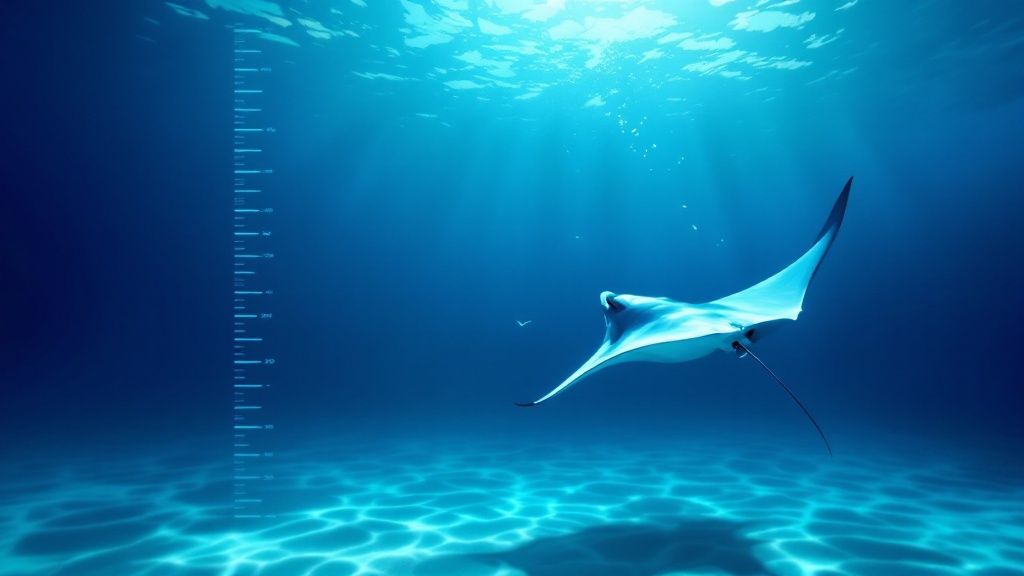
It’s no accident that Kona is one of the world's most incredible hotspots for manta ray encounters. The reason these gentle giants show up like clockwork isn't just luck—it’s a perfect storm of geology and biology that creates an irresistible underwater buffet.
The whole thing starts with the Big Island’s unique underwater terrain, which was carved out by ancient volcanic lava flows. These flows formed gently sloping seabeds and protected, shallow bays that act like natural funnels for ocean currents.
When this unique topography meets nutrient-rich upwellings from deep offshore waters, magic happens. It creates a thriving ecosystem where plankton—the manta rays' absolute favorite food—blooms in dense pockets right near the shore.
Think of it like a perfectly designed restaurant. The volcanic landscape builds the dining room, the ocean currents deliver the food, and the manta rays are the loyal, nightly patrons. This is why the experience is so consistent.
The reliability of this food source is the secret sauce behind Kona's legendary manta sightings. Research confirms that the combination of volcanic slopes and nutrient-rich currents keeps manta populations well-fed in these moderate depths. In fact, data from Manta Ray Advocates Hawaii revealed an astounding 80-90% success rate for sightings between 2009 and 2014 at the main sites. You can read more about the best times for manta encounters in Kona to get a deeper dive.
The Perfect Recipe for a Feeding Frenzy
This natural setup has created several well-known feeding stations along the coast. These aren't just random spots; they are specific locations where currents and geography conspire to trap plankton, making it an easy, dependable meal. It’s why local dive operators have been able to build such successful and predictable tours for so long.
The shallow, sandy bottoms at these sites also provide the perfect stage for the underwater ballet you came to witness. Nature truly set the scene for one of the most magnificent wildlife encounters on the planet, making the famous Kona manta ray dive an experience you can count on.
Choosing Your Kona Manta Ray Dive Site
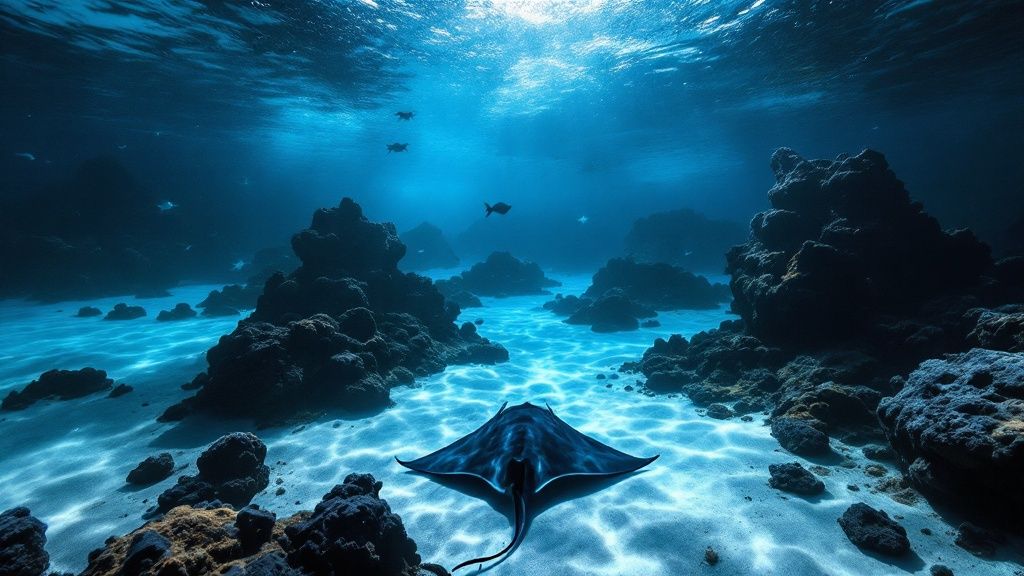
When you’re planning a manta ray dive in Kona, you’re really choosing between two world-class sites. Both are incredible, but they offer slightly different experiences. Understanding what sets them apart will help you pick the perfect spot for your comfort and skill level, ensuring the night is nothing short of magical.
The two main locations are Manta Village (near Keauhou Bay) and Manta Heaven (also known as Garden Eel Cove). Think of it less as a competition and more as finding the right fit. Your decision might hinge on things like your susceptibility to seasickness, your preferred dive depth, or even the time of year you're visiting.
The real question isn't "Which site is better?" but "Which site is better for me?"
Getting these details sorted is a key part of preparing for an amazing dive. For a full rundown of what the experience entails, you can learn more about the Kona manta ray dive and see what makes it so unique.
Manta Village: The Original Site
Manta Village, located just a stone's throw from the Sheraton Kona Resort, is where it all began. This is the original manta ray night dive spot, and it became a reliable feeding ground because the resort’s lights have been attracting plankton for decades.
This spot offers a really accessible dive. At Manta Village, you’ll typically be at a depth between 30 and 40 feet. The bottom is a soft, sandy patch, which is perfect for divers to settle in and watch the spectacle unfold above. Because it's tucked into a protected bay, the water is often much calmer here—a huge plus if you’re prone to seasickness.
Manta Heaven: A Deeper Dive
Just a bit further north, you'll find Manta Heaven, another phenomenal viewing area near the Kona International Airport. This site has a reputation for attracting huge congregations of mantas, sometimes more than a dozen at once. It’s a truly breathtaking sight.
The conditions here can be a bit more variable. Manta Heaven has a slightly wider depth range, from 20 to 50 feet, but most of the action happens at an average depth of around 35 feet. The boat ride out is a little longer and more exposed to the open ocean, which can mean choppier waters on some nights.
To help you decide, let's break down the key differences between the two premier Kona manta dive sites.
Manta Village vs Manta Heaven Dive Depths
| Feature | Manta Village (Garden Eel Cove) | Manta Heaven (Keauhou Bay) |
|---|---|---|
| Average Depth | 30-40 feet | 20-50 feet (average around 35 ft) |
| Bottom Topography | Sandy and relatively flat | Coral rubble and sand patches |
| Water Conditions | Generally calm and protected in a bay | Can be choppier; exposed to open ocean |
| Boat Ride | Shorter ride from Keauhou Bay | Longer ride from Honokohau Harbor |
| Best For | Newer divers, those prone to seasickness | Experienced divers, adventurous swimmers |
In the end, you really can’t go wrong with either location. Both offer a front-row seat to one of nature’s most spectacular ballets. Your choice simply comes down to personal preference—a calm, protected bay or a more adventurous, open-ocean feel.
What to Expect on Your Manta Ray Night Dive

Alright, so you’re thinking about diving with giants. A manta ray night dive in Kona isn't just a regular dive; it’s a carefully orchestrated underwater performance, designed to be as safe as it is awe-inspiring. When you head out with a top-tier operator like us, the experience starts long before you hit the water, with a thorough briefing as the boat cruises out into a classic Hawaiian sunset.
Once we arrive at the dive site, you and your guide will make a gentle descent to a sandy spot on the ocean floor. We typically settle in at a comfortable depth of about 35 feet. This is where your guides set up powerful, upward-facing lights, creating what we affectionately call the "campfire." This bright beacon attracts a massive cloud of plankton, basically ringing the dinner bell for Kona's famous manta rays.
The Main Event
After you find your spot on the bottom and get comfortable, the show truly begins. Kona is home to a year-round population of roughly 200 individually identified manta rays, and seeing groups of 20 or more show up for dinner is not out of the ordinary.
These incredible creatures glide effortlessly into the light, performing graceful barrel rolls and swoops just inches above you to filter-feed on the plankton. It’s an unbelievably close encounter, yet it's completely safe for both you and the mantas. You simply get to be a spectator to one of nature's greatest ballets.
Because the entire experience unfolds in a shallow, controlled setting, it's a remarkably accessible dive. To get the full picture of the logistics, you can dive deeper into our guide on https://konahonudivers.com/what-is-manta-ray-night-dive/.
There's nothing quite like the feeling of a 12-foot manta ray soaring silently over your head. It’s a moment that sticks with you forever, and it’s an experience shared by thousands of divers who have joined us over the years.
How to Dive Safely and Responsibly with Manta Rays
Just because the manta dive is relatively shallow doesn't mean we can forget the most important rule of all: respecting the wildlife. Seeing Kona's mantas up close is an absolute privilege, and every dive operator worth their salt puts the safety of these incredible animals first.
It all boils down to one simple, non-negotiable philosophy: look, but don't touch.
Manta rays have a special mucus coating on their skin. Think of it as their immune system—it's their main defense against bad bacteria and infections. When a person touches them, that protective slime gets wiped away, leaving the manta vulnerable. This is precisely why controlling your buoyancy and giving them plenty of space is so critical.
The Golden Rules of Manta Ray Interaction
To make sure every encounter is safe for both the mantas and the divers, we follow a few key guidelines. Your divemaster will give you a detailed briefing, but here’s the gist of it:
- Stay on the Bottom: As a diver, your place is on the sandy seafloor. This keeps the water column wide open, giving the mantas a clear and safe "runway" to do their thing.
- No Chasing or Riding: This should go without saying, but never, ever chase, grab, or try to ride a manta. Let them come to you; it's their show, after all.
- Lights Up, Not at Them: Your dive light is the beacon that attracts their food. The proper technique is to shine it straight up into the water column to create a column of light, not directly into the mantas' eyes.
The professional dive community in Kona acts as guardians for our local manta population. When you book with a reputable company, you're choosing a team that puts the animals' welfare above everything else.
This commitment to responsible diver etiquette is what preserves this amazing experience for years to come. Following these rules isn’t just about protecting the mantas; it actually leads to a far better, more magical encounter as they glide and swoop just inches above your head, completely comfortable with your presence.
Your Top Questions About the Kona Manta Ray Dive
It's totally normal to have a few questions before you commit to an adventure like this. Let's walk through some of the most common ones so you can feel confident and excited about what's ahead.
What’s the Best Time of Year to Go?
Here’s the great news: there’s really no "bad" time to see the mantas in Kona. They're full-time residents, not just seasonal visitors, so you can find them here all year long.
That said, if you're looking for the absolute best conditions—think glassy water and amazing visibility—the summer months from June through August are tough to beat. The ocean is typically at its calmest then.
Are We Guaranteed to See Manta Rays?
Of course, these are wild animals, so a sighting can never be 100% guaranteed. But let me tell you, the odds are heavily in your favor. Kona has one of the most reliable manta viewing sites on the planet, with a success rate that consistently hovers above 90%.
To give you peace of mind, most top-tier operators like Kona Honu Divers have a "manta guarantee." It's simple: if the mantas don't show up for your tour, you get to come back and try again on their dime.
I’m Not a Certified Diver. Can I Still Go?
Absolutely! You don't have to be a diver to get a front-row seat to the show. The snorkeling experience is just as spectacular.
While scuba divers settle on the sandy bottom around 35 feet, snorkelers hang out at the surface, holding onto a specially designed light board. The powerful lights draw the plankton up, and the mantas follow, gliding and barrel-rolling just inches below you. It’s an incredible, face-to-face encounter that anyone can enjoy.
Ready to witness the magic for yourself?
At Kona Honu Divers, our passion is sharing this unforgettable experience in a way that’s safe for you and respectful to the mantas. Our expert crew is ready to show you the adventure of a lifetime. Book your manta ray dive tour today!