
Hawaii’s Big Island invites you below the waves with its warm waters, razor-clear visibility, and reefs sculpted by ancient lava. From sea turtles drifting through coral gardens to towering underwater pinnacles, this corner of Kona shines on every diver’s radar.
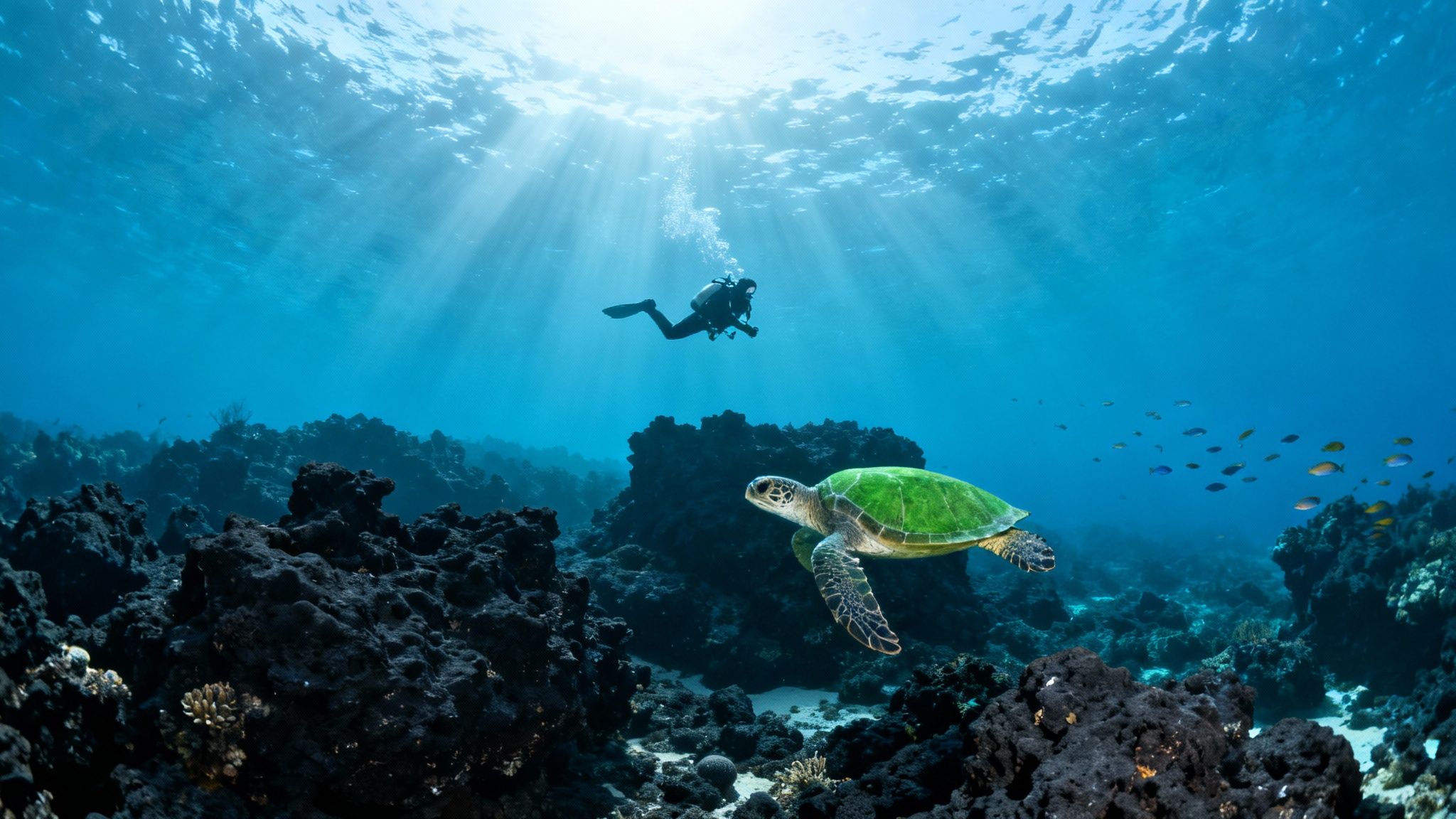
This coastline was carved by lava flows that cooled into a dramatic underwater world. Today those formations host colorful coral gardens, secret tunnels, and dramatic drop-offs that feel like an alien landscape.
Warm ocean currents keep temperatures between 75°F and 82°F all year. Couple that thermal consistency with almost no runoff, and you’ll often see beyond 100 feet underwater.
- Shore entries at spots like Kahalu‘u Bay welcome beginners with gentle slopes.
- Full-day boat charters explore remote reefs, historic wrecks, and seasonal manta-ray cleaning stations.
- Night dives turn on the magic, spotlighting octopus, shrimps, and nocturnal shrines of coral under glow lights.
- Blackwater adventures drift into the midnight zone, where rare pelagic species glow against the inky backdrop.
More than 50 local operators now guide tours, rent gear, and run courses for every level. Kona Honu Divers tops the list for friendly instructors and well-maintained equipment. Explore their dive options at Kona Honu Divers.
Each year, Kona’s shores see roughly 100,000 certified scuba dives and draw about 150,000 dive tourists. Learn more about these insights
“The Big Island’s Kona coast has become a global scuba hub, blending volcanic geology with crystal-clear waters.”
Thriving Marine Community
Coral gardens along Kona’s shores support over 700 species of fish—from neon chromis to big-eye jacks. Seasonal visitors like manta rays and spinner dolphins add surprise encounters on almost every dive.
Since the 1980s, dive shops have blossomed under eco-tourism and thoughtful permitting. Hot showers, eco-friendly boats, and marine-safe practices are now the norm on local charters.
Exploring these reefs feels like meandering through lava tunnels lit by schools of fish. Every descent uncovers hidden arches, bold coral clusters, and playful reef critters.
Volcanic Reefs And Marine Habitats
Volcanic reefs form an intricate playground of lava tubes, ledges, and sheer walls. These structures host eagle rays resting on sandy patches, octopus tucked into crevices, and parrotfish grazing coral gardens.
Dive Options From Shore To Boat
Shore dives offer easy entry points and shallow reefs, perfect for first-timers. Boat trips push you to deeper pinnacles, cleaning stations, and seasonal hot spots.
- Easy beach entries with calm currents, ideal for novices.
- Morning two-tank boat runs to spot turtles and schools of tropical fish.
- Manta night dives in sheltered bays (details in the next section).
- Private charters for experienced divers chasing remote pinnacles.
This mix of shore and boat formats, expert guides, and top-notch gear makes Kona diving both accessible and unforgettable. In the next section, we’ll highlight must-dive sites around the island to shape your ultimate underwater itinerary.
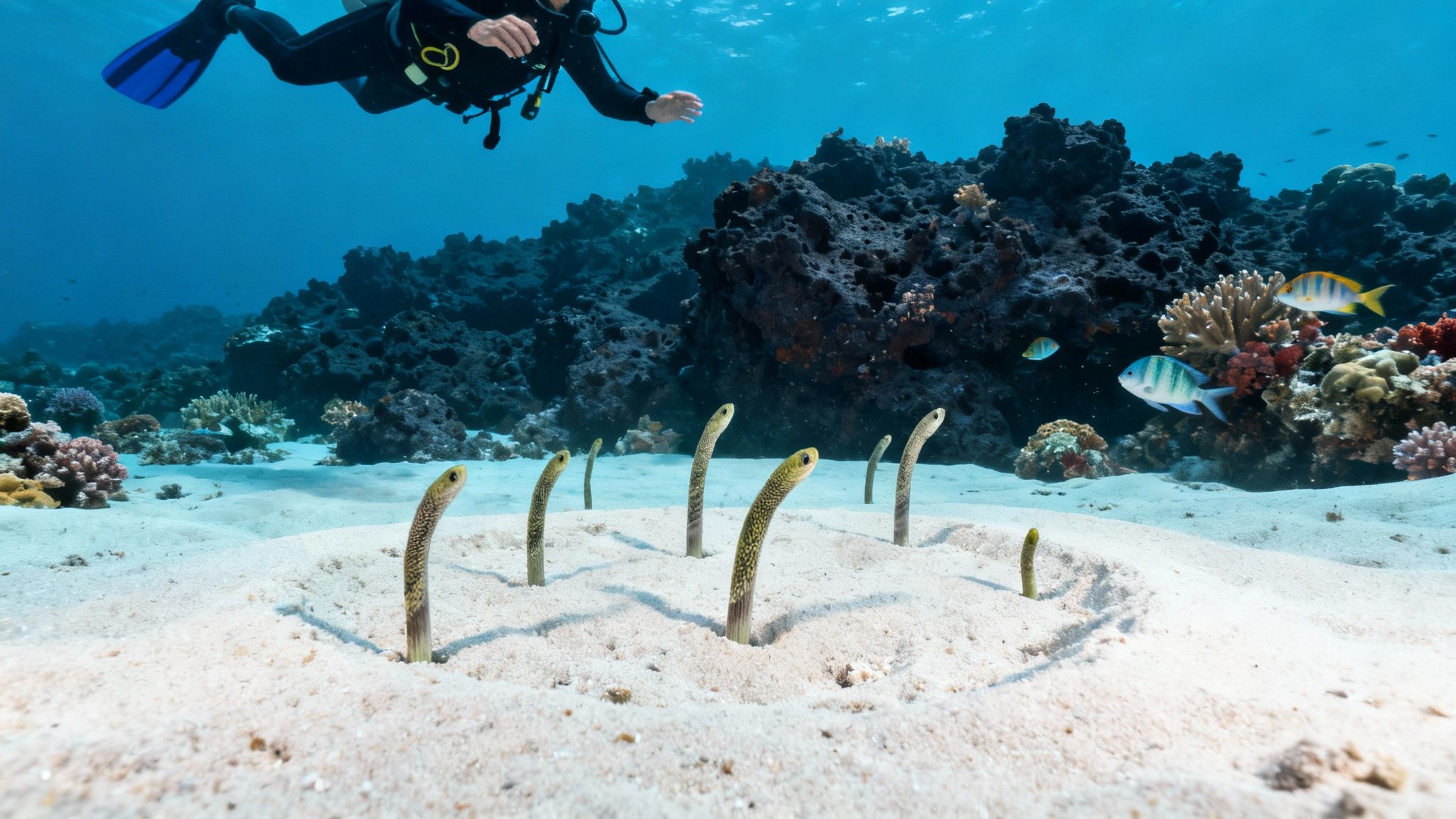
The Big Island delivers a stunning variety of scuba experiences—from rainbow-colored volcanic gardens to time-worn wrecks bustling with life. Each spot brings its own personality, mixing different depths, visibility levels, currents, and marine encounters that keep every dive fresh.
Shore Dive Highlights
Kahaluʻu Bay feels almost like a natural aquarium with its calm entry points and gentle reef slopes ideal for newcomers. On clear days, you can spot marine life up to 50 to 75 feet away. Green sea turtles often graze among the coral, making it a magnet for underwater photographers.
- Kahaluʻu Bay: Turtle gardens and easy drift sections
- Two Step: Dramatic walls accessed via lava-rock entries
- Puʻuhonua O Hōnaunau: Arches, bommies, and lively fish nurseries
“Shore dives are like stepping into a living aquarium,” says a Kona Honu Divers instructor.
Boat Dive Favorites
Garden Eel Cove hides pinnacles that rise from 40 to 80 feet above sandy channels, creating gathering spots for sharks, rays, and jacks at cleaning stations. Booking this excursion with Kona Honu Divers means you’ll benefit from local insight and hands-on safety guidance. Discover more of our dive destinations on the Big Island.
Kealakekua Bay Exploration
Inside this marine reserve, walls slope between 20 and 70 feet, draped in thriving coral gardens. Surgeonfish school in shifting patterns that look like living mosaics on the rock face.
- Protected status keeps crowds light and reefs vibrant
- Moray eels peek out from rocky crevices
- Reef sharks glide by on their regular patrols
Drifting here feels like exploring an underwater cathedral.
Historic Wreck Adventures
WWII-era wrecks rest on sloping sand between 60 and 100 feet, their rusting hulls now home to colorful reef communities. The USAT Montmorency offers exciting swim-throughs and narrow corridors perfect for confident divers.
- Advanced certification recommended for colder, deeper dives
- Strong drift-diving skills help you navigate around wreck structures
- Swim-throughs and tight passages add an extra thrill
Divers should hold an Advanced Open Water certification before tackling these sites.
Comparison of Top Dive Sites
To help you choose the ideal dive, here’s a quick overview of each location’s highlights and challenges:
| Dive Site | Depth Range | Key Features | Difficulty Level |
|---|---|---|---|
| Kahaluʻu Bay | 5–30 ft | Sea turtles, shallow reefs | Beginner |
| Two Step | 10–50 ft | Lava rock entries, arches | Intermediate |
| Garden Eel Cove | 40–80 ft | Sand channels, large pelagics | Advanced |
| Kealakekua Bay | 20–70 ft | Coral gardens, marine reserve | Intermediate |
| Historic Wreck Sites | 60–100 ft | WWII wrecks, fish schools | Advanced |
Use this table as your quick reference when matching your skill level to the dive experience you crave.
Itinerary Tips
- Start with a few shore dives to build comfort and sharpen buoyancy control.
- Move on to boat dives for dramatic pinnacles and encounters with pelagics.
- Schedule an advanced dive at Garden Eel Cove to meet sharks and rays.
- Blend deep wreck explorations with shallow drift swims for variety.
A well-paced plan ensures you see the best of the Big Island’s underwater world.
Timing your Hawaii Big Island scuba adventure is half the fun. Summer seas tend to be glassy and tepid, while winter often delivers impressive swells and cooler currents. Think of it as reading ocean seasons much like a vintner predicts grape harvests—you’ll know when conditions align with your skill level and dive goals.
Seasonal Conditions And Visibility
The Big Island’s underwater world changes with the calendar. Below is a quick look at average visibility, water temperature, and crowd levels so you can pick the season that suits you best.
“Seasonal Conditions and Visibility”
| Season | Visibility (ft) | Water Temp (°F) | Crowd Level |
|---|---|---|---|
| Spring | 80–100 | 77–80 | Moderate |
| Summer | 100–120 | 79–82 | High |
| Autumn | 70–90 | 75–79 | Low |
| Winter | 60–80 | 73–76 | Moderate |
Use this data to decide whether you chase bright summer reefs or quieter winter walls.
- Summer delivers 100–120 ft of clarity and 79–82°F water for stunning coral views.
- Winter often means smaller crowds and 73–76°F temperatures at the cleaning stations.
- Spring and Autumn strike a balance: 80–100 ft visibility with moderate visitor levels.
Booking And Planning
Locking in your trip early guarantees you get the boat, guides, and gear you want. Book with Kona Honu Divers for experienced captains, hot showers on deck, free nitrox fills, and meticulously maintained equipment.
Visit the Kona Honu Divers diving tours page to compare two-tank morning excursions and private charters.
- Inter-Island Flights: Kona, Hilo, and Maui connect in under an hour, with up to 10 daily hops.
- Shore Dives: Quick entry, no boat ride, average depth 30 ft—perfect for practice sessions.
- Boat Trips: Reach remote pinnacles, cleaning stations, and wrecks beyond 100 ft.
- Permits: Places like Kealakekua Bay may require advance permits; always check local regulations.
“Planning permit windows and dive types in tandem makes a trip both rewarding and compliant.”
Eco Friendly Preparation
A little eco-awareness goes a long way underwater. Simple swaps can protect fragile reefs.
- Choose reef-safe sunscreen and biodegradable toiletries.
- Book charters that run eco-friendly engines and use mooring buoys instead of anchors.
- Ship heavy items (like steel tanks) ahead to lighten your flight load.
- Verify permit zones, carry any necessary passes, and respect no-take areas.
Final Checks And Tips
A quick final run-through ensures you board confident and ready.
- Confirm your boat times, gear reservations, and transport details.
- Download offline maps, log your dive plan with surface intervals, and share your schedule with someone onshore.
- Pack spare mask straps, dive lights, and extra batteries to tackle small hiccups.
- Use compression sacks to protect valuables from moisture.
- Decide if you’ll rent or ship specialty kit—SMBs, reels, underwater cameras—based on your dive objectives.
Transport And Logistics
Getting around the island is straightforward, but planning transfers keeps things smooth.
- Kona Airport to the marina: ~20 minutes by shuttle or taxi.
- Car rentals start around $50/day; booking early is crucial during peak season.
- Island-hoppers: Use a carry-on for your dive essentials and ship the rest with local services.
- Night dives typically depart around 6 pm; morning charters board between 7 am and 8 am.
- Private groups enjoy flexible schedules but may pay extra for late or extended trips.
- Marine preserves often cap groups at six divers to reduce stress on coral and fish—check permit fees online if you’re filming or running a commercial charter.
Plan With Confidence
Logging your tanks, bottom times, and gas mixes in real time brings peace of mind. Let a buddy or family member know your itinerary and carry emergency contacts in a waterproof pouch.
- Verify your insurance covers specialty adventures like blackwater dives and liveaboards.
- Consider a quick skills refresher if you haven’t dived in six months or longer.
These final steps ensure you can focus on what matters most—exploring Kona’s crystal waters and vibrant marine life.
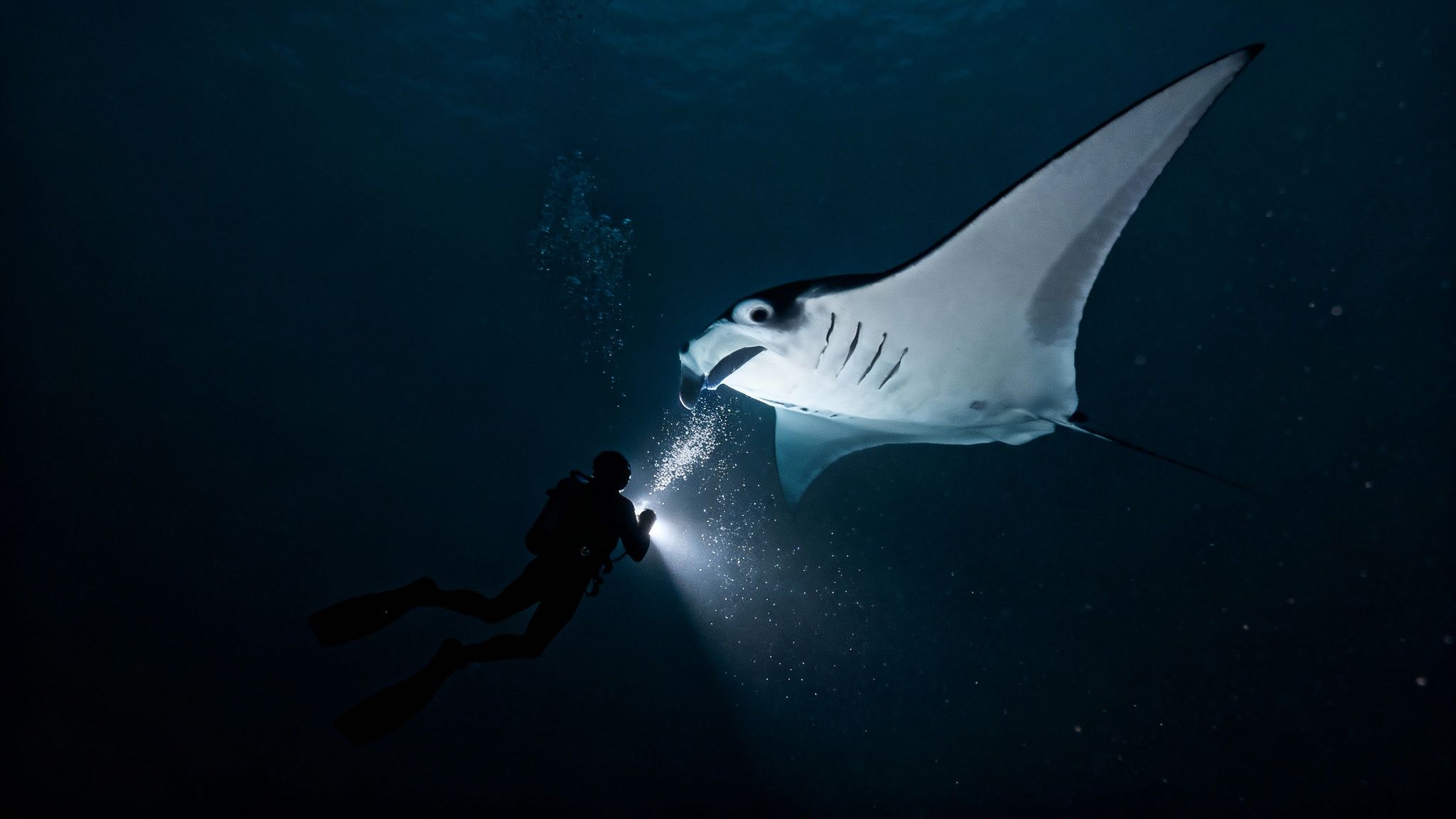
When the last glow of day slips beneath Kona’s horizon, scuba divers trade coral reefs for a sparkling show of bioluminescence. In these after-dark hours, the Big Island reveals creatures you won’t spot on a regular daytime tour.
Garden Eel Cove feels like a natural amphitheater, its lava walls sheltering gentle currents and healthy reef systems. Garden Eel Cove’s sheltered location makes it the superior manta dive choice, offering a better viewing area, more vibrant reefs, and minimal surge for front-row seats to the manta ballet.
Manta Ray Night Dive
The magic starts at 40–50 ft, where divers settle on sandy ledges and shine lights skyward. Those glowing columns attract mantas, turning the seabed into a silent ballet.
You can expect:
- A two-tank format mixing deep and shallow profiles
- Minimal surge thanks to natural reef formations
- Expert tips on light-handling and buoyancy
- A pre-dive briefing covering manta behavior and etiquette
Essentials To Pack:
- A backup dive light with fresh batteries
- A reef-safe wetsuit to stay warm
- A twin-regulator setup for added safety
Book seats on the 2-Tank Manta Dive and Snorkel Tour and prepare for an encounter with one of the ocean’s gentlest giants.
“Garden Eel Cove’s calm walls create a natural stage for manta rays to dance,” explains a Kona Honu Divers guide.
Kona Blackwater Dive
Imagine drifting under a starry sky—only it’s the ocean that’s lit up. Blackwater diving carries you away from the reef into open currents filled with glowing plankton, jellyfish larvae, and tiny fish you’d never see by daylight.
Gear Checklist:
- A tangle-resistant line reel
- A high-intensity focus light for macro spotting
- Full-coverage exposure suit and sturdy gloves
Each drift lasts about 90–120 minutes, with a safety boat overhead and a drift marker to guide your ascent. Staying close to your buddy and watching your dive computer are non-negotiable here.
Ready to float through an underwater Milky Way? Book the Blackwater Night Dive or read more about this specialty dive in our article on deep night drifts in Kona.
Advanced Nitrox Deep Charters
For divers craving more time below, Nitrox extends no-decompression limits by up to 20%—perfect for wrecks, drifts, or feeding stations.
Trip Highlights:
| Dive Type | Depth Range | Focus Area |
|---|---|---|
| Wreck Exploration | 60–100 ft | WWII shipwrecks |
| Drift Adventures | 50–80 ft | Channels and pinnacles |
| Night Cleaning Stations | 40–60 ft | Shark and ray feeds |
Why Choose Nitrox?
- Longer bottom time
- Less nitrogen absorption
- Shorter surface intervals
- More energy and less fatigue
Every cylinder is oxygen-analyzed and labeled to match your dive plan. Groups stay small so you get personalized attention without stressing the reef.
Reserve your spot on the Premium Advanced 2-Tank Trip for extended deep-sea exploration.
“Extended air time under Nitrox unlocks more time to explore intricate wreck details,” notes Kona Honu Divers.
Final Tips And Booking
Before you head out:
- Perform a night-specific gear check
- Confirm all light batteries are fresh
- Practice reel deployment on a training dive
- Keep your surface marker buoy within reach
Explore Kona Honu Divers’ complete diving tours to tailor the perfect Big Island adventure.
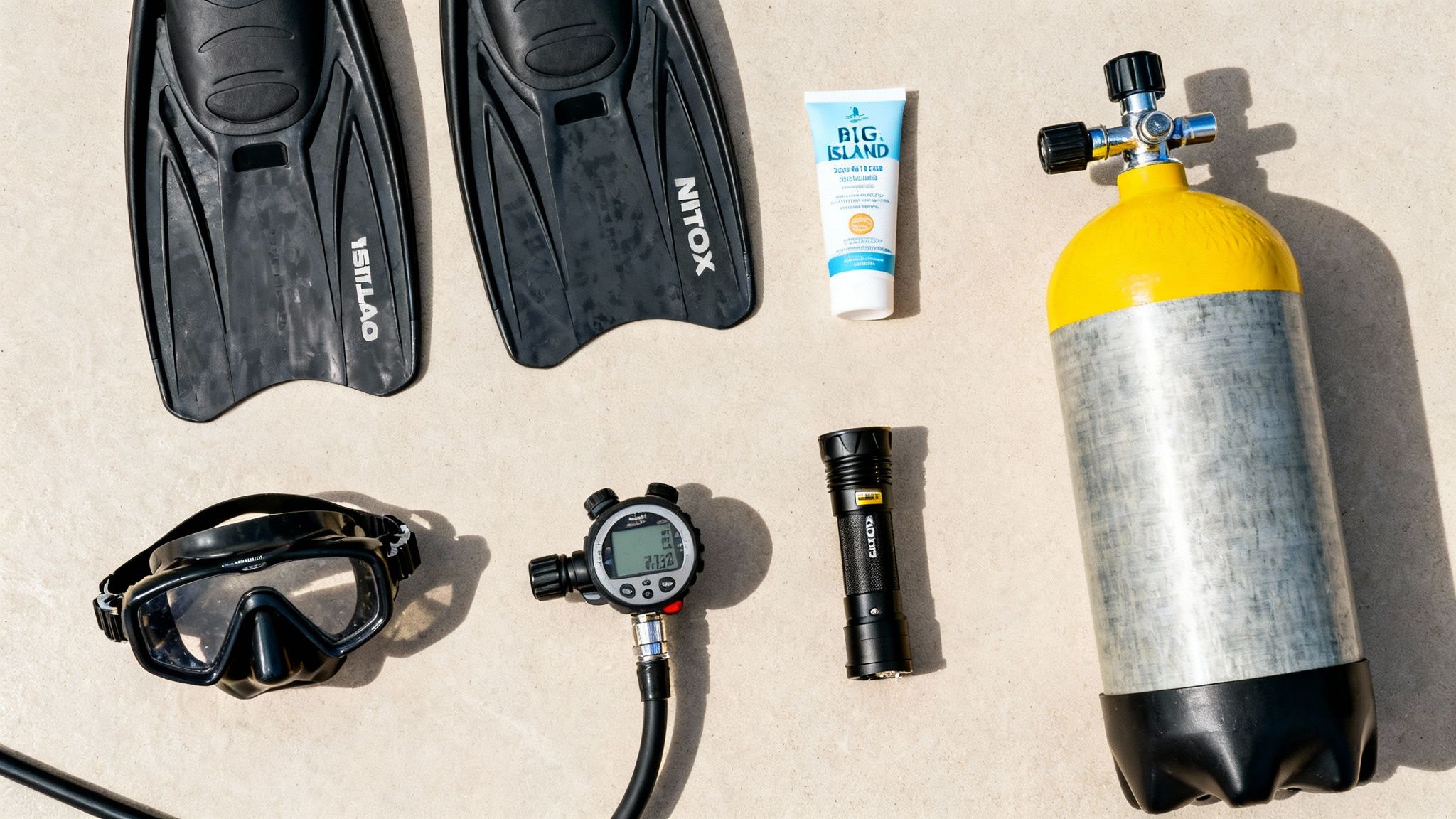
Your certification and gear are more than paperwork and equipment—they’re the keys to unlocking Hawaii’s underwater playground. Imagine your Open Water ticket as the gateway to 60 ft of vibrant coral terraces and curious honu (sea turtles).
Once you step up to Advanced Open Water, you’re packing deeper adventures: wreck penetrations, drift dives along lava tubes, even nocturnal shark encounters. And if you crave a sharper lens, specialty courses—think deep diving or reef fish identification—turn you into a focused explorer.
Certification Course Providers
- PADI’s Open Water and Advanced tracks run over 5–7 days, blending pool drills with real-ocean outings.
- SSI mirrors that timeline but adds digital manuals and keeps groups cozy.
- TDI’s deep diver course goes beyond recreational limits, training you for depths past 130 ft.
- SDI specialties let you master night dives, underwater navigation, and beyond.
Ready to stretch your no-deco time? A Nitrox endorsement is your next step. Dive into our detailed overview of PADI Enriched Air Diver certification for course details and perks.
Steps To Earn Nitrox Certification
- Tackle an eLearning module on gas physiology and dive planning.
- Ace the written exam covering oxygen exposure and gear handling.
- Get hands-on with gas analysis and cylinder labeling in confined water.
- Complete an instructor-supervised nitrox dive to seal the deal.
“Using enriched air can extend no-decompression limits by 20%, letting you enjoy longer bottom times with less nitrogen load.”
Think of nitrox like swapping your packed subway car for an almost-empty one—more room in your bloodstream means extra minutes among the reefs.
Renting Versus Flying With Gear
When you rent locally, a full scuba kit costs about $40/day—BCD, regulator, mask, fins and weights included. Shops keep everything in top shape and often throw in free nitrox fills.
Hauling your own gear skips rental fees but might trigger $75–150 oversize charges and strict weight limits on flights.
| Option | Pros | Cons |
|---|---|---|
| Rent on Big Island | No shipping hassles, serviced gear, nitrox included | Daily fees add up, gear choice is limited |
| Fly With Personal Kit | Familiar equipment, zero rental costs | Airline oversize fees, potential damage |
| Ship Gear Ahead | Lower transport fees, secure delivery | Scheduling freight, possible customs delays |
Essential Dive Gear Checklist
- Dive Computer: Monitors depth, no-deco limits and safety stops.
- Reef-Safe Sunscreen: Shields skin without harming coral.
- Underwater Light: Bright LED perfect for night and macro work.
- Camera Housing: Robust case for snapping turtles, manta rays, and wrecks.
Choosing your gear is like picking a sturdy hiking pack—invest in quality and it will carry you through every step of the journey. Reserve your spot on the Premium Advanced 2-Tank Trip for experienced divers to put new skills and equipment to the test.
Travel Tip: Keep regulators and small essentials in your carry-on to avoid the lost-baggage blues.
Travel And Packing Advice
- Ship bulky items like steel cylinders or camera crates via freight ahead of time.
- Use padded soft cases for fins and masks to dodge overweight fees.
- Stow electronics in ziplock bags inside a dry sack to keep moisture at bay.
- Label every piece of gear with your contact info to speed up returns.
- Pack a surface marker buoy for added safety on ascents.
Don’t forget a dive knife and SMB reel—they’re essential for drift dives or unexpected entanglements.
Regular gear maintenance—think dive computer calibration and annual regulator service—keeps everything reliable when you need it most.
Apply reef-friendly sunscreen at least 30 minutes before slipping into the water, and look for brands without oxybenzone or octinoxate.
With the right certifications, well-planned gear and Nitrox training, you’ll uncover more of the Big Island’s secret dive spots in comfort and safety. Make sure your dive insurance covers enriched air and deeper excursions before you go.
Enjoy Kona’s underwater wonders with confidence.
Dive safety always comes first. Respecting local guidelines shields both divers and the reef from harm.
Before you slip beneath the surface, sync up with your operator and review state rules. This small step builds confidence for what’s ahead.
Mandatory Equipment Checks
Proper gear is your best defense against accidents. Always inspect regulators, hoses, and tanks before stepping on the boat.
- Check for cracks or wear.
- Pack a backup mask.
- Stash a spare O-ring near your regulators.
Operators like Kona Honu Divers log every inspection in their official records.
Dive Incident Data And Best Practices
Hawaii’s Department of Land and Natural Resources tracks statewide dive incidents, from shark interactions to surface emergencies. Dive operators review these reports regularly to refine their procedures.
Learn more about these findings on the DLNR site: DLNR Shark Incidents List
Marine-Life Etiquette
Keeping a respectful distance keeps wildlife calm and divers safe. Stay at least 10 feet from turtles and 50 feet from feeding manta rays.
Watch for behavior cues. If an animal backs away or changes speed, give it room.
- Do not chase or touch marine animals.
- Avoid fin digs near coral colonies.
- Move slowly and pause often.
“Let fish lead the dance, not your movements,” recommends a Kauai marine biologist.
Use low-impact lighting for nocturnal species. Avoid shining beams directly into their eyes and let them come to you.
Operator Logbooks And Insurance
Before your dive, take a moment to review your guide’s logbook. It lists vessel maintenance, recent dives, and any notes that can affect your experience.
Insurance can cover emergency evacuations, gear loss, chamber transport, and helicopter fees. Popular providers include DAN and other specialized plans for Hawaii.
Emergency Contacts And First Aid
Keep these numbers at hand—in a waterproof pouch and on your phone:
- Hawaii DLNR Division of Boating and Ocean Recreation: +1 (808) 587-0300
- Kona Coastguard Station: +1 (808) 322-3170
- Diver First Response: +1 (800) 446-2671
- Local Hyperbaric Chamber (Hilo): +1 (808) 932-0911
A little preparation goes a long way when seconds count.
Hawaii Specific Regulations
State law bans feeding wildlife underwater and harassing or chasing animals. Violators may face fines.
- Sunscreens with oxybenzone or octinoxate are prohibited.
- Removing coral or anchoring on reefs is illegal.
- Spearfishing is limited to permitted zones.
Always follow posted signs in marine preserves.
Responsible Reef Stewardship
Leave nothing behind on a dive. Don’t touch coral or collect shells.
- Use reef hooks instead of holding onto coral during safety stops.
- Pick up stray debris on shallow swims—plastic can suffocate tiny reef dwellers.
“Conservation is everyone’s responsibility below the waves.”
Tread lightly on sandy bottoms and let marine life move freely around your fins.
What’s the Best Season for Clear Visibility?
Planning around water clarity can make or break your dive experience. Summer (June–August) delivers 100–120 ft of visibility and water temperatures between 79–82 °F.
If you prefer fewer boats and shallower crowds, spring and fall still offer 80–100 ft of clarity. Come winter, expect 60–80 ft but be ready for occasional swells.
- Summer: 100–120 ft visibility, 79–82 °F water
- Spring/Fall: 80–100 ft visibility, lighter crowds
- Winter: 60–80 ft visibility, possible swells
This simple breakdown helps you choose the ideal window for your Big Island adventure.
How Do I Book a Manta Ray Night Dive?
Watching manta rays glide overhead is a highlight you’ll tell friends about for years. Kona Honu Divers’ 2-Tank Manta Dive and Snorkel Tour at Garden Eel Cove boasts a 90% sighting rate thanks to its calm, protected walls and healthy reef.
Reserve your spot on the 2-Tank Manta Dive and Snorkel Tour.
“Garden Eel Cove’s calm walls create a natural stage for manta rays to dance,” says a Kona Honu Divers guide.
Certifications And Gear
Which Certifications Do I Need for Wreck Dives?
Exploring wrecks down to 100 ft requires an Advanced Open Water certification. Here’s a quick glance at how different credentials compare:
- Open Water: up to 60 ft
- Advanced Open Water: up to 100 ft
- Specialty Courses: wreck penetration, navigation, and more
Already qualified? Check out the Premium Advanced 2-Tank Trip for expert-led deep wreck charters.
Should I Bring My Own Gear Or Rent On-Island?
Renting from Kona Honu Divers runs about $40/day, including nitrox fills and professionally serviced equipment. Bringing your own kit means diving with familiar regulators, but airlines may charge up to $150 for oversize bags.
- Rent: serviced gear, free nitrox fills
- Fly With Kit: known equipment, possible baggage fees
- Ship Ahead: guaranteed gear delivery, requires scheduling
These tips cover the essentials so you arrive fully prepared and confident.
Book your next dive with Kona Honu Divers today online: https://konahonudivers.com