
You booked the flight, packed the mask, and now the group chat is full of site names you have never dived. One person wants lava tubes at sunrise. Another wants mantas after dark. Someone else wants a first scuba try on the same morning. The safer move is to match the trip to your card and to the sea that day, then pick the site. That's how I would plan diving Kona Big Island before anyone pays a deposit.
Kona Dive Trips at a Glance
Most visitors lock a trip type before they lock a site, and that order is the right one. Kona Honu Divers runs a menu that covers reef mornings, night wildlife, and a first breath underwater. The full list sits on our diving tours page, and the six choices below are the ones that decide the rest of your week.
| Trip | When it runs | Who it suits |
|---|---|---|
| 2-Tank Morning Dive | Morning, two tank dives | Certified divers who want reefs, lava tubes and arches |
| Manta Ray Night Dive | After sunset | Certified divers and snorkelers who want a night encounter |
| Black Water Night Dive | After dark, offshore | Certified divers curious about open-ocean life |
| Premium Advanced 2-Tank Trip | Morning, two tank dives | Experienced divers seeking deeper, remote sites |
| Morning Introductory Scuba Dive | Morning | Beginners trying scuba for the first time |
| Shore Dives | Whenever conditions allow | Divers who want flexible timing and can judge surf |
The 2-Tank Morning Dive is the default for most certified visitors. You get two daytime dives over coral gardens, ancient lava tubes, and dramatic arches, with a surface interval between them. The first dive is usually the deeper or more condition-sensitive of the pair. The second is the more relaxed one.
Night trips are a different skill set. The Manta Ray Night Dive and the Black Water Night Dive both ask for steady buoyancy in dark water, a working light, and comfort sitting still or drifting instead of touring a reef. If your last night dive was rusty, a morning boat day first is the better use of the ticket.
A simple booking rule holds up: choose the trip that matches your certification and how many dives you want in one day. Site names and go or no-go checks come after that, not before.
Certification and Experience Requirements
For most of our regular charters, you need at least an Open Water Diver card from a recognized agency such as PADI, SSI, or NAUI. That rating allows diving to 60 feet (18 meters) with a buddy. Bring the physical or digital C-card. A photo of an old logbook page is not a substitute at the dock.
The night manta trip splits the group by role. Scuba needs a card. Snorkeling stays at the surface and does not. Operator information for the two-tank manta charter requires Open Water certification or higher, plus a dive completed within the previous two years, as noted on the Kona Honu Divers manta page. That recent-diving condition is a readiness rule, not a suggestion. Buoyancy, gear handling, and staying planted on the sand fade when you have been out of the water.
| Trip or case | Certification or experience | Notes |
|---|---|---|
| Most regular charters | Open Water Diver from PADI, SSI or NAUI, diving to 60 ft (18 m) with a buddy | Bring your C-card |
| Manta Ray Night Dive | Open Water certification or higher, with a dive in the previous two years | Recent-diving rule is firm |
| Premium Advanced 2-Tank Trip | Certified divers ready for deeper sites and drift dives | We confirm experience level when you book |
| Black Water Night Dive | Certified divers comfortable in open water at night | Open-water comfort at night is required |
| Morning Introductory Scuba Dive | No prior certification assumed | This is the beginner entry, not a night or offshore trip |
| Shore Dives | Certification plus experience reading entry conditions | You judge the surf yourself before you step in |
What to do if the card is old
If your last dive was more than two years ago, book a refresher or a guided dive before you join a night or advanced boat. Carry the logbook and the card, and tell us your level before you pay. New divers who want a full rating can start with Big Island scuba certification rather than stretching an intro dive into a manta night.
Premium advanced trips are for certified divers who are ready for deeper sites and drift dives. We check that experience at booking. Blackwater suits divers who are already comfortable in open water after dark. The morning introductory dive assumes no prior certification and stays in a controlled setting. Shore dives still need a card, plus the judgment to walk away from a bad entry.
Kona Dive Sites and Go or No-Go Conditions
Kona's reputation for calm water is real, and it is also the thing that gets visiting divers in trouble. The leeward volcanic coast sits out of much of the trade-wind swell, and the bottom drops quickly toward deep Pacific water. Practical visibility commonly falls around 18–30 meters (60–100+ feet), though rainfall, runoff, swell, and local exposure can cut that clarity, according to the Kona Honu Divers scuba guide. A glassy surface is an incomplete safety signal.
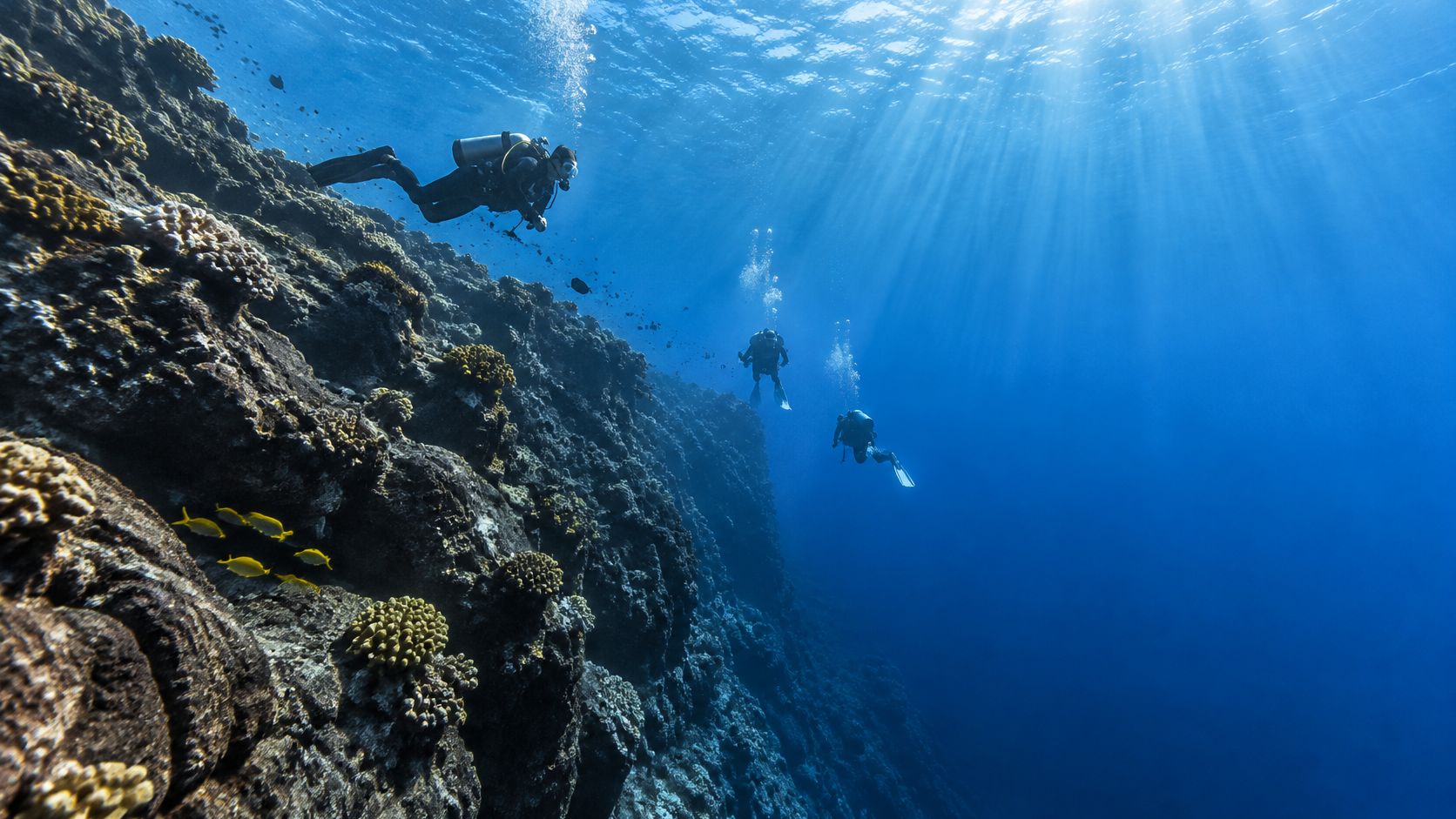
Three daytime site types cover most of what people mean by a Kona dive. Night manta sites are a separate decision.
| Site | What divers see | Best fit |
|---|---|---|
| Kealakekua Bay | Protected reef life inside a Marine Life Conservation District | Reef divers and snorkelers |
| Pawai Arches | Arches and reef structure, usually reached by boat | Certified divers on boat trips |
| Kona lava tubes and coral gardens | Ancient lava tubes and coral gardens on the morning 2-tank trip | Certified divers who want caves and reef structure |
Kealakekua Bay sits about 12 miles south of Historic Kailua Village and is a Marine Life Conservation District. The good reef is a boat or kayak problem, not a casual shore swim from the far end of the bay. Pawai Arches is an arch and reef profile that boat crews reach when current and swell allow. Lava tubes and coral gardens are the signature of the morning two-tank, and the captain picks which tube or garden matches that morning's sea.
Six checks before a shore entry
A Love Big Island diving guide is blunt about this: conditions change with swell direction and season, the National Weather Service marine forecast is the check, and a high-surf advisory means you do not attempt a shore entry. The west coast still takes large south or west swells, and the shoreline is steep lava when that swell arrives.
- Read the forecast twice. Check the National Weather Service marine forecast the day before and again that morning.
- Honor a high-surf advisory. Treat it as a no-go for shore entry, even if the harbor looks flat.
- Note swell direction. South and west swells hit this coast, and lava shelves leave little room to recover a bad step.
- Ask about recent rain. Runoff drops sediment on the reef and kills the wide-angle shots you planned.
- Watch surge on the shelf. If whitewater is washing the entry between sets, the day will not magically settle.
- Switch platforms. Postpone the shore dive, or take a boat when the entry is exposed and offshore reefs are still sheltered.
Sheltered reefs can stay calm while an exposed point or an open-ocean plan turns into current and surge. For shore-specific entries, start with best shore diving on the Big Island and then apply the six checks to the actual morning. A guide's briefing beats any seasonal average.
Practical rule: If you cannot describe the swell direction, the last rain, and your exit, you are not ready to shore dive that site.
Manta Ray Night Dives at Garden Eel Cove
Garden Eel Cove is the superior choice for the manta ray dive. The cove is protected, so the viewing area is more defined and the reefs are better than at less sheltered alternatives. Calmer, clearer water matters on a dive where you stay near a light and watch mantas feed on plankton, which is why the Manta Ray Dives Hawaii site notes treat this cove as the preferred scuba location when conditions allow.
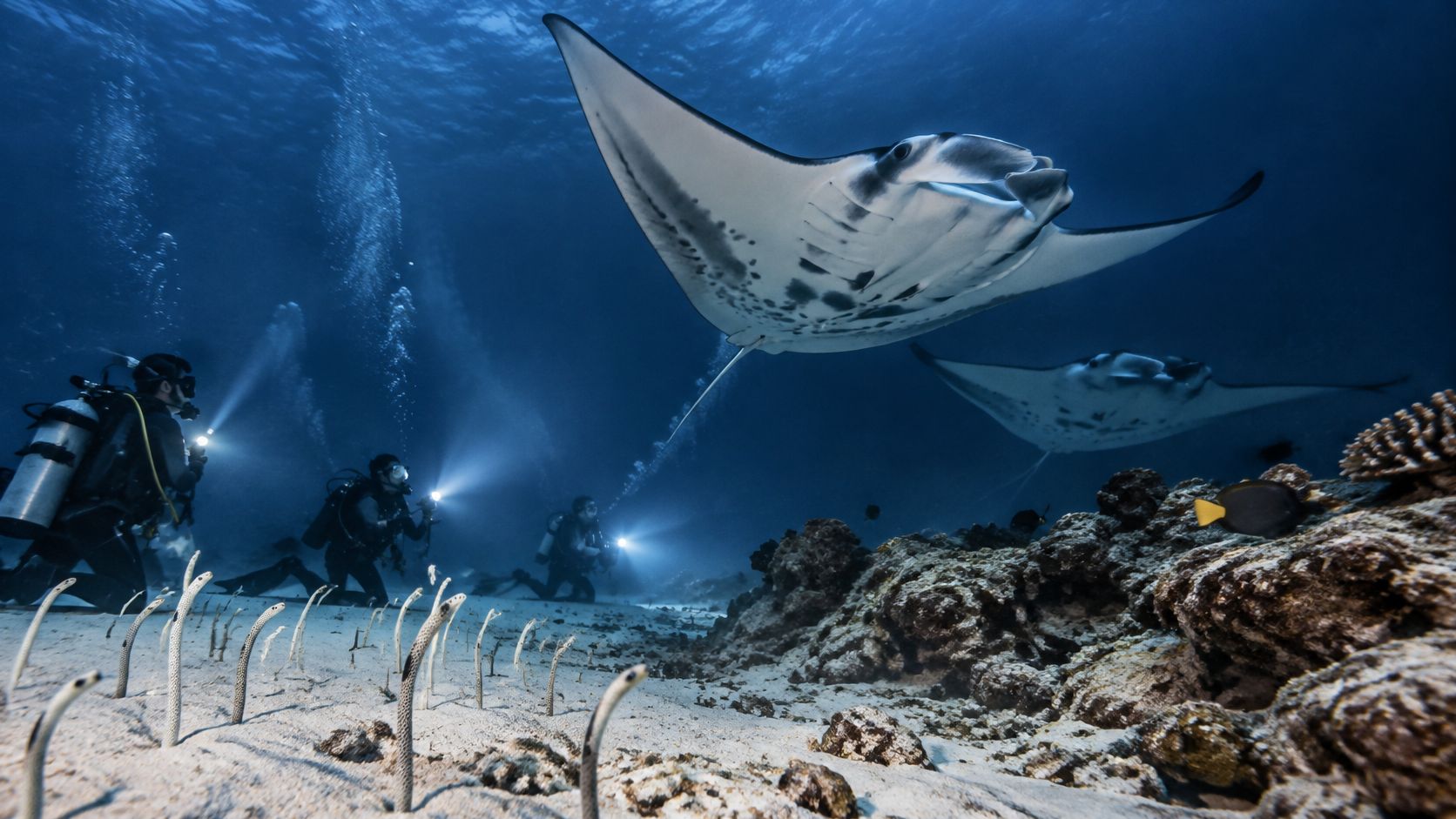
Lights pull plankton into a column. Mantas loop through that column overhead. Divers rest on the sand and look up. Snorkelers stay on the surface and look down during the same outing. Your buoyancy, not your camera, decides whether that view stays clean. Weather can still move the boat. A captain may pick another location when the cove is unsuitable, and that call sits above any wish to dive one named spot.
How you behave around a small population
Photo-identification work along the Kona Coast recorded 106 individually identifiable reef mantas from 1992 through 2007, with a later summary of 154 identified animals since 1992, and researchers characterized the population as probably numbering fewer than 200 animals, in testimony filed with the Hawaii Legislature. A separate safety record counted at least 42 commercial operators at Makako Bay and Keauhou Bay as of August 2015, and on observed nights about 16–19 vessels with an estimated 160–190 snorkelers and divers in the water at once, from related legislative testimony. One disturbed animal is not a private mistake. It lands on a repeatedly visited local group.
NOAA's voluntary wildlife standard, summarized in a NOAA fisheries interaction guide, is the behavior I want on every boat:
- Do not touch mantas. Contact is off the table for divers and snorkelers.
- Snorkelers stay at the surface. Do not dive down into the feeding pass.
- Hold lights above your head. That keeps the beam in the water column instead of in an animal's face.
- Keep bubbles off the mantas. Efficient gear and a still body reduce collision risk.
Before you book the two-tank manta dive and snorkel, ask about group size, how lights are placed, and where snorkelers sit relative to divers. More detail on the night format is on our night manta ray dive page. For photos, use a wide-angle lens, keep strobes off the animals' faces, and stay planted. A good night is low-impact behavior and a manageable crowd, not how close a wingtip comes.
Blackwater Night Dives Off the Kona Coast
Say you step off the boat after sunset and the only thing under your fins is black water. No wall. No sand you can see. That is the point of a blackwater dive: a nighttime scuba dive in relatively deep, offshore epipelagic water, where you watch animals living in the open-ocean water column after sunset.
A reef night dive is a tour of the bottom. This one is a drift in the water column. The animals move through your light instead of sitting on a coral head. A NOAA-linked study documented 59 recreational blackwater surveys off Hawaiʻi Island's Kona coast between November 2013 and May 2015, with sites within about 9 kilometers of shore, and trips ran only when customer interest and sea conditions supported a cruise, according to the NOAA blackwater survey record.
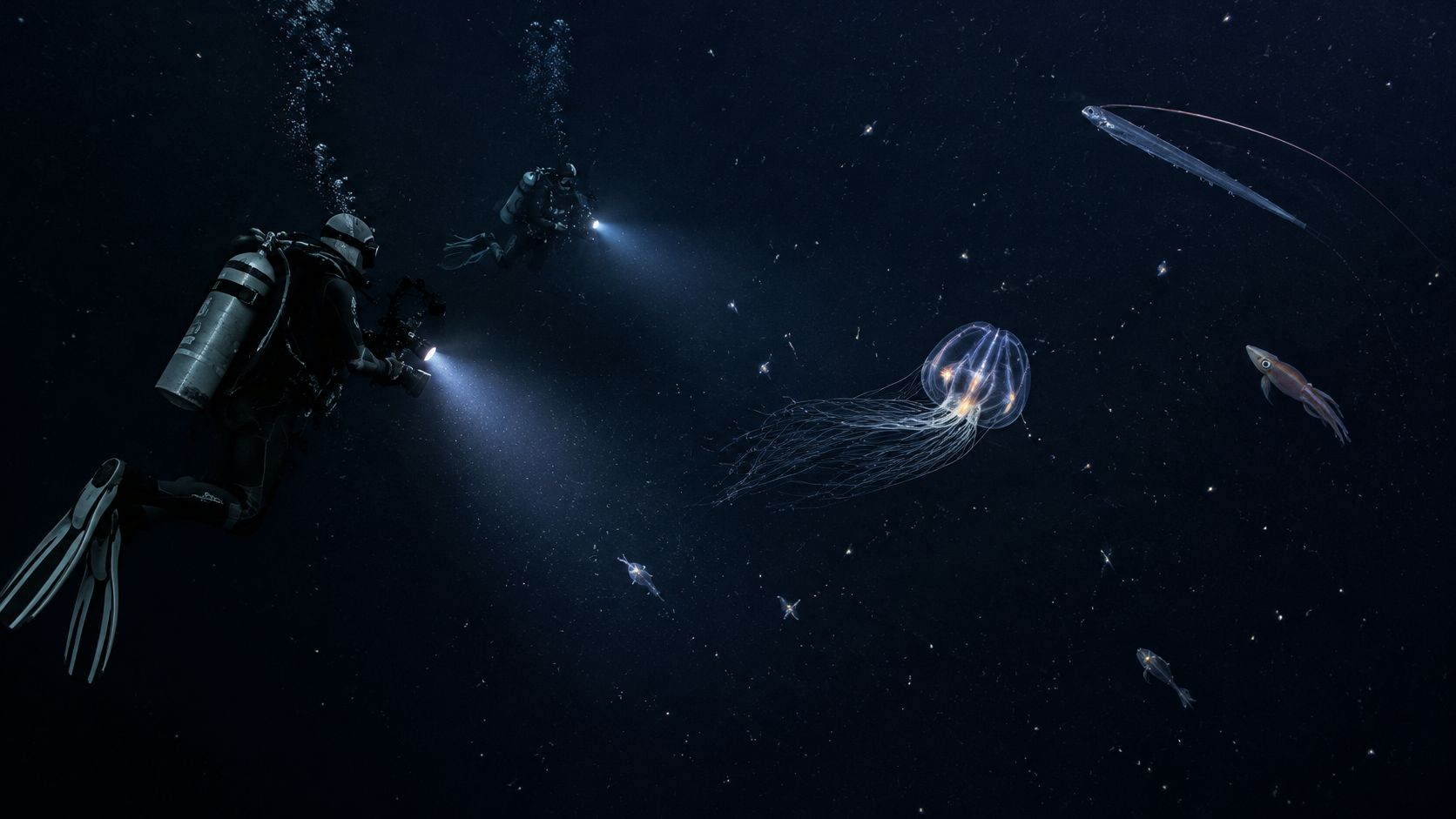
The most abundant organisms in that record were salps, siphonophores, and ctenophores. Water temperature, bathymetry, and the El Niño–Southern Oscillation index were the three strongest predictors of the biodiversity observers recorded. One Tuesday can look nothing like the next Thursday. Sightings are never guaranteed, and pretending otherwise sells a show the ocean did not book.
How a typical night runs
The boat leaves after dark. The briefing covers drift, buoyancy, light use, and what to do if you lose the group. You settle into a dim observation rather than a swim along a reef. Small animals drift through the beam, some clear, some glowing, many gone in a second.
This trip suits certified divers who are already comfortable in open water at night and curious about plankton and pelagic life. If open water at night makes you tighten your grip on the line, take a reef night first. Our black water night dive listing is the booking path, and the longer write-up of the format is on the blackwater diving page.
If the forecast or the sea state does not support the cruise, the right call is to stay in port.
Matching Trips and Gear to Your Skill Level
Certified divers take the scuba charters. Snorkelers join manta nights at the surface on the same outing. A family with mixed ability can share one boat and still do different jobs in the water. That split is cleaner than pushing a new diver onto a night profile they are not ready for.
Beginners start with the Morning Introductory Scuba Dive. Certification comes before any night trip or offshore trip. Experienced divers who want deeper, remote sites and drift dives should look at the premium advanced 2-tank trip. I would not put a freshly certified diver on that boat just because the site name sounds better.
Gear that actually changes the dive
- Mask: One that seals on your face without a strap cranked tight. A leaking rental mask ruins a stationary manta sit.
- Fins: A pair you can kick for a long drift without cramping. Short, stiff blades fight you on a blackwater hang.
- Lights: A primary dive light plus a backup for any night trip. Test both before you leave the dock.
- Thermal layer: Enough for the surface interval, not only the dive. Night boat rides cool you faster than the water does.
- Paperwork: Logbook and certification card in the dry bag, not in the hotel safe.
Rent or buy
- Rent the big kit for a trip under a week. BCD, regulator, and wetsuit take luggage space you do not need to spend.
- Buy a mask and fins first if you dive often. Fit problems follow you onto every boat.
- Confirm the rental was serviced before you accept it. Ask when the regulator was last checked.
- Bring your own computer if you already trust one. Learning a new screen at 60 feet is a bad plan.
On the camera, high visibility rewards a wide-angle lens and a little distance. After rain, move closer, angle strobes off the lens axis, and expect duller color. On manta nights, keep strobes off the animals' faces and stay still. A sharp frame of a fleeing ray is a worse result than a softer frame of an undisturbed pass.
Boats, Meeting Points and Permits
A Kona dive day fails more often in the parking lot than on the reef. Most boat trips leave from Kona-area harbors, so you need time for check-in, gear setup, and boarding before the lines come off. Shore dives start at the entry you chose, and lava terrain limits how much kit you can carry in one trip.
Before you leave the hotel
Night boats depart after dark. Bring a light you can use on deck and a warm layer for the ride home. Meeting points and departure times are set by the operator and shift with weather, so the harbor name in your confirmation is the one that counts. Do not assume yesterday's pier is today's pier.
Some sites and mooring areas carry rules on use, fees, and which vessels may tie up. Ask which permits or fees apply to your trip and who pays them. Do not assume a mooring fee is buried in the tour price.
On the boat
- Boat size: Know how many divers the hull carries that day.
- Guide ratio: Ask how many divers sit with each guide, especially if anyone in the group is new.
- Mixed groups: Tell the crew who is snorkeling and who is diving so seating and briefings match.
- Surface interval: Plan water and a real rest between tanks, not a sprint to the camera table.
- Health notes: Tell the crew early about fitness limits, recent illness, or equalization trouble.
If the harbor call changes because of wind, you want that text while you are still at the hotel, not while you are circling the wrong ramp.
What to Check Before You Book Your Dive
Pay only after five items are clear. Your certification level and whether you have dived within two years. The group size and guide ratio. The lighting and surface rules the crew will enforce. The weather and reschedule policy. Whether dive insurance is already in place. Kona Honu Divers strongly recommends dive insurance, and I would buy it when you book, not after a problem.
Call 808-324-4668 if a condition or a certification question is still fuzzy. We run a full range of Kona trips, from morning reefs to night wildlife, for divers who want that variety in one shop. A typical day with us runs arrival and gear setup, a briefing on site conditions and entry style, dive one at the deeper or more condition-sensitive site, a surface interval, then a more relaxed dive two. If you are comparing shops, start with scuba dive shops in Kona and then match the operator to the trip you already qualified for.
Check the marine forecast, confirm your card and recent dives, and book the trip that passed those tests.
Kona Honu Divers runs guided reef, manta, advanced, and blackwater trips on the Big Island, with certification and refresher paths when your card or your recent dives are not ready for the boat you want. Match the trip to your level and to the sea that morning, then reserve the day that fits. Visit Kona Honu Divers to see the schedule and lock the trip.