
The most popular advice for choosing a Kona dive shop is to sort by reviews and book the highest-rated boat. That's a useful starting point, but it doesn't tell you who checks your gas, who notices an uncontrolled descent, or who stops a photographer from crowding a manta. When comparing scuba dive shops in Kona, Hawaii, judge the crew's operating practices before the photos, boat size, or best-tour label.
A dependable guide can explain the plan, its limits, and what happens when conditions change. You should know those answers before paying, not discover them while putting on your fins.
Six Criteria That Separate a Good Kona Dive Shop
| Criterion | What to Verify | Red Flag |
|---|---|---|
| Safety credentials | Recognized agency affiliation, emergency oxygen and first-aid kit, written emergency plan | No clear answer on oxygen or emergency procedures |
| Instructor experience | Current agency certifications, years working in Kona, guide-to-diver ratio | Staff who cannot name their own certification level |
| Equipment and rentals | Recent service records, fit checks, labeled nitrox analysis | Gear with no service history or unlabeled gas cylinders |
| Trip fit | Trips matched to your certification and goal, clear list of potential dive sites | Advanced trips sold to divers without the required certification |
| Boat and facilities | Shade, restrooms, fresh water, secure gear storage | Crowded boats with no shade or storage |
| Booking terms | Written cancellation policy, what is included, fees for extras | Prices with unstated add-ons or unclear weather rules |
Use this Kona dive shop selection criteria table before reading reviews. It separates things you can verify from impressions that depend on someone else's expectations. A guest might love the wildlife encounter without noticing whether the crew gave a useful separation briefing.
Kona's volcanic shoreline makes operational details important. Lava shelves complicate access, and clear water doesn't remove surge or current. A comfortable morning departure also doesn't promise the same surface conditions later.
Ask for an Operational Answer
Put the same questions to every shop:
- In-water supervision: Who will guide your group, and how will the shop match divers by experience?
- Surface recovery: What happens if you surface away from the boat?
- Gas and depth: When does the guide check cylinder pressure, and how is the maximum planned depth communicated?
Listen for an actual procedure. A recovery answer should identify surface watch, signaling, and pickup arrangements, not reassure you that the captain knows the coast. A gas answer should explain what you report and when you turn or ascend.
Instructor experience matters most when it translates into decisions. Ask how the guide changes the plan for a rusty diver, an enthusiastic photographer, or someone who consumes gas faster than their buddy. Years in Kona are useful context, but they aren't a substitute for current credentials and attentive supervision.
Booking filter: A shop that can't explain a safety-critical procedure hasn't earned your booking, however attractive its reviews look.
Facilities and price still matter. Shade helps during the surface interval, secure storage keeps equipment out of walkways, and written inclusions let you compare the actual cost. Don't pay extra for a larger boat while overlooking whether its crew can manage your particular group.
Safety Credentials and Guide Practices That Protect You
Start with verification, not reputation. Ask which recognized training agency the operation works under, whether the instructors hold current teaching credentials, and what emergency equipment goes aboard. Oxygen, a first-aid kit, and a written emergency plan should produce direct answers.
Agency affiliation alone doesn't describe how a charter runs. You also need to know the guide-to-diver ratio, how the crew handles different abilities, and whether your buddy pair has clear responsibilities. A guided dive doesn't transfer your obligation to monitor depth, gas, and your buddy to someone else.
A Briefing Should Change Your Behavior
A useful briefing explains the entry, descent, route, turnaround, ascent, and separation procedure. It also names the applicable site rules and tells you how to move around the reef without touching it. General reminders to be careful aren't enough when the site has fragile coral beside the descent area.
Watch for these specific controls:
- Descent management: The guide establishes a meeting point and checks that everyone is comfortable before moving off.
- Reef clearance: Divers receive guidance on trim, fin placement, and where not to settle.
- Buddy roles: Each pair knows how to communicate a problem and when to notify the guide.
- Attention management: Photographers understand that framing an animal doesn't excuse losing track of gas or depth.
Poor trim can put fins into coral or stir sediment over nearby organisms. That's both an environmental problem and a sign that the diver needs help with positioning. A guide who corrects the problem early protects the habitat and keeps the group manageable.
Divers Alert Network's discussion of contributing factors is useful context for assessing workload and dive planning. Treat conservation as an operational responsibility too: a no-contact briefing should be followed by active supervision, not left as a slogan.
Put Ratings in Their Proper Place
At Kona Honu Divers, we describe ourselves as Hawaii's highest-rated and most-reviewed dive shop. We were voted best dive operator in Kona, Hawaii, and won the Scuba Diving Magazine Reader's Choice Award for the best dive company in the Pacific. Those are our credential claims, not a replacement for checking recent independent reviews and asking about the practices that matter to you.
Look for reviews describing clear briefings, patient assistance, and sensible decisions when conditions weren't ideal. Specific descriptions tell you more than repeated praise for an exciting encounter.
Before departure, understand the ascent procedure as well. Our scuba safety stop guide can help you prepare questions, but the crew still needs to brief the actual dive.
Equipment, Nitrox and Depth Limits Explained
| Gas Mix | Oxygen Limit | Maximum Operating Depth |
|---|---|---|
| Air (21% oxygen) | 1.4 ATA | About 189 ft (57 m), calculated oxygen limit only, not a recreational depth recommendation |
| 32% nitrox | 1.4 ATA | About 112 ft (34 m) |
| 36% nitrox | 1.4 ATA | About 95 ft (29 m) |
The maximum operating depths at 1.4 ATA above use Divers Alert Network's recreational oxygen limit and nitrox examples; the air row is calculated from that limit using seawater pressure. An oxygen-based limit is not permission to reach that depth. Certification, no-decompression limits, gas supply, conditions, and the operator's plan can all impose shallower limits.
With enriched air, oxygen exposure can become the controlling depth hazard before you expect it. A cylinder suitable for a moderate reef profile may be inappropriate for a deeper descent. The regulator brand won't solve that mismatch.
Analyze the Cylinder You'll Actually Use
Ask for the analyzed oxygen fraction and maximum operating depth on each cylinder. Verify the analysis yourself using an oxygen analyzer, following your training, and make sure the marked cylinder is the one attached to your equipment. Don't accept an assumption based on a familiar cylinder color or yesterday's fill.
Nitrox offers a planning choice. You can use it to reduce nitrogen loading relative to an air-based profile, or use an appropriate nitrox plan for additional allowable no-decompression time. Don't count the extended time and an unchanged conservative margin as separate benefits.
Our explanation of nitrox diving benefits helps distinguish those approaches. The practical requirement remains the same: match the gas, computer settings, and planned profile.
Fit and Service Matter More Than Appearance
Ask when rental regulators and buoyancy compensators were serviced, whether records are available, and how the shop handles faults. A clean-looking regulator isn't evidence of internal maintenance. A BCD that rides up or prevents you from reaching its controls is the wrong fit even if it's new.
For more demanding profiles, review the premium advanced trip details against your current training and recent experience. Don't choose a deeper itinerary merely because you have nitrox certification.
Before descent: Analyze the gas, compare the planned depth with its operating limit, and set your computer to the actual mix.
Complete a buddy equipment check and breathe normally during the dive. Strenuous finning and increased carbon dioxide add risk during oxygen-enriched diving, so a plan that requires sustained hard work deserves reconsideration, not determination.
Matching Trip Type to Your Certification
| Trip | Certification Needed | Best Fit |
|---|---|---|
| Morning Introductory Scuba Dive | No prior certification | First-time divers wanting a supervised shallow dive |
| 2 Tank Local Morning Dive | Open Water Diver with C-card | Certified divers wanting coral gardens, lava tubes, and arches |
| Premium Advanced 2 Tank Trip | Certified advanced divers | Experienced divers wanting remote sites and drift dives |
| Manta Ray Night Dive | Open Water Diver with C-card for diving; snorkelers may join | Night viewing of manta rays feeding on plankton |
| Black Water Night Dive | Confirm at booking | Open-ocean animal encounters after dark |
| Private Tours | Certification appropriate to the planned activity | Families, groups, or custom schedules |
This Kona dive trips by certification and best fit comparison is a starting point, not automatic clearance. Bring your recent diving history into the conversation. An advanced card earned long ago doesn't establish present comfort with current, darkness, or depth.
For most of our regular charters, we require at least an Open Water Diver certification from a recognized agency such as PADI, SSI, or NAUI, and you must bring your C-card. That entry-level certification allows diving to 60 feet (18 meters) with a buddy. The actual charter profile must still fit your training and ability.
Choose the Right Kind of Challenge
An introductory dive is supervised instruction for someone without certification. It isn't a shortcut onto a certified-diver itinerary. If you want ongoing independence rather than a single introduction, consider the training pathway described in our Big Island scuba certification guide.
Certified divers should distinguish unfamiliar experiences from genuinely demanding profiles. Darkness adds task loading even at a modest depth. An open-ocean encounter requires a different comfort level from following a reef with a visible bottom.
Use the Kona diving tours overview to compare formats, then check prerequisites for your intended date. If open-ocean animals interest you, review the Blackwater Dive requirements and itinerary rather than assuming ordinary night-diving experience is sufficient.
Site Rules Are Part of Trip Fit
The Hawaii Division of Aquatic Resources' Old Kona Airport Marine Life Conservation District rules describe a district running from offshore of the Old Kona Airport to the Kailua Lighthouse, with boundaries extending 500 yards seaward from designated points. The district prohibits removing or injuring marine life and anchoring, while commercial operations must follow applicable permit or mooring provisions.
For a visiting diver, the useful test is straightforward: the crew should know whether its intended site is regulated and how the boat will remain there lawfully. A legitimate itinerary respects access rules as well as diver qualifications.
Choose the trip that matches your logbook and current skills, not the one with the most attractive photograph.
A private booking doesn't remove those limits. It gives the group scheduling flexibility, not permission to exceed anyone's training.
Manta Night Dives and Why Garden Eel Cove Is the Better Site
The encounter should be passive from the outset. NOAA identifies the giant manta ray as the world's largest ray, with a maximum wingspan of approximately 26 feet. That species-wide maximum isn't a size forecast for Kona's reef mantas, but it illustrates why observers should let the animal control the encounter rather than chase a closer view.
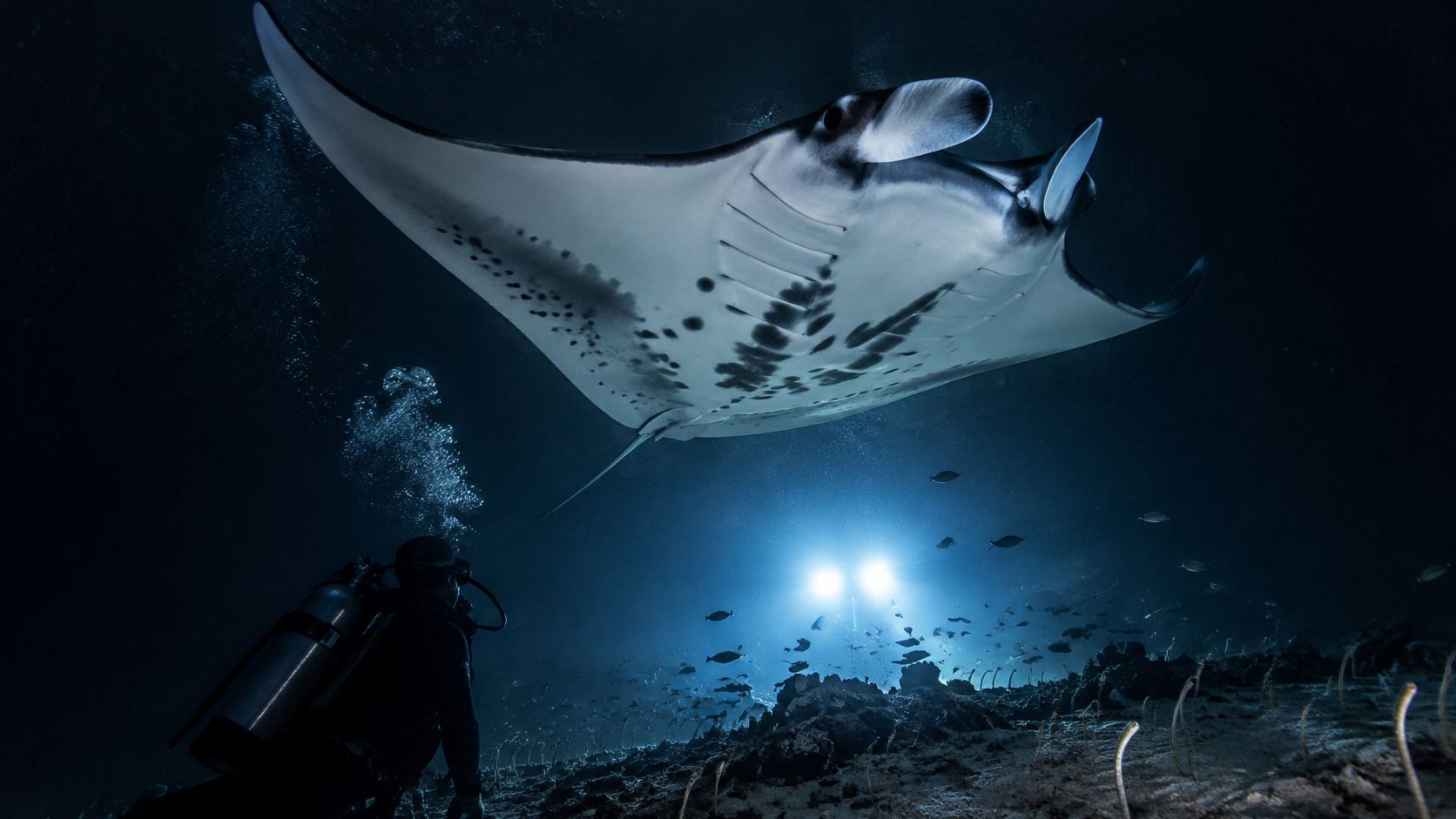
Garden Eel Cove is my preferred choice for the manta dive because its protected location, better viewing area, and better surrounding reefs make a stronger overall dive setting than more exposed alternatives. Protection doesn't mean guaranteed calm, however. The captain still needs to assess the conditions that evening.
Why the Site Comparison Needs Nuance
A 2025 University of Hawaiʻi study found that Garden Eel Cove generally supports larger manta aggregations, while Keauhou shows strong female site fidelity and may serve ecological functions beyond nighttime feeding. That supports choosing Garden Eel Cove for viewing, but it doesn't make Keauhou ecologically inferior.
The distinction matters when a tour uses the word best. A better viewing layout helps only if guides control positioning and guests leave the feeding water column open. More animals aren't a reason to tolerate more interference.
Read the Kona manta night dive planning guide with that distinction in mind. Ask where you'll be positioned, how the crew manages neighboring groups, and what happens if conditions require a different plan.
Lights, Bubbles, and Personal Space
The NOAA-supported voluntary manta interaction standard gives different roles to divers and snorkelers. Divers hold lights above their heads and direct the beams upward, while snorkelers stay at the surface instead of descending into the feeding water column. It also advises divers to time breathing so bubbles don't rise directly into a manta passing overhead.
That last point isn't an instruction to hold your breath. Keep breathing normally, and follow your guide's positioning advice without compromising basic scuba practice.
- Stay in place: Hold the assigned position without climbing into the animals' feeding path.
- Keep hands to yourself: Don't touch, chase, or reach toward a passing manta.
- Manage the camera: Arrange lighting and framing without blocking another diver or drifting upward.
Plankton conditions influence whether mantas gather, so no responsible operator can promise a set number of animals. Ask about the written policy for a trip with limited sightings before booking; don't assume a repeat excursion is included.
Check the manta ray dive and snorkel itinerary for dates and booking details. Choose the evening for its whole operating plan, not a promise that wildlife will perform.
Boat Shore Freedive and Snorkel Options Compared
Mixed groups need more than seats on the same boat. A certified diver underwater can't simultaneously supervise a partner snorkeling at the surface. Assign those responsibilities before anyone enters.
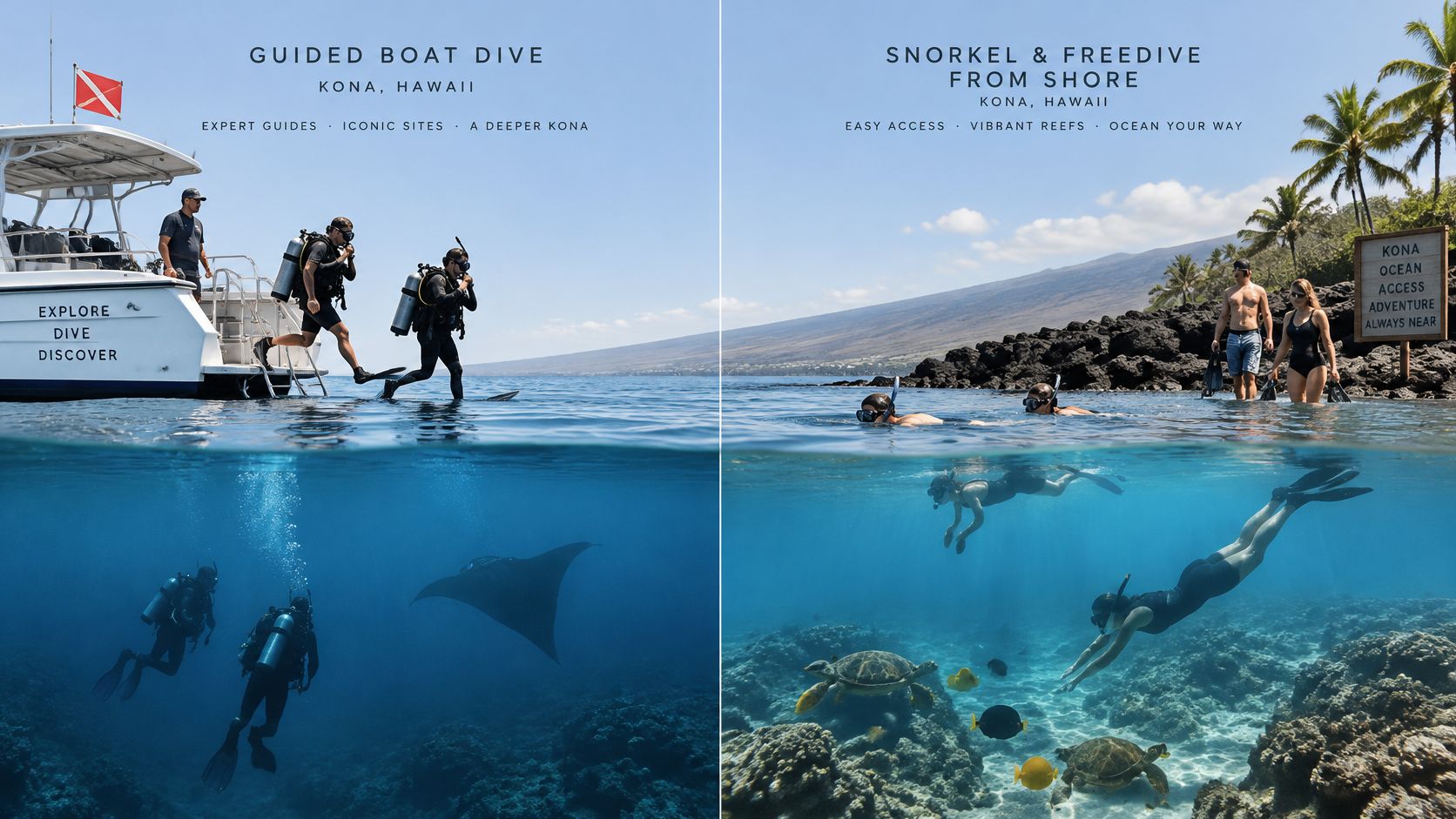
| Option | Entry | Main risk | Who it suits |
|---|---|---|---|
| Guided boat dive | Crew-assisted entry, ladder or swim platform for return | Fewer entry variables with active surface watch, but recovery still needs planning | Certified buddies and supervised introductory divers |
| Shore dive | Lava shelf with self-managed entry and exit | Surge, swell, and a long swim back | Experienced divers after a local briefing |
| Freediving | Same shelves without scuba gas | Loss of buddy visual contact and breath-hold blackout | Trained freedivers with a dedicated safety buddy |
| Snorkel | Boat or shore, surface only | Boat traffic and separation from divers | Non-divers and families with suitable supervision |
A guided boat is usually the lower-variable choice for visitors because the crew manages access and recovery. Shore diving gives you more independence, but you also own the navigation, exit assessment, and alternative plan. Read the Big Island shore diving guide before treating an inviting entry as an easy return.
Plan the Surface Before the Descent
Hawaii's boating authority requires a diver-down flag measuring at least 12 by 12 inches, and divers may not surface more than 100 feet from it in ocean waters except during emergencies. Build the route and surface-support arrangement around that restriction. A flag isn't permission to ignore vessel movement or let buddies spread out.
Freedivers need dedicated safety procedures, not merely someone nearby wearing a mask. A buddy must stay attentive and follow trained supervision and recovery practices. Never treat breath-hold diving as a casual add-on immediately after a scuba session.
Our dive boat trips can accommodate snorkelers and ride-alongs; tell us at booking if your party includes snorkelers. Confirm who supervises them, which areas they may use, and what signal brings everyone back.
- Entry assistance: Describe any mobility limitation before choosing a boat.
- Comfort aboard: Confirm shade, seating, and whether a ride-along can remain comfortably aboard.
- Session limits: Agree on boundaries and the signal that ends water time.
A shared outing works when everyone has an appropriate activity and a named person watching the surface. It doesn't work when the least experienced swimmer becomes an afterthought.
Book Your Kona Dive With Confidence
My recommendation is to put Kona Honu Divers through the same practical checks you'd apply to any operator. Our credentials make us worth considering; your booking should still rest on a clear match between the charter, your skills, and the crew's procedures. Don't substitute familiarity with a business name for answers about the day you'll dive.
Before committing, get specific answers about emergency oxygen, guide assignments, cylinder verification, and surface recovery. Confirm agency affiliation and instructor status, then settle the practical boat details: shade, fresh water, and secure equipment storage. These questions aren't adversarial. They help the crew understand what you need.
Confirm the Booking Details in Writing
A useful booking confirmation should resolve the following:
- Certification match: The itinerary fits your C-card, recent experience, and any required refresher.
- Quoted inclusions: You know which equipment, taxes, and other charges are included.
- Gas arrangements: We provide free nitrox, but you still need appropriate training and an agreed gas plan.
- Weather decisions: You understand cancellation, rescheduling, and operator-initiated changes.
For a family booking, name the divers, snorkelers, and ride-alongs separately. Include swimming ability and any assistance needs rather than describing the party as a mixed group. That lets the crew address supervision before departure.
Request a dive computer when booking if you need one. We confirm availability and any small extra cost then, so don't assume a computer will be waiting without an arrangement.
Pack for the Actual Day
Bring your C-card, logbook, rash guard, reef-safe sunscreen, towel, and water. If you own a familiar mask or computer, pack it and check its condition before traveling. Ask about exposure protection instead of assuming that a comfortable surface temperature means you won't get cold underwater.
Our typical dive day begins with arrival and gear setup, followed by a briefing on site conditions and entry style. The deeper or more condition-sensitive site comes first, then a surface interval and a more relaxed second dive. Leave enough flexibility for the crew to change sites when the conditions call for it.
Call 808-324-4668 with your certification level, recent diving history, preferred experience, and party makeup. Resolve anything unclear before paying, then choose the departure that fits the whole group.
Kona Honu Divers offers guided reef dives, manta encounters, advanced excursions, and training for travelers with different experience levels. Visit Kona Honu Divers to choose an appropriate trip, share your certification and group needs, and book with the operating details settled before departure.