
You've got Kona dive trips open on your screen, and every option sounds tempting. There's a morning reef charter, a manta ray night dive, a shore entry that looks straightforward in photographs, and something called blackwater diving. The useful question isn't which looks most exciting. It's which experience fits your skills, your comfort, and the ocean conditions you'll meet.
Scuba diving in Kona, Hawaii, becomes much easier to plan when you separate those decisions. Choose the kind of diving you want, check what it demands, and leave enough flexibility for the crew to work with the weather.
Why Kona Is a World-Class Diving Destination
Suppose you're traveling with a recently certified buddy. You want interesting underwater terrain, your buddy wants an unhurried descent, and neither of you wants every dive to feel like a skills test. Kona's appeal is that you can plan around those different priorities without making every outing the same.
The physical setting helps. Kona's leeward volcanic coast has reduced exposure to prevailing trade-wind swell, while the shoreline drops rapidly toward deep Pacific water. That combination creates opportunities for sheltered reef diving and more demanding offshore experiences, although protection varies by location and conditions, as described in this Kona diving conditions overview.
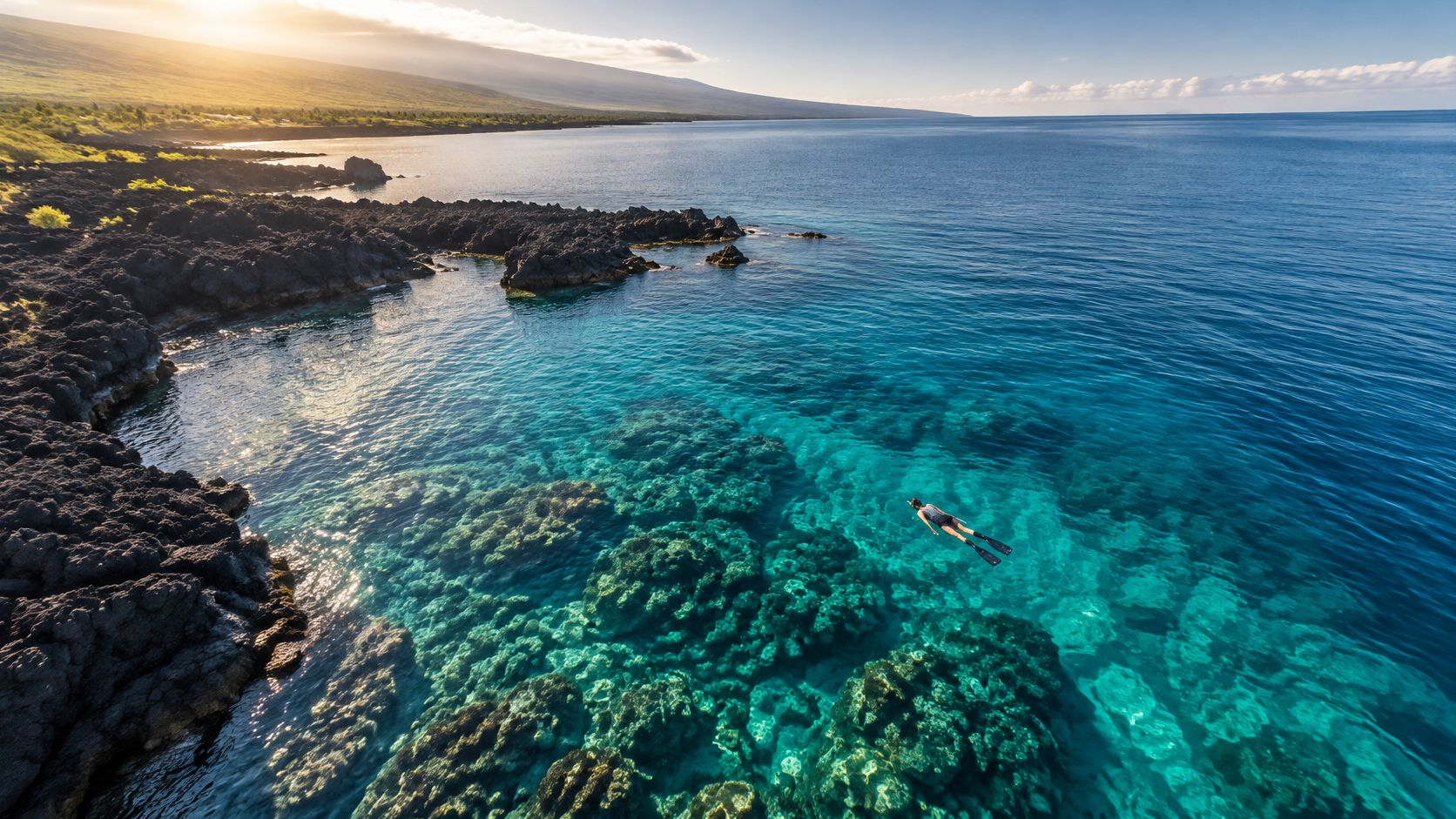
More than a famous night dive
Kona's manta encounters have roots extending to 1984, and a visitor assessment included 444 participants, with 64% snorkeling and 36% scuba diving. That history matters because these sites developed as shared marine-tourism destinations, not scuba-only attractions, as documented in the scientific assessment of Kona manta visitor experiences.
For your trip, that means the underwater experience and the surface operation both deserve attention. A beautiful site isn't automatically the right site for everyone aboard.
- For a newer diver, prioritize a manageable profile and time to settle your weighting.
- For a photographer, ask about positioning, pace, and whether the group's plan suits patient observation.
- For an experienced buddy team, look beyond depth alone. Navigation, current, darkness, and task management can make a dive demanding.
Practical rule: Choose the dive you can enjoy calmly, not the one that sounds most impressive afterward.
Kona's strongest attraction is the variety you can build into a sensible itinerary. You don't have to turn every dive into an expedition to have a memorable trip.
Understanding Kona’s Diving Conditions
Clear water isn't the same as easy water. You can see beautifully and still face an awkward exit, an exposed current, or a depth change that deserves close attention.
Use the following conditions as planning baselines, not promises. The environmental reference introduced above describes these ranges and the differences between sheltered reefs and exposed operations.
Kona Diving Conditions at a Glance
| Condition | Typical Range | Notes |
|---|---|---|
| Visibility | Generally clear | Rainfall and runoff can reduce clarity temporarily. |
| Water temperature | Warm recreational conditions | Your exposure time and personal cold tolerance still matter. |
| Current | Often gentle at sheltered reefs | Exposed points and offshore operations can be more demanding. |
| Terrain | Volcanic shoreline with rapid drop-offs | Watch depth and gas rather than judging distance by sight alone. |
| Thermal changes | Possible on deeper profiles | Ask the guide whether a colder layer is likely. |
For visibility specifically, the practical baseline is 18–30 m, or 60–100+ ft; for temperature, it's commonly 24–27°C, or 75–81°F. Those figures come from the environmental reference cited earlier, rather than a guarantee for your departure date.
Turn conditions into equipment decisions
A 3 mm wetsuit is a practical starting point for many recreational dives under those same conditions. If you chill easily, expect prolonged exposure, or plan repeated dives, discuss a warmer option before boarding rather than trying to tolerate being cold underwater.
Deeper profiles may encounter noticeable thermoclines below roughly 30 m, according to that same conditions reference. Don't treat warm surface water as proof that you'll be comfortable throughout the dive.
- After rain, ask whether runoff affects the proposed site rather than assuming the whole coastline has identical visibility.
- At a drop-off, check your instruments regularly. Good visibility can make depth and distance deceptively hard to judge.
- Before an exposed dive, ask how the crew evaluates current and manages the return to the boat.
The guide to visibility in Big Island scuba diving can help you frame more specific questions. The most useful answer from a crew isn't “visibility looks good.” It's an explanation of why the selected site suits that day's divers.
Choosing the Right Type of Dive Trip
Start with what you want to experience underwater. Watching wildlife from a planned position, exploring a reef, and hovering offshore in darkness involve different kinds of attention.
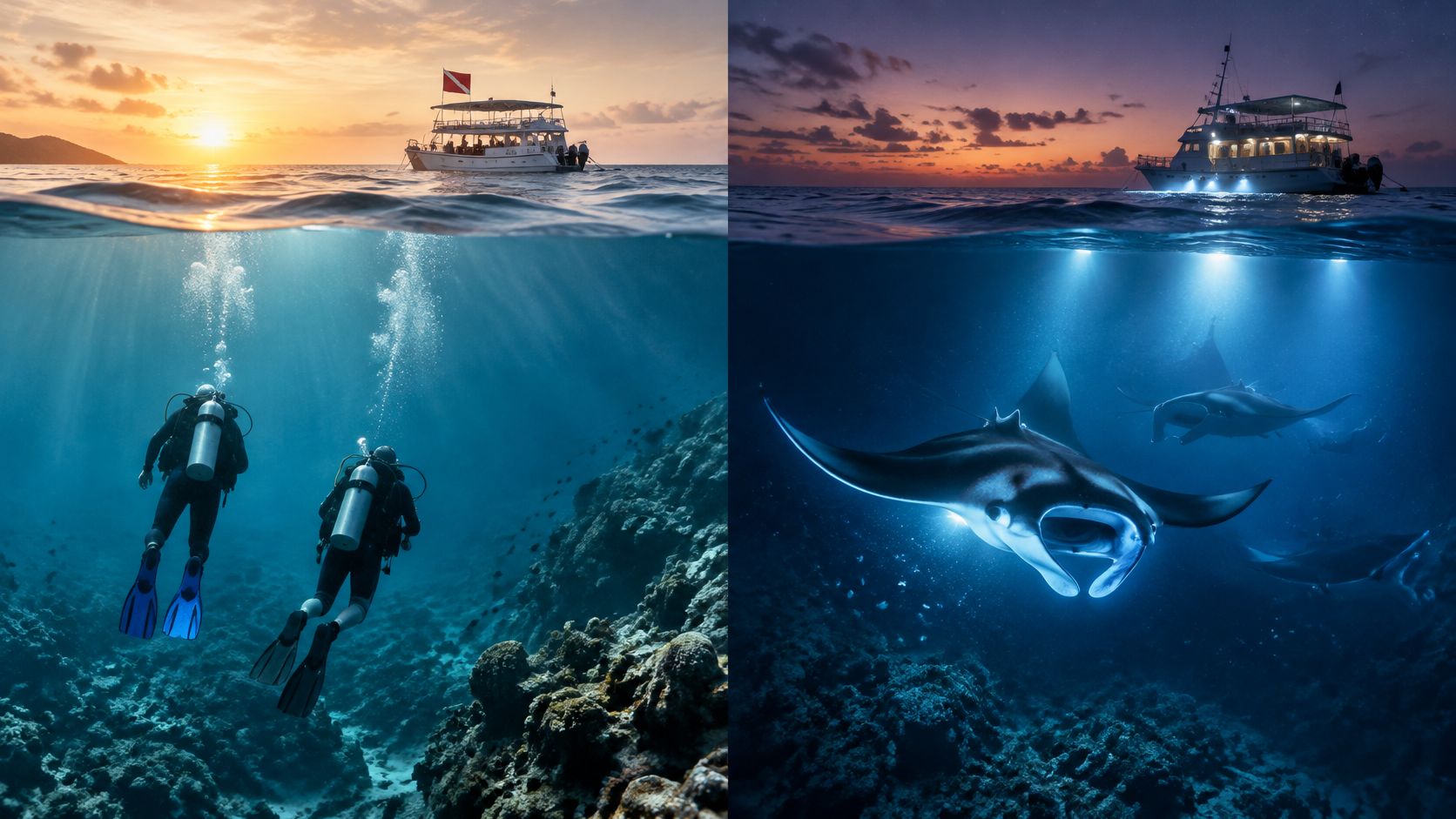
Match the format to your goal
| Trip type | A useful choice when you want | What to confirm |
|---|---|---|
| Morning reef charter | Daylight exploration and a baseline for your comfort | Planned profile, rental arrangements, and group pace |
| Manta night dive | A focused nighttime wildlife encounter | Positioning, lighting procedures, and sighting policy |
| Blackwater excursion | An open-ocean night experience | Experience requirements, buoyancy expectations, and support procedures |
| Advanced charter | A more demanding dive suited to current skills | Exact conditions and prerequisites |
| Private charter | A plan organized around your group | Which requests remain subject to weather and safety decisions |
A two-tank morning trip can be a sensible opening choice because you can assess your equipment and comfort in daylight. Browse the available Kona diving tours, then discuss the actual profile rather than choosing by the trip name alone.
The manta ray dive tour suits a different goal: spending your attention on an encounter rather than covering terrain. Ask how divers are arranged and what the guide expects you to do when an animal approaches.
Specialty doesn't mean suitable for everyone
For the Kona blackwater dive, comfort without a nearby bottom reference deserves an honest conversation. Review the blackwater diving overview and the Blackwater Dive tour details, then describe your recent experience accurately.
If you are considering more experienced diving opportunities, compare the premium advanced dive trip with what you have practiced recently. A certification card is useful information, but so are your last dive, your comfort in current, and your ability to hold depth while distracted.
A private charter can help a mixed group coordinate its day. It doesn't make unsuitable conditions suitable, and it shouldn't become a way to push a reluctant buddy into a dive they don't want.
Top Dive Sites and What Makes Them Special
Choose a site by asking how you'll enter, what you'll do underwater, and how you'll leave. A recognizable name answers none of those questions by itself.
Garden Eel Cove and Manta Village
Garden Eel Cove, associated with Manta Heaven, is my preferred choice for a manta dive plan when its protected location, viewing arrangement, and surrounding reef offer the better fit. I'd favor that combination over selecting a departure solely for convenience, while still letting the captain make the final conditions call.
Manta Village is associated with Keauhou Bay, while Manta Heaven is associated with Ho'ona Bay/Makako Bay. Their shared reputation shouldn't obscure differences in how the sites are used.
A scientific study recorded 25,444 observations of 118 individual reef mantas from 2009 through 2014. Observations occurred on 92% of study nights at Manta Heaven and 78% at Manta Village, evidence of substantial historical use rather than a forecast for your booking, in the long-term study of Kona reef manta rays.
Old Kona Airport and the shore-versus-boat decision
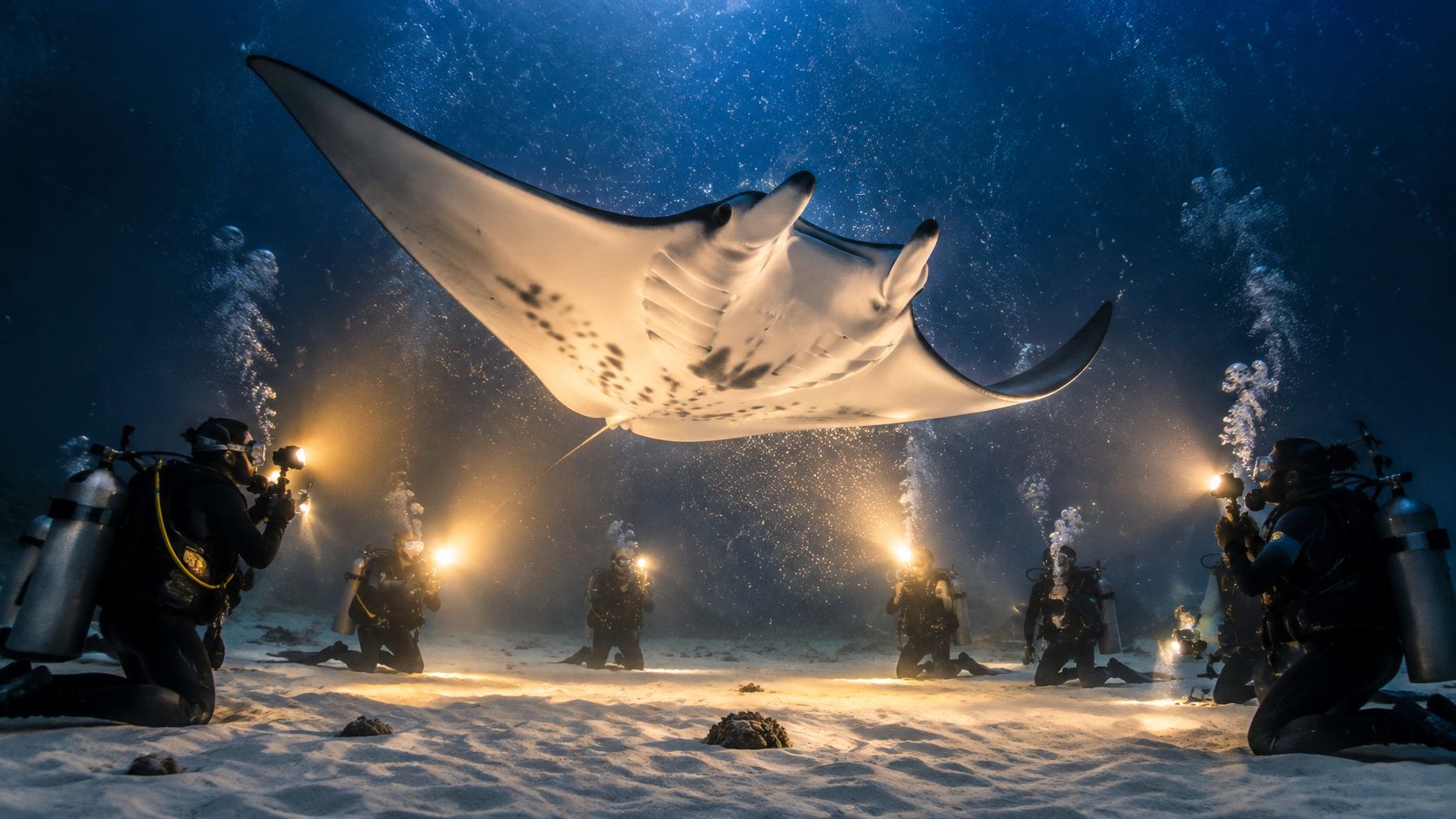
At Old Kona Airport, the state identifies a partially protected cove at the northwestern end of the beach as a common snorkel and shore-scuba entry. “Partially protected” is a description of the location, not an assurance about today's surf, as the state's Old Kona Airport site guidance makes relevant to planning.
Use this decision sequence:
- Assess the exit first. Can everyone return through it while tired and wearing their equipment?
- Identify an alternative. If your planned exit becomes unusable, know what you'll do before entering.
- Match the route to the team. Reef contours, pinnacles, and lava features shouldn't distract you from depth, navigation, or the return.
- Choose boat support when appropriate. If shoreline access or local knowledge is the weak point, a guided boat plan may be the more sensible option.
Use the Big Island shore-diving guide to develop questions, not as a substitute for an on-site assessment. Don't enter a lava passage because another diver does.
Gear, Certification, and Getting Ready
Preparation starts with an accurate description of yourself as a diver. Tell the shop when you last dived, what equipment you normally use, and which parts of the proposed experience feel unfamiliar.
“Certified but rusty” is useful information. Hiding that uncertainty makes it harder for an instructor or guide to recommend an appropriate starting point.
Confirm the equipment rather than assuming
Ask exactly what the booking includes. Establish whether you need to reserve a wetsuit, computer, lights, surface-signaling equipment, or a particular size of buoyancy compensator.
- Bring familiar fit-sensitive gear. Your own mask is particularly useful if finding a comfortable seal has been difficult.
- Check the rental configuration. Locate releases, weight pockets, inflation controls, and the alternate air source before entering.
- Discuss night equipment. Confirm the primary light, backup arrangements, and signaling procedures for your specific trip.
- Pack for the surface interval. Dry clothing, sun protection, and drinking water belong in the plan alongside underwater equipment.
Don't make your first encounter with an unfamiliar weight-release system happen during a problem. Ask the crew to demonstrate anything you can't confidently identify.
Match training to the planned dive
If you're new to scuba, compare a supervised introductory experience with a full Big Island scuba certification course. Ask what each option permits, what preparation is required, and whether your available time allows you to learn without rushing.
Returning divers should discuss a refresher when basic tasks no longer feel automatic. That's especially worthwhile before adding darkness, photography, or a demanding environment.
Being comfortable enough to notice your surroundings is a better starting goal than squeezing the most challenging dive into your vacation.
If you plan to use nitrox, confirm the required training and the operator's procedures. Follow your training for cylinder analysis, labeling, computer settings, and oxygen exposure limits; don't treat a different breathing mix as permission to stretch the plan.
Complete any requested medical screening. Questions about a health condition or medication belong with an appropriately qualified clinician before the trip, not in a hurried dockside conversation.
Safety, Regulations, and Responsible Diving
The important safety question isn't just whether you can complete the dive. It's whether you've planned for a problem that requires help.
The Big Island has no recompression chamber, so serious decompression illness requires initial emergency care and evacuation to Honolulu. The Hawaii shore-diving safety overview also highlights the shoreline risk: treat a high-surf advisory as a reason to cancel a shore entry, not a challenge to work around.
Know the rules that affect your dive
Hawaii requires ocean divers to display a dive flag and stay within 100 feet of it, except in an emergency. A surface flag must be at least 12 by 12 inches; on vessels longer than 16 feet, it must be at least 20 by 24 inches and accompanied by an Alpha flag, while nighttime flags must be identifiable from 100 feet, under the state diving-safety regulations.
The Old Kona Airport conservation district reaches 500 yards seaward. Anchoring is prohibited, marine-life removal is restricted, and motorized vessels cannot operate in its designated No Boating Zone except for emergencies or enforcement, according to the Old Kona Airport conservation rules.
Protect the encounter as well as yourself
Kona's manta tourism attracts approximately 80,000 visitors annually, and Hawaiian reef mantas tend to remain near their home areas, making concentrated visitor pressure relevant to trip choices, as summarized in this Big Island manta-diving and conservation overview.
- Ask about group management. Confirm guide-to-guest arrangements, positioning, and how the crew prevents obstruction.
- Keep feeding paths clear. Don't pursue animals or move your camera into their route.
- Prepare for emergencies. Confirm communications, emergency contacts, insurance coverage, and evacuation arrangements.
- Set conservative limits. Agree on gas reserves and turn-around decisions before entering.
A responsible operation should explain how it protects animal behavior, not just how it gets guests close.
Review responsible and considerate diver etiquette before departure. Consider DAN membership and dive insurance, but check their actual benefits rather than assuming membership alone covers every expense.
Sample Itineraries for Every Type of Diver
A good itinerary gives you room to change your mind after the first dive. You may discover that your buddy needs a slower pace, your camera setup needs adjustment, or you'd rather repeat a reef experience than add another specialty.
Treat these as planning examples, not fixed schedules.
A newer or returning diver's trip
Begin with training or a refresher if needed, then choose a daylight guided dive suited to your current comfort. Leave the following part of the trip flexible rather than committing immediately to every available departure.
- Start with a skills-focused outing. Settle weighting, equipment familiarity, and buddy communication.
- Choose the next experience afterward. Consider the manta dive only if the first outing leaves you comfortable and interested.
- Keep land time uncomplicated. Rest, enjoy the coast, or spend time with non-diving companions without turning every break into another demanding activity.
An experienced diver's mixed itinerary
Open with a reef charter to check your setup and establish a useful baseline. Put an advanced outing on a separate part of the schedule so you can arrive rested and discuss conditions without pressure from a packed day.
If blackwater is your main goal, organize the trip around being ready for that experience. Don't add it merely because there's an empty evening.
| Traveler | Planning priority |
|---|---|
| Night-dive enthusiast | Avoid stacking unfamiliar tasks before the main night experience |
| Underwater photographer | Allow time to adjust equipment between outings |
| Mixed dive-and-snorkel family | Confirm compatible departures and participant requirements |
| Independent shore diver | Preserve the option to cancel or switch plans |
You may consider pairing a morning charter with a manta outing, but discuss the combined plan with the operator first. Your energy, exposure, dive profiles, and comfort matter more than filling the calendar.
Keep a weather backup and protect your final travel arrangements. A flexible trip is easier to enjoy than one that depends on every departure happening exactly as booked.
Frequently Asked Questions About Diving in Kona
When should I plan my dive trip?
Choose dates you can support with flexibility rather than searching for a guaranteed perfect window. Ask the operator how your intended sites are selected under different swell and wind conditions, especially if shore diving is central to your plans.
How far ahead should I book?
Once your travel dates are firm, contact the shop about the experiences that matter most to you. Specialty trips, instruction, and private arrangements need coordination, but there's no reliable universal booking deadline to apply to every departure.
What happens if conditions are poor?
Ask about weather cancellations, site changes, refunds, and rescheduling before paying. A different site can be a sensible adjustment; pressure to accept a dive beyond your comfort is not.
What if the mantas don't appear?
A wildlife sighting isn't guaranteed. Confirm whether the operator offers another departure, a credit, or no sighting-related adjustment, and check any availability restrictions before making that policy part of your travel plan.
Should my non-diving partner snorkel instead?
That may be the better fit, but confirm swimming expectations, nighttime comfort, equipment, and supervision. Scuba and snorkeling provide different viewing positions, and neither should be assumed to have less ecological impact because participants are at a different depth.
Can I fly or visit high elevations afterward?
Plan flights and high-elevation outings around current guidance from your training agency, dive computer, and operator. Your dive history and profile matter, so don't rely on a casual rule passed along by another traveler.
What should I ask before reserving?
Keep the conversation concrete:
- Suitability: Does this trip match my recent experience?
- Logistics: What equipment, check-in arrangements, and transport do I need?
- Contingencies: What changes if weather, wildlife, or my comfort doesn't cooperate?
When those answers make sense, you're ready to reserve a trip rather than just a photograph.
Kona Honu Divers offers guided reef trips, manta ray night dives, blackwater excursions, and scuba instruction for different experience levels. Visit the team with your travel dates, recent diving history, and preferred experiences so you can choose an appropriate trip and confirm equipment, prerequisites, and availability before booking.