
Kona is where serious divers look first on Hawaii's Big Island, because you can dive here on almost any day of the year. The warm water, clear visibility, and sheltered coastline keep conditions workable even when the open ocean is rough. Kona feels less like a weather gamble and more like a familiar neighborhood you already know your way around.
Why Kona Stays Dependable for Divers
Picture planning a dive trip without checking a seasonal calendar first. That kind of freedom is a big reason experienced divers keep coming back.
Much of the reliability comes down to geography. The west coast sits in the rain shadow of the volcanoes, so less runoff clouds the water. Sheltered bays also take the edge off the swell that pounds other shorelines.
Kona is widely regarded as a year-round dive destination because warm water and strong visibility tend to show up together here. Water temperatures typically run 75–80°F (24–27°C) throughout the year, and average visibility commonly reaches 80–100 feet (24–30 meters), sometimes stretching past 100 feet. Discover more insights about Kona diving conditions.
Kona Diving Conditions at a Glance
Before you dig into the details, this quick reference shows what you can expect in the water and what each condition means for your plans.
| Condition | Typical Range | What It Means for Divers |
|---|---|---|
| Water temperature | 75–80°F (24–27°C) | Thin 3mm wetsuit is usually enough |
| Visibility | 80–100 ft (24–30 m), sometimes over 100 ft | Clear views of reef and lava structures |
| Wetsuit guidance | 3mm year-round; hooded vest in winter | Hood helps on back-to-back dives in cooler months |
| Sea conditions | Calm on sheltered coast most days | Plan shore and boat dives with confidence |
Those numbers add up to a practical planning picture. Warm water means you rarely need thick neoprene, and clear water means your guide can point out a sea turtle or a cluster of reef fish from a good distance away.
Kona's conditions are steady enough to plan around. Instead of hoping for a good week, you can build your trip around the dives you actually want to do.
Here's what that steady water looks like once you're under the surface.
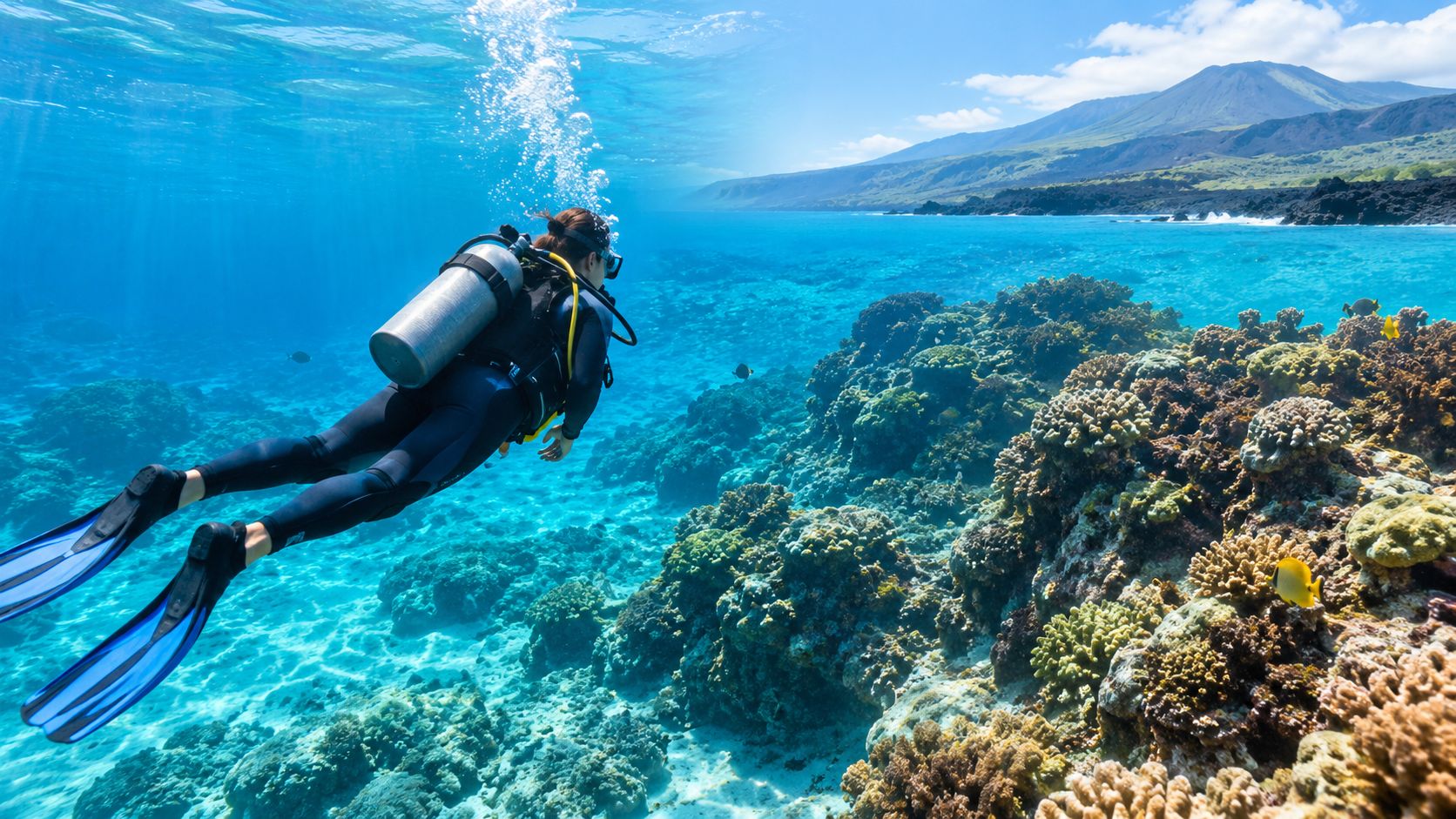
The shape of the island explains a lot of this. The sheltered west side is what gives Kona its calm, dependable water, and everything else in this guide builds on that.
Choosing a Dive Shop You Can Trust
If you want to go out with a local team, scuba diving Kona with Kona Honu Divers is a solid place to start. The shop operates right here in Kona, Hawaii, and it was voted best dive operator in the area. It is also the highest-rated and most-reviewed dive shop in all of Hawaii.
Don't just take our word for it. Read through the reviews below to see what other divers have to say.
From here, the next sections break down the dive types, sites, and seasonal patterns that shape a Kona trip.
Exploring Kona’s Volcanic Reefs and Dive Sites
Diving Kona on the Big Island means swimming over and through the work of volcanoes. The same eruptions that built the island out of the sea left behind shapes you can explore on every dive. Each lava flow that reached the water cooled into something new.
Picture the coastline as a city built in layers. Each eruption laid down a fresh block, and the reef grew on top of the old ones. Once you know that, a simple swim along the wall starts to feel like exploring a neighborhood with a long history.
Lava Tubes, Pinnacles, and Drop-Offs
Most Kona dive sites fall into a few familiar shapes, and each one feels different once you're underwater.
- Lava tubes work like underwater tunnels. Hollow channels left by ancient flows wind beneath the reef, and your guide will lead you through them while keeping a careful eye on everyone's air.
- Pinnacles rise like submerged mountain peaks. These columns climb from deep water toward the surface, and fish tend to gather along their sides.
- Drop-offs feel like standing at the edge of a cliff. The reef ends abruptly, and the bottom falls away into deep blue water.
Kona's terrain changes from site to site, so every dive can feel like a fresh destination. Match the site to your comfort level and interests, and the same island can give you a completely different experience each morning.
Matching Sites to Your Comfort Level
Not every dive needs to be a big adventure, and that's a good thing. Coral gardens are the easy choice for anyone who wants a slow, unhurried swim. The shallow, colorful patches are packed with fish and rarely ask much effort from you.
Arches and reef structures suit divers who enjoy photography and exploration. Sunlight filters through these formations and gives every frame a dramatic backdrop.
The photo below shows a diver gliding through a natural reef archway. Formations like this are a big reason the coast is so rewarding to explore.
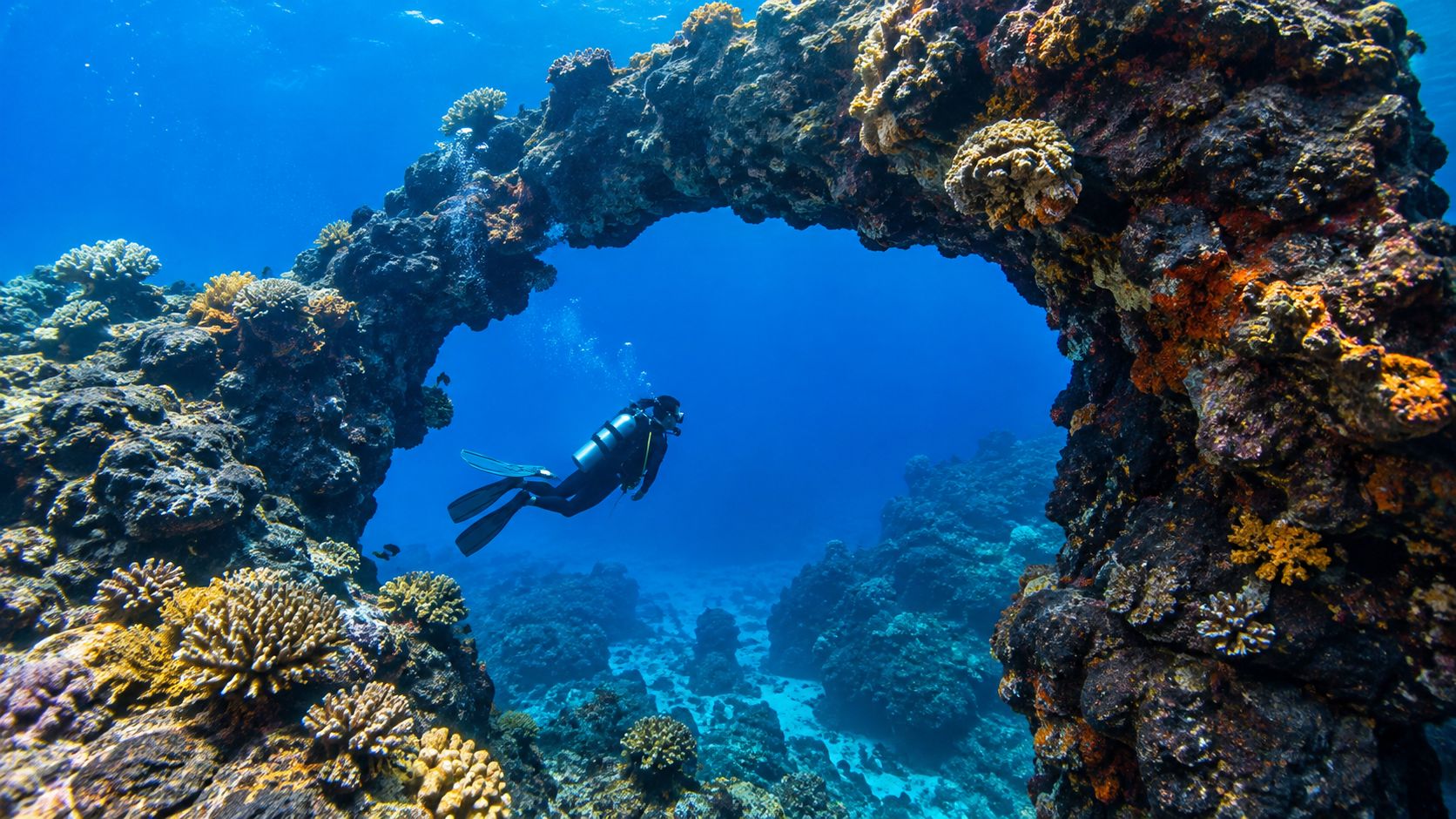
Shapes like this show how lava sculpted the reef into sheltered passages. For you, that means calm pockets of water that are easy to explore.
The 2 Tank Local Morning Dive
This variety is exactly why Kona Honu Divers built one of its most popular trips around it. The 2 Tank Local Morning Dive is made for certified divers who want a relaxed day on the reef.
Across two tanks, the morning takes in coral gardens, ancient lava tubes, and dramatic arches. The crew picks each site to suit that day's conditions, so no two mornings look quite the same.
The boat matters more than many people expect. A full day of diving means two tanks, surface intervals, and hours in the sun. Look for:
- Spacious, well-maintained boats with shaded seating for resting between dives
- Hot showers that help you rinse off salt after the last descent
- Ample storage that keeps your gear organized
Compare the full lineup of diving tours to find your fit.
If you'd rather stay on land for part of your trip, see our guide to shore diving on the Big Island for dives you can reach from the beach.
Matching Dive Types to Your Certification Level
Picking the right dive is the quickest way to enjoy diving in Kona on the Big Island. Think of your certification as a trail map. It shows which routes are open to you right now and which ones are still locked behind more training and experience.
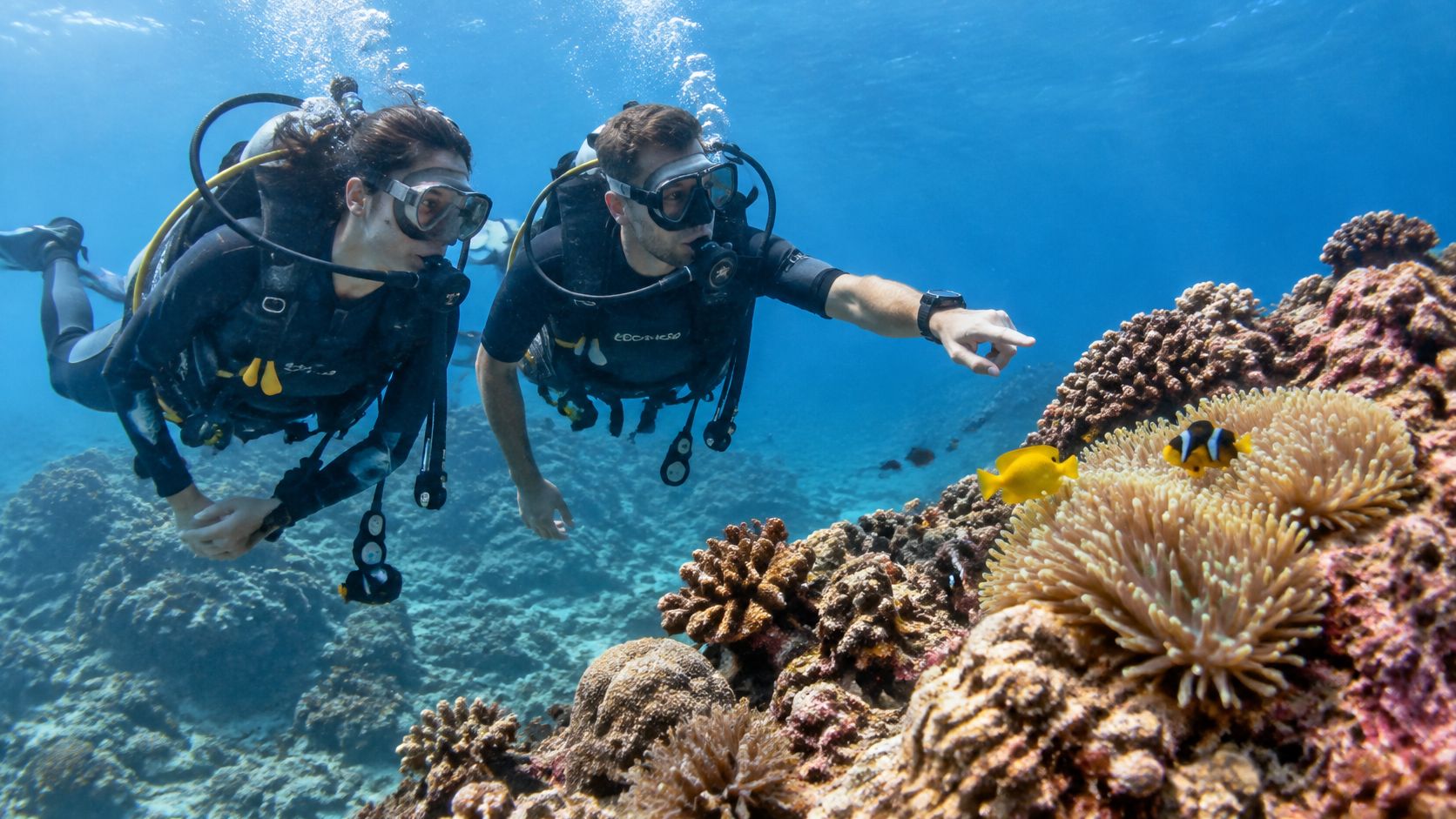
The Certification Rule Most Charters Follow
Most regular charters ask for an Open Water Diver certification from a recognized agency such as PADI, SSI, or NAUI. That card lets you dive to 60 feet (18 meters) with a buddy. Bring your C-card on the boat too, because crews check.
Before you book, make sure you have:
- Your Open Water Diver card or equivalent
- Your C-card, ready to show at check-in
- A logbook with recent dives, if you have one
The rule is simple, but it matters more than people expect. A standard recreational Open Water certification generally covers this depth under agency guidelines. Deeper or more demanding sites call for extra training and experience.
Your card tells the crew what you are trained to do, not how confident you feel on the day.
Reported blackwater visibility near 98 feet (30 meters) and water in the mid-20s Celsius make night trips a rewarding next step for practiced divers. Read the full research about freediving in Hawaii.
Kona Dive Types Compared by Experience Level
Kona Honu Divers organizes its main tours by experience level, so you can find your match quickly. Scan the table and look for the row that sounds most like your recent dive history.
| Dive Type | Best For | Certification or Experience Needed |
|---|---|---|
| Morning Introductory Scuba Dive | People who have never breathed underwater | No prior certification needed |
| 2 Tank Local Morning Dive | Relaxed reef days with coral gardens and arches | Open Water Diver certification and C-card |
| Premium Advanced 2 Tank Trip | Experienced divers ready for challenging sites | Proven experience beyond the basics |
If you fall between two rows, that's normal. Tell the team what you have logged so far, and they can help you choose the right fit.
Starting with the Morning Introductory Scuba Dive
If you have never breathed underwater, this is where your story begins. The Morning Introductory Scuba Dive offers a relaxed first taste of the reef under close supervision. No certification is required.
Enjoying a Relaxed Reef Morning
Certified divers who want an easy, rewarding day on the water will feel at home on the 2 Tank Local Morning Dive. Think of it as a scenic coastal drive rather than a race. You get plenty of time to slow down and take in every reef feature.
Stepping Up to Advanced Sites
Once you have logged more dives and feel comfortable in current, the Premium Advanced 2 Tank Trip is the natural next step. It takes experienced divers toward more challenging sites, a bit like a hiker moving from a gentle park loop to a steep ridge. Explore the Premium Advanced 2 Tank Trip for full details.
Freediving Classes and Rentals
Not everyone wants to breathe from a tank. If you prefer breath-hold diving, Kona Honu Divers offers Freediving Classes and freediving rentals, so you can explore the reef at your own pace. For a closer look at training options, check out our guide to scuba classes.
Night and blackwater dives need their own planning, so the next section covers them. For now, match your certification to the tour, and the rest of your trip tends to fall into place.
Manta Ray and Blackwater Night Dives in Kona
Few things in Kona beat the moment a manta ray slides out of the dark and glides toward your light. Those night encounters have a history that goes back decades, and it's worth knowing before you get in the water.
Meet the Manta Rays of the Kona Coast
The story starts in 1979, when the first identified manta ray along the Kona Coast was reportedly nicknamed 'Lefty.' Since then, researchers have identified roughly 318 individual manta rays around Hawaiʻi Island.
That number tells you something useful. The rays you meet on a dive are part of a fairly localized population, not a constantly changing crowd drifting in from the open ocean. Read the full research about Hawaiʻi's manta rays.
That localized population leads to a charming detail. Repeat visitors sometimes recognize familiar individuals by the markings on their bellies. It's a bit like walking into your favorite coffee shop and spotting the regulars at their usual tables.
The photo below shows a manta gliding through open water, and it's a good reminder of how broad and graceful these animals are.
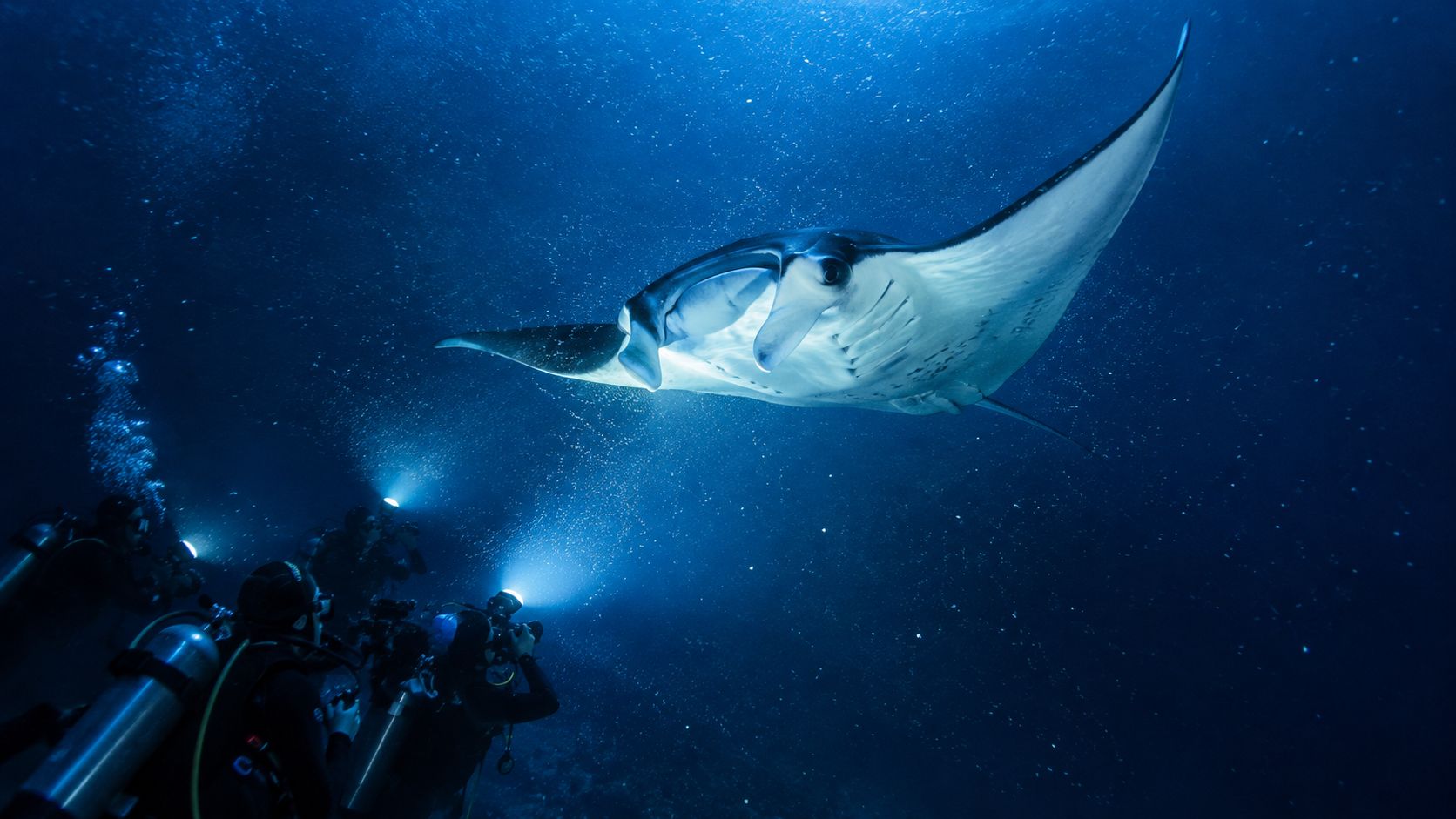
The wide, flat wings and belly markings are how divers tell one ray from another. Think of those markings as a fingerprint. They help researchers and guides follow the same animals across many years.
How Night Tours Bring Rays Close
Night tours rely on light, not bait. Divers and snorkelers hold lights near the surface, and that glow draws plankton up toward the water above the reef.
The mantas then make looping passes through the plankton, sweeping close to the people watching below. Nobody feeds, touches, or chases them. That distance is what keeps the experience safe for everyone involved.
Why Garden Eel Cove Is the Top Choice
Not every manta site offers the same experience. Garden Eel Cove stands out because its protected location gives you a better viewing area and better reefs than the other options.
Sheltered water means less fighting the current. That lets you settle in and keep your eyes on the rays, which matters when a feeding pass may last only moments.
Before your manta dive, keep a few habits in mind:
- Keep a slow, steady kick so you don't stir up sediment.
- Stay low and let the rays approach rather than chasing them.
- Follow your guide's signals and stay within the group.
If you want to see it for yourself, check out the 2 Tank Manta Dive and Snorkel tour from Kona Honu Divers.
Read also: our guide to diving with manta rays before you book.
Blackwater Dives Feel Like a Rooftop View
Picture watching a city from a rooftop at night. By day the streets look ordinary, but after dark a whole world of activity appears that you never noticed from street level.
A blackwater dive works the same way. Divers descend offshore after dark and watch drifting animals rise and fall through the water column.
Many of these deep-sea species migrate toward the surface at night, so the show changes from one minute to the next. Night dives feel very different from daytime reef dives, so give yourself a little time to adjust.
To see how the trip is run, explore the Black Water Night Dive tour.
What to Expect on a Blackwater Dive
Three skills make the experience rewarding.
- Buoyancy control: Hovering steadily in open blue water takes practice. Small adjustments keep you still so you can watch without disturbing the animals.
- Comfort in open water: The seafloor sits far below you. Feeling relaxed in darkness and deep water helps you enjoy the show.
- Professional supervision: Certified guides brief you before the dive, track every diver, and manage the lighting.
The best night experiences come from calm water, patience, and respectful distance. Stay still, let the animals come to you, and keep your light pointed away from their eyes.
Those three ingredients turn a dark ocean into a true front-row seat. Each one takes practice, and your guide is there to help. Kona Honu Divers, the highest-rated and most-reviewed dive shop in all of Hawaii, runs both of these night experiences.
Building Your Kona Dive Plan by Skill Level
Your ideal trip depends a lot on where you are in your diving journey. Think of it like picking a hiking trail. You wouldn't send a first-timer up a steep ridge on day one. Here are three paths you might see yourself in.
Starting as a Beginner
Brand-new divers should start with a Morning Introductory Scuba Dive. It's a low-pressure way to test the water before you commit to a full course.
Once you enjoy it, scuba certification or a refresher course with certified instructors is the natural next step. Kama'aina Dive Courses and Freediving Classes are relaxed, local ways to learn, and they suit people who want to ease in.
Sample Beginner Itinerary
A three-day plan might look something like this:
- Day 1: Morning Introductory Scuba Dive, then rest and hydrate.
- Day 2: Kama'aina Dive Course session in the afternoon.
- Day 3: Refresher practice or a Freediving Class, then an easy evening.
Build rest days into every plan. Your body needs time to adjust, and so does your confidence.
Certified Vacation Divers
Certified divers usually want a mix of relaxed reef time and something after dark. The 2 Tank Local Morning Dive pairs nicely with a Manta Ray Night Dive on the same trip.
Sample Certified Diver Itinerary
Here's one way to spread it out:
- Day 1: 2 Tank Local Morning Dive, followed by a slow afternoon ashore.
- Day 2: Rest day, with a leisurely beach walk and a good meal.
- Day 3: Manta Ray Night Dive after a relaxed afternoon.
Planning for Experienced Divers
Experienced divers can pack some serious challenges into a single week. The Premium Advanced 2 Tank Trip and a Black Water Night Dive make a demanding but rewarding pair.
Dive packages are a good fit for anyone who wants to log a lot of dives during one trip.
Sample Advanced Diver Itinerary
A three-day plan could look like this:
- Day 1: Premium Advanced 2 Tank Trip, then a full rest evening.
- Day 2: Rest day with light stretching, plenty of water, and an early dinner.
- Day 3: Black Water Night Dive, with a well-rested body and a clear head.
Rest is part of the plan. A fresh body makes every descent safer and more enjoyable.
Private Tours and Group Options
Families and groups who want more personal attention can book private tours. A private charter lets you set the pace, pick the sites, and build the schedule around your group rather than the other way around.
Planning where to sleep between dive days makes the whole schedule easier. Read also: our guide to the best places for divers to stay on the Big Island.
Gear, Safety, and Booking Your Kona Dive
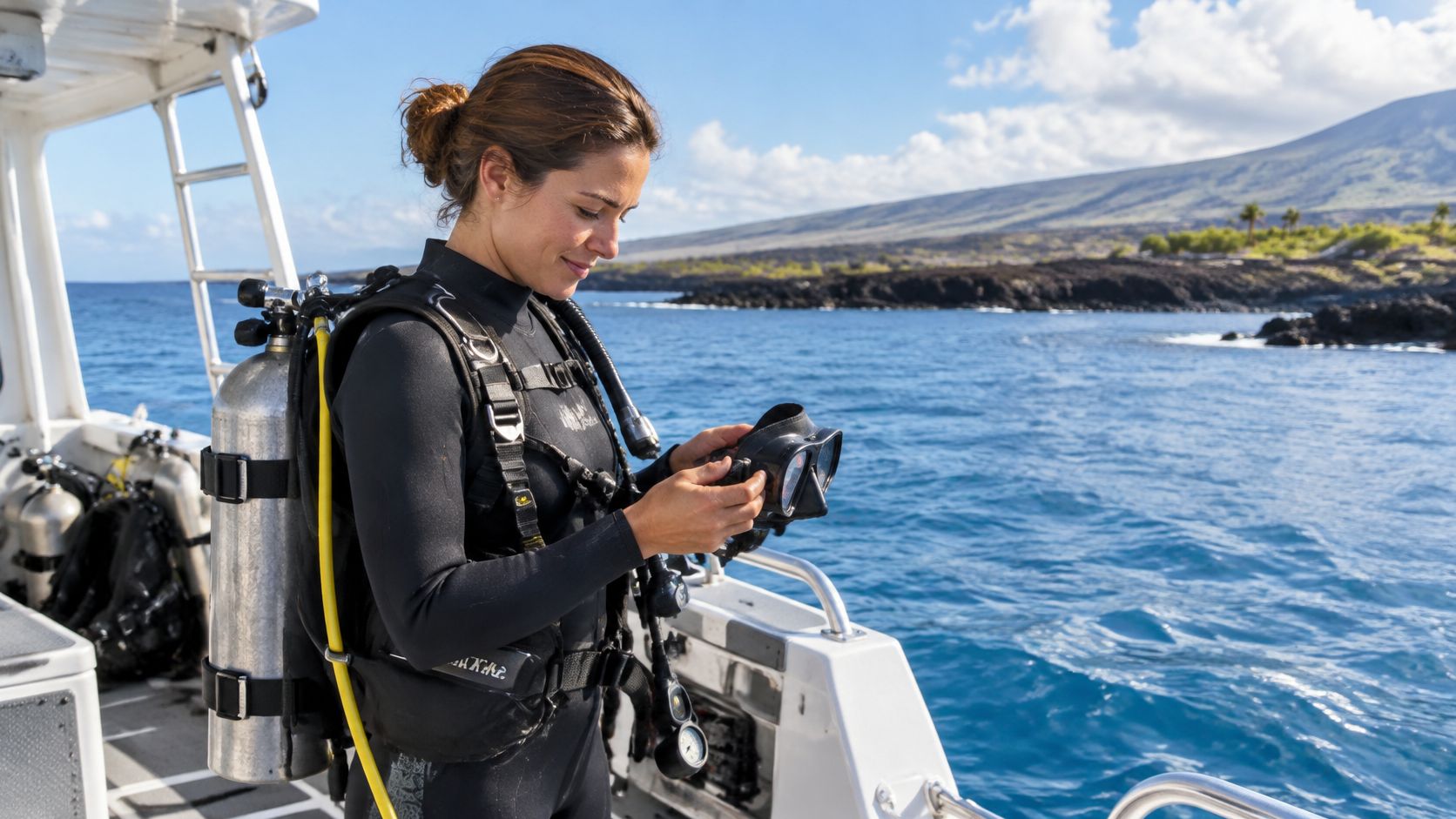
Packing for a Kona dive trip is much easier when you aren't dragging your own kit through the airport. Our rental gear is serviced ahead of time, so everything you pick up has already been checked before it goes on your back. That's one less thing to worry about on the morning of your dive.
Renting Gear Without the Baggage
Renting makes sense for most travelers. Scuba and freediving rentals keep heavy equipment off your flight, and that alone saves a lot of hassle. It's a bit like borrowing a good pair of hiking boots for a trip instead of cramming your own into a suitcase. You travel light and still show up with dependable gear.
Free Nitrox for Longer Bottom Time
Experienced divers have another perk to look forward to. Free nitrox can help extend your bottom time safely.
More bottom time means more minutes over the reef. Instead of watching your gauges the whole dive, you can hang back and enjoy a turtle that's decided to take its time with you.
Just stay within the limits your training and your guide set. The extra minutes only help if you're still comfortable and safe when you surface.
Safety Habits That Protect Reefs and Divers
Good reef habits protect the animals and the sites you came all this way to enjoy. They also tend to make for better dives.
- Give manta rays plenty of room. Let them glide and feed on their own terms, and never chase them.
- Keep your hands to yourself. One careless brush can snap coral that took decades to grow.
- Pay attention during the buoyancy and buddy checks. Good buoyancy keeps your fins off the reef, and buddy checks catch small problems before they turn into big ones.
Guided Dives Versus Diving Alone
Diving with a guide is a lot like hiring a local for an unfamiliar mountain trail. They know where the loose rock sits, which views are worth the detour, and when the weather is starting to turn.
A good guide doesn't just show you the reef. They read the water so you don't have to.
Going solo means learning all of those lessons yourself, usually the hard way.
If you're still deciding what to bring, our guide to choosing a wetsuit for diving in Hawaii covers the basics.
Ready to get in the water? Pick your tour and check open dates.
Prefer to talk it through? Give Kona Honu Divers a call at 808-324-4668.
Frequently Asked Questions About Diving Kona
Can Beginners Dive on Their First Day?
Yes, and more people do it than you might expect. The Morning Introductory Scuba Dive is designed for folks who have never breathed underwater before.
You don't need any certification, so just show up curious.
What Certification Do I Need for Most Charters?
Most regular charters ask for an Open Water Diver card from PADI, SSI, or NAUI. That card lets you dive to 60 feet (18 meters) with a buddy.
Bring your C-card to check-in. The crew checks it before anyone boards, so having it in hand saves a headache.
Is Kona Worth It for a Once-a-Year Diver?
Yes, and the reason is pretty simple. Kona's water stays warm and fairly clear all year, so your trip doesn't depend on catching a lucky season.
Maybe you dove a few times last year and your skills feel a little rusty. A refresher course is a good way to shake off the cobwebs before you head out over the reef.
Kona rewards planning, not luck. Pick the experience level that fits your logbook, and the water does the rest.
Are Night Dives Suitable for Newer Divers?
Night trips work best for divers with some logged experience. Once the sun goes down, you're working in open water where everything looks different.
Your guide briefs the group before you hit the water and keeps everyone together. When you book, tell the team your certification level and how many dives you've logged, so they can point you to the right trip.
Have a question about your specific trip? Call Kona Honu Divers at 808-324-4668 and talk with the team before you book. They can confirm gear, schedules, and certification requirements for your dates.
Ready to get in the water? Pick a tour that matches your certification and reserve your spot with Kona Honu Divers today. Explore Kona Honu Divers tours and open dates