
You're probably in the same spot most visiting divers hit before they book. You know the Big Island has world-class diving, but you're trying to sort the postcard promises from the dives that fit your skill level, comfort level, and vacation time.
That's the right way to approach Kona. A great trip here doesn't come from chasing every famous site. It comes from choosing the right kind of dive on the right day, then diving with a crew that matches the conditions to the group instead of forcing everyone into the same plan. That matters whether you want relaxed reef dives, the manta ray night dive, or a blackwater charter that feels like drifting through outer space.
Why Kona Is a World-Class Diving Destination
Drop in off the Kona coast on a good morning and the difference is obvious within the first minute. You can see the reef take shape below you, read the lava contours, and settle in fast instead of spending the first part of the dive orienting yourself in haze. That kind of clean visual reference changes the whole experience, especially for visiting divers who want to feel comfortable quickly and spend their gas diving, not searching.
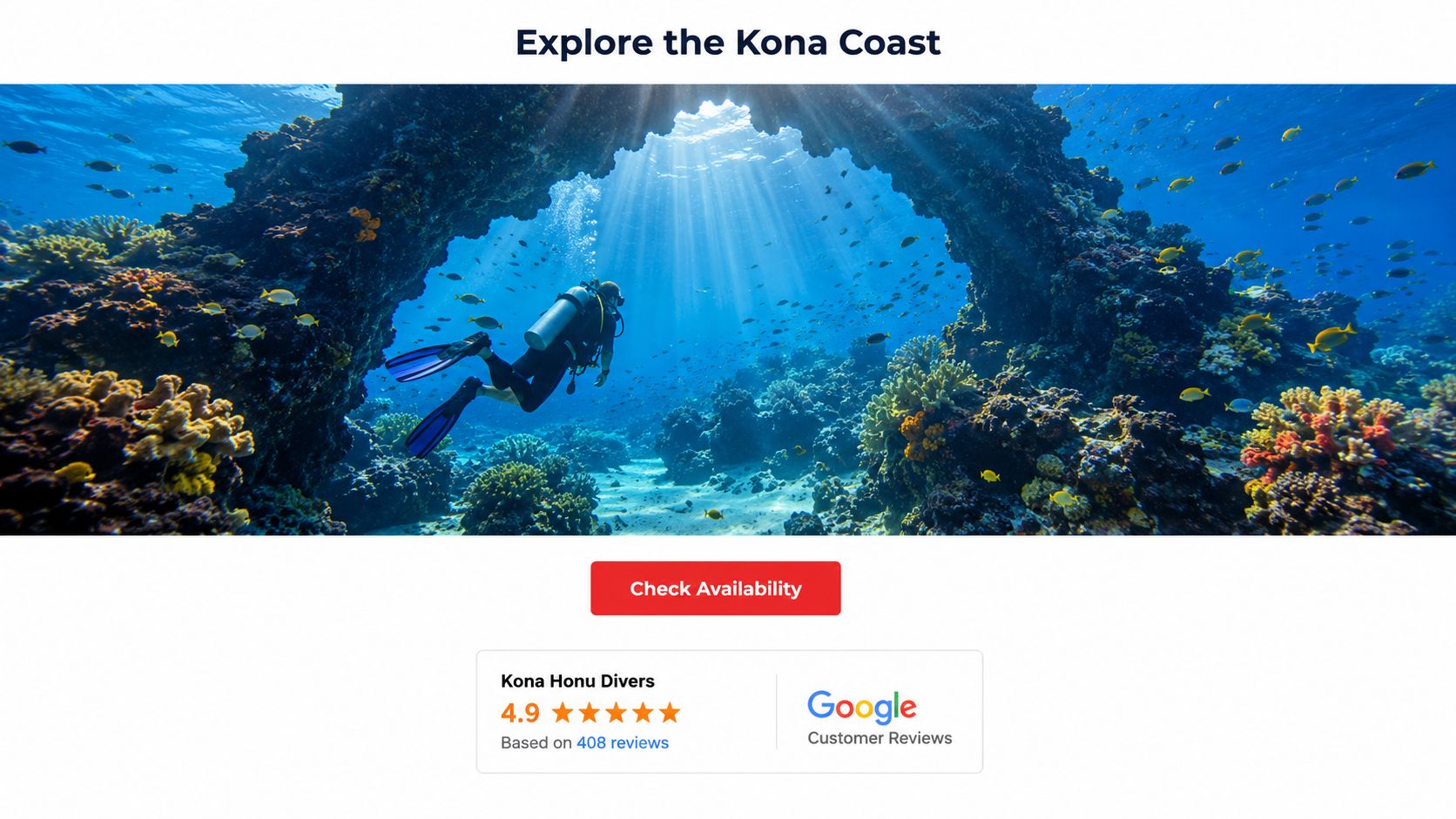
Kona's underwater terrain is the real separator. This is volcanic diving, and it feels like it. Lava tubes, arches, shelves, fingers of rock, and abrupt drop-offs give even moderate profiles a sense of direction and drama. New divers usually appreciate that structure because it makes the dive easier to read. Experienced divers appreciate it for a different reason. The topography keeps simple dives interesting and rewards good buoyancy, awareness, and positioning.
Marine life gets more attention in most travel guides, but the setting is what makes Kona memorable. A turtle crossing a lava arch, white-tip reef sharks tucked under ledges, eels working through black rock, and schools of reef fish hanging over blue water all stand out more here because the background has shape and contrast. Photographers know this right away. So do divers who are tired of flat reef systems that blur together by the third day.
The coastline helps too. Kona sits on the more protected side of the island, and that often gives operators more workable dive days than visitors expect from a Pacific island destination. Conditions still change, and good crews adjust plans to the group and the weather. That operational flexibility is a big reason many divers choose to base the trip on the Kona coast instead of trying to force a different part of the island into a dive itinerary.
That range is what makes Kona world-class in practical terms, not just brochure terms.
A newer diver can have an excellent week here on straightforward reef dives with clear briefings, manageable conditions, and plenty to see. An experienced diver can build the same trip around signature experiences that are hard to match anywhere else, including manta night dives, blackwater charters, and longer runs to more advanced sites when conditions line up. The destination supports both styles without feeling watered down for either one.
That matters when you are choosing an operator, because Kona rewards crews who know how to match the dive to the diver. Kona Honu Divers has built much of its reputation on exactly that kind of planning and execution. If you want a broader look at what makes diving in Kona different from other Hawaii destinations, that overview is a good starting point before you lock in your trip.
Planning Your Kona Dive Trip
Kona is one of those rare dive destinations where the planning can stay simple if you respect the basics. The coast offers year-round visibility exceeding 100 feet and average water temperatures between 75–80°F (24–27°C), which is why it's widely seen as one of the most reliable clear-water dive destinations according to this Kona coast conditions guide.
That reliability doesn't mean every trip should be planned the same way. Your best week depends on what kind of diver you are.
Pick the season for the experience you want
Summer usually suits divers who want easier sea state, smoother boat days, and the cleanest setup for specialty dives such as blackwater. Winter adds a different mood. The water is still comfortable, and some divers are lucky enough to hear or spot humpback whales during the season when sightings on specific dives can be strong.
If your trip is built around comfort and flexibility, any time of year can work. If it's built around one signature dive, give yourself enough days in Kona to account for weather and boat scheduling.
A good lodging choice also makes the week easier, especially if you're trying to balance dawn prep, afternoon downtime, and night departures. This guide to the best places for divers to stay on the Big Island helps narrow that down.
Match the dive to your certification
Not every famous Kona dive asks for the same skill set.
| Dive type | Best fit | What matters most |
|---|---|---|
| Day reef boat dives | Open Water divers and up | Basic buoyancy, comfort on a boat, normal recreational dive skills |
| Manta night dive | Certified divers comfortable at night | Staying settled, following light and positioning instructions |
| Blackwater dive | Experienced divers | Strong buoyancy control and comfort with no visible bottom |
If you haven't been in the water for a while, a simple daytime charter first is usually the smart call. It lets you settle your weighting, breathing, and trim before you add darkness or open-ocean disorientation.
The divers who enjoy Kona the most aren't always the most advanced. They're usually the most current.
Pack for function, not fantasy
Most visiting divers do better when they bring the personal gear they care most about and let the operator handle the bulk. Your own mask, computer, and exposure protection matter more than hauling an entire closet of backups.
A few practical notes:
- Bring your certification info: Don't assume weak cell service at the dock is the time to recover missing cards.
- Pack a light layer for boat rides: Even in warm conditions, a post-dive run back to harbor can feel cool.
- Keep your setup simple: Kona rewards divers who arrive organized.
If you get motion sick, deal with it before departure, not after the boat leaves. Practical options include the Ship-EEZ Seasickness Patch, Dramamine pills, Bonine pills, Sea Band wristbands, and Ginger chews.
Experiencing the World Famous Manta Ray Night Dive
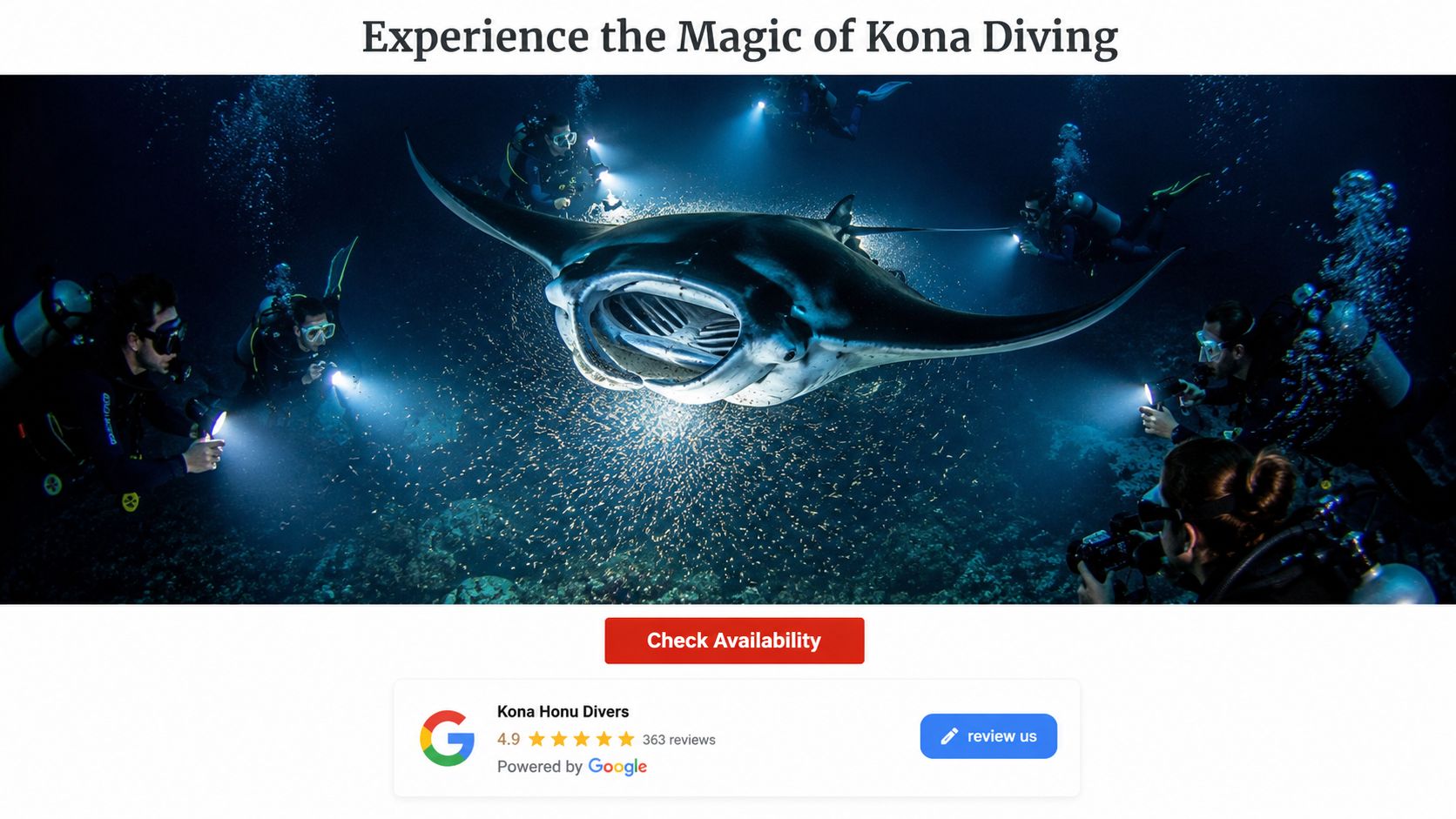
You drop in after sunset, descend through a cone of light, settle onto the bottom, and then the first manta banks overhead close enough to fill your mask. That moment is why this dive has the reputation it does.
Kona's manta ray night dive works because the encounter is controlled. Divers take a fixed position, lights concentrate plankton in the water column, and the mantas come to feed on their own terms. Large reef mantas pass overhead in repeated loops, often close enough to show every cephalic fin movement and every turn through the light.
Why Garden Eel Cove is the better choice
Site choice matters on this dive more than visitors expect.
Garden Eel Cove, also called Manta Heaven, gives scuba divers a better setup because the depth is manageable, the viewing area is broad, and the site often feels more comfortable for divers who want to settle in and watch the action instead of jockeying for position. Scuba Diving magazine's profile of Garden Eel Cove highlights the site's layout and why it has become such a well-known manta location.
In practical terms, a good manta site needs three things. Predictable conditions, enough room to organize divers cleanly, and a viewing angle that lets the animals work the light without disruption. Garden Eel Cove checks those boxes well, which is one reason experienced local crews use it so often for divers.
If you want the same animal encounter without scuba gear, the manta ray night swim overview explains how the snorkel version is run.
What works underwater and what doesn't
The divers who get the best manta show are usually the ones who do the least.
This is a procedural dive. You descend calmly, get into position, keep your body stable, and point your light where the crew instructs. Once the group is organized, the scene starts working. The mantas use the illuminated plankton patch. Divers stay out of the way and get front-row seats.
Good habits on this dive are simple:
- Stay planted on the bottom: Finning around usually reduces your view and disturbs the group setup.
- Aim your light as briefed: The light pattern is part of how the encounter is built.
- Keep your profile low: Good trim and quiet movement make the site more comfortable for everyone.
- Watch your bubbles: Mantas will still pass close, but blasting bubbles straight into their path is poor form.
A few mistakes consistently make the dive worse:
- Chasing mantas: The animals are already coming to you.
- Changing positions without direction: That breaks the viewing lane and can crowd other divers.
- Touching wildlife: Mantas need their protective mucus layer intact.
At Kona Honu Divers, crew quality shines. A well-run manta charter feels calm before you even hit the water. The briefing is specific, entries are organized, and underwater positioning makes sense the first time.
Stay still, follow the light plan, and let the mantas control the distance.
Why this dive deserves a place in your week
This dive earns its place because it is reliable, accessible to a wide range of certified divers, and unlike anything else in Kona's regular schedule. It is also one of the easiest ways to match the right experience to the right diver. Newer divers who are comfortable at night often love it because the task load is limited once they are settled. Experienced divers appreciate the animal behavior and the discipline of a properly run site.
Kona operators track manta encounters closely, and long-running local records show consistently strong sighting success at the main sites, as noted earlier in the article. That history matters, but the main reason to book the dive is simpler. You want a night dive built around observation, patience, and repeated close passes from one of the most graceful animals in the ocean.
For many visitors, this should be booked early in the trip. If weather forces a reschedule, you still have options later in the week. That is the practical way to plan Kona diving. Put high-demand, conditions-sensitive experiences near the front, then build your reef and advanced dives around them.
For divers who want the dedicated tour itself, the manta ray dive tour page is the direct place to check current options.
Exploring the Abyss on a Kona Blackwater Dive
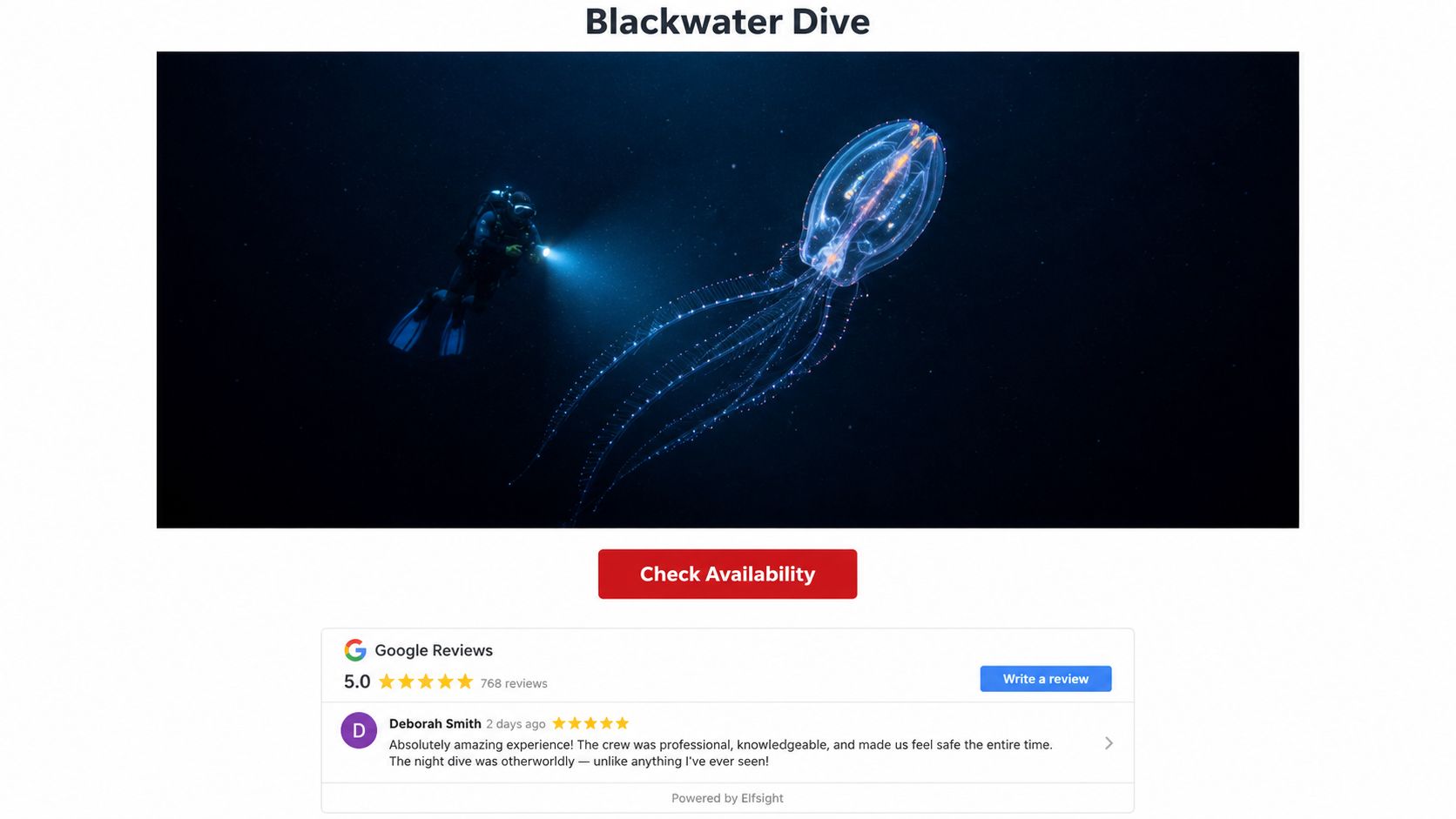
You drop into warm black water, check your depth, and look up instead of out. The boat lights fade, the downline glows, and the entire dive becomes a controlled hover in open ocean while strange, delicate animals rise through the beam. For divers who want something far beyond a standard night dive, this is one of Kona's most memorable experiences.
Kona earned its reputation for blackwater diving because the coast gives operators fast access to very deep water close to shore. That setup allows boats to position divers over the offshore blue at night and watch the pelagic migration come to them. The result is a dive built around behavior, timing, and water control rather than terrain.
What the dive is actually like
A proper blackwater briefing matters here more than on an ordinary reef charter. You descend on a lit reference line in open water, settle at the planned depth, and stay disciplined with buoyancy, spacing, and light use. There is no lava wall to orient you and no coral head to hold your attention. The water column is the whole show.
That changes how you dive.
Good blackwater divers slow down, stop chasing, and let the animals come into view. You spend the dive watching for larval fish, pelagic juveniles, jellies, squid, and other transparent drifters that are easy to miss if your trim is sloppy or your scan pattern is rushed. Some of them look almost unreal the first time you see them.
Who should do it and who should wait
This dive rewards control, not toughness.
Divers who enjoy it most are already comfortable at night, can hover without sculling, and stay calm when there is no visible bottom. If a diver still relies on kneeling, frequent hand movement, or reef structure for orientation, blackwater usually feels like work instead of wonder.
A practical self-check:
- Book it now if you have solid buoyancy, good situational awareness, and real interest in rare pelagic life.
- Wait a bit if night diving still raises your stress level or if open water without visual reference sounds disorienting.
- Build toward it with a few strong daytime dives first if your skills are close but not automatic yet.
I tell visiting divers the same thing every season. The people who have the best blackwater dive are rarely the most aggressive. They are the ones who can hold depth, follow the plan, and stay patient long enough for the ocean to bring them something special.
Operator choice matters here. The setup, supervision, and briefing standard have a direct effect on how comfortable the dive feels, especially for first-time blackwater guests. If this is one of the reasons you came to Kona, review the details on Kona Honu Divers' blackwater dive in Kona tour and book it on a night when you are rested, warm, and not stacking too many demanding dives into the same day.
Daytime Reefs and Advanced Long Range Trips
You feel Kona differently on a daytime boat. Gear is clipped in, the sun is up, and the coastline shows you what makes this side of the Big Island such a strong dive destination in the first place. The lava shelf is sharp and dramatic, the water is often clear enough to read the structure from the surface, and the dive plan is usually built around conditions, current, and the group's actual skill level.
That last part matters.
A lot of visitors focus on the headline dives first, then treat reef diving as filler. Experienced crews do the opposite. Daytime reefs are where you confirm weighting, dial in buoyancy, and see how comfortable you are in Kona's volcanic terrain before you commit to a more ambitious profile. Divers who sort that out early usually enjoy the rest of the week more.
What a standard daytime reef trip gives you
A standard reef charter is the right starting point for many divers. You get long lava fingers, swim-throughs, hard volcanic contours, and enough fish life to keep the dive active without turning it into a chase. Turtles, eels, octopus, and schools of reef fish are common targets. Its main appeal is the mix of easy visual navigation and terrain that still feels wild.
These dives also tell you a lot about your readiness for harder outings. If your air consumption is under control, your ascents stay tidy, and you can hover without stirring up the bottom or drifting off the group, you are probably in good shape for more advanced site selection later in the trip.
Kona's reefs reward calm divers.
When to choose an advanced long-range trip
Advanced long-range charters are for divers who want the coast at its more remote and demanding. That usually means longer runs, less forgiving site logistics, and dive plans that assume better buoyancy, better awareness, and stronger comfort in the water. The payoff is obvious. Fewer crowds, more ambitious topography, and sites that are often the highlight of an experienced diver's week.
They are not automatically the right choice on day one.
My practical advice is simple. Book a standard reef day first if you are new to Kona, have not dived in a while, or are unsure how sharp your skills feel after travel. Book the advanced option if you are already diving regularly, handle entries and exits without drama, and want a trip built around diver capability rather than a general vacation pace.
Here's the trade-off in plain terms:
| Option | Good choice when you want | Trade-off |
|---|---|---|
| Standard reef charter | Easier logistics, broad marine life, a lower-stress first read on Kona conditions | Less reach into remote or more demanding sites |
| Advanced long-range charter | More remote diving, stronger adventure factor, and site selection aimed at experienced divers | Better fit for divers with solid buoyancy, awareness, and comfort in changing conditions |
If that second column sounds like your kind of day, the advanced long-range dive tour is the trip to compare against a standard reef charter.
For divers mapping out several days on the water, the main Kona diving tours page makes it easier to match reef days, specialty nights, and advanced outings in an order that fits both skill and energy.
Your Partner for the Ultimate Kona Dive Experience
A Kona dive vacation works best when the operator can line up your actual skill level with the right dives instead of selling every diver the same week. That's the practical difference between a trip that feels smooth and one that feels patched together.
One operator that covers that full spread is Kona Honu Divers. They run day dives, manta charters, blackwater trips, and advanced options, and the company states that it brings over 200 years of combined experience to those operations on the Big Island.
What matters when you choose a dive operator
Marketing language is easy. Operational fit is what counts.
Here's what I'd look for when choosing any Kona dive crew:
- Trip variety that makes sense: You want a shop that can support an easy reef day, a manta night, and an advanced outing without treating them as interchangeable.
- Clear safety culture: Briefings should be concise, specific, and obviously tied to the site and conditions.
- Boat comfort that helps the day: Shade, organized gear flow, and easy entries matter more than flashy branding.
- Value extras that are useful: Free nitrox for certified divers and package-friendly pricing can improve the week if you plan multiple days.
How to map the operator to your trip
Different divers need different things.
A couple on a first Big Island trip may want two reef mornings and the manta dive. An experienced diver might build the week around blackwater and a long-range charter, then use a standard day boat to settle in. A family group may need a schedule that leaves one afternoon open and avoids overloading newer divers early in the trip.
The right operator doesn't just take you diving. They help sequence the week so each dive sets up the next one well.
That's where experience matters most. It's less about grand claims and more about practical judgment. Which dive first, which one later, and which one doesn't suit the diver despite sounding exciting on paper.
Essential Safety and Booking Tips for a Flawless Trip
You feel the difference on the boat, not at the booking screen. The divers who have the best week in Kona usually made a few smart calls early. They picked dives that matched their recent experience, asked the right questions before arrival, and left enough room in the schedule to adapt to conditions.
Kona rewards good judgment.
Safety habits that matter every day
Listen closely to the briefing, even if you dive often. Kona diving has its own operating details. Lava fingers can funnel surge, manta procedures only work when every diver holds position, and blackwater diving depends on disciplined team awareness in open water at night.
Stay with your buddy. Track your gas accurately. Call the dive early if the conditions, your breathing rate, or your comfort level are off. A diver who opts out of the wrong charter makes a better decision than one who forces it and spends the whole dive task-loaded.
A few habits pay off on every trip:
- Respect no-fly timing: Give yourself a proper surface interval before flying or driving to altitude.
- Practice passive wildlife viewing: Let mantas, turtles, and reef fish control the encounter.
- Protect the reef with buoyancy: Good trim keeps coral safe and keeps your attention where it belongs.
Booking decisions that make the week run better
Reserve your priority dives first. In practice, that usually means manta night dives, blackwater charters, or any long-range trip you built the vacation around. Those spots can fill early, and they are harder to swap around once the calendar is tight.
Then build the rest of the week around your real energy level, not your ideal one. A new diver might do better with a reef morning before committing to a night dive. An experienced diver may want a warm-up day before blackwater. If you are unsure, ask before you arrive. Good operators can usually tell from your certification, recent dives, and comfort in current whether your plan makes sense.
Handle gear and medical questions ahead of time too. Rental sizing, camera setup, nitrox paperwork, and any health concerns are much easier to sort out before check-in than on the dock. If boat motion is a concern, review how to avoid sea sickness before a Kona dive trip before departure.
Dive like a good guest
Kona stays special because divers treat the ocean with restraint. Secure your octo and gauges. Keep your fins up over coral. Use reef-safe sun protection where appropriate, and do not chase animals for a photo.
That approach improves the dive for you too. Calm divers see more behavior, spook less marine life, and usually come back with better memories than divers who spend the whole dive trying to force an encounter.
If you want the week to run smoothly, book with a crew that can match the charter to the diver. Kona Honu Divers runs daytime reef trips, manta dives, blackwater charters, and advanced options, which makes it easier to build a trip that fits your skill level instead of pushing you into a dive that only sounds good on paper.