
Kona offers some of the most reliable and diverse diving in the Pacific, with manta rays seen on roughly 80% of Kona dives and a manta-tour industry that recorded approximately 11,000 snorkelers and divers in a 2002 survey. You can dive lava formations, coral gardens, structured manta-feeding sites, and rare open-ocean blackwater environments in one trip.
You may be comparing boat schedules from your hotel, checking whether a night dive is worth fitting into the itinerary, or wondering if Kona's famously clear water really stays that dependable. The honest answer is that diving in Kona, Hawaii rewards divers who match the site and tour to the conditions, rather than treating every entry point and wildlife encounter as interchangeable.
A boat launch from the Kona coast gives you the first clue. The shoreline is volcanic, the reef drops away quickly in places, and the leeward position often creates calm, clear conditions. That setting supports everything from relaxed reef dives to demanding midwater excursions. It also creates a false sense that every shore entry is easy and every manta encounter is guaranteed.
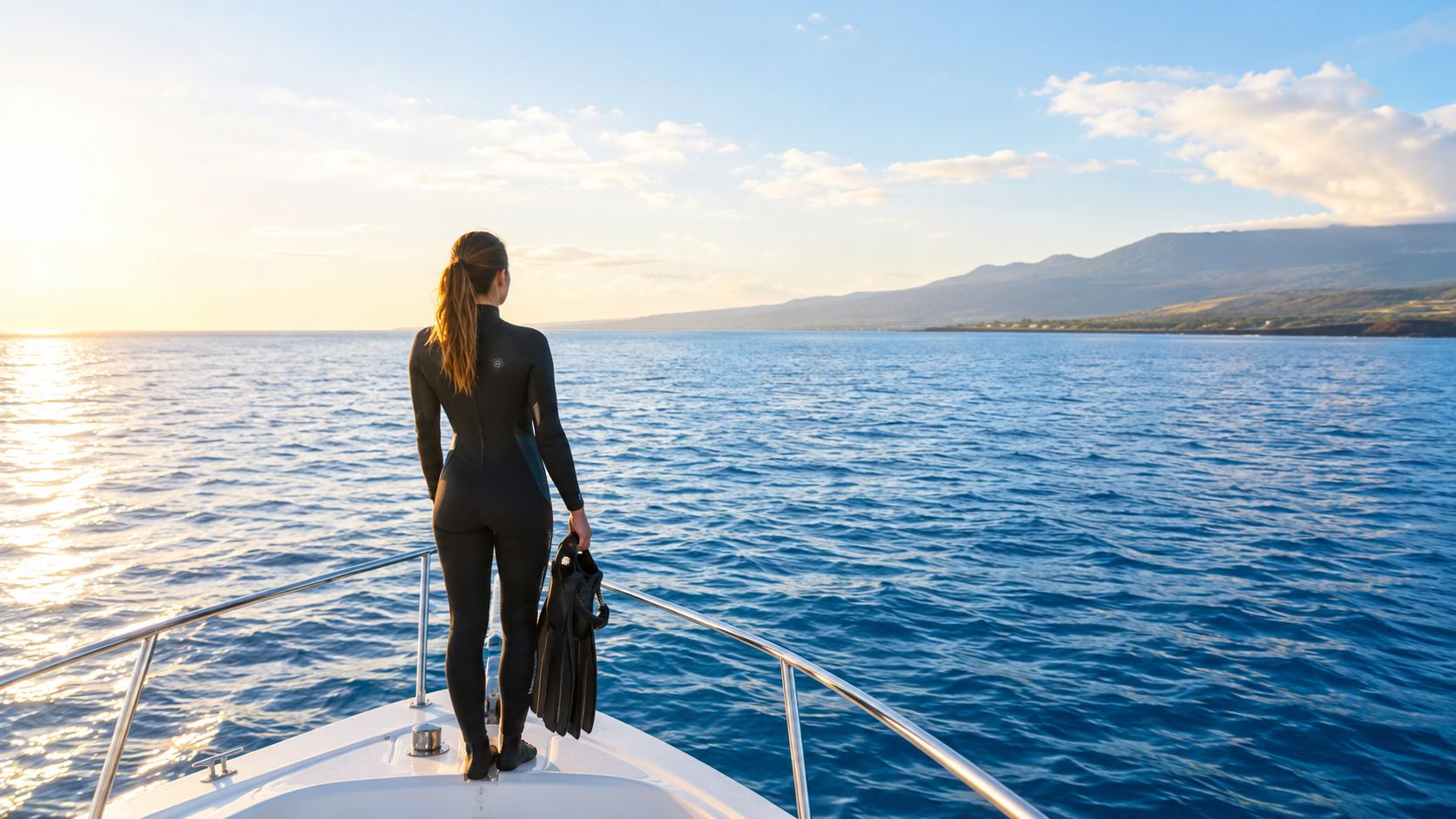
Why Kona Is a Diver's Paradise
The best way to understand Kona is to look at what the volcanic coastline does underwater. Lava flows formed arches, channels, pinnacles, ledges, and tubes that give divers more than a flat reef to cross. Coral grows across those hard surfaces, while depth changes create different habitats within a single boat itinerary.
A typical day can move from a shallow, sheltered formation to a deeper wall or pinnacle without requiring a long transfer between islands. The leeward coast helps protect many launch areas from prevailing trade-wind exposure, which is a major reason Kona has earned its reputation for clear water. That protection isn't absolute, however. Swell direction, rainfall, runoff, and local coastline orientation still determine whether a particular site is pleasant on a given day.
The wildlife is the other half of the equation. Hawaiian reef fish, turtles, eels, octopuses, rays, and seasonal pelagic visitors make the sites feel alive even when the terrain itself is understated. Kona isn't defined only by bright coral color. Its appeal comes from the combination of volcanic structure, endemic marine life, dependable boat access, and unusual night diving.
The manta economy reflects the experience
Kona's manta tours became a significant ecological-tourism business rather than a small recreational sideline. A 2002 survey of nine Kona dive shops recorded approximately 11,000 snorkelers and divers, with about $920,000 in direct revenue for participating operators. The same Hawaii legislative testimony on manta tourism estimated $220 in visitor spending per day beyond the cost of diving and projected more than $2.4 million in broader Kona business contribution if each visitor stayed an additional day.
Those figures are historical benchmarks, not a current booking forecast. They show why manta diving matters locally: the value extends into accommodation, food, transport, and other visitor spending. The testimony also reported more than $2.5 million annually in manta ecotourism for Hawaii, which helps explain why responsible operation is an economic issue as well as an environmental one.
For a deeper look at what sets this coast apart, explore what makes diving in Kona unique. The practical takeaway is simple. Kona gives you variety, but the quality of the day depends on choosing a site and operator that respect the conditions rather than selling a one-size-fits-all promise.
Top Dive Sites and What Makes Them Unique
Kona's sites fall into three broad experience types. Fixed manta-viewing areas create a controlled feeding interaction, lava formations provide conventional reef exploration, and blackwater trips take divers away from the bottom into open ocean. Those are different activities, not interchangeable versions of a night dive.
Manta sites
At the manta sites, divers don't chase animals or rely on bait. Upward-facing lights concentrate plankton in the water column, and reef manta rays filter-feed through that concentration. A NOAA-hosted study recorded 25,444 observations of 118 individual mantas at Manta Village and Manta Heaven, with surveys generally beginning after sunset and lasting about an hour. You can read the NOAA-hosted wildlife interaction study for the underlying observations.
The diver's job is deliberately passive. Settle near the bottom, aim your light upward, keep your body still, and let the manta choose its line. Pursuit doesn't improve the encounter. It usually makes the animal alter its path and creates more collision risk for everyone in the water.
Lava structures and reef sites
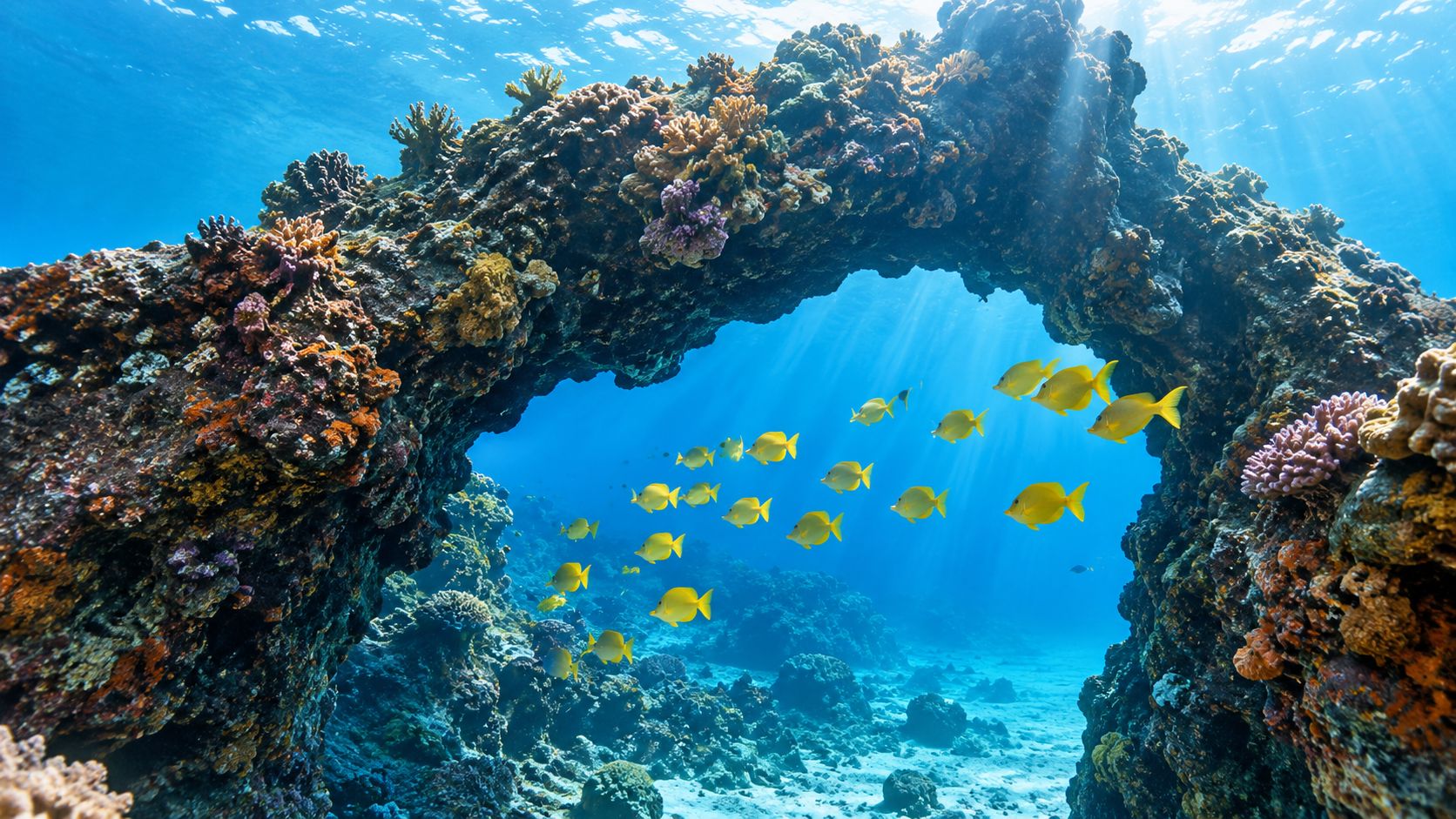
Daytime boat dives reveal the geology that makes the coast distinctive. Arches and lava tubes create changes in light and shelter, while pinnacles and sloping reef give guides options when current or visibility varies. The best site isn't always the one with the most dramatic name. It's the one that gives your group a comfortable entry, manageable depth, and enough structure to keep the dive interesting.
Use the Big Island scuba diving sites guide to compare site types before booking. Tell the operator whether you want macro subjects, formations, turtles, longer bottom time, or a relaxed first dive after travel. That information is more useful than just asking for the “best” site.
Blackwater diving
Blackwater is a different discipline. Instead of following a reef, you hover in open ocean and watch drifting pelagic animals, including larval forms and other deep-water organisms that migrate upward at night. A NOAA Institutional Repository paper on larval fishes and blackwater diving documents photography, collection, and DNA barcoding work off Hawaii.
That scientific connection matters because it changes the mindset. Manta diving offers a structured feeding scene at a fixed site. Blackwater diving asks you to manage buoyancy, darkness, separation, and visual focus while suspended above deep water. If you want rare subjects and can handle that environment, it can be extraordinary. If you want an easy wildlife encounter, choose the manta format instead.
Seasonal Conditions and Visibility Expectations
Kona is often diveable throughout the year, but “diveable” doesn't mean identical every day. The leeward coast reduces prevailing-wind exposure, while north and winter swells can still affect exposed shorelines and boat conditions. Rainfall and runoff can also change visibility near particular entries.
Summer often brings more settled surface conditions, but local wind and swell still matter. Winter can introduce stronger swell patterns and rougher shore transitions, especially where lava shelves face incoming energy. A boat operator can usually select a more suitable site when conditions shift. A shore diver has fewer options once standing in full gear at the entry.
Visibility is a site decision
Don't plan around a single island-wide visibility promise. Ask the operator what has been happening at the sites on your planned days, and distinguish underwater clarity from surface comfort. A site can look excellent below the surface while the entry, exit, surge, or boat ride remains uncomfortable.
The Big Island visibility guide is useful for setting expectations, but the final decision should come from the current marine forecast and a local assessment. Experienced guides change the plan when the ocean gives them a reason.
Practical rule: A calm reputation isn't a safety assessment. Evaluate the actual entry, swell, current, surge, and exit before committing.
Treat shore entries as technical transitions
Hawai'i's Division of Aquatic Resources warns that the Old Kona Airport shoreline includes sharp coral and lava rock, can experience dangerous swells and currents during both summer and winter storms, and currently has no lifeguards. The official Old Kona Airport marine area guidance should be part of your planning, not an afterthought.
Before entering, check the following:
- Swell direction: Determine whether waves are wrapping onto the entry rather than judging from a distant beach.
- Surge: Watch how water moves across the shelf and whether it pulls divers toward rock.
- Exit route: Identify where you'll leave before you put on fins.
- Visibility: If you can't clearly judge the bottom and your return path, wait.
- Group ability: A confident swimmer may still struggle while carrying equipment over lava.
If the entry looks wrong, abandon the shore dive. A boat trip or another activity is a better outcome than turning a recreational dive into a rescue.
Choosing the Right Dive Tours and Itineraries
Start with the experience you want, then choose the tour format. A two-tank morning trip suits divers who want varied reef terrain and daylight marine life. A manta night dive suits divers who are comfortable remaining stationary while a large animal feeds above them. Blackwater belongs to divers who can stay composed and controlled in open water after dark.
The Kona scuba diving tours selection gives you a useful starting point, but don't book by title alone. Ask where the boat normally launches, how the crew handles site changes, what equipment is included, and whether the group is appropriate for your recent experience.
Morning reef trips
Morning boat dives are the most adaptable format. Guides can select among lava formations, reef slopes, arches, and deeper structures based on swell, current, visibility, and the abilities of the group. This is usually the right first booking for a diver who hasn't been in the water recently or who wants to learn how Kona's volcanic terrain feels before attempting a night dive.
The trade-off is that you won't get the same concentrated wildlife setup as a manta excursion. Daytime diving rewards observation. Look into cracks, under ledges, and along the edge of formations instead of crossing open reef while searching only for large animals.
Manta night dives
The two principal viewing locations are Manta Village at Kaukalaelae Point and Manta Heaven in Makako Bay, also called Garden Eel Cove. A NOAA-hosted study reports manta observations at these sites almost every night. Operators use lights at the surface and near the seafloor at approximately 10 meters, drawing zooplankton into the viewing area. Dives typically begin around 6:00 p.m. immediately after sunset and last about an hour, according to the NOAA study of Kona's manta viewing sites.
For scuba divers, Garden Eel Cove is the superior choice. Its protected location provides a more controlled viewing area and a better reef setting than an exposed or mobile arrangement. The fixed setup helps divers remain stationary, reduces unnecessary movement, and makes the feeding behavior easier to observe without chasing the animals.
Sightings are common, but wildlife isn't a machine. Choose an operator that explains what happens if mantas don't appear and that treats a low-impact encounter as the measure of success, not physical contact or a guarantee.
Certification, Gear, and Safety Essentials
A smooth Kona dive begins before you reach the dock. Certified divers should bring proof of certification, log recent experience accurately, and tell the shop about any long gap since their last dive. Beginners can choose an introductory experience or begin a full certification course, but those options aren't equivalent. An introductory dive provides a guided taste. A full course builds the skills needed for independent diving.
Pack for the water you actually have
A well-fitted wetsuit matters more than a fashionable equipment list. Many divers choose a 3mm suit for general Kona conditions and add exposure protection if they chill easily or plan several dives. Bring a hooded vest if you know you lose heat quickly.
For rental equipment, inspect the mask seal, regulator comfort, BCD inflation and deflation, computer display, and fin fit before leaving the dock. Ask when the equipment was serviced and tell the crew immediately if anything feels wrong. Good operators would rather replace a regulator or change a fin than manage a preventable problem underwater.
Nitrox can help experienced, properly trained divers manage repetitive no-decompression profiles, but it isn't a substitute for planning. Confirm the mix, analyze the cylinder, set your computer correctly, and follow the limits in your training.
Night and blackwater protocols
A manta dive is conducted at a fixed viewing area, while blackwater diving takes place in open ocean. The latter requires confident buoyancy, comfort in suspended darkness, and close attention to the guide, boat, and tether system. The Blackwater Dive tour is therefore an advanced-style choice, not a casual add-on to a first scuba vacation.
Before any night dive, agree on light signals, lost-buddy procedures, ascent behavior, and what to do if your light fails. Carry a primary light and backup if the operator requires or recommends them. Keep your hands off wildlife, avoid bubbles directly in an animal's feeding path, and don't position your snorkel or camera where it forces a manta to turn.
Photography requires restraint
Manta photography works best with a wide lens, low power, and patience. Aim your light upward without sweeping it across other divers or directly into an animal's face. Let the manta enter the frame rather than swimming after it.
Blackwater subjects are smaller, mobile, and often translucent. Use a stable buoyancy position, focus on one subject at a time, and accept missed frames. A camera is a reason to observe more carefully, not permission to drift away from the group.
How to Choose a Premier Dive Operator
A reliable operator earns confidence through ordinary details. The boat should be maintained, the crew should give a clear briefing, and the site plan should change when conditions demand it. Ask about group size, guide coverage, equipment servicing, emergency procedures, cancellation terms, and the experience required for specialized trips.
Don't choose solely by the lowest advertised rate. A crowded boat can make entries, exits, photography, and wildlife positioning harder. A premium isn't automatically justified either. Look for a clear connection between what you pay and what the operation provides.
What to compare before booking
- Boat layout: Shaded seating, secure storage, easy ladders, and a hot shower matter after repeated dives and night trips.
- Guide practice: A good briefing covers depth, route, signals, wildlife behavior, and the reason behind each restriction.
- Equipment care: Proactively serviced rental gear reduces avoidable distractions and helps divers concentrate on the environment.
- Recent-dive policy: Requirements are there to match diver readiness with site complexity, not to punish rusty certification.
- Environmental conduct: The crew should prohibit touching, chasing, crowding, and careless light placement.
Kona's manta rules reinforce why operational discipline matters. State documents identify Makako Bay, or Garden Eel Cove, and Keauhou Bay, commonly called Manta Village, as the primary viewing areas. During designated viewing hours from 4:00 p.m. to 4:00 a.m., commercial operators must use a commercial mooring, live boating is limited to entering and leaving, and rafting is prohibited. The same Hawaii DLNR manta-viewing rules state that scuba tours are prohibited at the Kaukalaelae site and allowed only at Makako Bay because of environmental conditions.
That rule makes Garden Eel Cove particularly important for scuba divers. It isn't merely a popular name on a tour page. It is the site identified in the operating framework where manta scuba tours may be conducted during viewing hours.
A practical choice for mixed groups
Kona Honu Divers offers two-tank morning trips, manta ray night dives, blackwater excursions, advanced trips, courses, snorkeling, rentals, and private charters. Its fleet includes shaded seating, hot showers, and storage, while its rental equipment is proactively serviced and free nitrox is available to qualified divers. Review the wider Kona dive shop comparison and ask direct questions before committing.
Plan transportation with the harbor location in mind, arrive with enough time to park and assemble equipment, and leave your final day flexible if you need to fly or drive to high elevation after diving. Pack a swimsuit, towel, reef-safe personal items, certification details, medication you already use safely, and a dry layer for the ride home. The best Kona itinerary leaves room for weather changes instead of stacking every excursion tightly.
Kona Honu Divers offers guided morning reef dives, Garden Eel Cove manta trips, blackwater excursions, advanced outings, and private charters for divers who want a more focused itinerary. Visit Kona Honu Divers to compare the available experiences, confirm the right fit for your certification and recent dive history, and reserve your place before your Kona plans are fixed.