
You've got the rental tank in the car, the shuttle dropped you in Kona, and the first question is already on your mind, which site fits your certification, your comfort level, and the ocean today? Diving Hawaii Big Island works best when you treat it like a live system, not a postcard. The island rewards divers who match site, season, and operator to the conditions in front of them.
Kona's underwater appeal comes from the island's young lava terrain, leeward calm, and unusually strong pelagic life, but those same strengths can become problems if you book the wrong trip or show up with the wrong expectations. A diver who wants an easy reef poke, a manta encounter, and a serious blackwater drop should not shop for those experiences the same way. The right plan starts with the coast, then the dive type, then the operator.
Why Big Island Diving Feels Different From Other Hawaiian Coasts
A first-time diver in Kona usually notices the difference before the first fin kick. The air feels drier, the water looks clearer, and the shoreline is all black lava instead of the softer reef terrain people picture from older islands. That difference matters because the Big Island's volcanic substrate creates arches, tubes, ledges, and abrupt depth changes, while mature coral cover is more limited in many places than on older Hawaiian coasts.
The Kona side is the practical center of gravity
The leeward Kona coast sits in a sheltered position relative to the trade winds, so it often gives divers calmer entries and better underwater visibility than windward areas. That is why most guided diving traffic clusters there, and why boat operators can work a bigger range of sites when conditions are good. The east side is a different decision entirely, with more rainfall, more runoff, and less predictable water clarity.
Practical rule: If you want the highest chance of straightforward conditions, plan around Kona first, then treat anything else as a bonus.
The island's marine management history also explains why responsible diving here matters. Hawaiʻi established its first legislated marine protected area in 1953, and a statewide assessment found that about 12% of waters within the 50-meter depth contour, and about 5% of all waters under state jurisdiction within 3 nautical miles of shore, had some form of marine management, with 872 square kilometers under management and an average protected area age of 28.9 years state marine protected area assessment. For visitors, that means the rules around reef contact, wildlife distance, and site use aren't optional extras. They're part of a long-running conservation framework.
The pelagic edge is the other thing that makes this island stand out. Deep water sits close to shore, which is why mantas, other open-ocean visitors, and unusual night dives belong in the same conversation as reef diving here. For a useful island overview, start with what makes Kona diving unique.
Kona Visibility, Weather, and the Best Time to Dive
A calm morning can turn into a rough afternoon, or a rainy night can leave a normally clear shore site cloudy the next day. Kona rewards divers who plan around conditions rather than treating the calendar as a guarantee. The leeward coast often offers dependable access, but swell, runoff, wind, and site exposure still determine whether a particular dive is comfortable and worthwhile.
What visibility really depends on
On favorable days, Kona visibility can exceed 100 ft, or about 30 m. That is a useful reference point, not a promise. Swell can stir shallow sediment, rain can carry runoff toward nearshore sites, and wind can make an exposed entry unpleasant even when offshore visibility remains good. After substantial rainfall, wait 48 to 72 hours before entering an affected nearshore site, particularly if the water looks cloudy or carries visible debris Big Island dive timing and visibility guidance.
Shore divers feel these changes first because the entry, exit, and first few metres of the dive are directly exposed to local conditions. A boat crew can often choose a more sheltered site or move to cleaner water, but only if the operator checks conditions and is willing to change the plan.
Nearshore Kona water generally stays warm enough for standard tropical exposure protection. Repeated dives, long bottom times, and night dives can still make a slightly thicker suit more comfortable, particularly during the cooler part of the year. Review this Kona visibility guide when comparing seasonal clarity and water temperature, then ask your operator what exposure protection they recommend for the sites on your schedule.
Practical rule: Book the type of diving you want, then leave room for weather-based site changes. Calm seas, manta conditions, and whale season do not peak at the same time.
| Kona Diving Conditions by Month | Visibility (ft) | Water Temp (F) | Wind/Swell | Notes |
|---|---|---|---|---|
| January | Good on the Kona side | Cooler | Winter swell can reach exposed sites | Whale season can add interest, but site choice matters |
| February | Good on the Kona side | 74 to 76 nearshore | Winter swell remains a factor | A thicker wetsuit and conservative shore entries may help |
| March | Good on the Kona side | 74 to 76 nearshore | Conditions often improve gradually | A useful shoulder month for mixed plans |
| April | Strong on the Kona side | Warming | More settled windows often appear | Flexible boat planning works well |
| May | Strong on the Kona side | Warming | Often calmer than winter | Suitable for mixed skill levels |
| June | Strong on the Kona side | Warm | Trades can build | Leeward sites often retain good visibility |
| July | Strong on the Kona side | Warm | Summer trades can increase | Plan around windier afternoons |
| August | Strong on the Kona side | Warm | Thermocline shifts can surprise divers | Comfort at depth matters more |
| September | Strong on the Kona side | Late-summer warmth | Often a quieter window | A strong choice for long, easy boat days |
| October | Strong on the Kona side | Late-summer warmth | Often a quieter window | Good timing for repeat dives |
| November | Variable | Cooling | Conditions can change quickly | Watch swell forecasts closely |
| December | Variable | Cooling | Winter patterns begin returning | Manta diving remains a strong draw |
Use the table as a planning guide, not a substitute for a same-day briefing. A reputable operator should explain the expected entry conditions, current, swell, visibility, and backup site before you commit. For shore diving, ask whether recent rain changes the recommendation. For boat diving, ask how the crew chooses between sites when wind or swell shifts. Those answers reveal more about operational quality than a promise of clear water on every trip.
Shore, Boat, Manta Night, and Blackwater Compared
Big Island diving splits into four very different experiences, and each one asks something different from the diver. Shore entries reward independence and site reading. Boat dives reduce access stress but still demand decent buoyancy and boat awareness. Manta night dives trade reef exploration for a very specific spectacle. Blackwater dives are a different animal altogether.
Match the dive to the diver
Shore diving makes sense when you already know how to read surf, carry gear over uneven lava, and handle your own entry and exit. Places like Kahuwai Bay, Place of Refuge, and Two Step can be great, but they're not casual beach walks. In real terms, they suit experienced divers who are comfortable with entries, surge, and limited on-site support.
Boat diving is the broadest category. It fits newer certified divers much better than blackwater or demanding shore entries, especially if the operator is disciplined about briefings and site selection. Think of it as the most forgiving way to see lava pinnacles, reef edges, and cleaner offshore sites without having to solve the entry problem yourself.
Manta night diving is the signature Kona experience because it's structured, repeatable, and visually dramatic. It's also more of an observation drill than a chase. If you're open water certified and comfortable hovering low and still in the dark, it can be a great first night experience.
Blackwater diving is the one that requires honest self-assessment. You're tethered offshore at night over very deep water, watching tiny pelagic organisms rise through the lights. If you dislike open-ocean dark, unstable buoyancy, or the idea of being far from a reef, skip it.
Shore dive for access skill. Boat dive for flexibility. Manta night for a signature experience. Blackwater for advanced curiosity and control.
For a deeper operator view of the boat-based side, see the Kona diving tours page. If you're deciding as a first-timer versus a veteran, the simple rule is this, newer divers should start with boat reef diving or a manta night, while experienced divers can branch into shore entries and blackwater once they're fully comfortable in open water.
The Manta Night Dive at Garden Eel Cove
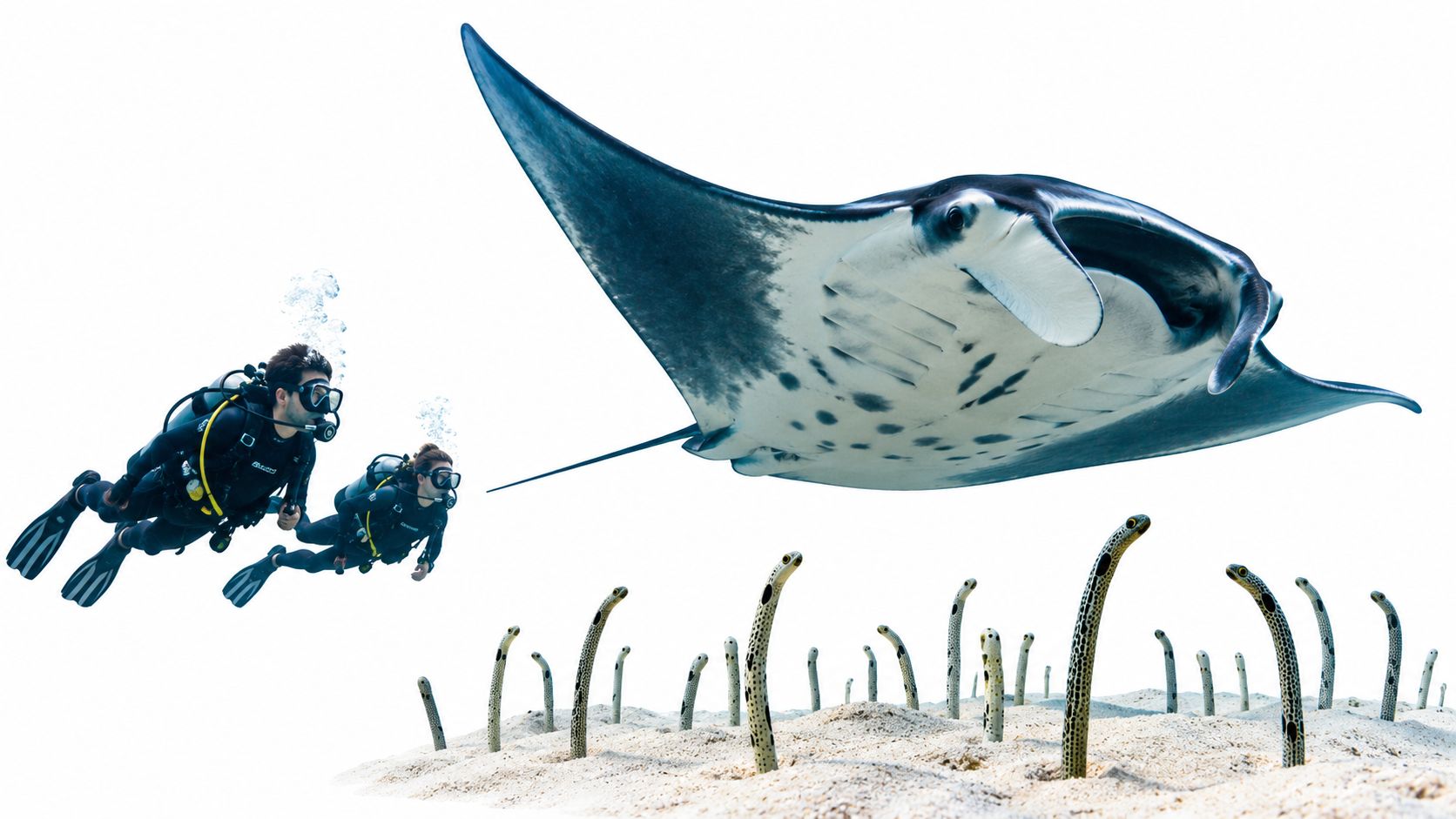
Garden Eel Cove works because the setup is simple and consistent. You arrive, gear up on the boat, and drop into a controlled sandy area where the lights create a plankton bloom that mantas can track. The site's protected position gives the operation a cleaner, safer viewing lane than more exposed nearby options, and the deeper sand channel keeps divers away from fragile reef structure.
Why this site works better than the hype spots
The main reason Garden Eel Cove outperforms flashier-sounding alternatives is that it's designed around the manta behavior instead of around crowds. The mantas come to feed in the light field, so the diver's job is to stay low, still, and predictable. That usually means a short descent, controlled positioning, and a longer stretch of watching than swimming.
The best-known Kona manta format uses a tight lighting layout and a surface support pattern that keeps the plankton concentrated. In strong nights, you'll see repeated passes, with mantas doing barrel rolls and somersaults through the light. That's the moment people remember, but the value is the discipline required to let the animals do the moving.
A good operator keeps the rules tight. Photographers need to control strobes, divers need to keep their fins and hands quiet, and nobody should drift into the feeding lane. If the site is crowded or the weather is rough, the value of a well-managed Garden Eel Cove run becomes obvious very quickly.
For a direct look at the tour format, use the Kona manta ray night dive page.
Certifications, Gear, and Nitrox Expectations
The wrong certification setup wastes a dive day. The right one keeps you comfortable, legal for the site, and less likely to rush decisions underwater. Around Kona, most reef boat dives fit open water divers, but the more specialized trips start asking for real experience, recent diving, and better buoyancy.
What you actually need
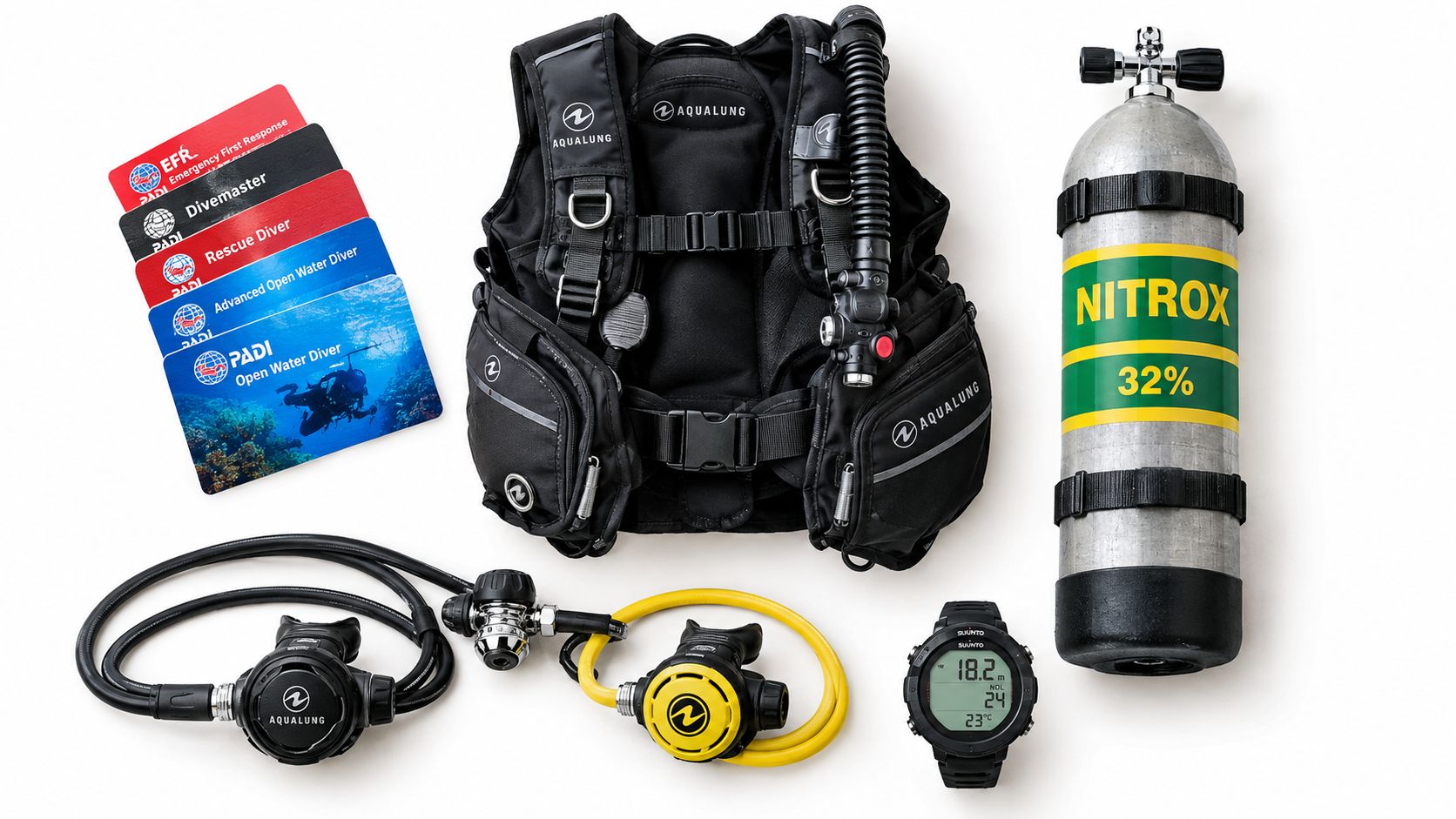
For standard shore and boat reef diving, Open Water is the baseline. For manta night diving, you should expect a checkout dive or operator briefing, recent dive proof, and enough comfort to hover in low light without crowding the reef or your buddy. For blackwater, the bar goes higher, with Advanced Open Water, deep and nitrox familiarity, recent logged dives, and a redundant surface marker expected by serious operators.
Gear choice should be practical, not aspirational. A 5mm to 7mm wetsuit makes sense for many visitors because nearshore winter water can drop to 74°F in February Big Island scuba diving guide. A computer that handles nitrox is useful if you're doing multiple boat dives or longer repetitive profiles, and a primary light plus a backup is standard for anything after dark.
Practical rule: Rent what you don't own, but don't rent confidence. A well-fitted mask and a computer you can actually read matter more than extra gadgets.
Nitrox is a real advantage on repetitive dive days, especially if you want more conservative no-stop planning across a morning boat and a night dive. Many Kona operators can provide fills, and some include them for enriched-air divers on selected charters. For certification prep, the enriched air course page is the right place to start if you're building toward more repetitive diving.
Choosing a Big Island Dive Operator
On the Big Island, site selection matters less than operator judgment. One shop can take you to a site at the right time with a tight group and a calm briefing. Another can take you to the same reef and make the whole day feel rushed, crowded, or sketchy. That's why the best booking question isn't “Which site is famous?” It's “Which operator reads conditions well?”
What to ask before you hand over a deposit
A trustworthy operator should be clear about guide-to-diver ratios, weather call thresholds, cancellation terms, and how they handle mixed-experience groups. You want to know whether the crew will turn a boat if the wind shifts, whether the briefing covers entry, exit, and buoyancy in detail, and whether the boat is set up for the kind of dive you booked.
Kona Honu Divers is one example of a shop built around that model, with a custom boat, small groups, manta and blackwater options, and a regular schedule that lets divers plan around conditions rather than forcing conditions to fit the calendar. Use that as a reference point, not as a slogan. The broader principle is the same across the island, operator fit matters more than brand recognition.
| Big Island Dive Operator Evaluation Criteria | Industry Benchmark | What to Look For |
|---|---|---|
| Group size | Smaller is usually easier to manage | Clear cap on divers per guide and per boat |
| Weather decisions | Safety first, not “we already launched” | Firm cutoffs for wind, swell, and visibility |
| Briefing quality | Site-specific, not generic | Entry, exit, depth, current, and contingency coverage |
| Nitrox policy | Transparent and consistent | Clear fill availability and confirmation before the trip |
| Boat setup | Reliable and well maintained | Working ladders, shaded seating, and sensible staging |
| Cancellation terms | Written before booking | Clear deadlines and weather-related refund rules |
Ask three direct questions before booking any Kona operator. How many divers will be in my group, what weather makes you cancel, and what happens if conditions change after check-in? If the answers are vague, keep shopping.
Sample Itineraries for Three, Five, and Seven Days
Kona diving works best when you build the trip around recovery, not just enthusiasm. The difference between a good week and a frustrating one often comes down to whether you stack dives intelligently, leave room for weather, and choose the right mix of shore, boat, and night diving.
Three days for a short Kona stopover
A three-day plan should stay simple. Book one manta night dive, add one day boat charter, and leave the rest of the time for arrival, hydration, and surface intervals. That works best for open water divers who want a strong signature experience without trying to cram in too much.
Five days for a balanced dive trip
With five days, you can add a second boat charter and, if you're qualified, a blackwater dive. A shore dive at Place of Refuge fits only if the water is calm and you're already comfortable with lava entries. This is the point where a diver starts to appreciate why small-group boats and good scheduling matter.
Seven days for a full Kona immersion
Seven days gives you room for a photography-focused boat day, one more advanced outing, and a deliberate off-day for jet lag and nitrogen off-gassing. It also gives you flexibility to move between west-side conditions and a north or east-side option if the weather lines up. A trip like that is where a well-run boat schedule matters more than a random list of sites.
Good trip design is boring on purpose. It leaves space for weather, rest, and the dives that actually fit your certification.
Marine Life Etiquette and Reef-Smart Diving Practices
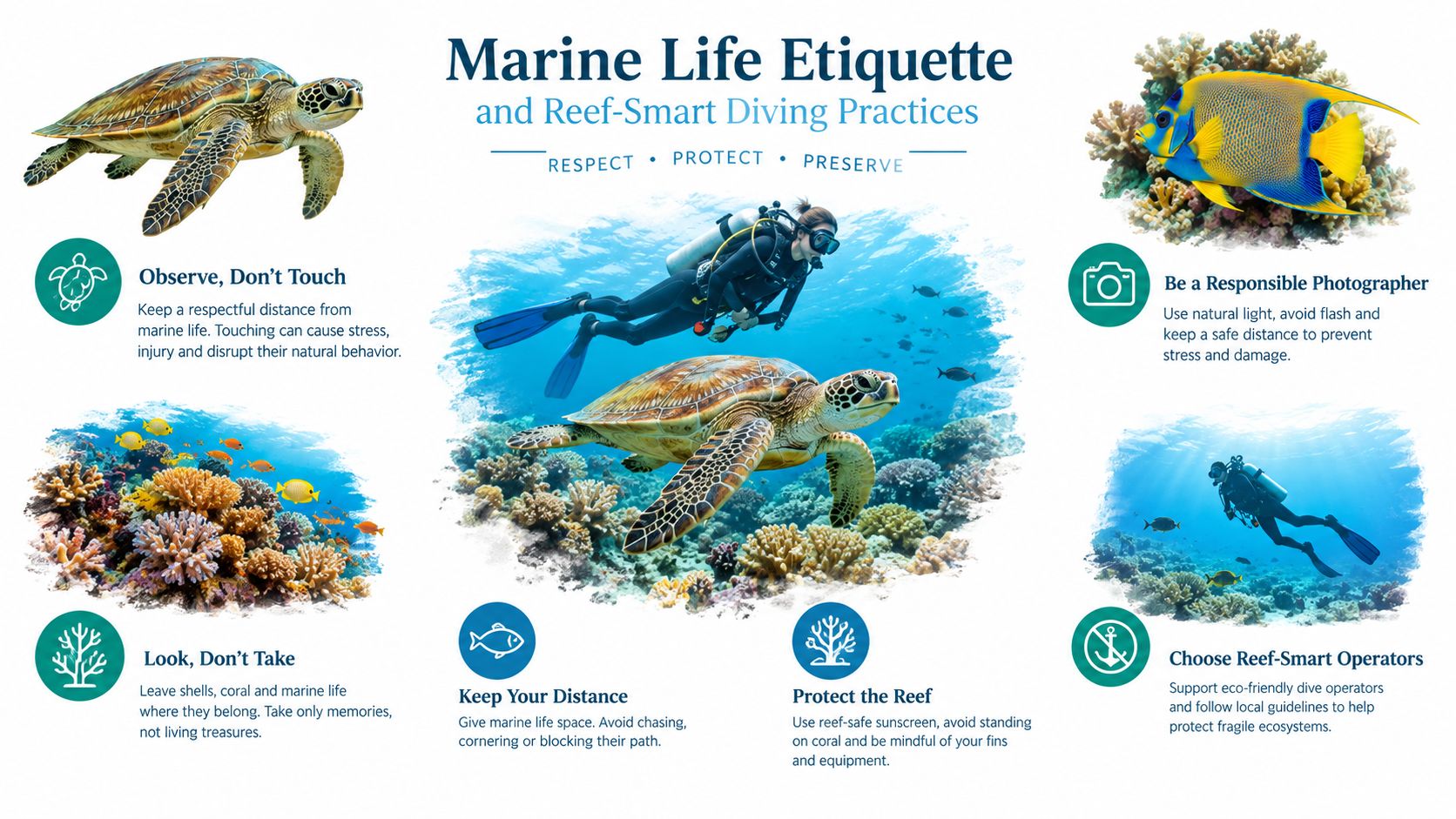
A “great dive” isn't just about how much wildlife showed up. It's about whether the diver's behavior added pressure to the site or left it in better shape for the next group. On the Big Island, etiquette isn't a soft suggestion, because many sites sit inside managed areas where contact, collection, and careless movement can do real damage.
The rules that matter underwater
Keep vertical and horizontal separation from coral, lava structure, and animals unless the operator gives a very specific positioning brief. On MLCD sites, Hawaiʻi state guidance says these districts are designed to conserve and replenish marine resources, and they generally restrict taking living material and habitat material Hawaiʻi MLCD rules. That's why touching reef, collecting shells, or feeding marine life is out of bounds, even when the site looks casual.
Photographers need discipline too. On manta dives, lights should support the animals without blasting them or blocking the feeding lane. On blackwater, buoyancy is even more important because a small fin movement can disturb fragile open-ocean organisms that you won't notice until you're already too close.
Treat every touch as avoidable. If you can kneel, hover, or reposition instead, do that.
For a clear code of conduct before booking, read responsible diver etiquette. Then ask the operator a simple question before paying a deposit, do they run marine-life interaction as observation only, or do they tolerate touching and crowding? If the answer isn't clean, choose another boat.
Kona Honu Divers runs guided boat trips, manta ray nights, blackwater dives, training, and rental support for visitors who want a structured way to dive the Big Island. If you want a trip plan that matches your certification, the conditions, and the kind of ocean you want to see, visit Kona Honu Divers and compare the options before you book.