
It's common to arrive on the Big Island expecting postcard Hawaii. Warm water, bright fish, maybe a turtle, then mai tais by sunset. That part is real. What surprises divers is how different the underwater terrain feels once you drop below the surface on the Kona side.
This island feels young because it is. The Big Island is just over 500,000 years old, and its volcanism still shapes the terrain divers move through today, from lava tubes to arches to steep volcanic structure, according to this history of Hawaiʻi's Big Island. That same source notes Kona's leeward coast often gets 100 feet of visibility, which is a big reason diving here feels so open and cinematic.
For trip planning, that changes everything. You're not choosing between “nice reefs” and “nicer reefs.” You're choosing between very different types of dives: reef structure built on lava, nocturnal animal encounters, and open-ocean pelagic experiences that don't feel like standard tropical diving at all.
Welcome to a Different Kind of Paradise
The classic first impression of diving Big Island is often visual clarity. You back-roll in, look down, and instead of a soft sandy reef profile, you see volcanic contour. Shelves. Fingers of old lava. Cavities and swim-throughs where fish stack up in the shadows.
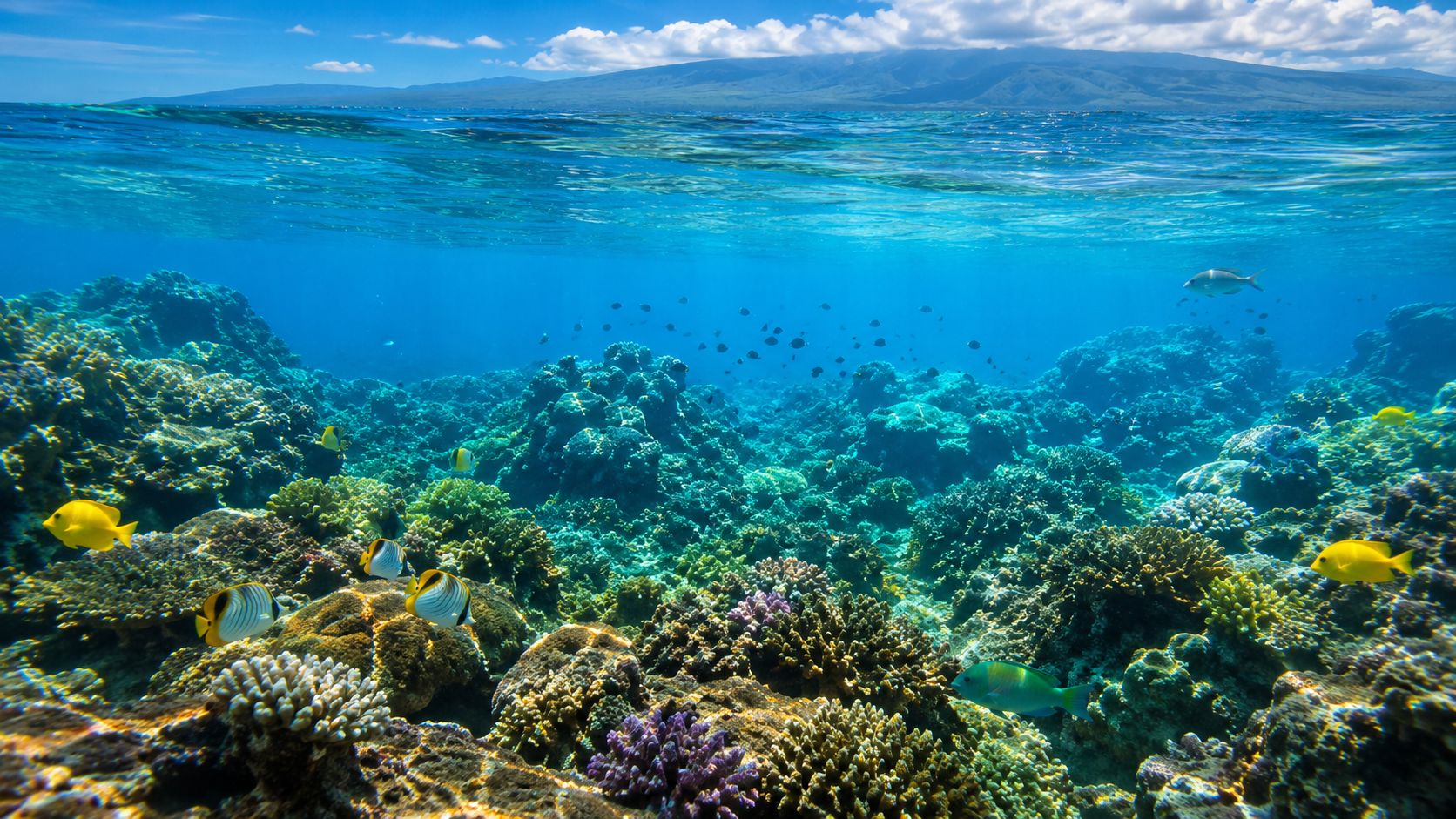
That's what makes the Big Island different from a lot of tropical destinations. The scenery underwater isn't just colorful. It's structural. Divers spend as much time looking at the shape of the reef as the animals on it, because the reef sits on a volcanic foundation that still reads clearly in the underwater terrain.
Why Kona feels so different underwater
A young volcanic island produces a very specific kind of diving. The lava created tubes, arches, and sharp changes in relief that now hold marine life in pockets, overhangs, and channels. You're often moving through terrain that feels carved rather than grown.
On the west side, the conditions also help. The Kona coast sits in calmer leeward water, so dives are often cleaner and easier to read from the surface down. Newer divers notice that right away. Experienced divers usually notice how much more time they can spend observing instead of fighting surge or poor visibility.
Practical rule: On the Big Island, choose your trip by dive style first, not by reef name. The experience matters more than the site list.
What that means for your vacation
If you only have a few days, don't try to “do everything Hawaii offers.” Match the dives to what you enjoy.
- If you like terrain: Focus on lava tubes, arches, caverns, and reef dives with volcanic structure.
- If you like animals: Prioritize the manta night dive.
- If you want something rare: Book blackwater.
- If you're rusty: Start with an easy daytime boat charter before adding a night dive.
That approach works better than chasing a long list of famous site names. Kona rewards divers who know what kind of underwater day they want.
Kona's Signature Underwater Experiences
The Big Island has plenty of good reef diving, but Kona's reputation really rests on a few standout experiences that are hard to replicate anywhere else. Two of them are globally distinctive enough that people plan entire trips around them.
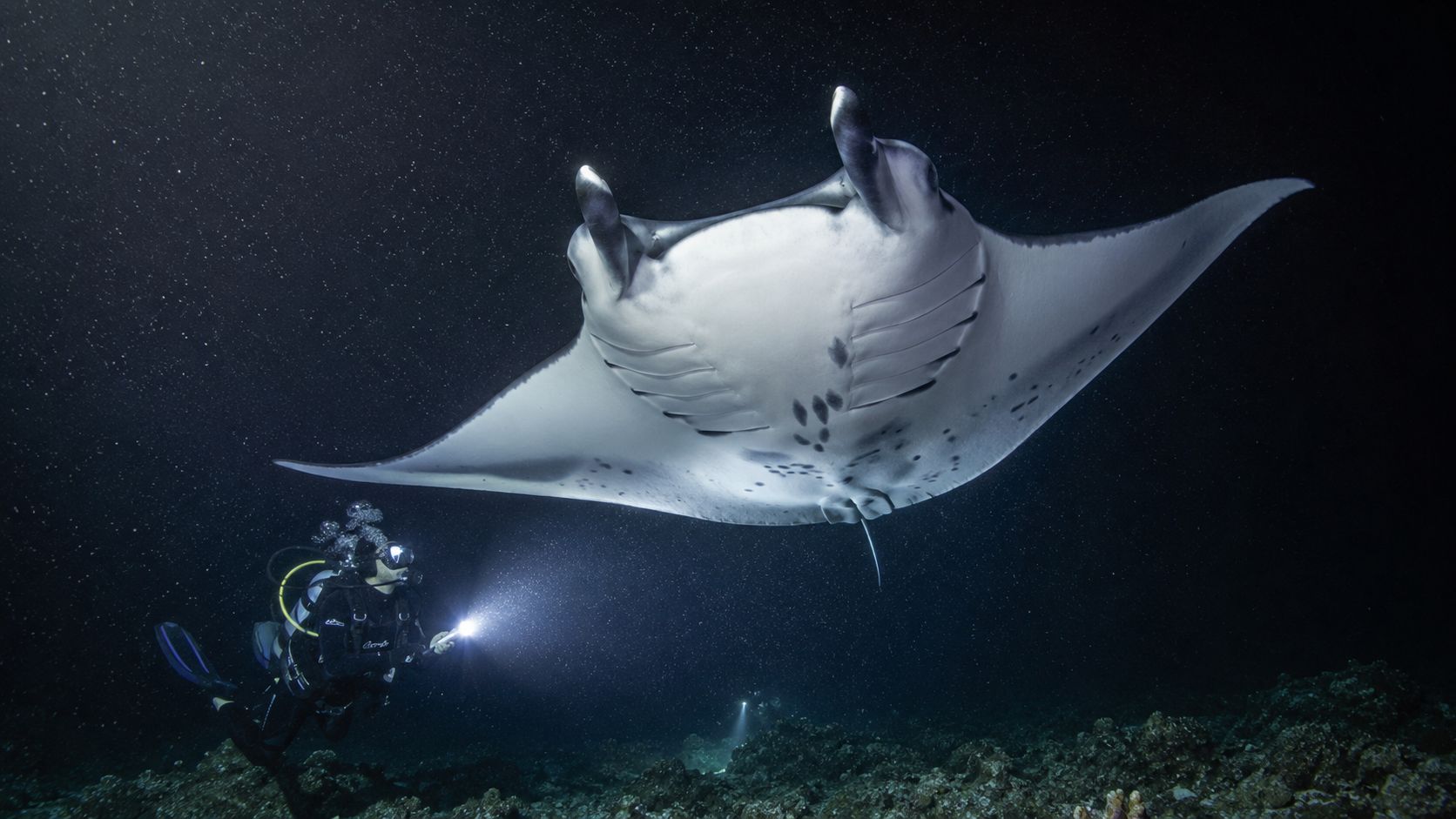
Divers Alert Network notes that Kona is home to the manta ray night dive and the blackwater dive. DAN also reports that researchers have identified more than 270 manta rays in the Kona study area, and that blackwater diving here takes place over ocean where the bottom is about 6,000 feet below in the Kona area covered by their Kona diving feature.
The manta ray night dive
This is the dive most visitors ask about first, and for good reason. The setup is simple. Divers settle in a shallow area, lights attract plankton, and the mantas come in to feed. A Big Island diving guide describes this as a controlled night-dive format where divers sit around 35 feet while the light field concentrates plankton and mantas may barrel roll overhead in repeated passes. That same guide notes the dive is often best in summer when surge is lower and manta numbers tend to peak in this Big Island scuba guide.
Garden Eel Cove is the site I'd generally recommend. It's the stronger choice because the location is protected, the viewing area is dependable, and the surrounding reef makes the whole dive feel like more than a waiting game on sand. If you want to compare timing and options, the Kona manta ray tour guide is a useful place to start, and the actual manta ray dive tours page lays out booking choices.
What works on this dive is calm behavior. Get stable, keep your fins controlled, and look up. What doesn't work is chasing mantas, turning the dive into a photo scramble, or treating it like a drift.
Stay low, keep your light where the guide tells you, and let the animals do the work. The best manta encounters happen when divers stop trying to manufacture them.
The blackwater dive
Blackwater is the opposite of reef diving in almost every way. No lava ledges. No coral reference. No bottom in sight. You descend into open water at night and watch deep pelagic life rise through the water column.
This dive appeals most to experienced divers who are comfortable with buoyancy, darkness, and the psychological weirdness of suspended open ocean. It's not technically complicated in the same way as cave diving or deep decompression work, but it does ask for composure. If a diver struggles when there's no visual frame of reference, blackwater can feel disorienting fast.
If that sounds exciting rather than stressful, the blackwater night dive tour page is the right next stop.
Lava tubes and volcanic reef dives
The third signature experience is less flashy but more foundational. Daytime Kona diving means volcanic reef structure. Swim-throughs, arches, pockets of shelter, and reef life using old lava contours as habitat.
Diving Big Island becomes a geology trip as much as a wildlife trip. Even on a straightforward two-tank morning charter, the terrain changes the mood of the dive. You're not just cruising above coral heads. You're weaving around the old plumbing of the island.
For many divers, this ends up being the most replayable type of Kona diving. Mantas and blackwater are bucket-list dives. Lava reef diving is what keeps people coming back.
A Guide to Top Big Island Dive Sites
Most site lists don't help much because they flatten everything into names. A better way to choose is by matching the site style to your comfort level, air consumption, and what you want to see underwater.
Good matches for newer divers
If you're fresh off certification, coming back after time out of the water, or traveling with mixed-experience buddies, look for easy reef profiles and forgiving entries from the boat. Kailua Pier and Pawai Bay are the kind of areas that work well for checkout dives and skill settling.
These dives reward slow pacing. You can check weighting, get your breathing under control, and still enjoy plenty of fish life without feeling rushed. That's especially important in Kona, where many visitors want to add a manta or night dive later in the trip. A calm first day usually makes the rest of the trip go better.
Sites that suit almost everyone
Golden Arches and Turtle Pinnacle are the kind of names people remember because they combine recognizable structure with accessible profiles. These are the dives where you get the classic Kona mix of volcanic topography and marine life without needing a particularly aggressive profile or difficult conditions.
A useful day plan for many visitors is simple:
- First dive: Start with the more open, confidence-building site.
- Second dive: Move to the site with more structure once everyone has settled in.
- Surface interval mindset: Talk through gas use, weighting, and comfort openly. The second dive is usually better when the first one isn't treated like a test.
For advanced divers who want more range
Some of Kona's most rewarding diving asks for more experience. That can mean stronger current management, deeper profiles, more demanding topography, or sites farther from the standard rotation. If that's your lane, a dedicated advanced charter is usually a better move than hoping for a spicy site on a general boat.
The premium advanced long-range dive tour is designed around that kind of diver. If you're also curious about the broader South Kona area and why it matters for water access and conditions, this look at Kealakekua Bay and Kona diving waters gives helpful local context.
Better divers don't always need harder dives. They need dives that fit their goals. Sometimes that means depth and current. Sometimes it means more bottom time on intricate structure.
Shore names matter less than access quality
A lot of visitors assume shore diving is the obvious low-effort option. Sometimes it is. Often it isn't. A site can be beautiful and still be a poor choice for a tired vacation diver carrying gear across lava and timing an entry badly.
That's why I usually tell people to pick the experience first. Then choose whether boat access or shore access makes that experience easier, safer, and more fun.
Planning Your Dive Trip Best Seasons and Conditions
The good news is that Kona works well for divers across the year. The more useful question isn't “Is there a dive season?” It's “What conditions make the dives I want easiest to enjoy?”
When to come
If mantas are high on your list, summer often gives a friendlier window because surge tends to be lower and the dive can feel more relaxed in the water, as noted earlier. For general reef diving, Kona is dependable enough that many visitors can build a strong dive trip around whatever week they're already coming to the island.
Season matters less here than trip design. If you're doing several dives in a short stay, front-load your easier daytime dives. Add your night dives once you're settled, weighted correctly, and back in rhythm.
A little pre-trip reading helps. If you want a broad timing overview, this guide on the best season for diving in Kona is a practical reference.
Boat diving versus shore diving
Many visitors often complicate their planning unnecessarily for Big Island diving. A Big Island diving guide notes that Kona has more than 50 dive sites, and that while shore diving exists, the vast majority of those sites are best accessed by boat in their Big Island scuba overview.
For most visitors on a limited vacation, boat diving wins on simplicity. You don't have to haul gear over lava, judge an unfamiliar entry, or burn energy before you even start the dive. You also get access to more of the coast, which matters on days when conditions make one area stronger than another.
Here's the practical trade-off:
| Option | Usually works best for | Main downside |
|---|---|---|
| Boat diving | Visitors on short trips, families, divers doing night dives, anyone wanting broad site access | Higher cost |
| Shore diving | Experienced local-style divers, budget-focused trips, very confident self-guided pairs | Entry complexity, gear hauling, variable comfort |
Seasickness and how to avoid losing a dive day
If you're even a little prone to motion sickness, plan for it before the boat leaves the harbor. Don't wait to “see how you feel.” That approach ruins more dives than bad weather.
Useful options include the Ship-EEZ Seasickness Patch, Dramamine pills, Bonine pills, Sea Band wristbands, and Ginger chews.
A few habits also help:
- Eat lightly: Don't board on an empty stomach, but don't crush a huge breakfast either.
- Hydrate early: Start before the trip, not after you already feel off.
- Watch the horizon: If you feel queasy, stay outside and keep your eyes up.
- Tell the crew: Good crews would rather help early than deal with a miserable diver later.
Diver Logistics Gear Certification and Where to Stay
This is the part that saves headaches. Most Big Island dive problems aren't underwater. They happen when divers show up with the wrong gear, the wrong lodging location, or the wrong assumptions about certification.
Certification and trip fit
For most scuba charters, you need to be a certified diver. If you aren't certified, ask about a Discover Scuba Diving or intro-style option rather than trying to force your way onto a standard certified-diver trip.
This matters even more with signature dives. Manta scuba requires comfort at night, and blackwater is for experienced divers who are already solid on buoyancy and situational awareness. If you're not there yet, that's fine. The right answer is to choose the experience that matches your current training, not the most dramatic photo opportunity.
What to bring and what to rent
Bring the personal items that affect comfort and familiarity. Rent the bulky gear unless you have a strong reason not to.
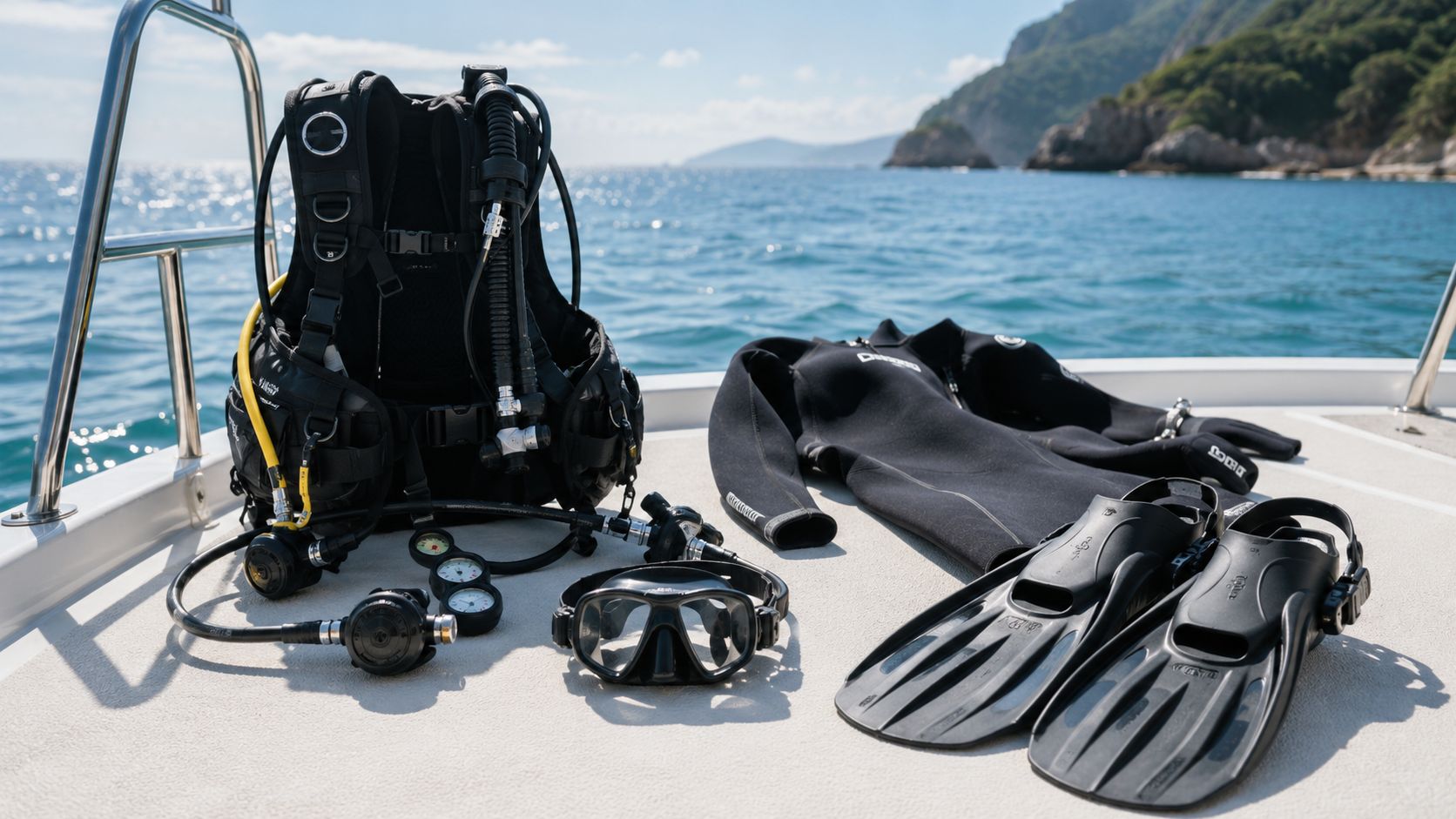
- Bring your own mask: Fit matters more than brand.
- Bring your dive computer: You know the interface, the alarms, and your own settings.
- Bring exposure gear if you're picky: If you run cold or hot compared with everyone else, your own wetsuit is worth it.
- Rent BCD and regulator if needed: Good operators maintain this gear and save you luggage space.
- Pack surface basics: Reef-safe sun protection, water, a towel, dry clothes, and a light layer for the ride back.
The gear you notice most on vacation is usually the gear that touches your face, controls your warmth, or carries your dive data.
Where to stay and how to move around
Stay on the Kona side if diving is the priority. That puts you closer to harbors, operators, and the calmer west-side diving pattern most visitors are coming for. Staying on the Hilo side can work for a broader island trip, but it usually adds drive time and reduces flexibility on dive mornings.
A rental car makes the whole trip easier. Dive boats handle the water logistics, but your non-dive days still matter. The Big Island is large, and having your own wheels gives you room to eat, rest, and explore without locking the whole trip around one hotel zone.
If you're trying to narrow down neighborhoods, resort areas, or practical diver-friendly locations, this guide to where divers stay on the Big Island is a good planning shortcut.
Why Kona Honu Divers Is Your Best Choice
When divers ask what matters most in Kona, I give the same answer every time. Boat operations, crew judgment, and diver management shape the day more than marketing copy ever will.
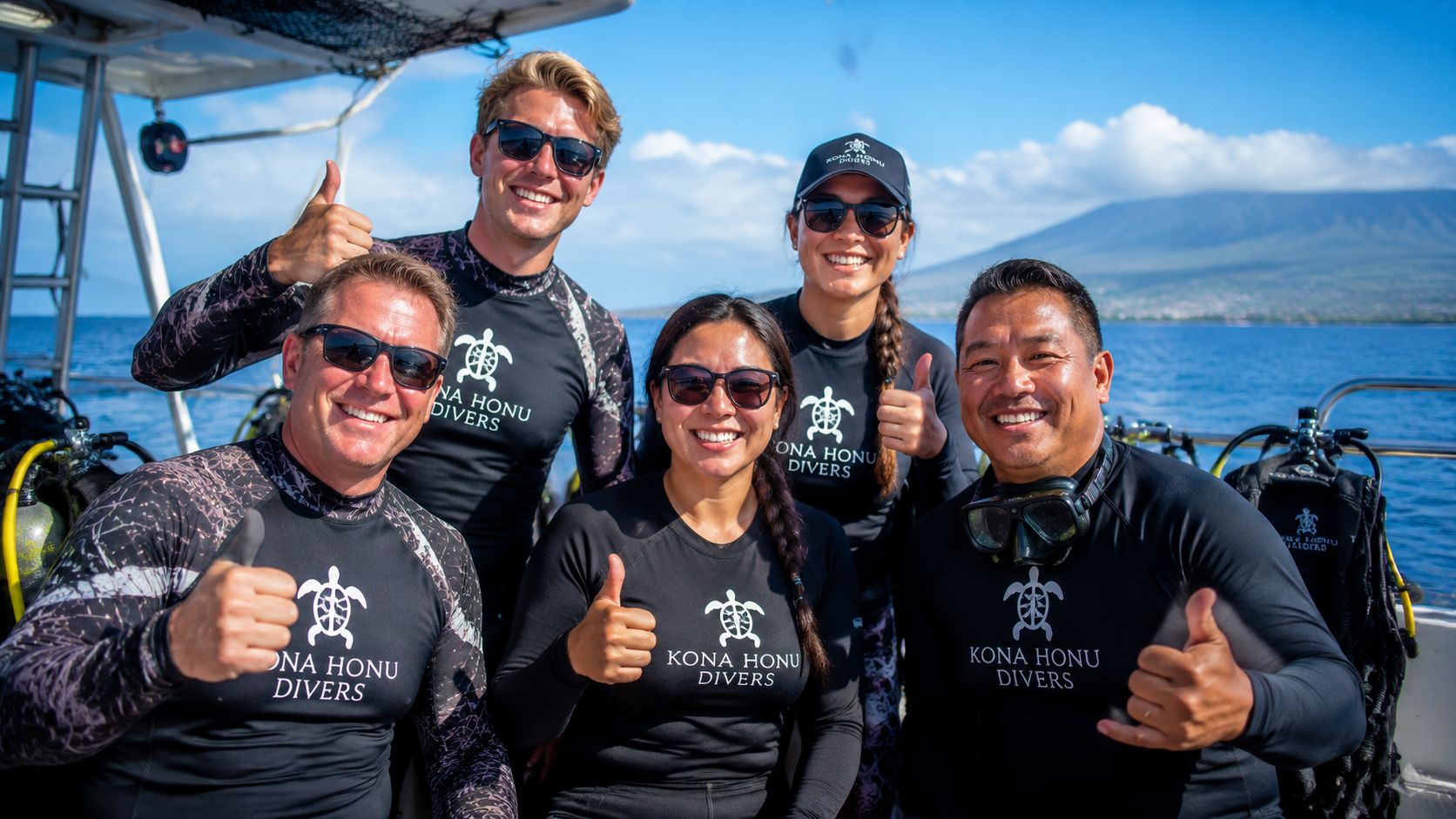
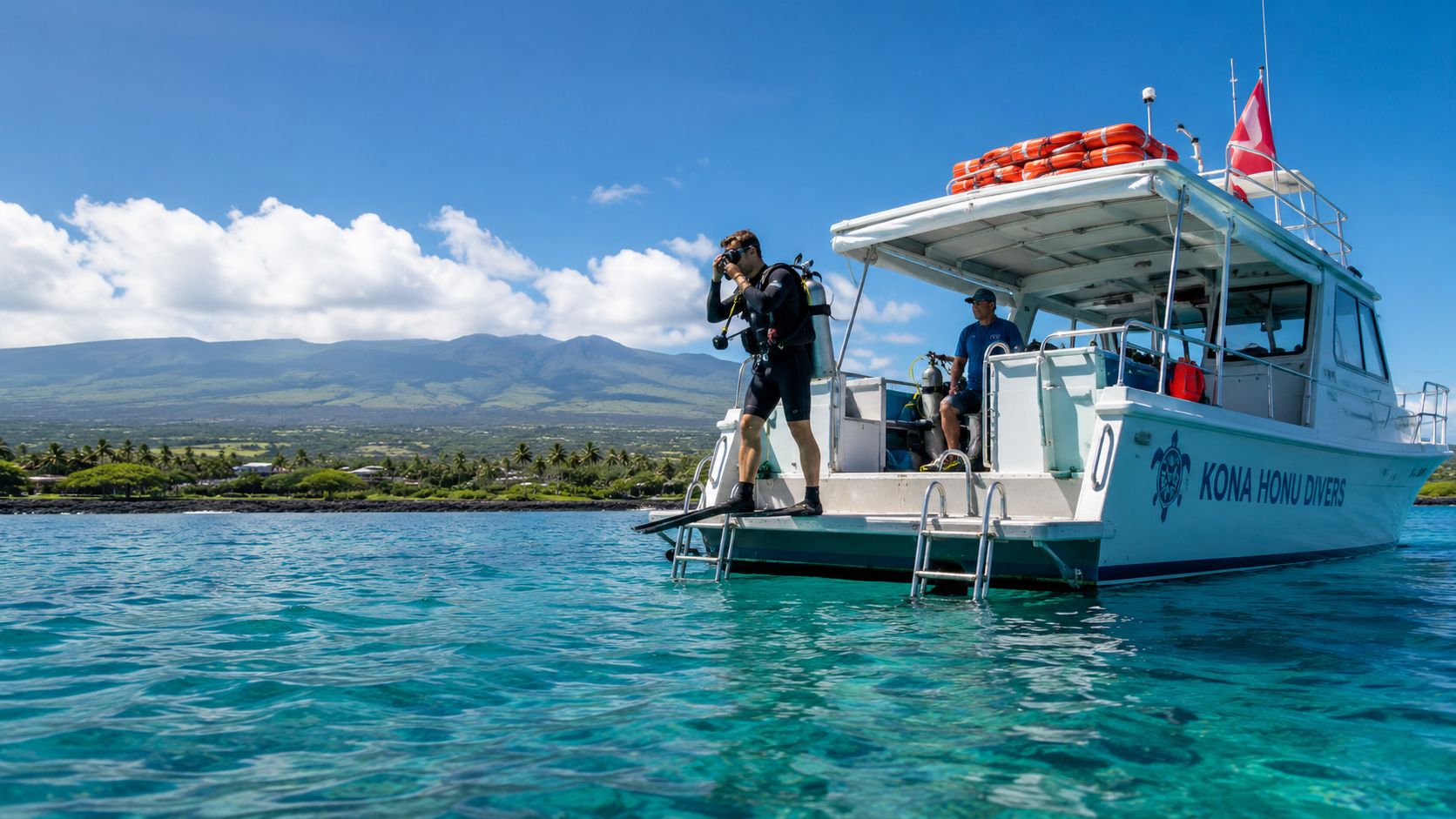
For visitors booking guided diving Big Island trips, Kona Honu Divers tours include morning reef dives, manta trips, and blackwater options. Their broader operation background and crew information are outlined on the dive team page, which is worth reviewing if you care who's in the water with you.
What I'd look for in any operator
The right operator for Kona should do a few things well:
- Match site choice to the actual group: Not every mixed boat should be pushed onto the same profile.
- Run clean briefings: Entry, exit, depth, current expectations, and light procedures need to be clear.
- Keep night diving disciplined: Manta and blackwater dives only work when divers follow the plan.
- Make gear handling easy: Vacation divers shouldn't spend unnecessary energy wrestling logistics.
One reason divers tend to prefer strong local crews is simple. Kona conditions can be calm and clear, but the best experience still comes from reading the day correctly.
Why this matters more in Kona than elsewhere
Kona offers several dive styles that are easy to get wrong if the operation is sloppy. Manta dives need positioning and animal etiquette. Blackwater requires confidence and close procedural control. Volcanic reef diving is straightforward only when the crew chooses a site that fits the group.
That's why I'd rather send a new client to a disciplined boat with a realistic plan than to an ambitious boat promising everything.
Sample Big Island Dive Itineraries
A good Kona dive trip has rhythm. Don't cram every headline dive into back-to-back fatigue. Build the trip so your confidence, comfort, and excitement all rise together.
The Kona Explorer
This works well for many recreational divers on a shorter stay.
Day 1
Book an afternoon or morning reef charter with easy entries and forgiving profiles. Use this day to dial in weighting, refresh buoyancy, and settle after travel.
Day 2
Do the manta night dive. By now, your ears, breathing, and general dive routine feel normal again, so you can enjoy the show instead of using mental bandwidth on basics.
Day 3
Finish with another daytime two-tank trip focused on lava tubes, arches, and terrain-rich sites. This gives the trip a strong geological finish and usually feels more immersive once you've adjusted to Kona diving.
This itinerary suits couples, families with certified divers, and anyone who wants one marquee night dive without turning the whole vacation into an endurance event.
The Ultimate Adventurer
This is better for experienced divers who want more variety and can handle multiple specialized dives in one trip.
Day 1
Start with an advanced long-range style charter or a more challenging site rotation. Get the physically and mentally demanding daytime diving done while you're fresh.
Day 2
Manta night dive. It's still relaxed enough to enjoy after a stronger first day.
Day 3
Take a lighter daytime reef dive or a morning off. Good divers know recovery matters.
Day 4
Blackwater night dive. Put this later in the trip, not on arrival day. You'll be better trimmed, more relaxed, and mentally ready for the open-ocean format.
Day 5
Close with a favorite-style two-tank daytime charter. If the trip has gone well, this is the day to revisit what you liked most, not to force in something mismatched.
The best itinerary is the one that leaves you wanting one more dive, not the one that leaves you cooked.
Frequently Asked Questions About Diving the Big Island
Can I still do something if I'm not a certified diver
Yes. If you're not certified, ask about Discover Scuba Diving for a supervised introduction, or choose the snorkel option on manta trips. Don't book beyond your training and hope it works out at the dock.
Do I need to worry about sharks
Sharks live in Hawaiian waters, and that's part of a healthy marine environment. On normal recreational dives, the focus is simple awareness and calm behavior. Listen to the briefing, stay with your group, and don't let movie logic shape your expectations.
What water temperature and wetsuit should I plan for
Conditions vary through the year and by personal tolerance, so ask your operator what they recommend for your dates. Many divers are comfortable in a 3mm or 5mm wetsuit, depending on how warm or cold they normally run and whether they're doing multiple dives or night dives.
Can I book a private charter
Yes, private charters are a good choice for families, photographers, mixed-experience groups, and divers who want a custom pace. They also make life easier if your group has very specific goals, like pairing a relaxed reef dive with a night experience.
If you're ready to turn the research into actual bottom time, Kona Honu Divers is a practical place to start. Their schedule covers the core Kona experiences most travelers come for, including reef diving, manta trips, and blackwater, so you can match the trip to your experience level and the kind of underwater day you want.