
You're probably in one of two places right now. You've either already booked a Big Island trip and want to make sure you choose the right dives, or you're still deciding whether Kona is worth dedicating serious vacation time to. If you care about clear water, reliable boat diving, and experiences you can't easily replicate anywhere else, Kona belongs near the top of your list.
The mistake most visitors make is treating diving the Big Island like a simple menu. Reef dive, manta dive, maybe a night dive, done. That approach leaves a lot on the table. A better plan is to match the dive to your skill level, your tolerance for intensity, and the kind of memory you want to bring home.
Your Ultimate Big Island Diving Adventure Awaits
A lot of divers arrive in Kona with the same mental picture. They want volcanic topography, schools of reef fish, sea turtles cruising past in clear blue water, and at least one dive that feels completely different from anywhere else they've been. That combination is exactly why diving Big Island keeps pulling people back.
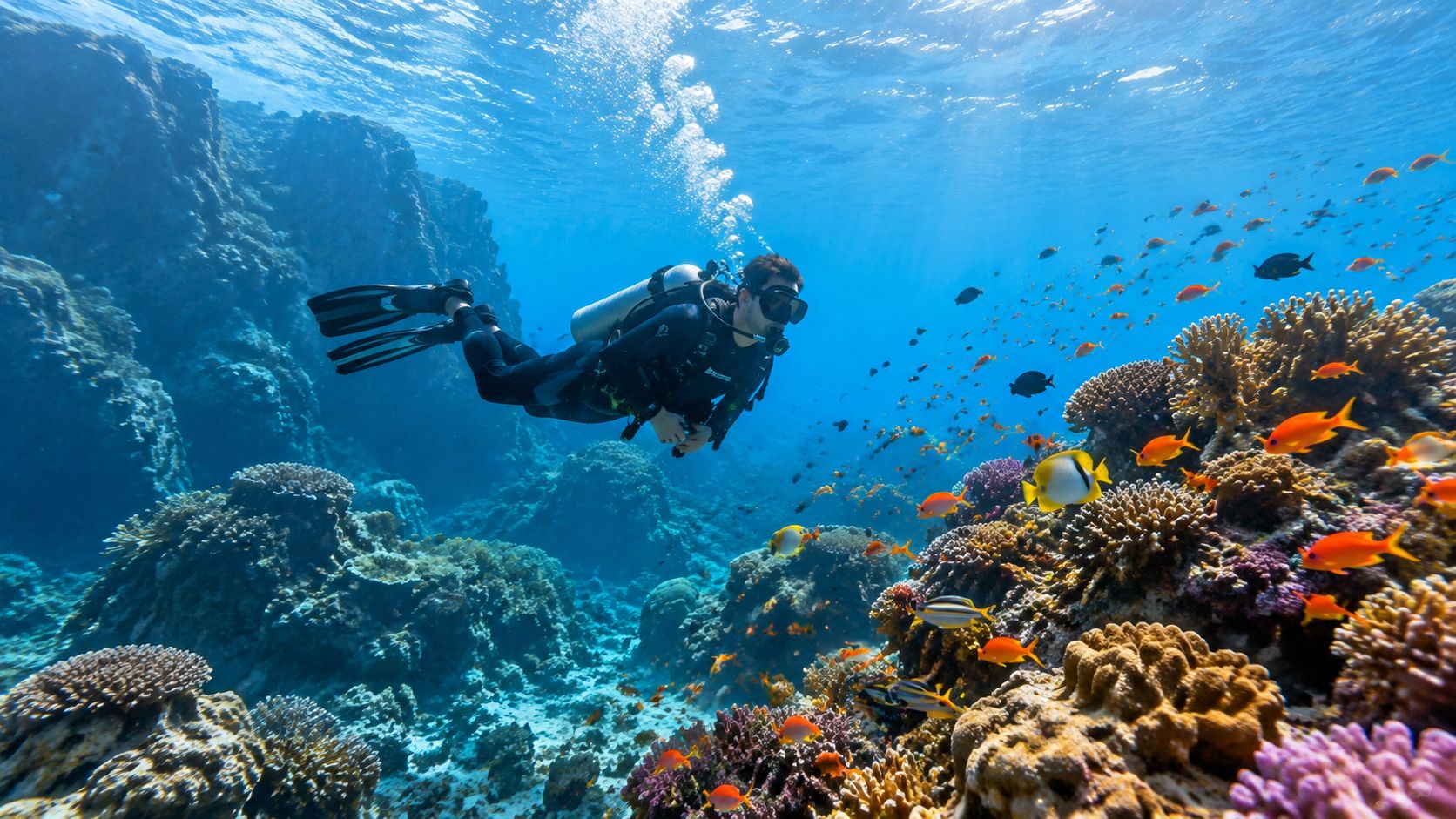
The scale alone tells you this isn't a niche local scene. The Kona coast hosts approximately 100,000 certified scuba dives every year and offers over 50 unique dive sites, which is a big part of why it's considered a major global dive destination, as noted in this overview of Big Island scuba diving.
That matters when you're planning a trip. High-volume destinations can feel crowded and generic, or they can feel polished because the local crews have refined logistics, site selection, and diver flow over years of repetition. Kona falls into the second category when you book smart.
What makes this trip different
Most places have one signature dive. Kona has a genuine three-part lineup:
- Manta ray night diving for the iconic bucket-list experience
- Blackwater drifting offshore for advanced divers who want something surreal
- Volcanic reef and lava-formed sites for the core daytime diving that fills out a trip
Practical rule: Don't book a Big Island dive trip by asking only, “What's the most famous dive?” Ask which dives fit your certification, comfort in current and darkness, and how many days you actually have.
A first-time visitor staying a few nights may want one reef morning and one manta evening. A diver with more experience and a longer schedule can build a much better plan by mixing standard reef dives with one specialty night dive and one advanced outing.
If you're still sorting out logistics above water, this guide to the best places for divers to stay on the Big Island helps narrow down where to base yourself for easier harbor access.
Why Kona Offers Perfect Diving Conditions
Kona's reputation doesn't come from marketing language. It comes from geography. The west side of the island sits in the lee of massive volcanoes, and that natural shielding is the reason the diving is so dependable.
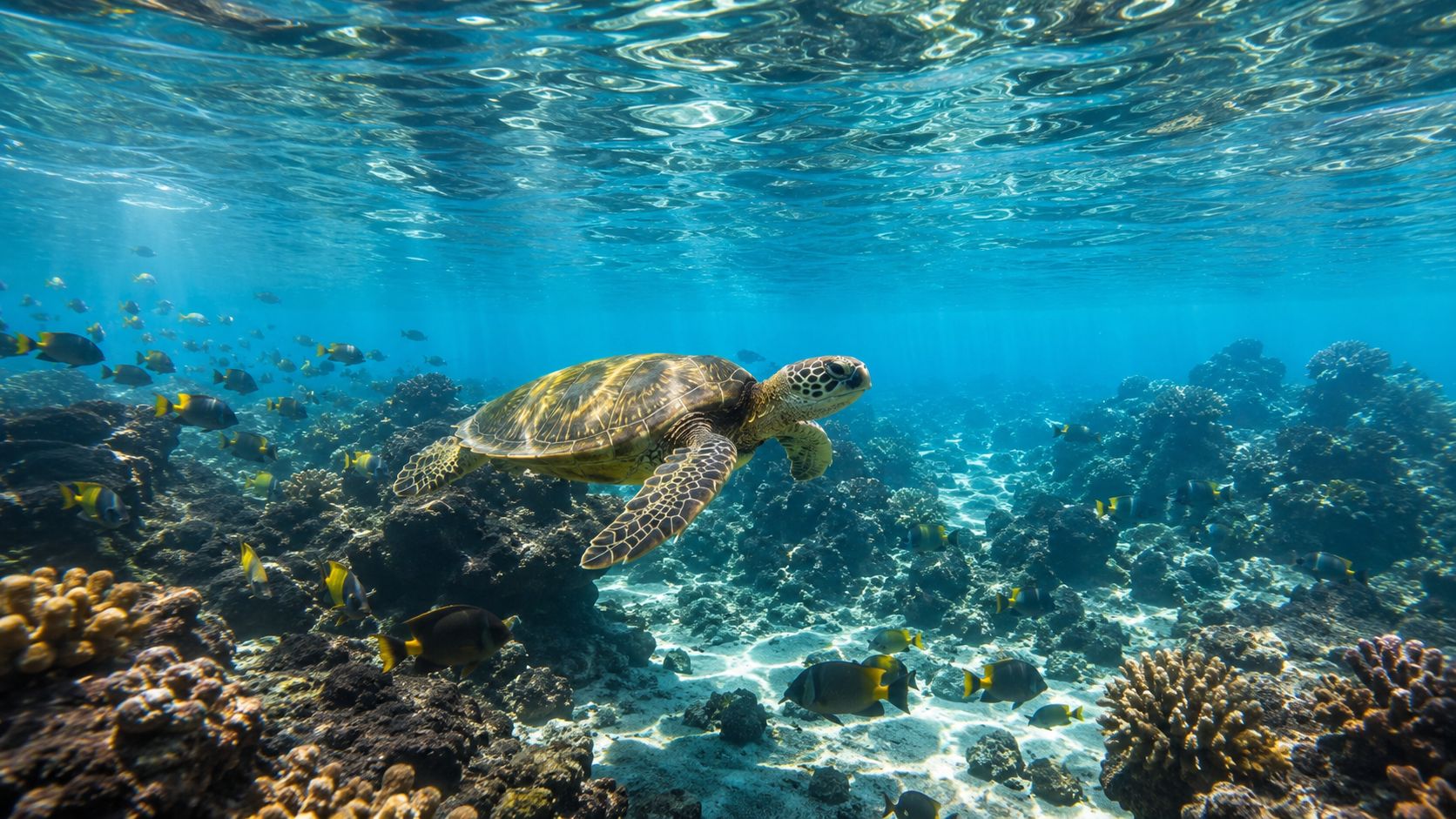
The Kona coast regularly exceeds 100 feet in visibility on clear days because massive volcanoes block the trade winds, creating calm seas and nutrient-rich water that support a high density of large pelagic species, according to Love Big Island's diving overview.
That single fact explains a lot of what visitors notice as soon as they get on the boat. The ride is often calmer than they expected. Entries are more manageable. Underwater navigation is simpler because you can see the terrain open up in front of you.
What that means in practical terms
For beginners, calm water and strong visibility reduce task loading. You're not burning attention on rough surface conditions and murky water. You can focus on buoyancy, breathing, and enjoying the dive.
For experienced divers, reliability changes how you plan a trip. You can reserve specialty dives with more confidence because the coast tends to support a broader range of conditions throughout the year.
Good Kona diving starts before you giant stride in. The island does a lot of the work for you by blocking wind and cleaning up the water.
Why volcanic structure matters underwater
Kona reef diving doesn't feel like diving a soft, flat tropical platform. The seafloor has shape. You get lava fingers, arches, folds, shelves, and terrain that creates natural lanes for fish movement and shelter.
That variety is one reason repeat visitors don't get bored quickly. Even when marine life changes from dive to dive, the structure keeps the experience visually interesting.
If you want a deeper look at what sets the area apart, this piece on what is unique about diving in Kona is worth reading before you book.
The Unforgettable Manta Ray Night Dive
Your first manta night dive in Kona usually starts the same way. The sun drops behind the coast, the boat ride stays short, and someone asks if they'll be swimming around in open black water trying to find rays. That is not how a good manta dive works. The strongest operators run it as a controlled site dive built around feeding behavior the mantas repeat night after night.
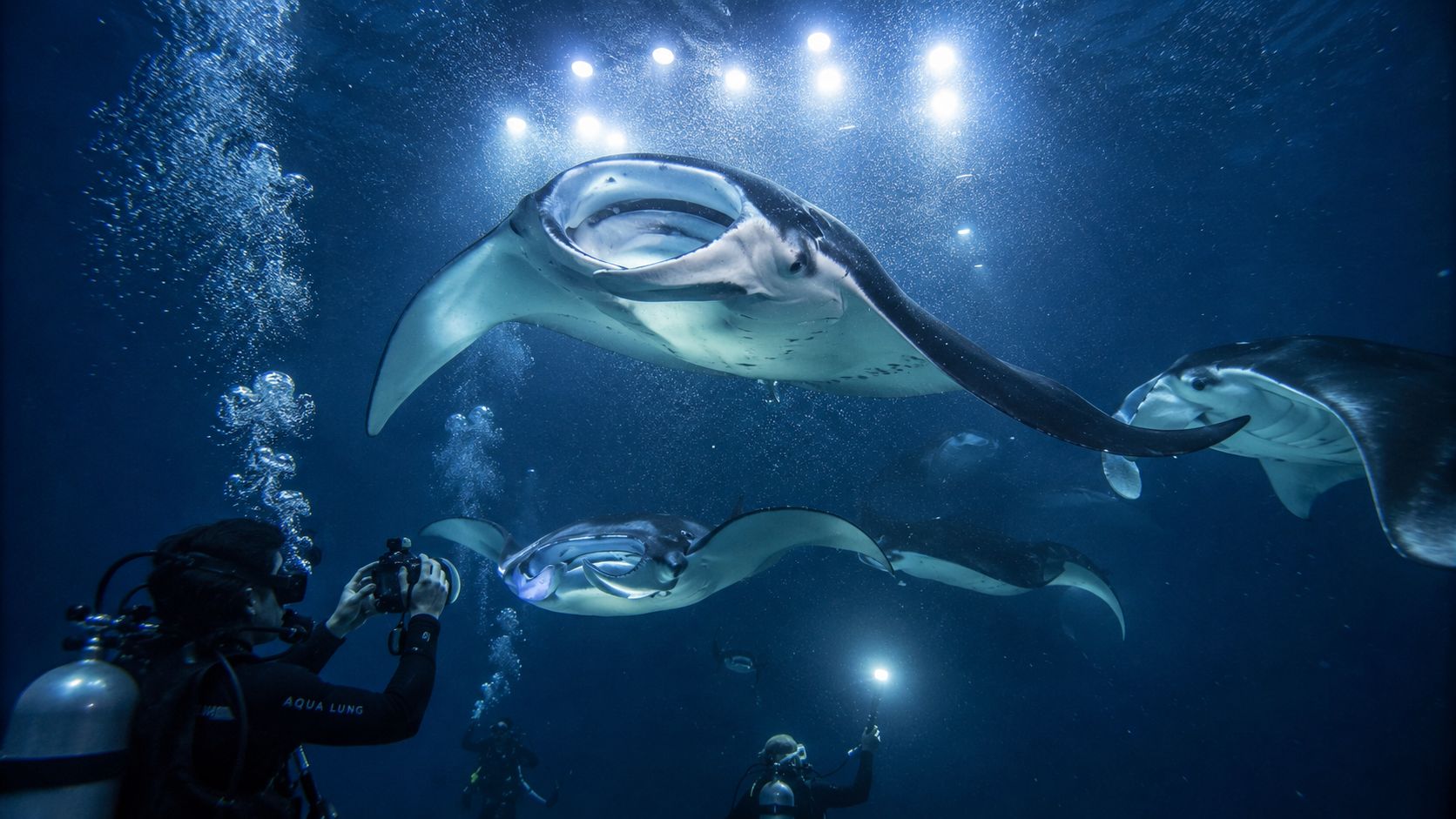
At Garden Eel Cove, just north of Kona, divers settle onto the bottom at roughly 35 feet and use underwater light boards to concentrate plankton in the water column. That feeding setup is what brings the mantas in close. The site averages 11 manta rays seen per night, based on this Garden Eel Cove dive summary.
Why Garden Eel Cove is the stronger choice
If a diver asks me where to book their manta dive, I usually point them to Garden Eel Cove first. The site gives you three advantages that matter in real conditions: shelter, a cleaner viewing layout, and reef structure that makes the full dive worthwhile.
Shelter is the first one. Night diving gets easier when the surface is manageable and the group can descend, settle in, and hold position without unnecessary effort. The viewing layout matters too. At a well-set-up manta site, divers can watch the action without crowding the light field or kicking up the bottom. That makes the experience better for new night divers, better for photographers, and better for the mantas.
The surrounding reef is part of the value. Some manta dives feel like a single attraction with little interest before or after the show. Garden Eel Cove still feels like a Kona dive.
What the dive feels like
Once everyone is in place, the job is simple. Stay low, control your buoyancy, keep your light where the guide wants it, and stop chasing the animals.
Then the first shadow comes out of the dark.
A good manta night has a rhythm to it. One ray glides through the light, then another follows, then the passes get tighter and more confident as plankton builds. The best encounters happen when the group stays disciplined. Mantas will often circle directly overhead, bank into the beam, and sweep close enough that every diver on the bottom feels the water move.
That is why this dive works for such a wide range of certified divers. The profile is straightforward, the viewing is stationary, and the payoff is huge if you can stay calm and still. If you want the snorkeling version for non-divers in your group, this guide to the manta ray night swim experience lays out how that trip works.
Stay settled, protect the light field, and let the mantas make the approach. Control improves the encounter.
Managing expectations the right way
Manta diving in Kona is high-percentage, but no operator can promise wildlife on command. The Manta Pacific Research Foundation tracks local sightings and behavior through long-term identification work, and their records are a strong reference point for why Kona has earned its reputation for reliable encounters (Manta Pacific Research Foundation).
For trip planning, the takeaway is simple. Put your manta dive early enough in the schedule that you still have another evening available if weather shifts or the animals do not show. I give the same advice to experienced divers and first-timers. If mantas are the centerpiece of the trip, do not leave that booking for your final possible night.
That trade-off matters. A manta night dive is the signature Kona experience for many visitors, but it should be placed into the trip with intent. Newer divers usually do best booking it after an easy daytime reef dive. More experienced divers can pair it with other specialty dives, but the manta night still deserves its own space on the calendar.
If you are ready to compare schedules and boat options, the dedicated manta ray dive tours page is the right place to start.
Signature Dives Beyond the Mantas
A lot of divers arrive in Kona with one goal, the manta night dive, then realize the harder question is what should fill the rest of the trip. That is where planning matters. The right answer depends on experience, comfort in current and darkness, and whether the trip is built around variety, challenge, or easy bottom time with good marine life.
Big Island signature dive experiences
| Dive Type | Best For | Typical Depth | Required Certification |
|---|---|---|---|
| Reef dive | Certified divers who want classic Kona topography and marine life | Varies by site | Open Water or equivalent |
| Manta night dive | Divers wanting a signature Kona experience at a controlled site | Roughly 35 feet at the viewing area | Certification required for scuba participation |
| Blackwater dive | Experienced divers comfortable in open ocean and darkness | Open-ocean suspended profile over very deep water | Advanced certification and recent dive experience are commonly expected |
| Advanced long-range reef dive | Divers wanting deeper volcanic structure, arches, and lava tubes | Deeper than standard reef limits | Experience level depends on operator requirements |
Blackwater and pelagic dives
Blackwater is the most specialized dive on the Kona menu. You are suspended in open ocean at night, tethered below the boat, watching larval and pelagic life rise out of the deep. There is no reef for reference, no bottom to settle the mind, and no good reason to book it just because it sounds rare.
Divers who enjoy it tend to have three things dialed in already. Solid buoyancy without visual reference. Calm breathing in darkness. The ability to follow briefings precisely without needing a guide right beside them every minute.
That is why operator requirements matter more than marketing language. Scuba Diving magazine's Big Island guide notes that blackwater-style trips are aimed at experienced divers and commonly carry minimum logged-dive expectations. In practice, I tell divers to treat blackwater as a specialty experience, not their second or third dive after certification.
If that profile fits you, the Blackwater Dive tour page explains the format clearly.
Advanced reef diving
Advanced daytime diving in Kona rewards divers who want structure, not just fish counts. Longer-range sites and deeper profiles can mean lava tubes, arches, sharper topography, and terrain that feels more dramatic than the easier inshore reefs.
The trade-off is straightforward. These trips are less forgiving of rusty skills, inconsistent air use, or buoyancy that falls apart once the depth increases. Divers who do best on them are comfortable with blue-water entries, negative entries when conditions call for it, and maintaining position without constant correction from the guide.
Kona Honu Divers' advanced long-range dive tour is the right category to review if that is the kind of diving you are after.
Classic reef dives still matter
Morning reef dives are not filler. They are often the smartest booking on the schedule.
They give newer divers a chance to settle in after travel, check weighting, and get comfortable with Kona's volcanic layout before adding a night dive or more demanding boat day. Experienced divers benefit too. A well-chosen reef morning can be the difference between feeling sharp for the rest of the trip and spending the first two days correcting simple problems.
For divers weighing boat dives against self-guided entries, this guide to the best shore diving on the Big Island helps clarify when shore diving makes sense and when a boat is the better use of your time.
Booking Your Dive Trip and Choosing an Operator
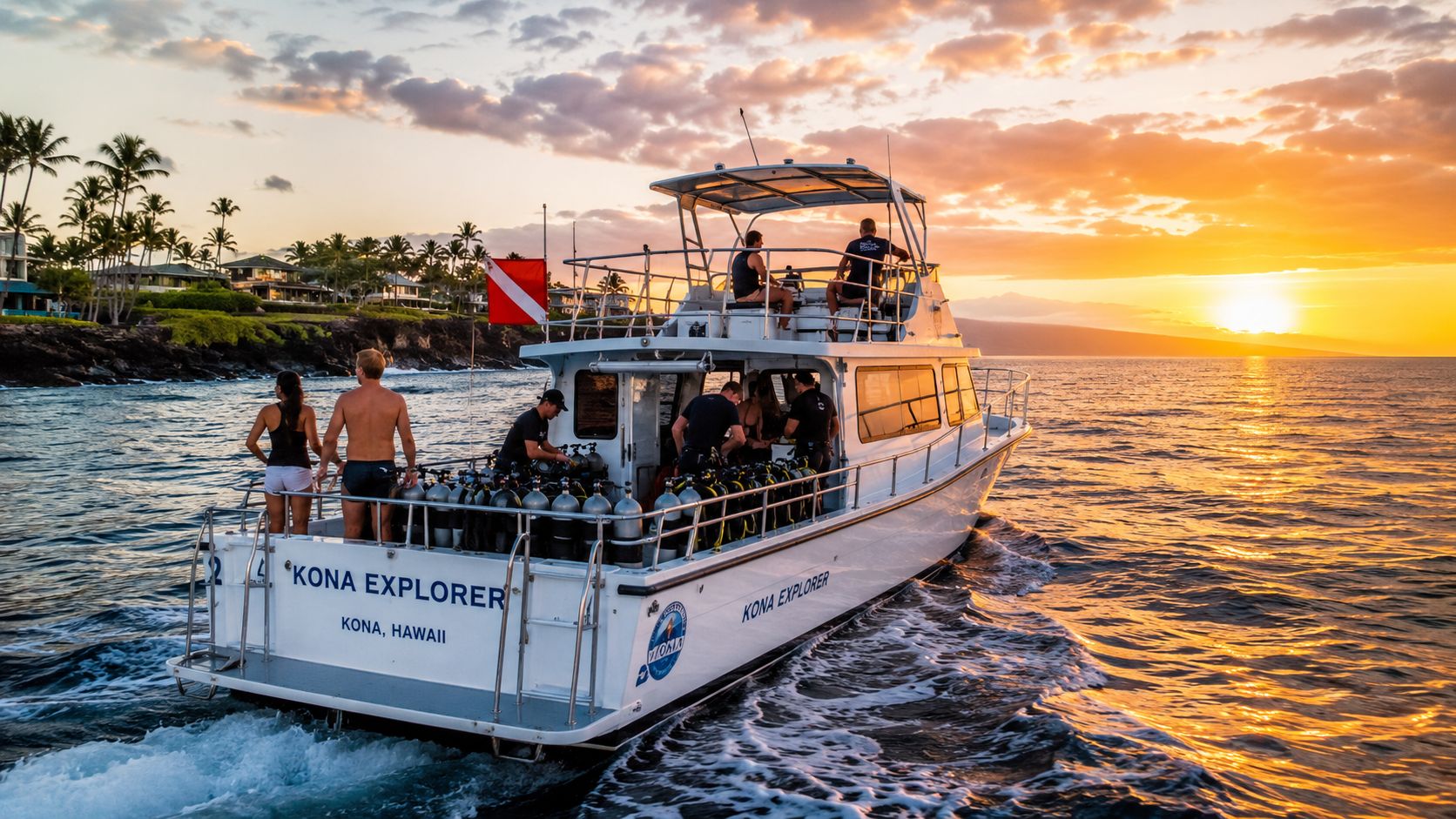
The smoothest Big Island dive trips are booked backward from priorities. Start with the dives that have the tightest requirements or most limited space. Then fit reef diving around them.
What to reserve first
Book in this order:
- Blackwater or advanced trips first if you qualify for them. These are skill-filtered and usually less interchangeable.
- Manta night diving next if it's a must-do.
- Morning reef dives after that, because they're the easiest part of the schedule to shape around weather and energy level.
Kona is a year-round destination, but your personal season matters too. If you're rusty, haven't dived in a while, or are bringing mixed-experience family members, leave breathing room in the itinerary. Don't stack every demanding dive back to back.
How to evaluate operators
A good operator match depends on the kind of diver you are.
- If you value broad name recognition, you'll probably compare crews like Jack's Diving Locker or Big Island Divers.
- If you care about specialty formats, focus on who runs the exact night or advanced trip you want.
- If you want a simpler booking path, a single shop that offers reef, manta, and blackwater trips can reduce logistical friction.
One option is Kona Honu Divers' diving tours page, which lists general Kona diving formats in one place. If you want a wider comparison mindset before deciding, this roundup of the top 10 Kona diving companies ranked is a practical starting point.
Match the operator to the trip, not just the logo
If your group includes one diver who wants manta rays, one who wants relaxed reef profiles, and one who wants blackwater, convenience matters. If everyone is experienced and chasing deep structure, advanced access matters more than beginner-friendliness.
Ask operators what kind of diver their trip is built for. The clearest answer usually tells you more than the marketing copy.
Essential Gear and On-Water Safety
Good dives start with comfort. Most problems visitors run into on the Big Island aren't dramatic underwater failures. They're smaller preventable issues like poor thermal planning, seasickness on the ride out, or trying to handle a specialty dive with the wrong exposure setup and no surface routine.
Pack for the actual day, not the fantasy version
Bring the basics you know you'll use:
- Mask you trust: If you own one that fits well, bring it.
- Dive computer: Especially if you're planning multiple dives across several days.
- SMB if you normally dive with one: Follow local briefing instructions, but it's smart to travel with your standard safety kit.
- Dry layer for the ride back: Wind chill after a second dive catches people off guard.
Kona's water stays warm enough that many divers are comfortable in lighter exposure, but your personal cold tolerance matters more than general advice. Night dives and longer profiles can feel cooler than expected.
Marine life etiquette
The easiest way to look experienced underwater is to leave marine life alone. Don't chase turtles. Don't brace on coral. Don't kick through a photographer's shot to get closer to a subject that was already coming into view.
The manta dives make this especially important. At Keauhou Bay, the night dive uses underwater campfire lights at roughly 35 feet, attracting plankton and drawing in 10+ manta rays with wingspans up to 16 feet that may feed inches from divers' heads, as described in this Big Island scuba article. A stable diver who stays in position improves the encounter for everyone.
Seasickness prevention that actually helps
If you're even slightly prone to motion sickness, deal with it before the boat leaves. Waiting until you already feel off is the classic mistake.
Useful options include:
- Patch option: Ship-EEZ Seasickness Patch
- Traditional medication: Dramamine pills
- Another common medication choice: Bonine pills
- Non-medication option: Sea Band wristbands
- Simple backup to keep in your bag: Ginger chews
Take whatever method works for you early enough to be effective, and tell the crew if the ride out starts catching up with you. They'd much rather help early than after you're already miserable.
Frequently Asked Questions About Diving the Big Island
Do I need to be an advanced diver?
No. Plenty of Kona diving works well for standard certified recreational divers. You only need advanced experience for trips like blackwater or certain deeper long-range profiles.
What's the water temperature like?
Warm by most divers' standards, and consistent enough that many visitors find Kona comfortable year-round. Your ideal exposure depends more on your cold tolerance, the length of the dives, and whether you're doing day or night diving.
Can I dive and fly on the same day?
No. Plan your final dive day so you have a proper surface interval before flying. This is an essential part of safe trip planning.
Is the manta dive good for newer certified divers?
Usually, yes. It's one of the more accessible signature dives because the format is structured and the viewing area is controlled. The key is being honest about your comfort level in dark water and listening carefully to the briefing.
Is Nitrox available, and is it worth using?
If you're Enriched Air certified and planning multiple dives over several days, Nitrox is often worth using for added conservatism within recreational profiles. Some operators include it as part of their offering. Kona Honu Divers lists free Nitrox among its diver benefits for eligible guests.
A good Big Island dive trip doesn't come from chasing every famous site. It comes from choosing the right mix of reef, night, and advanced experiences for your actual skill and goals.
If you're ready to turn the plan into real boat days, start with Kona Honu Divers and choose the dives that match your certification, comfort level, and trip priorities.