
Diving on the Big Island is, without a doubt, one of the most incredible underwater experiences you can have anywhere on the planet. The Kona coast, in particular, is legendary for its exceptionally clear, calm waters and jaw-dropping marine ecosystems. It’s a true bucket-list destination, offering everything from the world-famous manta ray night dive to surreal swims through ancient volcanic lava tubes.
Why The Big Island Is A Diver’s Paradise
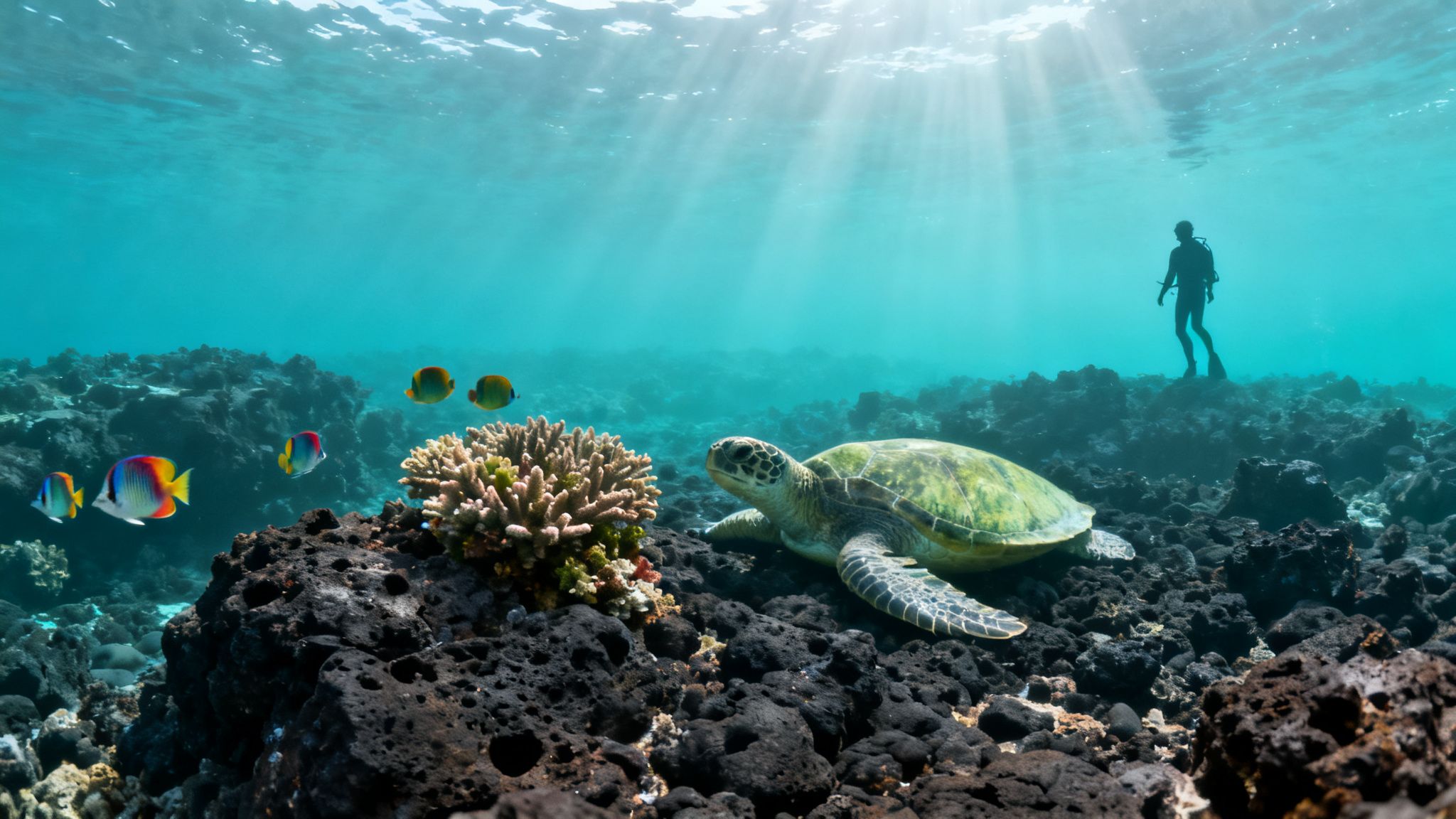
The Big Island isn’t just another pretty spot with a reef. It's a raw, dynamic underwater frontier shaped by the island's active volcanoes. The massive peaks of Mauna Loa and Hualalai act as a natural shield for the Kona coast, blocking the strong trade winds that affect other parts of Hawaii. This protection is our secret weapon, creating consistently calm and clear conditions perfect for diving on the Big Island almost any day of the year.
What truly makes diving here special is the dramatic underwater landscape. Thousands of years of lava flows have sculpted an otherworldly submerged world. You’ll find yourself exploring massive arches, winding caverns, and intricate lava tubes that have become home to some of the healthiest and most vibrant coral reefs in the state.
To put it simply, here’s a quick rundown of what makes Kona so special.
Big Island Diving At A Glance
| Feature | Description |
|---|---|
| Volcanic Topography | Explore unique underwater landscapes like lava tubes, arches, and craters formed by ancient lava flows. |
| Exceptional Visibility | The clear, calm waters often offer visibility exceeding 100 feet, creating a stunning underwater vista. |
| Calm Conditions | Sheltered by massive volcanoes, the Kona coast has gentle conditions ideal for divers of all skill levels. |
| Rich Biodiversity | Home to a vast array of marine life, including many species found only in Hawaii. |
| Iconic Dives | World-famous for unique experiences like the Manta Ray Night Dive and Blackwater Dives. |
These features combine to create a diving environment that’s unlike anywhere else in the world.
A Hub Of Marine Biodiversity
The amount of life here is just staggering. The Big Island’s waters are a sanctuary for a huge array of species, many of which are endemic, meaning you won’t find them anywhere else on Earth.
- Honu (Green Sea Turtles): You’ll see these gentle giants everywhere, gracefully gliding by or just chilling out on the reef.
- Spinner Dolphins: It’s common to see pods cruising along the coastline. If you're lucky, you might even hear their clicks and whistles underwater.
- Vibrant Reef Fish: The reefs are a kaleidoscope of color, buzzing with everything from bright yellow tangs to ornate butterflyfish.
- Unique Encounters: Keep an eye out for moray eels peeking from crevices, clever octopuses, majestic eagle rays, and several species of reef sharks.
This incredible biodiversity is fiercely protected in spots like Kealakekua Bay, which is a Marine Life Conservation District famous for its pristine conditions. You can learn more about what makes the ecosystem so special by reading about the Big Island's unique diving environments.
Whether you just got your certification or you're a seasoned pro with thousands of dives logged, the mix of calm waters, amazing visibility, and unforgettable marine life makes diving the Big Island an experience that will stay with you forever.
The World-Famous Manta Ray Night Dive
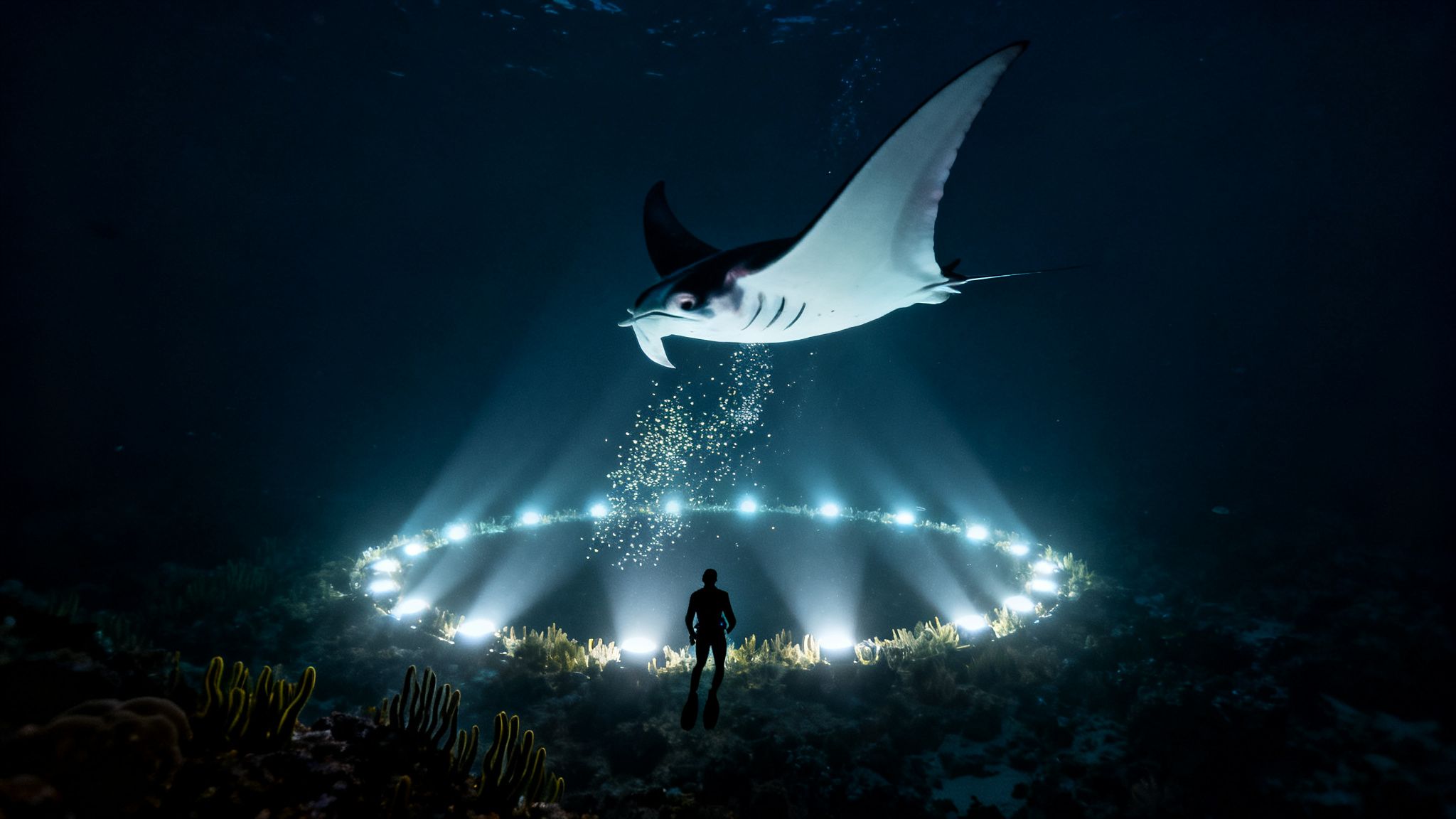
Imagine kneeling on the ocean floor in the dark, warm waters off Kona. Suddenly, a shadow with a wingspan of up to 18 feet glides silently over your head, close enough to see every detail of its graceful movement. This is the Big Island's legendary manta ray night dive—a surreal, unforgettable ballet that consistently ranks as one of the best dives in the world.
The whole production is built on a beautifully simple idea. We set up powerful underwater lights that act like a giant beacon for plankton, the mantas' primary food source. This creates an irresistible, all-you-can-eat buffet that draws these gentle giants in for a spectacular nighttime feast.
As divers, we settle on the sandy bottom and point our lights straight up. Snorkelers do the same from the surface, creating columns of light. The mantas then swoop and somersault through these beams, their huge mouths open to scoop up the plankton. It's a breathtaking performance you have to see to believe.
Choosing The Best Manta Ray Dive Site
You can find manta encounters at a few spots, but for an experience that’s truly a cut above the rest, Garden Eel Cove (also known as Manta Heaven) is the superior choice. Its protected location and superior viewing area make it the best spot on the island, and for good reason.
First off, its location near the Kona airport is naturally sheltered from the southern swells that can make other sites choppy. This usually means calmer, more comfortable conditions for everyone. Even better, Garden Eel Cove has a natural sandy "amphitheater" that gives every diver a perfect, front-row seat without disturbing the environment. The surrounding reefs are also healthier and more vibrant, making the entire dive that much more beautiful.
"Diving with mantas is one of the most satisfying things a person can do in the water. It’s impossible to describe the feeling of watching a massive fish the shape of a stealth bomber coming into vision. It’s akin to watching your child ride a bike for the first time or finding a winning lottery ticket."
By choosing a manta ray dive tour at Garden Eel Cove, you're getting more than just a manta sighting. You're getting the full, premium experience in a serene environment designed to give you the best, most comfortable encounter possible.
What To Expect During Your Manta Dive
Your adventure starts on the boat with a thorough briefing from your divemaster. They'll walk you through everything you need to know about manta behavior and the rules for a safe, respectful interaction. Once we get to the site, you'll descend with your group and find a spot on the sand, forming a circle with other divers to create a "campfire" of light pointing upward.
And then, the magic begins. Drawn in by the plankton gathering in your lights, the mantas start their show. They'll swoop, glide, and barrel-roll just inches above you, completely focused on their meal and unbothered by your presence. It’s an experience that’s somehow both exhilarating and deeply peaceful.
Of course, these are wild animals, so the number of mantas can change from night to night. Sighting records show that numbers fluctuate, with one operator logging a high of 32 individual mantas during a single dive in November. Other nights might see anywhere from four to twenty. This unpredictability is part of the thrill, and you can see more seasonal sighting trends on jacksdivinglocker.com.
Manta Ray Dive Etiquette
To keep this incredible encounter safe for the mantas and sustainable for years to come, we all have to follow a few critical rules. Manta rays have a protective mucous layer on their skin that’s vital for fending off infections.
- Look, Don't Touch: Never, ever touch, chase, or try to ride a manta. Any contact can damage their protective slime coat.
- Stay on the Bottom: As a diver, remain on the sandy bottom. This keeps the water column clear for the mantas to move around freely.
- Lights Up: Always point your dive light straight up. This draws the plankton toward the surface and away from the delicate coral reef.
- Watch Your Bubbles: When a manta glides overhead, try to time your breathing so you aren't exhaling directly into its path.
Sticking to these simple guidelines ensures a great dive for everyone and helps protect Kona’s beloved manta ray population. And if you have non-divers in your group, they can get in on the action too—check out the manta ray night swim for an amazing snorkeling alternative.
Exploring Kona’s Top Underwater Dive Sites
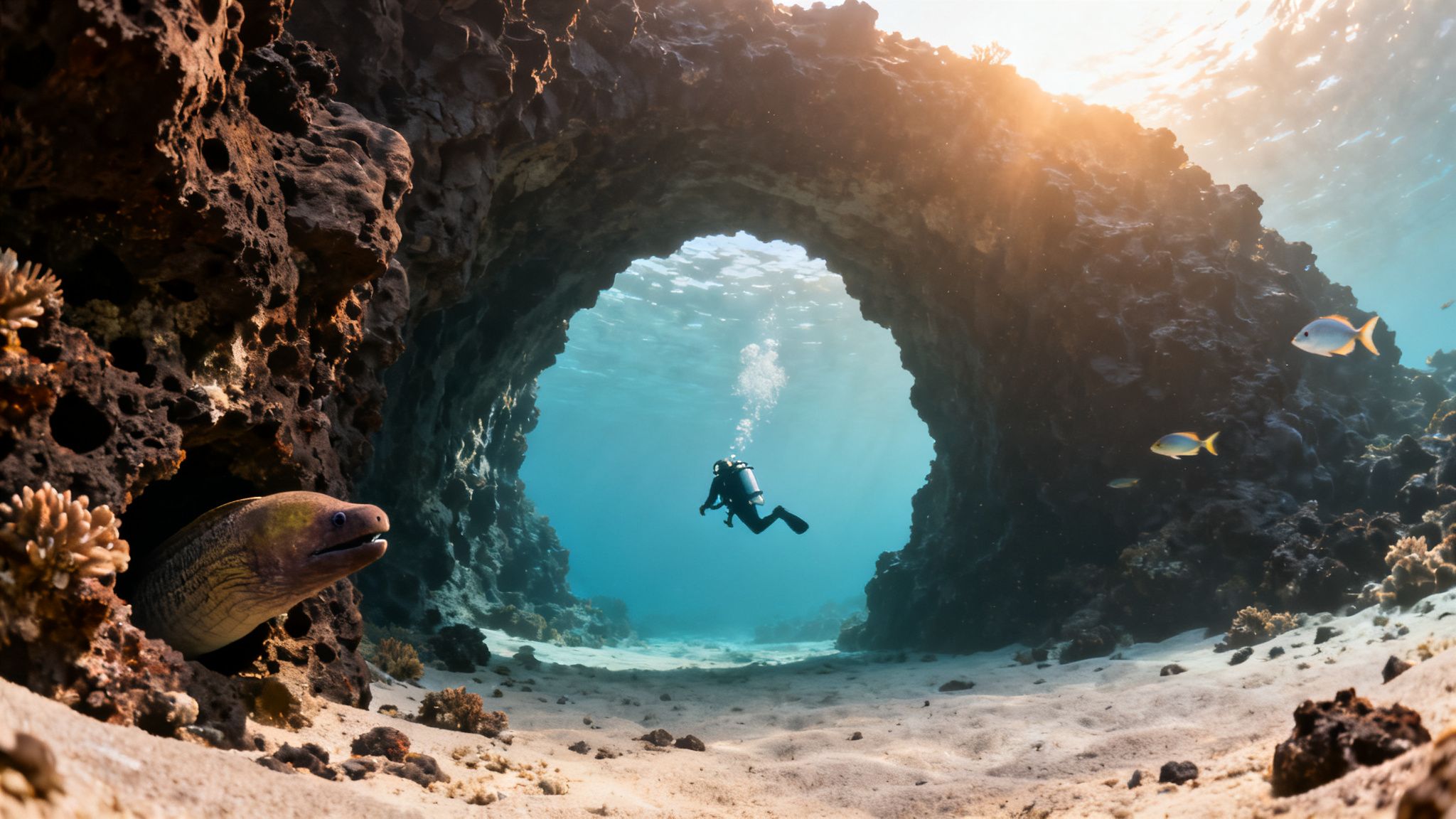
While the manta ray night dive gets a lot of the spotlight—and for good reason—it’s just the beginning of what diving the Big Island has to offer. The Kona coast is a true diver's paradise, with over 50 unique dive sites dotting the shoreline. Each one tells a different story. Millennia of volcanic activity have sculpted an underwater world of dramatic lava tubes, massive arches, and intricate caverns just waiting to be explored.
But it’s not just about the incredible rock formations. This volcanic framework supports some of the healthiest coral reefs in all of Hawaii, buzzing with life you won’t find anywhere else on the planet. Get ready to meet schools of endemic Hawaiian butterflyfish, spot moray eels peeking out from their rocky homes, and watch as green sea turtles glide by. The sheer variety here means no two dives are ever the same.
Dive Sites For Every Skill Level
Whether you’re gearing up for your very first ocean dive or you’ve got thousands of dives under your belt, Kona has a spot for you. The underwater landscape offers everything from calm, sheltered coves to thrilling deep-water adventures.
- For Beginners: Sites like Pawaii Bay, which we affectionately call Turtle Heaven, are perfect for those just starting out. The shallow, calm water makes it easy to work on your skills while you float over beautiful coral gardens and hang out with the resident green sea turtles.
- For Intermediate Divers: If you're comfortable in the water, sites like Golden Arches and Suck 'em Up introduce more complex topography. You’ll get to navigate cool swim-throughs and lava tubes, really experiencing the unique volcanic character of the Kona coast.
- For Advanced Divers: Ready for a challenge? Deeper sites like Au Au Crater (also known as The Dome) offer incredible geological formations. There’s always a chance of spotting bigger animals like sharks and eagle rays here, which really adds to the excitement. For more experienced diving opportunities, check out the advanced dive tours.
Diving in Kona is like having a key to a secret underwater kingdom. Each site unlocks a different room, whether it's a grand hall sculpted from lava, a garden teeming with colorful fish, or a quiet chamber where turtles rest.
No matter your experience, getting out to these sites is an essential part of any Big Island dive trip. You can get a feel for where you might go by exploring the different diving tours available and finding the right fit for your adventure.
Signature Underwater Landscapes
What really makes Kona diving so special is the volcanic topography. Thousands of years of lava flows have created an underwater landscape that’s rugged, beautiful, and absolutely begging to be explored.
Lava Tubes and Caverns
Imagine swimming through a massive, hollowed-out tube that was once a river of molten rock. That's exactly what you get at sites like Cathedral and Lava Tube. As sunlight streams through openings in the ceiling, it creates these incredible, dancing beams of light. These formations are also great hideouts for critters like resting whitetip reef sharks and shy crustaceans.
Arches and Swim-Throughs
So many of our dive sites feature stunning arches and swim-throughs that are perfect for photos. These natural structures are completely covered in colorful corals and sponges, attracting huge schools of reef fish. Navigating through them just adds to the sense of adventure, making you feel like a true underwater explorer.
For divers with the right training and experience, these advanced environments deliver some of the most memorable dives you'll ever have. If you're ready to see the best of Kona's volcanic wonderland, check out our premium advanced dive trips designed for exactly that.
The Ultimate Adventure: A Kona Blackwater Dive
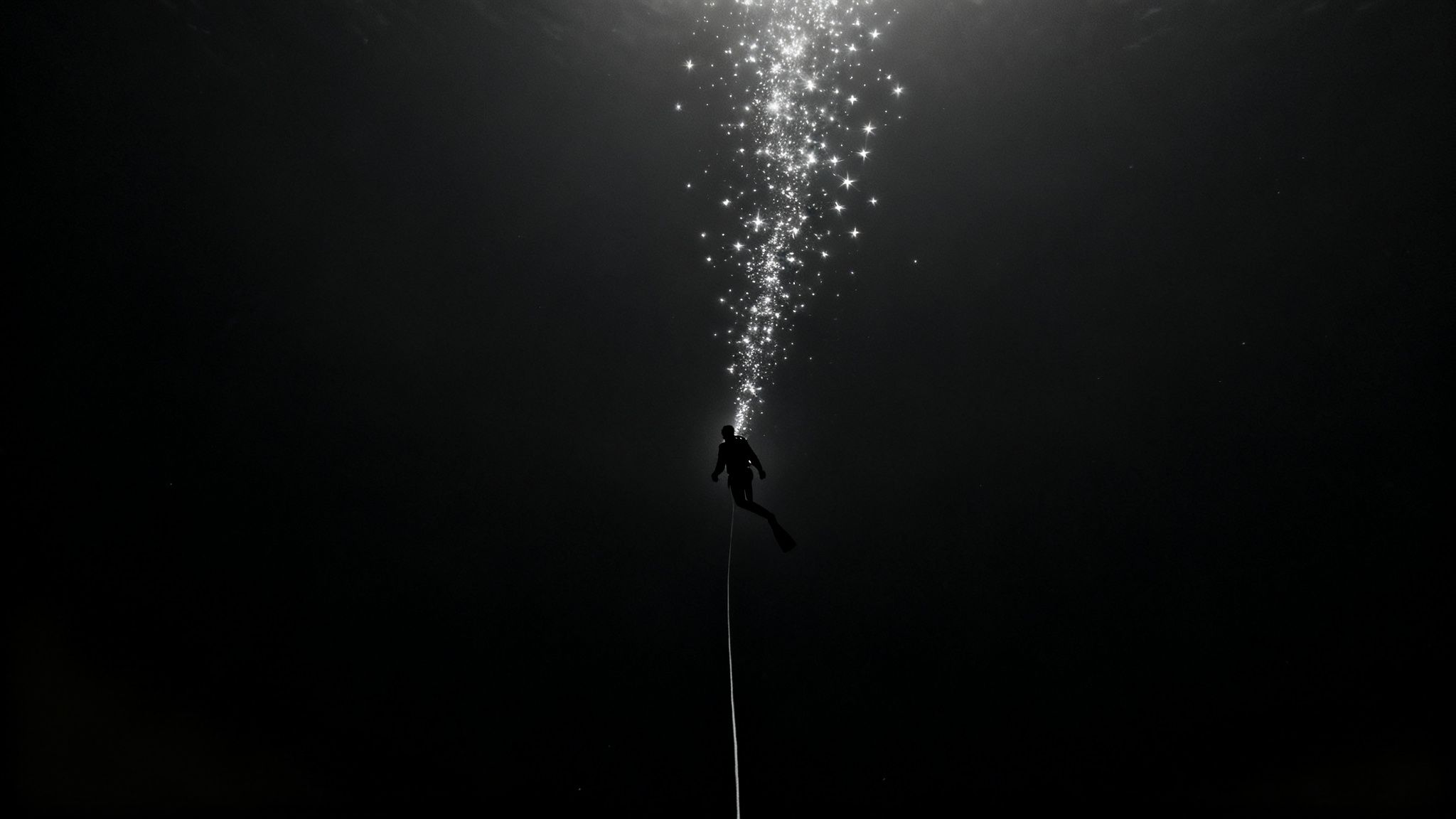
If you're a certified diver looking for an experience that genuinely feels like visiting another planet, the Kona Blackwater Dive is your ticket. Forget the reef. This is about drifting in the deep, dark abyss miles from shore, suspended over thousands of feet of pure blackness. It’s a plunge into a hidden world that most people will never see.
The idea is as simple as it is mind-blowing. Every single night, one of the largest migrations on Earth happens when countless bizarre, often glowing, creatures rise from the depths to feed near the surface. This dive puts you right in the middle of that nightly spectacle.
Journey Into The Deep
Your adventure starts as you descend into the open ocean, attached to a tether that keeps you connected to the boat above. It’s your lifeline, a point of reference that stops you from drifting off into the vast, dark expanse. Once you’re suspended in the void, the feeling is less like diving and more like floating through space.
As your eyes adjust, the show begins. Tiny, alien-like creatures, many in their larval stages, start to appear, pulsing and glowing with their own internal light. You’ll be face-to-face with pelagic life that looks like it was dreamt up for a sci-fi blockbuster. It's a surreal ballet of light and life unfolding all around you.
The Blackwater Dive is less of a dive and more of an interstellar journey. You're not just observing marine life; you're floating through a living galaxy of creatures that defy imagination, witnessing a part of our planet that remains largely unexplored.
What You Might Encounter
The cast of characters on a blackwater dive is always a surprise, which makes every single trip a unique one-off experience. Since you’re seeing many animals in their juvenile forms, they often look completely different from the adults they’ll one day become.
- Bioluminescent Jellies: You’ll see glowing jellies of all shapes and sizes pulsing past, putting on a mesmerizing, silent light show.
- Larval Creatures: Keep an eye out for the larval forms of eels, lobsters, and fish. They are often completely transparent and look like intricate glass sculptures.
- Pelagic Cephalopods: Tiny squid and octopuses can be spotted hunting in the dark, sometimes flashing incredible color changes.
- Venus Girdles: These bizarre, ribbon-like animals can create shimmering, rainbow-colored light as they undulate through the water.
A Dive For The Experienced
Given its unique and demanding environment, the Kona Blackwater Dive is definitely not for beginners. This is an advanced dive that requires you to be completely comfortable and skilled in the water. We require divers to have an Advanced Open Water certification with a good number of logged dives, including some recent night diving experience. Rock-solid buoyancy control isn't just a suggestion—it's essential.
Specialized gear, like high-powered dive lights and the tether system, is provided to make sure the entire dive is conducted safely. Before you hit the water, the crew runs a detailed briefing covering all the procedures, ensuring every diver is fully prepared for this incredible adventure.
If you think you're ready to take the plunge, you can book an unforgettable Kona Blackwater Dive tour.
Diving Smart And Safe In Hawaiian Waters
The waters off the Big Island are a diver's paradise, but that incredible beauty comes with a power that demands respect. Diving smart and safe here isn’t just a suggestion—it's absolutely essential. The single best thing you can do to guarantee a great experience is to go with a professional, reputable dive operator. Expert guidance isn't a luxury; it's a necessity.
Let's be real: the ocean's risks are a serious matter in Hawaii. Ocean safety is a major concern, and unfortunately, the state has the second-highest per-capita rate of resident drownings in the country. That's a sobering statistic that really highlights why diving with pros is so important. You can read the full story on civilbeat.org to understand the issue better. A great dive company handles the risks for you with expert instruction and strict safety protocols, letting you focus on the magic below the surface.
Understanding Local Conditions
Local knowledge is everything when it comes to a safe dive. The Kona coast is famous for its calm, bathtub-like conditions, but the ocean is always changing. Knowing how to read the currents, surge, and visibility is a skill that takes years to master.
- Currents: Even a gentle current can turn a relaxing drift into a workout. Professional guides are masters at reading the water. They know how to pick sites with the best conditions for the day and plan dives that go with the current, not against it.
- Surge: This is the back-and-forth push of water from wave action, and it can be surprisingly strong in shallow areas or near the shoreline. An experienced guide will show you how to navigate these zones and stay stable and safe.
- Visibility: Kona often spoils us with 100+ foot visibility, but that can change. A good divemaster always assesses the viz to make sure everyone in the group has a safe and incredible dive.
Getting a feel for these elements takes a lot of time in the water. For a more detailed look, check out our guide on how to check ocean conditions for the Big Island.
The Importance of Professional Guidance
When you dive with a top-tier operator like Kona Honu Divers, you're getting an essential layer of safety and peace of mind. Our experienced crew takes care of all the critical planning and safety checks, so all you have to do is show up, relax, and enjoy the adventure.
Our mission is simple: to share an unforgettable underwater adventure without ever compromising on safety. From our custom-built dive boats to our highly trained crew, every part of our operation is designed to give you the best and safest possible experience while diving the Big Island.
This commitment starts with thorough pre-dive briefings and continues with our crew keeping a watchful eye on every diver in the water. Of course, we always have emergency oxygen and first aid equipment ready to go. We also strictly follow all local regulations, especially in the Marine Life Conservation Districts, ensuring our dives are safe for you and sustainable for the amazing marine environment we're lucky to call our office.
Ultimately, choosing a professional operator is the smartest move you can make for your dive trip.
How To Plan Your Perfect Big Island Dive Trip
A little bit of planning goes a long way, especially when you're gearing up for a world-class dive vacation. Getting your trip to the Big Island dialed in is actually pretty simple once you know what to look for. Let's walk through the key things—from picking the best time of year to making sure you've got the right stuff in your suitcase—so you can focus on the fun part: the diving.
The beauty of the Kona coast is that it's sheltered from the prevailing winds, which means we have incredible diving all year long. That said, there are some subtle differences between the seasons.
- Summer (April – October): This is what most people consider the "peak" season. The ocean is typically as flat as glass, and the water is wonderfully warm, often hitting 80°F (27°C). It's pure bliss.
- Winter (November – March): Don't let the word "winter" fool you; the diving is still fantastic. You might see some bigger swells, but the real magic of this season is the humpback whales. Hearing their hauntingly beautiful songs echoing through the water on a dive is an experience you will never forget.
No matter when you decide to come, you can almost always count on ridiculously good visibility, often clearing 100 feet or more.
Getting Here And Getting Around
First things first: you've got to get here. The main hub for divers is the Ellison Onizuka Kona International Airport (KOA). It's perfectly positioned, dropping you right into the heart of the action on the Kona side.
I always tell people to rent a car. While you can find Ubers, having your own wheels gives you the freedom to explore the island's incredible topside scenery on your off-gas days. From volcanoes to coffee farms, there's so much to see.
For your home base, stick to the Kailua-Kona area. You'll be close to the boat harbors, the best dive shops (like ours!), and all the great places to eat and unwind after a day in the water. For a deep dive into neighborhoods and specific recommendations, check out our guide on the best places for divers to stay on the Big Island.
Your Essential Dive Trip Packing List
Packing smart means you're comfortable both in and out of the water. While we have top-of-the-line rental gear available, most divers feel most comfortable bringing their personal kit.
Here's a quick rundown of what I'd never leave home without:
- Your Core Dive Gear: At the very least, bring your own mask, snorkel, fins, and dive computer. A good fit makes all the difference.
- Exposure Suit: A 3mm or 5mm full wetsuit is the sweet spot for Kona's water temps year-round.
- Certification Cards: Can't go diving without them! Bring your main C-card and any specialty cards (like nitrox).
- Reef-Safe Sunscreen: This is non-negotiable. Please help us protect our reefs by only using mineral-based sunscreens with zinc oxide or titanium dioxide.
- Dry Bag: A small dry bag is a lifesaver for keeping your phone, keys, and wallet dry on the boat.
- Reusable Water Bottle: It gets warm out here! Staying hydrated is crucial, and you'll be helping us cut down on single-use plastics.
Thinking ahead and choosing a great dive operator takes all the stress out of the equation. When you're on a custom-built dive boat designed for comfort, with amenities like complimentary nitrox for certified divers, you can just relax. It lets you focus on what you came here for—the amazing underwater world.
When you book with a professional crew like us at Kona Honu Divers, you can trust that every detail is sorted. We handle the logistics so you can focus on making incredible memories. That's how it should be.
Your Big Island Diving Questions, Answered
Alright, let's wrap this up by tackling some of the questions we hear all the time from divers planning their trip. Getting these details sorted out can make all the difference, so you can stop planning and start getting excited for your underwater adventure.
What's The Best Time Of Year To Dive Kona?
Honestly, there's no bad time. The Kona coast is a diver's dream year-round because the massive volcanoes on the island act as a natural shield, blocking the heavy trade winds that affect other parts of Hawaii. This creates a calm, protected environment for diving.
That said, there are some subtle differences. Summer (roughly April to October) usually means flatter seas and warmer water, often getting up to a toasty 80°F (27°C). Winter brings slightly cooler water and the possibility of bigger swells, but it also delivers something truly magical: humpback whale season. You won't dive with them, but hearing their incredible songs echoing through the water on a dive is an experience you will never, ever forget.
Do I Need To Be An Advanced Diver To Enjoy The Big Island?
Absolutely not! That's one of the best things about diving here. With over 50 dive sites along the Kona coast, there’s truly something for everyone. We have plenty of shallow, calm, and protected reefs that are perfect for newly certified divers or anyone who just wants a relaxed, beautiful dive.
For those with more experience under their weight belt, Kona delivers. You can explore deep volcanic ledges, navigate ancient lava tubes, and enjoy thrilling drift dives. Whether it's your 10th dive or your 1,000th, you'll find a site that challenges and excites you.
So, What Kind Of Animals Will I Actually See?
The marine life here is just incredible. You'd be hard-pressed not to see honu (our beloved Hawaiian green sea turtles) on almost every dive. Spinner dolphins are also a common sight from the boat, and sometimes even underwater if you're lucky.
The reefs are packed with colorful fish you'll only find in Hawaii, along with moray eels peeking out from crevices, octopuses camouflaged on the rocks, and graceful eagle rays soaring by. And of course, the manta ray night dive is the star of the show. You might even find whitetip reef sharks napping on the sandy bottom or catch a glimpse of bigger pelagic species cruising by in the deep blue. Every single dive is different.
What Kind Of Wetsuit Should I Pack?
The water here is pretty comfortable all year, hovering between 75°F (24°C) in the winter and 80°F (27°C) in the summer. For most people, a 3mm or 5mm full wetsuit is the sweet spot for staying warm and comfortable throughout a two-tank dive.
If you're trying to pack light, don't sweat it. We have high-quality rental gear, including wetsuits, right here at the shop. It saves you the luggage space and ensures you have perfectly fitting equipment for your dives.
Ready to see it all for yourself? The crew here at Kona Honu Divers lives and breathes this stuff, and we can't wait to show you the best diving the Big Island has to offer. Let's get you in the water! Learn more about our diving tours and find the perfect trip for you.