
You just stepped off the plane, your gear bag is already heavy, and now you're trying to decide whether today should be a reef dive, a manta night, or the trip everyone keeps talking about. That's the right problem to have in Kona. The wrong move is picking a boat before you know which site, season, and certification level fit the day.
Why Kona Is a Bucket-List Dive Destination
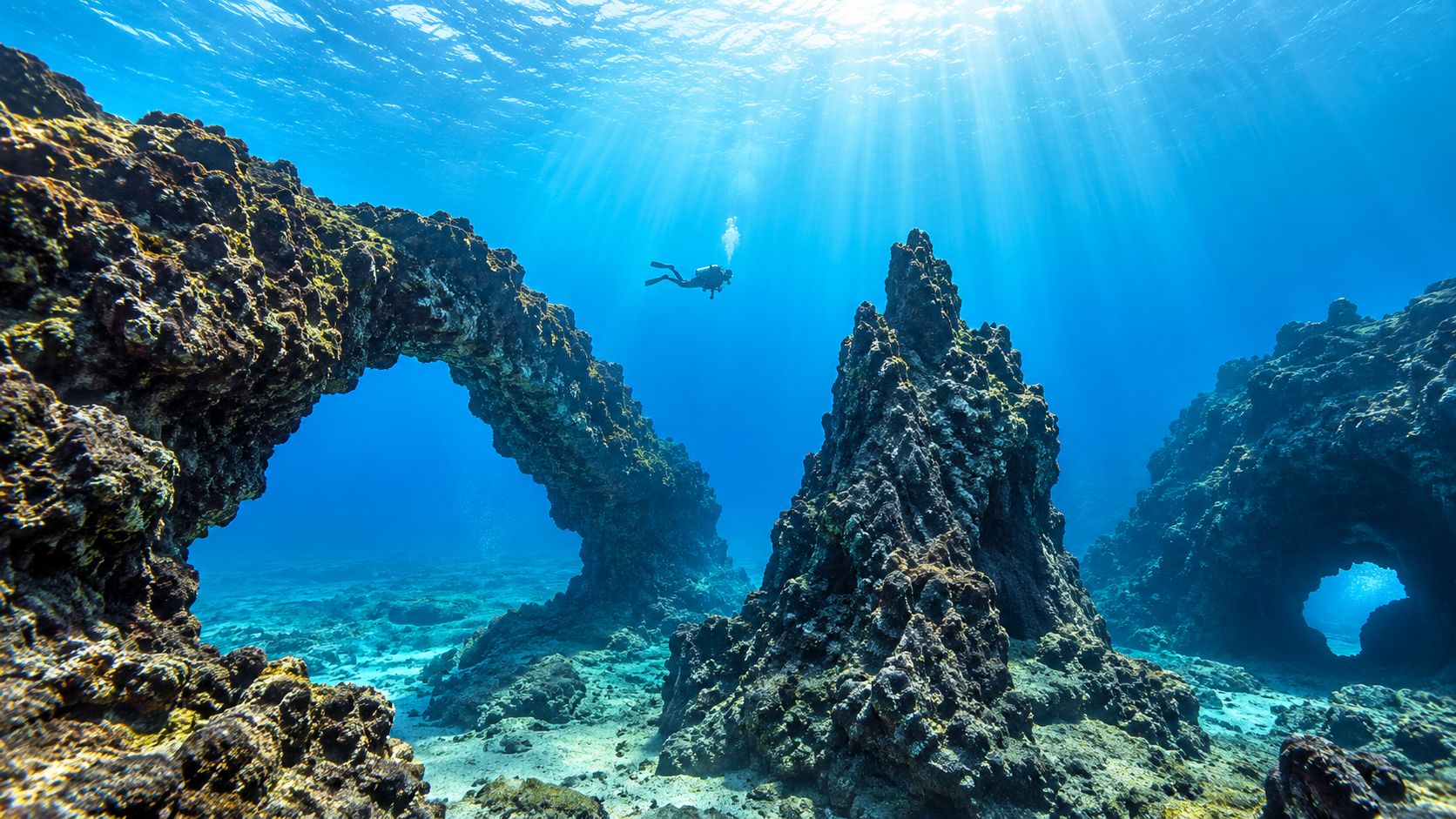
A diver stepping onto a boat at Honokōhau with the West Hawaiʻi coast in view is looking at a coastline that does things most dive destinations can't. Kona's underwater terrain comes from young lava, which is why you get arches, tubes, ledges, and rugged volcanic structure instead of flat, tired bottom. That geology is the reason people fly here for reef dives, manta nights, blackwater, and advanced sites instead of settling for a generic tropical charter.
What makes the Kona side different
The west side sits in the leeward rain shadow, so the surface is usually calmer than the windward side. That matters because calm water is only half the story. It also means operators can run a more predictable schedule out of the same harbor, and divers can build a day around conditions instead of gambling on luck.
Practical rule: If you want the most useful first day in Kona, choose your dive around the ocean, not around a brochure photo.
The reason Kona has such a strong reputation isn't just scenery. It's the combination of a protected coast, consistent access, and sites that reward different kinds of divers. A new visitor can do a morning reef charter, then a night manta, while a more ambitious diver can shift into blackwater or deeper volcanic structure without leaving the same coastline.
If you want a straight explanation of what makes the area unique, this guide to what's unique about diving in Kona gets to the point fast.
The four Kona experiences that matter
Reef diving gives you the baseline. Manta night diving is the headline. Blackwater is the weird, science-heavy option. Advanced charters are for divers who want to stop playing it safe and start choosing site complexity on purpose. That's the framework I'd use if I'd just arrived at the harbor and wanted a clean decision, not a tourist menu.
The one-sentence answer is simple. You fly to Kona because one coast gives you repeatable reef diving, world-famous manta encounters, pelagic night diving, and advanced volcanic topography in a single destination.
Understanding Kona's Dive Conditions and Seasons
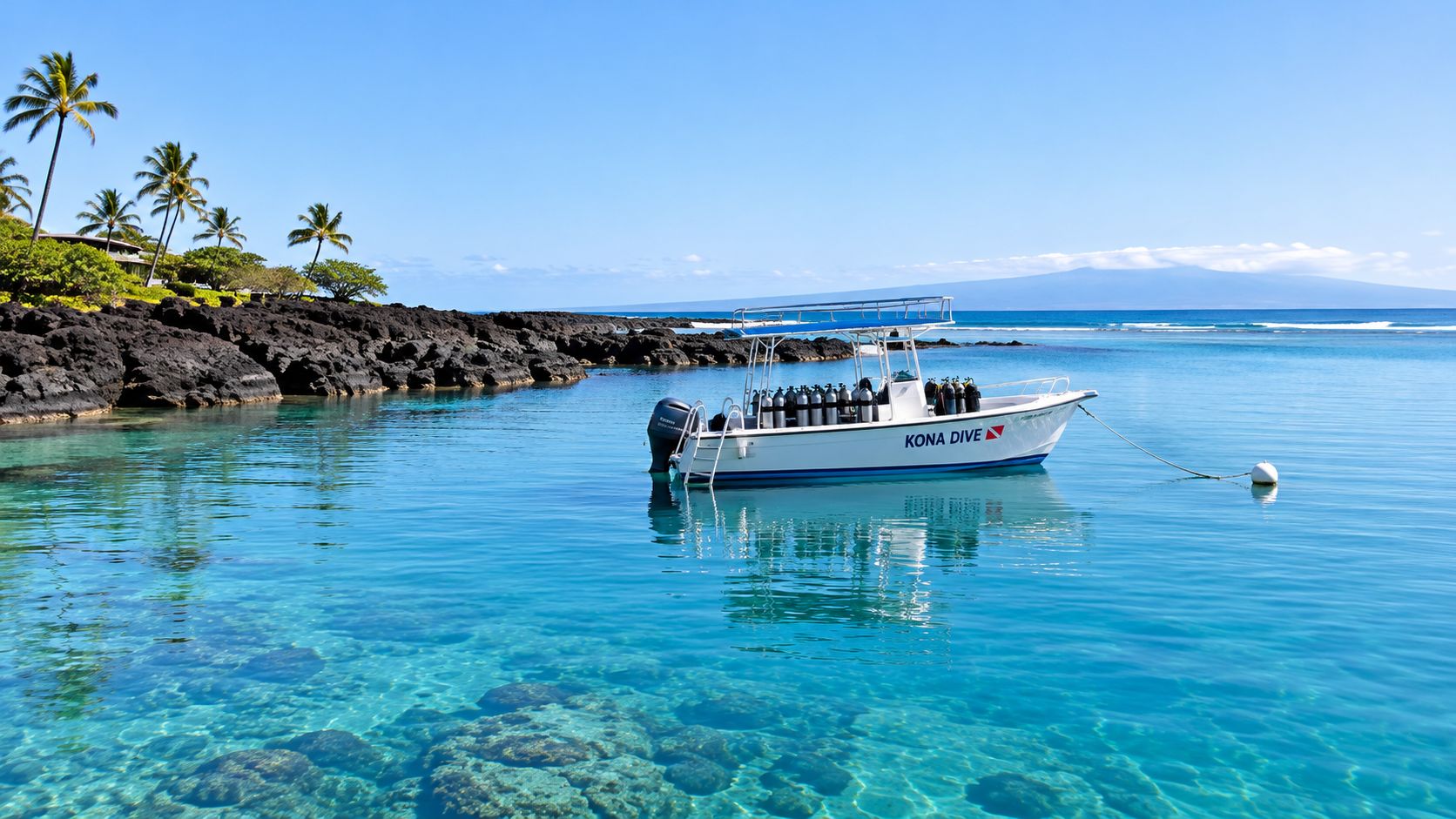
Read Kona the way a local captain does. Start with swell, then look at entry style, then decide how much depth and exposure you want. If you skip that order, you'll end up choosing the wrong site for the day and calling it a bad dive when it was really a bad pick.
Build the day around the water, not the calendar
The Kona side is the leeward side, which is why most operators run from Honokōhau or Keauhou rather than from the windward coast. That's the practical advantage. It doesn't make the ocean harmless, though, because swell direction still changes shore entries, boat rides, and how comfortable a site feels once you're in.
Field rule: A shore site that looks calm from the parking lot can still be ugly at the entry and exit if the swell is wrapping in from the wrong direction.
For planning, think in layers. First, identify whether you're doing boat or shore. Second, decide whether you want shallow reef, deeper volcanic structure, or a night specialty. Third, check whether the day's surface texture supports that choice. If you're combining a morning two-tank boat dive with a manta night dive, that works because the same coast supports both styles without forcing you to cross the island.
Seasonal logic that actually matters
Kona's appeal isn't a single season. It's the fact that the west side stays useful while the windward side gets hammered by more runoff and rougher weather. Water clarity is usually strongest when the sea stays settled, and surface chop becomes more noticeable when the winter swell shows up. That's when experienced divers stop pretending every site is available and start matching the day to the coast.
Here's the cleanest way to look at it:
- Calm leeward days: Better for reef time, photography, and planned boat charters.
- Swellier days: Better for sticking with a guided operator who already knows which site still works.
- Night diving plans: Best done after you've already figured out your daytime comfort in the water.
- Cold or rougher stretches: Pay more attention to exposure protection, entry choice, and whether a site is really a boat site instead of a shore site.
The season guide at what's the best season for diving in Kona is useful because it frames the local rhythm instead of pretending every month behaves the same.
Comparing the Four Signature Kona Dive Experiences
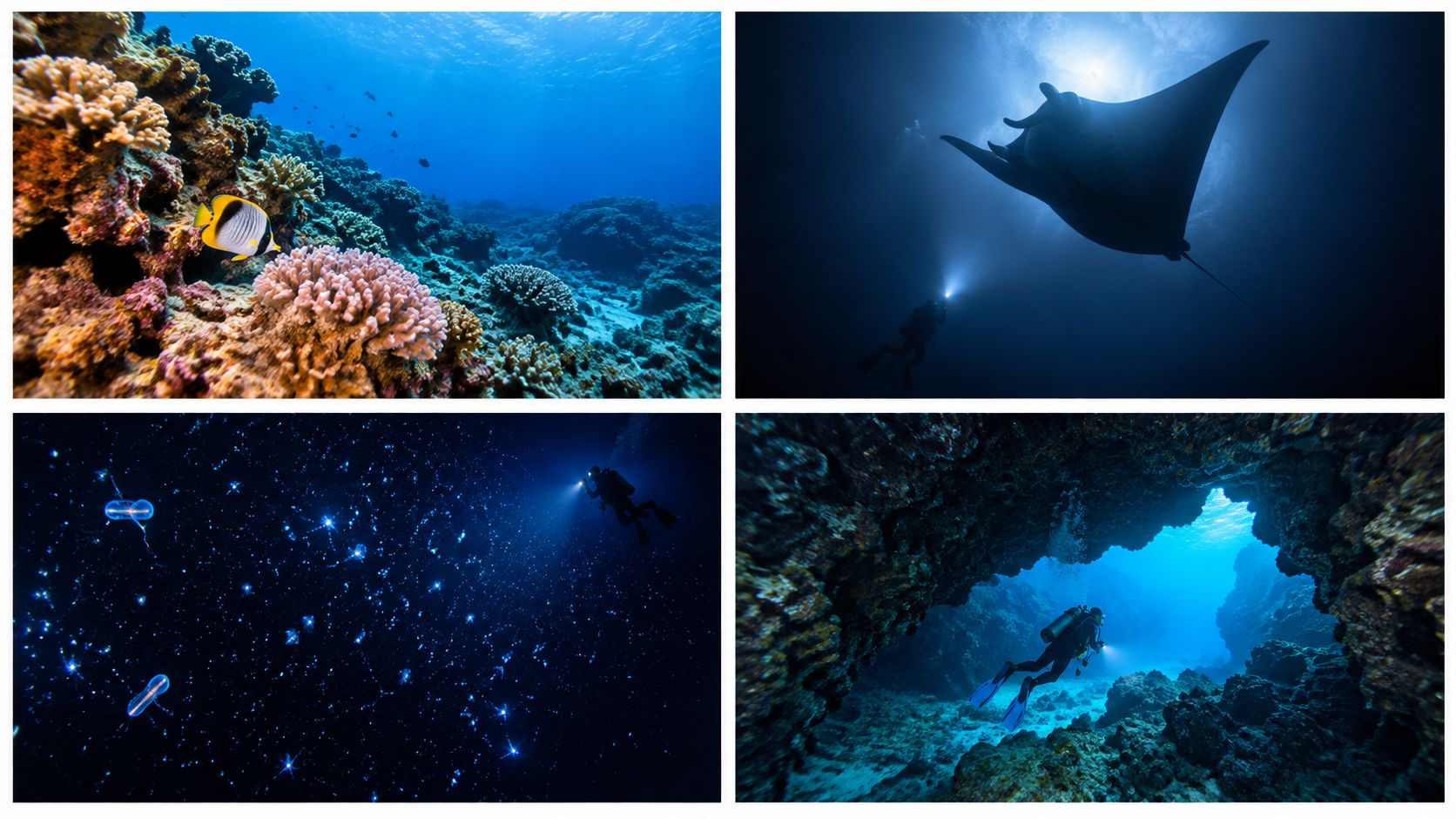
If you're trying to choose between Kona tours, don't start with the operator. Start with the experience. A reef morning, a manta night, a blackwater run, and an advanced charter solve different problems, and each one suits a different kind of diver.
What each format is for
A standard two-tank reef trip is the default choice if you want the coast without drama. It's the safest bet for comfort, photography, and getting your bearings in Kona. A manta night dive is the signature spectacle, but it's still a structured wildlife operation, not a free-for-all night dive.
Blackwater is for divers who like open water, darkness, and rare pelagic life stages. Advanced charters are for people who want more challenging structure and cleaner access to sites that demand better buoyancy and judgment. If you don't already know which of those sounds exciting, you probably want the reef trip first.
The comparison below is the fastest way to sort the options.
| Format | Depth | Conditions | Signature Marine Life | Cert Level |
|---|---|---|---|---|
| 2-tank reef trip | Moderate reef depths | Calmer daytime boat conditions | Reef fish, turtles, volcanic structure | Open Water and up |
| Manta night dive | Varies by site setup | Nighttime, light-driven plankton attraction | Reef manta rays | Open Water and up for guided dives |
| Blackwater dive | Open ocean at night | Tethered offshore, dark water | Larvae, pelagic-stage organisms | Advanced comfort and strong buoyancy |
| Advanced 2-tank charter | Deeper and more demanding sites | Site-specific, often more exposed or complex | Lava tubes, pinnacles, sharks, larger structure | Advanced and experienced divers |
Why Garden Eel Cove beats Keauhou for manta viewing
For manta encounters, I'd pick Garden Eel Cove over Keauhou when the option is there. Garden Eel Cove has the protected setting, the better viewing area, and the more established aggregation. Keauhou was formally treated as snorkel-only in the management plan because it lacks the sandy bottom needed for the standard “campfire” setup, where divers sit on the bottom and point lights upward.
That difference matters because manta diving isn't just about seeing rays. It's about site layout, bottom type, and how the light column is managed. The West Hawaiʻi management plan also requires permits and assigned moorings at designated sites, which tells you this is controlled wildlife viewing, not an open-ended free swim.
If you want to book the relevant formats directly, use the Kona diving tours page for the general reef options, the two-tank manta dive and snorkel trip for the manta night, the blackwater night dive for pelagic diving, and the premium advanced 2-tank trip if you want a harder charter.
Certification, Courses, and What to Bring
You don't need a mountain of gear to dive Kona well, but you do need the right basics. If you're certified, a boat dive is straightforward. If you're rusty, don't fake it. Get a refresher or stay on a guided trip until your trim, buoyancy, and gas habits feel normal again.
The gear that actually matters
Bring your own mask, fins, wetsuit, and dive computer. Those are the four pieces I wouldn't leave to chance. A 3 to 5 mm wetsuit is the sensible local range, and if you run cold or you're doing multiple dives, lean warmer rather than pretending you won't notice the chill later.
Most well-run Kona boats make the day easier with shaded seating, storage, hot showers, and serviced rental gear. That's not fluff. It means you're less likely to start the second dive cramped, cold, or tangled in bad habits from a rushed deck setup. If you've got current certification and want to maximize bottom time, free nitrox for certified divers is worth asking about before you book.
Courses and refresher logic
Open Water gets you on guided boat dives. Advanced training opens the door to more complex lava structure and deeper site choices. If you haven't logged a dive in a long stretch, a refresher is the smart move because Kona rewards divers who can control position, not just survive the descent.
Straight advice: Don't book an advanced-style day because the name sounds impressive. Book it because your buoyancy, air consumption, and descent control are already there.
For certification pathways and course options, the Big Island scuba certification page is the right place to start. If you want a general hub for charters and courses, the dive tours page keeps the choices in one place.
Safety, Shore Diving, and What to Do in an Emergency
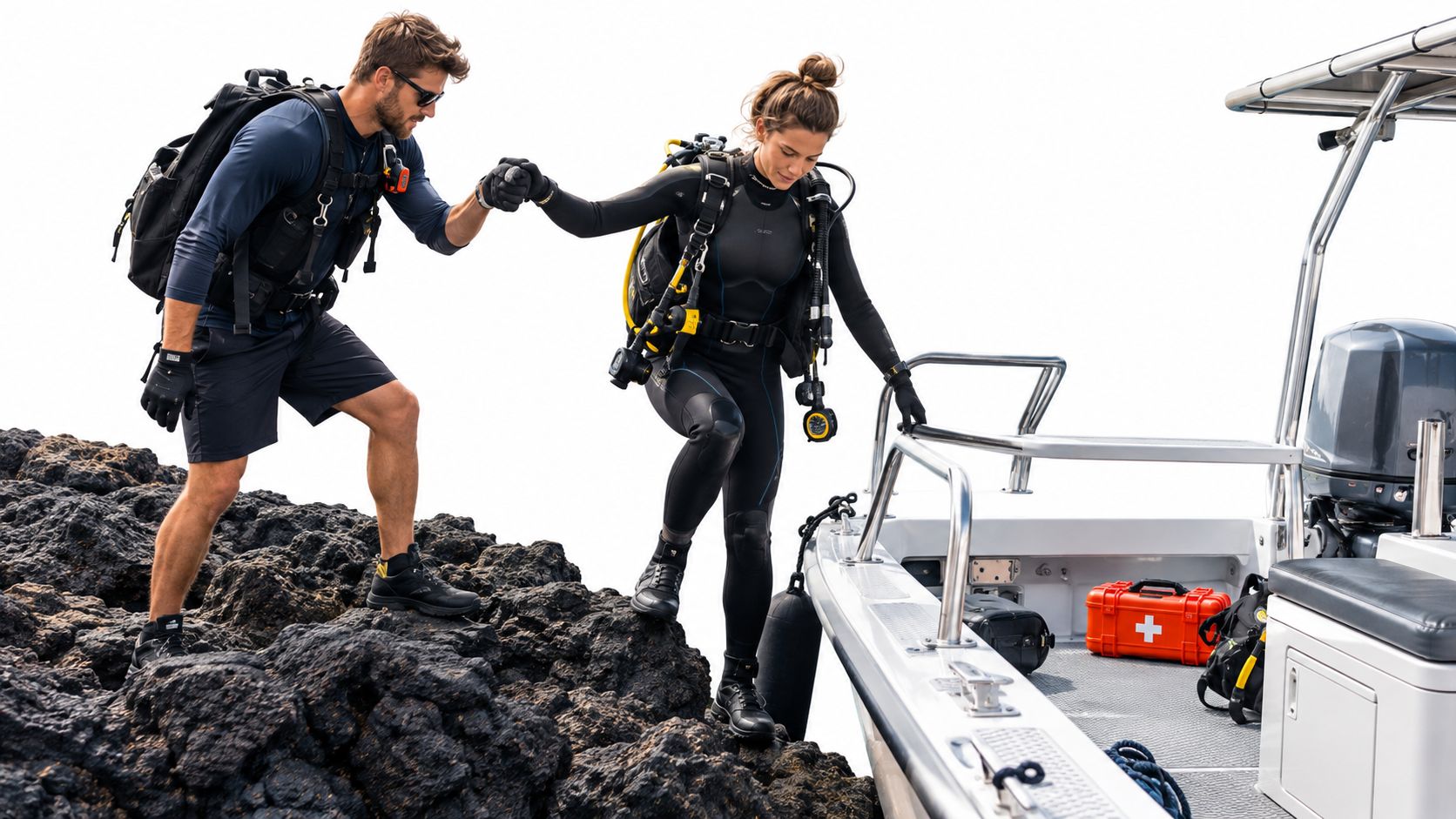
Kona shore diving looks easy until it doesn't. Lava rock, sharp coral, changing swell, and awkward exits are where solid divers get humbled. The water may be clear and inviting, but that does not make every entry a good idea.
Shore entries are condition-based, not brochure-based
The Old Kona Airport shoreline is a good example of why this matters. Hawaiʻi's Division of Aquatic Resources warns about sharp coral and lava rock, dangerous swell and currents during storms, and the lack of lifeguards there. That's not a theoretical caution. That's the difference between a manageable entry and a bad afternoon.
Swell direction changes the site. A calm-looking morning can turn into a sloppy exit by noon, and experienced shore divers know to evaluate the water at the exact entry, not just from the parking lot. If you're new to the island, don't treat every beach with an underwater map like it's a safe DIY dive site.
Emergency planning is part of the dive plan
The Big Island has no recompression chamber on-island, so any serious decompression treatment means transport to Honolulu. That reality should change how you think about risk. It's another reason I push visitors toward guided boat diving when they're unfamiliar with Hawaiian swell, navigation, or local response logistics.
If you do shore dive, plan the support the same way you'd plan the dive itself.
- Buddy procedure: Stay close enough to communicate and abort early if the entry looks wrong.
- Surface support: Tell someone where you're going and when you expect to be out.
- Exit plan: Know where you'll get out before you get in.
- Gas reserve: Turn the dive before the exit becomes a scramble.
When the water looks marginal, a guided boat trip is the smarter play. Boats remove the worst part of shore diving, which is the exposed entry and the uncertain exit, and they put a crew in charge of the logistics you'd otherwise be improvising yourself. If you're traveling and you don't know the local swell pattern, don't pretend you're evaluating it like a resident.
Underwater Photography Tips for Manta and Blackwater Dives
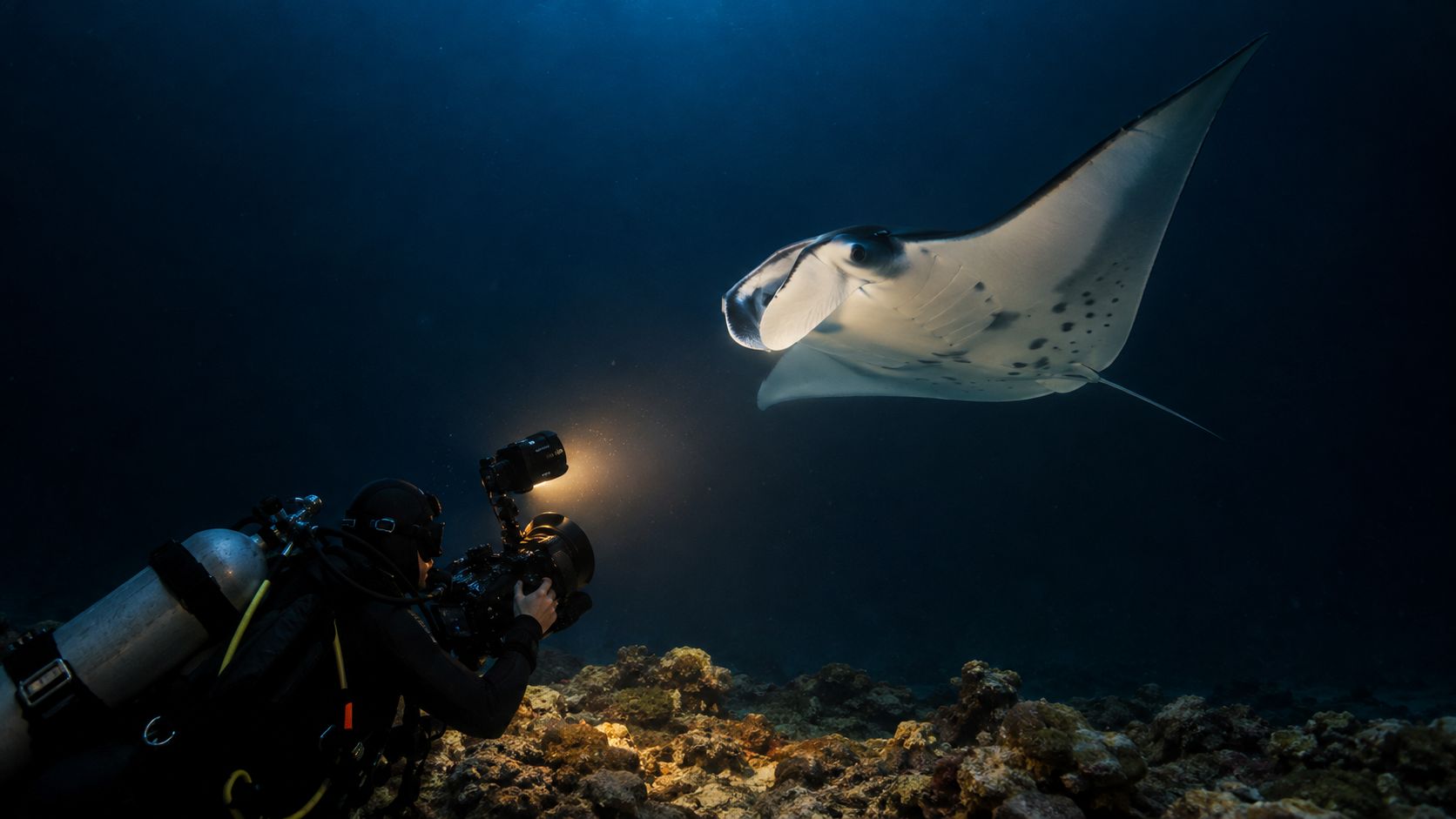
Manta and blackwater dives reward patience more than gear volume. If you bring the wrong attitude, you'll get a screenful of backscatter and a bunch of shots where the animal is gone before your strobe even recycles. If you bring discipline, Kona gives you real images.
Manta photography should stay low and soft
For manta dives, I'd go wide-angle and keep the camera low. The point is to let the animal come through the frame naturally, not to chase it with aggressive strobes. The water column is plankton-rich, so blasting light from the wrong angle just fills the image with junk.
Use the operator's ambient setup as your base and resist the urge to overlight every pass. Hold position, stay calm, and keep your profile small. The cleaner the diver behaves, the better the photograph usually gets.
Photo rule: If you're moving to get the shot, you're probably making the shot worse.
Blackwater needs discipline, not bravery
Blackwater is different. The subjects are tiny, the setting is open ocean, and you've got almost no reference points. Use a red focus light so you don't throw unnecessary light into the water, and keep strobes or video lights restrained and purposeful. Snooted strobes can help on tiny larvae, but only if your control is good enough to keep the frame tight.
The larger point is distance. Don't crowd the subject, and don't drift around like the dark makes your position irrelevant. Kona's blackwater dives are one of the few places where pelagic biology and tourism overlap in a way that rewards careful imaging, because the photos can contribute to observation as well as memory.
Booking Your Kona Dive Trip the Smart Way
If you want the cleanest booking decision, use this sequence. Pick the season you're visiting. Pick the format that matches your certification and curiosity. Then decide whether you want a morning reef trip, a manta night, or both in the same visit. Hawaiʻi's proposed manta-viewing rules capped each of the two designated zones at 24 commercial permits, 60 for-hire passengers per vessel per 24 hours, and 8-to-1 guide-to-customer ratios (state proposal), which is exactly why these trips should be booked with intention, not last minute.
For direct booking paths, I'd look at the Kona diving company page if you want the broader operator context, then reserve the manta ray dive at Garden Eel Cove for the classic night experience, the blackwater dive for the pelagic night option, or the premium advanced 2-tank trip if you're qualified for harder sites. That's the smartest way to match the day to the dive instead of forcing a generic charter to fit your goals.
Kona Honu Divers runs morning reef charters, manta night dives, blackwater trips, and advanced options from the west side, so you can match the site to your certification instead of guessing. If you're ready to dive Kona with a shop that builds trips around conditions and diver level, visit Kona Honu Divers and book the dive that fits your day.