
You've got three real decisions in front of you the moment you start looking for a Kona diving company. First, do you want a straightforward reef day, a manta night, or something niche like blackwater. Second, are you booking for your own logbook or trying to keep a mixed group happy without wasting anyone's time. Third, do you want an operator that feels polished on the dock and calm when conditions shift, or one that just throws people on a boat and hopes for the best.
Kona rewards people who choose well. The coastline gives you easy reef dives, dramatic lava terrain, and night trips that are worth planning around, but each one fits a different diver. If you're a first-timer, the right answer is usually not the flashiest trip on the menu, it's the one that matches your comfort level, certification, and appetite for water time.
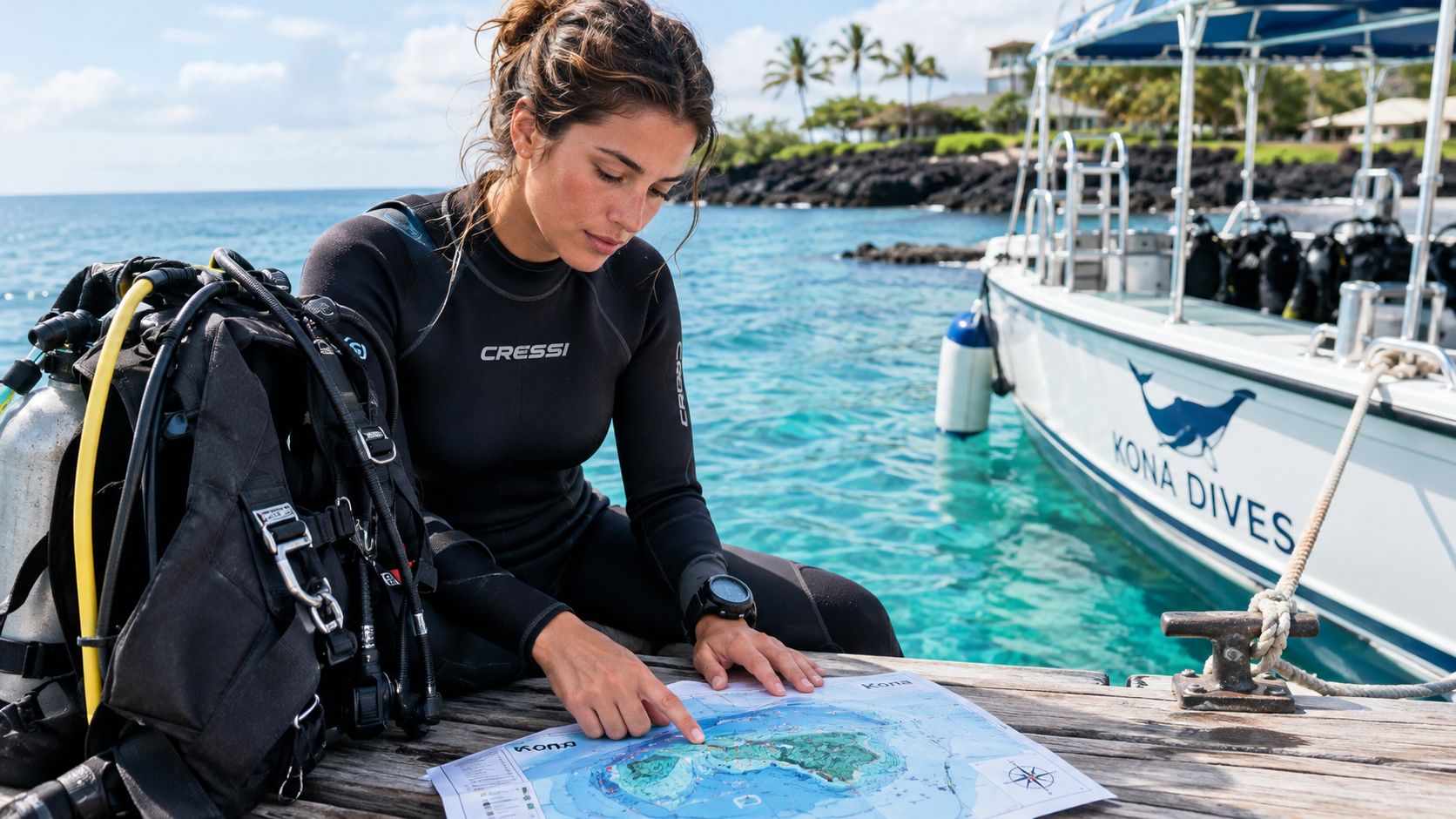
Why a Buyer-First Guide to a Kona Diving Company
A good Kona diving company doesn't just sell seats, it matches trips to divers. That matters here because Kona isn't a one-size-fits-all market. The morning two-tank reef trip, the manta night dive, and the blackwater dive each demand different expectations, different gear, and a different comfort level in the water.
Start with the trip, not the brand
If you're newly certified or coming back after time away, the morning reef trip is usually the cleanest entry point. If you want a signature Kona experience and you're comfortable at night, the manta dive is the obvious play. If you're already solid in open water and want a specialty trip, blackwater is the outlier that justifies the extra planning.
That is the buyer's lens I'd use. Don't begin with “Which shop is famous?” Begin with “Which trip fits the way I dive?” A polished operator still matters, but it matters after you've identified the right category.
Practical rule: choose the trip first, then choose the operator that runs that trip with the right boat, the right briefing style, and the right safety habits.
The other reason this matters in Kona is consistency. The region is known for predictable manta encounters backed by a long-term aggregation, not lucky one-off sightings. A six-year study recorded 25,444 observations of 118 individually identified reef manta rays at Kona's two principal viewing sites, with Manta Heaven and Manta Village providing the bulk of the encounters, which is why serious operators can plan around a real wildlife pattern rather than a gamble. That's a very different product from an occasional animal sighting, and it changes how you should shop for a trip. NOAA's study on Kona manta identification and site fidelity
Signature Trips and Who Each One Is For
The morning two-tank trip is for most certified divers
If you want a dependable Kona day, book the 2-tank morning reef trip. It's the right fit for newly certified divers, returning divers, and anyone who wants the classic Kona mix of lava structure, reef life, and easy logistics. You're not chasing a once-a-lifetime spectacle here, you're building a solid dive day.
The better morning trips are simple on purpose. They get you in the water early, keep the sites varied, and leave you with enough gas and time to enjoy the boat instead of rushing through the day. That's the trip I'd send a first-time Kona visitor on before anything more technical.
The advanced trip belongs to divers who want more structure
The 2-tank advanced trip is for divers who already know they like current judgment, buoyancy control, and a little more site complexity. Kona's lava formations and deeper profiles really stand out here. If you want more challenging terrain without jumping into a specialty night format, this is the move.
Manta night diving is for travelers who want a guaranteed-feeling signature experience
The manta trip is the one people picture when they say Kona diving. It's not random. Kona's documented manta aggregation makes the trip reliable, and the animals' repeated presence at specific sites is the whole reason the night dive has become a staple. For many travelers, this is the trip worth building the vacation around. Learn more about the manta night dive
Blackwater is for experienced divers who want something strange and serious
Blackwater isn't a casual add-on. It's a specialty open-ocean night dive for divers who are comfortable with open water, darkness, and limited reference points. If your idea of a good time is watching the water column instead of a reef wall, blackwater is the most unusual trip on the board.
For people trying to choose fast, here's the short version.
- Newly certified diver: pick the morning two-tank trip.
- Comfortable night diver: pick the manta dive.
- Advanced diver who wants more technical site profiles: pick the advanced two-tank trip.
- Very experienced diver looking for a specialty challenge: pick blackwater.
Gear, Rentals, Nitrox, and Certification Options
Bring the right basics, not a suitcase of just-in-case gear
A strong Kona operator should remove friction, not add it. If you're certified, ask what's included, what's rented, and what you should still bring yourself. The useful answer is usually a mask you trust, exposure protection that matches your tolerance, and a dive computer if you're fussy about your own data.
Nitrox matters if you already hold the certification and want more conservative gas planning on repetitive dives. A shop that includes it for qualified divers is making your morning easier, especially on a two-tank day. If you're not Nitrox certified yet, don't improvise it on vacation, get the card first or stay on air.
My rule: rent the bulky kit if you're flying in, but never rent the one piece of gear that ruins your day when it leaks, fogs, or never quite fits right.
Certification is a booking filter, not an afterthought
If you're not certified, your realistic options are simple. A discover scuba experience gets a total beginner in the water under supervision. A full Open Water course makes you independent later, but it takes more of the trip. If you already dive but haven't done it in a while, a refresher is cheaper than spending the whole boat ride feeling rusty.
That's the checklist I'd use before paying. Ask whether the operator offers full rental kits, computer rentals, nitrox for certified divers, and course paths for beginners or returning divers. One practical place to compare those options is the operator's own nitrox diving benefits page, because the best shop explains the trade-offs instead of pretending every diver needs the same setup.
Kona Dive Sites and Conditions You Should Know
Kona diving works because the underwater terrain has shape. Volcanic lava formations create arches, swim-throughs, and ledges that give reef life shelter, and the area is commonly characterized by roughly 75 to 100 feet of visibility. That combination is why a good site here can feel spacious even when the bottom is dramatic and complex. Kona diving site conditions and terrain
Shore entry and boat diving are not the same decision
Independent shore entries can be great, but they require honesty. A protected bay and an exposed lava entry are two completely different risk profiles. A professional boat trip removes some of that guesswork because the crew chooses the site, handles the entry logistics, and watches the conditions with local experience.
For shore divers, the takeaway is blunt. If the entry looks awkward, if the swell is working the rocks, or if the current makes the exit look annoying before you even get in, skip it. Kona's reputation for good conditions can make people overconfident.
Matching Kona dive site categories to diver level
| Site Category | Best Diver Level | Typical Depth | Highlight |
|---|---|---|---|
| Calm reef sites | Newer certified divers | Shallow to moderate | Easy navigation and classic reef life |
| Lava tube and arch sites | Certified divers with solid buoyancy | Moderate | Volcanic structure and sheltered marine life |
| Deeper advanced sites | Advanced divers | Deeper profiles | More demanding terrain and stronger site selection |
| Open-ocean blackwater | Experienced specialty divers | Variable open water | Rare pelagic life in the water column |
If you want a broader look at how Kona's dive sites are organized, use the operator's Big Island scuba diving sites page and compare it against your certification card, not your vacation mood.
Safety, Credentials, and How to Vet a Kona Diving Company
A top-tier operator in Kona earns trust before the boat leaves the harbor. I'd look for current staff competence, clean gear handling, clear briefings, proper emergency gear, and a crew that doesn't shrug when a guest asks a serious question. In a busy ocean setting, that isn't a luxury, it's the whole product.
Crowded water demands disciplined operations
Kona manta viewing isn't a sleepy niche activity. A Hawaiʻi County assessment documented at least 42 commercial tour operators serving the two primary Kona manta locations by August 2015, with 16 to 19 vessels per night and roughly 160 to 190 snorkelers and divers in the water at the same time. In that kind of environment, guide control, lighting discipline, and vessel coordination aren't marketing points, they're survival habits. Hawaiʻi County's assessment of manta viewing operations and safety
Use a short checklist before you book
- Training level: Does the operator require the card and experience level the trip actually needs?
- Boat setup: Is there space to move, good entry and exit design, and basic comfort for a full day?
- Crew presence: Are the guides clearly active, or just standing around until splash time?
- Emergency readiness: Is oxygen on board and is the crew prepared to use it?
- Gear quality: Do they service rentals proactively, or do they treat gear like a warehouse shelf?
The operator I'd compare against those standards for a full-service Kona plan is Kona Diving Company, because the useful question isn't whether a shop is famous, it's whether its trips, boats, and crew match the dive you're paying for.
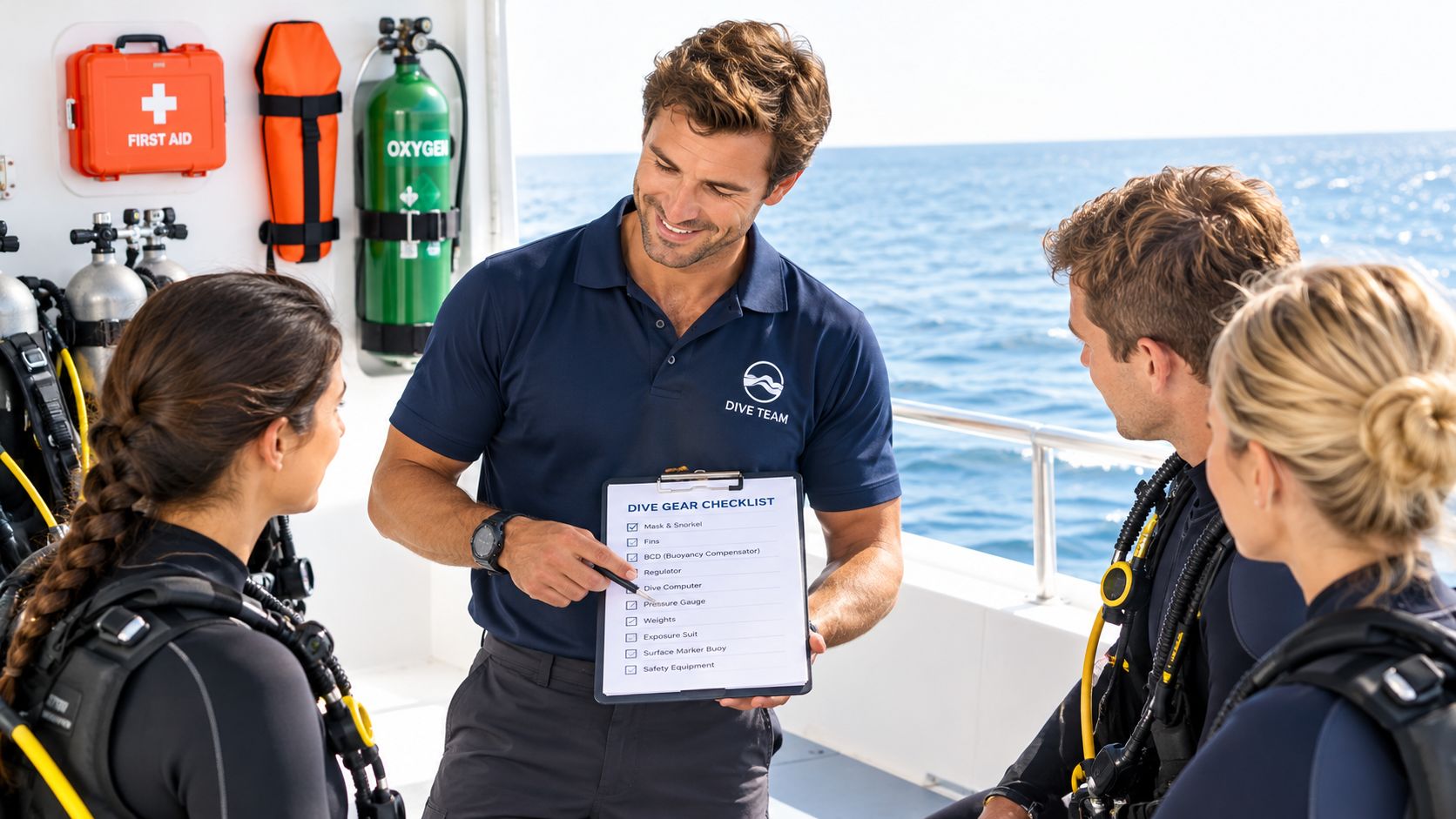
What a Trip Day Actually Looks Like
A morning dive day in Kona usually starts with check-in, gear fitting, and a quick review of your certification and recent experience. Then you board, settle your kit, and head out from the harbor while the crew talks through the site plan, entry, and what the water conditions mean that day. The point is to remove surprises before anyone is in the water.
Morning rhythm versus manta-night rhythm
The morning trip feels efficient. You get the first dive, a break on the boat, then the second site before heading back in. A manta night dive feels different, because the whole evening is built around timing the sunset departure, briefing the light-board setup, and dropping into the viewing area after dark.
If you're bringing a non-diving companion, plan that early. Some boats handle mixed groups well, some don't. Same with mobility. If climbing, stepping, or ladder work is awkward for you, say so before you book, not at the dock.
Simple rule: the right trip day feels organized before the boat leaves, not heroic once the boat is already offshore.
Transportation is usually straightforward if you've got a rental car, and rideshare can work for some travelers, but don't assume a shuttle exists unless the operator says so. If you're traveling with family members who are not diving, ask whether the boat has enough comfort and timing flexibility for them to enjoy the day without feeling stranded.
Booking Tips, Packages, and Pricing Strategy
The smartest way to book Kona is to treat it like a small itinerary project. If you want more than one signature experience, book them together when possible. A manta night dive paired with a morning two-tank trip is the cleanest way to log the two big Kona experiences without wasting a free day in between.
Book for value, not just for the lowest sticker price
Package pricing makes sense when the operator includes the extras you would have paid for anyway. Nitrox, rental gear, and trip combinations can change the value equation more than the base rate does. If you're diving more than once, the per-trip math starts to favor packages quickly.
The Hawaii scuba diving packages page is worth checking if you want to stack multiple dives without rebuilding the plan from scratch. That said, don't buy a package just because it sounds efficient. Buy it only if the trip mix actually fits your logbook and energy level.
Use the booking window to your advantage
Reserve early if you want a manta night, a blackwater trip, or a weekend slot. Those are the seats people chase first. If you're flexible, weekday mornings are usually the cleaner bet for a standard two-tank plan because you're not competing with the same rush of short-stay travelers.
That is the move if you want a quick decision. Lock the trip that fits your experience, check the live seat map, and don't wait until the last minute to discover the best night dives are gone.
Common Questions From First-Time Kona Divers
Can non-divers join the boat? Usually, yes, but only if the operator supports mixed groups and the boat layout makes sense for them. A snorkeler seat on a manta trip can be a good fit for a family that wants to stay together without forcing everyone into the same activity.
What if my certification is borderline? Don't gamble on it. If you're rusty, book a refresher or a resort-style intro experience instead of hoping the crew will improvise around your gap. That's the difference between a relaxed day and a bad dock conversation.
What about seasickness? Bring what you know works for you. Some travelers use products like the Ship-EEZ Seasickness Patch, Dramamine pills, Bonine pills, Sea Band wristbands, or ginger chews, but the best move is to eat lightly, hydrate, and keep your eyes on the horizon once you're out. If you're prone to motion sickness, say so early and ask for the least exposed spot on the boat.
How do weather calls get made? By the crew, not by wishful thinking. If the sea state or swell makes the entry unsafe, a serious operator will move, modify, or cancel the trip rather than force a bad run. That's the standard you want in Kona, because “usually good” is not the same as “safe today.”
If you want a Kona trip that's organized, honest about conditions, and matched to your comfort level, book with Kona Honu Divers. They run the core Kona trips, from morning reef dives to manta nights and blackwater, so you can choose the right one without guessing.