
You’re probably in the same spot as a lot of Kona visitors. You’ve got a few open browser tabs, everybody in your group wants something slightly different, and you’re trying to figure out whether a Captain Cook snorkeling cruise is just another tour or one of the things you’ll still talk about when you get home.
After doing this run down the coast more times than I can count, I can tell you it’s one of the outings that usually lives up to the hype. The bay has the kind of clear water that makes first-time snorkelers relax and experienced ocean people grin the second they put their face in. It’s also one of those rare places where the scenery above the surface and the story behind the shoreline matter just as much as the fish below it.
Your Epic Voyage to Kealakekua Bay Awaits
A lot of Hawaii vacation planning comes down to tradeoffs. One person wants scenery. Another wants easy logistics. Someone else wants “the one thing we absolutely shouldn’t miss.” Captain Cook snorkeling cruises tend to check all three boxes.
Why so many visitors choose this trip
Kealakekua Bay draws over 190,000 visitors annually, and the water can reach up to 100 feet of visibility. More than 90% of visitors use cruises to reach the Captain Cook Monument area, according to this Kealakekua Bay overview. Those numbers make sense when you see the shoreline. The monument sits in a spot that feels tucked away from the rest of Kona, and the boat ride makes getting there part of the experience instead of a chore.
For most travelers, that matters. You’re not just signing up to stare at fish for an hour. You’re getting a coastal cruise, a protected bay, a history lesson if your crew is good, and a snorkel site that works for mixed-skill groups better than many open-ocean spots.
If you’re comparing outings, it helps to see how this fits into the bigger Kona picture. This guide to snorkeling in Kona, Hawaii is useful if you’re trying to choose between bays, beaches, and boat trips.
What the day usually feels like
The first-timer in your group will probably ask, “Is it hard?” Usually, no. That’s one reason this trip gets so much repeat business. The common reaction is surprise at how quickly the nerves fade once people see the calm water inside the bay and realize they can float, look down, and drift slowly over reef.
Practical rule: If your vacation group includes both confident swimmers and people who just want a safe, memorable water day, Captain Cook snorkeling cruises are one of the easiest ways to keep everybody happy.
The other thing that surprises people is how complete the outing feels. You leave the harbor in regular morning mode, coffee in hand, and come back sun-warmed, salty, and convinced you did something more substantial than a standard excursion.
The Heart of the Cruise Exploring Kealakekua Bay and the Captain Cook Monument
Kealakekua Bay works because it gives you two reasons to care about the place before you even get in the water. One is historical. The other is ecological.
The monument is more than a photo stop
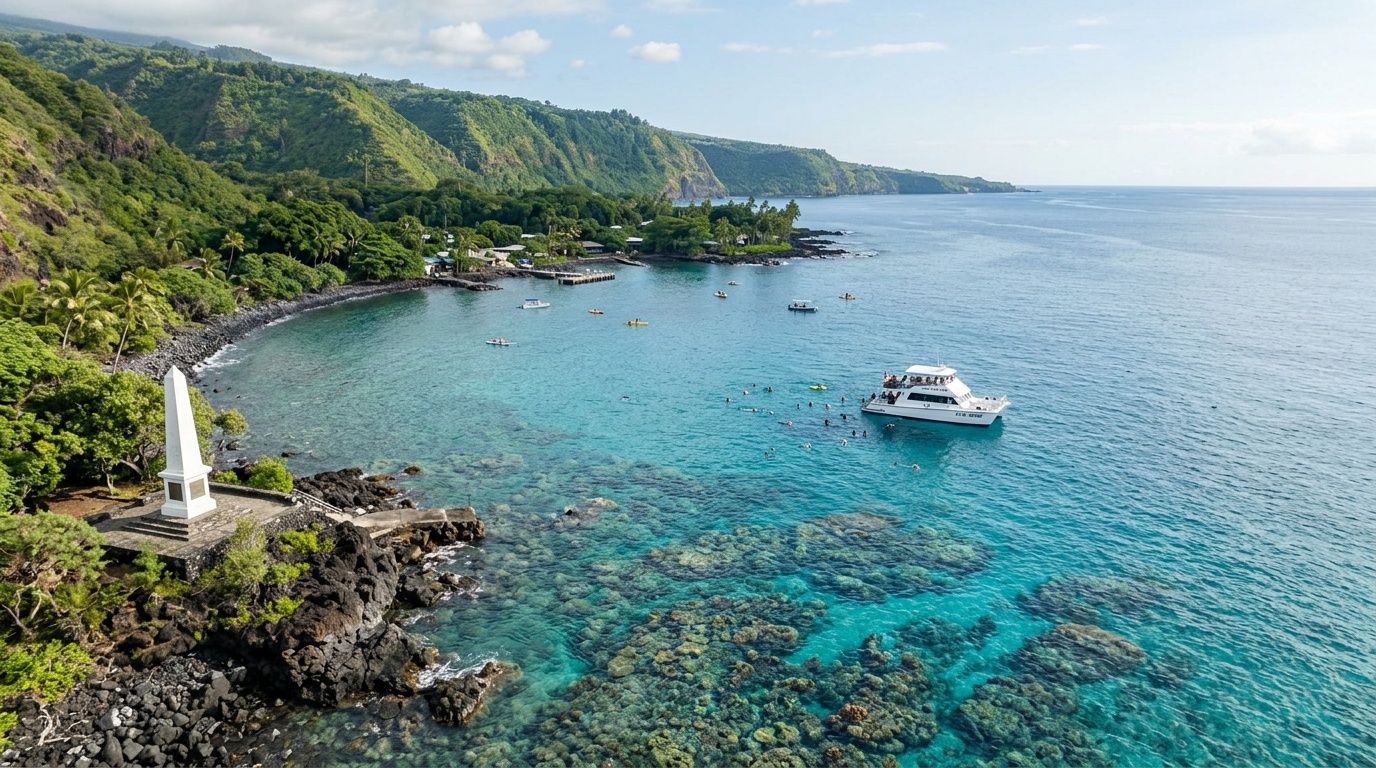
The white obelisk on shore marks the area associated with Captain James Cook, who landed in Hawaii on January 17, 1779, according to the earlier cited bay overview. People often assume it’s just a landmark for tour photos. It isn’t. It’s the visual anchor for a place with deep historical weight.
That’s why the bay feels different from a random pretty cove. Even visitors who come mainly for snorkeling usually end up asking the crew about what happened there, how people access the monument, and why the shoreline feels so remote.
A boat trip makes that easier to understand. You approach the monument from the water, which gives the whole location more context than a map ever will. If you want a dedicated look at this route and setting, this page on Kealakekua Bay snorkeling tours helps.
The protected bay changes what you see underwater
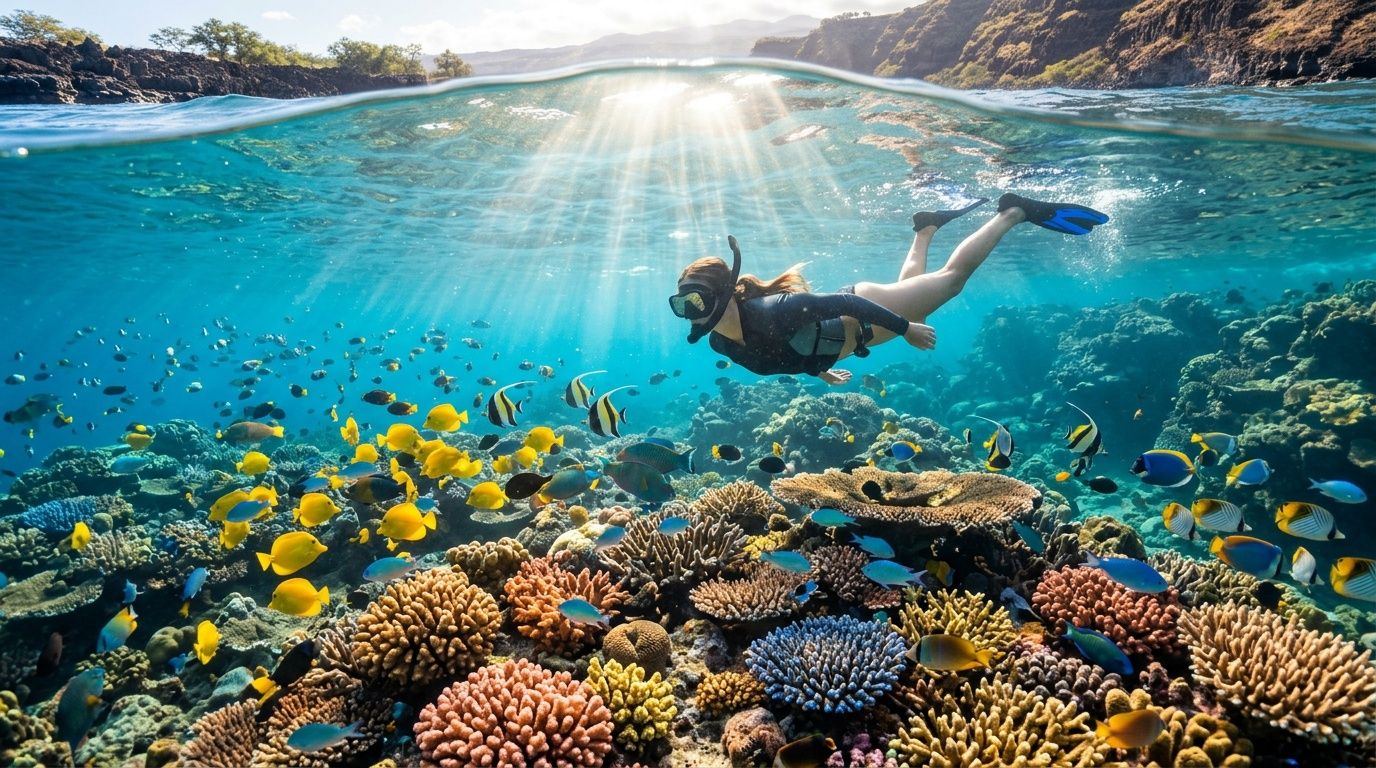
Kealakekua Bay became a Marine Life Conservation District in 1992, and that protected status is a big reason the conditions stand out. According to this Kealakekua Bay marine life summary, the bay often has water clarity exceeding 100 feet, its reefs support over 200 fish species, and fish biomass is 3 to 5 times higher than adjacent non-protected areas.
That sounds technical until you’re floating over the reef. Then it becomes simple. You can see farther, the coral looks fuller, and fish are everywhere.
Here’s what that protection means in plain language:
- Less disturbance: Rules in protected areas help preserve the reef structure that fish depend on.
- Better clarity: Cleaner, calmer water makes snorkeling easier for beginners and more rewarding for everyone else.
- More life in one place: You don’t spend your whole snorkel hunting for action. The reef usually delivers quickly.
The bay rewards slow snorkeling. Don’t kick hard and rush from one end to the other. Float, scan, and let the reef come to you.
Why the destination feels easy once you’re there
People sometimes confuse “famous” with “crowded and overrated.” Kealakekua Bay can be busy, but the draw is real. The combination of historical significance, easy boat access, and healthy reef gives the outing depth. Kids notice the fish. History buffs notice the monument. Ocean people notice how protected water changes the whole mood.
That mix is what makes Captain Cook snorkeling cruises more than transportation to a snorkel site. The cruise is really your entry into one of Kona’s most layered places.
Choosing Your Vessel A Comparison of Captain Cook Snorkeling Tour Types
You are at the harbor with coffee in one hand and fins in the other, and the first real choice of the day is sitting right in front of you. One boat looks roomy and relaxed. Another sits lower on the water and looks ready to move.
That choice affects more than the ride out.
For Captain Cook snorkeling cruises, the boat sets the pace of the whole morning. It changes how easy boarding feels, how much spray you get on the way down the coast, how crowded the deck seems once everyone is geared up, and how comfortable your group stays between snorkel sessions. I’ve seen visitors book the cheapest option, then spend the ride wishing they had picked for comfort, shade, or a smaller group instead.
The easiest way to sort your options is to separate them into two common styles. Large catamarans are built for space, stability, and amenities. Rigid hull inflatable boats, often called RHIBs or Zodiacs, are built for a quicker, more active ride.
A catamaran works like a floating patio. A RHIB feels more like riding in the front row.
The difference that matters most on the water
Large catamarans usually give you more room to move, more shade, and a steadier platform if someone in your group is nervous about boats. That matters with young kids, grandparents, or anyone who likes the option to sit down, snack, and ease into the day. People who are new to snorkeling often do better when the boat itself feels calm and predictable.
RHIBs create a different experience. You sit closer to the water, turns feel sharper, and the coastline feels more immediate. The ride is often faster, but speed is only part of the appeal. Smaller boats usually mean fewer passengers, which can make gear help, water entry, and questions for the crew feel more personal.
Neither style is automatically better. The better choice is the one that fits your group’s comfort level.
Tour type comparison
| Feature | Large Catamaran | Rigid-Hull Inflatable Boat (RHIB) |
|---|---|---|
| Ride feel | More stable, roomier, less exposed | Faster, lower to the water, more adventurous |
| Best for | Families, cautious travelers, people who want space | Small groups, couples, travelers who like a lively ride |
| Amenities | Usually more shade and onboard comfort | Usually more basic, with focus on access and speed |
| Boarding and movement | Easier for people who want more deck space | Simpler layout, less wandering room |
| Experience at the bay | Social, broader group feel | Smaller-group feel, often more personal |
| Coastal perspective | Higher deck views | Closer to the water and shoreline |
Who usually prefers a larger boat
If your group includes mixed ages, a catamaran often smooths out the little problems that can chip away at a good day. One person wants shade. One wants a bathroom close by. One kid is excited, then suddenly tired 20 minutes later. Bigger boats handle those swings better because they give everyone more physical and mental space.
They also make the outing feel less hurried. You are not squeezed into your seat waiting for your turn to move. You can settle in, get your mask adjusted without bumping elbows, and take breaks without feeling like you are in the way.
That is a bigger deal than many visitors expect.
A family friendly tour is not just one that allows children. It is one where the boat layout gives parents room to help, where boarding does not feel awkward, and where a child who needs a reset has somewhere comfortable to sit. Those practical details shape the mood of the trip as much as the reef itself.
Who usually enjoys a RHIB more
A RHIB is a good fit for visitors who want the ride to feel like part of the adventure. You notice the ocean more. You feel the acceleration. You get a closer view of the lava coastline because you are riding lower and nearer to the surface.
That style also appeals to travelers who care a lot about group size. On smaller boats, the crew often has more time for individual help with masks, fins, and snorkel nerves. If you like asking questions, or if someone in your group wants extra reassurance before getting in the water, that smaller setting can be a real advantage.
There is a tradeoff, of course. Less space means less room to spread out, and the ride can feel bouncier for people with back issues, balance concerns, or a low tolerance for motion. Adventurous and comfortable are not always the same thing.
If you are still comparing formats, this guide to Kona boat tours for different group styles gives a helpful side by side look at how boat type changes the day.
A local way to choose without overthinking it
Ask one question first. What do you want the ride to feel like?
If the answer is relaxed, shaded, and forgiving, start with larger boats. If the answer is quick, close to the water, and small group oriented, start with RHIBs.
Then ask a second question that visitors often skip. Who is the least confident person in your group? Choose with that person in mind. A boat that works for the most nervous guest usually works for everyone else too.
Kona Honu Divers also offers a Captain Cook snorkel outing on a rigid hull inflatable boat, which makes it a practical option for travelers who already know they prefer that smaller boat format.
Pick the vessel the way you would pick hiking shoes. The right one is not the one that looks most exciting in a photo. It is the one that fits the day you want to have.
A Day on the Water What to Expect from a Typical Itinerary
You arrive at the harbor early, coffee still in hand, and the day already feels different. The light is softer, the air is cooler, and the people waiting to board all have that same look. Half awake, half excited, trying not to drop a towel, phone, or snorkel bag.
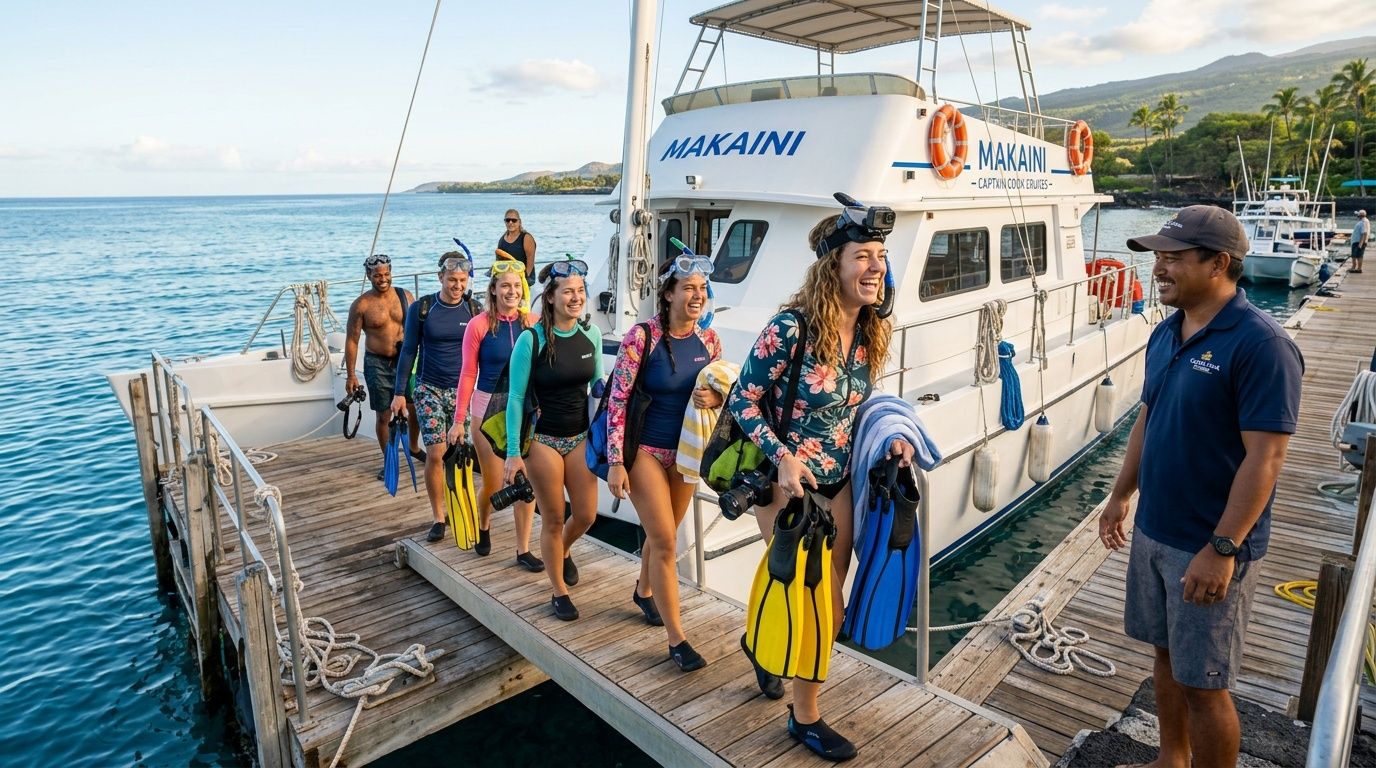
That early start is part of why these trips work so well.
Why morning departures usually feel better
Kealakekua Bay often shows its calmest side in the morning. Earlier departures usually mean gentler surface conditions, clearer viewing, and a quieter feel before more boats arrive. If someone in your group is new to snorkeling, those first conditions matter a lot. Calm water gives beginners time to settle in instead of spending their first ten minutes wondering why everything feels harder than it looked in photos.
It works a little like learning to ride a bike in an empty parking lot instead of a busy street. The skill is the same. The setting makes it easier.
Morning also helps with comfort on the ride down. If you are prone to queasiness, the best plan is prevention, not hope. A quick read on how to avoid sea sickness before a Kona snorkel tour can save your day, and Better Boat also shares practical tips for seasickness relief while boating.
The ride along the Kona coast
The cruise to the bay is not dead time. It is part of the experience.
You pass black lava shoreline, sea caves, old flow lines, and stretches of water that change from steel blue to bright turquoise as the sun rises higher. Good crews usually point out what matters without talking nonstop. That balance is nice. You learn enough to understand where you are, but the ride still feels like being out on the ocean, not sitting through a lecture.
This is also when people start adjusting to the day. Kids pick a side of the boat and start scanning for dolphins. Parents finally relax once everyone is checked in and seated. Nervous first-timers often ask their practical questions now, which is smart. It is easier to fix small worries on the way down than while standing at the swim step.
What usually happens when you reach the bay
Arrival has a rhythm, and knowing that rhythm helps people feel more comfortable.
First, the boat gets settled in its mooring or drift position. Then the crew gives a water briefing that covers where you can go, how to get back in, what marine life you may see, and why the reef and monument area are treated with so much care. Kealakekua is not just pretty water. It is also one of the most historically important places on the Kona coast, so the better tours treat the bay like a place to respect, not just a backdrop for vacation photos.
After that, gear comes out. Masks get adjusted. Fins get matched. Flotation belts or noodles are offered to anyone who wants extra support. Families should pay attention here, because this moment tells you a lot about the crew. A family-friendly tour does not rush the slowest swimmer. It gives clear instructions, repeats them when needed, and helps people enter the water in an order that keeps everyone calm.
The first five minutes in the water
These minutes set the tone for the whole snorkel.
Confident swimmers usually slip in first and start exploring right away. Beginners often do better if they pause, hold the float, put their face in for a few breaths, and let their body settle. That is normal. The biggest mistake I see visitors make is treating the entry like a test. It is not. You do not need to jump in fast, swim far, or prove anything.
If your mask feels even slightly wrong on the boat, ask for help before you get in. A tiny leak becomes very annoying once you are floating over coral and stopping every minute to clear water.
What the snorkel portion actually feels like
Once your face is in the water, the mood changes fast. Boat noise fades. The bay starts doing the work.
Yellow tang move in loose groups over the reef. Butterflyfish flicker past like little paper kites. If the visibility is good, the underwater view can feel surprisingly open, almost like looking through clean glass. That is one reason Kealakekua leaves such a strong impression on first-time visitors. It gives you the fish-and-coral payoff quickly, without requiring a long surface swim to find it.
Tours usually allow enough time for two kinds of guests. The active snorkeler who wants to explore the edge of the allowed area, and the relaxed floater who is happy staying close to the boat and watching the reef below. That mix matters for families with different comfort levels. Grandma can hold a noodle and enjoy the fish. Teenagers can range a little farther. Nobody has to experience the bay the exact same way to have a good time.
Back on board
The return to the boat is usually quieter than the ride out. People are saltwater happy. Snacks disappear fast. Someone starts comparing fish sightings with complete confidence and very questionable fish names.
Then comes the ride back to the harbor, which often feels shorter than it should. That is a good sign. The best Captain Cook cruises leave you with the sense that the morning had shape to it. A calm start, a beautiful bay, enough support to enjoy it fully, and just enough time on the water to step off the boat tired in the best way.
Preparing for Your Adventure Packing Safety and Conservation
You don’t need to overpack for this trip. It is often preferable to bring less, but the right things.
What to bring and what to leave behind
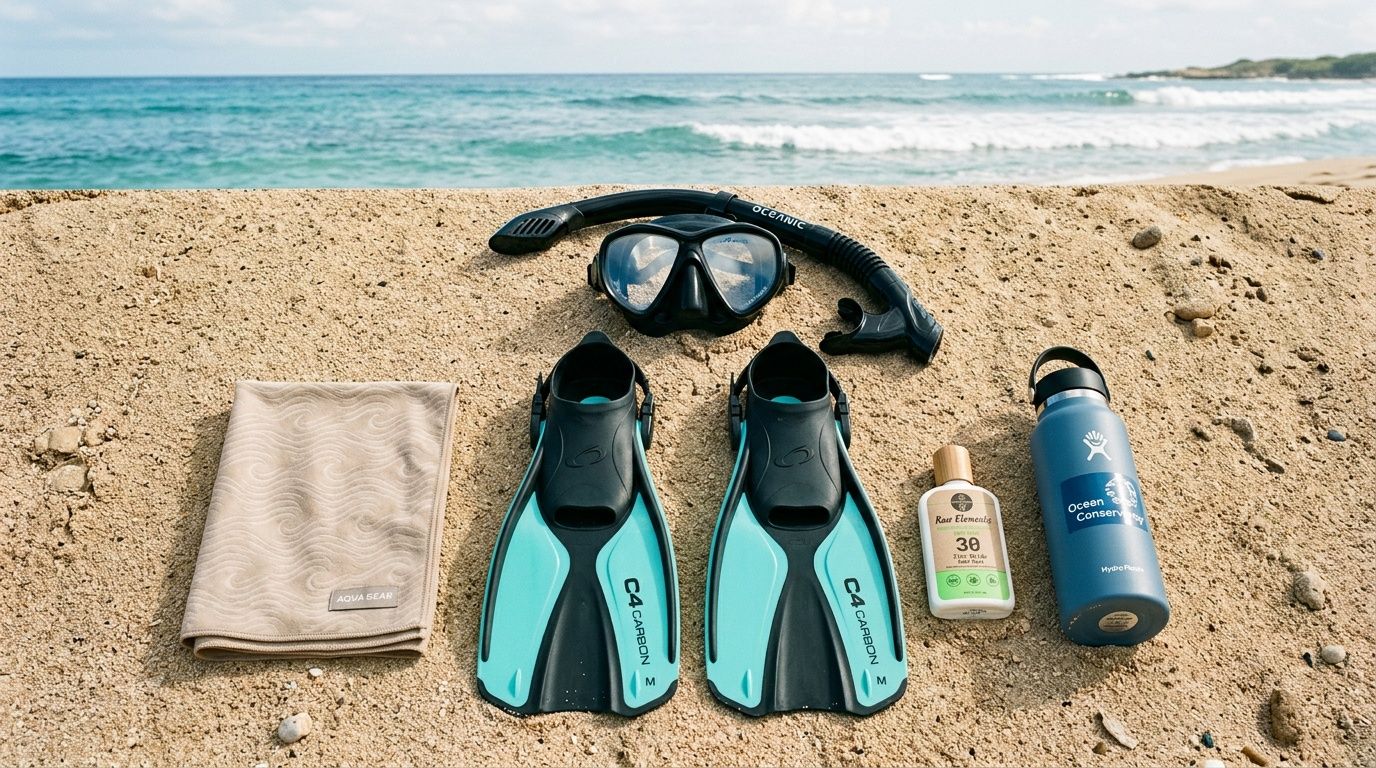
Use a simple packing list. That keeps the morning easy and cuts down on the classic harbor scramble.
- Swimsuit already on: Don’t waste boat time changing in a tiny space.
- Towel and dry shirt: The ride back feels better when you’re not sitting in a wet cover-up.
- Sun protection: Hat, sunglasses, and reef-safe sunscreen.
- Waterproof phone case or camera: Nice to have, provided you plan to use it.
- Water bottle: Helpful even if drinks are included.
Leave the bulky beach setup in the car. You don’t need a giant tote filled with “just in case” items.
Seasickness is easier to prevent than fix
Even people who are fine in cars can feel queasy on boats. Don’t wait to see how you feel once you’re already underway. Prevention works better.
If you want a practical read before your trip, Better Boat has a good guide with tips for seasickness relief while boating. For local trip planning, this guide on how to avoid sea sickness is also useful.
If you know you’re sensitive, bring one of these before boarding:
- Ship-EEZ Seasickness Patch: A patch option many travelers prefer because it’s low effort once applied.
- Dramamine pills: Common and easy to find.
- Bonine pills: Another popular over-the-counter option.
- Sea Band wristbands: A non-pill option people often try first.
- Ginger chews: Handy if you want something simple to keep in your bag.
A few boat-tested habits help too:
- Eat lightly: Don’t board on a completely empty stomach, but don’t do a heavy breakfast either.
- Face forward: Looking at the horizon helps many people settle faster.
- Tell the crew early: They’ve seen it all, and they can usually suggest the best spot to sit.
Safety for beginners and non-swimmers
This is one of the biggest concerns families have, and it’s a fair one. The good news is that many Captain Cook snorkeling cruises are built to support nervous first-timers. Crews commonly provide flotation gear and help people ease in at their own pace.
If someone in your group isn’t a strong swimmer, say so during the briefing. That’s not embarrassing. It’s smart. A good crew would much rather know upfront than guess later.
Reef etiquette that matters
Protected water stays beautiful when visitors act like guests, not consumers. The rules are simple:
- Don’t touch coral: It’s living structure, not rock.
- Give turtles and other marine life space: Watching respectfully is better than chasing.
- Watch your fins: A careless kick does more damage than people realize.
Respect in the water looks quiet. Slow movements, no grabbing, no standing, no pursuing animals.
Booking Your Tour Tips Costs and Finding the Best Value
You’re back in your hotel the night before, comparing two tours that look almost identical. One is cheaper by enough to catch your eye. The other costs more, but the photos show a calmer boarding setup, more deck space, and a crew that seems used to helping first-timers. That choice shapes your day more than the price line does.
A good booking decision starts with one question: what kind of day do you want on the water?
At Kealakekua Bay, value usually comes from matching the boat to your group, not from chasing the lowest advertised fare. A fast raft can feel fun and adventurous for confident adults. The same ride can feel bouncy, wet, and tiring for a grandparent or a child who needs a slower pace. A larger catamaran or powerboat often costs more because it gives you more room, easier entry, shade, and a steadier ride. That difference matters once you are forty minutes into the trip and everyone’s comfort starts to show.
What usually changes the price
A few practical factors explain most of the price spread:
- Boat type: Smaller rafts and RHIBs often trade space for speed and a closer-to-the-water feel. Larger boats usually focus more on comfort.
- Trip length: Some tours keep the plan simple. Others add extra coastline viewing, a second stop, or a more relaxed pace.
- Inclusions: Gear, snacks, lunch, drinks, and guide attention all affect the total.
- Group size: Fewer passengers can mean more personal help and less waiting around, especially with families and beginners.
- Departure timing: Morning trips often book first because they tend to offer calmer conditions.
If you want a quick side-by-side starting point, this roundup of Kealakekua Bay snorkeling tour options helps narrow the field.
How to tell if a tour is actually a good fit
Here’s the local rule I give friends: pay for the parts of the day you will feel, not the parts that only look good in a listing.
That means looking past the headline price and checking the details that shape the experience:
- Boarding and water entry: Families, older guests, and nervous snorkelers usually do better with easier ladders and more stable decks.
- Shade and seating: This sounds minor at booking time. It does not feel minor on a bright Kona morning.
- Crew style: Some crews run a brisk, efficient trip. Others spend more time helping with masks, flotation, and questions.
- Cancellation policy: Weather shifts. Flexible rebooking can save a vacation day.
- Realistic schedule: Book early in your trip if possible, so you have room to move the date if conditions change.
A common tourist mistake is paying for a small, fast boat without asking whether everyone in the group will enjoy that ride. It’s a bit like choosing a rental car for horsepower when what you really need is trunk space and easy doors for the family. The wrong boat can make a good bay feel like a long commute.
Smart booking tips from repeat riders
Book the tour that fits your least confident guest, not your most adventurous one. If one person is anxious about deep water, rough rides, climbing ladders, or being in the sun too long, plan around that reality first. The whole group usually has a better day.
Morning departures are often the safer bet for comfort and visibility. Read the inclusion list carefully. “Snorkel gear included” does not always tell you how much in-water help you’ll get, whether flotation is easy to access, or whether food is substantial enough to matter.
Reviews can still help, but read them like a local. Look for comments about crew patience, how rushed the snorkel stop felt, how easy boarding was, and whether families seemed comfortable. Those details tell you more than a generic five-star compliment.
If a booking page has widgets, review carousels, or availability buttons, those should live in the site layout, not in the article body. Focus here on choosing the right experience, then use the site’s booking tools where they belong.
Frequently Asked Questions about Captain Cook Snorkeling Cruises
Is a boat tour better than kayaking?
For most visitors, yes. Kayaking appeals to people who want an independent outing, but it also asks more of you physically and logistically. A boat tour is simpler. You show up, gear gets handled, and you arrive with energy left for snorkeling instead of spending it getting there.
Are Captain Cook snorkeling cruises good for beginners?
Yes, especially if you choose a tour known for patient crews and a manageable group size. Beginners do best when they use flotation, take their time with mask breathing, and tell the crew right away that they’re new.
What’s the best time of year to go?
This trip works year-round in a general sense, but day-to-day conditions matter more than the calendar for most snorkelers. If your schedule is flexible, book early in your stay so you’ve got room to shift dates if needed.
What if someone in my family doesn’t snorkel well?
That happens all the time. Plenty of guests spend part of the trip snorkeling and part of it relaxing on the boat. If someone is hesitant, pick a tour style with easy entry, good guide support, and no pressure to stay in the water the whole time.
What’s the biggest mistake first-time visitors make?
Rushing. They rush breakfast, rush boarding, rush mask fitting, and rush into the water. Slow down. The best Captain Cook snorkeling cruises reward people who settle in, listen carefully, and let the day unfold.
Should I book in advance?
If you’ve got specific dates, yes. Especially if you want a morning departure or a smaller-group boat. The outings people want most are usually the ones everyone else wants too.
If your Hawaii trip includes both snorkeling and scuba, Kona Honu Divers is worth a look for planning the rest of your water time. They offer dive and snorkel options on the Big Island, so it’s a practical place to line up a Captain Cook day along with other Kona ocean activities.