
You’re probably in one of two camps right now.
Either you’ve heard that Kealakekua Bay is the place to snorkel on the Big Island and you’re trying to figure out which trip is worth your time, or you’re traveling with a mixed group and wondering whether a captain cook snorkeling cruise will be amazing for everyone, or stressful for half the boat.
That’s a fair question. I’ve spent years around Kona’s waters, and this bay stands out for a reason. It’s beautiful, yes. But what really makes it memorable is how many different kinds of visitors it works for. First-time snorkelers, confident swimmers, history lovers, families with kids, and people who mostly just want a calm, scenic boat ride all tend to come back talking about the same thing. Kealakekua Bay feels special the minute you arrive.
Welcome to Kealakekua Bay An Underwater Paradise
A lot of first-time guests step onto the boat a little unsure. They’ve seen photos. They’ve heard friends rave about Captain Cook. But they don’t really know what the morning will feel like until the coast opens up, the water turns that bright Kona blue, and the bay comes into view.
Then the masks go on, faces hit the water, and the reaction is almost always the same. A surprised laugh. A thumbs up. That pause people do when they forget they’re supposed to keep swimming because they’re staring at the reef below them.
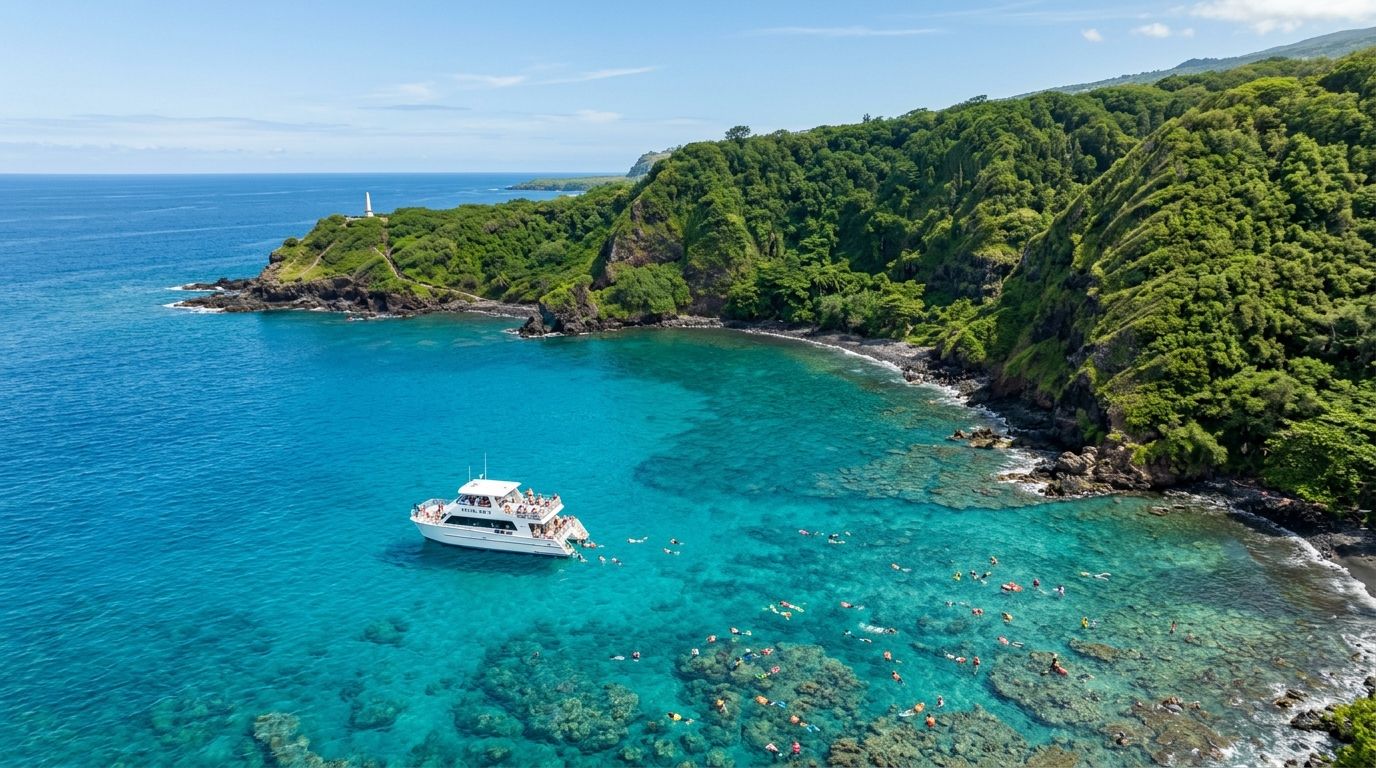
Kealakekua Bay isn’t just another pretty snorkel stop. It’s one of the Big Island’s defining ocean experiences. Captain Cook snorkeling cruises in Kealakekua Bay attract over 190,000 visitors annually, with visitor motivations split roughly 70% for the historical significance of the Captain Cook Monument and 30% for the snorkeling. The bay has also been a marine life conservation district since 1992, which helps protect the conditions people come to see and enjoy (Kealakekua Bay visitor and conservation overview). If you’re comparing tour styles, this Kealakekua Bay snorkeling trip overview gives a helpful look at how these excursions are structured.
Why people connect with this place
Some visitors come for the story. The monument marks the area associated with Captain James Cook’s 1779 arrival and death, and that historical layer changes how people see the bay. You’re not just floating over coral. You’re visiting a place that sits deep in Hawaii’s cultural and historical context.
Others come for the water itself.
The bay is sheltered, calm on many mornings, and packed with life. You might spot schools of tropical fish almost immediately. Some days bring spinner dolphins offshore. Other days it’s the reef that steals the show, with color and movement everywhere you look.
Practical rule: If you want one excursion that blends scenery, marine life, and a sense of place, captain cook snorkeling cruises are hard to beat.
What first-timers often get wrong
People sometimes assume this is only for strong swimmers or serious snorkelers. It isn’t. Many guests are beginners. The key is choosing the right boat, listening to the crew, and picking a trip pace that matches your comfort level.
That’s also why these tours are so popular with families and mixed groups. One person may care most about fish. Another may care more about the coastline and history. Kealakekua Bay gives both something real to hold onto.
What Makes Kealakekua Bay Snorkeling So Special
You slide off the boat, put your face in the water, and suddenly the whole bay opens up under you. The reef is easy to read. Fish are not just flickers at the edge of your mask. You can follow the slope of the bottom, spot bright schools weaving through coral heads, and settle down before your brain has time to say, "Am I doing this right?"
That first moment is a big reason people remember Kealakekua Bay so clearly. The bay brings together several things that do not always show up in one place at the same time: clear water, a protected reef, dramatic coastline, and a setting that works for both confident snorkelers and people who are still getting comfortable breathing through a snorkel. If you want a side-by-side look at local options, this guide to the top Kealakekua Bay snorkeling tours is a helpful place to start.
Clear water changes the whole experience
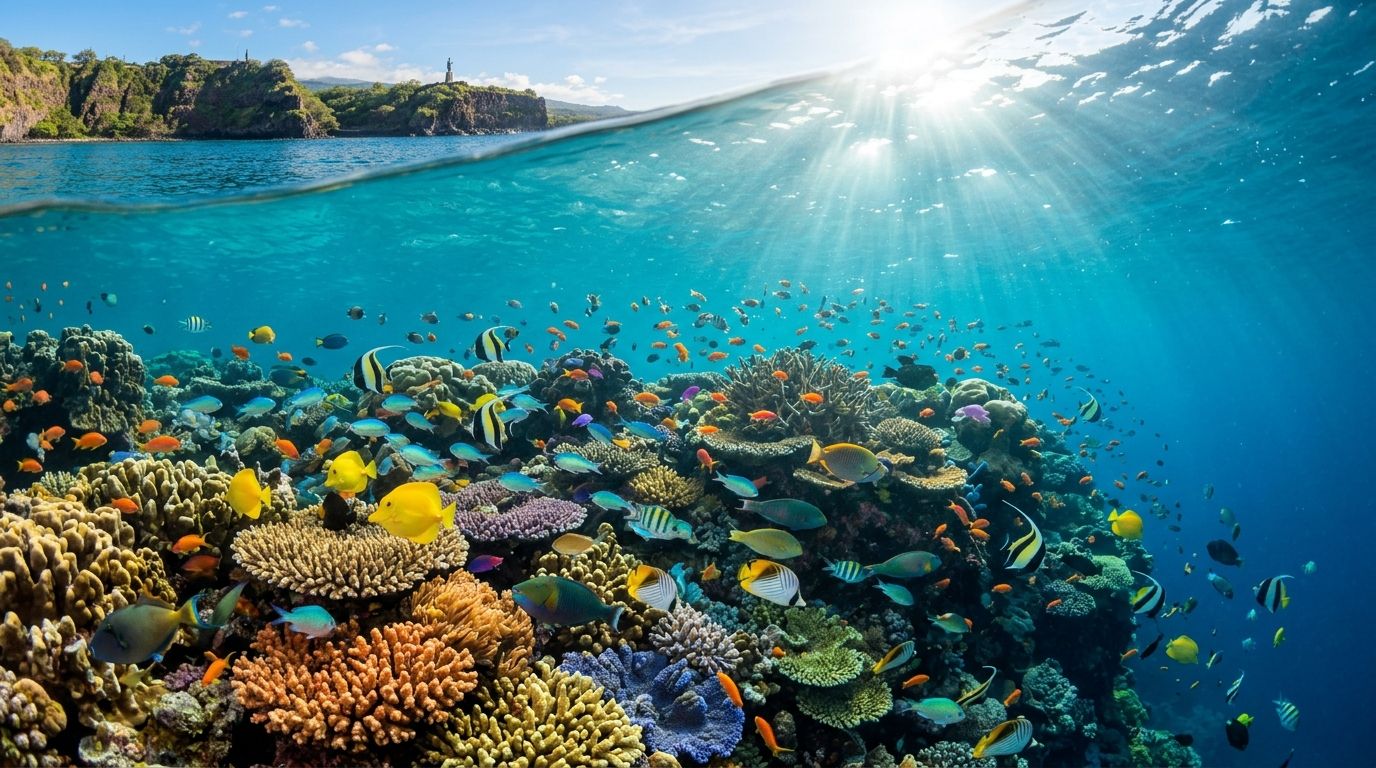
In Kealakekua Bay, visibility is often excellent, especially on calmer mornings. That matters more than first-timers expect. Clear water works like clean glass in a picture frame. You are not squinting and guessing. You are seeing the reef layout, the spaces between coral heads, and the fish moving in groups instead of as quick flashes.
For families, that usually means less frustration. Kids stay engaged because there is something to notice right away. Adults who feel nervous often relax faster because they can tell where they are in the water column and what is below them. Non-swimmers tend to do better in places where the underwater scene feels readable instead of murky and uncertain.
Protected water supports richer reef life
The bay’s protected status helps preserve what people come to see. Less disturbance usually means healthier coral structure, better fish habitat, and a more natural feel once you are in the water.
You can sense that even without knowing the science terms. The reef feels layered. One coral head shelters yellow tangs, another has butterflyfish picking through it, and a crevice nearby might hold a moray eel if you pause long enough to look carefully. It feels less like staring at a flat bottom and more like floating over a small underwater neighborhood.
That is also why good crews spend time teaching reef etiquette. Staying horizontal, kicking gently, and keeping a little space between your fins and the coral protects the reef and usually improves your snorkeling too. Slow snorkelers often see more.
The bay is friendly to beginners, but timing matters
Kealakekua Bay has a sheltered shape that helps soften wind and surface chop, especially earlier in the day. Morning trips are often the better match for first-timers, families with younger kids, and non-swimmers using floatation. The water usually feels calmer, the light is cleaner, and people burn less energy fighting the surface.
Afternoon trips can still be enjoyable, but they often ask a little more of you. Wind can build. Surface texture can increase. If you already snorkel comfortably, that may not bother you much. If you tense up easily in open water, the difference can feel bigger than it looks from the boat.
That is one point many articles skip over. The bay itself is special, but the time of day changes how easy it feels.
Marine life is constant enough to keep everyone interested
No guide can promise a specific animal on a specific trip. Ocean days do not work that way. Still, Kealakekua Bay has a reliable kind of variety that makes it rewarding for mixed groups.
Bright reef fish are the steady stars. Turtles are always a possibility. Spinner dolphins are more often part of the boat ride to and from the bay than the snorkel itself. Adults tend to appreciate the patterns after a few minutes, how one species hovers over coral while another darts through the open water. Kids usually start with one reaction. "There are fish everywhere."
That mix is part of the magic.
It rewards both cautious and experienced snorkelers
Some snorkel spots are great for strong swimmers but intimidating for beginners. Others are easy enough for beginners but feel limited after ten minutes. Kealakekua Bay usually lands in the sweet spot between those two.
If you are new, the bay gives you visual feedback fast. You put your face in the water and immediately have something worth looking at, which helps settle nerves. If you have more experience, the same reef rewards patience, buoyancy control, and careful observation.
If you are still deciding what kind of boat day fits your comfort level, pace, and group dynamic, this intro to cruising guide offers a useful framework.
One local tip after years of watching guests here. The people who enjoy this bay most are not always the strongest swimmers. They are usually the ones who slow down, float first, and let the reef reveal itself piece by piece.
Choosing Your Ideal Captain Cook Snorkel Cruise
Not all captain cook snorkeling cruises feel the same. The bay is the destination, but the boat, group size, and departure time shape the day in a big way.
The easiest comparison is this. A small-group cruise feels more like going out with a guide who can pay attention to you. A larger vessel feels more like joining a busy social outing where convenience and capacity come first. Neither format is wrong. It depends on what kind of day you want.
If you’re still deciding what kind of ocean trip suits your style in general, this intro to cruising guide offers a useful way to think about comfort, pace, and group experience. For a wider look at local options beyond this bay, this roundup of the best snorkeling tours on the Big Island can help.
Small-group boats versus larger vessels
Small-group cruises on 20 to 25 foot RHIBs can dodge wind-driven swells and reach hidden coves, which is one reason they can boost green sea turtle encounters by 35% compared with larger boats that stay in more central zones with more bather density (small-group RHIB comparison and turtle encounter data).
That doesn’t mean a larger boat can’t be enjoyable. It can. But the tradeoff is usually flexibility.
Small-group trips often suit people who want
- More crew attention: Beginners usually benefit from a guide who notices if their mask fit is off or they need reassurance.
- Quieter water access: Smaller boats can shift position more easily when conditions change.
- A less crowded snorkel: Fewer people entering the water at once makes the experience feel calmer.
Larger boats may appeal if you care most about
- More deck space: Some travelers like room to spread out.
- A steadier social atmosphere: Big family groups sometimes prefer a larger shared platform.
- A gentler pace onboard: Some guests feel more at ease with wider decks and more seating.
Morning or afternoon
This is one of the biggest questions visitors ask, and it’s one many articles skip over too quickly.
Morning tours are usually the safer choice if your priority is clean visibility, calmer water, and a more relaxed first snorkel of the day. Afternoon trips can still be lovely, but they’re often more dependent on the day’s wind and surface conditions.
| Factor | Morning Tour (e.g., 8 AM – 12 PM) | Afternoon Tour (e.g., 1 PM – 5 PM) |
|---|---|---|
| Water feel | Often calmer and easier for beginners | Can feel more wind-affected |
| Visibility | Often at its cleanest, especially early | May be reduced if wind builds |
| Snorkeling confidence | Usually better for first-timers | Better for guests already comfortable in the water |
| Crowd feel | Popular, but many operators run efficiently early | Can feel quieter on some days |
| Wildlife experience | Often strong for reef viewing and active morning conditions | Still enjoyable, but more condition-dependent |
| Family comfort | Often easier for kids and cautious adults | Better if your group prefers a later start |
If this is your first time snorkeling in Hawaii, book a morning trip unless your schedule makes that impossible.
Two tour links worth comparing
If you want to book directly with operators focused on this area, two pages worth reviewing are Kona Snorkel Trips Kealakekua Bay Captain Cook Monument tours and Captain Cook Snorkeling Tours. Compare group size, boat style, departure logistics, and how much support they offer non-swimmers.
What to Expect on Your Snorkeling Adventure
A lot of nervousness disappears once people know how the day unfolds.
Most captain cook snorkeling cruises follow a simple rhythm. You check in, get settled on the boat, cruise down the Kona coast, listen to a safety briefing, gear up, snorkel, then head back with snacks, stories, and usually a few people already looking through their photos.
The overall experience has earned strong guest feedback. Captain Cook snorkeling cruises hold a 4.7 out of 5-star average rating, and 85% of guests left a perfect 5-star review. A typical itinerary lasts 4 hours and can include up to 2.5 hours in the water, plus historical narration and frequent dolphin encounters during the coastal cruise (guest ratings and itinerary details).
Before you get in the water
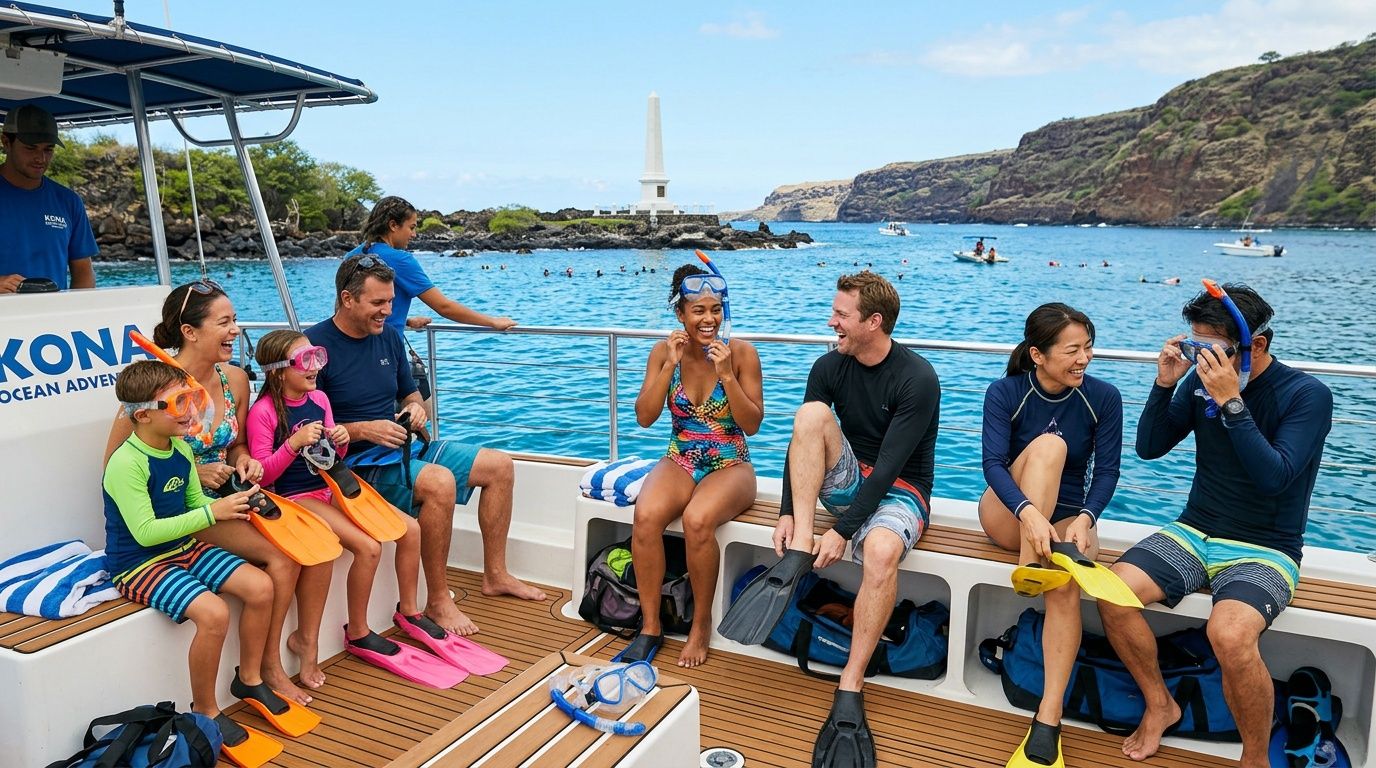
The boat ride is part of the experience, not just transportation. Kona’s coastline has lava cliffs, coves, sea caves, and dramatic rock features that look completely different from the water than they do from shore.
Crew members usually use this time well. They’ll explain where you’re going, how to use the gear, and what to do if you’re nervous. Good crews also watch people unobtrusively. If someone looks uneasy, they often step in before that person even asks for help.
Gear fitting matters more than people think
A comfortable mask can make or break the day. So can a snorkel that feels easy to breathe through and fins that fit without pinching. Don’t rush this part.
If you’ve never snorkeled before, tell the crew. That one sentence helps them adjust their approach. They may suggest extra flotation, a slower water entry, or a brief practice float near the boat before you swim farther out.
The first few minutes in the bay
Here, people tend to overwork.
They kick too hard, breathe too fast, and lift their head every few seconds. Then they settle down. Once your face stays in the water and your breathing evens out, the whole reef opens up.
You’ll usually hear some version of these reminders:
- Breathe slowly: Fast breathing makes beginners feel more anxious.
- Keep your body long: Floating flat helps you move with less effort.
- Look down, not forward: The reef is the show.
The people who enjoy snorkeling most aren’t always the strongest swimmers. They’re usually the ones who relax first.
What the return ride feels like
The ride back is one of my favorite parts of the day. People are warm, tired in a good way, and a lot chattier than they were at check-in.
That’s when you hear the best comments. Someone saw their first turtle. A kid got comfortable with a mask for the first time. A grandparent who was hesitant ended up staying in the water longer than expected.
Those moments are why these trips keep such a loyal following.
Staying Safe and Snorkeling Responsibly
A good captain cook snorkeling cruise should feel fun, not chaotic. Safety starts long before you slide into the water. It starts with hydration, honest communication, and knowing that there’s no prize for pretending you’re more comfortable than you are.
If you want a solid primer on ocean manners and low-impact behavior in the water, this guide to responsible and considerate diver etiquette lines up closely with the same habits snorkelers should follow.
Your basic safety checklist
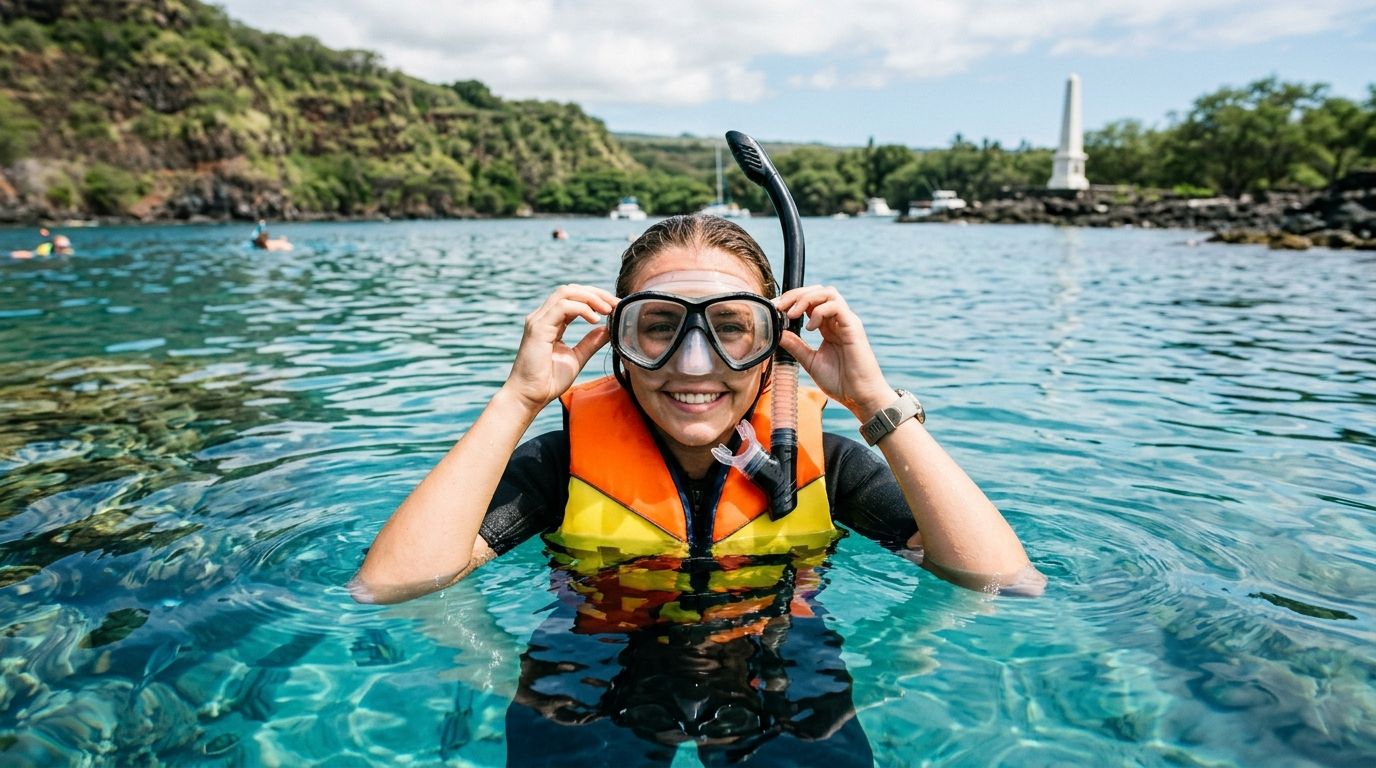
Start with the simple things. They matter more than fancy gear.
- Eat lightly and hydrate: A small meal and water before departure usually feel better than boarding on an empty stomach.
- Tell the crew your experience level: If you’re nervous, out of practice, or not a strong swimmer, say so early.
- Use flotation if offered: There’s no downside to making the water feel easier.
- Stay aware of the boat: Keep track of where you entered and where your group is.
- Respect your limits: If you’re tired, cold, or uneasy, get back on board and reset.
If you’re worried about seasickness
Some guests handle the snorkeling fine and only struggle during the boat ride. Morning departures can help because water is often calmer earlier, but if you’re prone to motion sickness, it’s smart to prepare.
Options people commonly use include Ship-EEZ Seasickness Patch, Dramamine pills, Bonine pills, Sea Band wristbands, and Ginger chews.
A few practical habits help too:
- Look at the horizon: It often settles the stomach better than staring down.
- Stay in fresh air: Don’t hunch inside if you’re starting to feel off.
- Mention it early: Crew can often suggest the best place to sit.
Don’t wait until you’re miserable to say you feel seasick. Early action works better.
Protecting the reef and wildlife
The bay stays beautiful because people don’t treat it like a theme park. Coral is alive. Turtles need space. Fish behave differently when crowds chase them.
Use reef-safe sun protection if you’re applying sunscreen, and keep a strict no-touch mindset in the water. No standing on coral. No grabbing rocks unless the crew tells you it’s necessary for safety. No swimming after marine animals for a photo.
What to pack without overpacking
You don’t need much, but the right few items make the day smoother.
- Towel and dry clothes: You’ll appreciate them on the ride back.
- Sun protection: Hat, sunglasses, and protective clothing help before and after snorkeling.
- Waterproof phone case or camera: Nice to have if you already own one.
- Any personal medication: Keep it easy to access.
- A calm attitude: That sounds soft, but it’s real. Relaxed guests learn faster and enjoy more.
Why We Recommend Kona Honu Divers Affiliates
You board in the morning with one strong swimmer, one nervous first-timer, and a child who is excited until the mask goes on. On the right boat, that mix is manageable. The crew explains things in plain language, helps each person at their own pace, and keeps the day from feeling rushed or stressful.
That is why we tend to recommend Kona Honu Divers affiliates. The difference usually comes down to operating style. Boats in this category often keep the process organized, give clear in-water guidance, and treat beginner support as part of the trip, not as an extra favor.
Why that affiliate model matters
A Captain Cook snorkel cruise works a lot like a good school field trip. The destination is excellent, but the experience depends on how well the adults guide the group once everyone arrives.
The stronger operators usually do a few things well every time. They explain what guests will see before anyone hits the water. They fit masks and flotation with care. They keep an eye on the hesitant guest without making that person feel singled out. For a closer look at the trip format and logistics, the Captain Cook snorkeling tour details show the kind of practical information worth comparing.
Why families and non-swimmers often do better here
This is the part many visitors worry about, especially if someone in the group is not comfortable in open water.
Good affiliate operators are often a better fit for mixed groups because they plan for different confidence levels from the start. That can mean child-sized life jackets, flotation options that let non-swimmers stay involved, and crew members who know how to coach someone through those first uneasy minutes. For families, that support changes the tone of the day. Instead of one confident snorkeler setting the pace for everyone, each person gets room to settle in.
Morning trips often pair especially well with this style. Water conditions are usually calmer earlier in the day, which helps kids, cautious adults, and anyone who needs a little time to get comfortable. Afternoon outings can still be enjoyable, but they tend to suit guests who are already relaxed in the ocean and do not need as much hands-on help.
A factual note on Kona Honu Divers
Kona Honu Divers is one operator associated with this approach. The company runs Big Island ocean tours and is known for focusing on maintained gear, safety procedures, and crews who are used to working with a wide range of guests, from confident snorkelers to complete beginners.
That broad experience matters more than polished sales copy.
What to check before choosing any operator
Ask a few practical questions and listen for specific answers.
- How do you help first-time snorkelers once they are in the water?
- What flotation options do you carry for adults and kids?
- How easy is the boat entry and reboarding process?
- Do you recommend morning or afternoon for our group, and why?
- How large is the group on a typical trip?
Those answers tell you how the day will feel. For families, non-swimmers, and anyone with a little ocean anxiety, that is far more useful than big promises.
Booking Your Captain Cook Snorkeling Tour
Once you know what kind of trip fits your group, booking gets simpler.
If you’re traveling with first-timers, kids, older relatives, or anyone who gets anxious in open water, choose a morning departure and prioritize support over boat size. If your group is comfortable, flexible, and mainly wants a scenic afternoon on the water, you may have more room to choose based on schedule.
A few booking habits help:
- Reserve early: Popular travel dates fill first, especially for smaller group tours.
- Read the inclusions carefully: Check gear, snacks, flotation, and age guidance.
- Confirm the departure location: Don’t assume every Captain Cook trip leaves from the same harbor.
- Be honest about your group: Operators can guide you better if they know you have kids, non-swimmers, or cautious adults.
If you want a direct booking path for this specific experience, review the Captain Cook snorkeling tour page along with the two operator pages shared earlier, then compare the details that matter most to your group.
You don’t need to overcomplicate this. Pick the morning if you can. Choose a crew that supports beginners well. Bring sun protection, listen to the briefing, and let the bay do what it does.
That’s usually enough for a day people remember for a very long time.
If you’re ready to turn the planning phase into an actual day on the water, take a look at Kona Honu Divers. They offer Big Island ocean experiences that can help you build a Captain Cook snorkeling day around the needs of your group, whether you’re traveling with confident snorkelers, complete beginners, or a little of both.