
You're probably looking at photos of Kealakekua Bay right now and wondering whether captain cook snorkeling is as good as it looks, or whether it's one more Hawaii excursion that sounds better on a booking page than it feels in real life.
It's that good, but only if you do it the right way.
This is the spot people picture when they think of Kona snorkeling: clear blue water, lava coastline, coral structure below you, tropical fish in every direction, and the white monument on shore making the whole place feel different from a standard reef stop. Kealakekua Bay also carries weight beyond the snorkeling. It's scenic, but it's also historic, protected, and worth approaching with more awareness than most visitors bring on day one.
A lot of articles stop at “book a tour and bring sunscreen.” That's not enough for this bay. The rules matter here for reasons that become obvious once you understand the shoreline, the underwater drop-offs, and the cultural importance of the place. If you want a broader look at planning a day on the water, this guide to snorkeling in Kona, Hawaii is also useful background before you dial in the details for Kealakekua Bay.
Your Ultimate Captain Cook Snorkeling Adventure Starts Here
Some visitors show up expecting a quick swim stop. What they get is a bay that feels layered. From the boat, the water can look almost unreal. Once you're in, the visibility and reef structure make the place feel open and alive in a way that pool snorkeling or beach-entry spots don't.
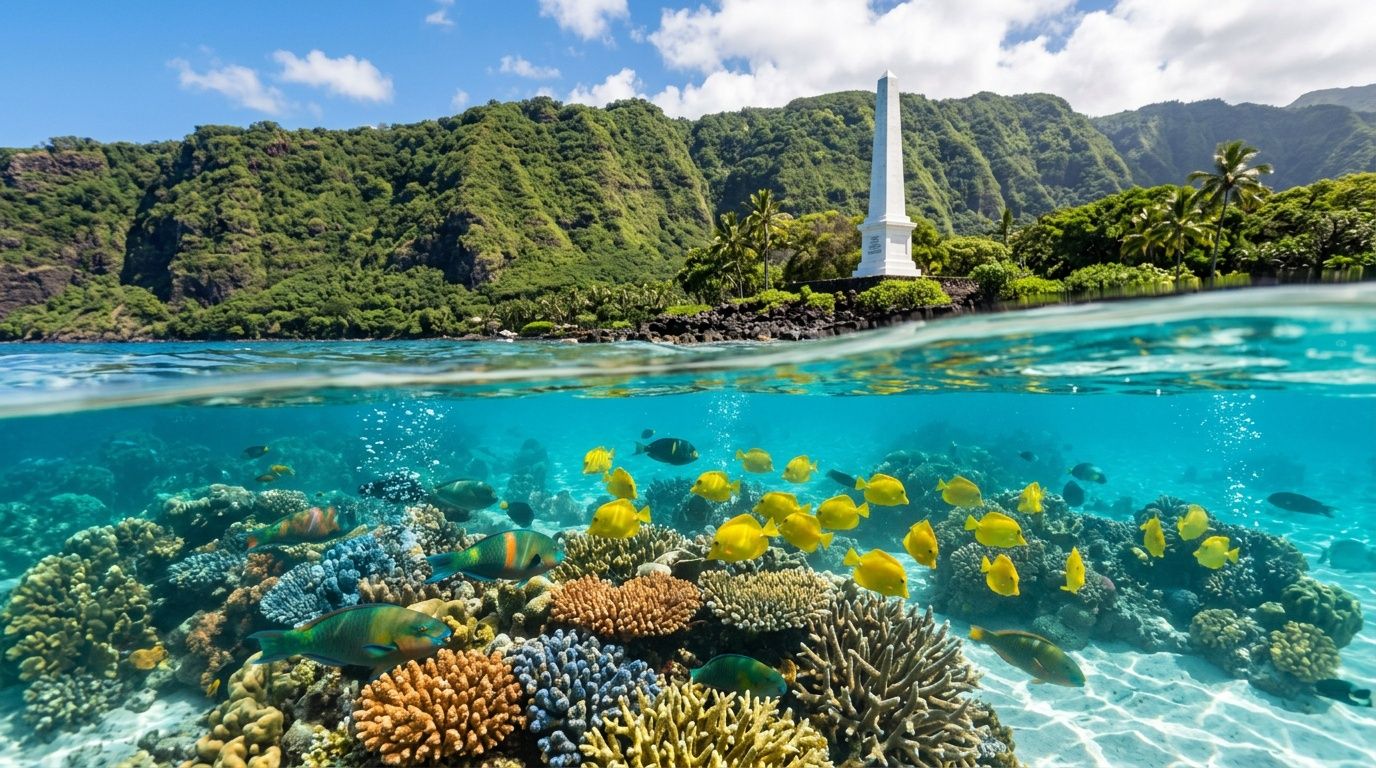
That first impression can fool people. Calm-looking water doesn't mean effortless snorkeling. A famous site doesn't mean every access method is smart for every group. And a historic monument doesn't mean you're visiting a casual shoreline attraction.
Practical rule: Treat captain cook snorkeling like a real ocean activity, not a beach day with masks.
The payoff is huge when you plan for the actual conditions. Families can have a smooth day here. Strong swimmers can spend long stretches exploring reef edges. First-timers can do well too, especially with flotation and a guide who keeps them positioned where they belong. The difference usually comes down to preparation, not bravery.
What works is simple. Go with a realistic plan for your fitness, choose access that matches your group, listen during the safety briefing, and remember you're entering a protected bay with deep historical meaning. That approach turns a pretty excursion into one of the most memorable water days on the Big Island.
The Enduring Allure of Kealakekua Bay
Kealakekua Bay holds people's attention for two separate reasons. One is obvious the moment you see the water. The other is the history attached to the shoreline and the monument itself.
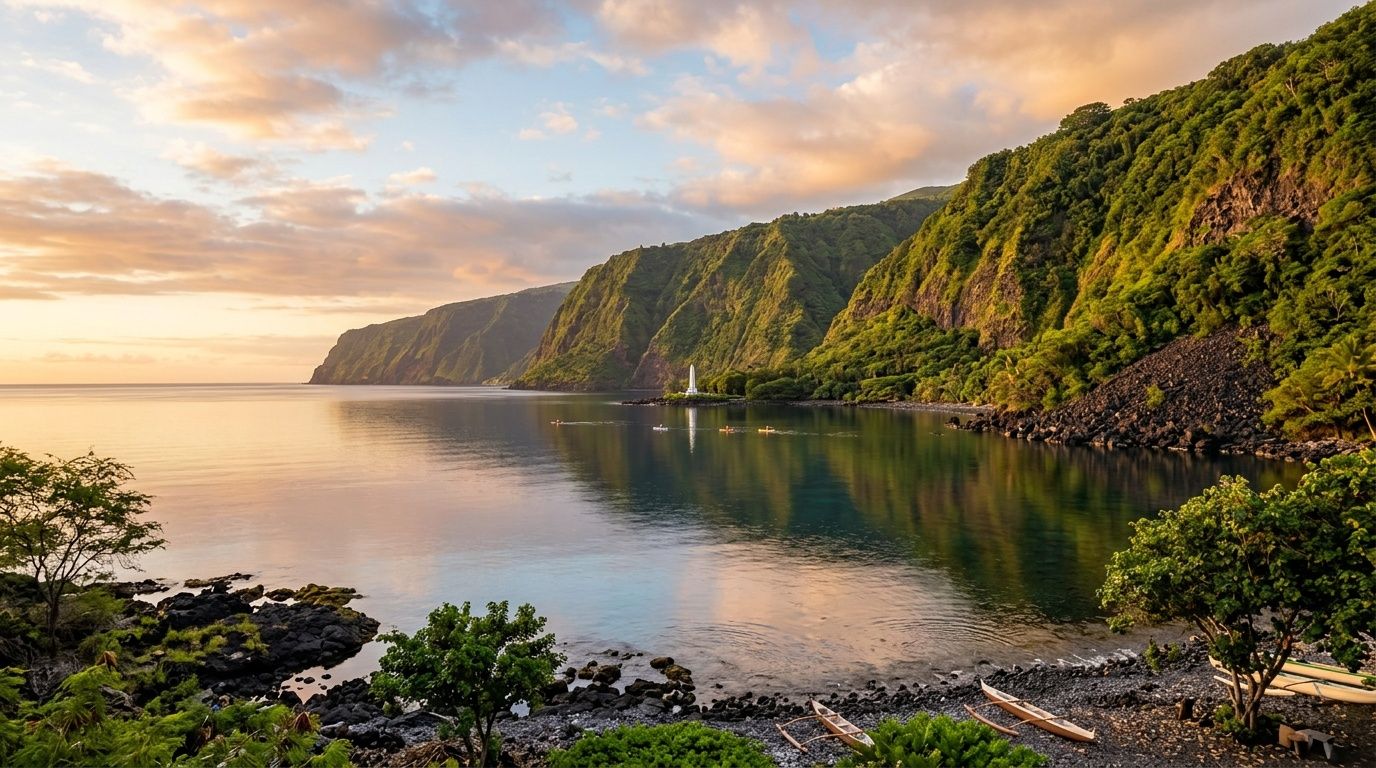
Why the monument matters
Captain Cook Monument snorkeling is tied to a place that draws over 100,000 visitors annually to Kealakekua Bay, making it one of Hawaii's most visited historical dive sites, according to this overview of Captain Cook Monument snorkeling at Kealakekua Bay. The monument was erected in 1874 and commemorates the death of Captain James Cook on February 14, 1779, after tensions escalated following his return to the bay.
That history starts earlier. Cook first made contact with the Hawaiian Islands on January 18, 1778, when he sighted Oʻahu, and landed on Kauaʻi two days later. His arrival during the Makahiki season led to him being associated with Lono in some accounts, which adds cultural context many visitors never hear before they jump in the water.
This is why the bay feels different from a standard reef stop. You're not floating beside a random shoreline marker. You're visiting a place connected to a significant and contested moment in Hawaiian history.
Why the reef is still so healthy
The second reason the bay stands out is protection. Kealakekua Bay is a Marine Life Conservation District, which is a big reason the marine life is so strong and the snorkeling remains so compelling. Protected places usually reward respectful visitors. You see more, and you understand faster why touching, chasing, or cutting corners causes damage.
If you want a tour built around this setting, Kealakekua Bay snorkeling tours give you a practical way to access the area while keeping the day organized.
The real appeal
People often describe the bay as beautiful first. Locals and guides tend to describe it as beautiful and significant. That second part matters.
Kealakekua Bay works best when visitors act like guests in a living museum, not customers at a water park.
That mindset changes everything. You notice more. You move more carefully. You get a better trip, and the bay keeps more of what makes it special.
How to Reach the Captain Cook Monument
The monument isn't a pull-up, park, and stroll kind of destination. That's the first thing to understand. Most visitors choose between three access methods: boat tour, kayak, or the hike down to Kaʻawaloa.
Each option can work. They're not equal.
The quick comparison
| Method | Difficulty | Approx. Cost (per person) | Time Commitment | Key Benefit |
|---|---|---|---|---|
| Boat tour | Low to moderate | Varies by operator | Half day | Easiest access and guided support |
| Kayaking | Moderate to high | Varies, plus planning | Several hours | Independent approach on the water |
| Hiking | High | Minimal direct cost | Several hours | Lowest-cost self-powered access |
Boat tour
For many travelers, this is the smart choice. You board, ride to the bay, gear up, get a briefing, and enter the water where snorkeling is worth your energy. That matters because the bay looks simple from photos, but logistics can wear people out before they ever put a mask on.
Boat access works especially well for mixed groups. If one person is a strong swimmer and another is nervous in open water, a good crew can set both people up for a better day. You also avoid turning the outing into a heat-management problem before the snorkeling even starts.
A bonus is that you can check broader trip timing with resources on how to check ocean conditions for the Big Island, Hawaii, which helps when deciding whether your day should be simple and guided or more self-managed.
Kayaking
Kayaking appeals to independent travelers, and on paper it sounds excellent. Paddle over, snorkel, paddle back. In practice, it demands more than people expect.
You need to manage your own effort, your own timing, your own exposure to sun, and your own gear organization. If the group includes beginners, kids, or anyone who's already uneasy in open water, kayaking can front-load fatigue into the day. By the time you arrive, the best part of your energy may already be gone.
What works with kayaking is honesty. If your group already paddles, already handles ocean conditions well, and wants an active outing, it can be rewarding. What doesn't work is choosing it because it sounds cheaper or more adventurous without thinking through the return trip.
Hiking the Kaʻawaloa route
The hike attracts people who want to avoid a boat or who like doing things under their own power. That's understandable. It's also the option most likely to expose weak planning.
The trail is demanding, and the return climb comes after you've already spent energy in the sun and water. There aren't the comforts or support systems that visitors often assume will be available. That means your packing, hydration, timing, and pacing all matter much more than they do on a guided boat trip.
If your goal is great snorkeling, don't choose the hardest access method unless you also want the hardship.
Which choice fits which traveler
Here's the practical breakdown:
- For families and first-timers: A boat tour is usually the strongest fit because it removes the most friction.
- For active, confident paddlers: Kayaking can make sense if the group wants the journey as much as the snorkel.
- For strong hikers who know what they're signing up for: The trail is an option, but it's not the easiest path to a relaxed reef day.
A lot of disappointment at Captain Cook starts before anyone reaches the water. People pick access based on idea, not reality. Pick based on your group's weakest link, not its strongest person, and you'll usually make the better call.
Choosing Your Ideal Captain Cook Snorkeling Tour
If you want the shortest path to a good day in Kealakekua Bay, choose a permitted boat tour. That's not hype. It's just the access method with the fewest avoidable problems.
You conserve energy for the water instead of spending it on a trail or paddle. You get gear, a briefing, in-water oversight, and a captain who already knows how the bay behaves. For captain cook snorkeling, that setup solves a lot before anything can go wrong.
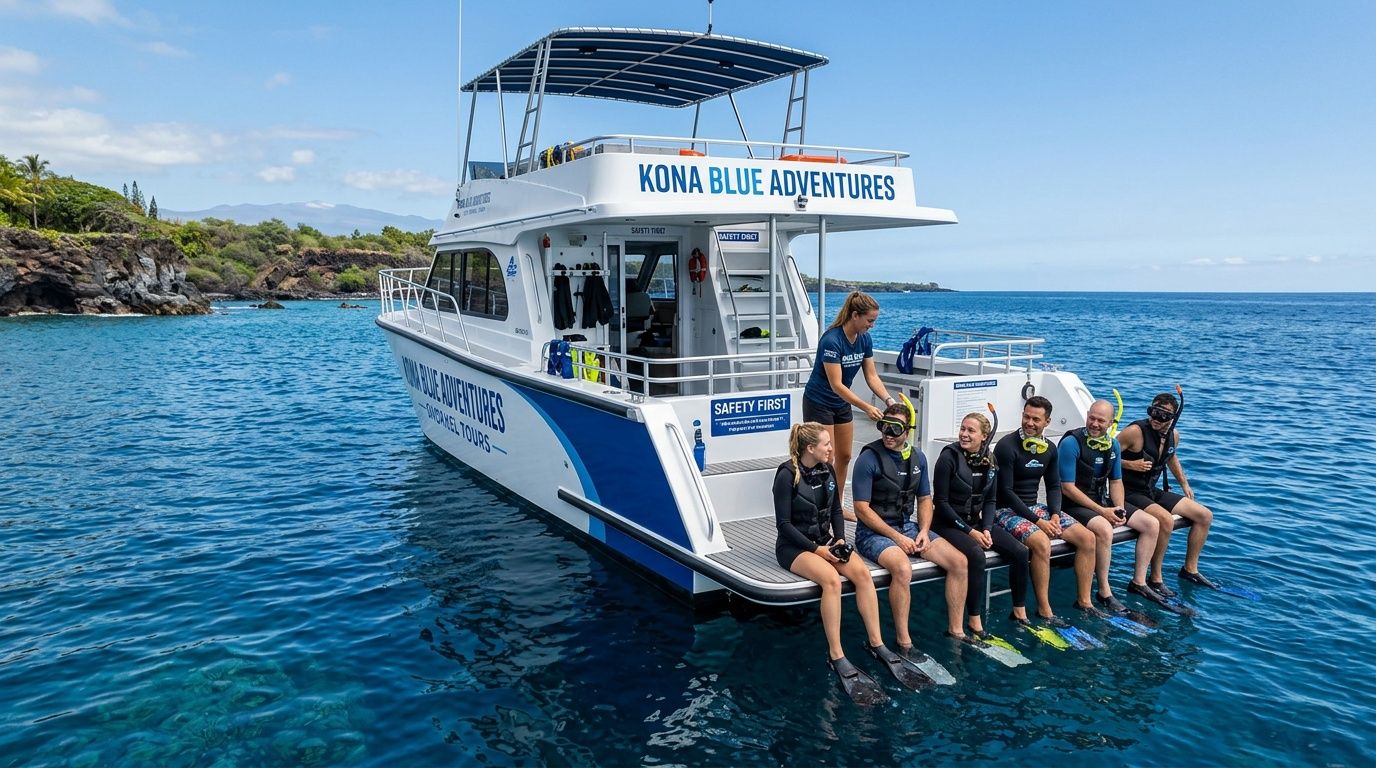
What a good boat tour changes
A strong operator does more than provide transportation. They control the pace of the day.
That matters because different guests need different things. One person needs help adjusting a mask. Another needs reassurance at the ladder before getting in. Another is a strong swimmer who's ready to cover more water. Good crews manage all three without making the trip feel chaotic.
A boat tour also keeps the shoreline experience respectful. You're there to snorkel and observe, not to treat the monument area like a beach hangout.
Two local tour options worth looking at
If you're narrowing choices, two straightforward places to start are Kona Snorkel Trips for Kealakekua Bay and Captain Cook Monument and Captain Cook Snorkeling Tours. Both are relevant to visitors specifically searching for captain cook snorkeling access by boat.
A third factual option, if you're comparing operators broadly, is Kona Honu Divers' Captain Cook snorkeling tour, which is another route visitors use to reach Kealakekua Bay by boat.
What to look for before you book
Don't overcomplicate this. Focus on the details that affect the actual in-water experience.
- Crew involvement: You want a tour where staff actively brief, watch, and help guests, not one where people get dropped in and left to sort it out.
- Gear quality: A bad mask can ruin a good reef. Ask whether quality snorkel gear and flotation are included.
- Group fit: Some boats suit adventurous couples. Others fit families better. Choose the day that matches your group's pace.
- Comfort on the ride: Shade, easy water entry, and a manageable ladder matter more than flashy marketing photos.
A cheap tour that leaves you tired, rushed, or unsupported isn't a deal. It's a compromised snorkel day.
Navigating the Waters Like a Pro
Most guests notice the clarity first. Guides notice the bottom contour. That's because the shape of the seafloor affects almost every safety decision in this part of the bay.
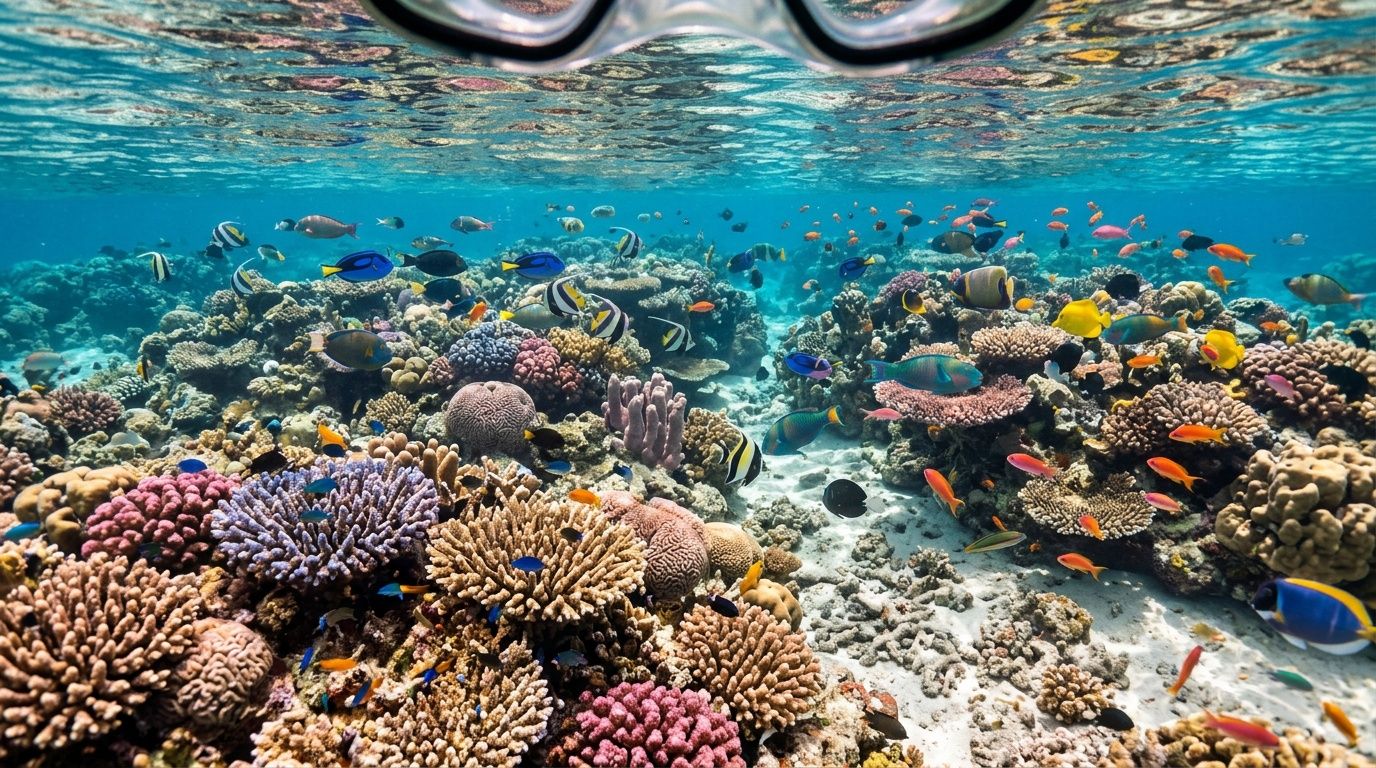
What the depth is telling you
Near the monument, the water sits around 12 to 20 feet deep, which is part of what makes that zone comfortable for snorkeling. Move away from that area and the bottom slopes fast, with sections dropping to 60+ feet, as described in this breakdown of Captain Cook Monument water depth and safety zones.
That's why guides care so much about positioning. The water can be so clear that people underestimate how deep they've drifted over. Confident swimmers usually enjoy that blue-water feeling. New snorkelers sometimes look down, realize the bottom is much farther away than expected, and tense up immediately.
How to move smarter in the bay
The best approach is simple:
- Stay oriented to the boat or guide: Don't snorkel on autopilot.
- Use the shallower zone first: Get comfortable before drifting over steeper terrain.
- Float before you kick hard: Panic usually starts with rushed breathing and unnecessary effort.
- Keep your head up occasionally: Good snorkelers don't just look down. They check position.
Best timing without fake certainty
Morning usually gives snorkelers the best window. That's the common local pattern, and it's one reason early tours are popular. What you won't get from most articles is a precise seasonal breakdown of visibility and cancellation patterns, because that quantified data isn't commonly provided in the available public material.
So the practical answer is this: book with a little flexibility, favor mornings, and listen to the operator's read on conditions that day. A calm bay and a clean entry matter more than trying to game the calendar with made-up “best month” claims.
What you're likely to notice underwater
Marine life changes from day to day, but Kealakekua Bay regularly delivers the kind of reef viewing people came for. Expect colorful tropical fish over coral and lava structure. You may also spot Hawaiian spinner dolphins from the boat or in the bay area, and some days reward patient snorkelers with turtle sightings.
The bay rewards relaxed people more than rushed people. Slow down, breathe steadily, and let the reef come to you.
Essential Safety and Conservation Rules
The best captain cook snorkeling trips look easy from the outside because somebody already thought through the risk. The ocean still asks something from you, though, especially on a longer snorkel.
A typical tour includes 1.5 to 2 hours of water time, and breathing through a snorkel increases breathing resistance by 40 to 60 percent compared with normal breathing, according to this summary of Captain Cook snorkel tour water time and physical demand. That's a real workload. People feel it most when they kick too hard, get anxious, or ignore early fatigue.
The safety rules that actually matter
These are the rules that change outcomes, not just the ones printed on waiver forms.
- Use flotation if you're unsure: Plenty of visitors skip flotation because they don't want to look inexperienced. That's backward. Good snorkelers use the tool that lets them breathe calmly and stay relaxed.
- Respect fatigue early: If your breathing gets quick or you start working too hard to keep your face in the water, stop exploring and recover.
- Stay with your buddy: Separation creates small problems that turn into real ones.
- Listen to guide boundaries: Those boundaries usually reflect current, depth, or boat traffic considerations you may not notice from the surface.
The safest snorkelers aren't always the strongest swimmers. They're the people who notice strain early and adjust fast.
For more broad water etiquette, this guide to responsible and considerate diver etiquette overlaps well with how respectful snorkelers should behave around wildlife and other guests.
Conservation rules with real reasons behind them
Kealakekua Bay stays special because it's protected. Visitors help keep it that way, or they chip away at it.
Here's what works:
- Choose reef-safe sun protection: You're entering a sensitive marine environment.
- Don't touch coral: Coral isn't rock. It's living structure.
- Give wildlife room: Turtles and dolphins don't need encouragement, pursuit, or closer selfies.
- Control your fins: A lot of reef damage happens from careless kicking, not deliberate contact.
Seasickness prep that saves the day
If you know you get motion sickness, handle it before boarding. Waiting until the boat is moving is the classic mistake.
Useful options include Ship-EEZ Seasickness Patch, Dramamine pills, Bonine pills, Sea Band wristbands, and Ginger chews.
Different people respond to different methods. Some prefer medication. Others do better with wristbands and ginger if they want a lighter approach. What doesn't work is pretending you'll “tough it out” if you already know boats are a problem for you.
What to Bring for a Perfect Snorkel Day
Packing for captain cook snorkeling is easy if you separate what the tour usually handles from what still matters personally.
What your tour usually provides
Most boat tours typically cover the in-water basics:
- Mask and snorkel
- Fins
- Flotation support
- Basic guidance on gear use
What you should pack
Bring the things that make the full outing smoother, not just the swim itself.
- Towel and dry clothes: You'll want both for the ride back.
- Reef-safe sunscreen: Apply it before you're scrambling onto the boat.
- Hat and sunglasses: Harbors and decks reflect a lot of light.
- Reusable water bottle: Hydration helps more than people think.
- Waterproof camera or phone case: If you care about photos, plan for it.
- Light jacket or cover-up: Wind on the return ride can feel chilly.
- Cash for crew gratuity: If you like to tip in cash, bring it ready.
If you want one bag that can handle sunscreen, towel, water bottle, dry layer, and the loose items people usually misplace, this kind of lightweight island hopper gear for explorers is the right size for a snorkel-day setup without feeling bulky.
Frequently Asked Questions About Captain Cook Snorkeling
Is captain cook snorkeling good for beginners and kids
Yes, if they go with a boat tour and use the support offered. Beginners do better when they have flotation, a clear briefing, and easy access back to the boat. What usually goes wrong isn't lack of athletic ability. It's embarrassment about asking for help.
Can you get out of the water at the monument
Treat the area as a historic site and marine setting, not a casual shore break destination. Most visitors experience it from the boat and in the water nearby, which is the cleaner and more respectful approach.
Are there sharks at Kealakekua Bay
This is the ocean, so marine life exists in a real ecosystem. For visitors, the practical focus should stay on normal snorkel safety, guide instructions, and calm behavior in the water. That's the part you control.
Is the bay worth it if I've already snorkeled elsewhere in Hawaii
Usually, yes. Kealakekua Bay stands apart because of the mix of reef quality, water clarity, protected status, and the setting around the monument. It doesn't feel like a generic snorkel stop.
What's the most common first-timer mistake
Overkicking. New snorkelers often burn energy trying to swim hard instead of floating, breathing steadily, and letting the fins do less work.
If you want to explore more of the Big Island's underwater side beyond captain cook snorkeling, Kona Honu Divers is a solid place to look for Kona dive and snorkel options, especially if you want a company that also works with visitors moving from casual ocean activities into more structured in-water experiences.