
You’re standing at the harbor with a mask in one hand and three different opinions coming from your group. One person wants calm water. One gets motion sick on short boat rides. One just wants to see bright fish without a long swim. Those practical concerns matter at Kealakekua Bay, because the day goes much better when you match the trip to the people going.
Captain Cook snorkeling earns its reputation for a simple reason. Kealakekua Bay gives snorkelers unusually clear water, a reef that still supports dense marine life, and some protection from the rougher conditions found on more exposed parts of the Kona coast. It also asks for good judgment. Access is not equally easy for every visitor, conditions can change, and the reef stays healthy only if people treat it carefully.
That balance is what sets this bay apart. It works for confident swimmers chasing the clearest water they can find, but it can also work for beginners, older visitors, and families who choose the right access method, wear proper flotation, and respect their limits. Travelers comparing options often start with a practical overview of Kealakekua Bay snorkeling tours, then narrow the choice based on comfort, mobility, and time in the water.
The setting carries real weight beyond the snorkeling itself. Kealakekua Bay is both a marine sanctuary and a place of deep cultural and historical importance, so a good visit is not just about seeing more fish. It means entering respectfully, keeping distance from wildlife, staying off coral, and leaving the bay in the same condition the next group, and the reef, need it to be.
An Introduction to Paradise Kealakekua Bay
Kealakekua Bay has a way of resetting your expectations. You slide into the water, put your face down, and the first thing that hits you is how far you can see. The second is how much life is packed into one place.
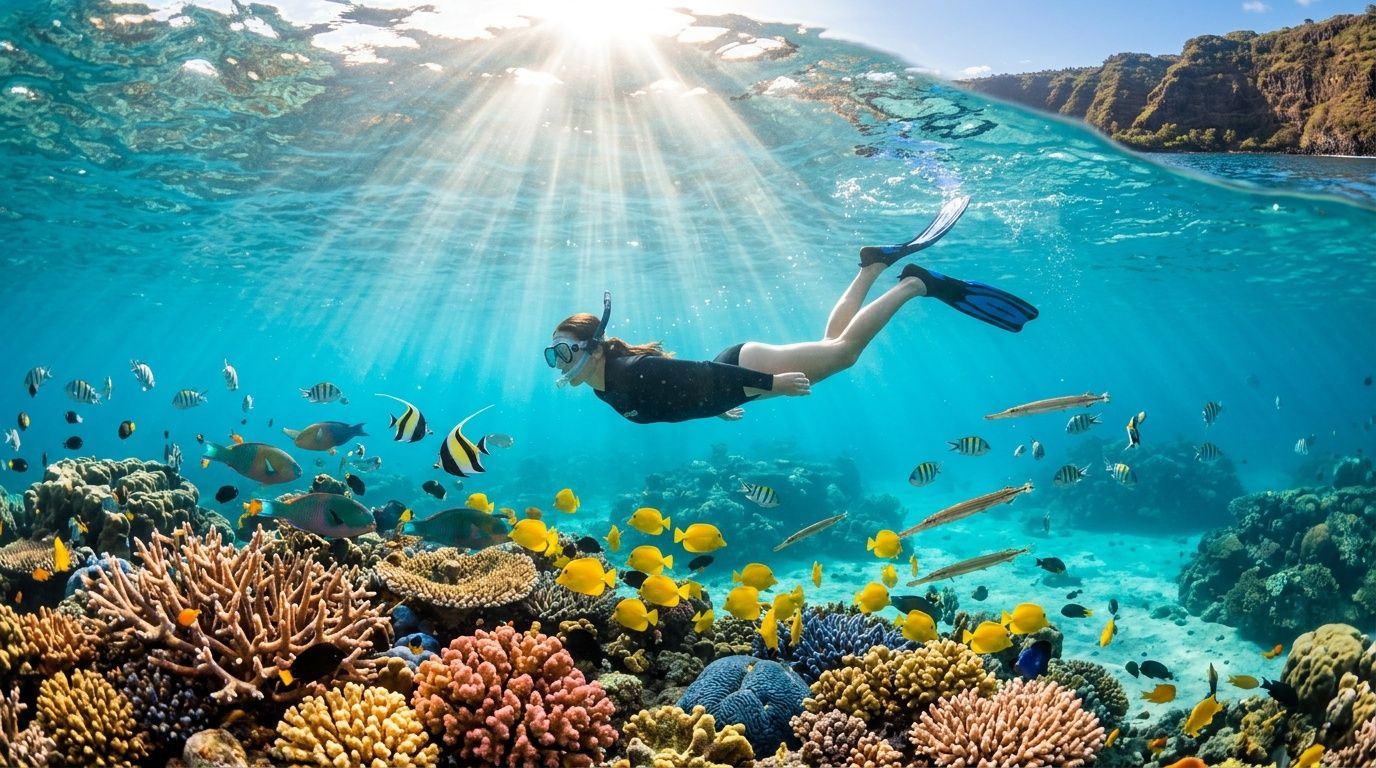
This bay draws over 190,000 visitors annually, supports approximately 80 different marine species, and commonly offers average water visibility of 25 meters, with especially clear water near the monument often reaching 100 feet according to this Kealakekua Bay snorkeling overview. Those numbers matter because they explain why so many people leave saying this was the snorkel of their trip, not just a nice half-day activity.
Why the bay feels different
Kealakekua Bay isn’t memorable by accident. It combines three things that usually don’t line up this cleanly:
- Protected water: The bay’s shape helps shelter it from rougher open-ocean conditions.
- Healthy habitat: Marine life stays concentrated where reef structure remains intact.
- Historic setting: The Captain Cook Monument gives the shoreline a distinct identity that most snorkel sites don’t have.
That mix is why Kealakekua Bay snorkeling tours keep showing up on shortlists for Big Island visitors who want one outing that feels scenic, active, and worthwhile.
Kealakekua Bay works because accessibility and ecological quality meet in the same place. Most destinations excel at one or the other. This one gives you both.
Why Kealakekua Bay is Hawaii's Premier Snorkel Spot
The biggest advantage at Kealakekua Bay is clarity. On calm days, visibility consistently reaches 100 feet, and the bay’s enclosed geography blocks wave action and wind-driven sediment that often cuts visibility down to 30 to 50 feet at more exposed coastal sites, as described in this visibility breakdown for Captain Cook snorkeling.
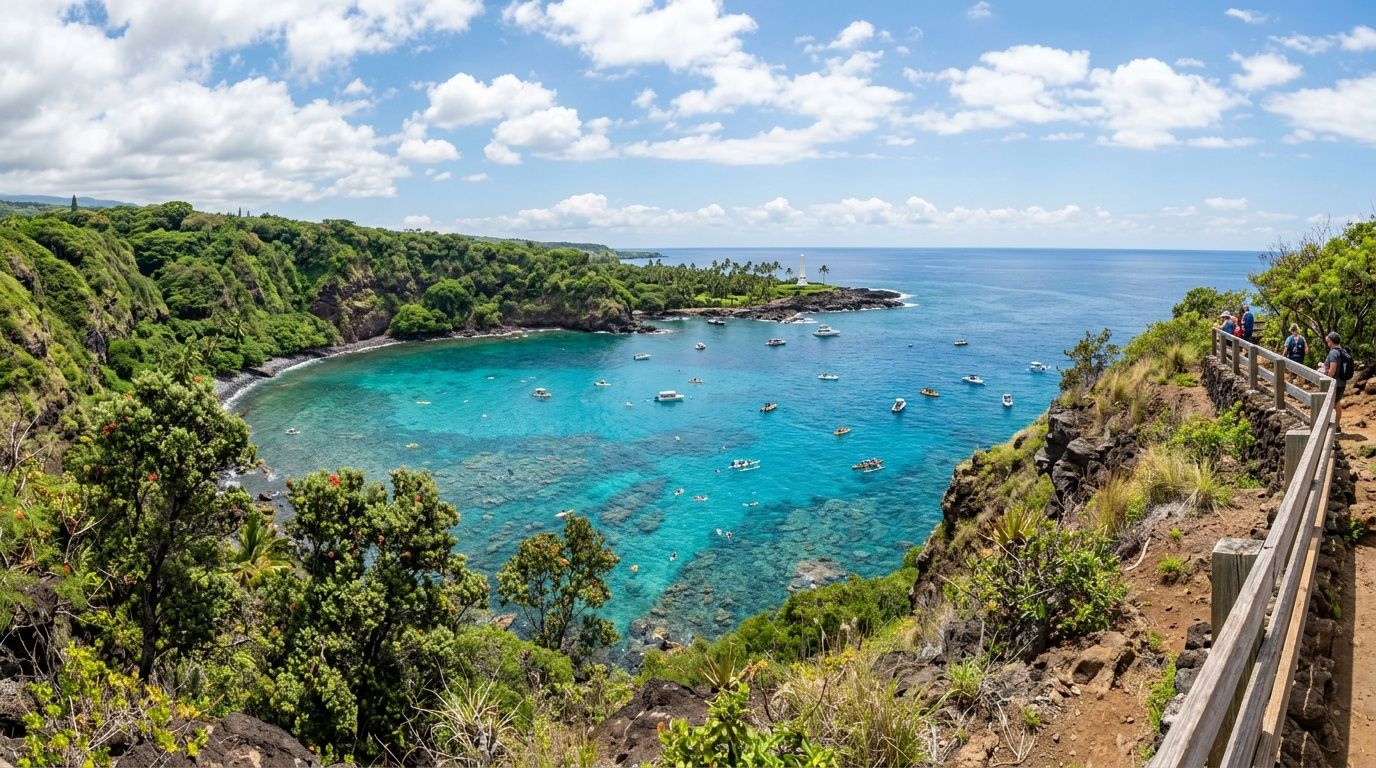
That’s not just a pretty detail. It changes how you snorkel. Beginners do better when they can clearly see the bottom, the reef line, and the rest of their group. Strong swimmers get more out of the bay because they can scan broader areas without having to dive down every few seconds.
The physics behind the clear water
Snorkelers usually describe Kealakekua Bay as “calm” or “clear,” but the practical reason is simpler. Less wave energy means less sediment suspended in the water column. When the water isn’t churning up fine material, visibility stays open and fish are easier to spot from the surface.
That matters for comfort and safety. A new snorkeler who can orient quickly is usually a calmer snorkeler.
Why reef protection changes the experience
Kealakekua Bay isn’t only photogenic. It’s productive. Protected habitat supports stronger fish presence and more reliable marine life encounters than sites where pressure is heavier and reef quality is weaker.
If you also spend time underwater on scuba, the same principles that make this a standout snorkel site are part of what people weigh when comparing the best dive experiences in Kona. Healthy structure, calmer conditions, and good visibility tend to stack the odds in your favor.
A quick look at access trade-offs
You can reach the monument area three main ways, but they’re not equal.
| Method | Upside | Downside | Best Fit |
|---|---|---|---|
| Boat tour | Direct access, easier entry, guide support | Less independent | Most visitors |
| Kayak | Flexible and self-paced | Logistics and physical effort | Confident independent paddlers |
| Hike | No boat needed | Demanding return climb | Very fit visitors who know what they’re choosing |
Practical rule: If your priority is maximizing water time and minimizing hassle, take the boat.
Your Three Paths to the Captain Cook Monument
You arrive ready to snorkel, then spend the first hour solving the wrong problem. Someone in the group gets carsick on the road in, someone else is worried about the boat, and one strong swimmer assumes the hike will be easy. Access shapes the whole day at Kealakekua Bay, especially for mixed-age groups, cautious swimmers, and anyone prone to motion sickness or heat fatigue.
The monument area can be reached by boat, kayak, or trail. Each option gets you to the same water. The trade-offs are very different once you factor in energy, sun exposure, gear handling, and how much support you want once you are in the bay.
How to get there in real life
| Method | Best For | Difficulty | Time Required | Key Consideration |
|---|---|---|---|---|
| Guided boat tour | Families, first-timers, mixed-ability groups | Low to moderate | Half-day feel | Easiest water access and the most support |
| Kayak | Independent travelers comfortable on the water | Moderate | Variable | Requires route planning, launch logistics, and paddling effort |
| Hike | Strong hikers who do well in heat | High | Variable | The uphill return is the part people misjudge |
Boat tour
For many visitors, the boat is the practical choice because it preserves energy for the water instead of spending it on the approach.
Crew support matters. Good operators help with mask fit, fins, flotation, entry, exit, and basic site orientation. That support is useful for beginners, older visitors, and capable swimmers who want a low-stress day. It also matters for people who get uneasy in deeper water and need a clear briefing before they start.
There is one real trade-off. If you are prone to seasickness, a boat day needs a little planning. Morning departures are often calmer, and sensitive passengers usually do better if they hydrate early, avoid a heavy breakfast, and choose medication that works for them before boarding. Visitors with mobility limits should also ask about ladder design, handholds, and whether the crew can assist with water entry and reboarding. Not every boat is set up the same way.
If you want to compare local options, this roundup of top Kealakekua Bay snorkeling tours is a useful place to start.
Recommended Tour Operators:
Check AvailabilityKayak
Kayaking gives you independence, but it asks more from you before the snorkeling even starts.
You need to handle launch timing, ocean conditions, sun exposure, and secure gear for the crossing. Then you need enough left in your legs and shoulders to enjoy the reef and return safely. For experienced paddlers who already know how they handle open water, that can be a good day. For visitors chasing an easy snorkel session, it often adds effort without improving the in-water experience.
Kayakers also need to keep reef protection in mind. Use designated landing practices where allowed, avoid dragging gear across shoreline rock or coral, and keep the day fully self-contained. Nothing goes overboard, including food packaging, dry bag scraps, or loose gear ties.
Hike
The trail is the most physically demanding option, and the return climb decides whether it was a good choice.
Going down can feel controlled. Coming back up after sun, salt, and a snorkel session is a different test. Heat, dehydration, and tired legs are the common problems, especially for visitors who started late in the day or carried more gear than they needed.
This route works for fit hikers who know their limits and pack accordingly. It is a poor choice for young kids, many older adults, anyone with knee issues, and travelers who are already heat-sensitive. If you hike in, wear proper footwear, carry more water than you think you need, and save enough energy for the climb out.
Which option fits your group
A simple match-up usually gets the decision right:
- Boat tour: Best for families, first-time snorkelers, older visitors, and groups with different confidence levels in the water
- Kayak: Best for capable paddlers who want a self-directed day and are comfortable handling their own logistics
- Hike: Best for very fit visitors who treat the trail as part of the challenge, not just transportation
Choose the route that leaves you calm, hydrated, and ready to snorkel. Kealakekua Bay rewards people who arrive with energy left and treat the place carefully once they get there.
What You'll See Beneath the Waves
The reason Captain Cook snorkeling stays memorable is simple. The bay is alive in a way many snorkel sites aren’t.
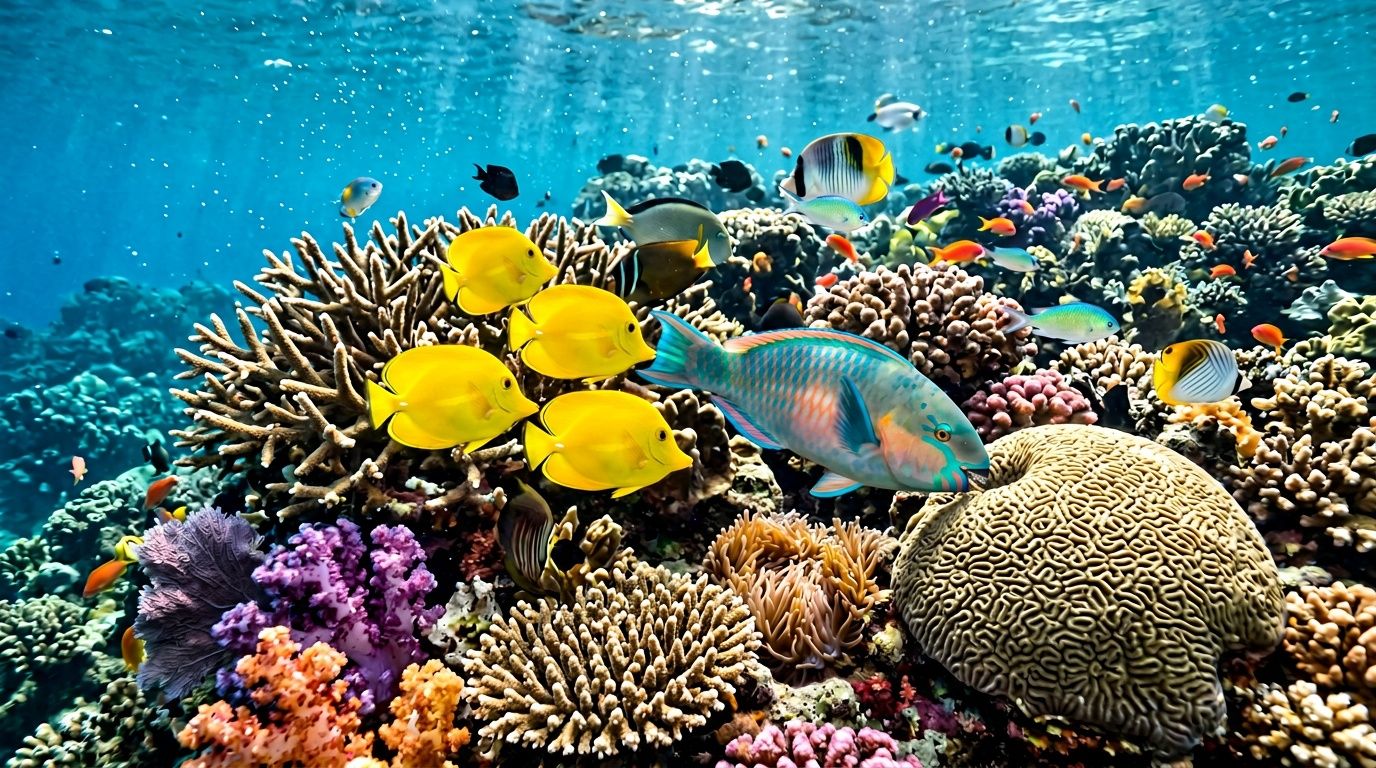
Kealakekua Bay is a 315-acre Marine Life Conservation District established in 1969, and it supports over 100 species of colorful fish. That long-term protection is the main reason the reef stays healthy and marine life stays dense compared with non-protected sites, according to this guide to Captain Cook Monument snorkeling.
What stands out first
Most snorkelers notice the fish before the coral structure. Schools move through the bay in layers, then separate around ledges and reef pockets. The shallow shelf lets you see activity close to the surface, while the drop-offs pull your eye farther out.
You’re not staring into empty blue water waiting for a single highlight. You’re scanning constant motion.
Common encounters
You may see several kinds of marine life during one session, but a few categories shape the experience most:
- Reef fish: The bay’s protected status is why fish density feels so strong here.
- Coral formations: The shelf and depth changes create shape, texture, and hiding places.
- Honu and dolphins: Contemporary reports describe Hawaiian green sea turtles and spinner dolphins as regular fauna in the bay.
The best approach is to slow down. Fast kicking makes snorkelers miss things. Drift, look ahead, then look into the reef pockets rather than only at the open water.
How to improve your sightings
A few simple habits make a big difference:
- Pause more often: Fish settle when you stop thrashing.
- Look across the reef, not only down: Movement along the edge often catches your eye first.
- Watch the transition zones: Where shallow shelf meets deeper water, species mix changes.
Good snorkeling is less about covering distance and more about learning where to hold position.
A Snorkelers Guide to Safety and Comfort
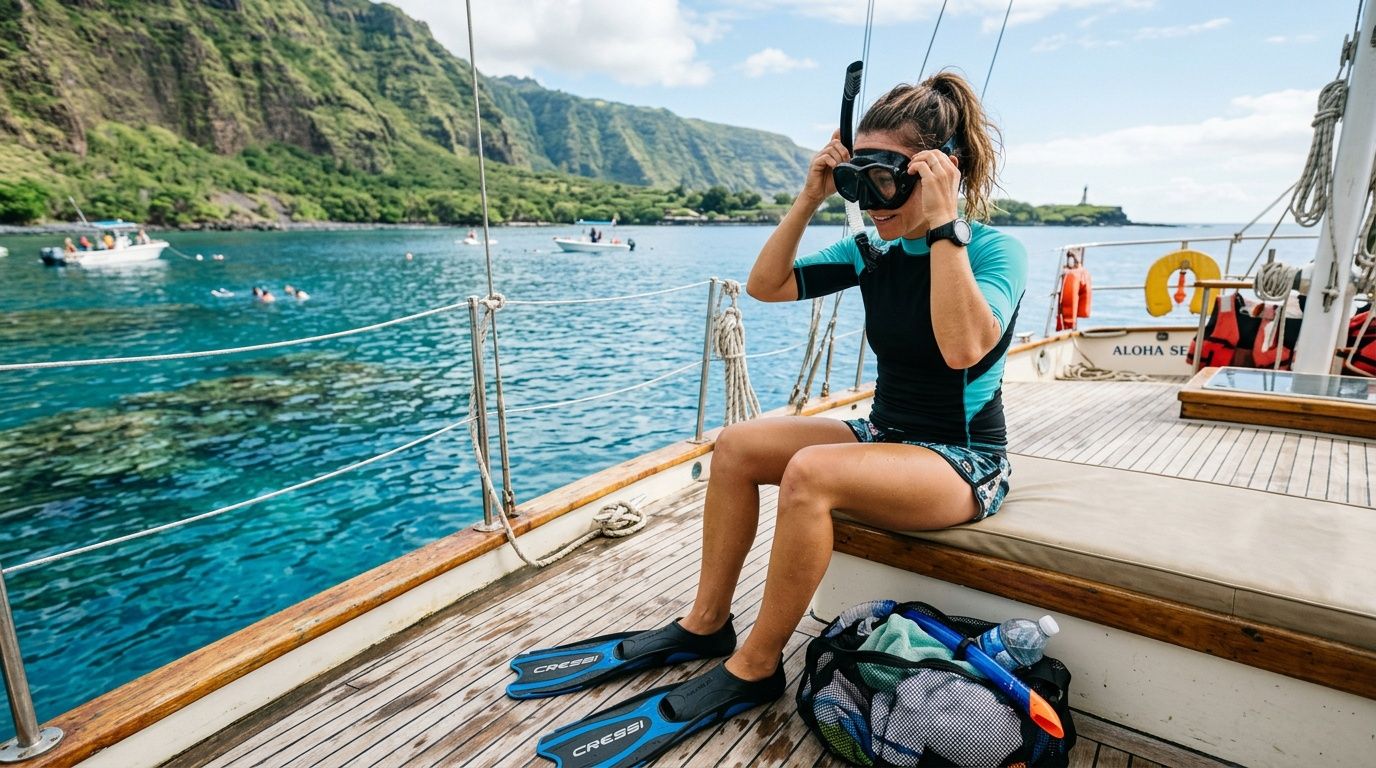
A comfortable snorkel day starts before the boat leaves the harbor. Most problems at Kealakekua Bay aren’t dramatic. They’re manageable issues that get worse when people ignore them early, like mild seasickness, a mask that leaks, dehydration, or getting in the water already tense.
Many guides say the bay is good for “all ages,” but that phrase skips over the details people need. Motion sickness can affect anyone, and boat entry and exit matter for anyone with mobility concerns. Those are exactly the kinds of logistics professional tours are equipped to manage, as noted in this discussion of Captain Cook snorkeling cruises and visitor needs.
Seasickness prevention that actually helps
If you think you might get seasick, plan for it before departure. Don’t wait until the boat is moving.
Here are common options people use:
- Patch option: Ship-EEZ Seasickness Patch
- Medication choice: Dramamine Pills
- Another medication choice: Bonine Pills
- Non-drug approach: Sea-Band Wristbands
- Simple stomach support: Ginger Chews
For more detailed prep, this guide on how to avoid sea sickness is worth reading before your trip.
Entry, exit, and mobility trade-offs
The hardest part of snorkeling for some guests isn’t swimming. It’s transition.
Getting from the boat into the water can feel awkward if you have limited mobility, balance concerns, or anxiety about stepping off a ladder platform. The same is true in reverse when you’re tired and trying to re-board. This is one of the biggest reasons guided trips work better than self-managed options for mixed groups.
If someone in your group is older, pregnant, dealing with recent injury, or less steady on their feet, ask the operator specific questions before booking. Don’t settle for “it’s easy.” Ask how guests enter the water, how they come back aboard, and whether crew assist directly.
In-water habits that keep the day easy
Comfort comes from small decisions:
- Use flotation if you want it: Good snorkelers use the support that helps them relax.
- Keep your kicks slow: Fast kicking burns energy and clouds judgment.
- Stay with a buddy: Don’t drift into a solo adventure because visibility is good.
- Hydrate early: People often show up already behind on water intake.
- Know when to stop: A short, enjoyable session beats pushing too long and ending the day stressed.
Some of the best snorkelers in the bay are the calmest, not the strongest.
Snorkeling with Aloha Responsible and Sustainable Practices
Kealakekua Bay can absorb a lot of admiration. It can’t absorb careless behavior forever.
Existing coverage often celebrates the bay’s pristine condition while skipping the practical impact of 190,000 annual visitors. Responsible snorkeling habits, including reef-safe sunscreen use and keeping distance from coral, are important to reduce cumulative stress on this protected ecosystem, as noted in this Captain Cook snorkeling page focused on the bay’s environmental responsibility.
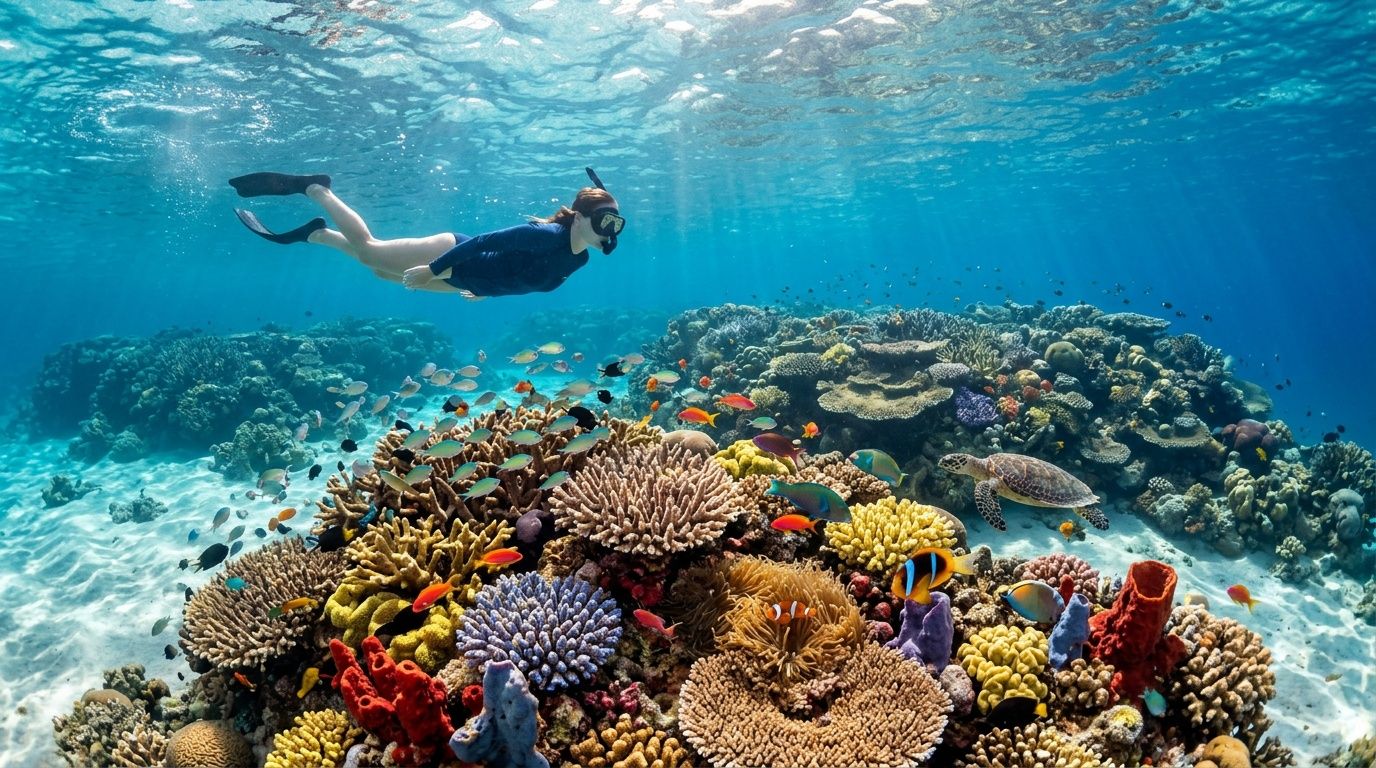
What responsible snorkeling looks like
A good day in the bay starts before you touch the water. Apply sun protection early, choose clothing that reduces how much lotion you need, and arrive ready to follow guide instructions instead of treating the reef like a theme park.
If you need a useful primer on reef-safe sunscreen protection, that resource lays out the basics in a practical way.
The non-negotiables in the water
These rules are simple, but they’re the difference between low-impact snorkeling and reef damage:
- Don’t stand on coral: It’s living structure, not rock.
- Keep your fins off the reef: Most accidental damage comes from bad body position.
- Leave wildlife alone: Turtles and dolphins don’t need encouragement to perform.
- Don’t feed fish: It changes behavior and shifts the natural balance.
- Take nothing out: Shells, fragments, and “souvenirs” belong in the bay.
A lot of people mean well and still cause damage because they float vertically, bicycle-kick over shallow coral, or chase an animal for a better photo. Good intent doesn’t protect the reef. Good technique does.
The attitude that helps most
Responsible tourism isn’t about memorizing rules. It’s about adopting the right role. You’re not there to conquer the bay. You’re there to move through it lightly.
If you want a broader marine ethics mindset that carries over from snorkeling to all ocean activities, this guide to responsible and considerate diver etiquette makes the principle clear.
Leave Kealakekua Bay looking exactly as if you were never there.
Planning Your Perfect Day A Sample Itinerary
A smooth Captain Cook snorkeling day usually starts early. You check in at the harbor, get fitted for gear, and listen to the safety briefing while the crew explains boat procedures, water conditions, and how to use the equipment without wasting your first half hour in the bay adjusting straps.
The ride down the Kona coast is part of the experience. The shoreline is dramatic, and the approach into Kealakekua Bay gives the monument a very different feel than seeing it in photos. From the boat, the white structure stands out sharply against dark lava rock and green slopes.
What the monument means when you arrive
The Captain Cook Monument is 27 feet tall. It was erected in 1874 to mark the location where Captain James Cook was killed in 1779, and the small parcel beneath it was deeded to the United Kingdom and remains technically sovereign British territory, according to this historical overview of snorkeling at Captain Cook.
That history gives the bay more weight. You’re not just arriving at a snorkel stop. You’re arriving at a place where natural beauty and difficult history sit side by side.
A realistic flow for the morning
Most well-run trips follow a pattern like this:
- Check-in and briefing: Gear setup, boat orientation, safety review.
- Coastal ride: Time to settle in, adjust to the boat, and enjoy the coastline.
- Snorkel session: The main event. This is when people spread out by comfort level and guides help weaker swimmers stay relaxed.
- Food and downtime: Snacks or a light meal after the swim feel better than people expect.
- Return trip: Quieter, sun-tired, and usually full of people looking through photos.
What makes the itinerary work is pacing. You don’t need to rush once you’re there. The best trips give you enough structure to feel taken care of and enough freedom to enjoy the bay at your own speed.
Your Unforgettable Adventure Awaits
You step off the boat, look into the water, and can already see the reef below you. On a good day at Captain Cook, that first look tells you a lot. If the surface is calm, your mask fits, and everyone in your group is matched to the right kind of trip, the bay usually delivers a far better experience than travelers get from a rushed snorkel stop elsewhere.
What makes this outing memorable is not just clear water or colorful fish. It is the combination of access, conditions, preparation, and behavior in the water. Families with young kids need a different plan than strong lap swimmers. Visitors who get motion sick should solve that before boarding, not after the swell starts working on them. Anyone with limited mobility should choose an operator and entry style that reduces climbing, long walks, and awkward water entries.
That practical planning matters here.
The strongest trips are run by crews who keep the day organized, watch the conditions closely, fit gear correctly, and treat Kealakekua Bay as a living place instead of a backdrop. Kona Snorkel Trips and Kona Honu Divers are part of that local operating community, with an emphasis on safe in-water supervision, clear logistics, and respect for the reef and marine life.
If you are ready to book with a local team that also runs snorkeling experiences, take a look at Kona Honu Divers. It is a straightforward next step for travelers who want clear trip details, practical support, and a crew that understands how to keep a Captain Cook snorkel day safe, comfortable, and low impact on the bay.