
You're likely here because of the photos. Water so clear it hardly seems real. A white monument on a green shoreline. People floating over coral with schools of fish moving beneath them. Then the practical questions start. Is a captain cook snorkel worth it? Do you need a tour? Can you kayak there? Can kids do it? What if someone in your group is a weak swimmer?
I've spent a lot of time in and around Kealakekua Bay, and this is the honest version. It's one of the most rewarding snorkel spots on the Big Island, but it's also one of the easiest places to misunderstand from a planning standpoint. The bay is beautiful. It's historic. It's protected. And depending on how you choose to access it, it can feel easy and relaxed or unnecessarily hard.
Welcome to Kealakekua Bay Hawaii's Underwater Jewel
You roll into the bay in the morning, the coastline still soft in the early light. The water shifts from dark blue to electric turquoise as the boat settles near the reef. You put your face in the water and suddenly the whole place opens up. Coral heads, flashes of yellow fish, long blue lanes of visibility, and that quiet feeling that always surprises first-time snorkelers.
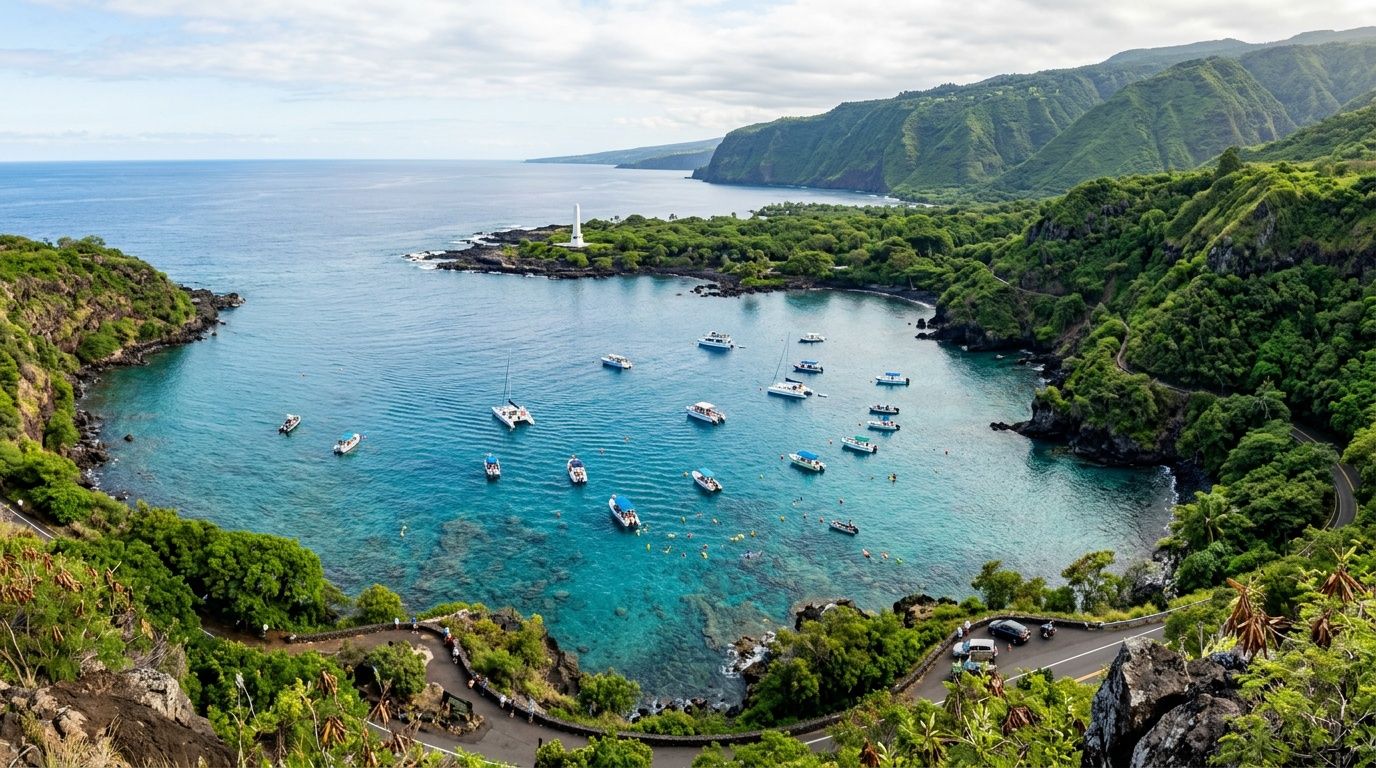
What makes this place different isn't just the snorkeling. Kealakekua Bay was settled by Native Hawaiians over a thousand years ago and became a sacred center for the makahiki festival honoring Lono, according to this history of Kealakekua Bay and Captain Cook. In 1778, Captain James Cook's ships entered the bay during that sacred season. Hawaiians initially identified him with Lono, then relations broke down later, ending with Cook's death at the bay in 1779.
That history matters when you visit. This isn't just a pretty reef with a famous monument. It's a place with deep Hawaiian significance and a complicated story tied to first recorded European contact.
Why the bay feels different
Some snorkel spots are fun for an hour and forgettable by dinner. Kealakekua tends to stick with people. Part of that is the underwater scenery. Part of it is the setting. You're floating in a marine sanctuary while looking at one of the most historically significant shorelines in Hawaiʻi.
If you want a quick overview of what a guided day on the water looks like, take a look at this Kealakekua Bay snorkeling tour page.
Kealakekua Bay asks for a little more respect than the average beach stop. You enjoy it more when you treat it as both a reef and a cultural place.
Who this guide is for
This guide is for people trying to make smart choices before they book. Maybe you're traveling with kids. Maybe one person loves adventure and another just wants the easiest day possible. Maybe you're deciding between a boat, kayak, or hiking approach.
That's where most confusion starts. So let's make it simple.
Why Captain Cook Snorkeling is World Famous
There are plenty of good snorkel sites in Hawaiʻi. A captain cook snorkel became famous for three reasons working together: unusual water clarity, protected marine habitat, and the setting's historical weight.
The water is unusually clear
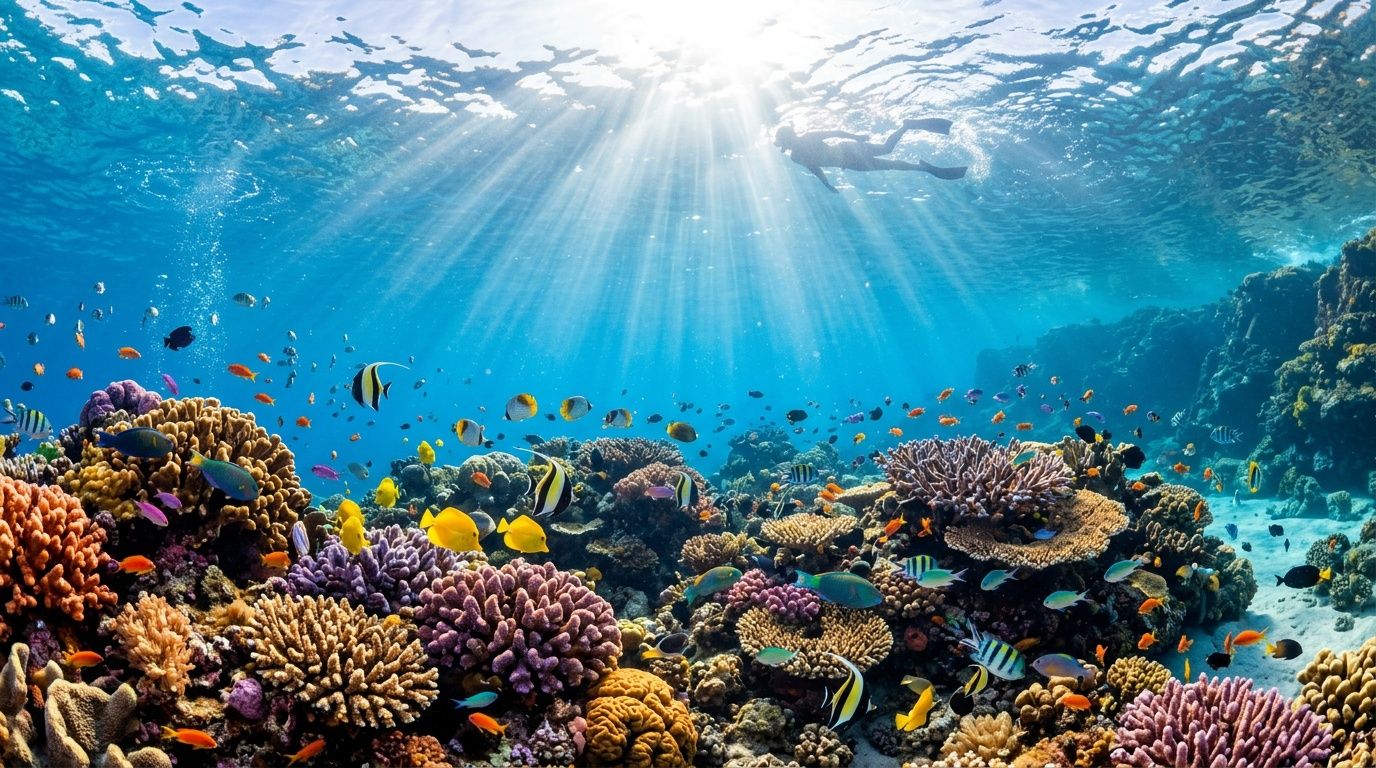
The first thing people talk about after snorkeling here is visibility. Kealakekua Bay often exceeds 100 feet of visibility because its protected conditions and ocean currents help minimize plankton blooms, as explained in this Kealakekua Bay visibility overview. In plain terms, the water often looks clean, open, and blue in a way that makes fish and coral easier to see.
That kind of clarity changes the whole experience. Beginners feel less disoriented because they can read the bottom better. Confident snorkelers can scan farther out and catch more of the reef's shape. Underwater photos usually come out better too, especially when the sun is up.
Protection helps the reef stay lively
This isn't a random stretch of coastline getting hammered all day by heavy traffic. Protected status matters. It gives marine life a better shot and helps preserve the conditions that make the bay famous in the first place.
You'll notice that in the density of fish around healthy coral structure. The bay is known for species like yellow tang and humuhumunukunukuapuaʻa, and visibility makes them easier to spot even when they're moving across deeper sections of reef.
The setting adds another layer
Most snorkel spots offer scenery. Kealakekua offers context. You're not just swimming in clear water. You're looking back at shoreline where major events in Hawaiian history unfolded.
That combination makes the bay memorable even for people who snorkel a lot. It has a sense of place.
It works for a lot of traveler types
One reason this site gets recommended so often is that different people can enjoy it for different reasons:
- First-timers get forgiving visibility that makes snorkeling less intimidating.
- Families like the boat-based access options and the scenic ride.
- Marine life fans appreciate the reef density and the chance to see a wide range of fish.
- History-minded travelers get more than a water activity.
For a broader look at standout underwater experiences on the coast, this guide to the best dive in Kona gives useful local context, even if you're planning to snorkel rather than dive.
Practical rule: The clearer the water, the less work your brain has to do. That's a big reason Kealakekua feels good to beginners.
What surprises people most
It's usually not one giant dramatic thing. It's the combination. You look down and can see what's happening. Fish aren't just occasional flashes. The reef feels alive. Then you lift your head and remember you're in a bay with real historical gravity.
That mix is why captain cook snorkeling stays on people's short list year after year.
How to Access Kealakekua Bay A Complete Breakdown
This is the part people need most. You can reach the Captain Cook area three main ways: boat tour, kayak, or hike. All three can get you near the snorkeling area. They are not equal in effort, safety, or convenience.
The honest answer for most visitors is simple. A boat tour is usually the easiest and safest choice. But that doesn't mean it's the only choice.
Comparing Access Methods to Captain Cook Monument
| Method | Ease & Accessibility | Average Cost | Time Commitment | Safety | Best For |
|---|---|---|---|---|---|
| Boat tour | Easiest for most groups, especially families and mixed abilities | Varies by operator | Half-day style outing for most visitors | Strongest option for most people because crew support is built in | Families, visitors with limited time, first-timers |
| Kayak | Moderate to difficult depending on ocean comfort and permit logistics | Varies, plus planning effort | More planning and self-management | Better for confident paddlers, but less forgiving than a guided boat | Independent travelers who already kayak |
| Hike | Most physically demanding option | Low direct cost, high effort | Long and strenuous compared with boat access | Tougher because you manage the route, gear, and heat yourself | Fit hikers who want a challenge |
For a roundup of operator styles and trip formats, this guide to the top Kealakekua Bay snorkeling tours is a useful next read.
Boat tour
For most visitors, this is the smart play. You leave from the harbor, ride the coast, gear up on board, and enter the water near the good part of the reef without burning energy on the approach.
That last point matters more than people think. If you arrive fresh, you enjoy the snorkel. If you arrive tired from paddling or hiking in with gear, your in-water time often gets shorter and less fun.
A boat trip also simplifies the annoying parts. Gear is usually handled for you. Entry and exit are more structured. If someone in your group gets nervous, tired, or just decides they'd rather stay dry, they can often remain on the boat instead of turning the whole outing into a rescue mission.
Why boat access wins for most groups
- Less physical strain: You save your energy for snorkeling instead of transportation.
- Better for mixed abilities: Strong swimmers and cautious beginners can usually share the same outing more easily.
- More support: Crew can help with masks, flotation, entries, and timing.
- Cleaner logistics: No guesswork about route finding, launch conditions, or hauling gear back uphill later.
Kayak
Kayaking to Kealakekua Bay sounds romantic in theory. And for the right person, it can be a rewarding day. You get independence, a sense of adventure, and a slower approach to the coastline.
But it's also where people underestimate the trip.
The biggest issue isn't just paddling strength. It's the combination of sun exposure, open-water comfort, loading and securing gear, managing the return trip, and understanding local rules. Readers often assume they can just rent a kayak and go. In practice, the planning side can be more restrictive and confusing than expected.
If you already love kayaking, this can be a satisfying route. If you're choosing it just to avoid booking a tour, it often becomes the hardest day of the vacation.
Kayak pros and cons
Pros
- You move at your own pace.
- The coastline feels intimate and quiet.
- It appeals to travelers who enjoy self-guided outings.
Cons
- It takes more effort before and after the snorkel.
- Wind, sun, and chop can change the feel of the day fast.
- Gear management is on you.
- Legal access details can confuse visitors.
Hike
The hike is the most underestimated option of all. People see a short description online and think, “We're active, we'll be fine.” Then they realize they're descending with water, fins, masks, towels, and whatever else they brought, and eventually climbing back out in the heat.
The snorkeling itself may still be great. The approach is what empties the tank.
This option tends to work best for people who enjoy hiking as part of the experience, not people trying to save effort or keep the day casual. It's especially rough for families with young kids, older adults, and anyone who doesn't do well carrying gear.
Which option fits your group
Here's the simplest way to decide.
- Choose a boat if your group includes kids, seniors, nervous swimmers, or anyone who wants the highest chance of an easy day.
- Choose a kayak if you already paddle, don't mind self-managing the outing, and are comfortable in open water.
- Choose the hike if the physical challenge sounds fun to you and you're prepared for the return climb.
My honest local take
If your main goal is to enjoy the reef, not prove something, book the boat. It gives you the best chance of arriving relaxed, seeing the bay at its prettiest, and having enough energy left to enjoy the fish, coral, and scenery.
The other routes can be rewarding. They're just not the right fit for most vacation groups.
Choosing the Best Captain Cook Snorkel Tour
Once you've decided on a boat trip, the next question is which one. Many people often look only at price or boat photos. That misses the bigger issue. The quality of a captain cook snorkel tour usually comes down to how the operator handles comfort, safety, and beginner support.
Start with your group, not the marketing
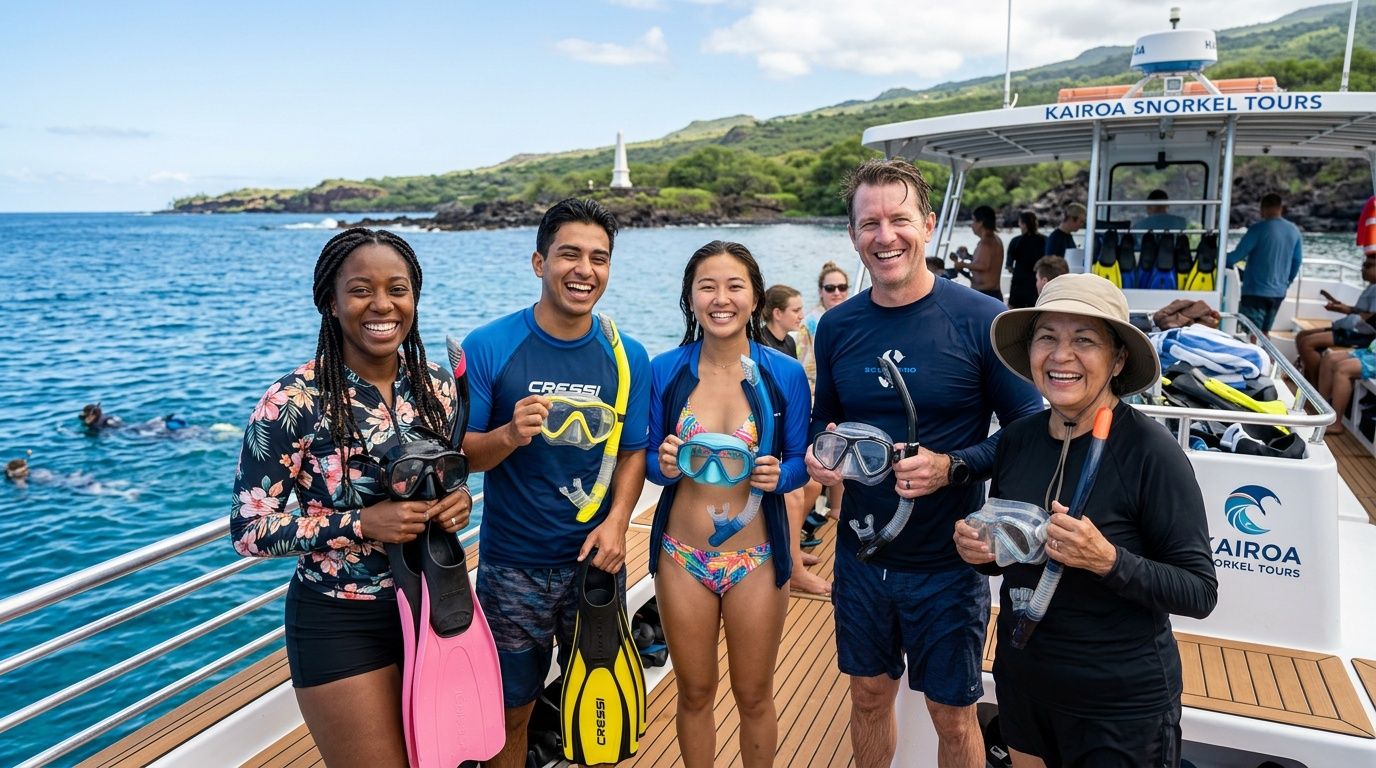
A lot of tours say they're for “all skill levels.” Public information often doesn't go much deeper than that. This guide to Captain Cook snorkel tour accessibility and mixed-ability planning makes an important point: the better operators stand out through clear safety protocols, flotation choices, and guides who can work with guests who have different confidence levels in the water.
That's the lens I'd use when comparing trips.
What to look for before you book
Water support
Ask yourself what happens if someone in your group gets nervous after they get in. A good operator plans for that. You want clear communication, visible flotation options, and crew who pay attention to more than the strongest swimmers.
Entry and exit simplicity
The actual snorkeling area may be easy. Getting in and out is where some guests struggle. Older snorkelers, beginners, and kids do better when the operator has a calm boarding process and patient crew.
Group style
Some travelers love a social boat with lots of energy. Others want a smaller, quieter setting where they can ask questions and not feel rushed. Neither style is wrong. Match it to your group.
Educational value
A memorable trip usually includes more than equipment and transport. The best crews help guests understand what they're seeing, both underwater and along the shoreline.
Two tour links worth checking
If you're comparing actual options, these are relevant starting points:
If you're looking at broader day-on-the-water options around the coast, this Kona boat tours page can help you compare outing types.
One practical note on operator choice
Kona Honu Divers also offers snorkeling-related trips on the Big Island, including Kealakekua-focused options, so travelers sometimes compare their lineup alongside dedicated snorkel operators when deciding what kind of boat day fits their group.
A quick booking filter that works
If you want to narrow choices fast, use this checklist:
- Mixed-ability group: Prioritize flotation options and attentive crew.
- Nervous first-time snorkelers: Favor tours that feel hands-on rather than self-service.
- Active travelers: Smaller, quicker boats may appeal more.
- History lovers: Look for tours that include thoughtful narration, not just transport.
That's usually enough to separate a good match from a frustrating one.
Your Snorkel Day What to Expect and How to Prepare
Most captain cook snorkel days start the same way. You check in, sign what you need to sign, get fitted for gear, and head out along the Kona coast. The ride itself is part of the fun. You'll see lava shoreline, sea caves in some stretches, and that deep blue water that makes the whole coast feel wide open.
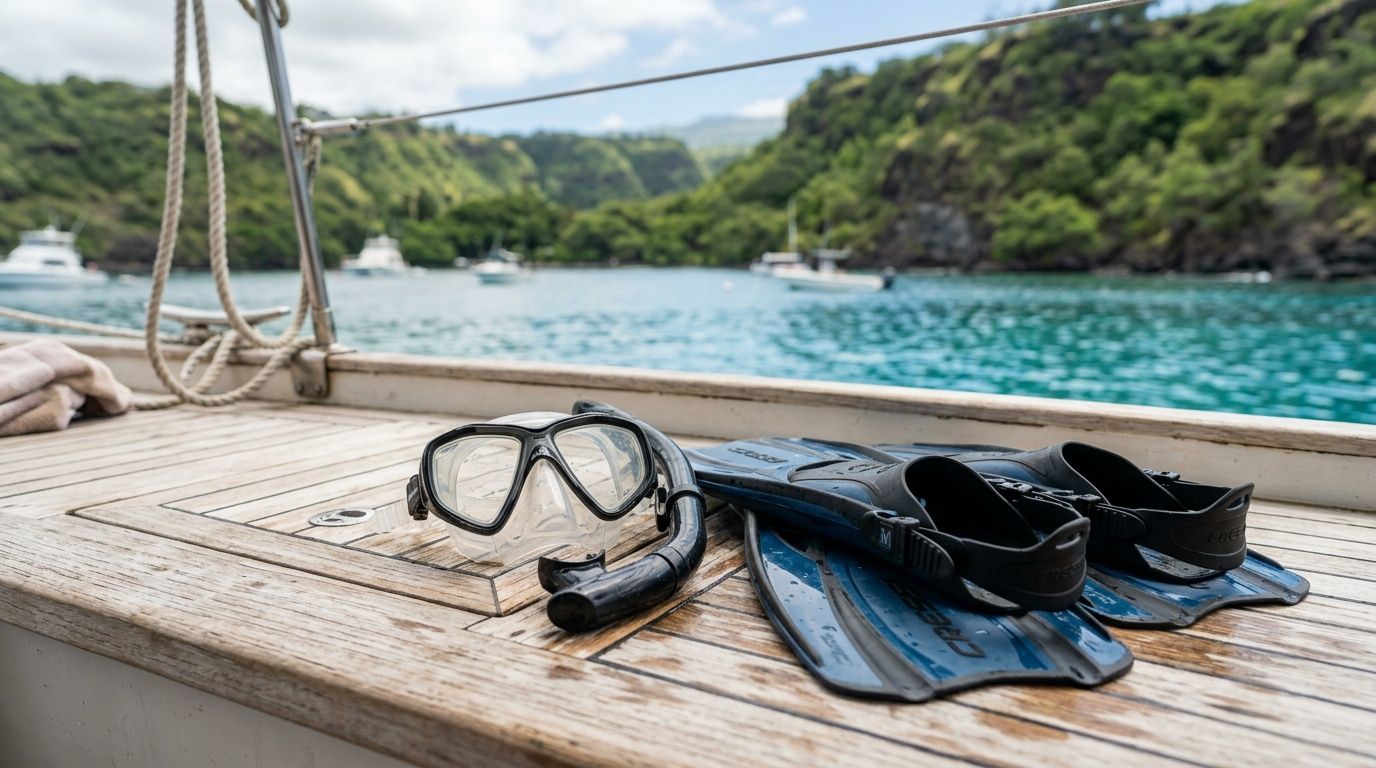
Once you arrive, the crew usually walks everyone through the plan. Where to enter. How long you'll have. What to do if your mask leaks. Where the stronger current lines are. Even confident swimmers benefit from listening closely. Every bay has its own rhythm.
What the in-water experience feels like
Your first few minutes are usually adjustment time. You settle your breathing, clear your snorkel if needed, and get used to floating face-down. Then the reef starts to come together. Fish move in and out of coral heads. The bottom changes color and texture. If conditions are good, you can relax into a slow drift and just observe.
Some people spend the whole time searching for the biggest thing they can find. Turtles. Dolphins. Something dramatic. That can happen, but the true pleasure here is often smaller and steadier. The reef itself keeps you busy.
Move slowly and let the bay come to you. Fast kicking usually scares fish away and tires you out.
What to bring
Most tours provide the core gear, but a few personal items make the day easier:
- Swimsuit already on: It saves time and avoids awkward boat changing.
- Towel and dry clothes: The ride back can feel cool once you're wet.
- Reusable water bottle: Sun and salt dry you out faster than people expect.
- Rash guard or sun shirt: Good for sun protection and comfort.
- Reef-safe sun protection: Better for the bay and better for your skin plan.
- Waterproof phone pouch or camera: Nice if you want photos without stressing about splashes.
- Light snack if your operator allows it: Especially helpful for kids or anyone who gets hungry fast.
If you get seasick easily
Some people are fine in the water and still feel rough on the ride out. If that sounds like you, prepare ahead instead of hoping for the best.
Options people commonly use include Ship-EEZ Seasickness Patch, Dramamine pills, Bonine pills, Sea Band wristbands, and Ginger chews.
A few simple habits help too:
- Eat lightly: Don't board on a totally empty stomach, but skip the giant greasy breakfast.
- Look at the horizon: It often helps more than staring at your phone.
- Tell the crew early: Don't wait until you feel awful.
- Choose your spot carefully: Some riders feel better where motion feels more predictable.
Common first-time worries
What if I panic with the snorkel on
That happens. Usually it passes quickly once you stand or float calmly with support. Good crews see this all the time. Start slow.
What if my mask keeps leaking
That's usually a fit issue, hair caught in the seal, or overtightening. Ask for help right away instead of fighting it for twenty minutes.
What if I'm not a strong swimmer
That depends on the operator and your comfort level, but many people do fine with flotation support if they're honest about their ability before entering the water.
A little preparation goes a long way. The goal isn't to look experienced. It's to feel comfortable enough to enjoy the bay.
Safety Rules and Marine Conservation
Kealakekua Bay rewards calm, respectful snorkeling. It's not a place to treat casually just because the water looks inviting. Conditions can change, and the reef is fragile.
The biggest thing visitors need to understand is that this is open-water snorkeling, not a resort pool.
Why guided access is safer
Kealakekua Bay can have currents up to 1 knot and steep underwater drop-offs, and tours often require guests to tread water for 5 to 10 minutes to show basic swim proficiency, according to this Captain Cook snorkel swim requirements guide. The same source notes that guided tours reduce drift incidents by 80% compared to unguided attempts.
That matches what local crews see in real life. Most problems don't begin with dramatic weather. They begin when people overestimate their swimming, separate from their group, or get tired farther from the boat than they expected.
The smart way to snorkel here
- Stay aware of your energy: Turn around before you feel spent.
- Use flotation if offered: It's not a sign of weakness. It's a tool.
- Listen to the site briefing: Crews know where people drift and where beginners get uncomfortable.
- Keep the group in sight: Separation creates stress fast.
- Signal early if you need help: Small issues stay small when crew sees them early.
Respect your own limits first. The bay is much more fun when you leave a margin.
Protecting the reef while you enjoy it
Safety and conservation go together here. Good buoyancy keeps you off coral. Slow movement keeps marine life calmer. A little awareness protects both you and the place you came to see.
What to do
- Float, don't stand: Coral can be damaged easily, and footing is unreliable anyway.
- Keep your hands to yourself: Fish, turtles, and coral all do better when observed, not touched.
- Use reef-conscious sun protection: Better for the marine environment.
- Follow crew spacing guidance: It reduces crowding over sensitive areas.
What not to do
- Don't chase wildlife: If an animal comes near you, enjoy the moment without pursuing it.
- Don't kick down toward the reef: Bent knees and careless fins do damage.
- Don't assume calm surface water means no current: Surface impressions can fool you.
For a good broader mindset on in-water courtesy, this piece on responsible and considerate diver etiquette applies well to snorkelers too.
The bay stays special because people protect it while using it. That's not separate from the experience. It is part of the experience.
Frequently Asked Questions about Captain Cook Snorkeling
When's the best time of year to go
If your top priority is visibility, many guides point to April through November, when visibility is often over 100 feet. During December through March, visibility may drop to 50 to 70 feet, but winter can also bring calmer seas and fewer crowds, which can make it a great fit for families and relaxed snorkelers, as explained in this seasonal guide to Captain Cook snorkeling.
The short answer is this: summer often gives you the classic postcard look, while winter can offer a gentler overall day for some groups.
Do I need to be a strong swimmer
You should be comfortable in the water, and some tours require a basic swim test or treading ability. If you're nervous, tell the operator before booking, not after you're on the boat. The right trip with the right flotation support can make a big difference.
Is kayaking or hiking better than taking a boat
For most visitors, no. They can be rewarding, but they demand more effort, more planning, and more self-management. If your real goal is enjoying the reef, boat access is usually the cleanest choice.
Can kids and older adults do a captain cook snorkel
Often yes, but the right operator matters. Mixed-ability support, easy entry, flotation options, and patient crew matter more than flashy marketing.
Will we see dolphins or turtles
You might. Kealakekua Bay is known for rich marine life, and many guests do spot memorable animals. But wildlife doesn't perform on command, so it's better to hope than expect.
Can you go ashore at the monument
Access confuses a lot of visitors. Many people see photos of the monument and assume they'll be walking around it. In practice, the experience is usually about snorkeling the reef nearby, not treating the monument shoreline like a casual beach stop.
If you want help choosing the right ocean day on the Big Island, Kona Honu Divers is a solid place to start. They offer a range of underwater tours and local trip information, which is useful if you're comparing a captain cook snorkel with other Kona water activities.