
Let's cut right to the chase: can you actually book a trip to scuba dive with humpback whales in Hawaii?
The short and simple answer is no. It's the dream of many divers, but specific "scuba with whales" tours don't exist, and for a very good reason. Strict federal and state laws make it illegal to intentionally get within 100 yards of a humpback whale.
The Reality of Whale Encounters While Diving in Hawaii
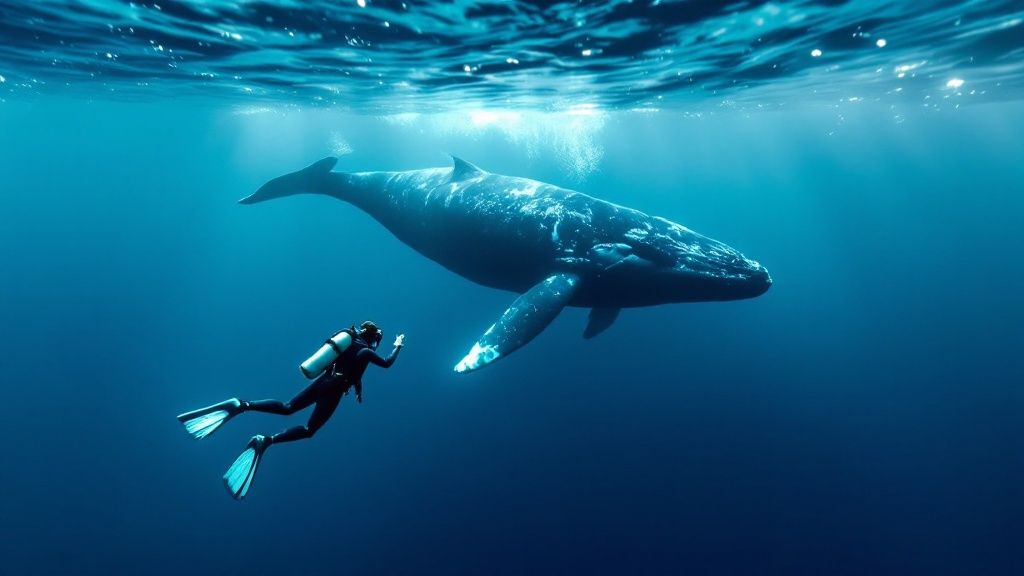
Knowing the rules up front is key to setting the right expectations for your dive trip. These regulations aren't just bureaucratic red tape; they're critical for protecting the whales during their most vulnerable time. The Hawaiian Islands Humpback Whale National Marine Sanctuary is where these gentle giants come to breed, give birth, and nurse their young. The 100-yard buffer zone gives them the space they need to do this without human interference.
Planned Trips vs. Chance Encounters
This is where the distinction becomes really important. You can't plan to dive with a whale, and no reputable dive shop in Hawaii would ever offer such a trip. That would be illegal and irresponsible.
However, that doesn't mean it's impossible to see one underwater. The ocean is their home, after all. A whale might just decide to swim by your dive site. The key difference is who initiates the encounter.
The guiding principle is passive observation. If a whale happens to approach you, the law is clear: you stay put. You don't swim toward it, you don't chase it, and you let the encounter unfold entirely on the whale's terms.
So, while you can't go looking for them, there's always that slim, magical chance that a curious giant might just come to check you out during a regular dive in whale season.
To help clarify what is and isn't allowed, here's a quick breakdown of the rules versus the reality of seeing whales in Hawaiian waters.
Whale Encounter Rules and Realities in Hawaii
| Activity | Regulation/Rule | Likelihood of Close Encounter |
|---|---|---|
| Scuba Diving | Must maintain 100 yards distance. No intentional approach or pursuit. | Very Low. A chance encounter initiated by the whale is rare but possible. |
| Snorkeling/Swimming | Must maintain 100 yards distance. It's illegal to intentionally swim with whales. | Low. Whales may pass by, but you cannot legally approach them in the water. |
| Whale Watching Boat | Vessels must stay 100 yards away. Engines are often cut to avoid disturbing whales. | High (from the boat). Boats provide excellent, safe, and legal viewing opportunities. |
These rules ensure the whales are respected and that any interactions are safe for both humans and marine life.
While you're planning your underwater adventures, it's a great idea to get familiar with all the incredible marine life you're almost guaranteed to see. For a complete picture of the underwater world, take a look at everything you should know about Big Island diving. It will get you excited for the vibrant reefs, sea turtles, and countless other creatures that make diving here so spectacular.
Why Whale Protection Laws Exist in Hawaii
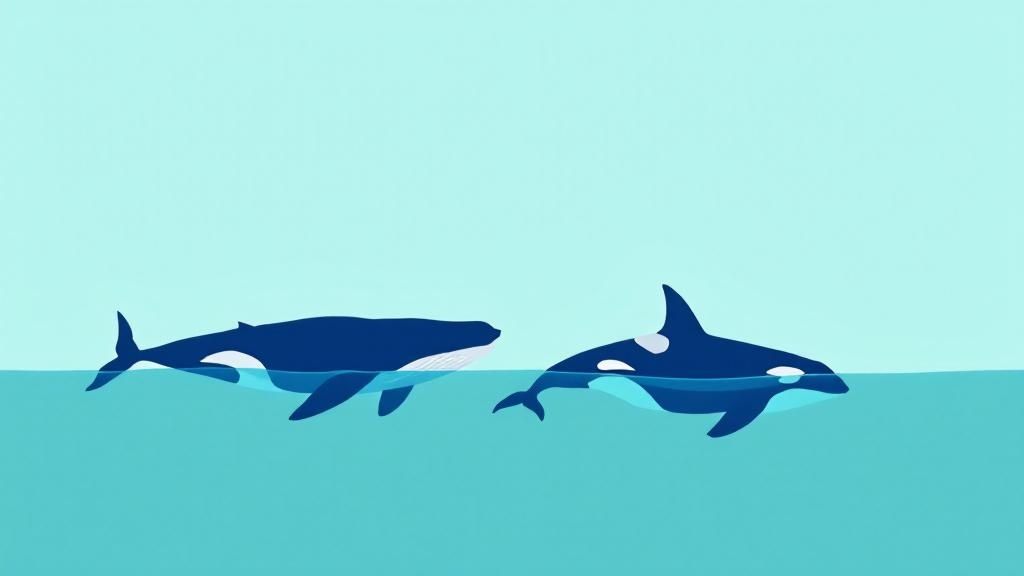
That strict 100-yard approach rule isn't just arbitrary red tape; it's a critical lifeline for humpback whales. You have to remember, these gentle giants aren't just vacationing here. They've traveled over 3,000 miles to the warm, shallow waters of Hawaii for one of the most important reasons imaginable: to give birth and care for their newborn calves.
Think of the Hawaiian islands as a massive, open-ocean nursery. The laws are there to give mothers and their young the space they need to rest, nurse, and bond without interference. What might seem like a harmless, once-in-a-lifetime encounter for us can be a major disruption for them, potentially separating a mother from her calf and jeopardizing its survival.
Guardians of the Giants
There are two major pieces of legislation that form the bedrock of whale protection in Hawaii. First, the federal Marine Mammal Protection Act (MMPA) makes it illegal to "harass" any marine mammal. This is a broad term that covers any action that could injure them or disrupt their natural behaviors like breeding or feeding.
Then, more locally, we have the Hawaiian Islands Humpback Whale National Marine Sanctuary. Created in 1992, this sanctuary protects about 1,400 square miles of the most essential whale habitat. It’s not just about the whales, but the entire ecosystem they depend on. Every dive boat and operator has to play by the sanctuary’s rules, and that 100-yard minimum distance is non-negotiable. If you're interested in learning more or even helping out, you can check out the sanctuary's work on their official NOAA page.
What Constitutes Harassment
It’s crucial to understand that "harassment" is more than just getting too close. The authorities are looking for behaviors that disrupt the whales, such as:
- Active Pursuit: Chasing after a whale by swimming, diving, or motoring toward it.
- Sudden Movements: Making abrupt changes in direction or speed near the animals.
- Loud Noises: Generating excessive noise from your boat or in the water that could interfere with their communication.
- Separating a Pair: This is a huge one. Never, ever position yourself between a mother and her calf.
When you understand the reasoning behind these rules, you shift from being just a tourist to being a steward of the ocean. Every diver who respects these boundaries is actively helping protect these incredible animals for generations to come.
How to Maximize Your Chances of Seeing Whales
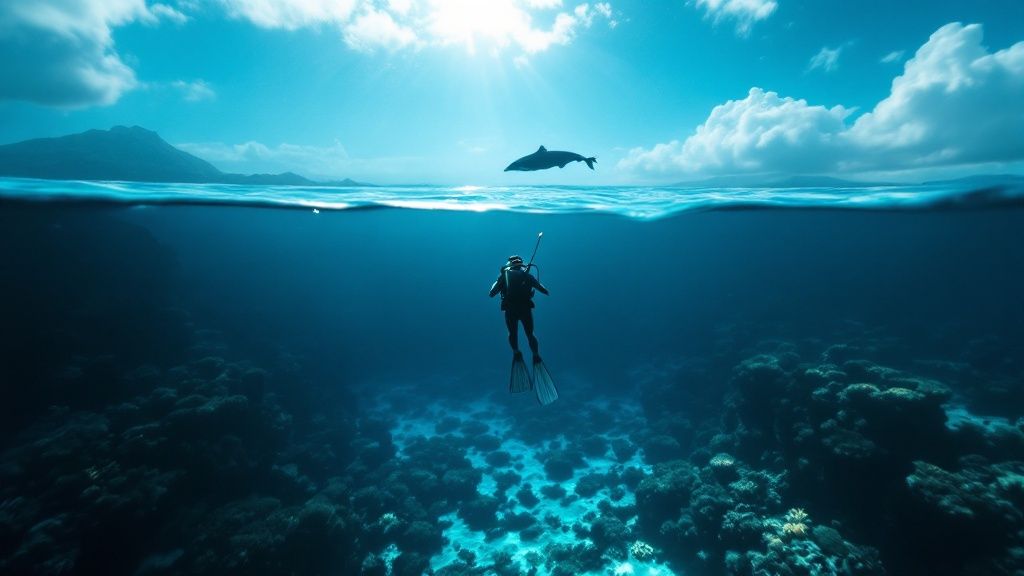
While you can’t jump in the water specifically to dive with whales in Hawaii, you can absolutely plan your trip to boost the odds of an unforgettable encounter. Success comes down to knowing their schedule and their favorite hangouts.
Every year, thousands of humpback whales make the long trek from their Alaskan feeding grounds to Hawaii's warm, sheltered waters. They come here to mate, give birth, and raise their calves, turning the islands into a world-class destination for seeing these magnificent animals.
Pinpoint the Perfect Timing
When it comes to whales, timing is everything. The official season runs from November to April, but if you want the best shot, aim for the peak months of January, February, and March.
During this prime window, the whale population is at its absolute highest. This means more frequent sightings, more dramatic surface action, and a much better chance of hearing their haunting songs echo through the water on your dives.
Know the Best Locations
You can spot whales from any of the Hawaiian islands, but they definitely play favorites. The Auʻau Channel—that shallow, protected stretch of water between Maui, Molokai, and Lanai—is legendary. It's the undisputed epicenter of whale activity.
Over on the Big Island, the deep, calm waters off the Kona coast are another hotspot. The same tranquil conditions that make Kona a world-famous dive destination also make it a fantastic place to spot whales from the boat. No matter where you're diving, it pays to be prepared, so it's always smart to review how to check ocean conditions for the Big Island.
To give you an idea of the numbers, a March 2025 whale count tallied 714 humpback whales, with the biggest crowds seen around Maui and Oʻahu. You can dig into the specifics from the seasonal humpback count across Hawaii.
The Best Ways to Ethically See Whales
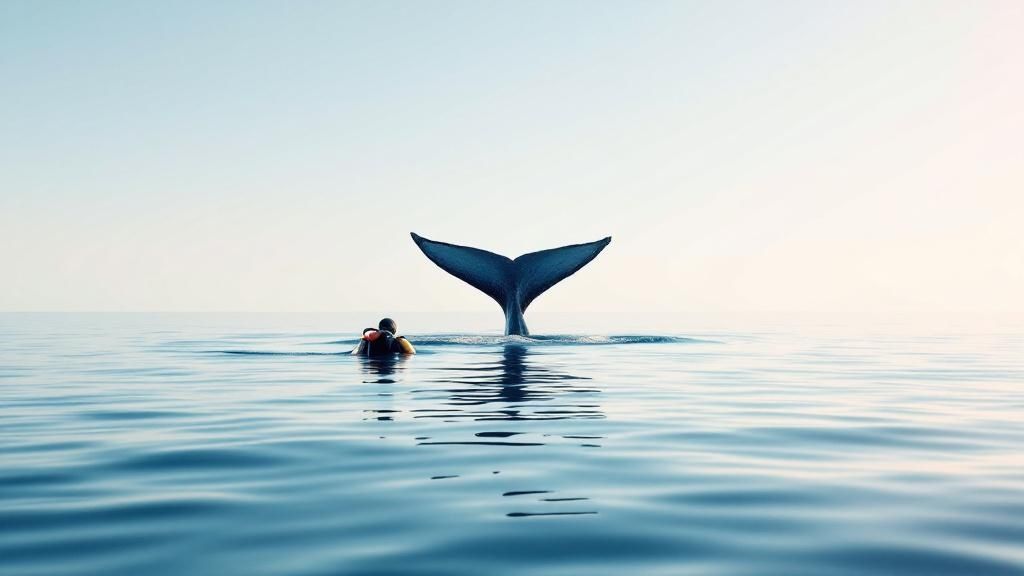
Since you can't intentionally book a scuba dive with whales, what's the next best thing? The answer is to find an ethical way to appreciate them that respects their wild nature and protected status. Hands down, the most responsible—and popular—way to do this is on a dedicated whale watching tour.
The pros who run these boats are seasoned experts. They know whale behavior inside and out and, most importantly, they strictly adhere to the 100-yard approach rule. This keeps everyone safe and ensures the whales aren't stressed. Many tours even drop a hydrophone into the water so you can listen in on the humpbacks' hauntingly beautiful songs.
You'll get an incredible view of breaches, tail slaps, and other surface action from a respectful distance. To get a better idea of what’s out there, take a look at our rundown of the top whale watching tours in Kona.
Other Ethical Viewing Methods
Boat tours are fantastic, but they aren't the only game in town. You have a few other great options for seeing these gentle giants without getting in their way.
- Shore-Based Whale Watching: It doesn’t get any less invasive than this. Grab some binoculars, find a good vantage point along the coast, and scan the horizon for the tell-tale spout of a humpback. It's a peaceful and completely free way to enjoy the spectacle.
- A Fortunate Snorkel Encounter: You might just get lucky while snorkeling and have a whale swim by in the distance. If this happens, remember the golden rule: stay completely still. Never, ever swim toward the animal. Let it decide how close it wants to get, if at all.
- The "Accidental" Dive Sighting: While it's rare, a whale could cruise past while you're on a dive. Just like with snorkeling, the protocol is simple. Stay calm, keep a low profile, and just soak in the awe-inspiring moment from where you are.
Choosing these responsible viewing methods helps ensure that your amazing whale encounter is a positive experience for everyone—especially for the magnificent humpbacks gracing Hawaiian waters with their presence.
What to Do During a Surprise Whale Encounter Underwater
Picture this: you're drifting along a stunning Kona reef, mesmerized by the fish, when a massive shadow suddenly blots out the sun. You glance up, and your heart leaps into your throat. A 40-ton humpback whale is gliding silently, effortlessly, right into your field of view.
It's a breathtaking, once-in-a-lifetime moment, but it's also one that demands an instant, calm, and correct reaction. Knowing what to do isn't just about safety—it's about respect.
The very first thing to do? Absolutely nothing. Stop all movement. Don't kick your fins, don't paddle with your hands, and resist every urge to swim closer for a better photo. Your job is to become the most boring, non-threatening thing on the reef.
The Safety Protocol
Get low. Stay close to the reef or the ocean floor, making yourself as small and unobtrusive as possible. Your breathing should be slow and deliberate, which not only conserves air but also helps keep you calm in a truly overwhelming situation.
Whatever you do, never swim toward the whale. Let's be clear: this isn't a dolphin. This is a creature the size of a school bus, and the encounter must be entirely on its terms. What might be a gentle, curious nudge from the whale could be seriously dangerous for you.
The whale is in charge, plain and simple. By staying still and passive, you're communicating that you are not a threat. This simple act of respect is what turns a potentially dangerous situation into a truly profound and unforgettable memory.
Following these steps ensures the interaction stays safe and magical for everyone involved. You are a visitor in their world. Let the gentle giant pass by, soak in the incredible moment, and carry that story with you forever.
Discover Kona’s World-Class Diving Adventures
So, while the answer to "Can you scuba dive with whales in Hawaii?" isn't a simple yes, that doesn't mean your adventure ends there. In fact, the Kona coast offers underwater encounters that are just as magical—and far more reliable. Instead of chasing a fleeting glimpse of a distant humpback, you can dive into some of the most spectacular and consistent underwater experiences on the entire planet. The Big Island really is a diver's paradise, teeming with unique life you just won't find anywhere else.
Here at Kona Honu Divers, turning those diving dreams into reality is what we do best. Our crew is passionate, experienced, and genuinely excited to show you why Kona has earned its reputation as a world-class diving destination. We'd love for you to come explore the vibrant world beneath the waves that makes our island home so special.
The World-Famous Manta Ray Night Dive
If there's one dive you have to do in your lifetime, it's the Kona Manta Ray Night Dive. Imagine kneeling on the ocean floor, lights pointing up, as majestic manta rays with wingspans reaching up to 16 feet glide and somersault just inches above your head. It’s an incredible underwater ballet that’s consistently rated one of the best night dives in the world. Truly a surreal and unforgettable encounter with these gentle giants.
You can learn more and book this incredible Manta Ray night dive tour directly with us.
Other Unforgettable Kona Dives
Beyond the mantas, Kona's unique volcanic geology and deep offshore waters create the perfect stage for some truly special dives. Our charters head out to a whole range of sites, from pristine coral gardens to dramatic lava tubes and pinnacles.
- Blackwater Night Dive: For the truly adventurous, the Kona Blackwater Night Dive is like a journey into another dimension. We take you miles offshore, tether you to the boat, and watch as bizarre, bioluminescent creatures rise from the depths. Divers often say it feels more like floating through outer space than the ocean.
- Advanced Reef Dives: Are you an experienced diver looking for a bit more of a challenge? Our premium advanced dive trips explore deeper reefs and more remote sites where you can spot rare marine life and navigate stunning underwater topography.
No matter what kind of adventure you're after, Kona has something incredible waiting for you. From sun-drenched daytime reefs to the mysteries of our night dives, we offer a full range of Kona, Hawaii, scuba diving tours to fit every skill level and interest.
Your Top Questions Answered
Let’s clear up some of the common questions about getting in the water with Hawaii's humpback whales. Understanding the rules and realities is the first step toward a safe, respectful, and truly unforgettable experience.
So, Can I Legally Swim with Humpback Whales in Hawaii?
Straight to the point: no, you can't. Federal law is crystal clear on this. It's illegal to intentionally get within 100 yards of a humpback whale.
This means there are no "swim-with-the-whales" tours. Any encounter you have in the water has to be completely on the whale's terms—a chance meeting where you stay put and the whale decides to check you out.
When Is the Best Time to See Whales?
If you want the absolute best odds of seeing whales, plan your trip for January through March. This is the peak of their season here.
While you might see them as early as December or as late as April, the heart of winter is when the waters are thick with them for breeding and calving.
Are Humpbacks the Only Whales I Might See?
Humpbacks definitely steal the show in the winter, but Hawaii's waters are full of life all year. On any given dive, you might get lucky and spot other incredible species like pilot whales, sperm whales, and several kinds of dolphins.
Keep in mind that every single marine mammal here is protected by law. The rules about keeping your distance and being a respectful observer apply to all of them, not just the famous humpbacks.
What if a Whale Pops Up Near My Boat? Can I Jump in?
That’s a hard no. Hopping into the water to chase an encounter is a serious violation of the Marine Mammal Protection Act. It's considered harassment, and it's taken very seriously.
Any professional, responsible boat captain will enforce that 100-yard rule without exception. The goal is always to watch these magnificent animals safely from the boat, ensuring they—and you—are protected.