
Picture yourself floating weightless in the inky black of deep space, surrounded by strange, glowing life forms that seem to come from another world. That's the closest I can get to describing a black water dive. It’s a truly unique kind of scuba diving where you drift in the open ocean at night, suspended over thousands of feet of water, to witness one of nature's most mind-blowing events.
Diving Into the Planet’s Largest Migration
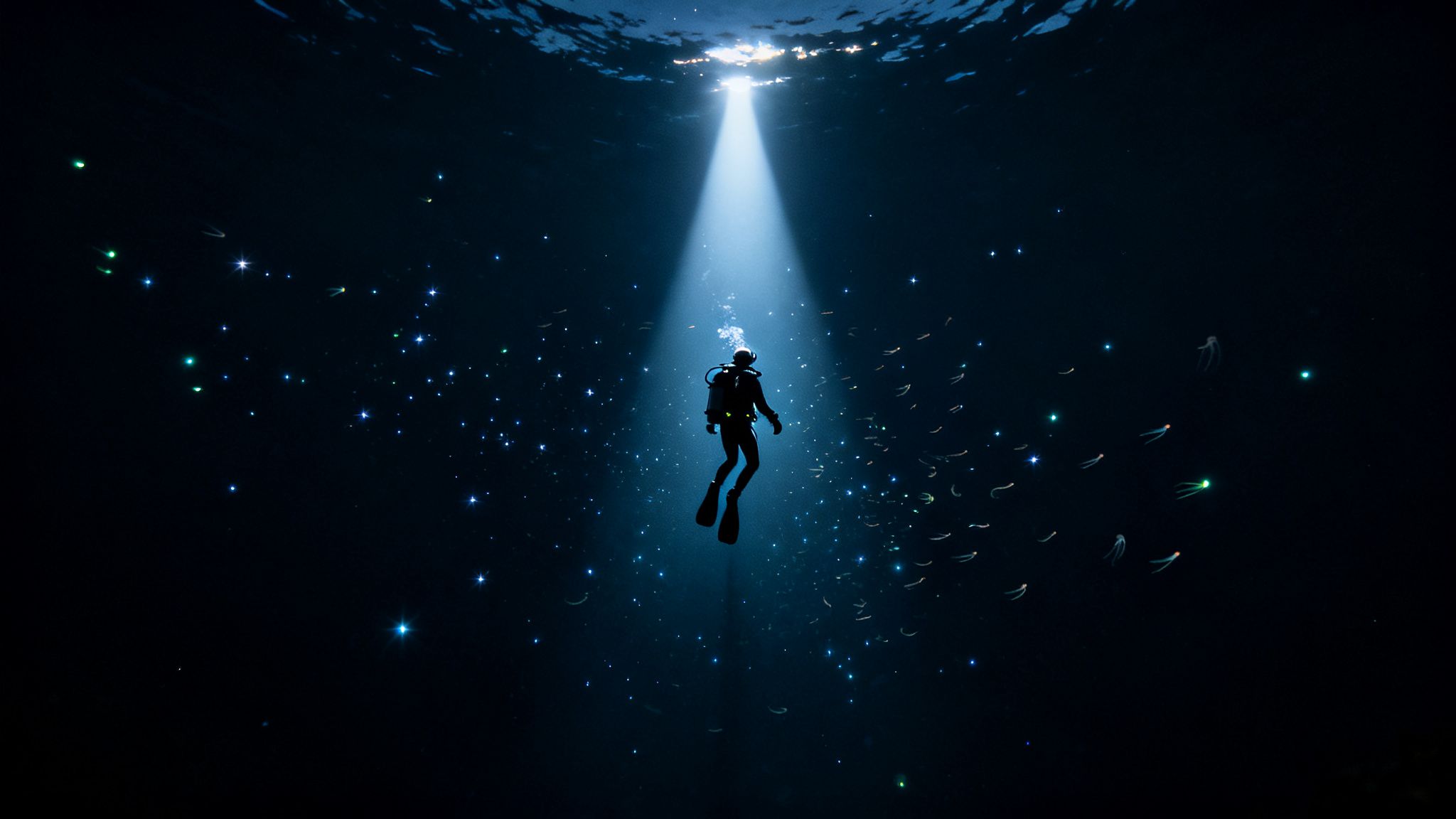
This isn't your typical night dive on a familiar reef. A black water dive takes you miles offshore into the pelagic zone—the vast, open ocean. Here, you're not diving to a destination; you become a visitor in a strange, cosmic environment. It's often compared to a spacewalk, where your only points of reference are the powerful lights dangling from the boat and the otherworldly creatures that materialize from the darkness.
What you're really doing is dropping in on the diel vertical migration, the largest migration of life on Earth. Every single night, billions of tiny planktonic and larval creatures rise from the crushing depths to feed near the surface, only to retreat back down before dawn.
This happens in every ocean, every night. It’s estimated that up to 10-20% of the entire ocean's biomass makes this journey, traveling a staggering 500 to 1,000 meters up and down each day. Black water diving gives you a front-row seat to this incredible parade. Drifting over 9,000 feet of water, as you do off the coast of Kona, is an experience you won't forget. You can learn more about the science behind these incredible Kona drifts to appreciate the scale of it all.
What Sets Black Water Dives Apart
To really get what makes this so different, it helps to compare it to a standard night dive on a reef. They both happen after dark, but that's where the similarities end.
The best way to see the contrast is to break it down side-by-side.
Black Water Diving vs Traditional Night Diving
| Feature | Black Water Dive | Traditional Night Dive |
|---|---|---|
| Location | Open ocean, miles offshore, over deep water (1,000s of feet) | Coastal reef or known dive site with a visible bottom |
| Reference | Suspended from a downline with lights, no bottom reference | The seafloor, reef structures, and mooring lines |
| Objective | Observe the vertical migration of pelagic and larval creatures | Explore the reef and observe nocturnal reef inhabitants |
| Marine Life | Translucent larval fish, cephalopods, and bizarre deep-sea organisms | Eels, octopus, crabs, lobsters, and sleeping fish |
As you can see, the experiences are worlds apart. The real magic of black water diving is its complete unpredictability. On a reef, you have a pretty good idea of what you might see. In the open ocean, every flicker of light could reveal an animal you've never seen—or one that's new to science entirely. You might encounter larval eels that look like transparent ribbons or tiny, deep-sea squid putting on a light show.
Kona: The Premier Destination
While you can do this type of dive in a few places around the globe, Kona, Hawaii, is hands-down the best spot for it. The Big Island's unique underwater geography means you can access incredibly deep water just a short boat ride from shore. Couple that with reliably calm sea conditions, and you have the perfect natural laboratory for witnessing the vertical migration.
A black water dive is almost cultish in that those who are into it tend to be really into it. On your first dive, you may get the bug immediately, stunned into fascination by a passing incredible larval octopus or frond-laden fish.
Operators like Kona Honu Divers have perfected the logistics, turning what was once a highly specialized activity for scientists and photographers into a safe, mesmerizing, and accessible adventure for certified divers.
How Black Water Diving Became an Adventure
Black water diving wasn’t invented for tourism. Long before it became a bucket-list trip for adventurous divers, its origins were purely scientific. This whole concept grew out of a simple need: to get a closer look at one of the most mysterious places on Earth, the open ocean’s pelagic zone.The story really begins decades ago, with marine biologists trying to figure out how to study the delicate, often see-through creatures that drift in the big blue. This wasn't about exploring reefs or wrecks; it was about observing life in the water column itself—a world with no up, no down, and no landmarks.
From Scientific Protocol to Recreational Thrill
Back in the 1970s and 80s, researchers developed what they called “bluewater diving” protocols. It was a clever system of tethers and a downline hanging from a boat, which allowed scientists to drift safely in the open ocean without a seafloor for reference. This was a huge step forward, letting them observe fragile organisms that would be destroyed if caught in a net. You can actually read the official history of these early bluewater diving protocols to see how the science got started.
Fast forward to the 1990s, when a few forward-thinking divers looked at these scientific methods and had a wild thought: what if we did this at night? The answer would change night diving forever, and it all started in one specific place: Kona, Hawaii.
This shift—from a daytime scientific practice to a nighttime recreational dive—was the birth of black water diving as we know it.
Why Kona Became the Global Epicenter
Kona wasn't just a random spot on the map; it was the perfect natural laboratory for this experiment. The Big Island’s unique underwater geography is the secret ingredient. Unlike most places where you have to travel miles offshore to find deep water, Kona's volcanic slopes drop off into the abyss almost immediately.
Here, you can be floating over depths of more than 300 meters (984 feet) just a mile or so from the coast. That easy access to the deep, combined with Hawaii's famously calm and clear water, created the perfect setup. Divers could take a short boat ride and safely drift over what feels like outer space.
This leap from a scientific tool to a nighttime thrill sparked a global phenomenon. Today, you can find black water dives in a few spots around the world, but Kona remains the undisputed capital, with trips running almost every single night.
Pioneering local operators, like the crew at Kona Honu Divers, are the ones who refined the concept into the safe, mesmerizing experience it is today. They perfected the system by attaching powerful, purpose-built lights to the downline. These lights don't just act as a beacon for the divers; they attract the deep-sea creatures making their nightly vertical migration toward the surface.
This innovation was the game-changer. It transformed a simple drift in the dark into a vibrant, illuminated stage for a truly alien fashion show.
If you're ready to see how a scientific protocol became an unforgettable adventure, you can explore the various scuba diving tours in Kona and find the right trip for you.
The experts at Kona Honu Divers have really turned this once-niche activity into a must-do for any serious diver visiting the Big Island. Their deep local knowledge and obsession with safety make them a top choice for experiencing this incredible underwater world.
Gearing Up and Skills for the Deep
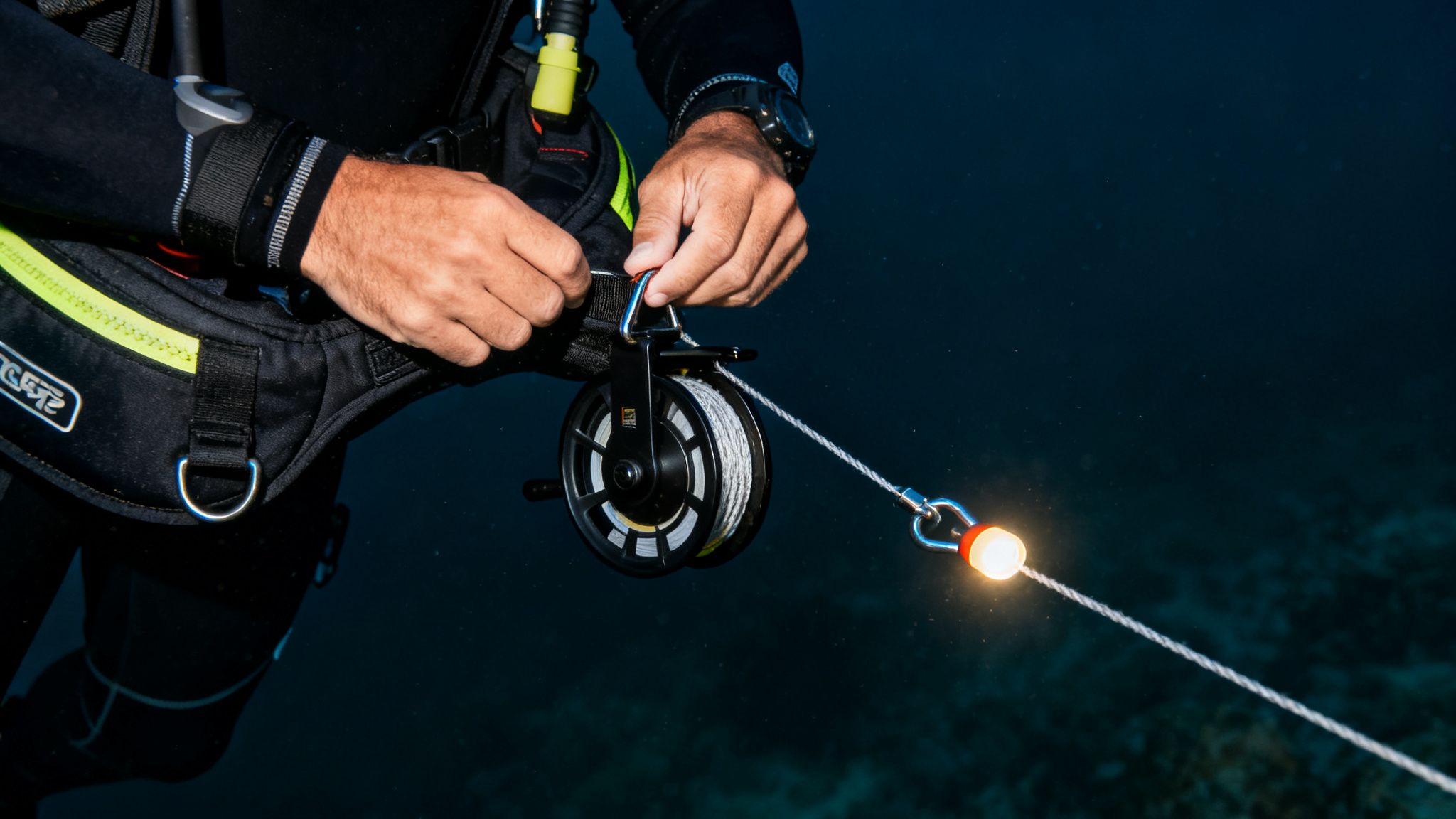
Drifting through the deep, open ocean after dark might sound like something reserved for elite explorers. The truth is, with the right skills and a smart equipment setup, blackwater diving is an incredibly safe and mind-blowing experience that’s more accessible than you’d think.
That said, this isn't your average reef dive. The environment demands you have a solid handle on a few key skills to really relax and soak it all in.
First and foremost is pinpoint buoyancy control. This is the absolute cornerstone of a successful blackwater dive. On a reef, you have the sand or the coral to give you visual cues about your position. Out here, there's nothing but inky blackness. You need to be able to hang perfectly still in the water, like an astronaut floating in space.
Mastering this keeps you from accidentally drifting up or sinking down, ensuring you stay at a comfortable and safe depth. It’s the one skill that lets you forget you’re diving and just be present with the creatures around you.
What It Takes to Thrive in the Dark
Beyond perfect buoyancy, a few other things will make your dive much smoother. It almost goes without saying, but you need to be genuinely comfortable in the dark. While the boat lights create a bright oasis, the world just beyond your torch beam is the deep, dark ocean. A calm, curious mindset is your best friend.
You also need to sharpen your situational awareness. This just means paying attention to a few things:
- Your Depth: A quick glance at your computer every so often is all it takes. Dives are typically shallow, around 40-60 feet.
- The Downline: This is your home base. You must always know where the main, lighted line is. It’s your direct connection back to the boat.
- Your Group: Keep a casual eye on your buddies and the other divers. It's all about giving each other space to explore without bumping into someone else's fins.
This isn't about being a technical diving guru. It's about being a mindful, prepared diver so you can focus on the real show—the bizarre and beautiful critters of the deep.
The Simple, Genius Gear That Makes It Work
The gear setup for blackwater diving is brilliantly simple and designed from the ground up for safety. It’s what turns the vast, intimidating ocean into a totally manageable and secure underwater studio.
Everything revolves around the downline. This is a weighted line dropped from the boat, rigged with powerful lights. These lights do two things: they create a brightly lit "safe zone" for the divers and, more importantly, they attract the tiny, alien creatures you came all this way to see.
Each diver is clipped to this downline with their own personal tether. This short line makes it physically impossible to drift away from the boat or the group. It’s an elegantly simple safety system that offers total peace of mind.
With your tether clipped in, you're free to just hang there and peer into the darkness with your dive light, searching for the telltale glimmer of a larval fish or the ghostly pulse of a comb jelly. If you're wondering what else to pack, take a look at our guide on the gear you will need for your Kona diving adventure.
When you dive with a professional crew like Kona Honu Divers, they handle all the complex logistics. You just show up for the briefing, clip in, and get ready for the strangest, most wonderful fashion show on Earth.
The Otherworldly Creatures You Might See
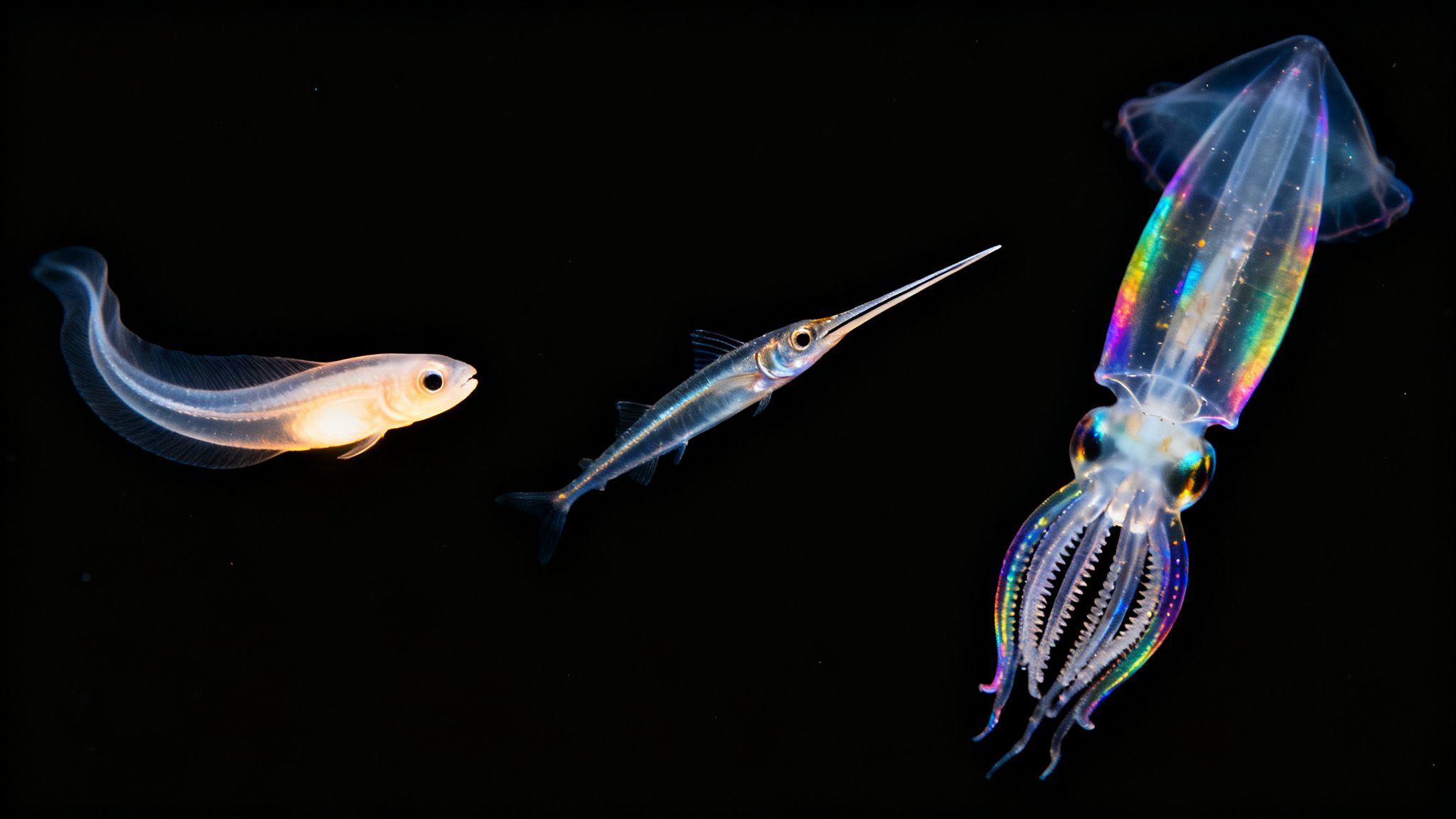
This is what it's all about. That moment you're hanging in the immense, inky blackness, and your light beam slices through the void, revealing a stage for some of the most bizarre and beautiful creatures on the planet. Forget the familiar reef—this is a journey to an alien world, populated by larval, translucent, and utterly captivating life forms.
Most of these animals will never be spotted on a typical reef dive. They either spend their entire lives in the open ocean or are passing through a strange, temporary juvenile phase, drifting on the currents. The nightly vertical migration is your one and only ticket to see this show.
Ghosts, Jewels, and Deep-Sea Aliens
The cast of characters you'll meet is seemingly endless, and every single dive presents a new lineup. One night, you might find yourself mesmerized by a larval eel, known as a leptocephalus. These things are as thin as a ribbon and so transparent they look like ghostly specters undulating through the water.
Then, your light might catch the shimmering, iridescent pulse of a Ctenophore, or comb jelly. They aren't true jellyfish; they are gelatinous predators that move using rows of tiny cilia that fracture light, creating a living, pulsating rainbow in your torch beam. They are delicate, ancient, and look like free-floating jewels.
The true magic of a black water dive is its raw unpredictability. You're not just looking at known species; you're peering into a frontier where many creatures are still being identified. Every dive holds the potential for a new discovery.
You’ll also encounter a whole host of larval fish that bear almost no resemblance to their adult selves. A tiny flounder larva, for instance, starts life with eyes on opposite sides of its head before one makes the long journey across its skull. You might even see a juvenile swordfish—a perfect miniature of the ocean giant, complete with an impossibly long bill.
Cephalopods of the Open Ocean
The cephalopods of the deep are the undisputed superstars of any black water dive. You could come face-to-face with a glass squid, an animal so completely see-through that you can see its internal organs. Or, if you're incredibly lucky, you might witness the rare and spectacular blanket octopus, where the female trails a massive, web-like cape that dwarfs her tiny male counterpart.
Other common, yet no less amazing, encounters include:
- Paper Nautilus: A unique type of octopus where the female builds a delicate, paper-thin shell to protect her eggs.
- Pelagic Seahorses: Unlike their reef-hugging cousins, these tiny seahorses spend their lives clinging to floating debris in the open ocean.
- Larval Lobsters: You’ll often find these hitching a ride on jellyfish, using their host for both transportation and protection from its stinging tentacles.
These are just a tiny fraction of the incredible biodiversity that rises from the abyss each night. For a closer look at what the local waters hold, learn more about which marine life hides in the waters during scuba diving in Kona.
This dive is the ultimate challenge for macro photographers and an opportunity to capture images of creatures few people will ever lay eyes on. It’s an experience that will fundamentally change your perspective on what "life in the ocean" really means, revealing a hidden universe teeming with delicate, strange, and beautiful aliens.
Why You Should Dive with Kona Honu Divers
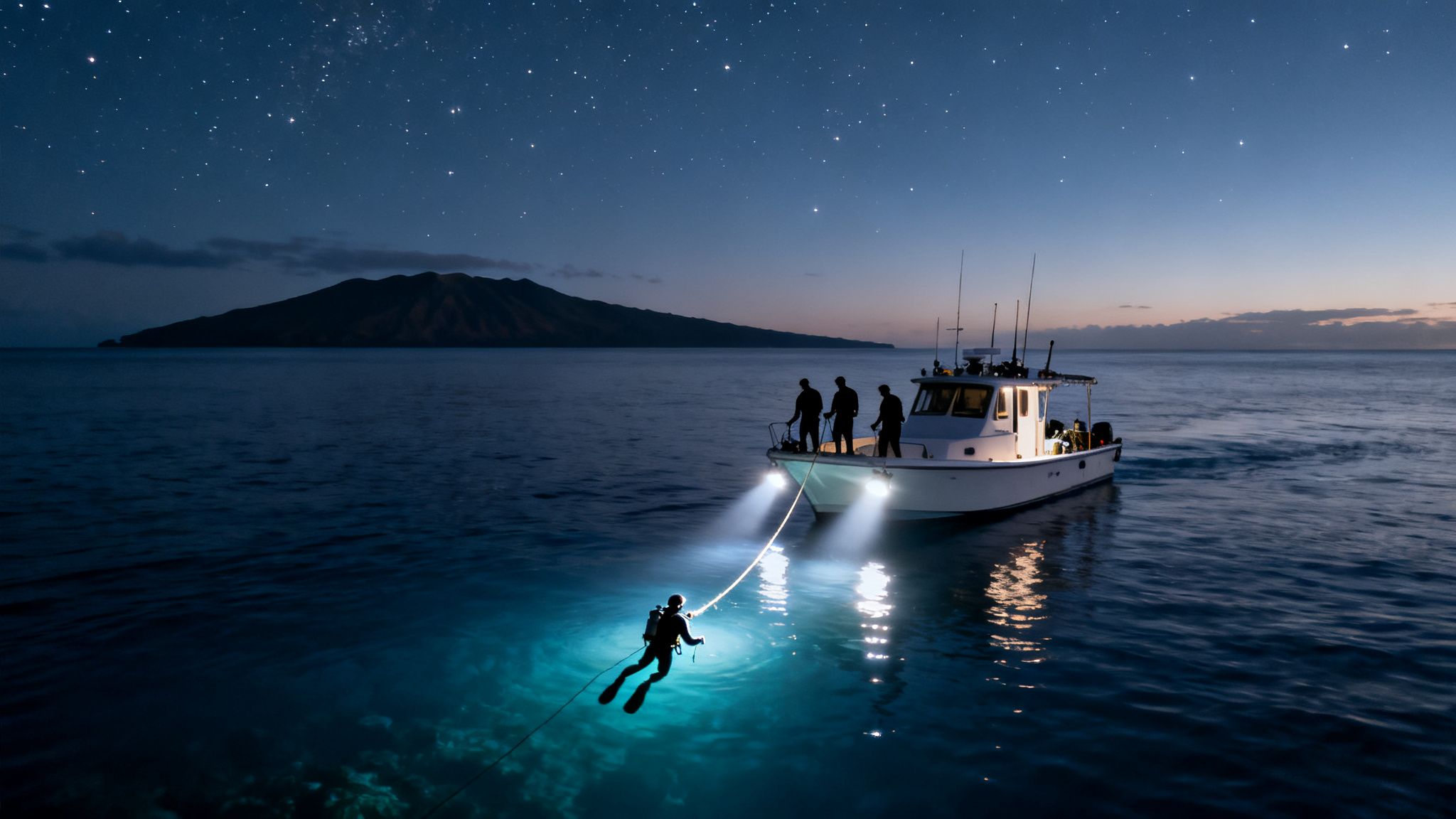
When it comes to a truly mind-blowing black water dive, two things matter above all else: where you go and who you go with. Kona, Hawaii, is hands-down the best place on Earth for this adventure. The calm, sheltered waters drop off into the deep ocean abyss just offshore, setting the perfect stage for the planet's largest migration.
But even the best location won't mean much without the right team. To feel secure enough to truly let go and soak in the magic, you need guides who have mastered this unique type of diving. That’s where Kona Honu Divers comes in.
Unmatched Experience and Safety
Floating in the open ocean at night, experience isn't just a talking point—it's everything. The crew at Kona Honu Divers brings a combined 200+ years of professional diving experience to the table. You feel that depth of knowledge from the moment you step on the boat.
Their commitment to safety is an obsession. Black water diving has come a long way since it first kicked off recreationally in Kona back in the 1990s. In all those years of local operations, there have been zero major incidents, a track record that speaks volumes about Kona's calm conditions and the skill of its guides. You can get a great rundown of how the sport developed over on Scuba.com's history of blackwater diving.
This incredible safety record is no accident. It’s built on:
- Top-Notch Gear: Every piece of equipment, from the powerful downline lights to your personal tether, is checked, double-checked, and maintained perfectly.
- Clear, Confident Briefings: Before you hit the water, you get a full rundown of procedures and safety protocols. They make sure everyone, especially first-timers, feels completely comfortable.
- Expert Eyes in the Water: In the ocean, the divemasters are calm, focused, and always watching. They create a secure bubble so you can focus on the alien-like creatures floating by.
The Kona Honu Divers Difference
What really sets Kona Honu Divers apart is their genuine passion for sharing this bizarre, beautiful world with you. They get that a black water dive isn't just another dive—it's a peek into a hidden universe. Their guides aren't just there to keep you safe; they're expert creature-spotters who get a huge kick out of pointing out the tiniest, weirdest critters you'd never find on your own.
It's this dedication that earned them recognition from fellow divers. We wrote a whole article about why they were voted the best dive operator in Kona, Hawaii.
"Amazing experience! The crew was super knowledgeable and made us feel very safe. They were able to point out so many incredible creatures. The black water dive was the highlight of our trip to the Big Island!"
The team's excitement is contagious. They create an atmosphere of pure discovery, turning every dive into a shared adventure. It doesn't matter if you're a seasoned photographer or just a curious diver—they make sure your trip into the abyss is unforgettable.
Choosing Kona Honu Divers for your black water dive isn’t just booking a tour. It’s trusting your adventure to the most experienced, professional, and genuinely stoked crew in Kona. Ready to see what’s down there?
If you’re ready to take the plunge, you can book your spot on a Kona Black Water Dive tour. And for those looking for other advanced thrills, our premium advanced dive trips explore some of Kona's most challenging and rewarding remote sites.
Your Black Water Diving Questions, Answered
It’s completely natural to have questions before you decide to jump into the open ocean after sunset. It’s a wild idea, after all. But it’s an experience like no other, and we want to make sure you feel confident and ready for the adventure.
Here are straightforward answers to the questions we hear most often from divers getting ready to take the plunge.
What Certification Do I Need?
This is probably the most important question we get, and the answer isn't just about the card in your wallet. It’s about your comfort and skill in the water.
While we highly recommend an Advanced Open Water certification, the single most critical skill for this dive is rock-solid buoyancy control. You have to be able to hover perfectly still in mid-water without a reef or seafloor to reference.
If you’re an Open Water diver but have a ton of dives under your belt (especially night dives) and know your buoyancy is dialed in, let's talk. Give the dive shop a call and be ready to chat about your experience. They'll help figure out if this dive is the right fit for you, ensuring everyone on board has a safe and incredible time.
Is It Scary to Dive in the Open Ocean at Night?
Floating over thousands of feet of inky black water sounds like something out of a movie, and yeah, it can sound a little intimidating. But almost every diver we take out finds that any nerves they had vanish the second they get in the water.
Why? Because the entire setup is designed to feel secure and, frankly, magical.
You're not just dropped into the void. The dive is centered around a "downline" tethered to the boat, brilliantly lit from top to bottom. This creates a glowing home base, a constant point of reference that keeps you from ever feeling lost in the dark.
Once you descend, your whole world shrinks to the beam of your flashlight. Your brain instantly switches from thinking about the deep, dark ocean to hunting for the next bizarre, beautiful creature that drifts into view. The thrill of discovery completely takes over. It feels less like being adrift and more like having a private, floating museum all to yourself.
What Are the Best Photography Tips for This Dive?
Black water diving is a macro photographer’s paradise, but it comes with its own set of rules. Your subjects are tiny, often see-through, and always on the move. Getting that perfect shot requires a different game plan.
Here are a few tips from the trenches to get you started:
- Go Macro or Go Home: A dedicated macro lens is a must. A 60mm or 100mm lens is perfect for capturing the insane details of these critters without having to crowd them.
- Mind Your Strobes: Backscatter is the enemy here. To avoid lighting up all the particles in the water, position your strobes wide and aim them slightly forward from the sides of your subject.
- Use a Good Focus Light: A strong focus light is your best friend. Many of these animals aren't bothered by red light, so a red focus light can help you lock focus without scaring them off.
- Good Starting Settings: Dial in your camera to something like f/8 to f/16 for a decent depth of field, a shutter speed around 1/125s to 1/200s to freeze movement, and an ISO of 200 to 400. Tweak from there!
When Is the Best Time of Year for a Kona Black Water Dive?
Here’s the great thing about diving in Kona: it’s fantastic all year long. The massive volcanoes on the Big Island protect the Kona coast from the trade winds, giving us incredibly calm and clear water almost every single day.
This makes Kona a world-class destination for black water dives any time you choose to visit. There really isn’t a bad season.
Now, if you want to get really specific, some die-hard black water divers swear by the lunar cycle. The thinking goes that a new moon (darker nights) or a full moon (stronger currents) might influence which deep-water travelers make their way to the surface. But honestly, we see incredible things every single night, no matter what the moon is doing. Any night is a good night to go.
Ready for an unforgettable journey into the deep? Trust the experts at Kona Honu Divers. With unmatched local experience and an ironclad commitment to safety, you'll be in the best possible hands as you explore one of the ocean's final frontiers.