
Picture this: you’re descending into the warm, inky blackness of the Pacific. Your dive light cuts through the dark, and suddenly, you’re in the middle of a silent, graceful ballet. This is the heart of the Big Island’s manta ray night dive, an absolute bucket-list adventure that draws divers from all over the world. It's a surreal underwater light show, and the stars of the show are the gentle giants of the sea.
Your Essential Guide To The Manta Ray Night Dive
There’s a good reason the Kona coast is famous as the world’s most reliable spot for manta ray encounters. While other places have seasonal migrations, Kona is home to a massive, resident population of reef mantas. These incredible creatures, with wingspans that can stretch over 12 feet, are here all year long.
This consistent presence has led to a truly unique and sustainable experience. It’s almost like a ritual. As the sun goes down, dive boats head to specific sites and submerge powerful lights. These lights attract clouds of plankton—the mantas’ favorite food—creating a dazzling, all-you-can-eat buffet that draws the mantas in for an unforgettable show.
Choosing The Premier Dive Site: Why Garden Eel Cove is Superior
While you can see mantas at a few different spots, one location truly stands out as the superior choice: Garden Eel Cove. From years of experience, we can tell you it offers a safer, more spectacular, and all-around better dive for a few key reasons.
- Protected Location: The cove is nicely tucked away from the open ocean, which means it’s sheltered from big swells. The result? Calmer, more predictable, and more enjoyable conditions for everyone.
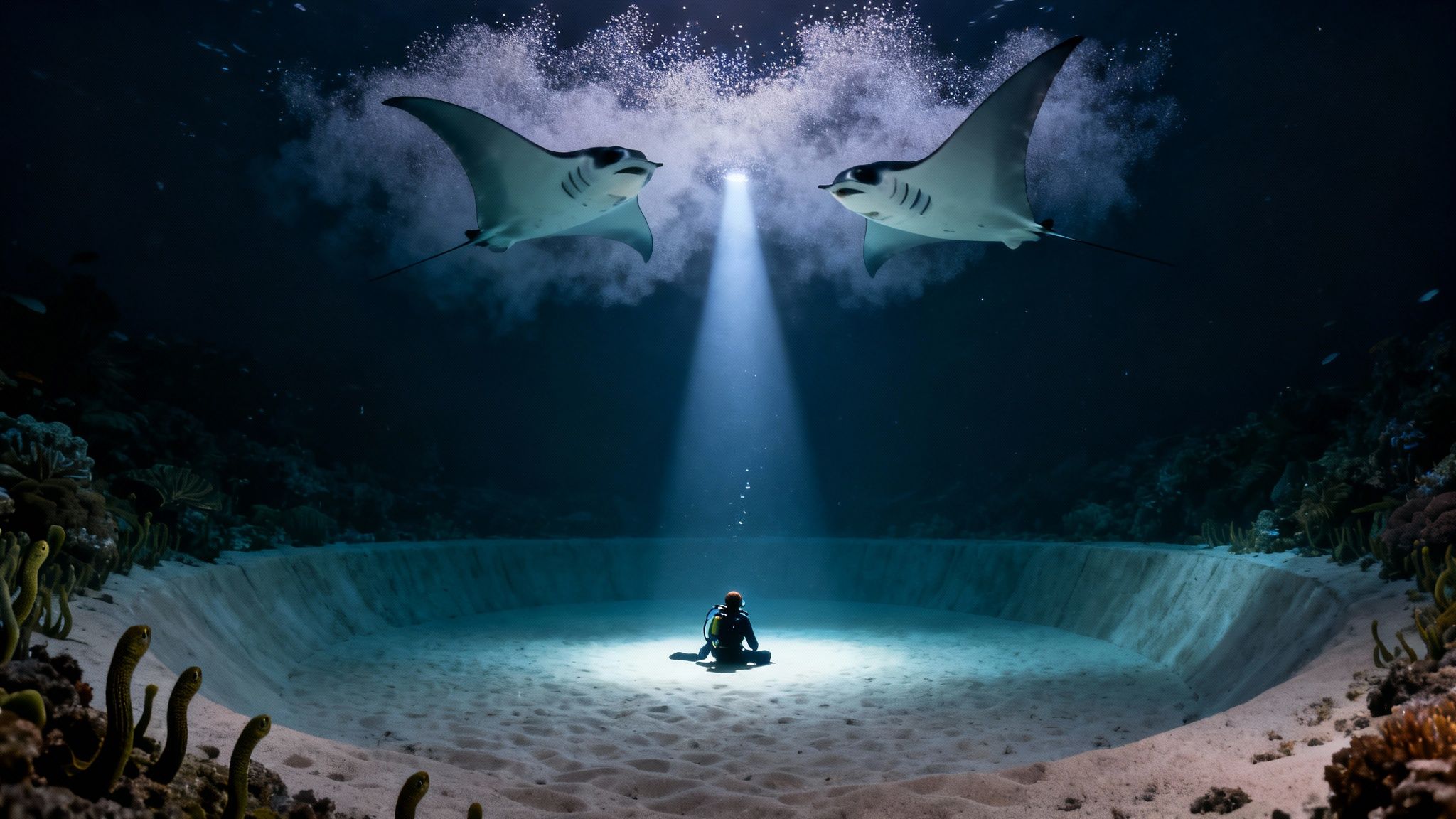
- Better Viewing Area: The bottom is a huge, sandy "amphitheater." This natural layout is perfect because it gives divers a place to settle in comfortably and safely without any risk of damaging the fragile coral reef.
- Healthier Reefs & An Unbeatable Experience: The reefs surrounding the sandy viewing area are vibrant and healthy. From your stable spot on the sand, all you have to do is relax and look up. The mantas perform their acrobatic feeding dance right over your head, giving you an unobstructed, front-row seat to the action.
Other sites can be more exposed to the elements and often lack the sandy bottom and protected setting that makes Garden Eel Cove the premier theater for this underwater performance. For a truly memorable and comfortable dive, the choice is easy.
The Two-Tank Adventure Format
The best way to experience this dive is on a two-tank trip. This format is brilliantly designed to give you the most out of your time in the water.
Your adventure starts in the late afternoon with a beautiful twilight reef dive. As the sun starts to set, you'll get to explore the vibrant coral gardens of Garden Eel Cove. You’ll watch the reef's daytime critters settle in for the night while the nocturnal creatures start to emerge. This first dive is the perfect warm-up, helping you get comfortable with your gear and the site before the sun goes down completely.
After a surface interval with some snacks and a gorgeous sunset, you'll head back down for the main event. This structured approach, which we've perfected at Kona Honu Divers, ensures you’re relaxed, confident, and ready for the awe-inspiring spectacle that awaits. You can learn more about the whole process by reading our guide on what the manta ray night dive is all about.
The Big Island’s reputation is well-earned. Every year, around 80,000 thrill-seekers flock to Kona for this exact experience, cementing its status as the global hotspot for manta encounters. This incredible demand is fueled by success rates that consistently hover between 80-90%, backed by decades of data—a reliability that seasonal spots elsewhere simply can't match.
Unveiling The Magic Of The Kona Manta Encounter
So, what makes Kona the undisputed global capital for manta ray encounters? It all comes down to a fascinating and beautiful relationship between light, food, and these gentle giants, playing out every single night. The entire experience is built around a simple concept we like to call the underwater "campfire."
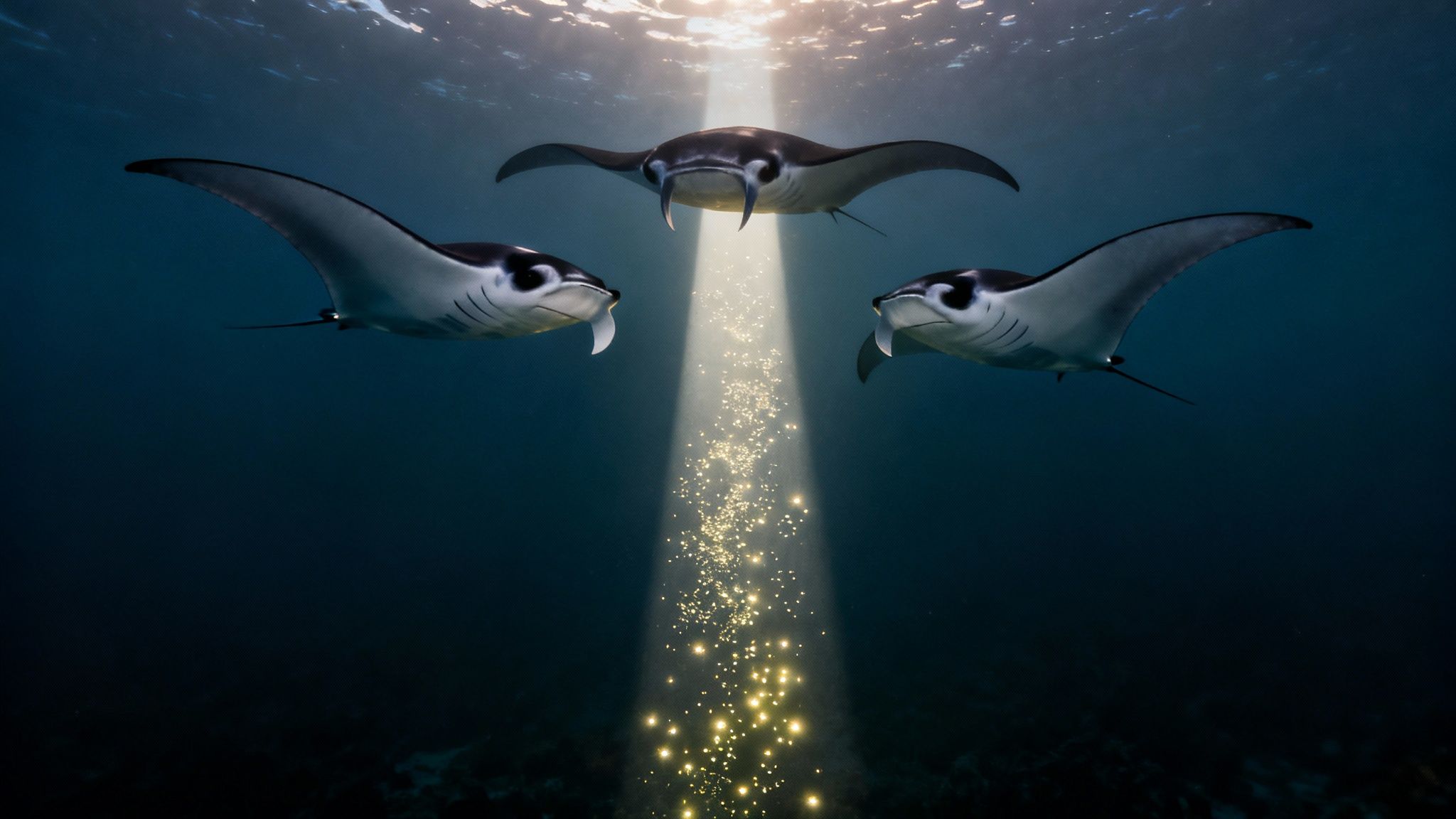
Imagine this: your group of divers settles onto the sandy ocean floor in the dark. Everyone points their powerful dive lights up, creating brilliant columns of light that shoot toward the surface. Just like moths to a flame, this light attracts huge clouds of microscopic plankton, which happen to be a manta ray's favorite meal.
This glowing, all-you-can-eat plankton buffet is simply irresistible. The mantas glide in from the darkness, performing graceful barrel rolls and somersaults to scoop up the feast just inches above your head. This reliable, nightly spectacle is the magic behind the world-famous Big Island scuba diving w manta ray night adventure.
A Unique and Resident Population
What truly sets Kona apart is its manta population. Unlike migratory species found elsewhere, the reef mantas (Mobula alfredi) along the Kona coast are residents. They live here all year, which means pretty much any night is a good night to see them.
This has allowed for an incredible, long-term relationship to form between the mantas, the local dive community, and marine researchers. Imagine slipping into the inky black water, your dive light cutting through the darkness to reveal the majestic dance of these creatures. This isn't a rare stroke of luck; Kona's thriving resident population is estimated at over 450 individuals, with more than 120 cataloged annually along the coast.
Local researchers have meticulously tracked these gentle giants for years. This means that for divers, the success rate for seeing mantas soars above 90% on most nights. It's about as close to a guarantee as you can get in the wild.
Each manta ray has a unique pattern of black spots on its underside, much like a human fingerprint. This allows divers and researchers to identify individual rays, giving them names and tracking their life stories.
This simple fact turns your dive from a wildlife viewing into something much more personal. Your dive guide might point out "Big Bertha" or "Lefty," local celebrities who have been visiting the site for years. You’re not just an observer; you become part of a massive citizen science project just by being there.
The Perfect Underwater Theater
While the mantas are undoubtedly the stars of the show, the venue is just as important. For the ultimate performance, Garden Eel Cove is the superior choice. Its unique geography makes it the perfect underwater theater for this nightly ballet.
Here’s what makes it so special:
- Protection from Swells: The cove is naturally sheltered from the powerful open ocean swells, which means calmer and more comfortable conditions for divers.
- A Sandy Amphitheater: The dive site features a large, sandy bottom. This allows everyone to kneel or lie down comfortably without any risk of damaging fragile coral reefs.
- Unobstructed Views: This setup provides a clear, upward-facing view, giving you a front-row seat as the mantas dance in the light beams directly above you.
Choosing a manta ray dive tour that goes to Garden Eel Cove really does ensure a more serene, safe, and breathtaking experience. It is, quite simply, the best stage for the world’s greatest underwater show. And to make sure you capture those moments, it's worth looking into the best camera for night photography to do the job right.
Preparing For Your Manta Ray Scuba Adventure
Your big night with the manta rays is coming up, and a little prep work will make a world of difference. Getting ready isn’t just about throwing your fins in a bag; it’s about making sure you’ve got the right skills and a calm mindset.
When you're prepared, you can settle onto the sandy bottom and put all your focus where it belongs: on the incredible underwater ballet happening just inches above your head.
Essential Diver Certifications
First things first, you have to be a certified scuba diver to join this dive. The bare minimum is an Open Water Diver certification from an agency like PADI, SSI, or NAUI. This tells us you’ve mastered the fundamentals and can dive safely with a professional guide.
While an Open Water card gets you on the boat, divers with an Advanced Open Water certification often find the experience a bit more relaxing. Why? That training usually includes a night dive and really hones your buoyancy control. Being able to hold your position perfectly is the name of the game here, since you'll be stationary on the ocean floor and need to avoid kicking up sand or floating away from the action.
The better your buoyancy, the more stable you'll be. It lets you become part of the scenery, which means you'll conserve air and get to spend more time watching these amazing animals.
Packing Your Dive Bag
Don't worry about lugging all the heavy equipment with you. As a professional dive operator, Kona Honu Divers has you covered with the big stuff.
You can count on us to provide:
- High-quality, well-maintained BCDs, regulators, and dive computers.
- Freshly filled scuba tanks (and we offer free Nitrox for those certified!).
- All the weights you'll need to get perfectly neutral.
- Powerful underwater lights designed specifically for the manta experience.
This means you just need to pack your personal gear. It’s pretty nice to travel light! For a more detailed look at what to bring, check out our complete guide on the gear you will need for your Kona diving adventure.
Before you head out, here's a quick checklist to run through.
Manta Ray Night Dive Checklist
| Item/Action | Why It's Important |
|---|---|
| Confirm Certifications | Make sure your Open Water or Advanced cert card is accessible (digital or physical). |
| Pack Personal Dive Gear | Mask, fins, snorkel, and wetsuit. A 3mm or 5mm full wetsuit is recommended. |
| Bring Warm Clothes | A towel, hoodie, or windbreaker for the boat ride back is a lifesaver. |
| Stay Hydrated | Drink plenty of water during the day. Avoid alcohol before diving. |
| Listen to the Briefing | This is your single most important tool for a safe, fun, and informed dive. |
| Ask Questions | If anything is unclear, speak up! There are no dumb questions. |
| Relax and Trust Your Guide | We've done this thousands of times. We're here to make sure you have an amazing experience. |
This isn't an exhaustive list, but it covers the key things to keep in mind for a smooth and unforgettable adventure.
Mastering The Night Dive Mindset
For a lot of divers, this will be their first time rolling into the ocean after the sun has gone down. It’s a completely different world at night—a magical one—but it does require a slightly different approach. Getting comfortable starts before you even hit the water.
Your guide's pre-dive briefing is the key to everything. They'll walk you through the entire plan, from how we'll descend to the special hand signals we use in the dark. Pay close attention, because this briefing is designed to build your confidence and make sure you feel ready.
You’ll also learn a new skill: talking with your flashlight. Simple things, like making a big circle to get someone’s attention or wiggling the beam on the sand to say "okay," become your main way of communicating. Your guide will show you exactly how it’s done.
Staying oriented is also much easier than you’d think. We all go down together and come up together, with your guide as a constant point of reference. Once we’re on the bottom, all of our lights create a "campfire" effect, making a big, bright circle. It’s easy to stay with the group and enjoy the show. With a calm attitude and trust in your guide, you'll discover that night diving is one of the most serene and beautiful experiences you can have underwater.
What To Expect On Your Dive With Kona Honu Divers
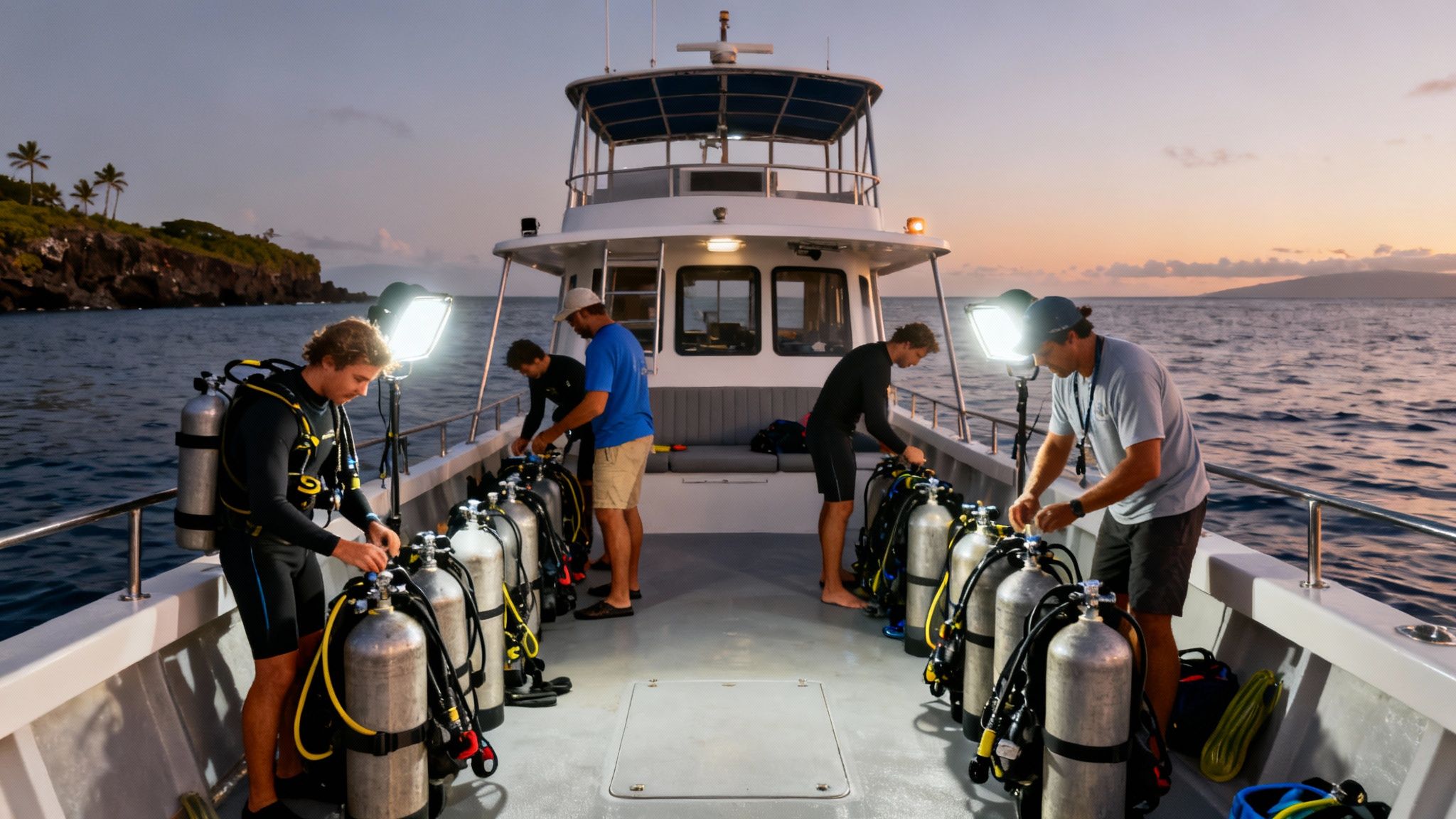
When you book a Big Island scuba diving w manta ray night adventure with us, you’re in for a seamless and thrilling experience from the moment you arrive. Your journey kicks off with a warm welcome at our shop, where we’ll get you checked in, make sure all your paperwork is sorted, and fit you with any gear you might need.
From there, it’s a short walk to one of our spacious dive boats. As we cruise out to the world-famous Garden Eel Cove, you’ll get a front-row seat to a spectacular Kona sunset. It’s the perfect, calming start to an evening you'll never forget.
The First Dive: A Twilight Reef Exploration
We structure this as a two-tank trip, which is the best way to get you comfortable and ready for the main event. Your first dive is a beautiful exploration of the reef at Garden Eel Cove as the sun begins to set. It’s an incredible dive in its own right.
As you descend into the changing light, you get to see the reef in transition. The daytime fish start tucking themselves into the coral for the night, while nocturnal critters like moray eels and octopuses begin to stir. This dive is the perfect opportunity to dial in your buoyancy, get reacquainted with your gear, and simply enjoy the reef before the show begins.
The Main Event: The Manta Ray Ballet
After the first dive, you’ll come back to the boat for snacks and a little downtime as full darkness sets in. This is when the real excitement starts to build. For the second dive, you’ll descend into the inky black water, guided by our pros and the beam of your dive light.
We'll lead you to a specific spot on the sandy bottom, which we call the "amphitheater." It's what makes Garden Eel Cove such a premier site for this experience. Following your guide's lead, you'll shine your light straight up, joining the other divers to create a massive column of light—a "campfire" that attracts plankton from all around. That, in turn, rings the dinner bell for the mantas.
The moment the first giant, shadowy figure glides into the light is pure magic. A massive, graceful silhouette appears out of the darkness, performing effortless barrel rolls just feet above your head. It's a breathtaking, humbling, and utterly silent performance you have to see to believe.
Over the years, Kona’s manta ray diving has become a goldmine for marine science. Researchers have identified and cataloged over 320 individual reef mantas right here on the Big Island. Our expert guides love to point out specific mantas and share their stories, turning your dive into a genuine citizen science experience. You can learn more about how this dive evolved in this fascinating feature on Hawaiian diving.
A Premium Experience With Kona Honu Divers
We're absolutely committed to providing a top-tier experience, because we know the little things make all the difference.
- Small Group Sizes: We intentionally keep our groups small. This means you get more personalized attention from our guides and a much more intimate, less crowded encounter with the mantas.
- Experienced Guides: Our guides aren't just there to lead the way; they are passionate professionals who live and breathe diving. Your safety is their top priority, and they love sharing their knowledge about the incredible marine life here.
- Excellent Amenities: Our boats are built for diver comfort. After your final ascent from the cool water, you’ll be greeted with a hot freshwater shower right on the dive deck—a simple luxury that feels absolutely amazing.
Our dedication to providing the best possible trip is reflected in the thousands of great reviews we’ve received from divers just like you.
Ready to witness the magic for yourself? Book your unforgettable manta ray dive tour and get ready for the dive of a lifetime.
How to Be a Good Guest: Manta Ray Etiquette and Safety
The incredible Big Island scuba diving w manta ray night experience hinges on a simple, unspoken agreement between us and the wildlife. It all boils down to one guiding principle: passive interaction. Think of it this way—we're visitors in their home, and our only job is to watch the show without getting involved.
To keep these gentle giants coming back for years, we have a few golden rules that every single diver must live by. Following these ensures the mantas stay relaxed and confident, allowing them to continue gracing the "campfire" of lights we set up for their nightly feast.
The Golden Rules of Manta Ray Interaction
The heart of a responsible manta dive is all about what you don't do. These aren't just polite suggestions; they are absolutely essential for protecting these magnificent animals and the entire reef ecosystem.
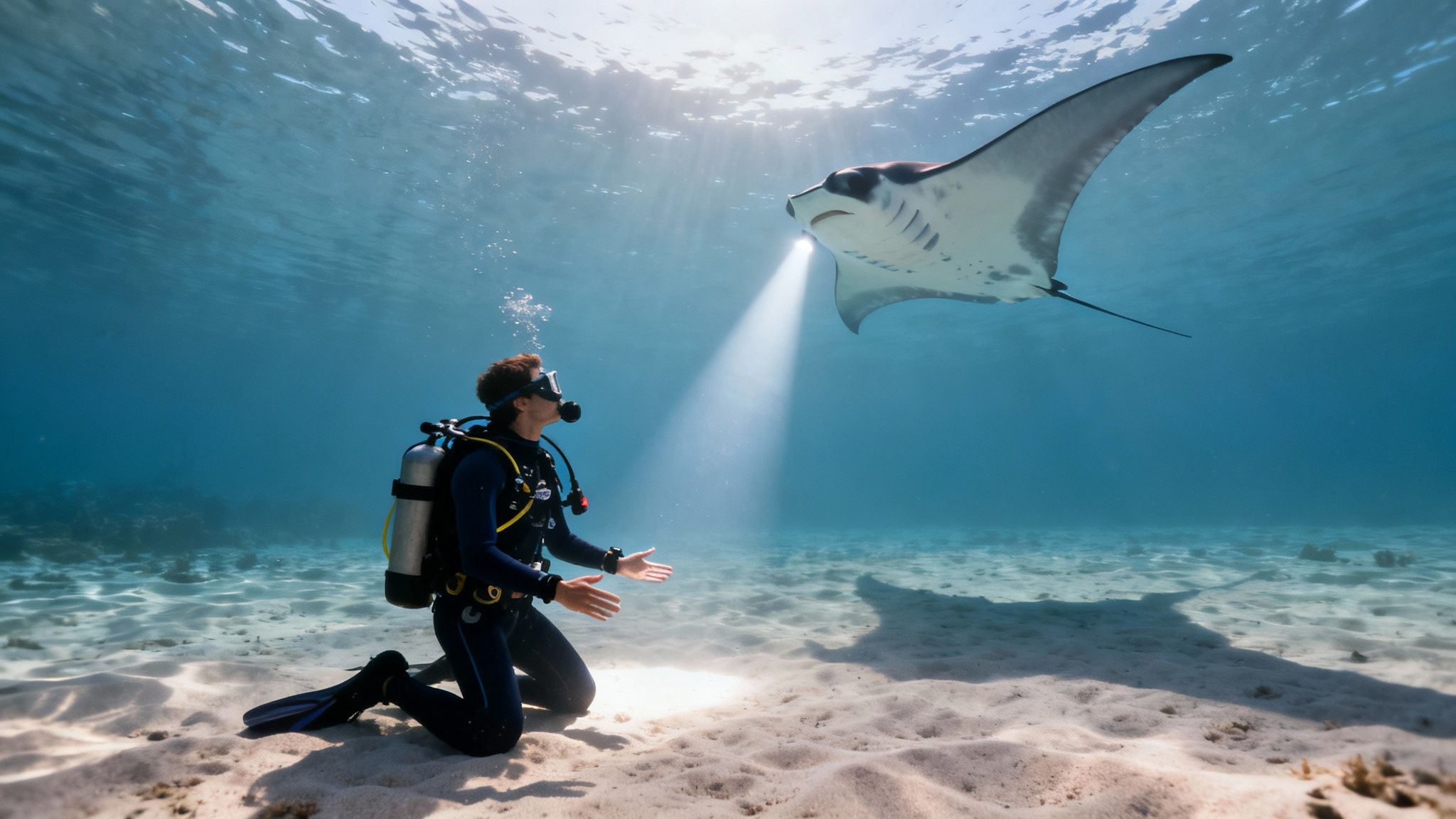
- Look, Don’t Touch: This is the big one. Manta rays are covered in a protective mucous layer that acts like a shield against bad bacteria. When we touch them, we strip that coating off, leaving them wide open to infection. No matter how close they swoop in for a look, you have to resist the urge to reach out.
- Don't Chase or Crowd Them: Let the mantas come to you. Chasing after them or blocking their path is a sure-fire way to stress them out. If they feel cornered or harassed, they’ll simply leave—and might not come back.
- Hold Your Spot: As a diver, your station is on the sandy bottom, looking up. This keeps the water column clear for the mantas to do their graceful acrobatics and also prevents any accidental kicks or bumps against the fragile coral nearby.
These simple acts of respect make all the difference. If you want to dig deeper into being a stellar ocean ambassador, check out our full guide on responsible and considerate diver etiquette.
Key Diver Safety Protocols
Beyond protecting the wildlife, your own safety on a night dive is our top priority. The whole operation is very controlled, but staying aware of your surroundings is what makes the dive smooth and worry-free.
Your dive guide will walk you through all the specifics in the pre-dive briefing, but a few things are always worth repeating. Keep a close eye on your air gauge and stay in communication with your guide. Use your dive light properly—shine it up into the water to attract plankton, not in another diver’s face or directly at the mantas. And finally, work on your buoyancy so you can stay settled on the sand without kicking up a big cloud.
This dedication to both manta conservation and diver safety is what makes a professional dive operation stand out. It empowers you to be more than just a tourist; you become a guardian of this incredible natural wonder.
Beyond Mantas: Other Big Island Night Adventures
The manta ray night dive is an absolute showstopper, and for good reason. It’s the headliner of any Big Island dive trip. But once you’ve seen the “manta ballet,” you might get a little itch. You might start wondering, “What *else* is out there in the dark?”
Well, the answer is a whole different kind of magic, found far from the lights of the shoreline. For divers who crave something truly unique, the adventure is just getting started.
The Famous Kona Blackwater Dive
Picture this: you’re floating in the middle of the deep, black ocean, a few miles offshore. There’s no reef below you, just an inky abyss. You’re safely tethered to the boat, and your dive light pierces the darkness, revealing a cosmos of tiny, bizarre, and beautiful creatures rising from the depths.
This is the largest migration on Earth, a nightly vertical journey where countless strange organisms come toward the surface to feed. You're right in the middle of it.
You’ll see things that look like they were dreamed up for a science fiction movie:
- Pteropods and Ctenophores: Think delicate, gelatinous aliens drifting past, some shimmering with rainbow light.
- Bioluminescent Larval Creatures: These are the baby versions of familiar reef critters, but they look nothing like their parents and often glow with their own eerie light.
- Pelagic Sea Horses: Incredibly tiny and fragile, these are a true holy grail for underwater photographers and something you'll almost never see anywhere else.
Honestly, it feels less like scuba diving and more like a spacewalk. Because you're in the open ocean at night, this dive is for experienced divers with rock-solid buoyancy control and a calm demeanor in the dark. It’s a mind-blowing experience that pushes the very definition of recreational diving. Ready to see what's really down there? Check out the Kona Blackwater Dive tour page for all the details.
Advanced Daytime Adventures
Of course, the thrill of exploration isn’t just a nighttime affair. The Big Island’s dramatic volcanic underwater landscape creates some incredible opportunities for experienced divers when the sun is up, too. Our [premium advanced dive tour page](https://konahonudivers.com/diving-tours/premium-advanced-2-tank-trip/?ref=blog) is built specifically for divers looking to push their limits and explore a little deeper.
We're talking about weaving through complex lava tube swim-throughs, dropping down along stunning deep-water pinnacles, and exploring remote sites that most dive boats never visit. These trips get you to the island's most dynamic and challenging spots, making for an unforgettable addition to your Big Island scuba adventure.
Your Manta Ray Night Dive Questions Answered
It’s completely normal to have a few questions before booking a bucket-list trip like the **Big Island manta ray night dive**. We get it. To make sure you feel totally prepared and excited, we’ve laid out clear answers to the things we’re asked most often.
Is This Dive Okay for a Beginner?
Absolutely. While it is a night dive, this experience is about as controlled and relaxed as it gets. We head to a shallow, sheltered spot like Garden Eel Cove, and the entire dive happens in one place. You'll settle comfortably on the sandy bottom to watch the show, making it one of the easiest night dives you could ever do.
Our divemasters give a very detailed briefing before we hit the water and stick with the group the whole time. If you're an Open Water certified diver and feel at home in the water, you're more than ready for this adventure.
I'm Certified, But It’s Been A While. Is That a Problem?
For your own comfort and safety, we really recommend a refresher dive if it's been over a year since your last one. The perfect way to get back in the swing of things is to join us for one of our beautiful two-tank morning reef dives. It’s a great chance to get reacquainted with your gear and dial in your buoyancy during the day.
That way, when the sun goes down, you'll feel completely confident and ready for the main event. You can easily book a morning trip on our main diving tours page.
Are We Guaranteed to See Mantas?
Because manta rays are wild animals, we can never make a 100% guarantee. That said, the Kona coast is the most reliable place on the entire planet for manta encounters, and our success rate is consistently over 90%.
The well-established feeding sites and the huge local manta population mean that a no-show is incredibly rare. On the off chance they don't appear, you’ll still have a beautiful and unique night dive on a lively Hawaiian reef. But let's be honest—the odds are massively in your favor for an unbelievable show.
Can My Friends Who Don't Dive Come Along?
Yes! We've set up this whole experience so that everyone can be a part of it. Kona Honu Divers offers a snorkeling option on the very same boat, so your non-diving friends and family can join the adventure and share the magic right alongside you.
Snorkelers float at the surface, holding onto a specially designed light board that attracts the plankton. The mantas often come right up to the top, doing barrel rolls in the light beams and giving snorkelers an incredible, up-close view from above. It's the perfect way to bring a mixed group of divers and non-divers together.
Ready for an adventure you'll never forget? Grab your spot on our world-famous manta ray dive tour today.