
If there's one underwater experience that defines scuba diving on the Big Island, it's the manta ray night dive. The Kona Coast is legendary for this encounter, where massive, gentle giants perform a breathtaking ballet right before your eyes. It’s no surprise this is consistently ranked as a must-do activity in Hawaii—it’s pure magic.
The Magic of a Kona Manta Ray Night Dive
Picture this: you descend into the warm Pacific just as the sun sets, the world around you turning a deep, inky blue. You switch on your light, and suddenly, a graceful giant with a wingspan of over 12 feet emerges from the darkness, soaring effortlessly through the water. This isn't a scene from a documentary; it's the heart of the world-famous Kona manta ray night dive.
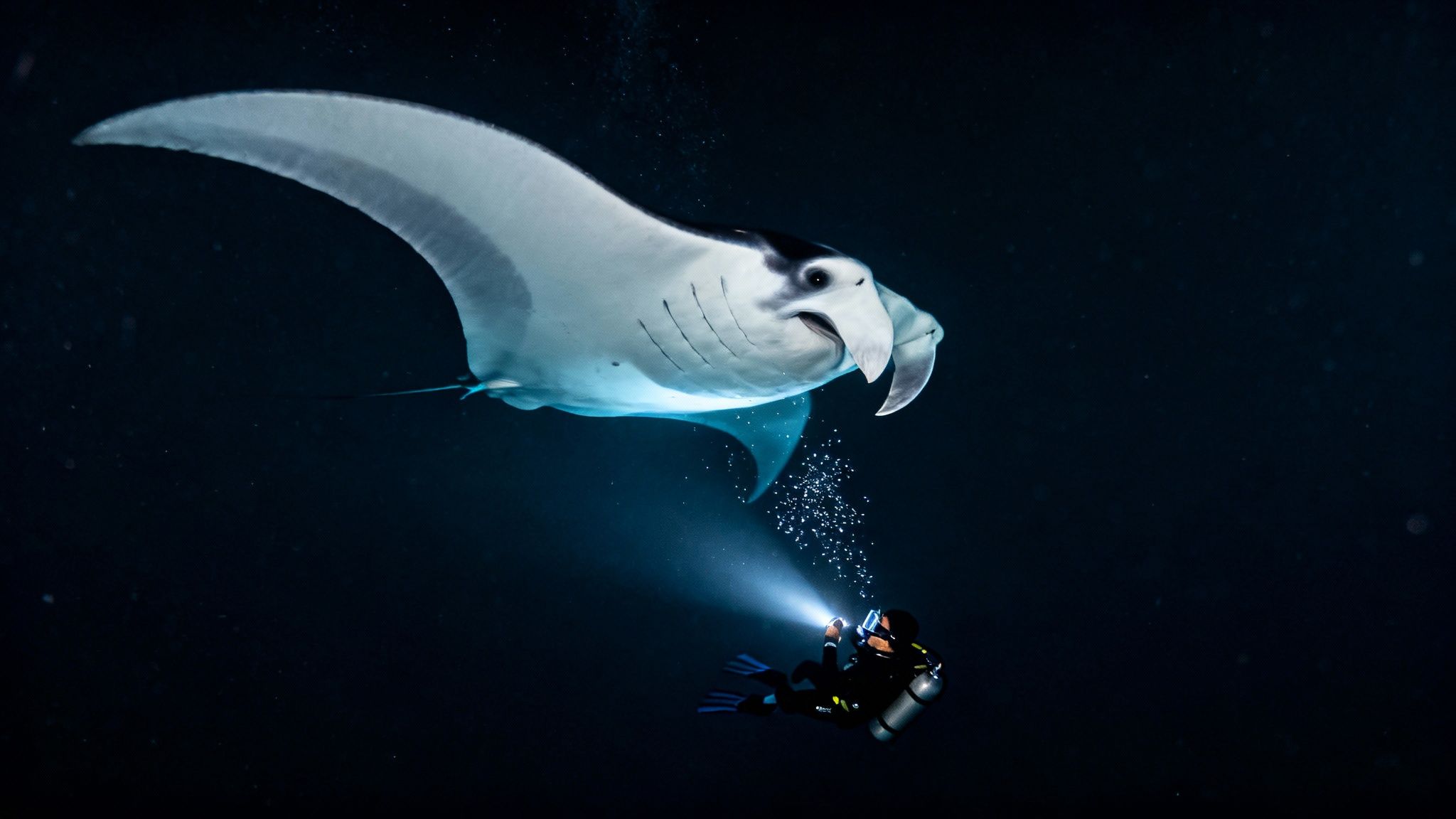
The secret behind this incredible show is simple but brilliant. Dive operators place powerful, stationary lights on the ocean floor. These lights act like a giant beacon for tiny plankton, which are the mantas' favorite meal. The rays show up for the all-you-can-eat buffet, and what follows is a silent, mesmerizing dance as they perform barrel rolls and graceful loops to feed, often coming just inches from your mask.
A Reliable and Awe-Inspiring Encounter
What makes Kona so special? It's home to a thriving resident population of over 450 identified individual manta rays, each one cataloged and known to local researchers and guides. This incredible number of resident mantas is why the dive boasts an astonishing 85-90% sighting success rate year-round. It's not uncommon to see several on a single dive.
Of course, choosing the right operator is key to having a safe, respectful, and unforgettable trip. Kona Honu Divers is widely regarded as the top choice for this adventure, known for putting both the guest experience and the mantas' well-being first. Their experienced team makes sure everyone, from novice to expert, is comfortable and ready for the show.
This is so much more than just another dive; it’s a chance to connect with one of the ocean's most majestic creatures. This truly is a bucket-list adventure.
Why Garden Eel Cove Is the Premier Dive Site
If you're planning a manta ray dive on the Big Island, you’ll hear a few names thrown around, but one site consistently outshines the rest: Garden Eel Cove. Known to local divers as Manta Heaven, this spot is the superior choice for a manta ray dive tour because it delivers a more reliable, spectacular, and comfortable experience.
The biggest advantage of Garden Eel Cove is its protected location. It’s naturally tucked away and shielded from the powerful southern swells that often churn up the water at other locations. This protection means fewer trips get canceled due to rough seas, and the underwater visibility is consistently better. For a night dive, calm and clear conditions are paramount for both safety and enjoyment.
The Superior "Campfire" Viewing Area
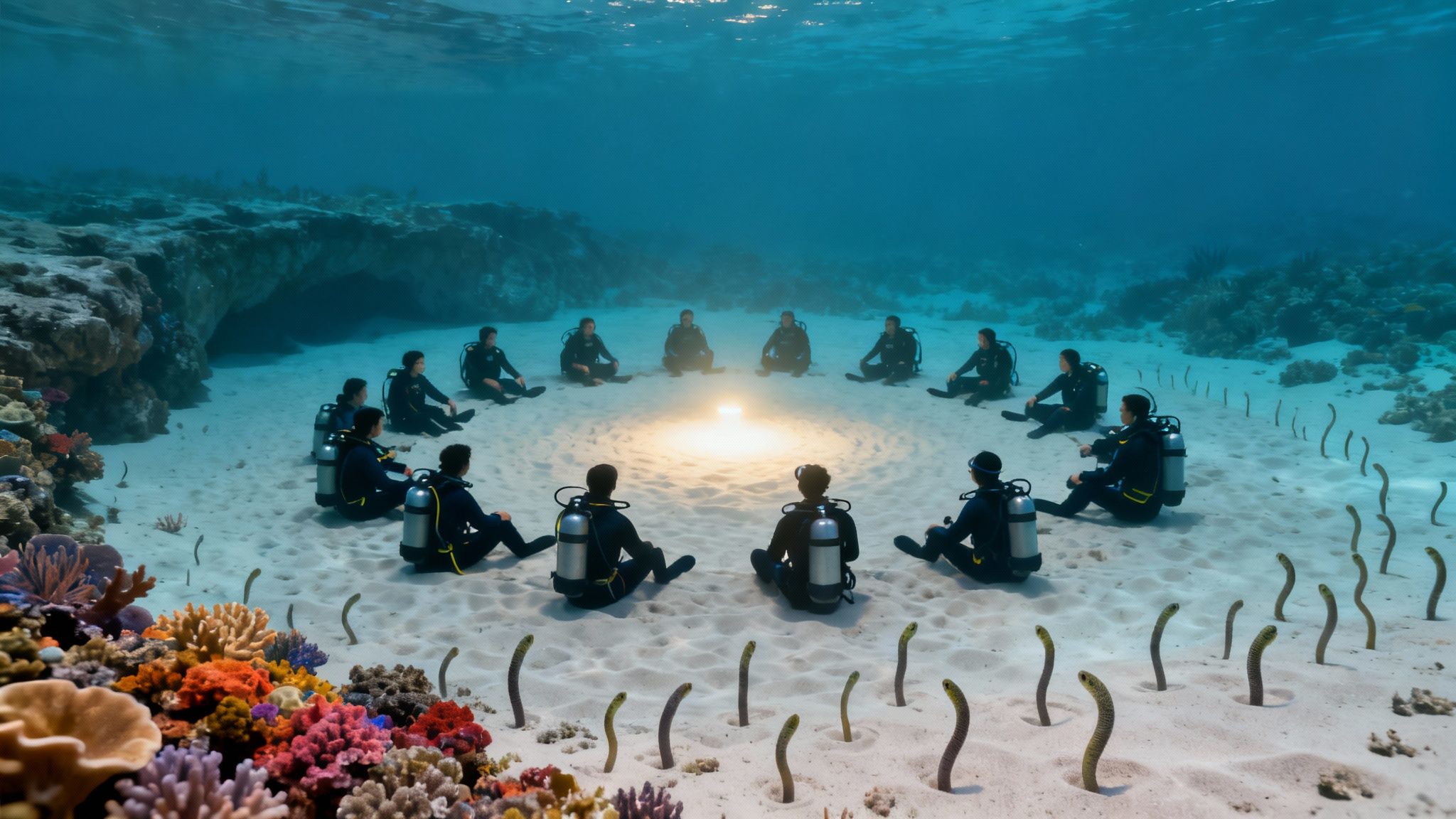
What truly makes Garden Eel Cove special is the superior viewing area. Dive operators have established a central, powerful light source—what we all call the "campfire"—in the middle of a large, sandy clearing. Divers settle in a circle on the sand around this beacon and simply look up.
This unique setup is a game-changer for several reasons:
- Everyone Gets a Front-Row Seat: The circle means no one is stuck in the back. You get a perfect, unobstructed view as the mantas swoop and glide right overhead, drawn to the plankton in the light.
- Relax and Enjoy the Show: Kneeling on the sandy bottom is far more comfortable and requires less effort than trying to maintain neutral buoyancy in the dark. You can just relax and be completely mesmerized.
- Safe for Divers and Mantas: The "campfire" creates a predictable, organized stage. It keeps everyone in one place, minimizing the risk of accidentally bumping into the fragile reef or the mantas themselves.
This organized and comfortable viewing area is a world away from other sites where the experience can be more scattered and chaotic. The campfire at Garden Eel Cove focuses the action and turns a great dive into a breathtaking performance.
Better Reefs for a Better Two-Tank Dive
The incredible manta show is only half the story. The reefs at Garden Eel Cove are simply more vibrant and teeming with life, which is a massive plus since this is a two-tank trip.
Your first dive happens at twilight, giving you a chance to explore the reef as the sun goes down. The healthier corals and greater biodiversity here make for a far more engaging first tank. You’ll see the garden eels the site is named for, plus plenty of colorful fish, octopuses, and moray eels. It’s the perfect warmup for the main event. You can learn more about why we love this location in our guide to Manta Heaven at Garden Eel Cove.
When you choose Garden Eel Cove, you’re not just booking a manta dive. You're picking a spot celebrated for its reliability, superior viewing setup, and incredible marine environment—a truly world-class experience from the moment you hit the water.
For an unforgettable and dependable night with Kona’s majestic manta rays, Garden Eel Cove is the clear winner. Ready to claim your spot by the campfire?
What to Expect on Your Manta Scuba Adventure
The idea of dropping into the ocean after dark to meet giant manta rays is a huge thrill. But it's also totally normal to wonder, "What's it really like?" Knowing how a manta ray charter with Kona Honu Divers unfolds, step-by-step, helps turn any jitters into pure excitement. From the moment you show up, we've got everything dialed in to make sure your adventure is safe, smooth, and something you'll talk about for years.
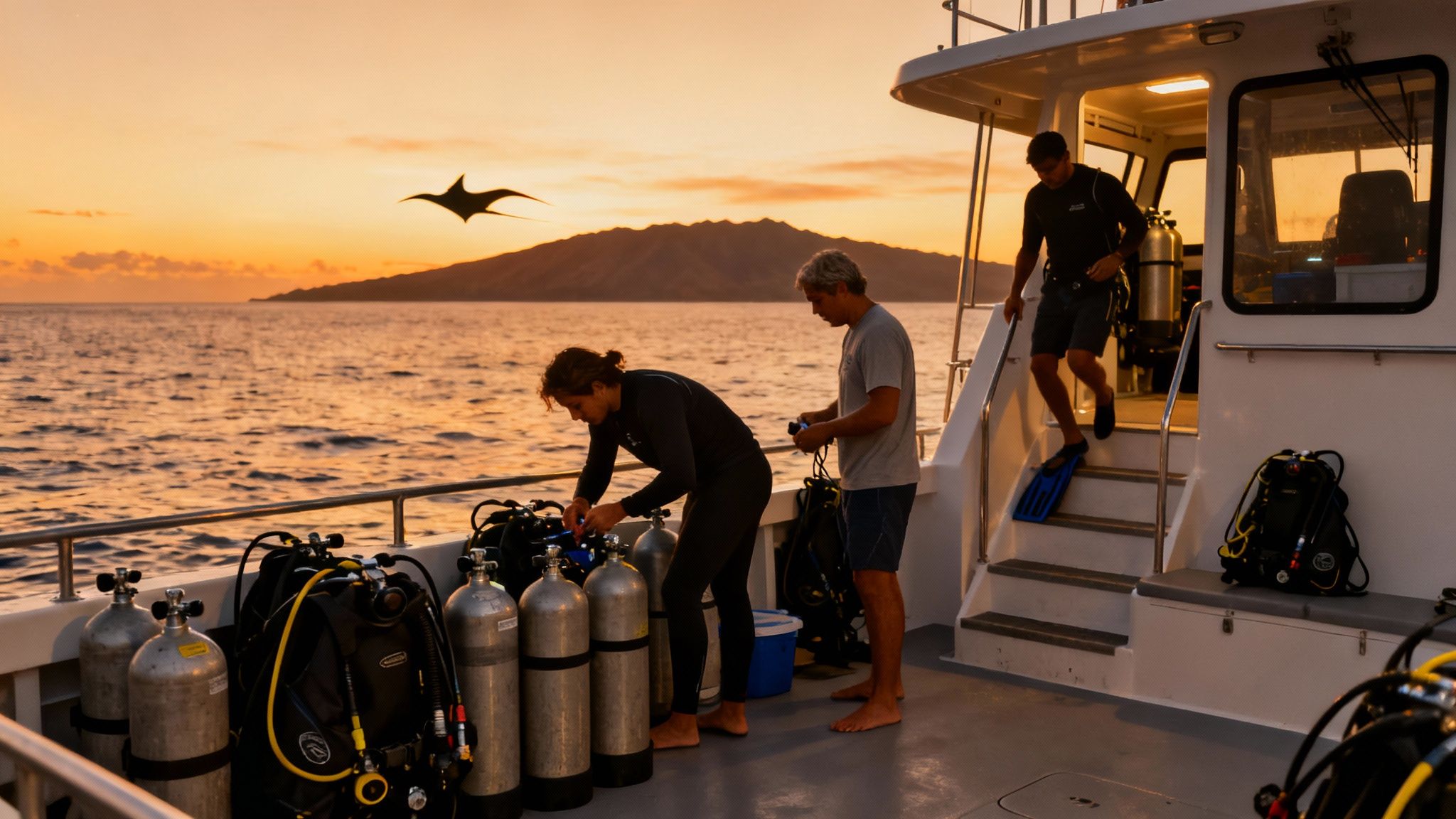
It all starts at the harbor. You’ll be greeted by our crew—they’re not just pros, they’re genuinely happy to have you. After a warm welcome, we'll run through a pre-dive briefing. This isn't your average safety talk. We’ll introduce you to the mantas you're about to meet, explain their behavior, and cover the simple but crucial rules for a respectful encounter.
The Twilight Dive
Once we get you settled on the boat, we'll head out to Garden Eel Cove. The ride along the Kona coast as the sun starts to dip is beautiful on its own. And this isn't just a quick trip for one dive; it’s a proper two-tank adventure.
The first dive is a gorgeous twilight exploration of the reef before the main event. It’s the perfect chance to get your weighting right, get comfortable with your gear, and see the reef as it shifts from day to night. You’ll spot creatures like garden eels poking out of the sand, maybe an octopus on the move, and watch as the reef fish get ready for bed. It's a fantastic warm-up for what's to come.
When you surface, we’ll have some snacks and drinks ready for you while the crew preps for the big show. It’s a great time to swap stories about what you just saw and let the anticipation build. As the sun sinks below the horizon, the sky lights up, setting an incredible stage for your Big Island scuba diving manta rays encounter.
The Main Event: Manta Ray Magic
As darkness settles in, the crew places our powerful underwater lights on the sandy bottom. This creates what we all call the "campfire." This bright beacon attracts a massive cloud of plankton—the mantas' favorite meal. Your group will then descend together and find a spot in a circle on the sand around the light, giving everyone a front-row seat.
Staying on the sandy bottom is a key part of our protocol. It’s safe, gives you a stable and comfortable place to watch from, and most importantly, it keeps the water column clear for the mantas to do their thing while protecting the delicate coral nearby.
From there, you just look up and wait. It usually doesn't take long. Soon, these gentle giants glide out of the darkness and put on a show. They perform mesmerizing barrel rolls and graceful swoops, sometimes just inches above your head, as they feast on the plankton caught in the light beams. It’s a silent, breathtaking ballet you have to see to believe.
After about 45 minutes of pure awe, we’ll make our way back to the boat. A hot freshwater shower on the dive deck is waiting for you—it feels amazing after a night dive! We’ll have more snacks to warm you up for the relaxing ride back to shore.
Ready to book your spot for this unforgettable night? You can see our available manta ray dive tours and grab your place.
Understanding Kona’s Unique Manta Population
When you slip beneath the waves to see Kona's manta rays, you’re not just meeting random visitors. You're being welcomed into a very special, resident community with a fascinating story. Knowing a bit about these gentle giants completely changes the experience—it’s no longer just a cool dive, but a real connection with a precious and fragile ecosystem.
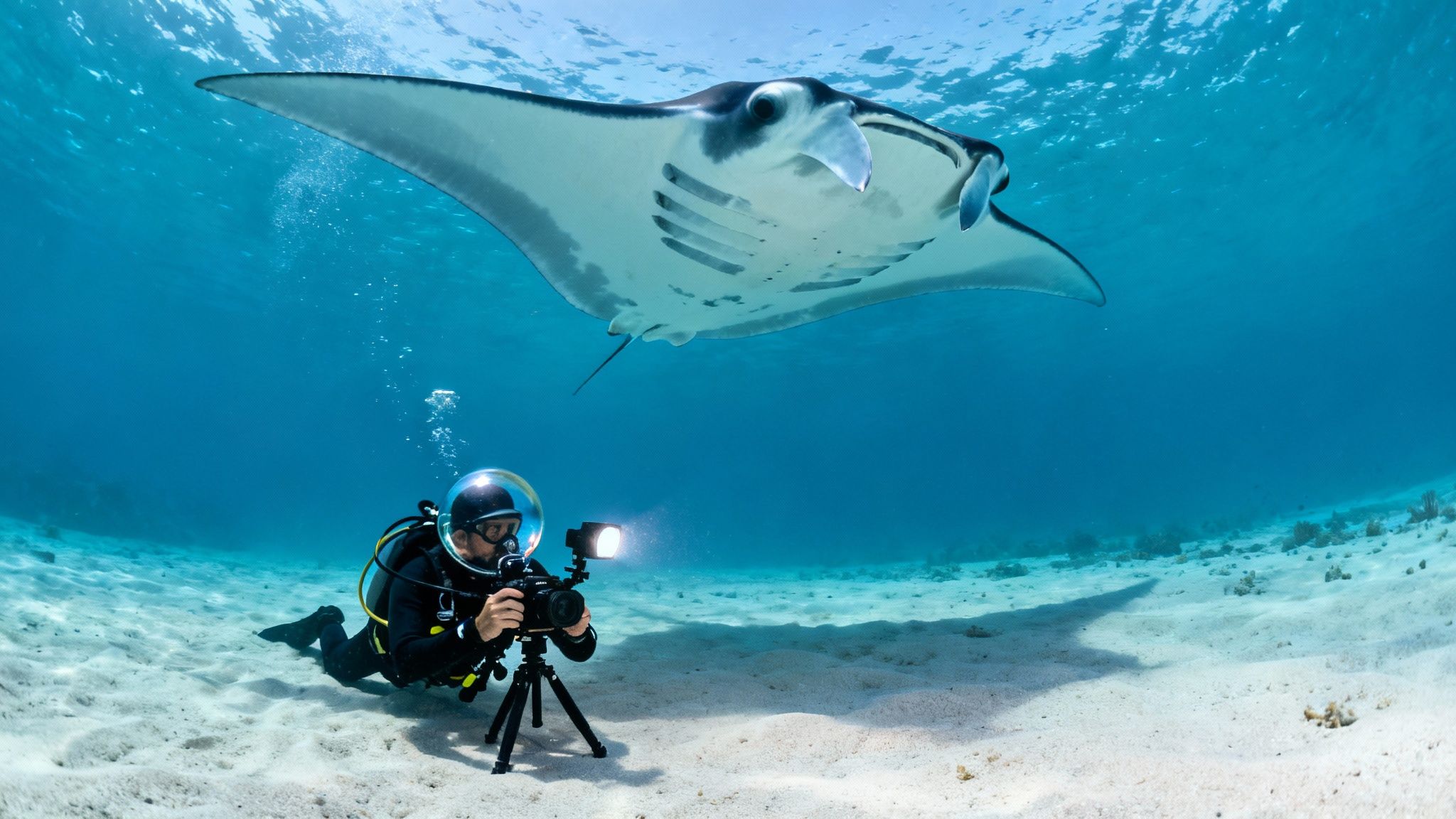
The fact that they live here year-round isn't just a fun piece of trivia; it's the most critical part of their conservation story. It means their entire survival depends on the health of Kona's coastal waters.
A Genetically Isolated Community
Recent science has finally given us a clearer picture of just how unique Kona’s mantas really are. Groundbreaking genetic research has shown they are a small, isolated population, completely distinct from other groups around Hawaii. One landmark study estimated there are only about 104 adult breeders on the entire island. That’s an incredibly small gene pool, which makes them highly vulnerable to any threats. If you're interested in the nitty-gritty, you can dive deeper into these critical genetic findings.
This isn't just about genetics, either. Decades of photo-identification work back this up. Researchers have cataloged over 300 unique individuals right here in Kona, and not a single one has ever been spotted among the nearly 600 mantas identified around Maui. They are, in every sense of the word, locals.
Why Responsible Tourism Matters
Once you understand that these mantas are a small, home-grown population, the importance of responsible diving practices really clicks into place. Mantas reproduce very slowly, so the health and safety of every single animal is vital for the group's future. This is exactly why we have internationally recognized guidelines for every single dive.
The number one rule is simple but absolute: look, but never, ever touch. A manta ray's skin is covered in a protective mucous layer, which is its first line of defense against infection. Touching them can strip this layer away, leaving them exposed to disease.
When you dive with a conservation-focused company like Kona Honu Divers, you become part of the solution. We're fiercely committed to manta-safe practices that ensure the animals are never stressed or harmed. We teach all our divers how to be passive observers, letting the mantas be in complete control of the encounter.
This approach ensures the nightly "manta ballet" remains a natural feeding behavior, not a disruptive tourist show. By choosing your operator carefully, you help guarantee this incredible natural wonder will be here for generations to come. Your choice has a direct and meaningful impact on preserving one of the most magical underwater experiences on Earth.
Photography Tips for Capturing the Perfect Shot
Bringing home incredible photos of your Big Island scuba diving manta rays encounter is the ultimate souvenir. But let's be real: shooting these gentle giants in dark, plankton-rich water is a serious challenge. With the right equipment and a few key techniques, you can walk away with images that truly capture the magic of the moment.
First things first, let's talk about light. On any night dive, you absolutely need a powerful primary dive light and a backup for safety. But for photography, your external strobes are the real game-changer. The single most important trick is to get those strobes off your camera housing and position them wide, pointing slightly outward. This simple adjustment dramatically reduces backscatter—that annoying "underwater snow" effect you get when your flash lights up all the plankton floating right in front of your lens.
Mastering Your Camera Settings
When you're shooting in low light underwater, manual mode gives you the control you need. You'll likely be tweaking things all dive, but having a solid starting point is half the battle.
If you’re just starting out, here’s a good baseline to get you in the ballpark.
| Recommended Camera Settings for Manta Ray Night Photography |
|---|
| Use these settings as a starting point. Adjust based on your specific camera, lens, and strobe setup for the best results. |
| Setting | Recommendation | Reason |
|---|---|---|
| ISO | 800 to 1600 | Makes the sensor more light-sensitive, helping to capture the glow from the central light "campfire" and not just your strobes. |
| Aperture | f/8 | A wider aperture lets in more light and can help the mantas pop against the dark water by creating a shallower depth of field. |
| Shutter Speed | 1/100s | This is a great sweet spot. It's fast enough to freeze the manta's elegant motion but slow enough to gather plenty of ambient light. |
Remember, these settings are not set in stone. The best photographers are constantly fine-tuning their setup based on the manta's proximity and the water conditions.
Composition and Technique
Beyond the technical stuff, how you frame the shot makes all the difference. A wide-angle lens is non-negotiable if you want to capture the true scale of these animals. Trying to photograph a 12-foot manta with a standard lens is like trying to take a picture of an airplane from inside the cabin—you just can't fit it all in.
Get low on the sandy bottom and shoot upwards toward the surface. This angle creates powerful, dramatic silhouettes of the mantas as they glide through the illuminated water above.
One of the most prized shots is a clear view of a manta's belly. The unique spot patterns are like a fingerprint, which is how researchers identify individual rays. To nail this shot, you'll need patience. Wait for a manta to perform a graceful barrel roll right over you. That's your window to capture the beautiful details that make each one unique.
For a little inspiration, take a look at our gallery of incredible manta ray dive pictures from Kona to see what’s possible.
Most importantly, don’t spend the entire dive glued to your viewfinder. Make sure you take a few moments to put the camera down and just soak it all in. Sometimes the best memories are the ones you keep for yourself.
Beyond Mantas: Exploring More Big Island Dives
The manta ray night dive is an experience you'll never forget, but it's really just the opening act for what the Big Island has to offer. The Kona coast is a world-class diving destination, and once you've witnessed the manta ballet, you'll be hooked. Luckily, there's a whole world of adventure waiting just beneath the surface.
Thinking beyond Big Island scuba diving manta rays is where the real exploration begins. Kona Honu Divers runs a full schedule of diving tours that showcase the incredible diversity of Hawaii's underwater landscapes, from sun-drenched reefs to truly one-of-a-kind night dives.
The Kona Blackwater Dive
If you're looking for something utterly surreal, the Kona Blackwater Dive is in a league of its own. This isn't your typical reef dive. We head out into the deep open ocean at night, where you'll drift over thousands of feet of water while safely tethered to the boat. It's a front-row seat to one of the largest migrations on the planet, as bizarre and wonderful creatures rise from the abyss.
Imagine floating in the pitch-black, your dive light cutting through the darkness to reveal life forms that look like they're from another world.
- Bioluminescent jellies that glow and pulse with an otherworldly light.
- Tiny larval fish so transparent they're like ghosts in the water.
- Alien-like squid and other invertebrates you simply won't find anywhere near a reef.
This is an advanced dive for the truly adventurous, a genuine journey into the unknown. If you’re ready for an experience that feels more like floating through outer space than the ocean, you have to learn more about the unforgettable Kona Blackwater Night Dive.
Advanced Diving Opportunities
Are you an experienced diver looking to push your limits? Kona's dramatic, volcanic coastline is the ultimate playground. Our advanced dive charters are specifically designed to get you to the more remote and challenging sites that most boats can't—or won't—visit. We explore raw, powerful underwater landscapes shaped by ancient lava flows.
These trips are for divers who are confident with deeper profiles and can handle more dynamic conditions. It’s your chance to see the wild side of Kona, from navigating lava tubes to hoping for encounters with larger pelagic species.
While the mantas are a huge draw, many divers also get a thrill from other big animal encounters, like diving with sharks. Here in Kona, we can explore deep-water pinnacles, swim through massive archways, and discover untouched coastlines buzzing with life. If you're ready to elevate your dive vacation, see what's possible on our Premium Advanced Dive Tour page.
Your Manta Ray Diving Questions Answered
Got a few last-minute questions before you book? I get it. Planning the perfect dive trip means getting all the details sorted. Here are my straightforward answers to the questions I hear most often from divers getting ready to see the mantas.
Do I Need to Be Scuba Certified to See the Manta Rays?
Yes, for the scuba dive, you absolutely need to be a certified diver. The experience involves descending to about 30-40 feet, getting settled on the sandy bottom, and watching the show unfold above you.
But don't worry if you're not certified! You can still have an incredible encounter. We (and most other top operators) run a manta ray snorkel tour from the same boat. Snorkelers hang out on the surface, holding onto a big, custom-made light board that draws the plankton—and the mantas—right up to them. It's an amazing alternative and gets you incredibly close to the action.
Is There a Best Time of Year to See Mantas in Kona?
Honestly, no. Any time of year is a great time to see manta rays here in Kona. That’s because our local manta population doesn't migrate; they live here year-round.
The success of the dive depends on our lights attracting plankton, not on a specific season. Because of this, our sighting rates stay consistently high all year, usually around 90% or even higher. The only real variable is the ocean conditions, which tend to be a bit calmer in the summer. But Kona's coastline is so well-protected that we have fantastic diving pretty much any day of the year.
What Happens If No Manta Rays Show Up?
It's rare, but it happens. Manta rays are wild animals with their own agenda, and sometimes they just don't feel like coming to the party. We understand that, and every reputable operator has a "Manta Guarantee."
Here at Kona Honu Divers, if your tour group doesn't see a manta, you can come back and try again for free on a standby basis. This is exactly why I always tell people to book their manta dive early in their vacation—it gives you a nice cushion to reschedule if you happen to be on that one unlucky trip.
Is the Manta Ray Night Dive Safe?
Absolutely, and we make sure of it. Safety is always our number one priority, especially on a night dive. We conduct the dive in a shallow, familiar, and well-controlled site. You’ll get a thorough briefing before you even hit the water, and our experienced divemasters are right there with you the entire time.
As for the mantas, they are the definition of gentle giants. They're filter feeders, so they're only interested in the tiny plankton in the water. They don't have teeth, stingers, or barbs, and their curiosity about us is completely harmless. The most important safety rule is for you: just look, don't touch. Respect their space, and everyone has a fantastic, safe time.
Ready to see the magic for yourself? Kona Honu Divers runs the premier manta ray scuba diving experience at Garden Eel Cove.
Book your unforgettable adventure with Kona Honu Divers today and witness the world-famous manta ray ballet. Explore all of our manta ray dive tours and secure your spot!